Classic Lit Challenge 6: Saturday

This one was a test.

For my classic lit challenge I’ve been choosing novels that have weathered decades. As in at least five. My reasoning: among the ocean of books, only quality literature will survive the currents of time.

I deviated for Ian McEwan’s novel Saturday. It was only published in 2005. Not enough time has passed to tell if it will be floating around used book sales a hundred years from now.
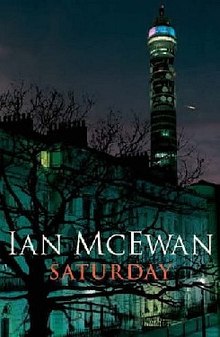
220px-SaturdayMy verdict: I don’t think so.

First, why I picked it up. I’d read Enduring Love by him a few years ago and I liked it a lot. I’d seen the movie Atonement, which is based on a book he wrote, and I liked it even more. I remember when Saturday came out and it got rave reviews. So, there it was, on the tables of Grace Van Vorst Church’s book sale, for just a buck.

The good: I read Saturday in a single day (a Sunday, not a Saturday). I was still in a wickedly off-kilter state of mind so I wandered into Manhattan and read chapters at various places along the Hudson riverfront, and I kept on doing so until Saturday (the book) had ended.

I NEVER read a book in a single day. Saturday, however, was fluid and seamless and kept me going.

So what’s it about? It follows a well-off and well-regarded middle-aged London neurosurgeon, Henry Perowne, during the course of a single day: February 15, 2003. As Henry navigates his unimpressive Saturday routine he ponders such things as the love of his family (very devoted all around), fears about terrorism, the looming Iraq War and his general place in life. In a lot of ways it reminded me of James Joyce’s Ulysses, or Virginia Woolf’s Mrs. Dalloway in that it focused intensely on one person’s life confined to a single day. But Joyce and Woolf pulled it off. McEwan fell short. I think I know why.

Henry Perowne has no memorable flaws. He’s skillful and dutiful and faithful and even tempered. He’s boring. There were opportunities to delve into his psyche, burrow into his past, but the earliest we get is adolescence, and one that is fine enough. I wished McEwan had used the Joyce/Woolf example and dug deep into Henry’s shit.

Nope. None of that.

Another problem hearkens back to why Saturday was so praised when it came out. Way back in 2005 the contentious Iraq War was underway. Saturday takes place during a massive British anti-war rally, and Henry spends many pages ruminating on the merits of the war. He gets into an impassioned argument with his daughter Daisy (most of the passion was on her side), which mirrors the arguments of the day, almost in a textbook fashion.

Topicality can be awesome. But what happens when, with the passage of time, that enormously world-changing event ends up not being such a big deal? A decade plus on, the Iraq War seems as consequential as the Boer War in popular culture, so the debate over its merits before the fact have zero tension. Time moves that fast. McEwan is one of today’s literary heavyweights, but I’m guessing if he wrote this same exact novel today, it wouldn’t get published.

There’s much to like about Saturday. The writing is great, and the action, especially toward the last quarter of the book, was unexpected and shocking (if not totally believable). Like I said, I read Saturday in one day.

Will it last a hundred hears on? I’m guessing McEwan’s Atonement will earn that honor.

Next up, a classic that made my skin crawl.


Classic Lit Challenge 5: As I Lay Dying

My history with William Faulkner isn’t a positive one. I remember having to read one of his books in high school — I can’t remember whether it was Light in August or The Sound and the Fury. It didn’t go well. Then again, what 16 year old can comprehend stream of coverconsciousness?

My second attempt came when I was living in upstate New York, a four-hour drive from my family in Jersey, and I’d gotten my hands on a Faulkner audiobook — one of the two aforementioned novels. I can’t recall which one, and again it doesn’t matter, since listening to Faulkner while driving along the New York Thruway is even more pointless than reading it.

Oh, and I’m not a fan of early 20th century southern gothic. It’s become a huge cliche.

Nevertheless, as part of my one dollar, 300 pages or less challenge, I boldly chose Faulkner’s As I Lay Dying (not to be confused with the excellent thrash metal band of the same name, which I am listening to as i lay dyingas I write this).

Ok, a bit of a rewind — last year, my friends Sara and Stephen both convinced me to read their favorite book of all time: James Joyce’s Ulysses. So I did, chapter by chapter, and we’d get together over beers to discuss and dissect. It was a challenge, but I finished it. Ulysses is considered the blueprint of modern, stream-of-consciousness writing. Joyce was the pioneer, more or less. Once I slogged through Ulysses, I was at ease with stream of consciousness. Reading Faulkner was now much, much easier.

(Though I did cheat a little; wikipedia helped me sort out the large cast of characters.)

A quick summary of As I Lay Dying: Addie Bundren, the matriarch of the rural southern Bundren clan, is dying, and her last wish is to be buried miles away among her own people. A simple journey tale, right? No. Not so simple. Everything that can go wrong hauling her decaying corpse miles and miles and miles in the southern heat does go wrong. Almost comically.

What makes As I Lay Dying both effective and frustrating is the rotating cast. The book is told in a first person point of view. Not just one, though. Fifteen, including Addie’s toothless husband Anse, her oldest son Cash, another son, the insightful Darl, dutiful daughter Dewey Dell, the secretly illegitimate son Jewel, and the youngest boy Vardaman. Other POVs include neighbors, doctors, etc etc.

You can get whiplash from the constant stream of murmuring voices.

Faulkner does a great job of carrying the reader along, even in places where the reader (me) feels almost lost. That’s because he keeps things interesting throughout.

Given my history with Faulkner, I liked this book way more than I thought I would. One thing that stood out for me was the character of Darl. The story of carrying a decaying body clear across the state is batshit crazy. Darl realizes this. In fact Darl is the only character who can see through all the secrets and lies of the Bundren clan. This eventually becomes his undoing.

Or maybe he’s the one who is batshit crazy.

When you’re the sane one in a crazy world, does that make you crazy in comparison?

The other thing that stood out for me was the title character (well, title POV character). The book is called As I Lay Dying (which is an allusion to the Odyssey, which inspired Joyce to write Ulysses, which clearly inspired As I Lay Dying. Boom!). Addie is the one who is laying dying when the novel opens, so she’s pretty damn important.

But we only get a single chapter from Addie’s POV, which comes in the middle and is out of time with the sequence of events.

That doesn’t matter though. It’s one of the most powerful chapters of the book. We find out who Addie really is. Turns out she’s a mean, nasty, violent woman who has no faith in the world or her family or her marriage or herself. There’s been tons written about Addie, and some consider her a feminist of sorts. I think she’s the story’s villain. It’s because of her that all this madness occurs.

But if it wasn’t for her villainy, we’d have a boring short story about a loving matriarch being buried in the backyard. Who wants that?

Next up: a deviation from the “classic” challenge, where I tackle a more modern literary hit.


Classic Lit Challenge 4: Pride and Prejudice

After this post I’m expecting hordes of furious Jane Austen fans at my door.

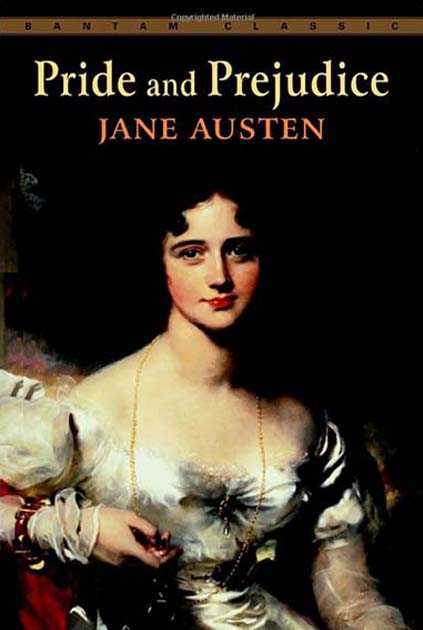
So when I was at the used book sale I spied Jane Austen’s classic Pride and Prejudice. Of course I’m familiar with Austen. She’s one of the biggies. She basically invented the romance genre. And who doesn’t love the movie Clueless (which is loosely based on Austen’s Emma)?

prideprejudice423x630I’d never read anything by Austen, though I know many writers and readers who practically worship her. Romance isn’t my thing, but not wanting to consider myself a literary snob, I handed over the dollar and set to reading.

When I was younger I had it in my head that I had to finish every book I started. As I got older and time became more precious, I tossed that useless rule. With this literary challenge, though, I told myself I’d at least read until page 50. If I still couldn’t take the torture, I’d tap out then.

For Pride and Prejudice I made it to page 38.

I don’t know what it was exactly that made me quit this book.

Was it the ridiculous, over-the-top language?

Was it the horrible stage direction, which always had me confused as to who was saying what?

Was it the fact that the most interesting scenes were being described off-camera?

Was it that the only character I liked was Mr. Darcy, who is considered the villain (as far as romances go)?

Maybe it was all of those.

I’m guessing our hero Elizabeth Bennet blossoms into a character who is 1) interesting and 2) not annoying, but I didn’t have the patience to wait for her metamorphosis. I also didn’t have the patience for the wide cast of characters whose sole purpose was to gossip and pile on the unnecessary dialogue.

Call me overly proud. Call me prejudiced. But I couldn’t find the charm in Pride and Prejudice.

Maybe I should give Pride and Prejudice and Zombies a shot instead. Who doesn’t love zombies?

Next up: a book that’s the polar opposite of a romance, and one I actually finished.

Classic Lit Challenge 3: All Quiet on the Western Front

A few months after my father was killed, my mother purged a ton of his books, so when I was at her house searching for something to read, it shouldn’t have been a surprise that the bookshelves were as bare as a Venezuelan supermarket. All I found were a few All Quietreligious books, some non-fiction war books and…All Quiet on the Western Front.

I probably grimaced when I pulled it off the shelf. Not only because it was a boring war novel that you’re assigned in high school, but also because on the cover was John Boy from The Waltons TV show. That show bored me to death, as did the character, so I can’t dissociate the actor from the character, or the show.

Nevertheless, I took it with me. It was short enough to meet my classic challenge standard, and I love the history of Germany during the pre-WWII era. So I figured I’d just try to not look too long at John Boy on the cover and give it a try.

I was expecting Erich Maria Remarque’s classic to be boring. It wasn’t. I was also expecting it to be staid and mannered. I was wrong again. All Quiet on the Western Front is the story of Paul, a battle-hardened German soldier fighting along the western front in France during World War One. In his preface, Remarque clearly states that the book is not meant to be anti war. While it could easily be mistaken for a pacifist plea, it’s not. It’s just a detailed account of life as a soldier.

At times the writing is bawdy. He’s not adverse to throwing in a few fart jokes, of all things. In other episodes, Remarque, through the narrator, clearly relays the intense camaraderie that develops among soldiers. This falls just short of romanticization, which makes it even more effective.

One thing that kept coming back to me (which was in contrast to the thirtysomething actor on the book’s cover) was Paul’s age. He and his friends enlist just after high school. He’s 19 during the course of the book. More than once he comments on how disillusioned he and his entire generation have become because of the war, how lost they are, how much they’ve aged. This was one of the most powerful themes for me.

All Quiet on the Western Front is bursting with rich description. Unlike most modern novels, it’s not told in a traditional three-act structure. That’s because it was serialized during the 1920s. I found the episodic nature of the chapters compelling.

All Quiet on the Western Front didn’t go over too well once the Nazis came into power. It was a target of book burnings, and Remarque fled the country. The Nazis are long gone, but his book still persists.

Next up, my first failure.

Classic Lit Challenge, Episode 2: Ethan Frome

Ethan Who??

As I write this I’m listening to Nine Inch Nails — The Day The World Went Away. It fits the mood I was in when I picked up Edith Wharton’s novel Ethan Frome, and the song’s constrained brutality fits the mood of the book.

I was in a “whole world went away” kind of mood when I rummaged through the stacks of books at the local protestant church’s used book pile (paperbacks for a dollar!). I’d just finished Ursula LeGuin’s The Left Hand oethan fromef Darkness, still haunted by that resonating line of hers: Why can I never set my heart on a possible thing? I was desperate for another book, one that had some words and meaning that would give me something (what “thing” I couldn’t say). On a shelf full of plays I found a few dozen classics. I sifted through them, and I chose Edith Wharton’s book for only one reason. It was short. Right now I can’t sit through anything longer than 300 pages, and this paperback version was about 100.

Deal.

All I knew of Edith Wharton was that she was a highly regarded American writer from the turn of the last century, that she was rich, and that she wrote books about rich people. I expected Ethan Frome to be a novel about boring rich people and their fussy manners.

I was wrong.

It’s about poor people and their fussy manners. And their inability to set their hearts on a possible thing.

Don’t get me wrong. I loved Ethan Frome. It’s a big story in a little book. It’s a focused narrative that mines deep emotions. It is restrained yet revealing.

The book is about the title character’s doomed, aborted love affair. Wharton does something interesting craft-wise. She opens with an unnamed narrator (who totally doesn’t matter) describing an older Ethan as a crippled man, both physically and emotionally. Eventually the narrator learns how Ethan became so wounded. Years earlier, Ethan, trapped in a loveless marriage with the shrewish Zeena, falls for her cousin Mattie, who is boarding with the Fromes to help Zeena, who is more or less a hypochondriac. Ethan falls in love with Mattie. Zeena, who only seems to love her mysterious malady, plans on sending Mattie away. Ethan grows desperate.

And then the trouble begins.

I won’t reveal what happened, but I was totally caught up in the story. Everyone is trapped in lives and a society that offer no escape. Their choices are severely constrained. Hope is hard to come by.

It fit my mood perfectly.

Ethan Frome is a book to wallow in. I don’t thing Edith Wharton thought highly of marriage, and she had no clue about struggling working class folk. but none of that mattered. She burrowed deep into the hearts of her characters. She churned a whirlpool of tension until the final shocking moments when she revealed exactly how Ethan’s body and spirit were broken.

Next in my literary challenge, another dark and stormy classic.


Classic Lit Challenge, Episode 1: The Left Hand of Darkness

It’s been a rough couple of months in my world. To deal with the turbulence I’ve turned inside myself. I pulled back from the real world, mainly because I can’t take the triviality, the overload. That might not make sense, but there’s not much else to explain.

I need some other focus. Television and movies aren’t cutting it right now. Too much crap floating around. And modern books are leaving me hungry for quality. So I’m starting on a self-imposed diet of classic works of literature.

First up, Ursula LeGuin’s The Left Hand of Darkness.

As a speculative fiction fan and writer, I am slightly ashamed to say that I’ve never read anything by LeGuin before. She’s a master of the genre. I picked up The Left Hand of Darkness blindly (knowing nothing about it at all), and read it blindly, not even glancing at the back cover copy. Not too far into the book I understood why she’s so revered.

The Left Hand of Darkness tells the story of Genly Ai, a (male) humanoid emissary to the icy world of Gethen. For Gethen’s humanoid inhabitants, he is their first contact with extraterrestrial life. (Quick recap, which I had to Google to understand: In LeGuin’s fictional universe, there are several humanoid species seeded throughout the universe. These interrelated species are slowly reconnecting with each other).

Gethen is a world unlike any other that Genly Ai has encountered. The people of Gethen are neither male nor female. They are ambisexual, dimorphic. For a few days every month they go into heat, and they become either male or female, depending on their partner, and they mate. when they are not in heat, they revert to an androgynous state.

The story follows Genly Ai’s attempt to understand this strange species of human, as well as influence them to open themselves up to the wider federation of humanoids throughout the universe.

Okay. That’s a lot of explanation on my part, but it’s important to relay the gist of this complicated story. LeGuin does an excellent job of merging storytelling and exposition. She parcels out this info as needed.

All in all I loved this book. The best sci-fi relays a wholly alien experience in a human way. She did this expertly. I did a little research into this book and I discovered that LeGuin is considered a proponent of feminist sci-fi. Unfortunately a lot of well-meaning writers use their platform to preach instead of tell a story. LeGuin did not fall into that trap. Instead she presented the people of Gethen, who were neither male nor female, as being wholly human and relatable. If there was a soapbox, it was well camouflaged.

What surprised me most about The Left Hand of Darkness was that it was written in 1969. Sci-fi tends to comment on the issues of the day. That leaves many sci-fi books feeling dated. Nothing about this book seemed dated. I could have believed it was written last year. LeGuin crafted a timeless tale.

A couple of things I didn’t like (because, alas, no book is perfect): there were tons of wholly alien names thrown around–I had trouble keeping track of who was who. Also, she tends to overdescribe. This was really noticeable during a sequence where two characters were traveling over a snowy landscape. There are only so many interesting ways to describe a snow-covered wilderness.

Next up for my reading challenge is a total 180.

Wuthering Heights? Vampires? Of Course!

WutheringHsscreenDTI read Emily Bronte’s one and only novel Wuthering Heights back in high school, and it’s a book that stuck with me all these years.

Why? I’m not into romance, or English period dramas, so those weren’t the draws. Instead, it was the strangeness of it all. There was something weird about the book, something supremely off-kilter that I never could identify.

For those who don’t know, Wuthering Heights is a gothic romance about the tortured relationship between the darkly brooding Heathcliff and the spoiled Catherine Earnshaw. Their love (if you can call it that) is charted through fights and marriages to others, and ultimately death — first hers, then his.

The book, while heavy on the melodrama, carries an undercurrent of horror. Dreams are filled with the pleading ghost of Cathy. And the dreams are downright creepy.

I read an article today on Chuck Palahniuk’s website LitReactor that, if correct, makes sense of the weirdness that is Wuthering Heights. According to the writer, Wuthering Heights is secretly…

…a vampire novel.

The article’s writer expertly makes her case, including details regarding the deaths of both Cathy and Heathcliff, details that sound reminiscent of vampire lore.

Another fact she brings up: vampire mythology was well-known and popular in mid 19th century England.

If her theory is correct (and it makes sense to me), then Emily Bronte pulled off a brilliant trick — crafting a vampire novel without ever naming the creatures, or dwelling on their vampirism.

Read the article and judge for yourself.


Sensuality, Shakespeare and Stranger Things

Where the hell has Winona Ryder been?

Like half my friends, I just finished binge-watching Netflix’s Stranger Things, an eight-part sci-fi/horror series that’s partly a homage to the 1980s. Overall it was very good, both addicting and entertaining, once I was able to slide into the story.

strangerthingsthumbjpg-6ab191_1280w

A lot has been made of the fact that Stranger Things is set in 1983, and the directors took great pains to ground the series in that time frame. The senses are constantly distracted by elements from the early ’80s — from music to the clothes and hairstyles to the decor of the houses.

I appreciate the effort, but it was overkill, too much of a good thing, and it distracted from the story. Having been alive and aware in 1983 I kept finding myself questioning how accurate it all was, and it seemed too dated.

Luckily, in a stroke of brilliance, they cast Winona Ryder as the lead. She played against type — the woman who made her name as a quirky everywoman played a worried, desperate, and unstoppable mother.

Winona

Winona Ryder is about my age, and when I was younger a lot of guys I knew had crushes on her. But to me she always seemed unformed. She a girl, not a woman. I didn’t get the attraction, and I never followed her career.

Winona_RyderIn these intervening years she’s had some not-so-secret difficulties, as we all have. And when I look at pictures of her now — she’s hot. She’s a woman now, a fully formed adult with all the complications that brings.

In Stranger Things Ryder was effective not just for her acting, but because, in contrast to the set, she was not stylized. She was gaunt and frail. Ryder’s pixie quality was a strength here, as we saw a woman who’s been beaten down by life in many ways but keeps fighting.

Coincidentally, last week I saw Shakespeare’s Troilus and Cressida in Central Park. One of the actors listed in that play was David Harbour as Achilles, a rambunctious warrior torn between his fellow soldier/boyfriend and a woman he pines for back home.

Harbour, unfortunately, dropped out two days before I saw the play. He tore his Achilles tendon during a performance (you can’t make that up). However, when I started binge-watching Stranger Things the next day, whose name pops up in the credits?

David Harbour, as Chief Hopper.

david-harbour-stranger-things

Like Winona Ryder, he brought a physicality that rooted the show. In one of his earliest scenes he’s outside shirtless smoking a cigarette after a hard night of drinking. He’s pale with a paunch. He’s tired. He’s hung over. And he’s real in a fully relatable way.

Watching Stranger Things was a totally different experience than watching Troilus and Cressida. Compared with television, it’s harder for me to lose myself while watching a play. I’m hyper aware of the fact that it’s fake. Troilus and Cressida was hard-charging. The actors were loud and physical. There was constant movement — touching, scrapping, fighting. The play used these sensory elements to draw me in.

Stranger Things, while fun, was using the sensory elements of 1983 (or a close approximation) as a wink to the audience, and it was distracting. Luckily they cast Winona Ryder and David Harbour as their leads. They were natural, and by using their physicality to ground the show, they ended up saving it.