Anatomy of a Story: Time Turns Blood to Dust

If you’re lucky, some stories come at you all of a sudden like an electric shock. The premise blazes in your brain. The bones of the architecture rise. All in a single moment.

This is what happened to me for my horror story, Time Turns Blood to Dust, just published here in the magazine Uncharted.

Not to say the story was an easy one to write. On the contrary. There was a puzzle I had to solve in crafting the narrative, and it took me what felt like forever to get it just right.

But I’m getting ahead of myself. Back to the beginning. Much like the four protagonists in my story, I was spending an aimless day wandering Manhattan when I saw this tiny nondescript bar. I decided to go in for a drink. The bartender was your average hipster white dude. I took a seat and got an IPA.

And then I went to the bathroom.

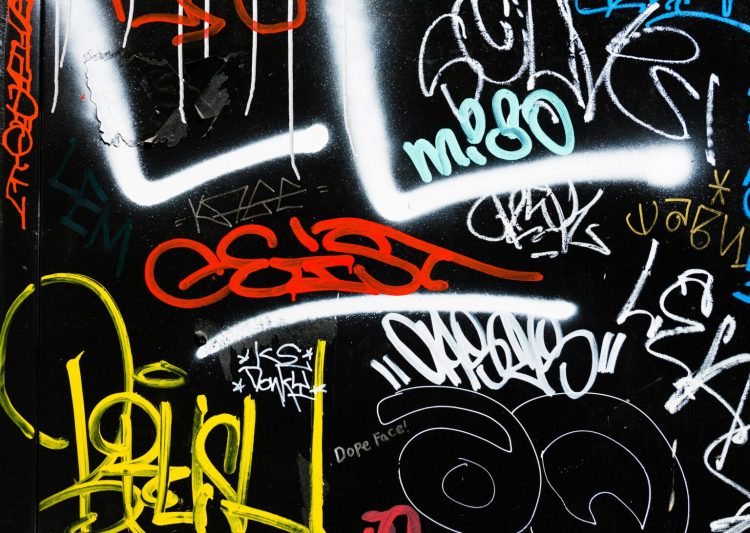
Right at the urinal someone had scribbled on the wall: DON’T LOOK UP.

Being both superstitious as hell and a not-quite-nonbeliever of things that go bump in the night, I definitely DID NOT look up. I left the men’s room, finished my beer, and went on with my life.

Of course I knew instantly what just happened: I’d been gifted with the premise of my next story. What if I had looked up? Was there some sort of monster up there waiting to consume me?

But premises are everywhere. Plots are harder to come across. My first question: what happens in the story?

My biggest clue was the graffiti. In my story it was a warning. I had to figure out WHO wrote it, and why. Early on I knew I’d be writing four different perspectives. I wanted the challenge of crafting four complete characters in a tight timeline. I also knew all four characters would be men, since another challenge I set for myself was to capture four different emotional experiences from a distinctly male viewpoint.

But which one would be the graffiti author? How does he do it and why? Where should he be in the order of the four?

Another puzzle was this: how to get to a resolution. The great thing about horror is that it opens up new imaginary worlds. The bad thing about horror is that there’s often no real story arc. I used the four stories within a single story to create a story arc, with the first story setting the tone, the second one amping up that tone, the third shifting, and the fourth going in a different direction, all the while giving the horror its due.

And then came the last challenge. What to name it? Don’t Look Up was the obvious title but there was a movie (that I never saw) with that same name. I thought about Obsidian. I love one-word titles but it left me flat. Then, while reading a Flannery O’Connor novella I came across the phrase “time turns blood to dust.” Bingo. It has the word blood in it (always a plus for horror), it captures one of the themes of my story, and it’s slightly pretentious. Everyone should try and be a little pretentious now and then.

Anatomy of a Story: Skeet

I tend to write stories in groups, as in I have specific themes I want to convey, or things I want to say, and it takes me a bit of prose to work it all out. These past several months I’ve been working on three stories, three very different characters in three very different circumstances dealing with things suppressed. I suppose all writers (or at least those with some level of self-awareness) do this. Our selves come through in our stories–what we like, what we don’t like, what we’re screaming to tell the world.

My story, Skeet, just published here by Virgo Venus Press, is one of those stories. I remember when I wrote it, roughly, and it was around the same time I wrote another story (which, ironically enough, was also just published). Both stories were similar in the sense that I was interested in exploring how men specifically deal with emotional despair, trauma, and plain old adversity. Men, just men. That was the main genesis for Skeet.

In brief, Skeet is about Mason and Colby and their afternoon of skeet shooting. Mason’s got some very recent grief he’s working through. Colby’s got his issues, too. Instead of emoting, the men talk around their pain, and in doing so, they share and they connect.

The second inspiration was more left-brained. I really appreciate when a writer shares some technical info about a hobby they enjoy. For instance, I love snowboarding, and I wrote a short story about that. I also like skeet shooting (though I’ve only done it about a dozen times). I wanted to write about it, so I did.

Skeet shooting, or clay pigeons, is a blast, in every sense. Using a shotgun, you shoot orange discs as they fly across the sky. I love that pure moment of focus when the disc is soaring and you have to aim and steady and fire. The world falls away. Past, gone. Future, irrelevant. In Skeet, these two men inhabit that space as they navigate their pain.

There was another inspiration behind this story. I was at a dinner party and ended up talking to a classical musician named Erich Barganier. I looked up his YouTube channel and clicked on one of the videos, one called Flyover Country. It’s a book of poems by John McCarthy read aloud and accompanied by an orchestra. (I assume Erich composed the music, and that John is the guy reading the poems.) I’m not particularly a fan of classical music or poetry, but something about the combo hooked me. The music is jarring. The poetry is powerful and visual. I must have listened to the hourlong piece twenty times.

One specific passage stuck in my mind: the author loses a tooth and plants it in a field expecting flowers to grow. (He’s much more visual and poetic than what I just wrote there.) I thought, what if something else grew instead? Something sinister? Or at least, what if my character believed that? This became the heart of my story.

Funny thing is I didn’t think Skeet would ever find a home. It’s strange and it’s subtle, more pensive than plot-oriented. But it stuck with me. Even to this day.

Anatomy of a Story: Envy, a User’s Guide

The origin story for my recently published piece, Envy, a User’s Guide (published here at Eulogy Press) is on one hand simple, and on the other hand, hard as hell.

Several months ago I took an online workshop on microfiction. What’s microfiction? It’s one of the latest in a series of subcategories of literature, mostly defined by length. You probably know of short stories and novels (short vs long). There are also novellas (longer than short stories) and novelettes (longer than novellas but not quite novels). 

And then on the other end of short stories there’s flash, which is 1000 words or less. Now, writing a complete story in 1000 words or less is pretty damn hard. But you can go even shorter. With microfiction we’re talking about 400 words max. 

(Disclaimer: there aren’t hard and fast rules. Surely people will have different guidelines for these lengths.)

I’ve dabbled in shorter than short. Like, 150-word pieces. I even got a 100-word story published. The thing is, at that length, you have to jettison just about everything that makes writing (and reading)  fun: the color, the expansiveness, the luxuriousness, the flavor. And it’s HARD. I think the shortest story most people know is this six-word one from Hemingway:

Baby shoes for sale, never worn.

Great in terms of giving some heartache with the fewest words. But that’s about it.

Still, I took this online course in microfiction, and one of the things they stressed was using that constricted canvas to experiment, to let your story live in a borderless zone between prose and poetry. Get a little wacky. 

So I decided to give it another shot. I went in thinking less about telling a traditional story and instead I viewed it as a way to convey a different kind of reality. The one I chose relates to my favorite deadly sin. Envy. I wanted to get into the head of someone who experiences envy as a crippling, phenomena. I wanted to present envy as a physical reality versus an ephemeral one. I wanted to get as close to personifying envy as Envy as I could without making it a literal person.

The hardest part of this story was the wordsmithing. When you’ve got only so many words, every one of them has to do a ton of work. I revised, at the same cafe, morning after morning, a couple weeks straight, to the point where I almost killed it (that feeling when you’ve wrung out every bit of originality and smothered all the life out of it). Apparently I didn’t, because some brave editor out there responded to it and published it.

Am I eager to take on another microfiction piece again? Not so much. But I did learn something valuable: don’t shy away from taking on a writing challenge. You never know when you can create a bit of art out of it.

Anatomy of a Story: My Loneliness Is Killing Me

You might recognize that song lyric. If not, it’s from Britney Spears’ song Hit Me Baby One More Time. Believe it or not, that lyric was the inspiration for my story, My Loneliness Is Killing Me, which was just published in the literary magazine Periwinkle Pelican (note, you have to download a PDF to read the story, but it’s free).

So how’d this one come about? Actually it originated from a very common phenomenon: when you get a song stuck in your head, no matter if you’re a fan or not, and it gets lodged in your brain and plays on repeat. FOREVER. Until it vanishes. Usually it’s a Bon Jovi song for me for some reason (not a fan, but I don’t hate them).

This story came from that. As luck would have it, on that particular day I didn’t have much to do. It was a Saturday. A beautiful day. A HOT day. So I went into Manhattan and bummed around with that lyric repeating in my head.

And an image. Of someone day drinking. Wasted and wasting their life away.

The weekend before I was with a bunch of people drinking and we watched the Sydney Sweeney rom-com Anyone But You. I’m not a rom-com fan but the idea of romance was still thick in my mind. As I walked around the city, this story came to life for me. I would run the lines through my head and then stop at random points and scribe lines into my phone. At one point I passed this white hipster guy who had this perfectly styled mustache, just short of cheesy, but great all the same, and I knew that his mustache had to be a part of my story (which it is).

By the end of my sweaty sojourn through the city, and after a few frozen margaritas (hence the Slurpee reference), I pretty much had the story all written. It’s short and fierce and I’m immensely proud of it. It’s not the type of story I usually write–nothing supernatural at all in it–but it’s loads of fun. And I have to give credit to a great writer, whose work I was reading and whose freewheeling style was most definitely an inspiration: Bud Smith. Check out his great collection Double Bird. His writing taught me you can be ridiculous as long as you’re getting to the guts of your character.

And my favorite part of this story? The opening line: Fuck off, Britney.

Anatomy of a Story, or the Only Way to Deal With an Impossible Crush

We’ve all had at least one. Or two. Or several. You meet someone and you get nearly instantly hooked, despite all logic or reasoning. Yet you know, for reasons beyond your control, that it can never ever be.

The impossible crush. Sometimes the only possible thing you can do is to get as far away from it, however possible.

That’s what I tried to portray in my story, The Only Possible Thing, recently published on James Gunn’s Ad Astra, a website dedicated to sci-fi-themed speculative fiction.

This universal quandary was just one inspiration for this story. The second was the amazing novella by Ted Chiang, The Story of Your Life. It’s about a linguist who struggles to communicate with aliens. In the process, her conception of time is disrupted. Rather than experiencing time as a linear construct, she experiences it as a simultaneous occurrence. If this sounds familiar, it’s because the novella was adapted into the movie The Arrival.

I’ve always had a hard…uh…time with time. Yes, I experience it in a linear fashion, but on an emotional level, things that happened in the past often seem more present than the present, to the point where I sometimes feel my life as existing on a broad plan that stretches out rather than a taut line. Chiang’s story spoke to me, and I wanted to blend his motif with my emotional concept of time and the futility of an impossible crush that sends you to the farthest reaches of the universe where you confront not just your horrific destiny, but that pivotal moment that sends you there, a moment that lingers forever.

You must know, first, that every moment is merely one of a constellation spread across the sky of my life. These moments, here with you, are the only ones that matter, the only ones I never want to leave.

The process with the folks at James Gunn’s Ad Astra was both intense and rewarding. Rather than a simple acceptance (or rejection), they sent back a thorough list of questions and recommended changes. It took me some time to work through these points, and to be honest, it was a struggle, but in the end it only made the story better.

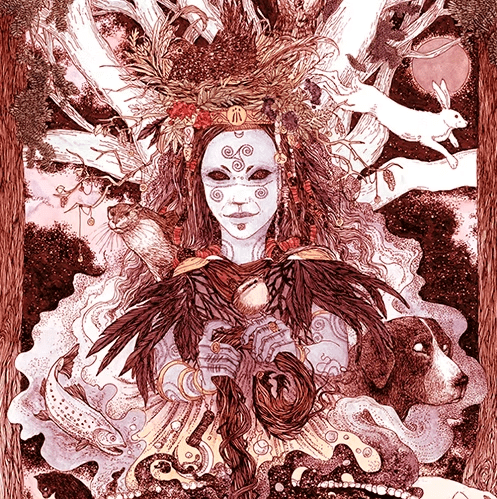
After it was accepted for publication, they provided me with the artwork that would be associated with the story (see above). I was blown away. I have zero visual artistic talent, and this image was more than I could possible have imagined.