Weapons: A movie on the verge of greatness, but not quite there

What makes a horror movie truly great? 

That’s not an easy question. Off the top of my head it’s got to be scary, innovative, well acted, well written, visually interesting. Some of the horror flicks that make this greatness level for me would include, Night of the Living Dead, Alien, Hereditary and Pearl, just to name a few (I could probably list a few dozen if given the time).

What those movies have in common is that they either brought something new to the genre, or they nailed every single facet of storytelling.

Why am I going on about this? Because I wanted so so bad for Weapons to be among one of these movies. It had a lot going for it, a great trailer, a strong premise, and a lead actor who I absolutely love. If you haven’t watched the series Ozark, watch it, for nothing else than the terrific acting by Julia Garner. When I saw she was starring in this, I could barely wait until it hit streaming.

My post-viewing verdict? Weapons is a strong movie. It’s solid and entertaining. But it doesn’t quite make the canon of the greats.

Quick recap of Weapons: one night at 2:17 am all the children of a certain classroom, except one, awake from their beds, leave their houses, and vanish.

Killer logline, right?

And the visuals in the trailer of kids running quietly in the night with their arms extended like airplanes. Simple, strong, creepy.

What Weapons has going for it is its different take on the protagonist (or protagonists) Julia Garner’s character, Justine, is the teacher of the class. Suspicion falls on her for somehow being involved. We have sympathy for her, but we also see another side of Justine. She’s a messy drunk. With a history. She’s not pure and plucky like many horror heroines. While she’s easy to root for, she’s also self sabatoging. I liked this twist.

Also, there are other characters, Josh Brolin plays Archer, the father of one of the missing kids. He’s kind of a dick, but again, we’re on his side. Alden Ehrenreich plays a cop and Justine’s ex. He’s a recovered alcoholic who slips up in many ways. And finally, we’ve got Austin Abrams, who plays the town junkie. Both of these characters cross paths and do things that we should dislike them for, but the way they’re written and acted, their flaws are somehow made relatable.

And finally, on the plus side, we have our villain, Aunt Gladys, played by Amy Madigan. She’s the aunt of Alex, the sole child who did not disappear. Visually she’s an A+ as a horror creature. She’s got major wicked witch vibes.

So we’ve got an interesting premise, compelling characters, solid acting and visuals. What’s holding me back from loving Weapons?

One thing is how they chose to tell the story. It wasn’t exactly linear. They’d focus on one character in turn, telling the story from their perspective, then backtrack to another character to tell it from their perspective, filling in the gaps. I liked this puzzle box method, but for me it kept on breaking the tension. It either didn’t belong in a horror movie, or it needed to be finessed.

A second thing was the tone. Sometimes it felt like I was watching a psychological thriller. Sometimes a body horror flick. Sometimes a Tarantino movie from the 90s. And toward the end it was almost a satire of horror movies. All of these elements were well done and interesting, but this inconsistency kept pulling me out of the movie.

But the final and most significant stumbling block I had related to the mythology of the movie. 

(Let’s put aside the meaning of the movie. I’ve read online that Weapons is supposed to be a critique of American society or something. I hope not, because that to me is so trite and boring and lazy. To be honest I’d rather see a movie take on critiques of American society. That would be something novel).

Anyway, all speculative stories have a mythology. What’s the story behind the thing we’re seeing or reading? How did it come about? What are the rules of this universe?

Now I don’t need to be told all the whys, or see all the hows, but I want to have the sense that the writer knows. And I’m not sure if the writers knew why Aunt Gladys did what she did. Was she a garden variety witch? Was she some kind of parasite? How exactly was she using the children? If the writers gave us just a little more of what she was and the hows and whys, she could have risen closer to the pantheon of unforgettable horror villains.

With all that said, watch Weapons. Yes it’s imperfect and slightly disappointing, but it’s tons of fun.

Power Prompts: Episode 5

The challenge: write a short story in 20 minutes using the following:

Characters: Pretty little devil and Stephen King

Genre: Alternate history

Setting: A boxing ring

Trope: Devil in my ear

POV/tense: Third/present

And the result:

Underground

“You know you want to do this, don’t you, Stevie boy?” she says as she strolls among the tubes and flasks in the workshop.

He wipes the sweat from his eyes. He’s burning up like never before. It must be some kind of fever, he tells himself. “Come on, Carrie, don’t be like this.”

She reaches him and she dances her fingers along the back of his neck. “Like what?”

“Like trying to get me to do something that, I don’t know, maybe I’m not totally sure I want to do.”

Carrie stretches her long legs out and Stephen stares at them, wondering how someone could be so damned beautiful. She catches him looking and she smiles, red ruby lips, black hair parted in the middle that falls past her shoulder. “Yes you do. Now say it after me.” She arches her back. “Say it, Stevie. Yes. I. Do.”

He feels the flush of heat all around him and he says, “If hell was like this I don’t think I’d ever want to leave.”

Her eyes flash. “Then say it.”

“It wasn’t enough that I left my wife and kid for you? It wasn’t enough that I left my career for you.”

She laughs. “What career? A schoolteacher?”

He sputters. “No. I was gonna be a writer. A good one, too.”

She gets on the floor and crawls toward him. She stops at his feet and looks up. “You know you want this. You know this is what you were really called to do, don’t you, Stephen?”

He swallows hard. He wants to look away but he can’t. He’s never felt passion like he does with her. He knows he can’t give that up. He knows he’ll never surrender. He knows it’s worth whatever price he has to pay. “Yeah, I do. I know it all too well, baby.”

Carrie climbs onto his lap. She straddles him and wraps her arms around him. She smells like sweat and sugar. She smells wrong and dirty and amazing and inescapable. “Promise me you will,” she whispers in his ear.

“Yes,” he tells her. “Anything you want me to do, I’ll do it.”

After an hour of heaven on the floor of the workshop, Stephen King, the Weather Underground’s latest recruit, goes to the Las Vegas Convention center where Muhammad Ali fights Ron Lyle and he plants a bomb beside the ring. Thirty four people are killed in the blast. Including Ali. Including King.

Anatomy of a Story: Envy, a User’s Guide

The origin story for my recently published piece, Envy, a User’s Guide (published here at Eulogy Press) is on one hand simple, and on the other hand, hard as hell.

Several months ago I took an online workshop on microfiction. What’s microfiction? It’s one of the latest in a series of subcategories of literature, mostly defined by length. You probably know of short stories and novels (short vs long). There are also novellas (longer than short stories) and novelettes (longer than novellas but not quite novels). 

And then on the other end of short stories there’s flash, which is 1000 words or less. Now, writing a complete story in 1000 words or less is pretty damn hard. But you can go even shorter. With microfiction we’re talking about 400 words max. 

(Disclaimer: there aren’t hard and fast rules. Surely people will have different guidelines for these lengths.)

I’ve dabbled in shorter than short. Like, 150-word pieces. I even got a 100-word story published. The thing is, at that length, you have to jettison just about everything that makes writing (and reading)  fun: the color, the expansiveness, the luxuriousness, the flavor. And it’s HARD. I think the shortest story most people know is this six-word one from Hemingway:

Baby shoes for sale, never worn.

Great in terms of giving some heartache with the fewest words. But that’s about it.

Still, I took this online course in microfiction, and one of the things they stressed was using that constricted canvas to experiment, to let your story live in a borderless zone between prose and poetry. Get a little wacky. 

So I decided to give it another shot. I went in thinking less about telling a traditional story and instead I viewed it as a way to convey a different kind of reality. The one I chose relates to my favorite deadly sin. Envy. I wanted to get into the head of someone who experiences envy as a crippling, phenomena. I wanted to present envy as a physical reality versus an ephemeral one. I wanted to get as close to personifying envy as Envy as I could without making it a literal person.

The hardest part of this story was the wordsmithing. When you’ve got only so many words, every one of them has to do a ton of work. I revised, at the same cafe, morning after morning, a couple weeks straight, to the point where I almost killed it (that feeling when you’ve wrung out every bit of originality and smothered all the life out of it). Apparently I didn’t, because some brave editor out there responded to it and published it.

Am I eager to take on another microfiction piece again? Not so much. But I did learn something valuable: don’t shy away from taking on a writing challenge. You never know when you can create a bit of art out of it.

Power Prompts: Episode 4

We’re back for another round. The challenge: write a story in 20 minutes using the following prompts:

Characters: Heart surgeon and Astronaut

Setting: A wine cellar

Genre: Cozy mystery

Trope: A very cheap date

POV/tense: Third person future

And the result:

The Case of the Orange Feather

It will be Betty who first notices the safe. Open, with a single orange feather resting on the bottom.

“That wasn’t like that before,” she’ll tell Alex.

“What do you mean?”

“When you first brought me here, down here to this wine cellar, of all places…”

“Of all places, what do you mean by that?” Alex will say.

“A first date is supposed to be romantic. Dinner, candlelight. Not, mildew and hypothermia.”

He’ll slide up close to her and wrap an arm around her. “How could I ever impress the best heart surgeon in the county by dropping five Benjamins at a steakhouse. I know that a woman like you deserves better. So I figured I’d bring you to a wine cellar—I was on the space shuttle a decade ago with the guy who owns it—and we can explore a little.”

“Explore as crack open a bottle of something pricey?”

He’ll raise his hands in mock surrender. “Hold on now, these bottles go for a grand a pop. I don’t think so.”

She’ll grunt at him, deservedly so, but she won’t be ready to end the date, not quite yet. “What about the safe?”

“What about it?”

“I know for a fact it was locked when we came down here. Did your friend, this mysterious friend, come back in when you were leading me through one of the caverns here?”

Alex will scratch his chin. “No.” He’ll reach in the safe and pick up the feather. “Strange. My friend has a parrot back home. But I don’t think it had orange feathers. Or did it. Hey, do birds have orange feathers?”

“I don’t know.”

Suddenly the lights will turn off. Betty will yelp and Alex will reach for her hand in the dark. She’ll find it and grab it. Then he’ll whip out his phone and shine the flashlight, revealing nothing but dark rows of dusty wine bottles.

Behind them, a crash.

“What was that?”

“I…I don’t know,” Alex will say.

“If this is some kind of practical joke, or scheme to make you fall for me…I know about how adrenaline can affect people, and I’m telling you, I’m not falling for it.”

“This isn’t a game. Trust me.”

Together they’ll walk closer toward the sound of the noise. They’ll turn a corner and see on the floor a busted bottle of 1901 Pinot Noir, the red wine flowing in a rivulet until it reaches a man’s loafer, and attached to the loafer a leg, and a body. While Alex shines the light on the man Betty will reach down and with her trained hands she’ll determine that the man is indeed…

“Dead,” she’ll say.

“I’m guessing he was stealing this prized bottle when he bit it,” Alex will say.

Betty will raise her hand to her mouth. “Who could have done this?”

Alex will hear a rustling from above. He’ll shine his light up and spot the biggest parrot he’s ever seen, the proof of what the parrot did on its claws and beak.

“Guard parrot,” he’ll say. “Who would’ve seen that coming?”

Problematic Protagonists: I Saw the TV Glow

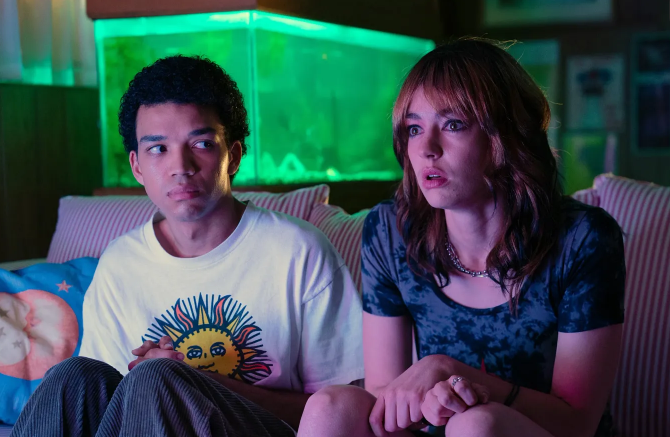
Recently I checked out the 2024 indie film I Saw the TV Glow. Ask me what genre it is and I’d have to take a moment. Somewhere in the dark contemporary fantasy camp. Not quite horror but wishing it could be.

First off, what it’s about.

High schooler Owen befriends an older student, Maddy. They bond over a cult TV show called the Pink Opaque, which is about two psychic girls who fight bad guys. Owen is too young to watch the show at home, so he sneaks over to Maddy’s house. Stuff happens. Maddy is a lesbian and Owen is apparently asexual (more on that later). Owen’s mother dies of cancer and he’s stuck with his ignoring father. Maddy runs away then returns claiming that they are really the characters from the Pink Opaque and have been trapped in this fake world, then she’s gone again and Owen is left to figure out what’s what for himself.

My overall take is that there are things I enjoyed about it. The movie had a fun retro indie shoestring vibe (I mean that as a compliment). It had heart. It was a little goofy and it played to the tropes. Also, the show within the movie, the Pink Opaque, was clearly a callback to one of my favorite TV shows, Buffy the Vampire Slayer, including the font used in the credits, and a cameo by Amber Benson, who played Tara in Buffy (Fred Durst, the Limp Bizkit frontman, also has a very small role).

And I didn’t mind that the ending is left vague. In fact I liked that ending. And the writers earned it.

What hold the movie back, massively, is the character of Owen.

I’m of the camp that protagonists are make or break to your story. They don’t have to be likeable or noble or superhuman. They don’t even have to be relatable or identifiable. But there is one thing that every protagonist absolutely must have. He or she must WANT SOMETHING. It can be a small something (to go get a Slurpee) or a big thing (to save the universe from collapse), but there has to be something.

Poor Owen. He didn’t seem to want anything. Clearly he was disconnected from the world. He tells Maddy in a key scene that he doesn’t have any sexual feelings whatsoever, like he’s been scooped out hollow. If he was just a normal human like one of us that would be sad and probably a cause to get therapy. In a piece of fiction? It’s a huge red flag. It signifies your character is disconnected from his own wants and desires.

Now this could be a great launching point. How does that character reconnect with his internal desires? How does he take concrete action to fix this?

But that’s not what we get in this movie. Instead Owen drifts passively through life. His voice rarely rises above a whisper. His facial expression barely changes. Clearly this is a guy with some serious low-grade depression. Again, normal in the real world but do we want to watch this play out for two hours?

By the time we get toward the end of the movie, after Maddy returns and tells Owen that he’s really one of the characters from the Pink Opaque, trapped in this fake identity, we’re aching for Owen to do something, but all we get is nothing. Even after the climactic scene, the one where you can make a case that a) yes, he really is that trapped character or b) no, he’s just seriously mentally ill, Owen is back to being the same old mopey Owen we all know and don’t love.

Like I said, there was a lot of goofy charm to this movie. I really wanted to like it. But poor Owen left me not caring in the least what happened to him. So my take: give your protagonist a purpose. Give him a goal. Make us root for him.

Power Prompts: Episode 3

Bringing back Trope or Choke, but this time live. The pressure’s on to write a story in 20 minutes.

The set-up:

Characters: A retired witch and a pimp

Tense: first person past

Tropes: Never too old for an adventure

Setting: Backstage at a concert

Genre: Historical romance

And the result:

Love Me Do

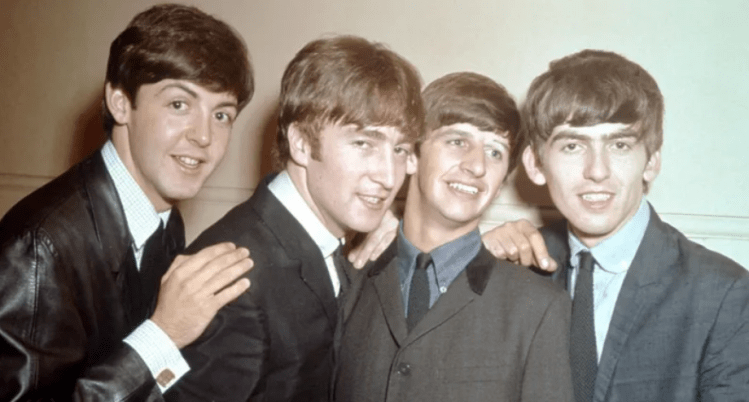
Her name was Lily. I knew she wasn’t supposed to be there. First she was old enough to be someone’s grandmother. And she wore this long black dress that reached down past her ankles, like something straight out of the 1920s. How she got backstage I don’t know but there she was, too close to Ringo, the kid was all bug eyed gawking at her, as if she put a spell on him, and for a moment I thought the girls I got him were all wrong. Maybe he was into older women.

I circled around the rear of the stage. The Beatles finished playing their first stateside concert not 20 minutes earlier. I still couldn’t get the screams out of my ears. I had it all lined up for them, two girls each, blondes for Paul, brunettes for John, they could take one or both, not my concern, as long as they paid cash money. But this lady, she was like a dragonfly buzzing around, regal and purposeful, and the last thing I wanted was for Ringo to ditch my girls, or I’d lose that fee.

“What’s your name?” she asked me. I didn’t know how she managed to get so close, like she suddenly materialized out of thin air.

“Rick,” I told her.

I’m Lily,” she said. “I know you from somewhere.”

I laughed. “I doubt you’re too familiar with my line of work.”

“Which is what?”

“Let’s just say I’m in the entertainment business. Listen, about Ringo, he has a prior commitment.”

“How entertaining,” she said. Then the stared at me so directly I had to swallow hard. I felt myself flush as she peered even closer, like she was opening doors and walking through each one. All around us people buzzed but all I could see was those eyes like green fields and suddenly I felt dizzy. I crouched down to steady myself and closed my eyes, the rush of people and clamor of voices hammering my ears and then it was all gone. I kept my eyes closed and kept my crouch and then she speaks to me.

“Yes, it’s you. We had a past life together. You burned me at the stake in 1542.”

I kept my eyes closed. “Lady you’re nuts.”

She laid her hand on my head and it’s the softest, most beautiful thing I’d ever felt. “But before that, many lifetimes, in fact, we were in love.” Then she sighed. “I thought I’d never find you in this lifetime. I retired, in fact. I gave it all up. But something told me to come here, to see these Beatles, and I did and I’m so glad. Open your eyes.”

I rose slow and unsteady. The rush of voices was gone. All I heard was birds and running water. When I opened my eyes we weren’t backstage anymore but in a sunlit forest, and Lily was young and beautiful again. She reached up and kissed me. “Let’s go, Rick. We’re never too old for an adventure, that’s what you always used to tell me.”

Read This Book: Sea of Tranquility

What should we do with the era of Covid? As a society? As writers?

It’s an understatement for sure to say that it was a difficult time. I look back in anger, and maybe not for the reasons that you might, and that fact makes reckoning with that time period all the complicated–we probably see different villains.

Nevertheless, as writers, our lives bleed into our work. It better to some degree, unless you want writing that’s sterile.

With that said, back to my original question – what do we do with the Covid era? I touched upon it from a distance in my recently published story, One More Darrell, by zeroing in on the isolation of the main character (isolation being one of the Big Bads of that time period for me).

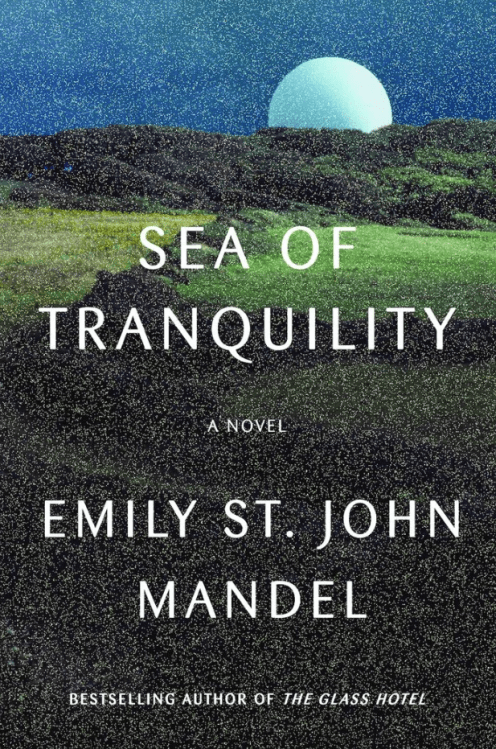
I’ve heard chatter that writers SHOULD be incorporating the Covid era more concretely and directly into stories. Fine, do that. I likely won’t read it. I don’t want to be reminded of it. Forgetting is the best medicine (weird cliche but go with it). Unfortunately (or fortunately) I slipped up and read Emily St. John Mandel’s time-hopping novel Sea of Tranquility, and while it is not about the big C per se, it hits on epidemics. Hard.

Luckily, Mandel, who wrote the mega-successful Station Eleven, is talented enough to push me past my resistance. Also, it helps that it’s not a story ABOUT pandemics. It’s about rips in the fabric of space and time. It’s about people from different eras sharing a common experience. And it asks what is the real nature of the world we live in?

Sea of Tranquility opens with a British nobleman migrating to Canada on the eve of World War 1. He’s a lost soul in the sense that he’s purposeless, and he stumbles on a strange incident in the forests of British Columbia he stumbles upon a strange incident that leaves him forever changed.

From there the novel time jumps ( from the 1910s to the 1990s-2020s, the 2200s, the 2400s, and back and forth). We meet characters including a novelist, Olive Llewelyn, and a time traveler named Gaspery-Jacques Roberts. To explain more of the plot wouldn’t do this book justice (and frankly it’s not so easy to explain without giving it all away). But I will say this. At its heart, Sea of Tranquility is a time travel story. I love time travel stories, but they’re damn near impossible to pull off (the series Dark did it well, so did the movie 12 Monkeys).

But Mandel manages to do it, successfully. She ties together all the back and forth and the here and there that ranges from cities on the moon to the forests of western Canada. It’s a small story; it’s not about the end of the world, or saving the world, or anything like that. It’s just about a group of people who become tied together across space and time through a series of events. Lives are lived and lost and remembered. Sea of Tranquility is a quick read, it has a compelling storyline, and the characters are drawn well.

But I’ve got to knock a star off of my review, and the reason why comes back to my question way at the beginning: what do we do with the Covid era? In Sea of Tranquility, Mandel harkens back to the particularly paranoid aspects of that time, and while it all made sense in the story, it ripped me right out of the book. Nevertheless, I enjoyed my time spent reading it. Time travel plus beautiful prose is the key to my heart.

Anatomy of a Story: The Two Burials of Francisco Collins

Story ideas are all around. You just have to open your ears. You can find them in all manner of places, including a pub in Ireland in a town called Renvyle on the Connemara coast, a pub called Paddy Coynes, small and dark and warm, which would’ve been smoky in another era, over a pint of Guinness, naturally.

That’s where I first came up with the idea for my story, The Two Burials of Francisco Collins, recently published in Folklore Review.

I was in that pub with my cousin and his wife. We were spending the weekend in Renvyle celebrating their tenth anniversary (they were married there, not the pub but the town), and that night over that pint my cousin’s wife told me of an Irish documentary about a man in Ireland whose body was buried twice. The documentary is called Con Carey and the Twelve Apostles, and I never got around to listening to it (probably will today after I write this) but it gave me a hell of an idea for a story.

An idea that stuck. That’s what good ideas do. They stick. Often I’ll tell myself I’m going to use something I hear or see in a story, but oftentimes it doesn’t stick. This one did. The premise was simple enough, but the question I needed to confront was this: why would a person be buried twice?

For that I went to one of my neglected literary loves: magic realism. The king of that is Gabriel Garcia Marquez, and truth be told I’m woefully deficient in my knowledge of magic realism, but to me it’s a close cousin of speculative fiction. It deals with events that are fantastical and improbable or impossible in our world, but totally in keeping with the fictional world in which they occur.

That’s my baseline for this story. In it, an old man recounts the true story of the events surrounding the two burials of the title character, a patriarch of a ranching family, and what led his son, Xavier to do what he did.

So the documentary gave me the idea, the genre gave me the vehicle, and for the heart of it all (every story needs a heart) I went to my own.

It’s been several years since my own father was killed in a plane crash, so I drew up my own personal experiences and feelings around his life and death, our relationship, and I funneled them into this story. Sometimes things get complicated. Sometimes people are complicated. Sometimes relationships are complicated. And truth be told it’s not always easy to reveal some personal things. But that’s my job as a writer: to put it all on the page, to leave a piece of myself behind, for the reader to see, for the world to witness.

Just as Xavier Collins needed his own witness.