The Leftovers rehashed

A strong premise plus great performances does not equal a successful show.
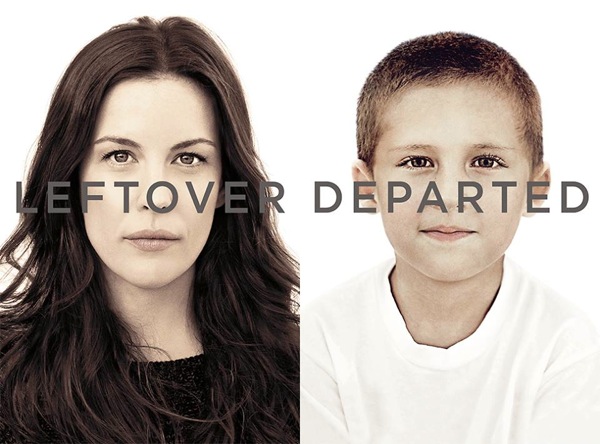
Leftovers promo

I was looking forward to HBO’s new show The Leftovers for two reasons. The first was that it was created by Damon Lindelof, the mastermind behind Lost, one of my favorite TV shows ever.

The second reason was the premise: two percent of Earth’s population has suddenly, inexplicably vanished. This biblical premise has been presented before, and I was interested to see how it would be handled without an overtly religious point of view.

Once you leave behind the religious element, which The Leftovers did, there were two directions in which to take the show: 1) as a jumping point for a wider sci-fi/mystical/horror story, or 2) as a navel-gazing meditation on loss and grief. Unfortunately, the writers chose #2.
Leftovers KevinI wanted to like The Leftovers. And it seemed promising, even once I realized that the “why” of the disappearance would never be addressed.

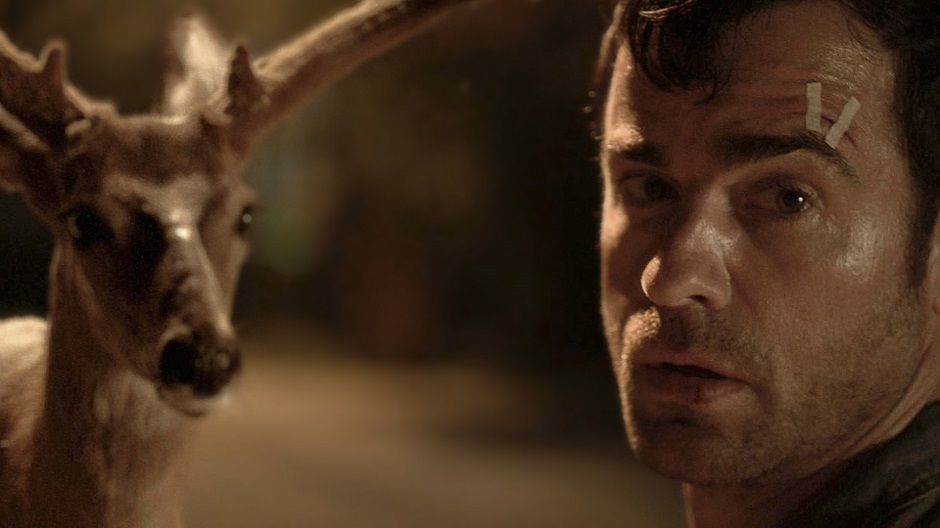
I liked the cast, and several of the characters, at least in the beginning. Justin Theroux as Kevin Garvey, the police chief, was intense and intriguing. He hadn’t lost anyone close to him in the vanishing, but his family fell apart soon after. He seemed to be losing his mind, and struggled to fulfill his duty as police chief while keeping what was left of his family intact.

Leftovers Patti LaurieAmy Brenneman as his estranged wife Laurie was great at portraying a range of emotions while rarely uttering a word as a member of the Grieving Remnant, a cult that wore white, refused to talk, chain smoked, and harassed whoever they could find, all in the name of reminding people of their losses.

Ann Dowd was brutal as Patti, the local leader of the Grieving Remnant. But part of the problem with this show was not only Patti, but the whole Grieving Remnant. I never liked any of them, and I never understood their motivation, which kept me distant from them.

The ten episode long series seemed to spin in its wheels the whole time. We watched characters struggle to move past an event that occurred three years earlier, yet they never progressed. I wasn’t sure where the story was heading, and halfway through the series, once I realized we would never learn the why, I didn’t care.

However, The Leftovers contained two of the best hours of television I’ve seen in a long time. Usually each episode jumped between different characters, but for two episodes, they chose to focus on a single character.

The first episode followed Matt Jamison (played by Doctor Who‘s Christopher Eccleston). I’ve been a big fan of Eccleston since Shallow Grave. He has a manic intensity, and this episode followed Matt Jamison as he fought to save his bankrupt church. It was a heartbreaking hour of television.

Leftovers Matt

The second episode, which was the best of the season, followed Nora Durst (the sister of Matt Jamison). I’d never heard of Carrie Coon, the actor who played Nora, but she’s high on my radar now. Nora lost her husband and both children in the vanishing. She was left alone. We were given one hour tracking Nora, and it was brilliant, both in the storytelling and in Coon’s portrayal. If only all the episodes were like this, I’d be a fan of The Leftovers, regardless.

Leftovers Nora

I think the fatal flaw of this season was that it followed the Garvey clan, and we were never given any motivation for their surly, strange behavior. There was a flashback episode that showed the Garvey family just before the event, and it did sweeten the bitter Garveys just a bit, but it was too late to change my feelings toward them. If Nora Durst and Matt Jamison were the main characters, I’d be looking forward to season two.


Wanna live forever (well, at least 30% longer)?

Immortality beckons. It’s that one thing unattainable to all of us. No matter how lucky, rich, or good looking we are, the odds are 99.999999% that we will die (there’s always the slimmest of chances that someone, somewhere has outsmarted death).

immortality

But like modern day Ponce de Leons rambling through Florida searching for the fountain of youth (the irony of him searching in Florida of all places), scientists are diligently trying, if not to have us live forever, then at least a bit longer.

One idea that’s been tossed around has been to upload our consciousness onto the web, or some other computer. But that begs the question — even if it would be possible to map our gray and white matter into bits and bytes, would it really be us?

Forget that for now. We won’t be cylons any time soon.

cylons-bsg

Instead scientists are focused on taking what we have — our flesh and blood bodies — and making them better.

The latest: scientists at UCLA have targeted a gene that counterbalances the harmful but seemingly unavoidable aging process, and by manipulating it in fruit flies, they’ve been able to extend life spans (in the flies) by as much as 30%.

fruitflyFirst question: what good are fruit flies? We’re a lot more complex than them after all. Well, fruit flies are easy to study for one thing. Scientists know all the fruit fly genes, and can switch them on and off at will. Plus, their genetics correspond to 75% of our disease-causing genes. It’s not proof, but it’s a good first start.

Second question: what are they doing exactly? They identified a gene called AMPK that, when activated specifically in the nervous system and the gut, spread beneficial effects throughout the body. It is believed that this gene could help offset the damaging effects of a range of diseases.

If this hold true in humans, the average lifespan could be shifted to well over 100. And not only would we theoretically live longer, but our quality of life would be vastly improved. Yes, in a way it’s science meets sci-fi.

Don’t rush down to the nearest gene therapy clinic just yet. This work is all very preliminary. But it’s got to start somewhere.


Where is everyone? (by everyone, I mean aliens)

I’m not alone, not by a longshot, when I say I love the idea of space exploration and possible alien cultures.

Look at some of the staples of pop culture — Star Trek and Star Wars, for example. These classic sci-fi stories have given us thrilling images of new worlds and aliens of all sorts. We can add one of my favorites, SyFy’s brutally cancelled Farscape, and one of the newest movie franchises, Guardians of the Galaxy (highly recommended, btw).

Farscape

In all of these, the universe is thick with life. There are countless races of intelligent—and not-so-intelligent—life forms, numbering perhaps trillions of individuals.

But, as far as we know, we are utterly alone in the universe, and we don’t know why.

As scientists discover solar system after solar system, with planets in the habitable zone, it’s dawning on us that our planet is not unique. And the logical assumption would be, if Earth is not unique, then we are not either. Surely if life evolved on Earth, over millions of years, to produce a species that is capable of traveling into space, then at least one of these other countless planets would have evolved similar life as well.

But where are they? Set aside the assumptions we’re making, such as that we would even be able to recognize alien life at all. If other species developed interstellar travel, wouldn’t they have found us by now? Wouldn’t their presence have long been known?

Revelation SpaceOne of my favorite sci-fi books, Revelation Space by Alastair Reynolds, tackled this question. Reynolds had an intriguing, though wholly fictional answer. (SPOILER WARNING) In Revelation Space, there were indeed alien races spread throughout the universe. But they went to war and ended up wiping each other out. To avoid any such catastrophe, a super-entity was established that would snuff out any civilization that got too big for its britches. How would it to that? Simply by waiting patiently for a curious species to contact it, and then exterminating it.

Another theory for the lack of alien life is more simple. Maybe complex and intelligent life is extremely rare — so rare that we’re it. It’s called the Great Filter theory. Several nearly impossible steps had to be overcome for us to be here.

–the creation of molecules that can reproduce

–the creation of simple single-celled life

–the creation of complex, multi-celled life

And that’s not even getting into such things as the rise of intelligent life capable of traveling into space, while also avoiding threats such as asteroid strikes, nuclear war, radiation bursts from space, and so on.

So, maybe we really are alone, and there is no Star Trek style federation waiting to greet us.

The good news? Maybe we’ve already overcome the biggest hurdles to interstellar life, and the universe is ours for the taking.

Tiny monsters, continued

Real-life creepy bugs are one of my favorite science-related topics. Not sure why — maybe because it combines monsters and science.

Here’s the latest. First, we have book scorpions. I’ve only seen a scorpion in real life once. I was in El Paso and one of the suckers, pincers snapping away, was crawling up a bedroom wall. Totally freaked me out.

book-scorpion

Well, it turns out not all scorpions are vicious. Not only are so-called book scorpions too tiny to harm us humans, they’re pretty helpful. These small creatures (there are over 3,000 different species) are only a couple of millimeters in length. What they love more than anything are booklice.

What are booklice? Bugs that eat the glue that binds books. And book scorpions devour these booklice. If it wasn’t for them, all our books would fall apart.

No word on whether book scorpions would help keep your Kindle clean.

The second of today’s tiny monsters is the Demodex mite.

mites

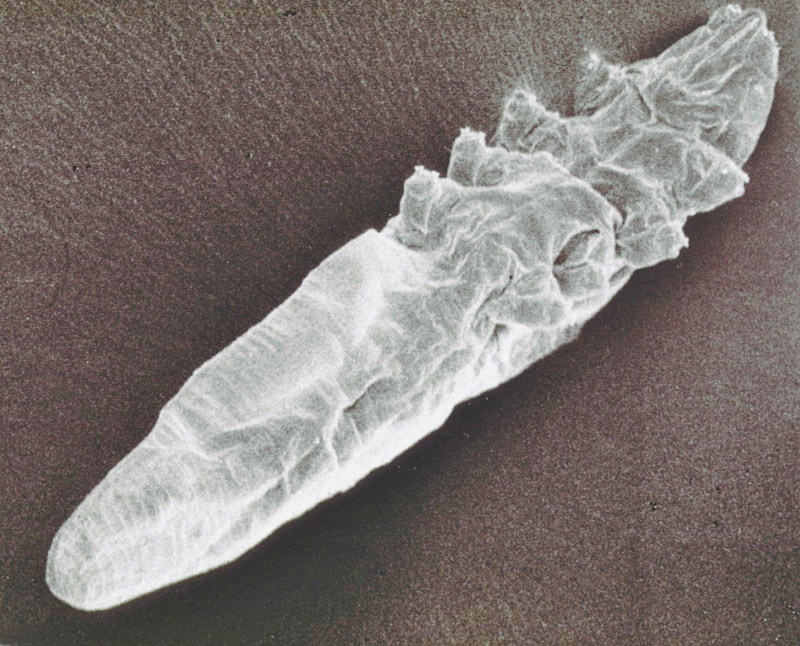
This microscopic critter is a relative of spiders and ticks. And you are very familiar with it. How familiar? Right now there are scores crawling all over your body.

No worries, though. The mites that live among us are relatively harmless, though when their numbers get out of whack they can cause skin conditions such as rosacea.

It turns out that Demodex has been with us for a long, long time, perhaps as long as when humans first left Africa and spread out all over the world. Not only Demodex — there are several species of mites that scientists are just beginning to identify.

Read more about book scorpions here at Scientific American, and more about the hitchhiking mites at Discover Magazine.

(Book scorpion image courtesy of Protasov AN/Shutterstock; mite image courtesy of Alan R. Walker)


Doctor Who: regenerated again

What do you do when you create an accidental hit TV show, and your lead actor leaves? If the show is the British sci-fi series Doctor Who, you give your time-traveling alien-in-human-form lead the power to regenerate.

Doctor Who

And now, with a change of actors on Doctor Who, we have yet another regeneration.

The era of Peter Capaldi as the latest Doctor begins with an episode titled Deep Breath, and what we saw was a Doctor thoroughly unsettled.

Age brings natural gravitas. Capaldi is older than the actors who’ve played the CapaldiDoctor in the modern era — Christopher Eccleston, David Tennant and Matt Smith. So, naturally, Capaldi’s Doctor seems so much older than the others.

How to maneuver around that? Capaldi’s Doctor, at least in the early days of his regeneration, is unhinged, nearly to the point of being child-like. In this way, Capaldi’s Doctor seems much younger than any of the modern Doctors.

This Doctor is a rambling, rummaging mess. He’s aggressively disoriented.

It’s not just the writing and acting that make it all so unsettled. The music is thumping and discordant, an angry rock soundtrack out of tune (in a good way). And the camera work is quick and jumpy without being shaky. It all combines in a way that let’s us know that this iteration of the Doctor may be far different than what we’ve been used to.

Regeneration is the theme of this episode. We’re along for the ride as his current human traveling companion Clara Oswald (Jenna-Louise Coleman) Clarastruggles to make sense of the whole concept of the Doctor regenerating. Not to mention the Doctor himself. Regeneration is never easy for the Doctor, and this one is especially difficult.

The writers use the theme of regeneration to hint at the insidious nature of the Doctor. Does this centuries-old alien wear a human face merely to be accepted by humans? Does he use this human face to keep from revealing who or what he truly is?

Philosophical questions aside, this first episode of the Capaldi era is classic Doctor Who, throwing a dinosaur into steampunk-infused Victorian-era London. But it also revels in the darkness that infuses many of Doctor Who‘s best episodes.

Based on this episode, I’m feeling pretty good about where we’re headed. Capaldi’s Doctor is clearly different from the rest, and Clara, as companion, is proving to be more Donna Noble than Martha Jones.

Finally, there was some great dialogue from this episode:

“You mustn’t worry my dear boy. By now he’s almost certainly had his throat cut by the violent poor.”

“Nothing is more important than my egomania.”

“It’s times like this I miss Amy.”

Read this story: Wolverton Station

If you’re a fan of horror fiction and haven’t heard of Joe Hill, get yourself to the nearest bookstore now. For starters, check out his short story Wolverton Station. What you’ll get from Hill—and this story—is solid (if not a little workman-like) heart-thudding chills.

wolverton stationThe plot: Saunders is a corporate hatchet man traveling the rails in England. He’s off to scout out new sites for a Starbucks-like chain called Jimi Coffee. He’s greeted not only by protests, but wolves as well. Soon enough he finds himself trapped among the wolves.

I read this story cold. All I knew was that it was horror, and I enjoyed Hill’s book Heart-Shaped Box, so I gave this one a try.

First, the good:

–Hill manages to create a complex, if not entirely likable, character in Saunders in a brief amount of time. I could not say that I liked him, but definitely felt for him.

–There’s some deft sleight of hand that Hill manages to pull off. At first it seems as if the story is classic horror, then it veers away from that, only to return with a vengeance. One of the hallmarks of good horror is to keep the reader always off-balance. I could never find my footing in this story, so well done.

–As the story rolls along, the tension reaches 10 out of 10. One of the most intense scenes took place on a train with no exits.

And the not as good:

–My main criticism is that Hill’s writing is, as mentioned earlier, workman-like. There’s nothing particularly new or innovative in his work. He is not forging new pathways in horror fiction, but he’s staying on the well-worn trails. But this is just a minor criticism.

So for some good horror thrills, check out Wolverton Station, and the rest of Joe Hill’s works.


Tale of the vampire (plant version)

File this under: Evil Nature.

The more I study science, the more I’m convinced that nature is home to some of our biggest nightmares.

More proof? There’s a vampire-like plant that not only feeds off its prey, but convinces it to let down its defenses.

Kind of like this guy (Nosferatu, the first film vampire, and the creepiest, in my book).

how-to-make-vampire-teeth-nosferatu

Scientists have long known that a plant called the dodder (deceptively cute name) wraps itself around a target plant, burrows into it, and then drains it of all its nutrients. Hence the vampire correlation.

But what they didn’t know were the details. How do dodders get away with it?

It turns out that once a dodder makes contact with the plants, it releases bits of its genetic material into the victim plant, and in turn receives bits of the plant’s genetic material, which prompts the victim plant to lower its defenses.

Or, as this article states, the dodder sweet-talks its victim into surrendering.

dodder

See-through science

Ever wanted to be invisible? Not in the metaphorical sense, but truly transparent?

Me either. But for those who do, scientists are a step closer to making see-through skin.

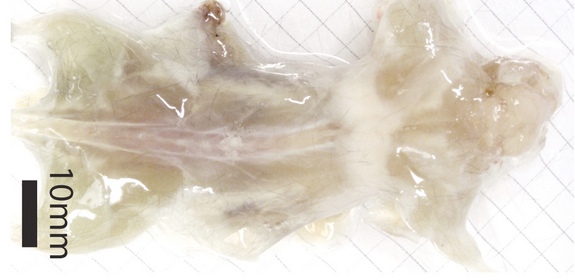
Researchers at the California Institute of Technology have advanced a process called tissue clearing that basically strips away all the color from the body. They did this in mice (not humans). What they got was a blurry, goopy messy looking thing. Ugly, but still intact.

see-through-mouse-1

How did they do this? By injecting a gel and detergents into the mouse’s bloodstream, which somehow stripped away most of the things that block our view.

Why would they do this? Having see-through organs would allow scientists to study body processes in real-time, as they happen. This would allow scientists to better understand conditions such as chronic pain.

I support most science, but for now, I’m adding this to the “not too sure this is a good idea” pile. I can imagine this getting into the hands of mad scientists who try this (illegally) on humans.

At the very least, it would make a really horrific story.

No word on how the mice fared, though. I can’t imagine it feels good to be injected with gel and detergents.