Read this story: Wolverton Station

If you’re a fan of horror fiction and haven’t heard of Joe Hill, get yourself to the nearest bookstore now. For starters, check out his short story Wolverton Station. What you’ll get from Hill—and this story—is solid (if not a little workman-like) heart-thudding chills.

wolverton stationThe plot: Saunders is a corporate hatchet man traveling the rails in England. He’s off to scout out new sites for a Starbucks-like chain called Jimi Coffee. He’s greeted not only by protests, but wolves as well. Soon enough he finds himself trapped among the wolves.

I read this story cold. All I knew was that it was horror, and I enjoyed Hill’s book Heart-Shaped Box, so I gave this one a try.

First, the good:

–Hill manages to create a complex, if not entirely likable, character in Saunders in a brief amount of time. I could not say that I liked him, but definitely felt for him.

–There’s some deft sleight of hand that Hill manages to pull off. At first it seems as if the story is classic horror, then it veers away from that, only to return with a vengeance. One of the hallmarks of good horror is to keep the reader always off-balance. I could never find my footing in this story, so well done.

–As the story rolls along, the tension reaches 10 out of 10. One of the most intense scenes took place on a train with no exits.

And the not as good:

–My main criticism is that Hill’s writing is, as mentioned earlier, workman-like. There’s nothing particularly new or innovative in his work. He is not forging new pathways in horror fiction, but he’s staying on the well-worn trails. But this is just a minor criticism.

So for some good horror thrills, check out Wolverton Station, and the rest of Joe Hill’s works.


Tale of the vampire (plant version)

File this under: Evil Nature.

The more I study science, the more I’m convinced that nature is home to some of our biggest nightmares.

More proof? There’s a vampire-like plant that not only feeds off its prey, but convinces it to let down its defenses.

Kind of like this guy (Nosferatu, the first film vampire, and the creepiest, in my book).

how-to-make-vampire-teeth-nosferatu

Scientists have long known that a plant called the dodder (deceptively cute name) wraps itself around a target plant, burrows into it, and then drains it of all its nutrients. Hence the vampire correlation.

But what they didn’t know were the details. How do dodders get away with it?

It turns out that once a dodder makes contact with the plants, it releases bits of its genetic material into the victim plant, and in turn receives bits of the plant’s genetic material, which prompts the victim plant to lower its defenses.

Or, as this article states, the dodder sweet-talks its victim into surrendering.

dodder

See-through science

Ever wanted to be invisible? Not in the metaphorical sense, but truly transparent?

Me either. But for those who do, scientists are a step closer to making see-through skin.

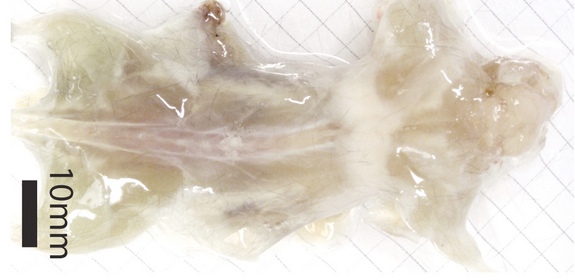
Researchers at the California Institute of Technology have advanced a process called tissue clearing that basically strips away all the color from the body. They did this in mice (not humans). What they got was a blurry, goopy messy looking thing. Ugly, but still intact.

see-through-mouse-1

How did they do this? By injecting a gel and detergents into the mouse’s bloodstream, which somehow stripped away most of the things that block our view.

Why would they do this? Having see-through organs would allow scientists to study body processes in real-time, as they happen. This would allow scientists to better understand conditions such as chronic pain.

I support most science, but for now, I’m adding this to the “not too sure this is a good idea” pile. I can imagine this getting into the hands of mad scientists who try this (illegally) on humans.

At the very least, it would make a really horrific story.

No word on how the mice fared, though. I can’t imagine it feels good to be injected with gel and detergents.


Pictures worth a thousand words

I’ve never been drawn to the visual arts. My life’s vocation is crafting words into stories that relay emotions, moods and experiences. But thanks to the vastness of the world wide web, I’ve discovered visual artists whose works are as vivid as anything the best wordsmith could create.

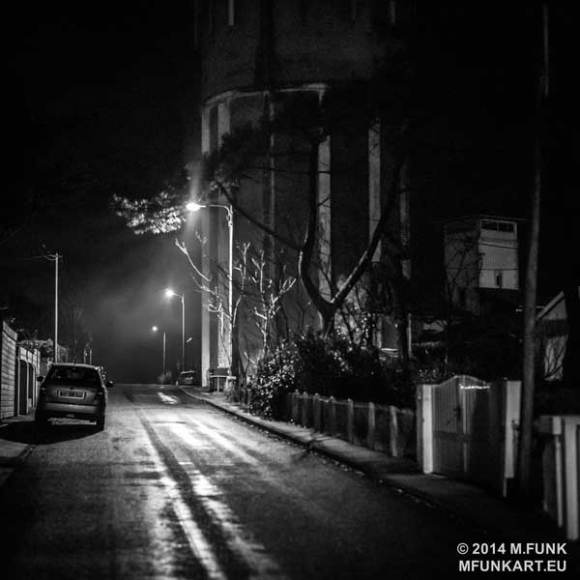
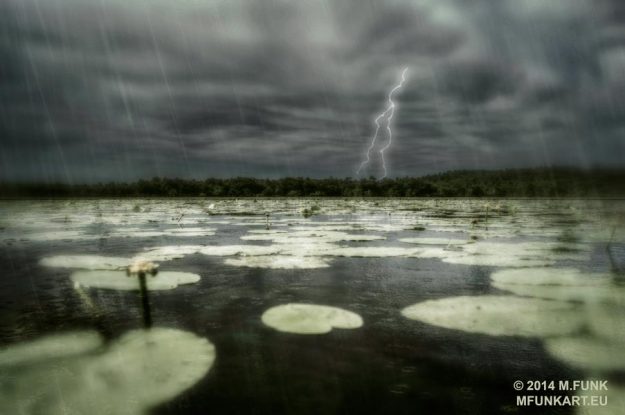
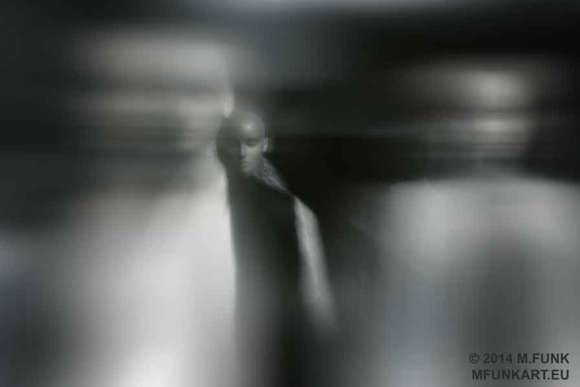
One of these visual artists is a photographer, M. Funk, based in Germany and France. I came across his website by accident. I’m glad I did. His photographs capture a moody eeriness that I could only hope replicate with words.

Take a look at a sample of his work below, and be sure to check out his website for more.


TEMPÊTE-4


AIR-DE-LA-NUIT-11

IT-WAS-A-SUNNY-DAY


UNREAL1

(Images courtesy of M. Funk)

Fiction and fear

What are you most afraid of? Spiders? Dogs? Death? Loneliness?

Chances are, whatever your fear is, it’s been dramatized. Horror stories are about laying bare our fears. Think of some of the most notable horror stories and at their root you can find a fear.

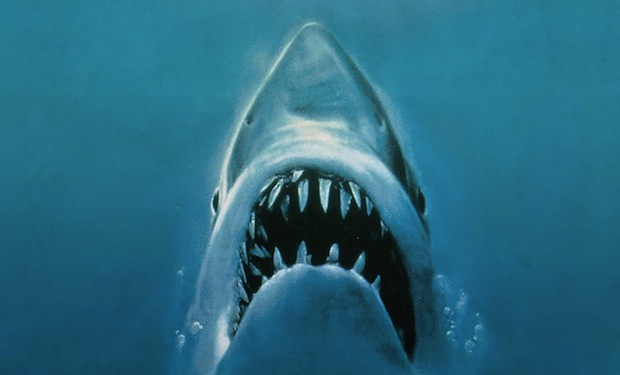
jaws_dts_hires–Bram Stoker’s Dracula is about the fear of sex and sexuality, a direct reflection of the repressed Victorian era

–Mary Shelley’s Frankenstein and Ridley Scott’s Alien franchise have both been interpreted as a fear of becoming a parent

Jaws is not only about a fear of sharks, but it touches on a primal fear of our vulnerability to deadly creatures that lurk in the deep

One thing that always frightened me is mental illness, especially the kind that leads to delusions. I know this type of mental illness has a physiological underpinning, but it still disturbs me on a core level. I incorporated my own fear into my new novella, House of Flies.

House of Flies

The plot: 19-year-old Alec Pearson, recently orphaned, lives in a huge house and has all the money he could need. Then he starts seeing flies. These aren’t ordinary flies; they carry with them dark visions. He tries to fight the flies but he fears he’s losing his mind. Finally he takes a drastic step to rid himself of the madness around him.

I used a common horror trope—insects, specifically flies—as a way to dramatize Alec’s plight. Insects creep most people out, so it’s a built in special effect. The whole point of the story, though, was to discover how suppressing emotions—grief in this instance—can push you to the brink of madness.

Writers are lucky. We have a vehicle to explore our fears, examine them, and work through them in a way that not only benefits us, but hopefully entertain others. If you have the chance, check out House of Flies.

Read this story: Don’t Eat Cat

Not too long ago, short stories were relegated to specialty magazines or book-length collections. Want to read a single story? You had to buy the book or subscribe to the magazine.

Now, thanks to e-books, stories of any length now have a home, and this has led to a rebirth of the short story as a form of art and entertainment. I’m happy as a writer — I’ve been on a novella-writing kick lately. And I’m glad as a reader too — sometimes you don’t want to invest too much time in a story. Sometimes you want to dive in, read to the end, and walk away, satisfied.

Satisfied is what I felt after finishing Jess Walter’s zombie-themed story Don’t Eat Cat.

Don't Eat CatFirst, a warning to zombie aficionados. Don’t Eat Cat is a zombie tale in the loosest sense. His zombies aren’t the mindless, swarming re-animated dead. They’re self-aware — victims of a party drug that carries zombie-like side effects, such as white-to-translucent skin, mental numbness, and a taste for living flesh, especially small animals (hence Don’t Eat Cat).

Second, for the animal lovers out there, no animals are actually eaten in the course of this story. So don’t let the title dissuade you.

The plot: following a confrontation with a zombie barista in a Starbucks, Owen decides to seek out his ex-girlfriend, Marci, who willingly consumed the drug and left two years earlier before the zombie effects set in. That’s it. Not too much happens in this story.

This is not a criticism. Walter packs his pages with humor and tragedy. In a limited word count, Walter deftly creates a world of the near-future that is overloaded, cynical, and nearly broken. Walter’s prose is clean, lean and fluid.

His protagonist is a good traveling companion. From the opening scene in the zombie-staffed Starbucks to the sudden end, Owen is impatient, moody, and thoroughly relatable. We know just enough about him to willingly go along for the ride.

But Don’t Eat Cat is not perfect (I have yet to find a story or book that is). These imperfections can be simply summed up: the story is too short. I wanted more. I wanted more of Owen and Marci. I wanted more of the hilariously nightmarish world. I wanted more of the negative effects of the zombie/humans. And when the story ended abruptly, I was left wishing there was more to come.


Bioluminescent creatures in the darkest realms

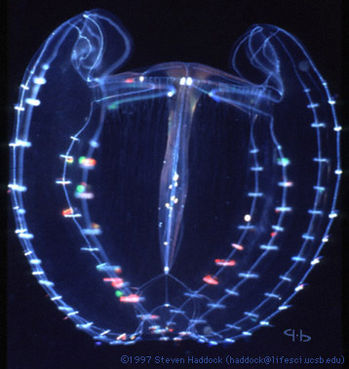
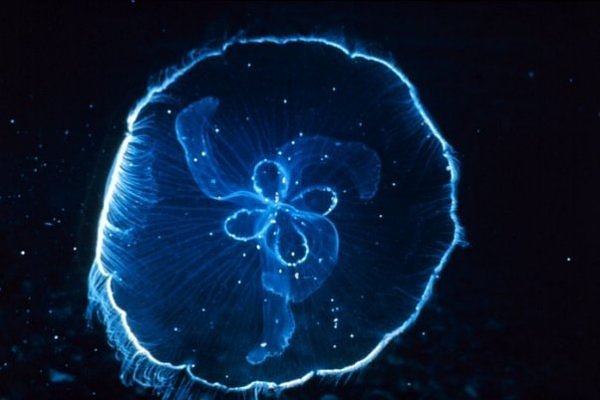
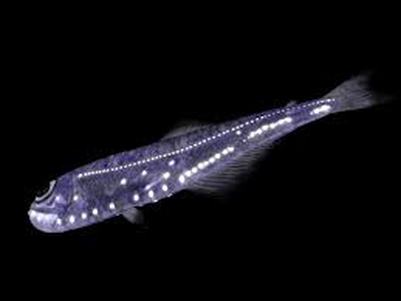
Life on earth is truly stranger than anything we’ve imagined. Science continually finds more evidence of this. Just one example? Fish in waters devoid of any natural light equipped with light-giving powers of their own.

bioluminescent

How do these fish manage to produce light from their own bodies? Through a mix of two chemicals. One is called, ominously enough, luciferin. This chemical creates the light. The second chemical, luciferase, spurs the reaction that, along with oxygen, creates the light. Deep-sea creatures use this light to not only find their way, but also to communicate with other fish and trap their prey.

What I love about science and nature is that there are so many twists and turns in the evolution of life, ones we are still discovering, that rival the wildest creatures dreamed up in our imaginations.

image 6

image 4

image 3

image 5

Fun with skulls

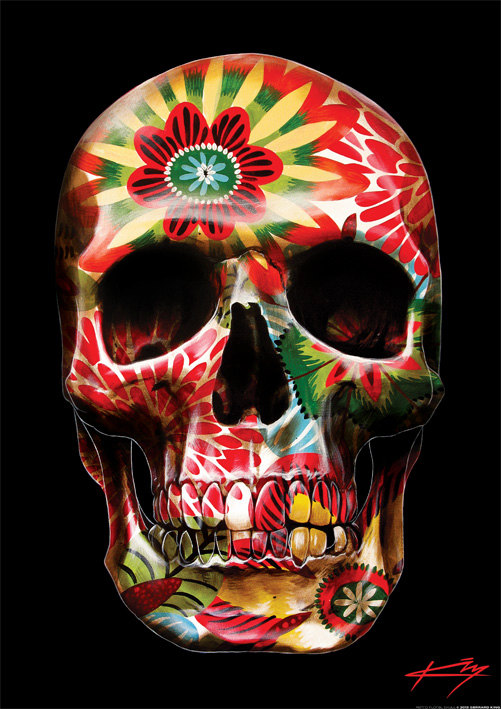
I’m not a macabre person by nature, but I like skulls. I’m not talking about actual human skulls, but representations: drawings, T-shirts, liquor bottles, candles, etc. Sure, it’s a cliche by now, but it’s still fun.

skull-art-prints-by-Gerrard-King

(Image courtesy of Gerrard King)

Where did my affinity for skulls start? Who knows? Maybe from the image of Hamlet holding up poor Yorick’s skull and talking to it. I always got a kick out of that when I was a kid. (Here’s a picture of Doctor Who‘s David Tennant as the moody Dane.)

Tennant Hamlet Yorick

Obviously I’m not alone. Skulls are everywhere in pop culture, and not just American culture. For instance, the Mexican Day of the Dead (Dia de Muertos) holiday is a festival that recognizes the dead, and similar traditions can be found throughout the world. Though the Mexicans seem to have perfected the imagery.

400px-Catrinas_2

My own theory: these representations of skulls are a safe way for us to reference our own mortality. We can observe it at arms’ length, poke fun at it, while still acknowledging it. Sure, some people choose to avoid anything that will remind them of death, while others seem to revel in it. For most of us, we can acknowledge it, have a laugh, and then move on.

And now I’m happy to be adding a skull to the pop-culture pantheon. My soon-to-be-released novella, House of Flies, will feature a skull on the cover. House of Flies follows Alec as he battles a fly infestation that drives him to the brink of insanity. It’s a psychological horror story about suppressed grief and the avoidance of death, hence the skull. I can’t describe how cool I thought this imagery was when my designer first showed it to me.

House of Flies

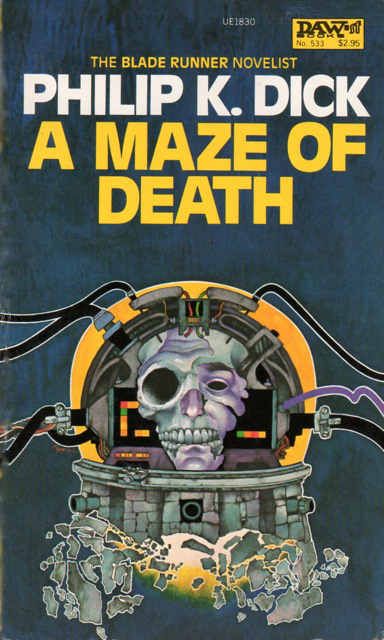
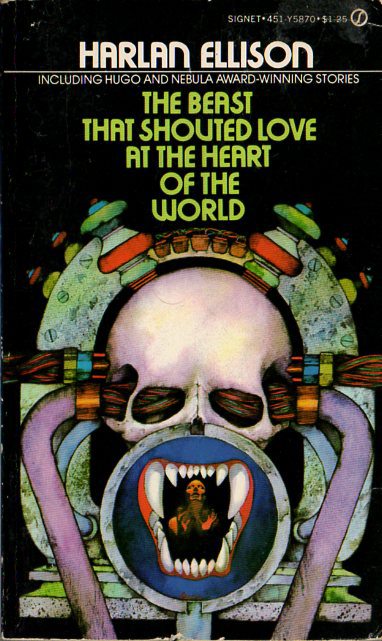
It turns out that there have been more than a few skull-themed covers. The website Science Fiction Ruminations has compiled a collection of skull covers from the recent era. Here are a few funky examples — check out the site for more.

Philip K. dick

Robert Heinlein

Harlan Ellison