Interview with Andrew Lamb, author of the Dispatchers series

Astral projection and bacon sandwiches are two things you normally wouldn’t link together. Fellow indie writer Madhuri Blaylock interviewed English writer Andrew Lamb, who wrote a paranormal novel — Dispatchers: Vengeance of the Dark — about astral projectors up to no good. That’s an intriguing set-up for a novel. Read Madhuri’s interview with Andrew below as they talk about his writing, his love of Cornwall and bacon sandwiches.

mpavamani45's avatarMadhuri Writes Things

Last week I became a member of the Goodreads group Paranormal, Fantasy, Dystopia and Romance Readers, Writers and Reviewers, a group whose goals are to help promote writers, give reviews, get good books out to reviewers and readers, give advice, engender good book discussions and just generally support Indie authors any way possible.

It’s through this group that I met Andrew Lamb, a writer from across the pond, developing a sci-fi/fantasy series called The Dispatchers, described as “a dark new twist on Astral Projection.” [Admit it, I had you at “dark new twist”.]

Always looking for new ways to help promote my fellow Indie authors and put some good juju out into the universe for myself and The Sanctum, I contacted Andrew to see if he would sit down for an interview to discuss pretty much whatever nonsense I throw at him. Apparently he’s a good sport…

View original post 1,116 more words

See this movie: Edge of Tomorrow

What do you get when you combine aliens, explosions, and the repeating day motif of Groundhog Day? Tom Cruise’s latest sci-fi action flick Edge of Tomorrow.

Edge_of_Tomorrow_9
Tom Cruise’s personal life gets a lot of attention, but strip away that nuttiness and what you have is a workhorse actor who knows how to entertain. Whether it’s the Mission: Impossible series, Minority Report, or Oblivion, Cruise is a master at making a damn good action film. Edge of Tomorrow is the latest in his string of successes.

Edge of Tomorrow is based on the Japanese sci-fi novel All You Need Is Kill (great title!) by Hiroshi Sakurazaka. All You Need Is KillThe movie’s plot: an alien race known as mimics has overrun the European continent, and unified forces are gearing up for a D-Day style invasion in France. Major William Cage (Cruise) finds himself on the front lines of the invasion, where he quickly dies. Only he doesn’t. Time resets, and he wakes up the morning before the invasion. He relives the same day, dying again and again. Aided by Sergeant Rita Vratraski (Emily Blunt) the war hero known as “Full Metal Bitch,” he plots to defeat the mimics.

What’s great about Edge of Tomorrow:

–Cruise and Blunt are excellent. This isn’t Oscar bait. We’re not looking for amazing acting. We want skill, competence and relatability. They deliver.

–The action is intense. The battle scenes are breakneck, part video game, part roller coaster.

–Humor. I didn’t think I’d be laughing during a Tom Cruise sci-fi action movie, but the writers were wise to add some funny scenes. On one level, this movie almost calls for it. The humor, which comes mostly from bungled deaths (and repeated days) helps break the tension. It also lets the audience laugh at the overall concept. Cruise plays it well — sometimes he’s clearly ready to die (again).

–The invasion of France has clear and obvious parallels to the Allied invasion of Europe in D-Day during World War II. The writers build a pretty complete world, one that has been at war for a while.

What’s not so great:

mimic3–The aliens were fine. I have no major complaints, but there was nothing particularly novel about them. The special effects were also fine. But I wanted a little more.

–I had a couple of issues with the ending, which I won’t reveal. The best I can say is that it was satisfying. I’ll leave it at that.

Overall, Edge of Tomorrow is a thrill ride of a movie with solid performances, some laughs, and great action scenes that make it worth a trip to the theater.

Meet my main character(s) blog tour

This is new for me. Friend and fellow writer Madhuri Blaylock (author of YA urban fantasy series The Sanctum) tagged me to join in on the Meet My Main Character blog tour.

My first question was, what the hell is this? Then I read Madhuri’s blog entry, and it clicked. Basically, this is a great way to share with readers and other bloggers some key and interesting facts about the characters who make up our literary worlds.

So now it’s my turn. The book: my supernatural suspense novel The Last Conquistador. Here goes.

1. What is the name of your main character? Is he or she fictional or a historical person?

The Last Conquistador tells two parallel stories, one set in the present day and one set in the past, so there are two main characters. Randy Velasquez is a young American soldier stationed in Germany. He’s totally fictional, though I drew on my experiences as a soldier in Germany to create much of the setting and even some situations.

Rodrigo is the main character of the second part, which is set in the past. He is a 17-year-old Spaniard who sets off for the New World in search of riches. He is fictional, though I based many of his exploits and misadventures on the true and wild tale of Cabeza de Vaca.

2. When and where is the story set?

Randy’s story is set in the present in Germany. I chose this setting for two reasons. After living there as a soldier, I realized that, with a couple of exceptions, I’d never seen this setting in fiction before. Also, one of the themes of this story is being lost in a strange world. For Randy, Germany is a weird place that he’s never able to conquer.

Rodrigo’s story, which begins in the year 1530, spans Spain, Cuba, what is now the southwest US, and Mexico. Similar to Randy, though more extreme, he’s a stranger in a hostile land.

3. What should we know about him?

For both characters, their character traits drive the story.

Randy is brash, tenacious, and is stubborn. He’s a bit of a smartass, a little cocky and sometimes he goes too far, which gets him into trouble. But he never gives up.

Rodrigo is hungry and determined. He grew up the second son of a tanner in a small Spanish village, but he always lusted for adventure. This will get him into more trouble than he ever imagined. But his determination and hunger are what will carry him through some tough times.

4. What is the main conflict? What messes up his life?

For Randy, the trouble starts because of his German girlfriend Lise. The day after she tells him she’s pregnant, she leaves him. Randy is determined to find her and win her back. But everyone around him throws roadblocks in his path, and he learns that Lise is not who she appeared to be. Not only that, but there’s a demon chasing him.

Rodrigo is in love with Elena. When her father turns down his marriage proposal, he vows to become a rich conquistador to prove his worth. But luck isn’t on his side. He becomes shipwrecked among hostile Indian tribes and spends the next several years trying to find his way back home.

5. What is his personal goal?

Randy’s goal is to find Lise and win her back. He wants her, he wants their baby, he wants this fantasy life he’s built up in his head, and he refuses to let that go, demon or no demon.

Rodrigo’s goal at first was to amass wealth and prestige. but once he’s marooned, his goal is simply to survive.

For both characters their goals are shaped by who they are. Rodrigo’s hunger drives him. He wants so much from life. this helps him survive against long odds, but it also leads to disappointment. Randy is stubborn in his hope, which sees him through some dark times. It’s the key to his ability to battle the demon which he can never seem to shake.

And now, for the next stops on the blog tour, check out these writers as they discuss their main characters:

Christa Wojo talks about David from her novella The Wrong David.

Check them all out. And if you’re a blogging writer, climb on board.

Game of Thrones vs science

The Mountain vs Prince Oberyn vs science: who will win?

First, this website is not a spoiler-free zone. Never has and never will be. I’m fine with spoilers. Sometimes I even seek them out (I was that kid who opened up his Christmas presents and then re-wrapped them). So, if you HATE spoilers, and aren’t up-to-date on Game of Thrones, stop reading now.

I love science, and I love fiction (and I also love science fiction). Fiction shouldn’t have to live up to the standards of science, especially when we’re talking about fantasy, sci-fi, or supernatural/horror, all of which require a level of disbelief. But sometimes it’s fun to see if what happens on the page (or screen) could happen in real life.

Let’s look at Game of Thrones and the epic battle between The Mountain and Prince Oberyn. Quick recap: Tyrion was accused of poisoning his nephew, the spoiled, vicious King Joffrey. Facing near certain conviction in a sham trial, he chose a duel to decide his fate. If his chosen fighter won, he would be set free. Cersei, Joffrey’s mother, who hated her brother Tyrion, selected The Mountain, a hulking beast of a man.

mountain

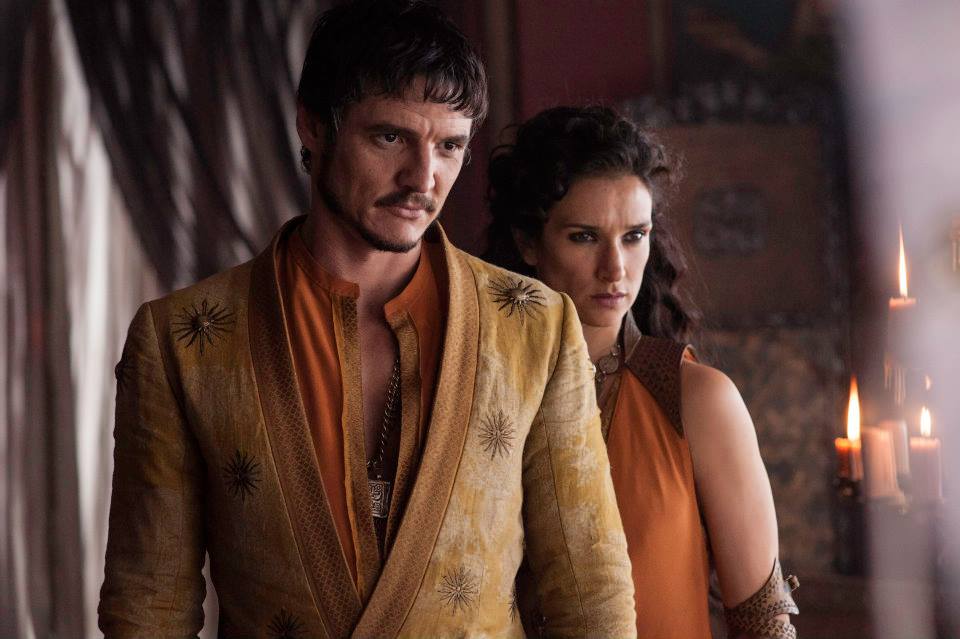
Prince Oberyn, aka The Red Viper, a fiery, bisexual Dornish prince renown for his fighting skills, volunteered to battle The Mountain on behalf of Tyrion in order to extract a confession from the villain who raped and killed his sister years earlier.

oberyn

Well, the fight didn’t go too well for either man. The Mountain was mortally wounded, and Prince Oberyn got his confession, but that was just before The Mountain crushed Oberyn’s skull with his bare hands.

It was shocking and gruesome, even for a show like Game of Thrones.

This article asks the scientific question: could The Mountain really have crushed Oberyn’s head like an overripe watermelon?

watermelon

First the facts. The actor who plays The Mountain, Hafthor Julius Bjornsson, is 6 ft 9 inches and weighs over 400 lb. Bjornsson is the third-strongest man in the world and can deadlift 994 lb. The guy is seriously strong. The strength and size of Pedro Pascal, who played Oberyn, is irrelevant here, but this picture of the actors shows their difference in size.

pascal bjornsson

So could he do it? Probably not. Based on bike helmet crash data, it would take 2x the amount of force to crush a skull than human hands could muster, even hands as strong as Bjornsson’s. But, like much of science, this isn’t settled. One study suggested that it takes as little as 16 lb of pressure to fracture the skull, while another study pushed the skull-crushing requirement to 1200 lb.

My vote? Let’s get Bjornsson a skull to crush (not mine). Then we’ll see if George RR Martin’s words were based on scientific fact, or were pure fiction.

Read this book: The Maze Runner

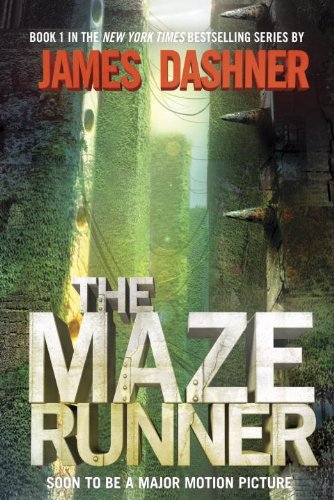
Short take: The Maze Runner, by James Dashner, is a thrill ride that succeeds despite its lack of heart.

Maze RunnerWhen I was young I devoured the Choose Your Own Adventure books. These books were a plot maze where the reader would make a decision at a crucial plot point, and then be directed to a certain page to continue the story. Some decisions would lead to a dead end — end of story — while others would keep you going. All the books were exciting, plot-driven page turners where character (and character development) was largely irrelevant.

In many ways, The Maze Runner, another entry in the YA dystopian canon, reminds me of the Choose Your Own Adventure books. It’s an action-packed story with characters who might as well be blank.

The story: Thomas wakes up in an elevator, with no firm memories, that takes him to a place populated with tough-talking teenage boys. Thomas soon discovers that he’s trapped, as are all the boys. Every day the walls of their compound open, revealing mazes that the boys attempt to navigate. They’ve failed to find an escape, and are threatened by biomechanical monsters called Grievers that lurk in the maze. Thomas is determined to become a maze runner, convinced he can not only solve the maze, but also recover his lost memories.

First, the good:

–Reading The Maze Runner, the first in a series, is like being at a great amusement park. The book is a constant thrill ride that had me turning pages (flipping through my Kindle) at a lightning pace. Dashner excels at turning up the heat and keeping it going.

–Not only that, but Dashner expertly parcels out hints of what’s really going on. He gives us just enough to pique our interest the whole way through.

And the not-so-good:

–Thomas as a character is not relatable. He doesn’t have much of an inner life, largely because he can’t recall his past. Thomas has guts, but he has no heart. I felt the same about most of the other characters — group leaders Newt and Alby, maze-running expert Minho, and the mysterious lone girl Teresa. The only character who seemed three-dimensional was eager, bumbling Chuck. Dashner subtly showed us how desperate Chuck was for friendship. He did this through Chuck’s dialogue and actions. If only Dashner had done that with Thomas and the rest.

–I didn’t buy Thomas’s fledgling relationship with Teresa. Again, maybe it was the fact that both characters were amnesiacs; there wasn’t much to build on. Was Teresa included only to throw in a romantic subplot? If so, then it felt forced.

–While the story was thrilling, there were times when I wanted Dashner to slow down. There was little reflection. The Maze Runner would have benefited from a break in the action now and then.

But these complaints don’t doom the book — far from it.

The Maze Runner is just one among many YA dystopian novels, a trend which seems to never end. The ones I enjoyed the most — The Hunger Games series and Neal Shusterman’s Unwind — excelled because they focused on character. The Maze Runner shows that sometimes you can get away with relying solely on plot.

Game of Thrones: revenge is a killer

I suppose I should blame George RR Martin, whose twisted head thought up all this deviousness. Or maybe David Benioff and D.B. Weiss who brought Game of Thrones to television.

No. I blame myself for not being able to turn away.

I got through Ned Stark’s beheading. I made it through Catelyn and Robb Stark’s undoing at the Red Wedding. And last night it was Oberyn Martell, the revenge-seeking bisexual Dornish prince’s turn.Game of Thrones

The writers titled the episode “The Mountain and the Viper,” so I knew the epic fight between Ser Gregor Clegane (aka The Mountain) and Oberyn (aka The Red Viper) would take place in this episode. But they pushed it off until the very last few minutes. Tension, nonstop, waiting for it. Genius.

And it was everything I thought it would be, even more. Oberyn was carrying around 20 years of anger for what Tywin Lannister, via The Mountain, did to his sister (raping and killing her and her children). Oberyn was a badass from his first moment on the show (and in the books). All he ever wanted was justice, but his justice slid headfirst into revenge, and that revenge, full of blind passion, was his undoing. He could have finished off The Mountain (and in a sense, he does eventually). But he had to extract a confession from The Mountain. In his rage he made a fatal mistake. He let the wounded hulk get hold of him. What happened next was horrifying as we watched Oberyn get his confession while meeting his end in the most gruesome of ways.

VIPER-MOUNTAIN-570

It gutted me (figuratively, of course). Those of you who are fans of Game of Thrones know exactly what I’m talking about. For those who aren’t, you’re missing a whole lot of masochism.

I suppose the moral of this latest episode (if there is one in the Game of Thrones universe) is that revenge is a killer. Or, if you need revenge, at least get it cold rather than hot.

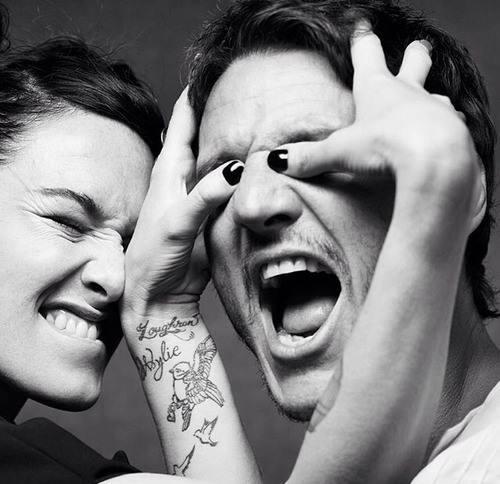
On the lighter side, here’s Lena Headey, who plays arch-villain Cersei, “reenacting” that fateful scene with Pedro Pascal, who played Oberyn. Sometimes it’s good to laugh.

GoT


Battlestar Galactica revisited: Gaius Baltar’s trial

Great stories must include these 3 elements: a strong premise, great characters, and a compelling plot. Two now-classic TV shows from the last decade—Lost and Battlestar Galactica—had the first two in spades.

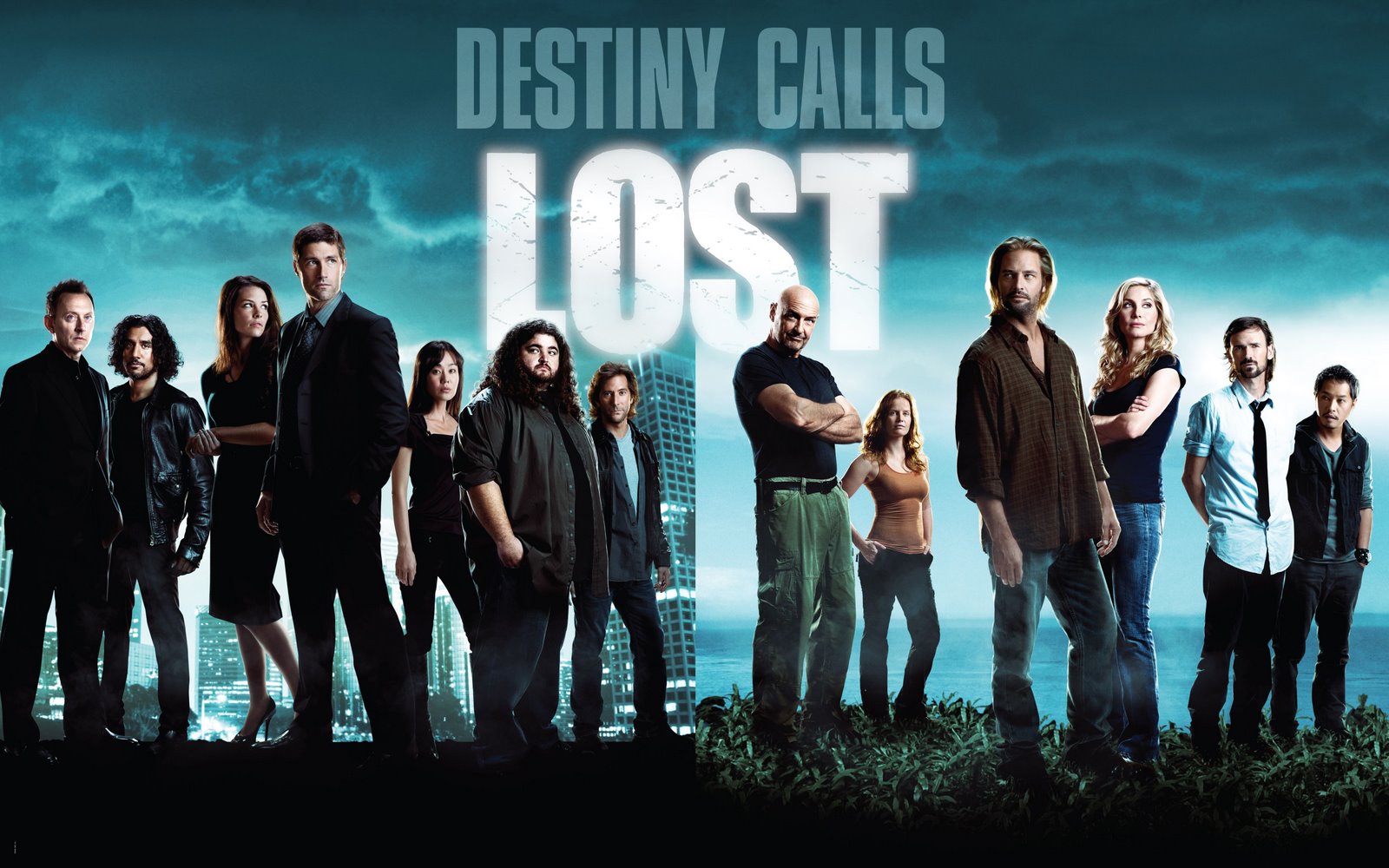
Take Lost. The premise: a plane crashes on a mysterious island and the survivors must battle not only each other, but the island’s inhabitants and the island itself. The characters: Jack Shepard, John Locke, Kate Austen, Sawyer, and Ben Linus, to name a few, were all strong and dynamic.

LostPoster

And then there’s Battlestar Galactica. The premise: Cylons (sentient robots) destroy their creators, but a ragtag group of human survivors flee through the universe in a search for a mythical planet called Earth. The characters: Admiral Adama, President Laura Roslin, Starbuck, Gaius Baltar, Apollo, the cylon Caprica Six, and many more. Again, all compelling.

battlestar

Both shows faltered when it came to plot. It’s safe to say that the endings of Battlestar Galactica and Lost were troublesome.

Nevertheless, what these shows gave us was a new and dynamic way to tell stories.

Battlestar Galactica was a reimagining of the 1970s series. The new version, written by Ronald D. Moore, was a gritty sci-fi drama that mirrored the American experience in the 2000s as the country suffered through the World Trade Center and Pentagon attacks and the resulting global war on terror and Iraq War. Battlestar Galactica was unflinching. It ran headfirst into controversial issues.

baltarOne of the best examples was the trial of Gaius Baltar. A haunted genius, Baltar was an amoral man whose sole concern was his own survival. In the old series he was a stock villain. In the new show, there were times, many times, when I found myself rooting for Baltar, even when I knew he was a jerk.

One of those times was his trial.

Baltar was elected President of the surviving humans, beating Laura Roslin (who nearly rigged the election to stop Baltar). Under his leadership, the humans chose to settle on a habitable planet, dubbed New Caprica, instead of seeking Earth. But the humanoid cylons soon found them. Instead of wiping them out, they instituted a terror-like regime to control the humans.

Baltar went along with them. What choice did he have?

Once the humans broke free from the cylons and escaped, Baltar was ousted as president and then put on trial for crimes against humanity. The resulting trial was a brilliant piece of drama. Obviously Baltar colluded. How could he be found not guilty?

baltar trial

This article from io9.com revisits the trial. It’s a fascinating look at the law and its use in fiction. Was the trial a farce? To an extent, yes. But the whole point of the show (and a theme of our own global war on terror) was that these were not normal times. When the whole of humanity has been reduced from 20 billion to fewer than 50,000, who are actively being chased by murderous robots, you do the best you can.

Some of the plot twists of Battlestar Galactica, including Gaius Baltar’s trial, pushed the bounds of logic and reason, but it’s great to see that so many elements of this iconic series still resonate.

Spider fangs: nature’s perfect piercer

Some people love spiders (why??). Some people love to hate spiders. My view is: hey, Mr. Spider, you stay over there, I’ll stay over here. To me, they’re creepy as hell — horror movie creepy.

mexican-red-knee

Now there’s more to add to their creep factor. Not only are spiders adept at trapping their prey alive in a sticky web and sucking their blood and bodily fluids out in a slow, agonizing death, their fangs were honed by nature, God, evolution (take your pick, or as I believe, all of the above) to be the perfect piercing tools.

This article published in Scientific American discusses a study of spider fangs. It turns out that the curve of the spider fang allows the spider to not only attack from different directions, but also hold their prey while injecting their venom. And the hollow, conical shape gives the fangs strength.

Not cool.

The upside?

1) More fodder for horror writers. Now we’ve got an even more gruesome way to describe spider attacks.

2) Maybe they can design better piercing equipment, not only for medical applications, but also for those casual body piercers among us.

(Image courtesy of LiveScience.com)