Battlestar Galactica revisited: Gaius Baltar’s trial

Great stories must include these 3 elements: a strong premise, great characters, and a compelling plot. Two now-classic TV shows from the last decade—Lost and Battlestar Galactica—had the first two in spades.

Take Lost. The premise: a plane crashes on a mysterious island and the survivors must battle not only each other, but the island’s inhabitants and the island itself. The characters: Jack Shepard, John Locke, Kate Austen, Sawyer, and Ben Linus, to name a few, were all strong and dynamic.
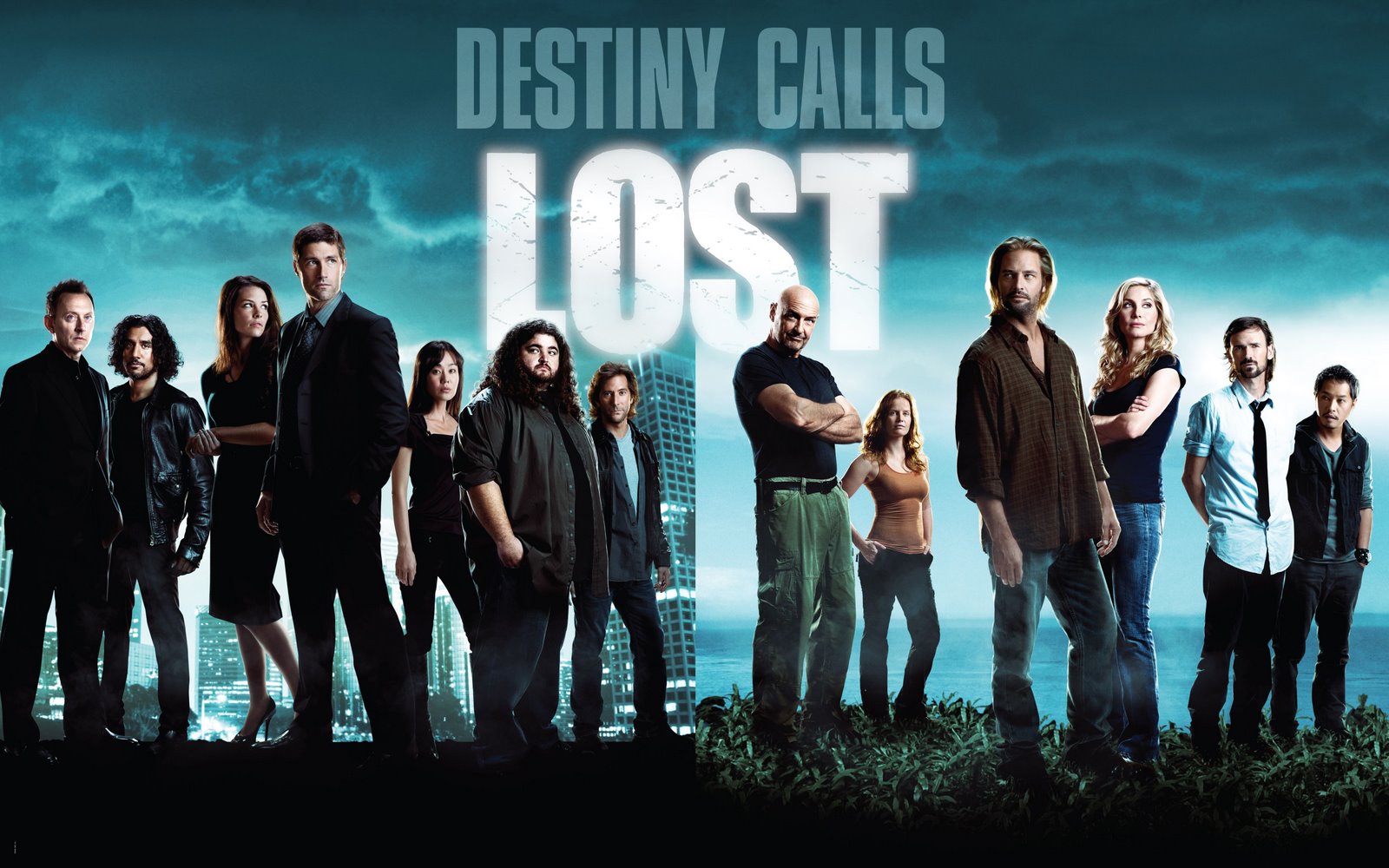
LostPoster

And then there’s Battlestar Galactica. The premise: Cylons (sentient robots) destroy their creators, but a ragtag group of human survivors flee through the universe in a search for a mythical planet called Earth. The characters: Admiral Adama, President Laura Roslin, Starbuck, Gaius Baltar, Apollo, the cylon Caprica Six, and many more. Again, all compelling.

battlestar

Both shows faltered when it came to plot. It’s safe to say that the endings of Battlestar Galactica and Lost were troublesome.

Nevertheless, what these shows gave us was a new and dynamic way to tell stories.

Battlestar Galactica was a reimagining of the 1970s series. The new version, written by Ronald D. Moore, was a gritty sci-fi drama that mirrored the American experience in the 2000s as the country suffered through the World Trade Center and Pentagon attacks and the resulting global war on terror and Iraq War. Battlestar Galactica was unflinching. It ran headfirst into controversial issues.

baltarOne of the best examples was the trial of Gaius Baltar. A haunted genius, Baltar was an amoral man whose sole concern was his own survival. In the old series he was a stock villain. In the new show, there were times, many times, when I found myself rooting for Baltar, even when I knew he was a jerk.

One of those times was his trial.

Baltar was elected President of the surviving humans, beating Laura Roslin (who nearly rigged the election to stop Baltar). Under his leadership, the humans chose to settle on a habitable planet, dubbed New Caprica, instead of seeking Earth. But the humanoid cylons soon found them. Instead of wiping them out, they instituted a terror-like regime to control the humans.

Baltar went along with them. What choice did he have?

Once the humans broke free from the cylons and escaped, Baltar was ousted as president and then put on trial for crimes against humanity. The resulting trial was a brilliant piece of drama. Obviously Baltar colluded. How could he be found not guilty?

baltar trial

This article from io9.com revisits the trial. It’s a fascinating look at the law and its use in fiction. Was the trial a farce? To an extent, yes. But the whole point of the show (and a theme of our own global war on terror) was that these were not normal times. When the whole of humanity has been reduced from 20 billion to fewer than 50,000, who are actively being chased by murderous robots, you do the best you can.

Some of the plot twists of Battlestar Galactica, including Gaius Baltar’s trial, pushed the bounds of logic and reason, but it’s great to see that so many elements of this iconic series still resonate.

Waiting for the Doctor to return

As we sit here like young Amy Pond and wait (and wait and wait) for the British sci-fi classic series Doctor Who to return to us — the rumor is that we’ll have to wait until Christmas — here are a few tidbits to hold us over.

doctor-whoFirst, Matt Smith, the bow-tie-wearing previous Doctor, who we last saw die defending Trenzalore, told an interviewer at a Calgary sci-fi expo that he’d love to make a return.

“I’m just waiting for the next anniversary. I spoke to Steven (Moffat) the other day and said ‘what’s the quickest one we can do?'”

I’m not sure how I feel about that right now. The 50th anniversary show, which featured a few Doctors running around, was tons of fun but it got a little confusing. Then again, with the rate that Doctor Who episodes are produced, we wouldn’t be seeing Smith reprise his role until 2025 at the earliest.

And, there’s a very tenuous rumor that Alex Kingston could come back as River Song, the Doctor’s wife and one of my favorite characters. What’s the evidence? An interview in RiverSong321_0which Kingston said she looks forward to sharing more of River with the audience.

But then we have Doctor Who head writer Steven Moffat hemming and hawing, wondering if there are more River stories to be told (I vote yes). His logic is that Matt Smith and Alex Kingston worked as a couple because they didn’t look like a couple, while the opposite would be true with Kingston and the latest Doctor Peter Capaldi. I don’t buy it.

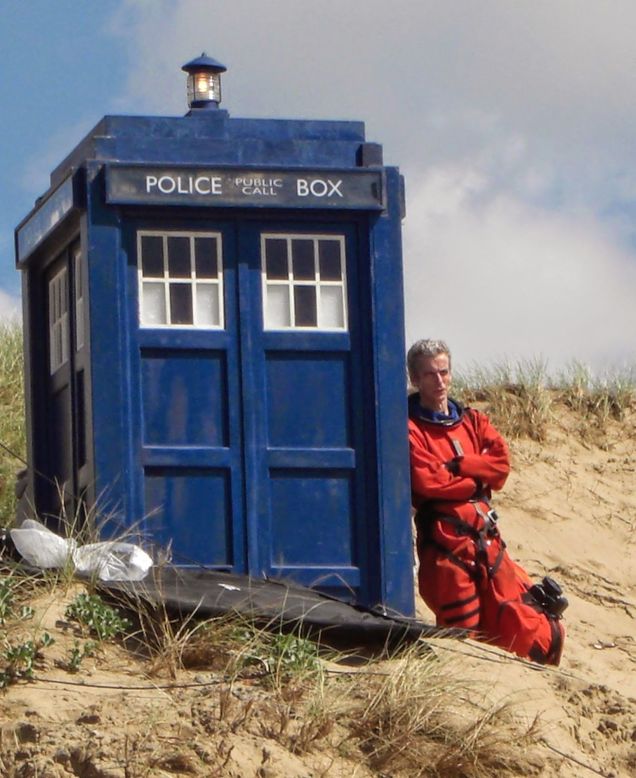
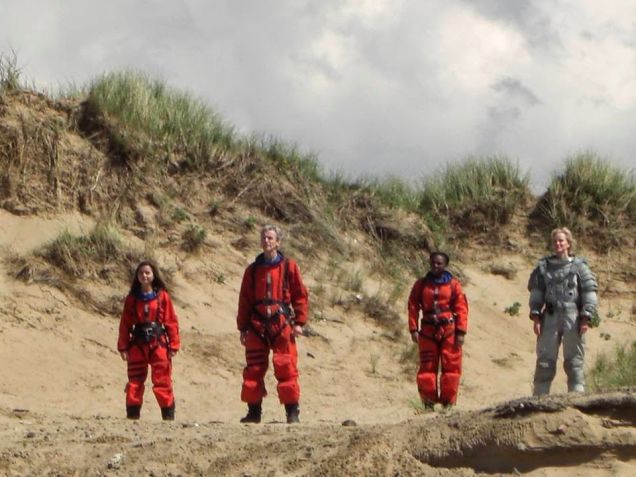
Finally, here are a couple of set photos from Doctor Who featuring new Doctor Capaldi, his companion Clara (Jenna-Louise Coleman), and some other people hanging around, via io9.com.

new doctor 1

new doctor 2


Playing the Game of Thrones

I love this TV show, and I’ve read book 3 (mainly because I’m a sucker for spoilers) but I game-of-thrones-iron-throne-1024x576hesitated writing about Game of Thrones for two big reasons.

1) It’s more in the realm of fantasy (though with strong supernatural elements). I’ve never been big into fantasy — I struggled with the Lord of the Rings series.

2) Game of Thrones, both the print and TV versions, are deep and intricate. I don’t think my analysis, on an episode-by-episode basis, could do it justice.

Nevertheless I’m a big fan of all things Game of Thrones. I think it’s brilliant storytelling. ned starkThe show hooked me late in the first season, when Ned Stark, played by Sean Bean (the biggest name in the cast), met his fate. I knew then I was in for a wild and unpredictable ride.

On TV, the production values are excellent, the pacing is consistently solid, and the actors are all pros. My favorite, and I’m not alone in this, is Peter Dinklage’s Tyrion Lannister. Tyrion as played by Dinklage is the complicated heart of a complicated show. Catelyn Stark, played by Michelle Fairley, a woman who is smart and tough and willing to do whatever it takes to protect her family, is/was a close second.

TyrionIn the books, writer George RR Martin alternates character viewpoints as he bounces around the fictional world of Westeros and beyond — Daenerys, Jon Snow, Sansa Stark, Catelyn Stark, Jaime Lannister, and Tyrion Lannister. Each of these viewpoints is utterly unique and fully formed.

But neither book nor TV show is perfect. The books are rambling. No, I don’t need listings of every Ser who fought in a certain battle twenty years earlier. And the TV show revels in gore and violence to the point of overkill. One blogger commented that the show uses rape as a set piece. Okay, I get it — this world is brutal.

These are minor points. Game of Thrones is great entertainment. Very few moments in recent TV history can top when Daenerys ordered her dragon to burn the evil Kraznys.

Game_Of_Thrones Daenerys

And then there’s the infamous Red Wedding episode, where Catelyn, Robb and his pregnant wife weren’t treated very well by their hosts (huge understatement). Check out this link for some great reaction videos.

red2

Watch/read Game of Thrones if you’re up for some excitement. And for great postgame reading, the best I’ve found on the Internet comes from the A.V. Club. Their website has intelligent commentary, with articles geared toward those who haven’t read the books and those who have.

pimpsmall-270x300

Was Battlestar Galactica too religious?

Is there a role for faith in sci-fi? I say of course, but the battle simmers.

Image

This recent post from a Netflix-sponsored blog brings up the issue of religion as discussed in the 2000s now-classic series Battlestar Galactica. The four-season-long reboot of the 1970s show was well written, well acted, and wasn’t afraid to take on the big issues of the day (the opening battles of the global war on terror). But by the time the show ended its run, there was simmering controversy among its fans: why end it with all the overt religious references?

I would say they weren’t truly paying attention.

Battlestar Galactica in its fun and campy 1970s incarnation was an allegory for Mormonism. And it was great television sci-fi, even to my 7-year-old mind. When it was relaunched it kept a strong element of religion. The cylons were inspired by the one true god, and they despised the humans not only as their creators, but for their polytheism. The cylons consistently talked of “a plan” and of their faith in god. Meanwhile, the humans always implored and paid tribute to their Greek-named gods. Take a look at this promo picture below. Can this get any more overtly religious?

Image

So if the religion was in the DNA of Battlestar Galactica, why the controversy?

Two reasons:

–There are many in the science community–and the sci-fi community–who see religion and science as antagonistic. They view science as the antithesis of religion. Therefore, having a sci-fi show that takes religion seriously (and not just as a metaphor or a plot device) is at its heart a betrayal of all that is sci-fi. I am not one of these people.

Battlestar Galactica fully embraced religion. It took faith seriously. However, it failed in that it used the mystery of religion to paper over plot holes. The biggest: when Starbuck disappeared, seemingly died, and came back. Was she some sort of angel? Was she reanimated? The writers never even tried to explain. Faith was used in the wrong sense. The viewer was expected to have faith that things were happening for a reason.

Image

What reason, though?

Unfortunately we were never given a satisfying answer. All we heard were things like “this has all happened before, and it will all happen again.” Uh, ok.

The cause for the Battlestar Galactica controversy are twofold – one inevitable and the other avoidable. All in all though, the series is brilliant television. Its strengths far outweigh its flaws.

Helix: the autopsy

This unexpected SyFy show proved to be worth the journey.

Image

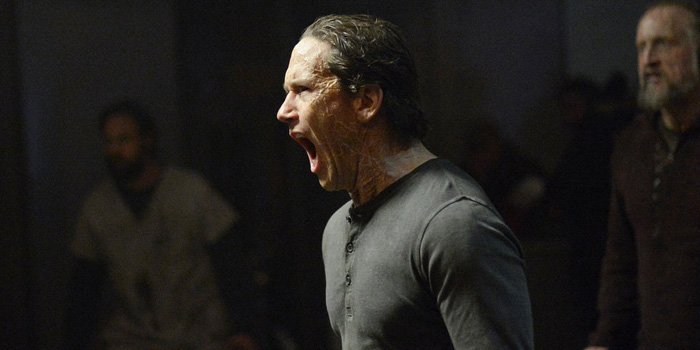
When I first saw the promos for the SyFy channel’s original series Helix I was intrigued. The premise: a group of CDC scientists travel to a remote arctic lab following a zombie-like outbreak. Initially what drew me were the zombies. What turned me off was the soap opera subplot: team leader Alan Farragut is joined by ex-wife Julia Walker, who slept with his brother Peter, who coincidentally is one of the infected.

It turns out I got it all wrong, and that was probably intentional on the part of the writers. (WARNING: spoilers ahead)

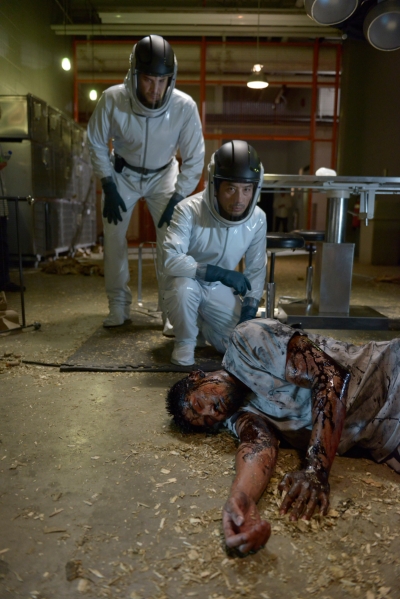
About the zombies. They were not zombies. By definition, zombies are the reanimated dead. Or, at the very least, they are not able to be cured, only destroyed. The writers kept us vague about the nature of the illness throughout, and once we saw the cure take effect, then I knew that these weren’t zombies. Instead they were a hive-like virus. Still damned scary.

Image

It turns out this whole zombie plot was nothing more than a MacGuffin. Simply put, a MacGuffin is a plot device that instigates the action, but in reality bears little importance to the story as a whole. One of the most famous MacGuffins is in Pulp Fiction. What was in that briefcase? We never knew, and its identity was irrelevant. Likewise, in Helix, the outbreak was a larger distraction from what the story was really about.

And what was it about? That’s hard to tell. On one level it was all about Julia Walker, the pouty, surly cheating scientist. She became the focal point of the storyline. And it worked. Julia was complex enough to be fully believable. She, along with Sergio Balleseros, a good/bad guy, were some of the more interesting characters in a show that suffered from weak characterizations.

Not only was Helix about Julia and her relationship with her estranged father Dr. Hatake, and missing mother (who showed up all too briefly), it was also about the cryptic Ilaria Corporation, which may not really be a corporation, but a collection of 500 immortals. It turns out that Ilaria, and not the outbreak, is the true focus of this show.

Image

So what does any of this have to do with that viral outbreak in an arctic lab? I’m not entirely sure. They hinted at population control, but that doesn’t explain the hive-mind of the infected.

Too many questions. Previously I doubted Helix would be renewed. It looks like I was wrong. In 2015 these questions may be answered (or not).

In the meantime, kudos for the writers for crafting a tightly wound puzzle of a show. There were no flashbacks, each episode consisted of a single day, and it was filmed in such a tight, claustrophobic way to keep you hooked. And it was not afraid of science. It was well worth my time.

Helix: the last spasm?

The SyFy original was more than I thought it would be, but will the lack of character (and viewers) be its downfall?

Image

One episode left for SyFy’s 13-episode sci-fi series Helix. No word yet on whether it will be renewed. Knowing SyFy, we may never see Helix again, which would be a shame.

When Helix was first launched, I was intrigued. Was it a zombie story? A medical procedural? Knowing it was produced by Battlestar Galactica‘s Ronald D. Moore was a plus, but so what?

Over the past 12 episodes I’ve been surprised. It was not at all what I expected. The writers of Helix have seeded intrigue steadily and consistently, with more than enough plot twists to keep me coming back.

–About those “zombies” – I would liken them more to vampires in the sense that the infected don’t die and come back to life, but turn. And what do they turn into? A sort of hive collective. Think bees, or ants – parts of a whole. A snippet of dialogue explained that the virus appears to be acting in concert, across the bodies of the infected. Kind of like Star Trek‘s Borg collective. It’s a cool twist on an old trope. I loved when one of the infected spit a mouthful of blood into the Keep Calm mug.

Image

–The writers have built layers of mythology, the most notable being the identity of the company that is funding Dr. Hatake’s research: the Ilaria Corporation. Their rep was Constance Sutton, overacted by Jeri Ryan, who didn’t fare too well against a desperate Hatake. Now we know that Ilaria is populated by 500 “immortals.” Like Hatake. And… his daughter.

–And that would be Julia Walker. Sure, it was a soap opera move reminiscent of Star Wars, but I bought it. The reveal of Julia Walker as Hatake’s daughter was telegraphed, and it made sense in terms of Hatake’s motivations and actions. It explained his preoccupation with her, as well as the fact that he rescued her from the infected-zombielike fate by making her “immortal” too.

Image

–But what about this immortality? Is it a fact? Why? Where did it come from? And what does it have to do with the Narvik A virus, the one that’s creating the hive-minded people? Could it be that Ilaria and the 500 want to rid the world of those annoying mortals forever? But is that the best way?

–Speaking of pesky mortals, we’ve got a mixed bag of semi-developed characters, which is Helix‘s glaring weakness. Crusading CDC researcher Sarah Jordan has been on death’s door for a few episodes now, and honestly I don’t care. Peter Farragut was healed, but he was more interesting as a viral. Alan Farragut is noble but cardboard. The only characters who have moderately interested me are Julia Walker, Hatake, his stolen/adopted son Daniel, and the evil-but-trying-to be good Sergio Balleseros. Compare Helix to Lost: Lost made you care about the characters, whatever nonsensical craziness happened on that island. Helix struggles to make us care.

Image

–But then there’s the storytelling. While Helix fails in characterization, it excels in plot and pacing. It is consistent in giving me just enough to hook me. The plot twists keep me off-balance. The visuals are stilted and creative. The music is moody and disturbing. Helix is a quickly moving story. Each episode spans single day, and it’s told with no flashbacks. The structure is bound and wound.

There is something subtly different about Helix. It’s not perfect, but few TV shows are. There’s only one episode left, I suspect not just for this season but for good. If this is the case, then Helix was a great experiment in tight, daring storytelling.


Churning the Doctor Who rumor mill

Will the 12th Doctor, Peter Capaldi, be a short-timer as per Christopher Eccleston?

peter-capaldi-doctor-who

Rumor has it, thanks to UK tabloid the Mirror, that the new 12th doctor in the BBC’s half-century-long sci-fi series Doctor Who, will only stick around for a single season. Christopher Eccleston, who was the 9th Doctor when the show was revived in 2005, left after a single season, supposedly because he clashed with the higher ups over their treatment of the cast and crew.

If the new report is to be believed, Capaldi’s short stint on Doctor Who is for a different reason — to help steer the show in a “different direction.” So what could that mean?

Either 1) they plan on bringing a new actor to play the Doctor, and this actor would either be female or non-white. Why they’d need a soft transition is beyond me. Or, 2) lead writer Steven Moffat won’t stick around after 2014, so a new writer will want his/her own version of the Doctor.

I don’t buy it, and I hope it’s not true. Every regeneration of the Doctor is nearly a different character. It takes a little while to bond with this “new” character, to really get to know him. A single season is not enough bonding time.Doctor Who Jenna Louise Coleman

In other news, there’s a new companion to ride in the Tardis alongside Clara (Jenna-Louise Coleman). This is welcome news. While Clara’s been real nice to look at, she’s never become a three-dimensional character, nowhere in the league of Donna Noble or River Song. She’s served as the Doctor’s conscience, helpmate, and even his savior. But too often she’s felt like just a foil — not a person in her own right. That may never change.

The new character is a colleague of Clara’s, a teacher named Danny Pink, played by British actor Samuel Anderson. He’s listed as a recurring character. Let’s see what he brings to Doctor Who.

Doctor Who Anderson


Helix spins a tantalizing, twisted tale

The SyFy Channel’s latest original series Helix, which airs Friday nights in the US, is turning out to be a multilayered labyrinth of a show.

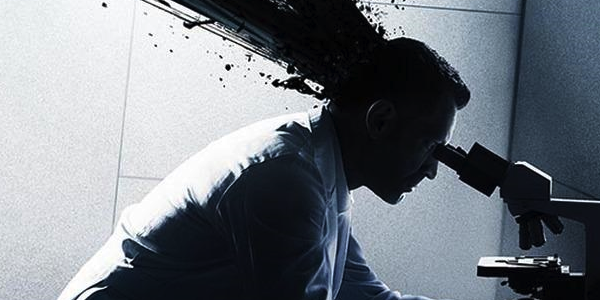
When SyFy first began promoting Helix, I was captivated by the (literally) mind-blowing poster.Since then, I tried toHelix- 1 unravel what exactly it was about. Zombies? Scientific procedural? Lost-style isolation tale?

Several episodes in, I’m still not sure exactly what this science-heavy show all about, and that’s half the fun.

To recap the set-up, a team of CDC scientists is flown in to a Helix - Season 1remote Arctic lab to contain a mysterious viral outbreak. Once there, they are trapped. Alan Farragut (Billy Campbell) is the lead scientist, and his brother Peter is one of the Arctic lab’s scientists, who also happens to be infected. Alan Farragut’s team includes his ex-wife Julia Walker, who had an affair with Peter. Soapy and confusing. Luckily this aspect of the story has taken a backburner as the plot churns on.

The series is getting a lot right.

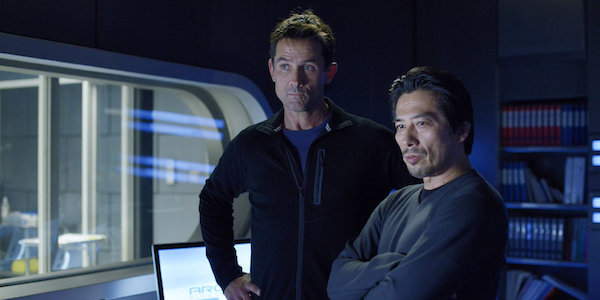
–We know the outbreak was engineered by lab head Hiroshi Hatake (Hiroyuke Sanada, a Lost alum), but we’re not sure what exactly it is, or why it was created.

–The writers on Helix aren’t afraid to play rough with the characters. No one is safe. Farragut and Hatake isolated scores of researchers they suspected were infected, giving them essentially a death sentence.

–Major characters are also at risk. I was shocked what happened to Doreen Boyle, a member of Farragut’s team. Likewise, big bad Constance Sutton (played by Star Trek: Voyager‘s Teri Ryan) proved less threatening in the end than she seemed. (And I loved the scene of her filing her own teeth down. Why??).

Helix_teeth

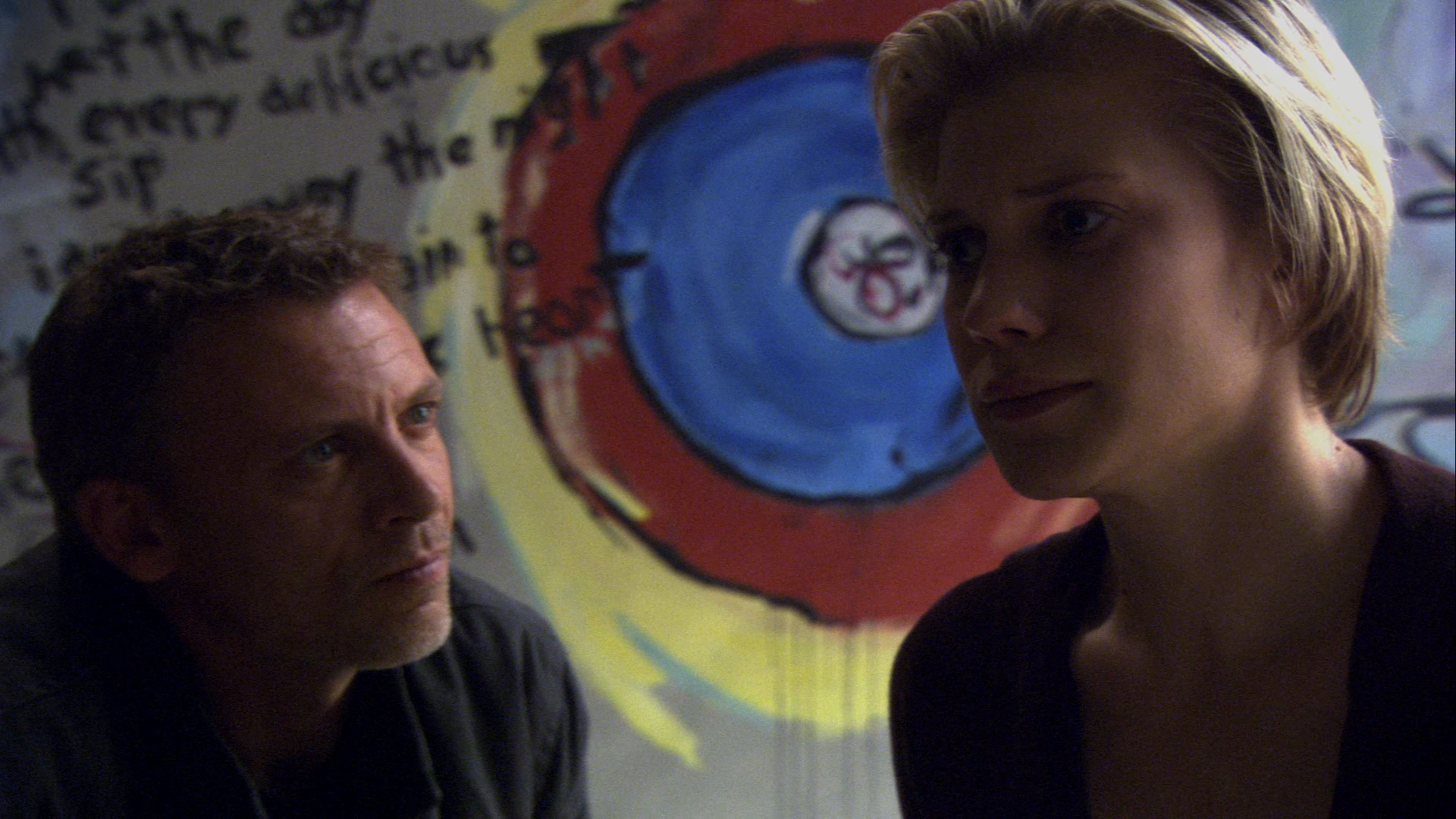
–Julia Walker, Farragut’s ex-wife, could have been an annoying distraction. Instead she’s become fascinating. Infected by the virus, then mysteriously “cured” by Hatake, Helix eyesshe’s revealed depth and determination. Adding to the mystery – is she really Hatake’s daughter? And what exactly has she become?

–One of my favorite characters on Helix is Major Sergio Ballaseros (Mark Ghanime). He’s duplicitous, murderous, and maybe even a touch remorseful. It’s a great portrayal of a mostly bad, complex character.Helix - Season 1

–Likewise, Hatake isn’t quite the villain he seemed. He reminds me of Lost‘s Ben Linus – a flawed man for whom the ends justify the means. His motivation is still unknown. It’s compelling to watch.

Another interesting aspect of the show is technical: the editing and the music. The scenes often seem a little off. They cut away too early, or they come in and out of focus, which keeps you slightly disoriented. It’s hard to understand without watching it;  this article at TV.com explains it better than I can. And the music choices, well, just watch the opening credits, with the 1960s bossa nova soundtrack.

I’ve referenced Lost a few times. That’s because Helix is similar to Lost in key ways. The mysteries unfold gradually, and the layers are onion-like. Character motivation is always in question, and the isolation heightens the drama. While it doesn’t have the emotional impact that Lost had, Helix is proving to be a fun addition to the sci-fi universe.