Where is everyone? (by everyone, I mean aliens)

I’m not alone, not by a longshot, when I say I love the idea of space exploration and possible alien cultures.

Look at some of the staples of pop culture — Star Trek and Star Wars, for example. These classic sci-fi stories have given us thrilling images of new worlds and aliens of all sorts. We can add one of my favorites, SyFy’s brutally cancelled Farscape, and one of the newest movie franchises, Guardians of the Galaxy (highly recommended, btw).

Farscape

In all of these, the universe is thick with life. There are countless races of intelligent—and not-so-intelligent—life forms, numbering perhaps trillions of individuals.

But, as far as we know, we are utterly alone in the universe, and we don’t know why.

As scientists discover solar system after solar system, with planets in the habitable zone, it’s dawning on us that our planet is not unique. And the logical assumption would be, if Earth is not unique, then we are not either. Surely if life evolved on Earth, over millions of years, to produce a species that is capable of traveling into space, then at least one of these other countless planets would have evolved similar life as well.

But where are they? Set aside the assumptions we’re making, such as that we would even be able to recognize alien life at all. If other species developed interstellar travel, wouldn’t they have found us by now? Wouldn’t their presence have long been known?

Revelation SpaceOne of my favorite sci-fi books, Revelation Space by Alastair Reynolds, tackled this question. Reynolds had an intriguing, though wholly fictional answer. (SPOILER WARNING) In Revelation Space, there were indeed alien races spread throughout the universe. But they went to war and ended up wiping each other out. To avoid any such catastrophe, a super-entity was established that would snuff out any civilization that got too big for its britches. How would it to that? Simply by waiting patiently for a curious species to contact it, and then exterminating it.

Another theory for the lack of alien life is more simple. Maybe complex and intelligent life is extremely rare — so rare that we’re it. It’s called the Great Filter theory. Several nearly impossible steps had to be overcome for us to be here.

–the creation of molecules that can reproduce

–the creation of simple single-celled life

–the creation of complex, multi-celled life

And that’s not even getting into such things as the rise of intelligent life capable of traveling into space, while also avoiding threats such as asteroid strikes, nuclear war, radiation bursts from space, and so on.

So, maybe we really are alone, and there is no Star Trek style federation waiting to greet us.

The good news? Maybe we’ve already overcome the biggest hurdles to interstellar life, and the universe is ours for the taking.

Doctor Who: regenerated again

What do you do when you create an accidental hit TV show, and your lead actor leaves? If the show is the British sci-fi series Doctor Who, you give your time-traveling alien-in-human-form lead the power to regenerate.

Doctor Who

And now, with a change of actors on Doctor Who, we have yet another regeneration.

The era of Peter Capaldi as the latest Doctor begins with an episode titled Deep Breath, and what we saw was a Doctor thoroughly unsettled.

Age brings natural gravitas. Capaldi is older than the actors who’ve played the CapaldiDoctor in the modern era — Christopher Eccleston, David Tennant and Matt Smith. So, naturally, Capaldi’s Doctor seems so much older than the others.

How to maneuver around that? Capaldi’s Doctor, at least in the early days of his regeneration, is unhinged, nearly to the point of being child-like. In this way, Capaldi’s Doctor seems much younger than any of the modern Doctors.

This Doctor is a rambling, rummaging mess. He’s aggressively disoriented.

It’s not just the writing and acting that make it all so unsettled. The music is thumping and discordant, an angry rock soundtrack out of tune (in a good way). And the camera work is quick and jumpy without being shaky. It all combines in a way that let’s us know that this iteration of the Doctor may be far different than what we’ve been used to.

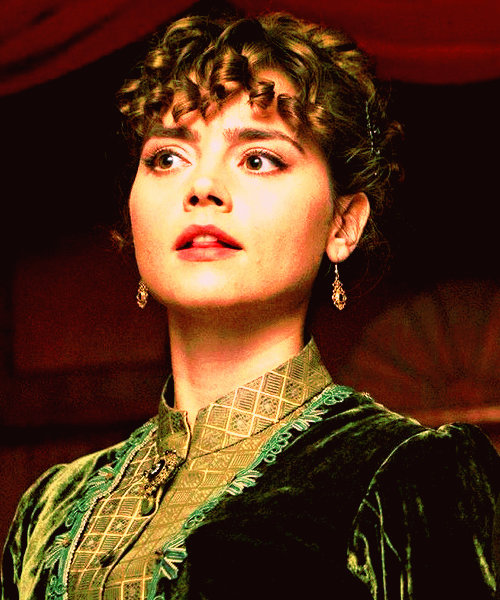
Regeneration is the theme of this episode. We’re along for the ride as his current human traveling companion Clara Oswald (Jenna-Louise Coleman) Clarastruggles to make sense of the whole concept of the Doctor regenerating. Not to mention the Doctor himself. Regeneration is never easy for the Doctor, and this one is especially difficult.

The writers use the theme of regeneration to hint at the insidious nature of the Doctor. Does this centuries-old alien wear a human face merely to be accepted by humans? Does he use this human face to keep from revealing who or what he truly is?

Philosophical questions aside, this first episode of the Capaldi era is classic Doctor Who, throwing a dinosaur into steampunk-infused Victorian-era London. But it also revels in the darkness that infuses many of Doctor Who‘s best episodes.

Based on this episode, I’m feeling pretty good about where we’re headed. Capaldi’s Doctor is clearly different from the rest, and Clara, as companion, is proving to be more Donna Noble than Martha Jones.

Finally, there was some great dialogue from this episode:

“You mustn’t worry my dear boy. By now he’s almost certainly had his throat cut by the violent poor.”

“Nothing is more important than my egomania.”

“It’s times like this I miss Amy.”

The latest Doctor: older and wiser?

The BBC just released a new trailer for the latest season of their classic sci-fi hit Doctor Who, with Peter Capaldi taking the lead role. Will this older Doctor signal a shift in the writers’ approach?

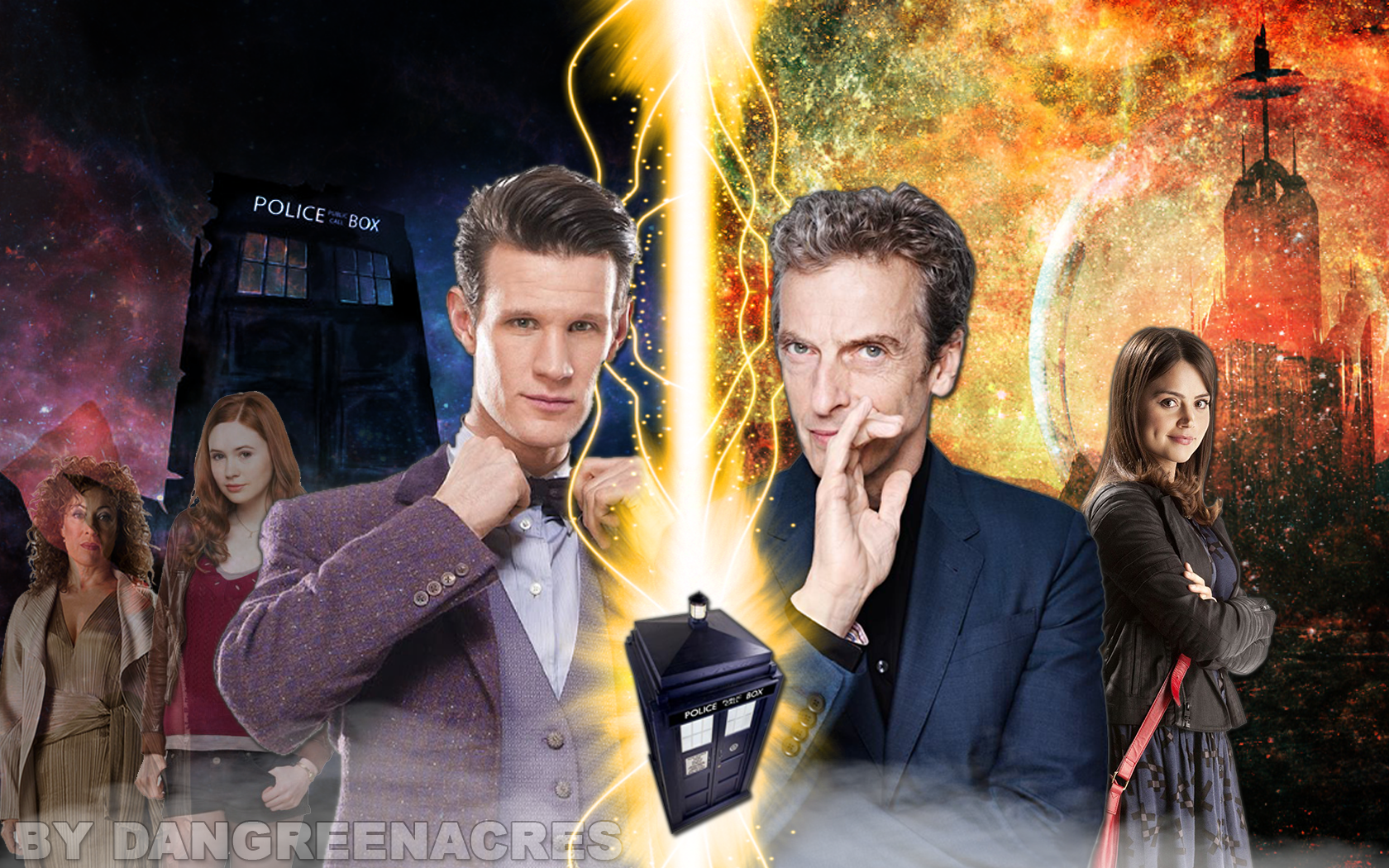
matt_smith_peter_capaldi_regeneration_by_dangreenacres-d6hmfuz

I’ve loved the reboot of Doctor Who. It’s been a thrilling ride, beginning with Christopher Eccleston as an edgy, battle-scarred Doctor, followed by David Tennant’s whimsical, haunted Doctor, and then onto Matt Smith, who brought a child-like, though deadly serious, quality to the Doctor. What all three Doctors had in common was that they looked significantly younger than Doctors of the past (I grew up watching Tom Baker — he was my first Doctor). Matt Smith, while a great actor, was in his 20s. Kind of strange for an alien who is centuries old.

The writers of Doctor Who seemed to be trending toward younger Doctors, maybe chasing a youthful audience. But then they announced that Peter Capaldi would take over for Matt Smith. While there’s much unknown about how Capaldi’s Doctor will be written — and played — he’ll definitely bring a new level of gravitas to the role.

But what will all this mean in terms of storytelling? I guess we’ll find out when Doctor Who returns in August.

In the meantime, BBC’s minute-long trailer highlighting the upcoming season includes the returning companion Clara (Jenna-Louise Coleman) and the voice of one of the Doctor’s classic enemies, the Daleks. Check it out below.


Apocalypse obsessions

Why are we so fascinated by end-of-the-world stories? It’s personal.

ch6-4horsemen_pastorpack_small

Sci-fi is filled with apocalyptic stories, from asteroid flicks like Armageddon to zombie/plague movies such as 28 Days Later. And this end-of-world obsession is nothing new. Think back 2000 years ago to a book in the bible titled Revelation. What’s it about? Basically, the end of the world.

And now sci-fi themed website io9.com has a list of the most plausible ways that the world, as we know it (meaning human civilization) might end.

Their list:

1) pandemic

2) asteroid/comet impact

3) large igneous province (not a volcano, but a crack in the earth that oozes lava and toxic gases

4) climate change

5) radiation disaster, either nuclear war or a gamma ray burst from space

6) an invasive species that upsets the natural ecosystem and ruins our food supply

7) a black swan, or, something we have no way of accounting for (think The Terminator movies)

The point is we love to think about the world’s end. But why? I believe it’s because our world will truly end one day (at least on Earth). We will all die. That fact is inescapable, and it’s burdensome to think about it every day. Still, it’s there, and it seeps out into mass culture through armageddon stories.

We can’t change this fact, but at least we can have fun along the way.


Lukewarm Leftovers

Will The Leftovers become a TV classic? Too soon to tell, but it doesn’t look good.

leftovers

HBO’s new sci-fi-ish series The Leftovers has an intriguing, if unoriginal premise, is based on a high-profile novel, and is produced by the man behind Lost. Yet the first episode left me underwhelmed.

The set-up: two percent of the world’s population has vanished with no explanation. Three years later, the residents of Mapleton (aka Anytown, USA) struggle to move on despite the uncertainty and lingering grief.

the-leftovers-hbo-damon-lindelof

The story follows police chief Kevin Garvey (played excellently by Justin Theroux), who is not quite with it. He struggles to relate to his rebellious teenage daughter Jill, and his son Tom, who has fled to a mysterious commune. He butts heads with the town’s mayor, Kevin and LucyLucy Warburton, and tries to keep the peace between the townspeople and a strange cult that wears white, chain smokes, doesn’t talk, and taunts the grieving. And he may or may not be crazy.

So far, so good. Plus, The Leftovers based on a book by bestselling writer Tom Perrotta. I like it when TV shows and movies have a literary legacy (then again, as a writer, I’m biased). And, it was brought to TV by Damon Lindelof of Lost fame. Say what you will about Lost; that show is a classic in my eyes, with spectacular storytelling and gripping characterization. The Lost connection, more than anything else, had me excited for the show.

But based on the first episode I’m not confident that The Leftovers is headed for greatness. I see two main problems:

1) I fear we will never get any kind of explanation for the disappearance, and this show will become an endless grief-fest.

2) There were so many characters who we zoomed past that it was difficult to get sucked into any of their stories. Theroux’s Kevin Garvey worked well, but aside from him, I felt no real connection with the faces who passed by.

Some of the subplots were interesting. Nihilism has gripped the youth of Mapleton, as we see with Kevin’s daughter Jill. There’s a party scene that perfectly captures the sense that if anyone can suddenly vanish, what’s the point of trying?

The story following Kevin’s prodigal son Tom, who is part of some survivalist-type cult is also intriguing (though the actor is miscast. He is 29 in real life, while his “father” is 42. It shows).

And then there’s Christopher Eccleston of Doctor Who fame who plays a preacher. I’ll tune in to anything with a Doctor Who alum in it.

I’m nowhere near ready to give up on The Leftovers, though I’m somewhat pessimistic. It’s hard to NOT compare The Leftovers to Lost, but as with Lost, I fear that the writers will lose their way when it comes to the sci-fi elements.

I hope I’m wrong.

Is time travel possible (for real)?

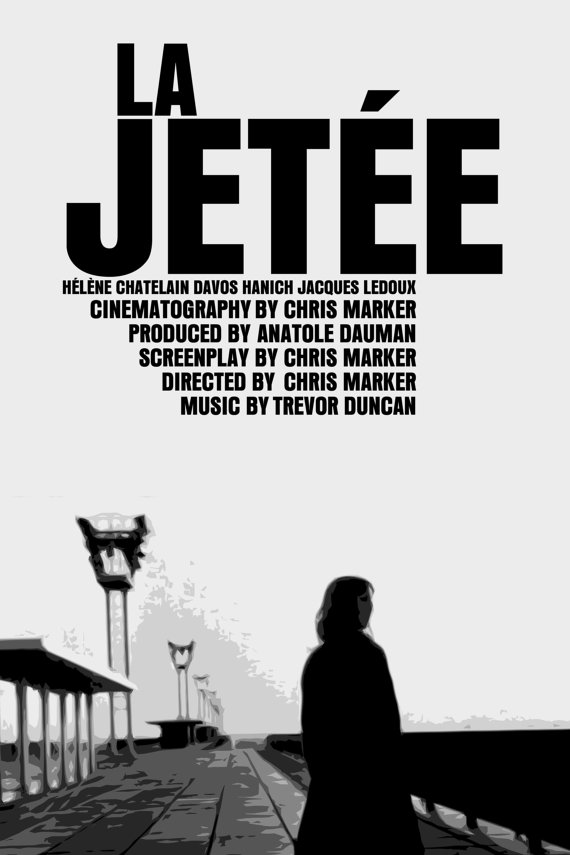
When I was young my mother was in college and she took me to one of her film studies classes. I was maybe 8 or 9, and the movie we watched was an avant garde French black-and-white flick called La Jetee, about a man from a desolate future who travels back in time and is killed. A boy watches the man die, and the boy turns out to be that man as a child (You can watch the whole movie here).

La Jetee

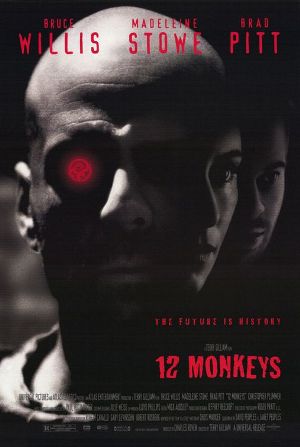
Since then I’ve been hooked by time travel stories. They’re a staple of sci-fi, and some of my favorites are The Terminator series, Doctor Who, SyFy channel’s Continuum, and 12 Monkeys, which was based on La Jetee.

Twelve_monkeysmpWhile time travel is an interesting fictional conceit, it’s been pretty much dismissed as an impossibility for several reasons:

1. How could it be done physically?

2. The possibility of time-destroying paradoxes — the most famous one being, what if you went back in time and accidentally killed your grandfather before your parent was conceived?

3. If time travel is possible, then why aren’t time travelers all around us?

I’ve never been convinced by number 2. Number 1 never interested me. Number 3 has always been the most persuasive.

Nevertheless, scientists are getting closer to solving the riddle presented in number 1.

According to this report, a team of Australian physicists have simulated time travel on a quantum level using particles of light. The particle “traveled” through spacetime on a closed timeline curve. This means that the particle returned to its original starting point. It did not create a new curve.

In the simulation, the particle was sent back to an earlier point in time and interacted with the original particle before returning back to the present.

Don’t ask me to explain the nitty-gritty science behind this stuff. I failed physics in college.

So, if I’m reading this correctly, time travel is theoretically possible, at least in the quantum world. Will this mean that we can one day travel through time? Probably not, but who knows?

In the meantime, I’ll keep going back, time and again, to time travel stories.

Interview with Andrew Lamb, author of the Dispatchers series

Astral projection and bacon sandwiches are two things you normally wouldn’t link together. Fellow indie writer Madhuri Blaylock interviewed English writer Andrew Lamb, who wrote a paranormal novel — Dispatchers: Vengeance of the Dark — about astral projectors up to no good. That’s an intriguing set-up for a novel. Read Madhuri’s interview with Andrew below as they talk about his writing, his love of Cornwall and bacon sandwiches.

mpavamani45's avatarMadhuri Writes Things

Last week I became a member of the Goodreads group Paranormal, Fantasy, Dystopia and Romance Readers, Writers and Reviewers, a group whose goals are to help promote writers, give reviews, get good books out to reviewers and readers, give advice, engender good book discussions and just generally support Indie authors any way possible.

It’s through this group that I met Andrew Lamb, a writer from across the pond, developing a sci-fi/fantasy series called The Dispatchers, described as “a dark new twist on Astral Projection.” [Admit it, I had you at “dark new twist”.]

Always looking for new ways to help promote my fellow Indie authors and put some good juju out into the universe for myself and The Sanctum, I contacted Andrew to see if he would sit down for an interview to discuss pretty much whatever nonsense I throw at him. Apparently he’s a good sport…

View original post 1,116 more words

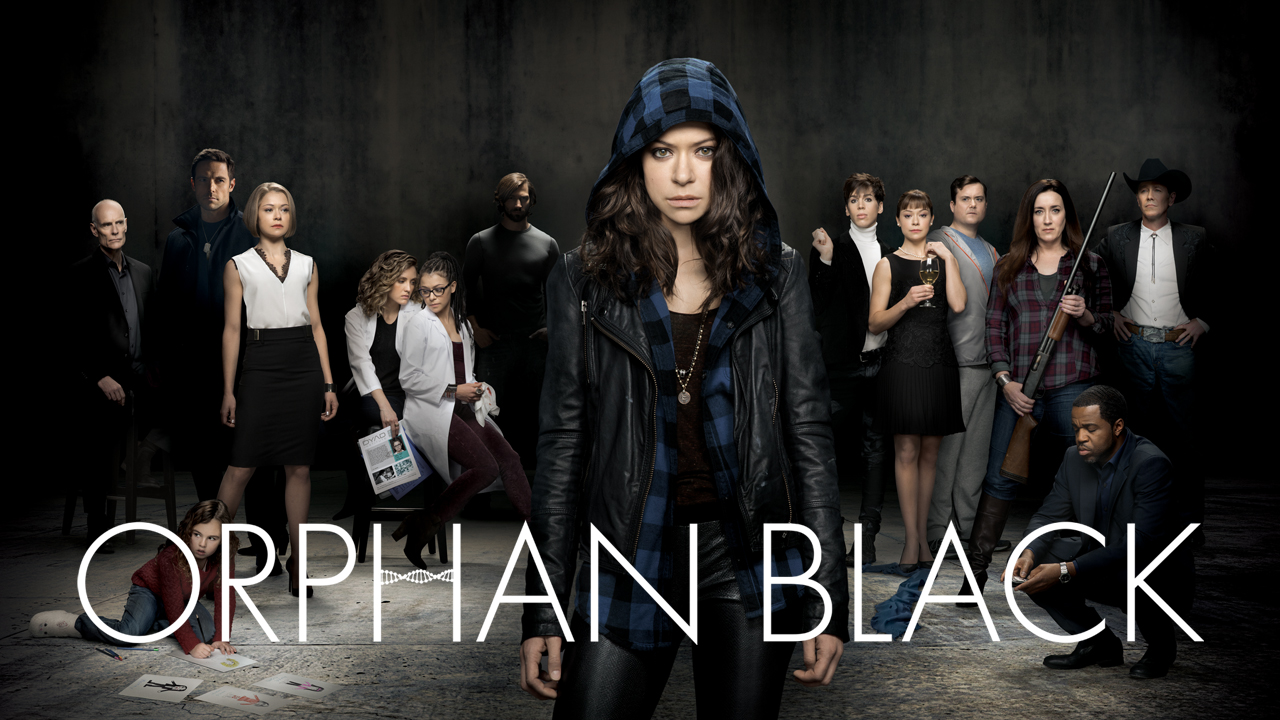
The secret genius of Orphan Black

The BBC America cult hit series Orphan Black has fast-paced plotting and amazing acting, but it’s something more psychological that keeps viewers hooked.

AA_orphanblack

I thank Doctor Who for introducing me to Orphan Black. A couple of years ago, BBC America aired Doctor Who at 9 pm. When 10 came around, I was too lazy to lift the remote and change the channel, so I left it on. The next show? A new Canadian-produced sci-fi show with the weird title of Orphan Black. It only took one episode to hook me.

Sarah ManningThe premise: Sarah Manning, a rough-around-the-edges London transplant living in Canada discovers by chance that she’s a clone. Together with fellow clones Alison, an uptight soccer mom, Cosima, a gay, hipster science nerd, and Sarah’s loyal foster brother Felix, she tries to unravel the mystery of her existence, while protecting herself and her young daughter, from sinister forces.

Orphan Black, if you haven’t guessed, is not your standard thriller.

What makes this show great is, first and foremost, the top-notch writing. Orphan Black moves at breakneck speed (sometimes too fast). Once it has you, it doesn’t let go. And it is unflinching in its violence.

And then there’s Tatiana Maslany. This actor is amazing. She plays each of the clones (I read that there’s been 12 accounted for, but we’ve only seen 9. Maslany has played all 9. Even when it’s just a brief portrayal, Maslany manages to impart a unique persona on each clone.

clones

Often, though, the clones interact with each other in a single scene. Think about it: one actor playing 3 different parts in a five minute scene. She does more than just pull it off. We quickly forget that it’s only one actor who we’re seeing. And then there was the scene where Maslany played Alison impersonating Sarah. Brilliant.

But to me the secret appeal of Orphan Black lies in its premise: clones. Clones are really nothing more than identical twins — two (or more) genetically identical humans. But identical twins, while they share the same exact DNA, are often more dissimilar personality-wise than alike. The same with the clones in Orphan Black. You have clones ranging from rough-edged transgender Tony to the corporate ice queen Rachel. Genetics doesn’t equal destiny.

What Orphan Black gives us, on an unconscious level, is a “what if” moment. What if I’d been born rich/poor/unwanted/loved? What if I went to/never went to college? What if I got married/never got married? We all have lives that go unlived, even those of us who live to the max. Choices inevitably are made. In Orphan Black, we get to see one genetic code across a range of lives and situations and choices. Why is Sarah straight and Cosima gay? Why is Alison so uptight while Sarah is so free-wheeling?

Who knows? But playing along in this game is half the fun.