Book vs movie: World War Z

It was nearly an impossible book to film, but they filmed it anyway.

There’s only one book that comes to mind as a successful movie adaptation (though I’m sure there are tons of others), and that’s The Hunger Games.

Zombie thriller World War Z by Max Brooks was a mega-successful book.

Image

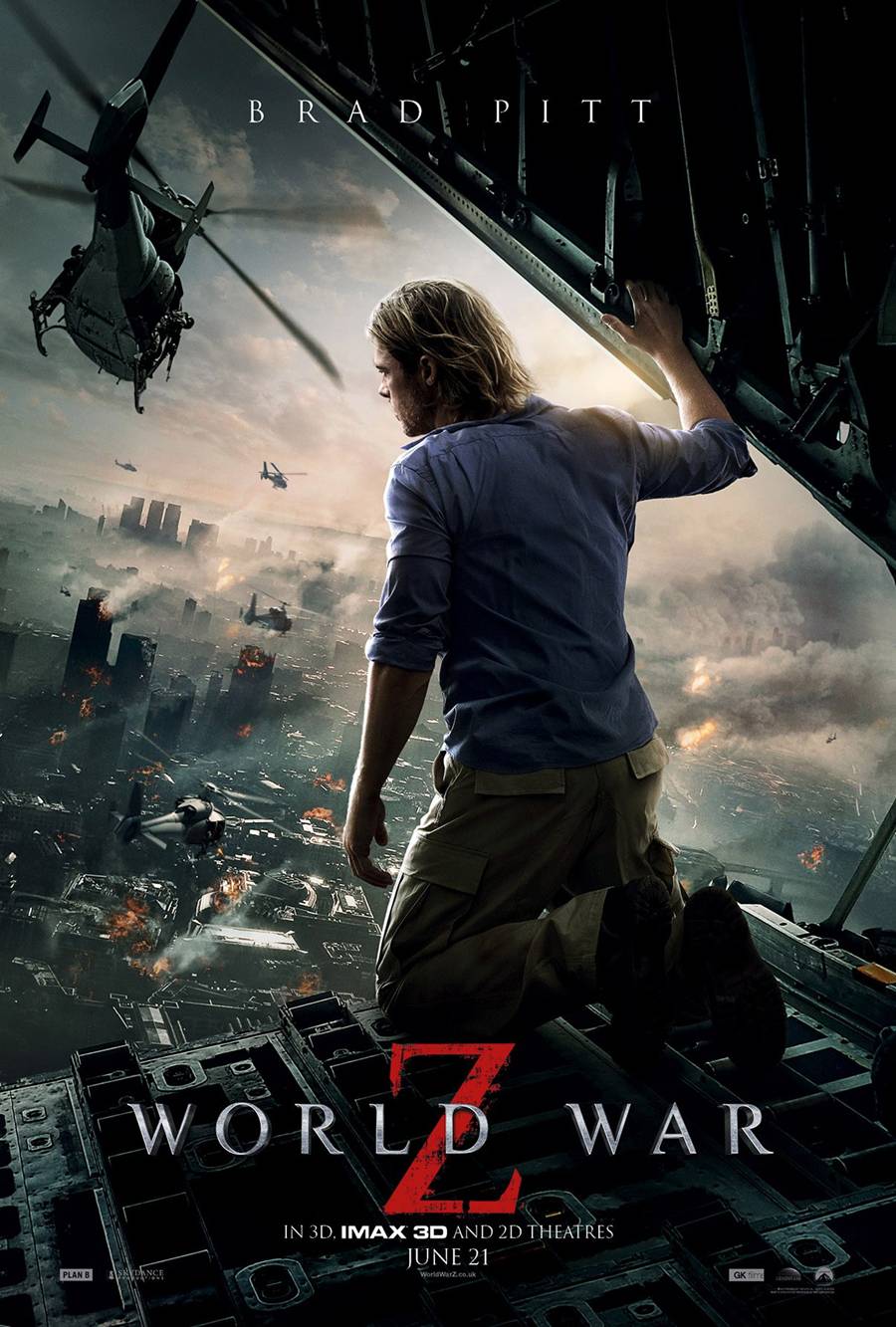
World War Z the movie, produced by Brad Pitt, was a moderately successful movie.
Image

Both are vastly different beasts, and the adaptation didn’t quite make the Hunger Games standard.

To be fair, the book is nearly unfilmable as written. It’s told in the style of The Good War, an oral history of World War II by Studs Terkel. World War Z (book) is written after a global zombie pandemic/attack/war. It’s narrator is a UN rep who is compiling reports on the war from around the globe. In a neat literary trick, while the narrator appears in every chapter — he actually interviews the survivors — we never even know his name, or much else about him. This allows the focus to be on the individual stories throughout the book.

And the stories are gripping. We hear from normal folks who have to bury their pain to soldiers who relay harrowing tales of near death to higher-ups who reflect on the war from a matter-of-fact perspective. Max Brooks excelled at writing these micro-tales that not only have genuine human drama, but combine facts on worldwide culture and geopolitics. Brooks covers nearly every facet of the global war and its aftermath, including the new world order that results. It’s fascinating to see how Russia has become a theocracy, Cuba is a capitalist powerhouse, Israel and Palestine finally live in peace, and China is a democracy.

The movie version of World War Z. goes in a different direction. The hero (Hollywood loves its heroes) is Gerry Lane (Brad Pitt). He is a former UN investigator who gets caught up in the zombie outbreak in Philadelphia with his wife and daughters. After a close escape from a Newark rooftop, Lane and his family are flown to a ship, where Lane is called back to duty to help a CDC scientist search for a cure. This search takes Lane (and the viewer) to South Korea, Israel, and Wales.

The movie tried to stay true to the book in the sense that it was a global story. It was exciting to travel to those locations, even if the plot felt forced. For instance, I was unsure as to why Wales, in particular.

But while the book was one of my favorite reads, it did lack that central human character, and that’s the role that Gerry Lane served.

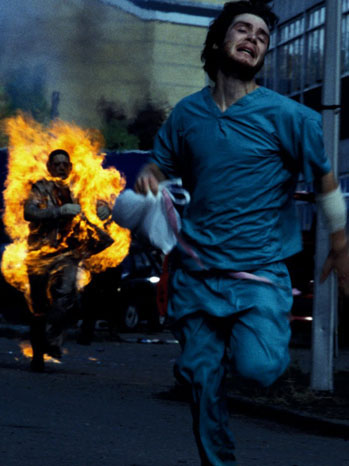
The movie also improved the book in its use of zombies. These were not the slow, ambling (though still menacing) zombies that we’re used to ,and which Brooks used. These zombies were lightning fast. The opening scene of Lane’s escape in the Philly streets was outstanding. The swarm happens in real time. It’s intense. There’s nothing like that in the book, though to be fair, it’s much easier to relay menace on film than in a book. And the scene with the zombie swarm scaling the wall in Jerusalem is a classic.

Image

Still, the movie couldn’t quite match the book in its scope. And as with most action movies, it stretched my belief nearly to the breaking point. A zombie outbreak on a plane results in a too-neat escape that could never happen in real life. Also, in the movie, the Israelis survived because they spotted the threat before any other country and walled themselves off. Yet they didn’t realize that noise would attract the zombies? The movie turned one of the most hopeful parts of the book — a lasting Israeli-Palestinian peace — into a tragedy.

In short, there were too many harrowing escapes for Pitt, and the last act in Wales nearly put me to sleep.

My recommendation — read the book if nothing else. Then see the movie, at the very least for it’s amazing visual effects. I hear there are sequels to the movie planned. Hopefully they figure out how to add more of the book’s heart.

Blurred lines – Zombie edition

Zombies through the ages have morphed, and they continue to do so.

The Hollywood Reporter has this cool slideshow on their website that takes us through decades of zombies in film. It starts with a 1932 movie titled White Zombie. But they weren’t zombies as we know it — they were simply people who were entranced.

Image

The years that followed gave us more voodoo zombies, then on to George Romero’s iconic undead slow walkers — to the brain-eaters, up to today’s version — the viral walkers.

I have a soft spot for Romero’s zombies, especially the ones in Night of the Living Dead – they were my first, and I’ll always love their menacing ambling. Plus, there was something about the black and white of the movie that kept the creep factor high.

Image

But I’m really digging the later versions as well, especially the one popularized by the British movie 28 Days Later. These were zombies created from a lethal infection, still vicious but not as mysterious. These latter-day zombies thrill the science geek in me.

Image

So what will come next in zombie lore? Alien-induced zombieism? I can’t wait.

Earth-bound monsters

When I was eight my parents took me to see the classic horror flick Alien in the movie theater. Little did they know what they were getting themselves–and me–into. They were sure I’d be terrified, but I barely flinched through the horror and gore Johnhurt(except for the iconic spaghetti scene, where the baby alien bursts through John Hurt’s stomach).

Maybe that’s because a few years earlier I was terrified by the flesh-eating zombies in George Romero’s Night of the Living Dead–and thus inoculated–from horror.

Nevertheless, the Alien franchise features some of the scariest, awe-inspiring monsters. These are creatures that use aliens.1humans not for food but as breeding pods, suffering through slow, agonizing deaths. Very much an H.P Lovecraft view of horror: the alien monster as a destroying force that gives no consideration to our humanity in pursuit of its destruction.

It turns out, once again, that nature parallels these horrors.

alien 1Take this parasite called PhironimaAccording to this article, it is thought to be the inspiration for the Alien monster.

And with good reason.

This tiny parasite lives in the ocean. It survives and thrives by attacking free-floating zooplankton. First it carves out the zooplankton’s insides. Then it climbs in and uses the hollowed out creature as its transport.

It’s not clear whether the Phironima kills the zooplankton, but the parallels to the Alien xenomorph are blood-curdlingly clear: a monstrous-looking creature alters and destroys another to use for its own benefit.

This is nature.

Sci-fi is failing us

Sc-fi is supposed to prepare us for the future, but no one gave the script to the robot creators.

The Terminator came out nearly 30 years ago. It lit the warning flare for a whole generation: artificial intelligence (machines, computers, robots, etc etc) will become self aware and will attempt to obliterate mankind. In the movie, this was done by Skynet, a high-powered war machine. Just as Star Trek has pushed us toward a more egalitarian society, the Terminator franchise has subconsciously tried to prepare us to battle human-hating robots.
 
And it’s been effective.
 
Take Japan’s repeated efforts to create companion robots, such as this nurse robot from Koroko robotics company:
 
Image
 
Creepy, right? Can’t you imagine her peeling off that fake skin and shooting you down with red glowing eyes? Something like this Arnold Schwarzenegger metallic monster:
 
Image
 
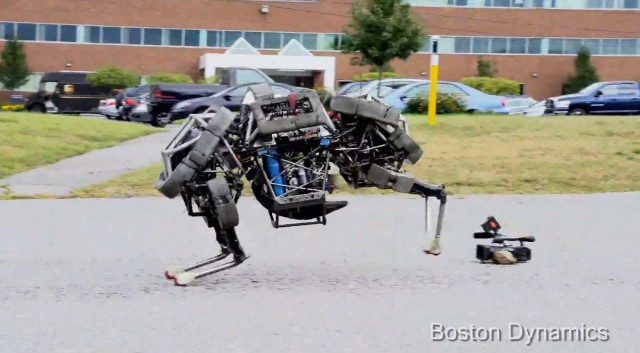
Now those “geniuses” at Boston Dynamics are fouling it all up. They’ve created a vicious robot that looks like… a galloping, headless goat/horse/metal hybrid, both fast and clumsy at the same time. Vicious. Silly. Unpredictable. Death bringers all the same.
 
Image
 
Watch this video and you will realize how confused and ill prepared you will be when this robot is hunting you down.


Nope. We only know how to fight humanoid, Schwarzeneggeresque robots. Not these crazy things.