I’ve been on a classic lit kick for some time now. A big part of that is my utter disappointment with books published in the 21st century (with a few exceptions), which seem to either be written by and for fellow MFA grads, or focus too much in the particulars of identity with little regard for storytelling and characterization. To deal with this I’ve been reaching further back in time, figuring that writing that’s survived the decades has to be good. Flannery O’Connor, for one, didn’t disappoint.
Having just finished Raymond Carver (recommended), I needed a new book, so I chose Evelyn Waugh’s 1945 novel Brideshead Revisited.
I bought it almost cold. All I knew about it was 1) it was about a British aristocrat family, and 2) it was kind of gay.
I was imagining Downton Abbey meets Brokeback Mountain, neither of which I’ve seen. Or maybe something along the lines of Saltburn, which I saw and hated.
I got the book in the mail and I read it fairly quickly (for me), and when I got to the end I was like…huh.
Huh because I didn’t quite get it.
First, a summary. Brideshead Revisited is set in England just after World War I. It follows Oxford student Charles Ryder (the narrator), who befriends the alluring and eccentric Sebastian Flyte. Sebastian is a part of an aristocratic Roman Catholic family, and their estate is called Brideshead. Sebastian brings Charles to Brideshead where Charles soon becomes entangled with the Flyte family—Sebastian’s mother, brother Bridey, sisters Julia and Cordelia, and his estranged father. Over the course of about a dozen years we follow the ups and downs of the Flyte family, all seen through Charles’s eyes.
The story was interesting and well written and also way less gay than I thought it would be. There’s not much said explicitly about Sebastian and Charles’s relationship, though there’s strong implication. Even with that, there was little overt attraction or detailed intimacy between the two. If anything, I read Charles’s attraction as something other than physical. What exactly, I still can’t say, but their relationship, on Charles’s part, read more like a platonic infatuation.
What Sebastian thought of Charles, we don’t know.
Sebastian, as it turns out, is just the catalyst. He’s gone for much of the story. He becomes a drunkard and runs away to North Africa. While Charles doesn’t quite forget him, he moves on with his life. He becomes a successful painter, marries, has a couple of kids, and then leaves his wife for Sebastian’s sister, Julia, who he definitely had a physical attraction to from the get-go. This continues his involvement with the Flytes for a little longer before it all finally ends.
I wasn’t sure what to make of the story as a whole. Much is made of the family’s status as Roman Catholics. The mother, older brother Bridey, and youngest sister Cordelia are committed. Sebastian and Julia, not so much. Sebastian resents his mother and all she represents, while Julia chafes against anything that she perceives as limiting her. That’s what she says, at least. I think it’s something else. She resents that, as a noble, she’s expected to marry a certain class of person, but as a Catholic, her options are severely limited.
Later in the novel, their father, Lord Marchmain, who had converted to get married, but then left his wife and faith, returns from Italy to Brideshead as World War II looms. On his deathbed he repents, which rekindles Julia’s faith, and as a result, she ends her affair with Charles.
The novel was framed as one big flashback. It opens in the early days of WW II with Charles, an officer, being barracked at Brideshead Manor. His reminisces are the story, and at the end, he walks into the Catholic chapel on the ground and prays.
Yep, that’s the end.
I felt like I was missing something obvious about the book.
So I went online and looked for some commentary, someone wiser and smarter than me, who could illuminate the book.
One essay resonated. The writer talked about how it doesn’t matter what the writer may or may not have intended (I knew next to zero about Waugh). She claimed that the text itself is all that matters. And thus, her reading (which she said went against Waugh’s) was that religion is oppressive, and that it’s a shame that Sebastian and Charles couldn’t have been gay and happy together.
Fair enough, but this is such a basic and 2026 reading. Our culture is obsessed with identity politics. Being a part of our culture, I tend to see things through that lens too. But isn’t it limiting? Doesn’t it get boring?
I got curious over her assertion that her reading clashed with Waugh’s intention. So I wanted to know what were his intentions?
Thank God for YouTube. I found a bunch of serious lectures on Brideshead Revisited. Watching them I learned that in his introduction, Waugh stated that the main character is grace: God moving through people. Since I never look introductions, I missed that.
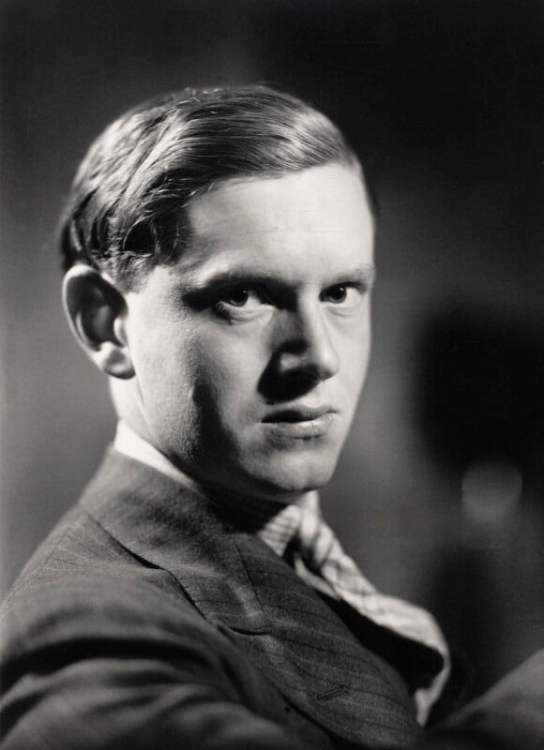
I also learned Waugh himself had converted to Catholicism as an adult, so that was his storytelling lens.
That was the piece I was missing. The book’s not about a short-term romance between Sebastian and Charles, even though that reading is still valid. It’s about the Flyte family’s struggle with their faith with a capital. And even though he shows that adhering to faith can be hard, it’s not meant to be about religion as a tool of oppression.
The attraction of Charles to Sebastian, to the Flytes, and to the manor house, Brideshead, itself, is about Charles being drawn into faith. Late in the book, Cordelia tells Charles that God’s grace is an invisible line attached to people, and God gives a twitch upon the thread to bring them to Him. At the end of the book, Charles prays in the chapel. Throughout the story he was a committed agnostic, and was often hostile to the Flyte’s faith, especially Julia’s. But there he was in the chapel. His thread had been twitched.
When you unpack the story through Waugh’s eyes there’s more to discover. The 20th century was a time of massive change. One of those changes was the rise of modernism. Waugh saw modernism as an erasure of tradition and a denial of the spiritual in favor of materialism, and he uses the book (through characters such as Julia’s husband Rex) to criticize it.
There’s also the name of the manor itself. Brideshead is a synonym of bridegroom, or just groom. The church is considered the bride of Christ, with Christ being the groom, So, Brideshead=Jesus. Considering the manor house itself is almost a character, this makes sense for this story.
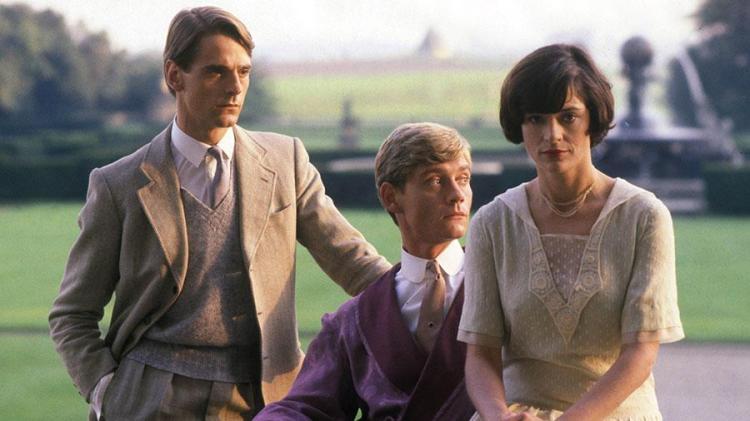
After watching various lectures I watched the 1981 miniseries. It turned out to be a faithful adaptation, so faithful I recognized chunks of dialog pulled straight from the novel. While I liked it, I wasn’t a huge fan, mainly because I’ve never had much interest in the finery of British aristocratic life. I’m not some crazy Marxist hater. I just don’t care. Still, if you’d rather watch eleven hours instead of reading the book, go for the miniseries.
So looking back on my experience with Brideshead Revisited, it was positive. I like it when a book makes you think and when it pushes you out of your intellectual comfort zone. Brideshead Revisited did that for me. I’m not a clever as I imagine, but I’m probably not dumb either.
Finally, regarding that one writer’s assertion that only the text matters, not the author’s intent, you can have it both ways. If you ignore the context of when and why the story was written, you’re depriving yourself. But you’re also entitled to read into the story whatever you want to. That’s also what makes reading so much fun.
Discover more from Read by Kevin
Subscribe to get the latest posts sent to your email.

