I’m a fan of short titles. One word is the ideal for me. The reasoning is, if you can boil the essence of your story into as few letters as possible, you’ve got some skill on display. So what explains this story of mine, The History of Value Shopping in 12st-Century America, which is probably the longest title I’ve ever chosen? Is it unfocused? Does it suck?
Suckiness, for lack of a better word, is subjective, and apparently this insanely long titled story did not suck as per the folks at Monkeybicycle, who published it here.
What I think happened, regarding the title is this: sometimes you’ve got to let the story (and title) be whatever it is.
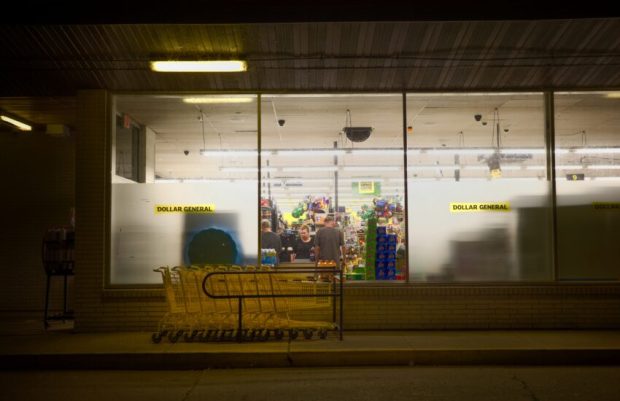
The History of Value Shopping in 21-st Century America is a deceptively simple story. Ellie Sears is a college student working on her thesis (hence the story’s title) by visiting dollar stores. She meets Lucinda, a clerk, a mysterious girl with a secret, and Lucinda brings Ellie along on an adventure. It’s a story of exploration and attraction (non-sexual) and escape. Hidden selves and alter egos. Maybe.
It’s also one of my shorter stories, clocking in at under 1600 words. It began life in a writing workshop as a power prompt, where you’re given two characters, a genre, a trope, a setting, and the POV/tense, and then you write a story. I came up with the bones of this one, and I thought I maybe had something, so I revisited it, and here we are.
I think at the time I was also in love with Bud Smith’s short story collection Double Bird. He’s great at detail and absurdity, so undoubtedly I was trying to incorporate some of his literary styles, play around with them, try them on, and while I would never consider myself an absurdist, I definitely like tossing in a drunken screaming circus clown now and again.
The moral of this post? I don’t know. Maybe it’s don’t insist on having every title be only one word. And let the story be whatever weirdness it insists on being, so it will find its place in the world.
The challenge: write a short story in 20 minutes using the following:
Characters: Long Island Real Estate Agent, Archaeologist
Genre: Comedy
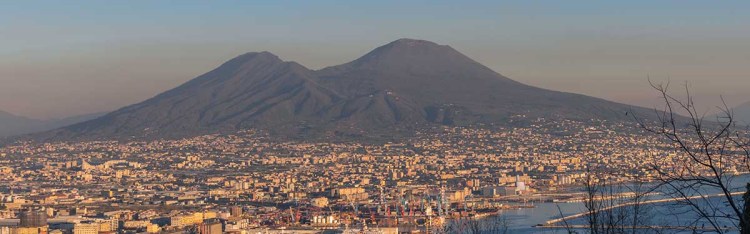
Setting: Mount Vesuvius
Trope: Talking animal
POV/tense: 1st/future
And the result:
“You can’t go wrong. Seaside views. Beautiful ocean breezes. And look at these vineyards.” Loretta DiChiara will wave a manicured, overtanned, overjeweled arm around the landscape. “And at only half a mil, it’s a steal.”
Charles Weathergood will take off his fedora and wipe a bead of sweat from his brow. “I don’t know. It seems awfully rocky.”
“Rocky’s good. It keeps the wolves away. They hate rocks.”
“Wolves don’t hate rocks,” I’ll tell Loretta. She’ll give me a death glare. That, or the botox froze her face in a permanent squint. Who can tell.
“And who exactly are you again?” she’ll ask.
“He’s my assistant,” Professor Weathergood will say.
“Honestly Ms DiCharia, the professor is only here to do some excavation on the site, not actually buy it.”
“Hold up,” the professor will say. He’ll start breathing heavy. Too heavy. I’ll whip out his inhaler. He’ll take a mighty pull off it and toss it back to me. “It’s true that I did not intend to buy a piece of property, but, but…” He’ll turn red again and start to wheeze. I’ll toss him the inhaler. He’ll drop it on the black earth and when he bends down to pick it up one of the buttons of his shirt will pop off. Loretta will wince. Maybe? Hard to tell through all the fillers.
“You know, my father, Augustus Weathergood, he was named after the great Roman emperor. He was the emperor here at the time mighty Vesuvius vented her gaseous fury across this very landscape.”
I’ll try to interrupt. “Actually–”
He’ll wave me away with a pasty hand. “And my father was one of the greatest archaeologists of his day.”
“Actually it was Titus,” a voice will say.
I’ll look around. Loretta too. And the professor. No one there but the three of us in this ridiculous heat on this ridiculous stretch of earth.
“Not Augustus, you foolish human.”
Up comes a dog, big and sleek and brown, with big wet fangs. “Oh my fucking lord a talking dog,” Loretta will shriek, covering her mouth with her jeweled-up hand.
“Not a dog, you simpleton, a wolf. And for the record…” the wolf will prance among the rocks like he’s in the Nutcracker. “See? No problem whatsoever traversing these stones.”
“Okay, okay, a talking wolf,” I’ll say. “Isn’t this some sort of sign, professor? Some omen? Some bad omen? As in, no way should you buy this land, not for half a mil, not for fifty grand, no matter what some leatherneck shyster real estate agent says?”
“Hey, you little asshole.”
“And what the hell is a real estate agent from Long Island doing in Italy?”
“If you must know, I happen to be Italian.”
“No shit,” you’ll say.
The professor will wrap a sweaty arm around your shoulder. “Listen, my boy, I don’t want you messing up this deal for me. Please be civil.”
“This deal? It’s an overpriced piece of land being sold by a charlatan complete with a freaking talking wolf.”
“And you’re a talking human,” the wolf will say. “You don’t see me making a scene about you.”
“Because wolves aren’t supposed to talk.”
“Perhaps you’re the one who shouldn’t be talking,” the wolf will say.
“Yeah, asshole.” Loretta will shake her fist at me, her bangles jangling in a fury.
“My dear boy, why don’t you take a break. I believe the heat is getting to you.”
I’ll take a step back. Loretta will glare at me while the professor explains to her that his dream has always been to have his own little piece of Vesuvius, to dig at his will, no oversight from any overbearing authority. The wolf will recline. He’ll follow their conversation, nodding and murmuring. Finally I won’t be able to take it anymore.
“This is so ridiculous.”
“If you don’t like it, then leave, smart boy. I’m about to make a hefty comission.”
“Yes, smart boy,” the wolf will snicker. “Leave.” He’ll climb on all fours and saunter over. I won’t know if it’s the heat or my shit pay or whatever but I drop to all fours and bite the wolf on his front leg. He’ll scream bloody murder and I’ll hoot laughter and then run to the nearest tavern for a nice cold beer.
Sometimes you need a little blood to make a story come alive. I’m not recommending you take out a razorblade and cut yourself, or someone else, but do it metaphorically.
I used this mindset in the crafting of my short story, Little Lamb, which was just published here by Epoque Press. The story follows Drew as he ventures to a very bizarre late night beach barbecue at the behest of his friend, Patrick, who in many ways is his Jungian shadow. I won’t spoil it, but let’s just say there is definitely blood involved.
Let’s rewind first. Credit where credit’s due. As I’ve written here before, someone (Virginia Woolf?) once said books beget books. Woolf’s Mrs. Dalloway was a riff on James Joyce’s Ulysses. I’m a staunch proponent of writers having to READING fiction in order to truly be a great writer (many of them don’t). First, it gives you an insight into great writing and storytelling, and second, it inspires you.
For the past five years or so I’ve been giving myself my own MFA in the craft of the short story, so far covering writers like Flannery O’Connor, Hemingway, Carver, just to name a few. Reading them. Dissecting them. Hand-writing passages from their stories. Another one of these writers was Yukio Mishima.
Mishima, from Japan, was one of the most prominent mid-century writers. I haven’t done too deep a dive into his bio, but he was an interesting and complicated cat. A difficult human, but also one who put his soul into his writing. You can feel the man’s pulse when you read his work. One of his stories, Raisin Bread, jumped out to me. It resonated. It haunted me.
I knew I had to grapple with it. I wrote passages longhand, over and over, and then I examined the characters and the setting and the plot. I took it all apart in my mind, and then I wanted to reassemble it all into something new, something different—take his set-up and veer off in a wildly different direction.
And that is how Little Lamb came to be born.
It’s weird, this deep dive into the craft of the short story I’ve undertaken. I’ve come to get so attached to these long-dead writers: Flannery and Ernest and Yukio, and I want to show them what they’ve taught me. I can’t do that, but I can share it with the world.