Watch this movie: Attack the Block

British horror done right…

 
attack_the_block_ver4_xlg

The British are known for many things: great music, bad food and teeth, and their one-time love of controlling the planet. But they’re not as well known for horror movies. Maybe this is good: they have little to prove, so there’s no pressure.

Case in point: two of the best horror movies of the past decade: 28 Days Later, a zombie-ish movie that starred Irish actor Cillian Murphy, and one of the coolest, underrated, most bad-ass and too-short-lived doctors from Doctor Who, Christopher Eccleston. It’s a hard-edged, smash-bang-fun time. Whatever you do, avoid the sequel (which shall remain nameless), as it nearly ruined the whole thing.

The second film is a horror/comedy, Shaun of the Dead, with Simon Pegg and Nick Frost. Couple dry British humor with gore and you have a classic. 

And then there’s Attack the Block, a low budget (I’m assuming) indie-style horror. Why low budget? Well, the monsters are kind of… rough. And the movie features the classic horror fail: the empty city streets. 

Get over it. I did, and it was worth it.

So here’s the plot in a nutshell, ripped straight from IMDB: a teen gang in South London protect their block from an alien invasion. There you go.

First, it’s great fun. The action starts pretty early, and once it starts, it rolls along, not too slow, not too fast. It lies somewhere between 28 Days Later (super serious) and Shaun of the Dead (tongue-in-cheek), though more toward the 28 Days Later end of the horror spectrum.

What stood out for me, most of all, was the unique set-up. You meet the teenage hero, Moses, as he, along with his juvy gang, are mugging Sam, a nurse on her walk home. Moses is cruel, someone who you would not choose to identify with, but over the course of the movie, he morphs into the hero of the story, in part because the other characters (drug dealers, vicious aliens) are so much worse, and in part because the extreme situation he finds himself in (battling aliens), forces him to grow as a person.

Rent this movie. It’s worth it, not just because it’s fun, but because it’s a great example of the anti-hero in drama, and it also shows another of my favorite literary conceits: the ordinary man (men and women in this case) forced to confront extraordinary circumstances. None of these people are Jason Bourne or James Bond, and their fight scenes reflect that, which makes it all the better. 
 

Want to kill Hitler? Good luck with that

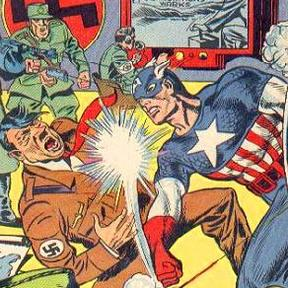
Attention time travelers, killing Hitler, while noble, may not be as easy as it sounds.
Image

One of my favorite web sites, io9.com, compiled several literary/TV attempts to kill Hitler, and the results are not particularly encouraging.

In a nutshell, all the literary/TV tries either 1) fail miserably due to the bumblings of the time traveler, 2) end up working, only leading to an even worse outcome, or 3) actually CAUSE Hitler and WWII as we know it.

Now, I wasn’t aware that this was such a common trope. I’ve seen the Doctor Who episode, Let’s Kill Hitler, which actually had little to do with the big bad himself, and was more about developing one of my favorite Who characters, River Song (for a good intro to all things Who, watch the two-parter Silence in the Library). Hitler was quickly forgotten in the first ten minutes or so.

Image

And I remember watching one of the items on io9’s list – the Twilight Zone episode (in full here) where Katherine Heigl (!) time travels to visit baby Hitler. She’s not there for a friendly visit, and not to give it away, but history incorporates her mission with no noticeable change in the timeline.

Several of the other books/stories/etc on the list are intriguing, and worth a look. Read this clever short story here, in its entirety.

The moral of this story?

Time travel as a dramatic device is great for one reason – there are endless permutations and possibilities. One simple concept – killing Hitler – can be spun in countless entertaining ways. As long as it’s well executed, it will work.

Smashing pumpkins, and worn-out cliches

“There’s a long-established concept that gets bandied about which is misery makes for great art…[so] you’re basically saying suffering’s good for business.” — Billy Corgan

Billy Corgan and his band Smashing Pumpkins ruled the rock world some years ago, for good reason. Listen to Bullet with Butterfly Wings for a taste.

I just stumbled across this short clip from a CNN interview where he spouts some wise words that blast the old cliche that artists must suffer for their art. That’s a lie. Good for him for calling it out. The truth is, suffering artists are too busy suffering to get to the art part. I’ve been there.

Corgan also talks about the next taboo in rock – God, while deflecting the Christian rock genre. Click here, or below – it’s worth a quick view.


Holy autopsies, or, nuns with knives


Take a look at this photo:

Image

No, he’s not the victim of some slashing monster. He’s been autopsied by a bunch of nuns way back in the Dark Ages.

Fiction aside, science is one of my other fascinations, and I came across this article on medical science in the Dark Ages in Scientific American. It turns out a lot of what we know about these centuries is dead wrong. For instance:

–Most people did NOT believe that the world was flat. Then knew it was round

–The Catholic church was a leader in scientific study, not a suppressor

The Catholic church was believed to be against autopsies. Again, not so. In fact, the church often performed “holy autopsies,” in which a corpse was dissected in an attempt to uncover a relic. In 1308, nuns performed an autopsy on an abbess and reported to have found a tiny crucifix embedded in her heart (How did that get there?).

File this under truth is stranger than fiction.


Lovecraft leftovers

Image

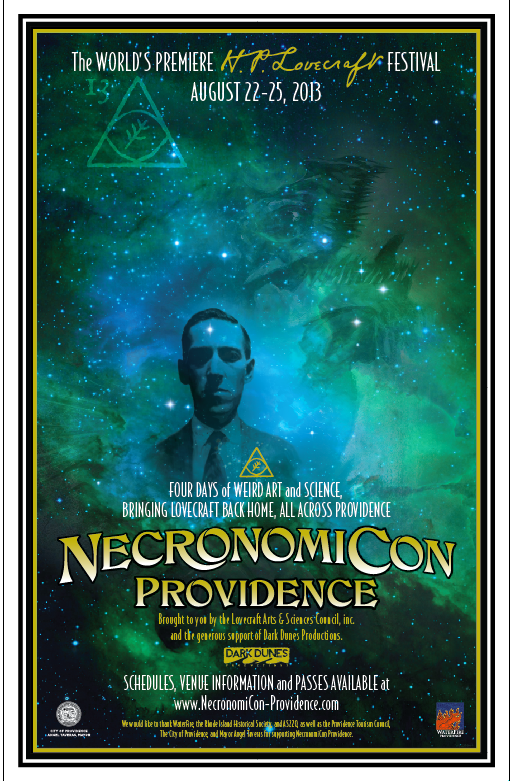
I was young and impressionable when I first saw the 1985 horror flick Re-animator. The best way to describe is as a Frankenstein story, with the heartwarming parts hacked out. The source for this story? Providence, Rhode Island’s own H. P. Lovecraft.

This Sunday I got to re-live this part of my adolescence at NecronomiCon, a convention devoted to all things Lovecraft, in Providence, of course, where I sat at a table selling copies of The Last Conquistador.

I don’t pretend to write pure horror in the Lovecraftian form. First, what exactly is that? In my take, Lovecraft’s horror is ultimately bleak, There is no hope – not even a thread. This makes it all the more chilling. The creatures who populate his tales aren’t so much malicious as uncaring, and pretty much unstoppable. Lovecraft excels in mood, and there is only dark.

Edward Lee is a writer in the Lovecraft style. City Infernal, about one girl’s journey through (literal) hell, rivals Lovecraft for darkness, though his heroine, Cassie, is tough and modern (in other words, there is a thread of hope). It is an exciting book that I tore through. And not only is there’s a great sequel – Infernal Angel, but another related book, Lucifer’s Lottery, which features as a character none other than Mr. Lovecraft.

Even bleaker? Try Brian Keene‘s zombie horror The Rising, where it’s not only humans turning into zombies. Don’t even bother uttering the word ‘hope’ on this thrill ride.

I’d say Lovecraft would be proud of these guys.

Music and mood: 16th century meets modern metal

Mastodon. Can’t say enough about how great this metal band is. I’ve seen them live twice. 

Image

In 2004 they released their CD Leviathan. Reviewed in the New York Times of all places, this CD was a riff on Melville’s classic Moby Dick. Now, I tried, and failed to read this classic in college, but I like to think that listening to this CD kinda/sorta makes up for that. Maybe.

What this CD definitely did for me was help contribute to the writing of my book The Last Conquistador. I used several pieces, across a range of rock, as my own soundtrack while writing (and rewriting… and rewriting), and Mastodon’s Leviathan was a part of that.

Rodrigo, the Spanish conquistador-wannabe, is shipwrecked and then stranded in what is now the US south/southwest, among Indians who have had minimal/no contact with Europeans. From the storm that wrecks the ship, to the initial desperate days under constant threat of death, I pulled inspiration from the loud, chaotic and desperate melodies of Mastodon.

Listen below.


Meet Jason Yankee

I hate Alex Rodriguez.

Image

Yes, this guy.

There’s nothing unique about my hate. Most Yankees fans can’t stand him, despite the fact that he’s played with the team for nearly a decade.

So why the mass hate? 

Is it the performance enhancing drugs?

The tabloid antics?

The huge gulf between what he’s paid and what he produces?

Yes to all three. But I don’t believe that captures it. The dislike among those I know is so visceral, and I think I know why.

First, imagine that the Yankees, the team in its entirety, was a fictional character, an action hero. Let’s call him Jason Yankee. He’s filthy rich, hard working, clean cut, loyal. He battles his archenemy Rodney Redsox, along with scores of minor villains including Mickey Mets. 

Now, think of the individual players as character traits of Jason Yankee. Derek Jeter would represent his All-American persona. Johnny Damon’s stint is a great example of Jason Yankee as clean-cut. Damon went from this cro-mag mess:

Image

To this:

Image  

Now how does A-Rod fit in?

That’s just it. He doesn’t. If you read a book or watched a movie featuring Jason Yankee, and an A-Rod-ish event occurred, you wouldn’t believe it. It’s too out of character.

So it’s time for a rewrite — long past time. Bye bye A-Rod.

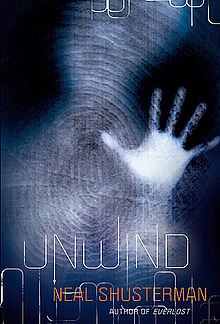
Read this book: Unwind

Image

If you survey the landscape of young adult publishing, it would be easy to assume that the future will be bleak. Take a look at Suzanne Collins’ phenomenal Hunger Games series, or Patrick Ness’ Chaos Walking trilogy. Well, add another one to the list.

Unwind, by Neal Shusterman, is set in a future America where the abortion battles led to a war, and the negotiated peace is as follows: abortion is illegal, but children can be unwound between the ages of 13 and 18, if their parents or guardians decide. What is unwinding? The body is taken apart, with each part being donated to someone in need (except for a few unusable bits). So, basically, they’re killed but in the name of charity.

With sci-fi/paranormal/supernatural stories, you often cannot look too closely at the logic behind the premise, lest is falls apart. And with Unwind, you have to ignore the fact that a law where abortion is illegal but adolescent children can be “aborted” would only piss off both sides.

So put that aside.

Once you do, what you get is a compelling and emotionally devastating book. It follows Connor, a bit of a wild kid, who discovers that his parents are going to have him unwound. He runs, and in the course of his travels hooks up with an unlikely pair: Risa, an orphan scheduled for unwinding, and Lev, the tenth child of a religious family who has been designated as a tithe (in other words, he will be unwound as well).

Grisly stuff.

I won’t reveal too much of the plot, which is a cracking story that keeps the pages turning. But this book is more than that. Shusterman hits an emotional core with two key scenes that resonated with me long after I put the book down (yes, it was paperback). Connor and company meet CyFy, a teen who’s had part of his brain replaced. The brain matter came from an unwound child, and now CyFy is accessing the “donor’s” memories and emotions. Only the donor has no idea he’s been unwound. Cyfy heads back to the donor’s home, and the scene between CyFy and the parents is gripping and grueling.

Later in the book, Shusterman describes an unwinding through the eyes of a character undergoing the process. Yep, this character is awake during the procedure. All I can say is that I wish I could write like that.

As with much of YA these days, Unwind may be about teens and labeled for teens, but it’s one for all ages.