Smashing pumpkins, and worn-out cliches

“There’s a long-established concept that gets bandied about which is misery makes for great art…[so] you’re basically saying suffering’s good for business.” — Billy Corgan

Billy Corgan and his band Smashing Pumpkins ruled the rock world some years ago, for good reason. Listen to Bullet with Butterfly Wings for a taste.

I just stumbled across this short clip from a CNN interview where he spouts some wise words that blast the old cliche that artists must suffer for their art. That’s a lie. Good for him for calling it out. The truth is, suffering artists are too busy suffering to get to the art part. I’ve been there.

Corgan also talks about the next taboo in rock – God, while deflecting the Christian rock genre. Click here, or below – it’s worth a quick view.


Holy autopsies, or, nuns with knives


Take a look at this photo:

Image

No, he’s not the victim of some slashing monster. He’s been autopsied by a bunch of nuns way back in the Dark Ages.

Fiction aside, science is one of my other fascinations, and I came across this article on medical science in the Dark Ages in Scientific American. It turns out a lot of what we know about these centuries is dead wrong. For instance:

–Most people did NOT believe that the world was flat. Then knew it was round

–The Catholic church was a leader in scientific study, not a suppressor

The Catholic church was believed to be against autopsies. Again, not so. In fact, the church often performed “holy autopsies,” in which a corpse was dissected in an attempt to uncover a relic. In 1308, nuns performed an autopsy on an abbess and reported to have found a tiny crucifix embedded in her heart (How did that get there?).

File this under truth is stranger than fiction.


Lovecraft leftovers

Image

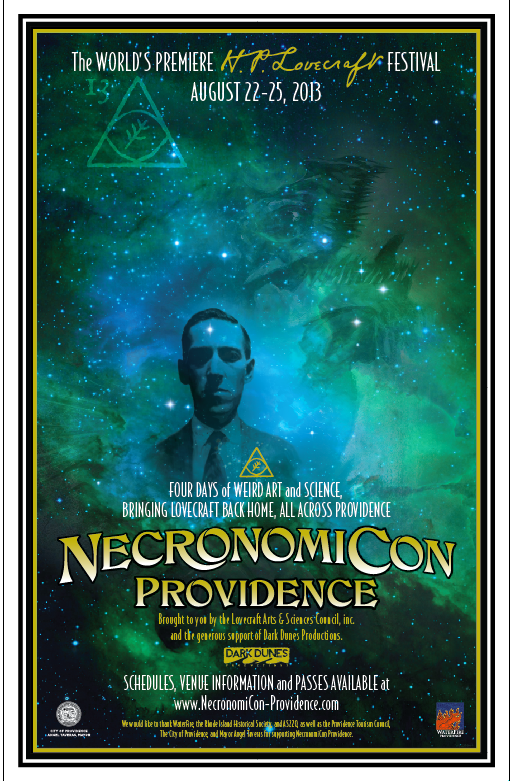
I was young and impressionable when I first saw the 1985 horror flick Re-animator. The best way to describe is as a Frankenstein story, with the heartwarming parts hacked out. The source for this story? Providence, Rhode Island’s own H. P. Lovecraft.

This Sunday I got to re-live this part of my adolescence at NecronomiCon, a convention devoted to all things Lovecraft, in Providence, of course, where I sat at a table selling copies of The Last Conquistador.

I don’t pretend to write pure horror in the Lovecraftian form. First, what exactly is that? In my take, Lovecraft’s horror is ultimately bleak, There is no hope – not even a thread. This makes it all the more chilling. The creatures who populate his tales aren’t so much malicious as uncaring, and pretty much unstoppable. Lovecraft excels in mood, and there is only dark.

Edward Lee is a writer in the Lovecraft style. City Infernal, about one girl’s journey through (literal) hell, rivals Lovecraft for darkness, though his heroine, Cassie, is tough and modern (in other words, there is a thread of hope). It is an exciting book that I tore through. And not only is there’s a great sequel – Infernal Angel, but another related book, Lucifer’s Lottery, which features as a character none other than Mr. Lovecraft.

Even bleaker? Try Brian Keene‘s zombie horror The Rising, where it’s not only humans turning into zombies. Don’t even bother uttering the word ‘hope’ on this thrill ride.

I’d say Lovecraft would be proud of these guys.

Music and mood: 16th century meets modern metal

Mastodon. Can’t say enough about how great this metal band is. I’ve seen them live twice. 

Image

In 2004 they released their CD Leviathan. Reviewed in the New York Times of all places, this CD was a riff on Melville’s classic Moby Dick. Now, I tried, and failed to read this classic in college, but I like to think that listening to this CD kinda/sorta makes up for that. Maybe.

What this CD definitely did for me was help contribute to the writing of my book The Last Conquistador. I used several pieces, across a range of rock, as my own soundtrack while writing (and rewriting… and rewriting), and Mastodon’s Leviathan was a part of that.

Rodrigo, the Spanish conquistador-wannabe, is shipwrecked and then stranded in what is now the US south/southwest, among Indians who have had minimal/no contact with Europeans. From the storm that wrecks the ship, to the initial desperate days under constant threat of death, I pulled inspiration from the loud, chaotic and desperate melodies of Mastodon.

Listen below.


Meet Jason Yankee

I hate Alex Rodriguez.

Image

Yes, this guy.

There’s nothing unique about my hate. Most Yankees fans can’t stand him, despite the fact that he’s played with the team for nearly a decade.

So why the mass hate? 

Is it the performance enhancing drugs?

The tabloid antics?

The huge gulf between what he’s paid and what he produces?

Yes to all three. But I don’t believe that captures it. The dislike among those I know is so visceral, and I think I know why.

First, imagine that the Yankees, the team in its entirety, was a fictional character, an action hero. Let’s call him Jason Yankee. He’s filthy rich, hard working, clean cut, loyal. He battles his archenemy Rodney Redsox, along with scores of minor villains including Mickey Mets. 

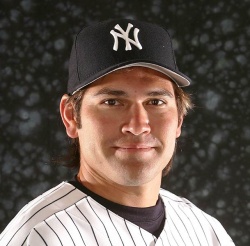
Now, think of the individual players as character traits of Jason Yankee. Derek Jeter would represent his All-American persona. Johnny Damon’s stint is a great example of Jason Yankee as clean-cut. Damon went from this cro-mag mess:

Image

To this:

Image  

Now how does A-Rod fit in?

That’s just it. He doesn’t. If you read a book or watched a movie featuring Jason Yankee, and an A-Rod-ish event occurred, you wouldn’t believe it. It’s too out of character.

So it’s time for a rewrite — long past time. Bye bye A-Rod.

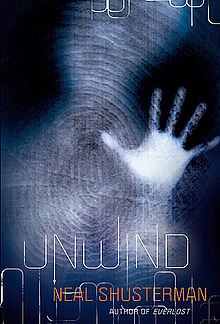
Read this book: Unwind

Image

If you survey the landscape of young adult publishing, it would be easy to assume that the future will be bleak. Take a look at Suzanne Collins’ phenomenal Hunger Games series, or Patrick Ness’ Chaos Walking trilogy. Well, add another one to the list.

Unwind, by Neal Shusterman, is set in a future America where the abortion battles led to a war, and the negotiated peace is as follows: abortion is illegal, but children can be unwound between the ages of 13 and 18, if their parents or guardians decide. What is unwinding? The body is taken apart, with each part being donated to someone in need (except for a few unusable bits). So, basically, they’re killed but in the name of charity.

With sci-fi/paranormal/supernatural stories, you often cannot look too closely at the logic behind the premise, lest is falls apart. And with Unwind, you have to ignore the fact that a law where abortion is illegal but adolescent children can be “aborted” would only piss off both sides.

So put that aside.

Once you do, what you get is a compelling and emotionally devastating book. It follows Connor, a bit of a wild kid, who discovers that his parents are going to have him unwound. He runs, and in the course of his travels hooks up with an unlikely pair: Risa, an orphan scheduled for unwinding, and Lev, the tenth child of a religious family who has been designated as a tithe (in other words, he will be unwound as well).

Grisly stuff.

I won’t reveal too much of the plot, which is a cracking story that keeps the pages turning. But this book is more than that. Shusterman hits an emotional core with two key scenes that resonated with me long after I put the book down (yes, it was paperback). Connor and company meet CyFy, a teen who’s had part of his brain replaced. The brain matter came from an unwound child, and now CyFy is accessing the “donor’s” memories and emotions. Only the donor has no idea he’s been unwound. Cyfy heads back to the donor’s home, and the scene between CyFy and the parents is gripping and grueling.

Later in the book, Shusterman describes an unwinding through the eyes of a character undergoing the process. Yep, this character is awake during the procedure. All I can say is that I wish I could write like that.

As with much of YA these days, Unwind may be about teens and labeled for teens, but it’s one for all ages.

Music and theme

I’m not a huge Coldplay fan, but they released Viva la Vida when I was writing The Last Conquistador, and this song lodged itself in my head. In my mind, the character of Rodrigo, a 16th-century Spaniard with big dreams, was in over his head. His motivations were complex, but much of it was a hunger for wealth and status. But his explorations in the Americas didn’t turn out as planned.

Colplay’s song carries a theme of melancholy, the rise and fall of a king or conqueror. And they were inspired by Mexican-born Frida Kahlo. Her work, in turn, fuses the old and new worlds.

Here’s the Coldplay video, an unofficial version with lyrics.


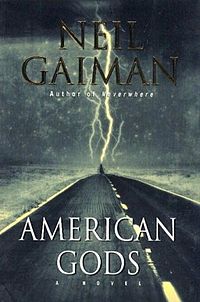
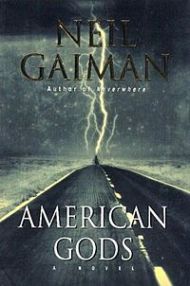
Read this book: American Gods

ImageAmerica, an immigrant country… America, thick with immigrant gods.
 
What is America? And who are the gods who roam this country? Those are the questions raised by Neil Gaiman (himself an immigrant) in his iconic novel American Gods.
 
This is Gaiman’s America: a sprawling landscape, larger than any one set of peoples or beliefs, where the land and nature are more powerful than any of the gods, old or new.
 
This is not a novel about the world’s America, or Hollywood America. It’s not about glamorous/gritty New York City, or the quirky/tragic south, or golden California. Gaiman takes us to the smaller places – the airports and fast food joints, the motels in midwestern towns, the off-road tourist traps, and the second-city walk-ups.
 
The premise: a war is brewing between the old gods and the new. A man named Shadow, an ex-con of mysterious origins with a faithless wife, is conscripted to join the battle by a huckster named Mr. Wednesday. Together they travel through the overlooked places of the country rounding up gods for a final battle to come.
 
So, how did these minor deities (and not just deities, but leprechauns and elves) come to live their decreasingly powerful lives in the new world? As Gaiman deftly describes in chapter-length interludes, immigrants who come to America carry with them their beliefs in their old-world gods. These gods take physical form and live on. Only their power diminishes when people no longer believe in them. They linger, but largely without purpose, living quiet lives performing parlor tricks, a “shadow” of their former selves. 
 
The human Shadow of the book is clueless regarding all of this, almost to a fault. As a battle between the old gods and the new ones (gods of computers, media, etc) is joined, Shadow ambles along, more of a spectator than a vital player. For part of the book, he’s hidden away by Mr. Wednesday in an isolated midwestern town. At this point I was confused by this side trip. In the end we return to the town and we get to the heart of this subplot, but it kept me waiting and wondering why we’d even gone there in the first place. My problem with Shadow, as written, is that he’s often reacting, rather than acting. It’s a problem I  struggle with in my own writing: if you have an ordinary man thrust in extraordinary situations, how do you have that character drive the action? In this way, Shadow is similar to Richard Mayhew, Gaiman’s hero in his novel Neverwhere. Gaiman’s huge talent, though, is his ability to create a sprawling, fantastic universe that captivates the reader regardless.
 
There’s a world full of minor gods packed into these pages. Who are they? How do their personalities translate into their human forms? Would have enjoyed it more or less if I’d known something about these minor deities. There’s no glossary, and I’m unsure whether it would be revealing too much if there was. 
 
Nevertheless, Gaiman presents a thrilling take on America. The land itself is nearly a character in its own right. And as for the people and their fading gods, I wanted to keep reading, even when it ended.