Read this book: After Dark

In the hands of this fiction master, After Dark is nighttime Tokyo reimagined as a surreal noir-ish dreamscape.

after darkI was in one of my favorite bars in Jersey City talking to the bartender Tom about the new insomnia-themed sci-fi novel Black Moon (which is on my shortlist). After a quick tour of books — others and mine — he threw one title at me: After Dark, by Haruki Murakami. Tom said it was strange, offbeat and captivating.

So I tried it. Tom was right.

The best words to describe After Dark is The Twilight Zone. The classic TV series often featured stories, settings, and characters that weren’t outright sci-fi or horror, but were just off-kilter enough to not be truly of this world. That describes After Dark.

The novel is set in a not-so-safe district of Tokyo. The narrator brings us in with a swooping eagle-eye view of the city (pretty after dark altmuch literally). Murakami uses an interesting technique where the narrator is our guide. He is nearly a character himself, though one who is never named or described. Instead he is the all-knowing, all-seeing, and he lets us have a glimpse.

What exactly do we glimpse? A pair of protagonists in their late teens chatting in a Denny’s after midnight. Mari is a 19-year-old student who doesn’t want to go home. Takahashi is a jazz musician on his way to an all-night practice. Mari and Takahashi met months earlier when Takahashi’s friend went on a date with Mari’s beautiful sister Eri.

What we get is a lot of talk between the two — on life, loneliness, alienation. After Dark almost reads like a play. We don’t get much action, but it doesn’t matter. These two characters are compelling.

Once Takahashi leaves Mari the action picks up. Mari gets tangled up with the manager of a “love hotel” where a Chinese prostitute has been beaten. We get glimpses of the dark side of this city, and it’s fascinating.

two girlsThe real strangeness comes when we get to the story of Mari’s sister Eri, the breathtakingly beautiful model. Eri sleeps through the whole book. Except for when she becomes trapped inside a TV.

Yes. That’s right. Trapped in a TV. The brilliance of Murakami is that he could write that and pull it off.

If you choose to read After Dark — and you should — don’t expect plot-twisting thrills. What you’ll get instead is a haunting story about young people on the edge.

(Two Girls image courtesy of www.innakomarovsky.com/blog)


The Girl and The Boy: local paranormal thrills

I’m a fan of supporting my local community, and that doesn’t just mean going to the local bars. I’ve become involved in my writing community here in Jersey City, and one of the girlwriters I’ve met is Madhuri Blaylock, a woman with a penchant for fantastical stories of page-turning urban paranormal fiction.

Her first book, The Sanctum: The Girl, follows our teenage hero Dev, a demon-angel hybrid. She’s targeted for death by a shadowy organization called the Sanctum, a worldwide group of families that monitors all the paranormal activity in our world. Dev, however, proves difficult to kill. Not only that, but she falls for one of he Sanctum’s best killers, Wyatt.

This was a fun book, full of relatable characters that ranged from stalwart best friends to seductive vampires, as well as The_boy_finalmustache-twirling villains I loved to hate.

Now Madhuri has released the second book in the trilogy, aptly titled The Sanctum: The Boy. Check it out, help me support my local community, and have some fun in the process.

Playing the Game of Thrones

I love this TV show, and I’ve read book 3 (mainly because I’m a sucker for spoilers) but I game-of-thrones-iron-throne-1024x576hesitated writing about Game of Thrones for two big reasons.

1) It’s more in the realm of fantasy (though with strong supernatural elements). I’ve never been big into fantasy — I struggled with the Lord of the Rings series.

2) Game of Thrones, both the print and TV versions, are deep and intricate. I don’t think my analysis, on an episode-by-episode basis, could do it justice.

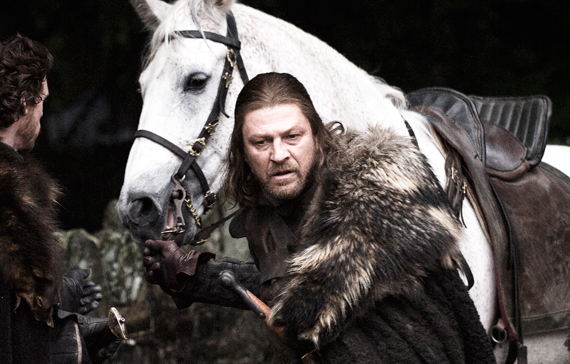
Nevertheless I’m a big fan of all things Game of Thrones. I think it’s brilliant storytelling. ned starkThe show hooked me late in the first season, when Ned Stark, played by Sean Bean (the biggest name in the cast), met his fate. I knew then I was in for a wild and unpredictable ride.

On TV, the production values are excellent, the pacing is consistently solid, and the actors are all pros. My favorite, and I’m not alone in this, is Peter Dinklage’s Tyrion Lannister. Tyrion as played by Dinklage is the complicated heart of a complicated show. Catelyn Stark, played by Michelle Fairley, a woman who is smart and tough and willing to do whatever it takes to protect her family, is/was a close second.

TyrionIn the books, writer George RR Martin alternates character viewpoints as he bounces around the fictional world of Westeros and beyond — Daenerys, Jon Snow, Sansa Stark, Catelyn Stark, Jaime Lannister, and Tyrion Lannister. Each of these viewpoints is utterly unique and fully formed.

But neither book nor TV show is perfect. The books are rambling. No, I don’t need listings of every Ser who fought in a certain battle twenty years earlier. And the TV show revels in gore and violence to the point of overkill. One blogger commented that the show uses rape as a set piece. Okay, I get it — this world is brutal.

These are minor points. Game of Thrones is great entertainment. Very few moments in recent TV history can top when Daenerys ordered her dragon to burn the evil Kraznys.

Game_Of_Thrones Daenerys

And then there’s the infamous Red Wedding episode, where Catelyn, Robb and his pregnant wife weren’t treated very well by their hosts (huge understatement). Check out this link for some great reaction videos.

red2

Watch/read Game of Thrones if you’re up for some excitement. And for great postgame reading, the best I’ve found on the Internet comes from the A.V. Club. Their website has intelligent commentary, with articles geared toward those who haven’t read the books and those who have.

pimpsmall-270x300

Interview with Indie Author Kevin Singer

This woman knows a thing or two about writing compelling characters. Dev, the lead in Madhuri Blaylock’s book The Girl (The Sanctum), is a teenage half angel/half demon powerhouse. Recently Madhuri interviewed me about my story Always Mine. It was a great experience. Check out the interview, and check out Madhuri’s book too.

mpavamani45's avatarMadhuri Writes Things

Back in January the book club at 9th & Coles Tavern in downtown Jersey City read THE GIRL and invited me to attend their discussion session. It was loads of fun hanging with Greg and the gang and was where I met fellow author and neighbor, Kevin Singer.

He’s very cool and it was fun talking about my book with another writer so when I had the chance this past March, I returned the favor and picked up his book “Always Mine”. It’s a little gem of a story and if you have a chance, I highly recommend snagging a copy and getting lost in its pages. You won’t regret it.

AlwaysMine_final

After reading “Always Mine”, I thought it would be fun to interview Kevin and see what goes on in his writer’s mind. Here’s what I discovered about Mister Singer:

Tell us a little about yourself.

I’ve been in love…

View original post 1,174 more words

Ultimate Dystopian Showdown: Battle Royale vs. The Hunger Games

I loved both The Hunger Games (books and films) and Battle Royale (the great Japanese movie long rumored to have inspired The Hunger Games). This blogger, The Spectatorial, has a great comparison of the two. What I’d add: while The Hunger Games is great, Battle Royale is better in two ways — it’s not as cartoonish as The Hunger Games, which makes it even scarier; and the “contestants” in Battle Royale have known each other all their lives, which makes the deaths that much more impactful.

Read this book: The Last Policeman

Apocalypse stories are divided into two camps:

1. The impending doom, where we see the event plus its aftermath (or see it thwarted)

2. The post apocalyptic, where a remnant of survivors has built a new and dangerous world from the wreckage of the old.

Ben H. Winters, in his novel The Last Policeman, gives us what should be a new sci-fi subcategory all its The Last Policemanown: the pre-apocalyptic world.
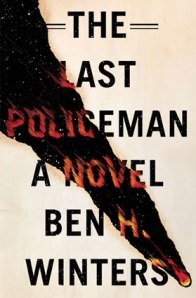
Hank Palace, the hero of The Last Policeman, has always wanted to be a detective (a desire that in part stems from the fates of his parents). A rookie cop with the Concord, New Hampshire Police Department, he gets his wish, but only because an impending cataclysm has opened up a detective slot.

This impending cataclysm? A kilometers-wide asteroid named Maia heading straight for Earth.

In the world of The Last Policeman, everyone knows that Maia will arrive in several months to end life as we know it. Several months of knowing that doom awaits. Imagine that.

Winters does a stellar job in describing what life is like in this world. And he does so mainly through the eyes of Palace, a solid, tenacious, and kind protagonist who the reader quickly grows to like.

Hank Palace is not a man trying to save the world. He’s just trying to do his job.

The plot is simple enough: a man is found hanging by his neck in a McDonalds bathroom. Suicides are rampant in this world, but Palace isn’t convinced this is a suicide. He doggedly investigates while others tell him not to bother. What he gets is apathy and stonewalling. But he never gives up, even as many in the world around him (literally) do.

In many ways this is classic crime noir. Think Raymond Chandler, with his misdirection (and even a femme fatale). This element of The Last Policeman hooked me. I’m a big fan of Chandler — he inspired me to write my novel The Last Conquistador, and I proudly employed his techniques.

Winters amps it up, though, in that he throws us a sci-fi curveball in Maia. On a technical level, I admire the way Winters uses newscasts, media reports, and recollections to tell us about Maia — how he effectively intersperses the info without giving us a data dump.

He also peppers The Last Policeman with fascinating details of life on a doomed planet. For instance, that McDonalds where the body was found? It wasn’t really a McDonalds. Corporate HQ closed, and the remaining stores were run by whoever wanted to sell their own food. All over the world people are abandoning their old lives to pursue a final dream. Or, they’re just giving up.

The Last Policeman is part of a trilogy. I’ve read the second, Countdown City (also great), and Winters does an even better job in describing a society desolate, dejected, but still clinging to threads of hope. In fact, he just won the Philip K. Dick award for best sci-fi book for Countdown City.

Life on a doomed planet: it’s not a cheery topic, but it’s rich with dramatic possibilities.

 

Was Battlestar Galactica too religious?

Is there a role for faith in sci-fi? I say of course, but the battle simmers.

Image

This recent post from a Netflix-sponsored blog brings up the issue of religion as discussed in the 2000s now-classic series Battlestar Galactica. The four-season-long reboot of the 1970s show was well written, well acted, and wasn’t afraid to take on the big issues of the day (the opening battles of the global war on terror). But by the time the show ended its run, there was simmering controversy among its fans: why end it with all the overt religious references?

I would say they weren’t truly paying attention.

Battlestar Galactica in its fun and campy 1970s incarnation was an allegory for Mormonism. And it was great television sci-fi, even to my 7-year-old mind. When it was relaunched it kept a strong element of religion. The cylons were inspired by the one true god, and they despised the humans not only as their creators, but for their polytheism. The cylons consistently talked of “a plan” and of their faith in god. Meanwhile, the humans always implored and paid tribute to their Greek-named gods. Take a look at this promo picture below. Can this get any more overtly religious?

Image

So if the religion was in the DNA of Battlestar Galactica, why the controversy?

Two reasons:

–There are many in the science community–and the sci-fi community–who see religion and science as antagonistic. They view science as the antithesis of religion. Therefore, having a sci-fi show that takes religion seriously (and not just as a metaphor or a plot device) is at its heart a betrayal of all that is sci-fi. I am not one of these people.

Battlestar Galactica fully embraced religion. It took faith seriously. However, it failed in that it used the mystery of religion to paper over plot holes. The biggest: when Starbuck disappeared, seemingly died, and came back. Was she some sort of angel? Was she reanimated? The writers never even tried to explain. Faith was used in the wrong sense. The viewer was expected to have faith that things were happening for a reason.

Image

What reason, though?

Unfortunately we were never given a satisfying answer. All we heard were things like “this has all happened before, and it will all happen again.” Uh, ok.

The cause for the Battlestar Galactica controversy are twofold – one inevitable and the other avoidable. All in all though, the series is brilliant television. Its strengths far outweigh its flaws.

Helix: the autopsy

This unexpected SyFy show proved to be worth the journey.

Image

When I first saw the promos for the SyFy channel’s original series Helix I was intrigued. The premise: a group of CDC scientists travel to a remote arctic lab following a zombie-like outbreak. Initially what drew me were the zombies. What turned me off was the soap opera subplot: team leader Alan Farragut is joined by ex-wife Julia Walker, who slept with his brother Peter, who coincidentally is one of the infected.

It turns out I got it all wrong, and that was probably intentional on the part of the writers. (WARNING: spoilers ahead)

About the zombies. They were not zombies. By definition, zombies are the reanimated dead. Or, at the very least, they are not able to be cured, only destroyed. The writers kept us vague about the nature of the illness throughout, and once we saw the cure take effect, then I knew that these weren’t zombies. Instead they were a hive-like virus. Still damned scary.

Image

It turns out this whole zombie plot was nothing more than a MacGuffin. Simply put, a MacGuffin is a plot device that instigates the action, but in reality bears little importance to the story as a whole. One of the most famous MacGuffins is in Pulp Fiction. What was in that briefcase? We never knew, and its identity was irrelevant. Likewise, in Helix, the outbreak was a larger distraction from what the story was really about.

And what was it about? That’s hard to tell. On one level it was all about Julia Walker, the pouty, surly cheating scientist. She became the focal point of the storyline. And it worked. Julia was complex enough to be fully believable. She, along with Sergio Balleseros, a good/bad guy, were some of the more interesting characters in a show that suffered from weak characterizations.

Not only was Helix about Julia and her relationship with her estranged father Dr. Hatake, and missing mother (who showed up all too briefly), it was also about the cryptic Ilaria Corporation, which may not really be a corporation, but a collection of 500 immortals. It turns out that Ilaria, and not the outbreak, is the true focus of this show.

Image

So what does any of this have to do with that viral outbreak in an arctic lab? I’m not entirely sure. They hinted at population control, but that doesn’t explain the hive-mind of the infected.

Too many questions. Previously I doubted Helix would be renewed. It looks like I was wrong. In 2015 these questions may be answered (or not).

In the meantime, kudos for the writers for crafting a tightly wound puzzle of a show. There were no flashbacks, each episode consisted of a single day, and it was filmed in such a tight, claustrophobic way to keep you hooked. And it was not afraid of science. It was well worth my time.