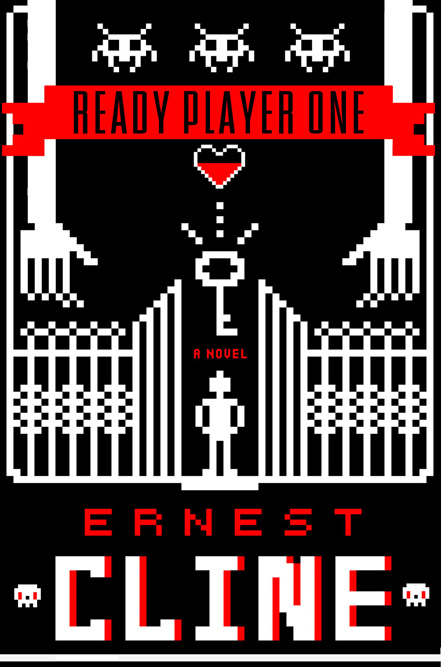
Read this book: Ready Player One

How do you write a book about a dense subculture and make it accessible to a wider audience. I don’t know that trick, but Ernest Cline, the writer of the book Ready Player
Ready PLayer OneOne
does. Somehow he managed to take the incredibly detailed world of video games and obscure Japanese anime, and make novices like myself care.

Ready Player One is best described as Charlie and the Chocolate Factory meets Tron. The story takes place in 2044 in a world that’s suffering from a significant depression. While the people’s real world is dystopic to the max, they have an out — OASIS. Created by James Halliday, OASIS is virtual reality perfected. As such, most people in the miserable real word spend all their time and money in OASIS. Halliday dies, and his virtual perfection is threatened by the evil conglomerate IOI, which wants to corporatize OASIS.

But Halliday left a plan in place. He established a hunt — Easter eggs hidden throughout his vast virtual universe. Whoever finds these Easter eggs will inherit Ready 2OASIS. Here comes our hero, teenager Wade Watts (who also narrates the story). A video game fanatic, Wade, who goes by the name Parzival in OASIS, is among the scores determined to find these Easter eggs. Halliday, it turns out, was a fanatic of all things from the 1980s — music, movies, TV shows both foreign and domestic. Wade spends years geeking out and studying this era, as well as mastering the video games of that time.

Ready Player One centers around Wade’s exploits as he solves Halliday’s riddles. But he’s not the only one. Questing alongside him are his vfriend Aech (pronounced H), famous blogger Art3mis, who he has a crush on, and a pair of Japanese dudes — and all of these people he’s only met in OASIS, never in the real world. As this rag-tag group progresses, they must also battle the genuinely evil conglomerate IOI, which uses all its resources to win control of Halliday’s empire.

ReadyPlayerOneBookArt

So now the breakdown:

The good…

–Wade/Parzival is an engaging narrator. Cline writes Wade with an assured and consistent voice. Wade is one of my favorite types of hero: the ordinary guy who rises to extraordinary circumstances. Keep your crusading CIA/FBI/forensic detectives. Give me more Wades.

Ready 3–This book is a page turner. I am a slow reader. I read this 300 page book in a week. That is light speed for me. There were times when I did not want to put my Kindle down and get off the train. That good.

–I’m pretty agnostic when it comes to video games. I enjoy playing them, but I’ve never been a fanatic. If there’s one around, I’ll play, as long as it’s not too complicated. Ready Player One reads like it was written by someone who lives and breathes video games. Normally I wouldn’t be interested. Why would I care on that deep level? But by using an engaging narrator and a high-stakes plot, Cline makes the world of gaming accessible…and interesting.

–By peppering Ready Player One with a range of cultural references and tasks, Cline keeps the story interesting. For instance, one task involves Wade/Parzival having to play the Matthew Broderick role in a virtual reenactment of the movie War Games. Pretty damn inventive.

Ready Player One ends. There is no cliffhanger forcing me to wait, or pony up to read. Cline leaves ample room for a sequel if desired, but he doesn’t pull a literary bait and switch, where the end isn’t really the end. Save the sequels for book two, not book one.

And the not so good…
ReadyPlayerOne RD 1 finals 2–Cline spends a lot of time in the beginning building his world. The first fifty pages are exposition heavy and not as interesting as the rest of the book.

–The romantic subplot between Art3mis and Parzival was a little clunky. Parzival was a little too lovestruck, and Art3mis’s aloofness got annoying sometimes.

–With all the careful world building, I had a hard time blindly accepting that these people could spend hours and hours in their virtual reality gear (no food or drink, no bathroom breaks, no sleep).

But these are minor points. Ready Player One isn’t a book I would normally pick up, and I’m glad I did. I’m not the only fan — none other than the 1980s icon of film making Steven Spielberg plans to direct the movie version. I can’t wait to see how that turns out.
Doctor Who and plot regrets

Writing is hard. You have to not only come up with compelling, believable characters, you also have to create dramatic tension. You have to give the character a reason to do what he does — motivation. And that’s not always easy. Especially when you’re rebooting a beloved, decades-old sci-fi franchise like Doctor Who.

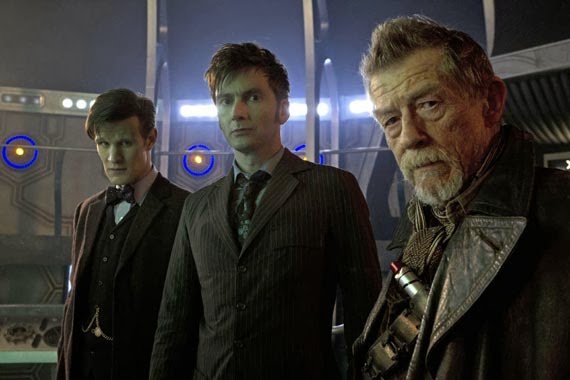
The-Three-Doctors

But that’s exactly what head writer Russell T. Davies did when he brought Doctor Who back to the BBC in 2005. He created a dark version of the Doctor, one who ended the war between his home planet Gallifrey and their mortal enemies the Daleks by sacrificing his home world to rid the universe of the Daleks forever. What Davies gave us in this new Doctor, played brilliantly by Christopher Eccleston, was a withdrawn, shell-shocked hero burdened by guilt. Sure, Eccleston’s Doctor showed flashes of that childlike wackiness that is the hallmark of the Doctor across incarnations, but the guilt was a strong undercurrent.

daleks

This theme — the burden of guilt and the loneliness of being the last of your kind — carried through to the new incarnations of the Doctor as played by David Tennant and Matt Smith. Doctor Who became a balancing act between darkness and frenetic energy.

But then the new head writer Steven Moffat changed it all. In Doctor Who‘s 50th anniversary episode, not only did we see the Doctor who ended the time wars, we also had a shift. Gallifrey was NOT destroyed. The Doctor was not guilty of genocide, however well intentioned. The Doctor was given a new purpose — rescue his home world from the static universe they were trapped in.

Now Moffat believes he may have cheated, in a way. In a recent interview, he stated that he, like the Doctor, is haunted by guilt:

“I know some of you, including friends of mine, were upset that we reversed the outcome of the Time War. My defence, however feeble, is that given the chance, the Doctor would do exactly that. And it was his birthday, how could I deny him that chance? What could define him more? This man who always finds another way? And there he is, at every moment of his life, proving to himself – literally – that there is always a better path.”

I say Moffat should get over his guilt. Why? The morose Doctor had run his course. After several years, we understood that the Doctor was tortured. What more could we get from this particular plot point? Why not switch things up? In the world of sci-fi and fantasy, writers have a broad canvas to paint on. Why not take advantage of every square inch?

Now Doctor Who has a chance to be reborn. Now we can witness a Doctor who has a genuine shot at redemption, one who is hopeful and can save his home world. Just imagine the new stories that can come from that.

Tracking the zombie outbreak

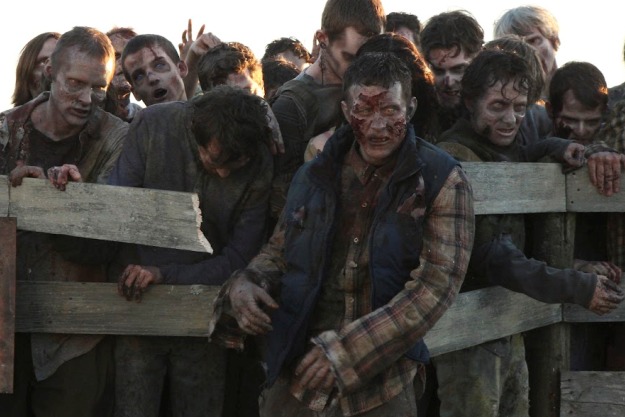
Who doesn’t love a good zombie story? I know, not everyone does but I like to pretend they do. From George Romero’s Night of the Living Dead to the AMC channel’s The Walking Dead, zombies have been a staple of the horror genre for half a century, with no sign of them being killed off anytime soon.

zombies

But who knew that zombies could be a topic worthy of honest-to-goodness scientific inquiry? I sure didn’t. I was wrong.

A team of researchers from Cornell University used a combination of US Census data and statistical probabilities regarding disease outbreaks, coupled that with some zombie lore, and created an interactive map that allows you and me to watch our own little zombie outbreak as it filters across the US.

zombie_horde

The map, which you can find here, lets us control a few of the parameters to make it interesting:

–how easy or hard it is to kill zombies

–how fast the zombies move

–where the outbreak originates

I tried a couple of simulations, and watched as a chilling red crept across the map. for both simulations, I had the outbreak start in Miami, because all the weird stuff happens in Florida.

In simulation 1, I had slow-moving zombies that were relatively easy to kill. While the zombies zipped up the east coast of Florida, it took them a full 16 days to conquer Florida, and after a month, they were still bogged down in the deep south. The zombies2takeaway? Under these conditions humans would have a good chance of surviving — the threat could conceivably be contained.

Then I tried a quicker, nastier simulation, with faster zombies that were harder to kill. Again, I started in Miami. And the results were scarier, at least for those of us on the East Coast. By the second day Florida was completely overrun. After 4 days the south was gone. On day 5, zombies were attacking New Orleans and the Midwest. Day 6: Washington DC, Baltimore were decimated, followed quickly by Philadelphia, and as the day ended, New York City fell victim, with Chicago, Houston and Detroit next to fall.

The good news? The outbreak had a hard time spreading through the rural areas of the Western United States. So if you want to survive the zombie apocalypse, go west.

Genre TV: a golden age or too much of a good thing?

It is a sad fact that there are too many great books in the world, of all genres, that I will never have time to read. I’m sure that I’m missing out on some life-changing classics, but there’s nothing I can do about that.

Star TrekWhen it comes to TV, though, there used to be a time when you could be up on all the great TV shows. For fans of all things sci-fi/supernatural/horror like myself, it wasn’t that hard, because there were so few TV shows that had a sci-fi or supernatural theme. Back in the 1950s you had The Twilight Zone and in the 1960s came The Outer Limits, Star Trek, and in England, Doctor Who. Along the way there were a smattering of other TV shows, notably the X-Files and Buffy the Vampire Slayer in the ’90s, but with only a handful of networks (and the BBC in England) the options were severely limited.

Buffy the Vampire Slayer

That’s all changed. Now there seems to be a new network popping up every week, along with new TV shows. When Lost premiered, it reinvigorated the genre by making it commercially and critically viable. As flawed as Lost was, the emmy-winning series showed the powers that be that genre shows could make money and win awards.

Lost

Since then, there’s been an explosion of genre shows. A few decades ago, who would have predicted that two of the most hyped television shows would include dragons and zombies? These two shows, Game of Thrones and The Walking Dead are worldwide cultural events. Game of Thrones and The Walking Dead bring more than just supernatural/fantastical/horror elements: they have high production values, are well acted, and have great writing.

Walking Dead

And these are just two of the latest and greatest. The past couple of decades have given us so many great genre shows, from SyFy’s Farscape and the Battlestar Galactica reboot, to BBC’s relaunched Doctor Who and BBC America’s Orphan Black. I should be happy, right?

Orphan Black Tatiana Maslany

In a way, I’m not. There are SO MANY genre shows out there I can’t keep up. And neither can the people who are writing them. The Walking Dead has given us the derivative Z Nation. The second season of SyFy’s Helix was a mess (a glorious, batshit crazy mess, but still a mess). And Netflix’s Hemlock Grove was half-baked camp. We’ve got a glut of genre shows out there, some of which should have never been made, and others that could have used a little more seasoning.

helixNot to mention that I don’t have the time to watch the vast majority. I’d love to watch The Strain, and there’s a new Salem TV show with Lucy Lawless that looks interesting. But between work, writing, play, family, how could I possibly fit all these shows into my life?

Maybe Hollywood needs to scale back a little — if not in the number of shows, then at least in the number of episodes. In the UK, it’s a common practice for TV shows to be short runs. Each season is perhaps six episodes, and the TV shows only run for a few seasons, if that. What you get is concise storytelling that does not require a lifetime commitment of the viewer. I’d fully support this idea; even the best shows suffer from episode bloat and could use some trimming (I’m looking at you, Walking Dead).

Designer humans: the future is almost here

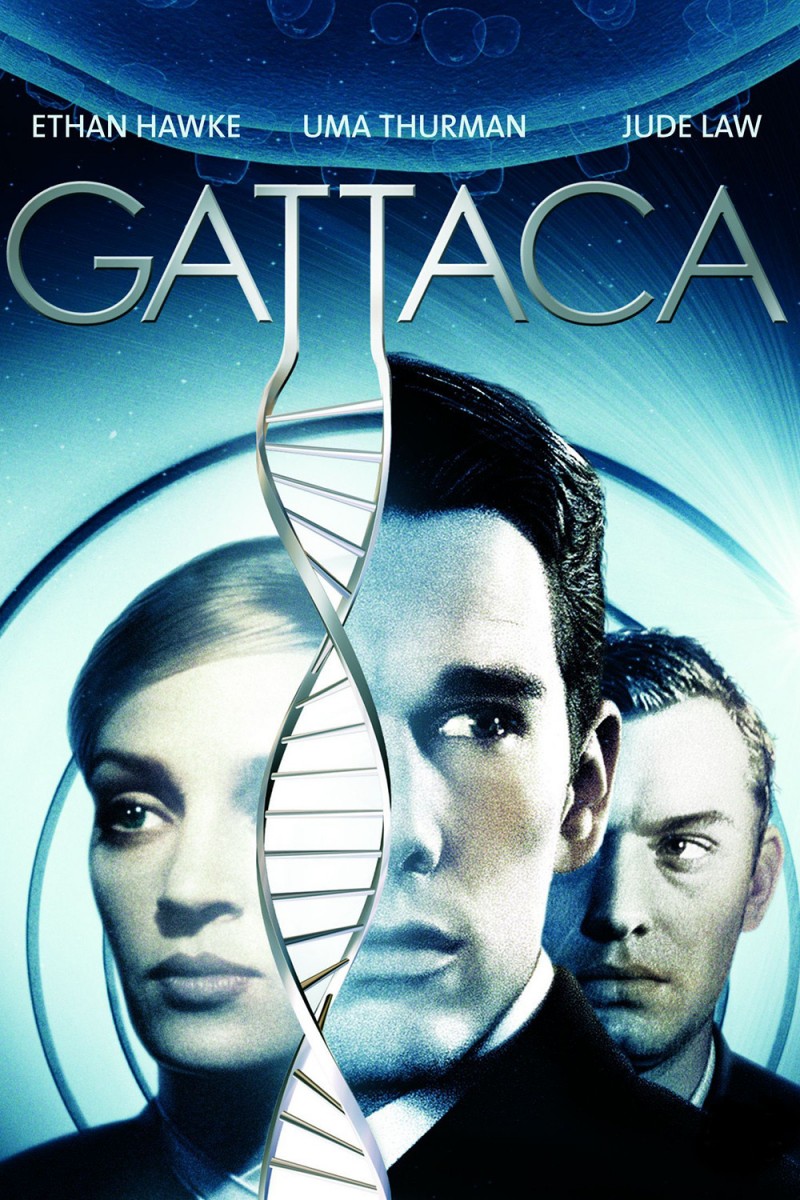
Some sci-fi tropes seem too far-fetched for reality, until science catches up. Take the film Gattaca, starring Ethan Hawke, Uma Thurman and Jude Law, set in a world where genetically approved people were given a higher Gattaca Jude Lawstatus. When the movie came out, the idea of designer babies was bizarre. How could such a thing be done, technically?

But now we’re on the verge of designer babies becoming a reality, and not everyone is eager for this to happen.

What do I mean by designer babies? Manipulating DNA to either enhance favorable qualities, or delete some bad genes though a process called gene editing. This could be good. Think of all the heritable diseases we could get rid of. Once we snip them from the gene pool, they’d be gone from that genetic line forever. An embryo that had its genes for a deadly disease extracted would never pass those genes on to future generations.

But there’s the flip side. What could we do to enhance humans? Super strength? Super intelligence? Evolution works by filtering out the bad traits and promoting the good traits. With this gene editing technique, we could make humans a whole lot better. Evolution put in the hands of man. Think of Star Trek and the genetically enhanced supervillain Khan.

Benedict Cumberbatch

And that’s what scientists are afraid of, so much so that they’re calling for a moratorium on using these amazing techniques on humans. I suppose their thinking is that if we can manipulate genes, we can create supermen, or monsters.

Personally, I don’t see the problem. Not right now, anyway. The truth is there is a whole hell of a lot we don’t know about the human genome. Scientists have not found a gene (or set of genes) that correlate with intelligence. There’s also the problem of junk DNA — strands of genes whose function scientists don’t understand. And also epigenetics: the strange phenomenon where environmental factors can change your genetics, and pass down these changes to your children and grandchildren. Right now we wouldn’t be able to do much with this gene-editing technology.

I say let’s keep exploring. Welcome to the brave new world.

Mars Alive!

If I had a hundred lives and the corresponding years, I’d spend a chunk on space travel. Can you imagine the disorienting feeling of stepping foot on another planet? I can’t but I would like to.

Mars is one of the planets on that list. Well, there aren’t that many viable options right now. Venus is a hot mess, Saturn and Jupiter are too gassy, and who would ever want to go to a place named Uranus? Mars is the best bet of a bad lot. But it is dry and barren. As it turns out, it might not always have been the case for the Red Planet.

Mars ocean

Those brilliant scientists at NASA have determined that Mars once had an ocean — a deep ocean — that covered nearly half the planet. This means it was warm enough for life (meaning us), and it may have actually been home to life.

I’m not one who thinks that Earth alone is the be-all and end-all of life. I do believe that life is special and rare, though. Could this mean that our next door neighbor was teeming with life?

Possibly. If the NASA scientists are right, then there was liquid water—a prerequisite for life—and time enough for life to develop. What that life on Mars would have looked like is anyone’s guess.

A quick and dirty guide to the YA novel

My friend Angela sent me this link some time back and it cracked me up. A young, enterprising writer named Randall Knox broke down the YA novel. His post, How to Write a Shitty YA Novel, is a classic.

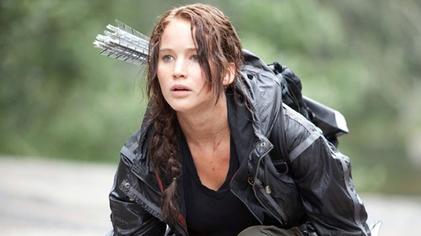
Katniss_EverdeenNow don’t get me wrong. I love YA. The Hunger Games was great (even though book 3 faltered, with Katniss continually running to the closet to hide) and Patrick Ness’s Chaos Walking trilogy is one of my favorites. Ness created a vivid, unique world.

But Knox’s list takes sharp aim at the tropes that plague YA novels. For example, of the protagonist, he says:

“Your main character needs to be flat and uninteresting. Save your really good and compelling quirks and nuances for your side characters, because you’ll need those in order to justify their existence in the story.”

As for plot, he writes:

“Along the way, show your protagonist going from childish to slightly less childish. That’s what we call character growth. It’s not actually, because the protagonist isn’t taking stock of his or her life, looking at the world through any lens but his or her own, or really showing any semblance of self-awareness, but the act of becoming slightly less annoying will stand in for that reasonably well.”

And he touches on the beauty of emotional manipulation:

“The world must be on the brink of destruction, every love must be the greatest love of all, and every character must be willing to pay the greatest sacrifice–except for the protagonist, because he or she is a boring, selfish asshole, remember?”

Check it out. It’s a fun read. Now I have to get back to rewriting my YA book.

Taking on time travel

Time travel is the thorniest of plot elements. By nature, it’s full of flaws. Take the Grandfather Paradox — watch Futurama for the best example of that. Time travel is difficult because it doesn’t fare well under the light gaze of logic.

But lets push logic aside — whether time travel is or is not possible. When I read fiction (or watch movies or TV), I often want to escape. And what better way to escape than to leave the time period entirely?

Time travel as a plot device offers infinite possibilities. When you’re no longer constrained by time itself, the plot permutations are endless. The imagination can run wild. And for that reason most of all, I love nothing better than a great time travel story.

One of my favorite websites, io9.com, recently ranked all the time-travel-related movies, from best to worst. The article, and their reasons behind each ranking, is worth a look.

For a quick rundown, here is their top five:

5. Time Bandits

time_bandits_25

4. Back to the Future 2

marlene-mcfly

3. Groundhog Day

groundhog-day-4

2. Primer

primer

And their top time travel movie of all time is….. Back to the Future (the first one)

back to the future

It’s an impressive list. I applaud the effort that went in to compiling it. My take? For the most part I agree, with some reservations. I’m not a Groundhog Day fan, and that barely qualifies as a time travel movie in my mind. And I disagree with the low rating for Ashton Kutshcer’s Butterfly Effect. Sure it was hokey, but what was great about it was how it showed the accumulated futility of trying to alter time.

As far as my own personal list, my favorite time travel movie ever, which made the top ten, has to be The Terminator. It was a brilliant sci-fi/thriller that established a mind-bending franchise. Arnold is great, and both Sarah and John Connor are now pop culture icons.

terminator