Hellraiser: behind the scenes

Hellriaser-Pinhead-Barker

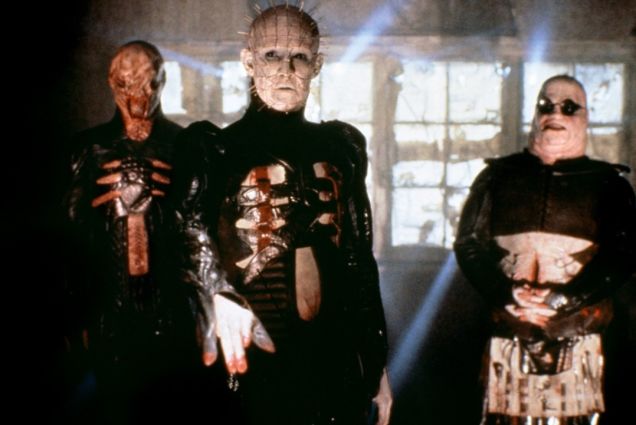
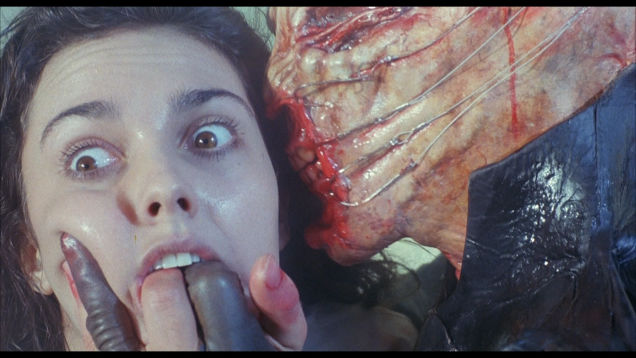
I was a teenager when I watched Clive Barker’s iconic horror movie Hellraiser. It freaked me out, to say the least. I’d never seen evil presented on screen in such a visceral, repulsive way. What made it so scary? First, several years of Catholic school had conditioned me to be afraid of hell. Second, the villains — Pinhead and the rest — were not just mindless monsters. They were human. Too human.

This movie has stayed with me after all these years. I haven’t watched it in a long time. Maybe I should. But will Hellraiser hold up? Sure, it was low-budget, but the core element of pure horror will remain as strong as ever, I’m guessing.

In the meantime, I came across this article in io9.com that details some behind-the-scenes tidbits about the movie. Here are a few highlights:

–Clive Barker sold the script for Hellraiser based on the idea alone. He’d never directed a movie — he didn’t even know how. Unfortunately the two books in the library on directing were both checked out.

–Jennifer Tilly auditioned for the role of Kirsty. But Barker wanted Ashley Laurence, an unknown actor, to play the part. He had to fight for her. Obviously he won.

Kirsty 2

–Doug Bradley, who played Pinhead, did not want to take the role. Why not? Number one, the hours of makeup required. Number two, with all the makeup, who would recognize him? Now that Pinhead is an icon, I bet he’s glad that he took the role.

–The original title was The Hellbound Heart, but the studio heads worried it would be mistaken for a romance. If only.

–The costumes were inspired by those seen in S&M clubs. Then again, that’s not a surprise.

hellraiser


See this movie: Edge of Tomorrow

What do you get when you combine aliens, explosions, and the repeating day motif of Groundhog Day? Tom Cruise’s latest sci-fi action flick Edge of Tomorrow.

Edge_of_Tomorrow_9
Tom Cruise’s personal life gets a lot of attention, but strip away that nuttiness and what you have is a workhorse actor who knows how to entertain. Whether it’s the Mission: Impossible series, Minority Report, or Oblivion, Cruise is a master at making a damn good action film. Edge of Tomorrow is the latest in his string of successes.

Edge of Tomorrow is based on the Japanese sci-fi novel All You Need Is Kill (great title!) by Hiroshi Sakurazaka. All You Need Is KillThe movie’s plot: an alien race known as mimics has overrun the European continent, and unified forces are gearing up for a D-Day style invasion in France. Major William Cage (Cruise) finds himself on the front lines of the invasion, where he quickly dies. Only he doesn’t. Time resets, and he wakes up the morning before the invasion. He relives the same day, dying again and again. Aided by Sergeant Rita Vratraski (Emily Blunt) the war hero known as “Full Metal Bitch,” he plots to defeat the mimics.

What’s great about Edge of Tomorrow:

–Cruise and Blunt are excellent. This isn’t Oscar bait. We’re not looking for amazing acting. We want skill, competence and relatability. They deliver.

–The action is intense. The battle scenes are breakneck, part video game, part roller coaster.

–Humor. I didn’t think I’d be laughing during a Tom Cruise sci-fi action movie, but the writers were wise to add some funny scenes. On one level, this movie almost calls for it. The humor, which comes mostly from bungled deaths (and repeated days) helps break the tension. It also lets the audience laugh at the overall concept. Cruise plays it well — sometimes he’s clearly ready to die (again).

–The invasion of France has clear and obvious parallels to the Allied invasion of Europe in D-Day during World War II. The writers build a pretty complete world, one that has been at war for a while.

What’s not so great:

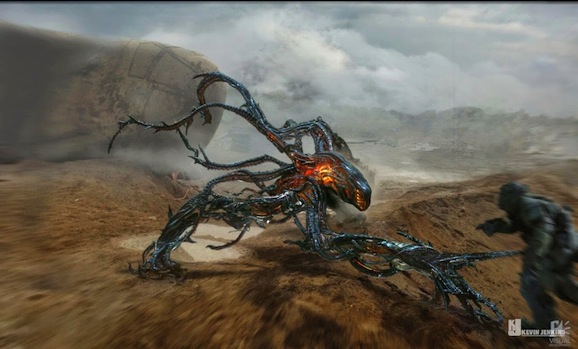
mimic3–The aliens were fine. I have no major complaints, but there was nothing particularly novel about them. The special effects were also fine. But I wanted a little more.

–I had a couple of issues with the ending, which I won’t reveal. The best I can say is that it was satisfying. I’ll leave it at that.

Overall, Edge of Tomorrow is a thrill ride of a movie with solid performances, some laughs, and great action scenes that make it worth a trip to the theater.

Don’t see this movie: The Host

The Host is proof that a great concept won’t work when saddled with a bad plot and annoying characters.

The_Host_PosterGranted, I’m not the target audience for a YA movie with a romantic subplot based on a book by Twilight’s Stephenie Meyer. But the premise sounded intriguing: the human race is taken over by alien body snatchers that obliterate the host human consciousness. Think of this as a more literal Invasion of the Body Snatchers than the original movie(s), which were all great, but should have been called Invasion of the Body Copiers.

I watched The Host solely for that premise, and that was the only good thing I can say about it.

The plot: Human holdout Melanie Stryder (played by Saoirse Ronan) is captured and taken over by an alien called “Wanderer” (that name was the first warning sign of trouble ahead). But Melanie manages to hold on. Melanie/Wanderer seek out her fellow human holdouts, trailed by a Seeker (the unbelievably beautiful Diane Kruger) who is determined to wipe them out.

The Host ends up turning into a weird love quadrangle. Melanie/Wanderer reunite with KrugerMelanie’s boyfriend Jared, and Wanderer falls in love with some guy named Ian.

How can true love work out if Melanie/Wanderer share the same body? I didn’t really care, because I never bought it. The love story was not developed, it was unrealistic, and the tension felt manufactured.

The rest of The Host was clunky as well. Great actors like William Hurt had little to do, because nothing really exciting or unpredictable happened. Saoirse Ronan is usually a phenomenal actor, but she couldn’t do much in this part. If you want to see her shine in an action flick, watch the surreal Hanna.

The worst part of the movie? Melanie’s voiceover. Since Wanderer had active control, she spoke through the body. Melanie spoke through thoughts, which we heard as a voiceover. Very early on I was wishing that Wanderer had indeed obliterated Melanie. That’s not a good sign.

All of this is a shame, because, like I said, the premise is great. But The Host is bad, and not even in the “so bad it’s good” sense. You’ve been warned: watch The Host at your own risk.

Ultimate Dystopian Showdown: Battle Royale vs. The Hunger Games

I loved both The Hunger Games (books and films) and Battle Royale (the great Japanese movie long rumored to have inspired The Hunger Games). This blogger, The Spectatorial, has a great comparison of the two. What I’d add: while The Hunger Games is great, Battle Royale is better in two ways — it’s not as cartoonish as The Hunger Games, which makes it even scarier; and the “contestants” in Battle Royale have known each other all their lives, which makes the deaths that much more impactful.

Why were killer insects so popular in sci-fi?

I loved cheesy horror/sci-fi movies as a kid, everything from The Blob to The Thing.

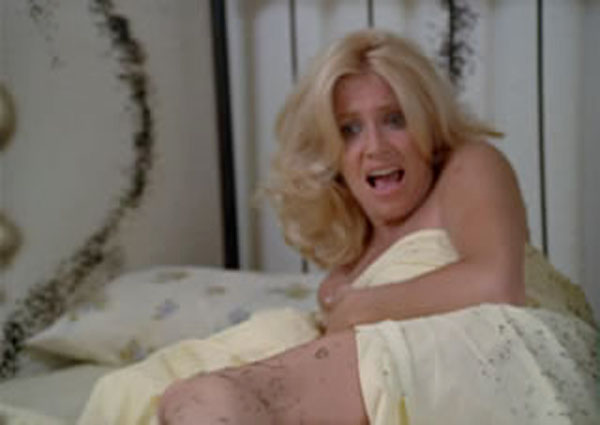
But what always freaked me out were the movies about bugs. I remember watching the 1977 film Ants, about swarming, poisonous ants, and being terrified there were ants crawling under my bed. I’d have to check carefully every night, and still I was never sure I was safe.

ants

io9.com has an article up analyzing why insects were a sci-fi staple, especially in the atomic age of the 1950s (with giant bugs such as those memorable monsters from Them!), but even later, through the ’70s.

them-ant-on-hill1

Some think that the fascination—and popularity—had to do with:

–fears of Communism and the reinforcement of trust in an all-powerful US government

–fears of radiation from nuclear fallout

–mistrust in science

–overreliance on chemicals that pervert our natural world.

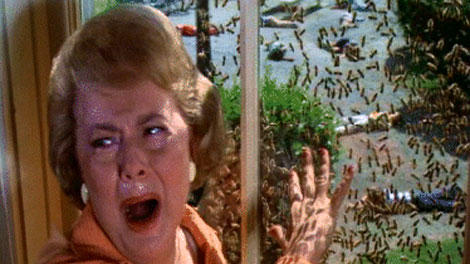
The article’s conclusion? The popularity of insects as villains was much more simple. That’s when we as a society became more aware of germs and diseases. And pesticides—bug spray, etc—were promoted to get rid of the vermin that were invading our homes.

killer-bees

We were constantly on the lookout for roaches and ants and mosquitoes in our homes and backyards, so naturally they’d morph into something even more insidious.

Whatever the reason, it made for fun and creepy horror stories.

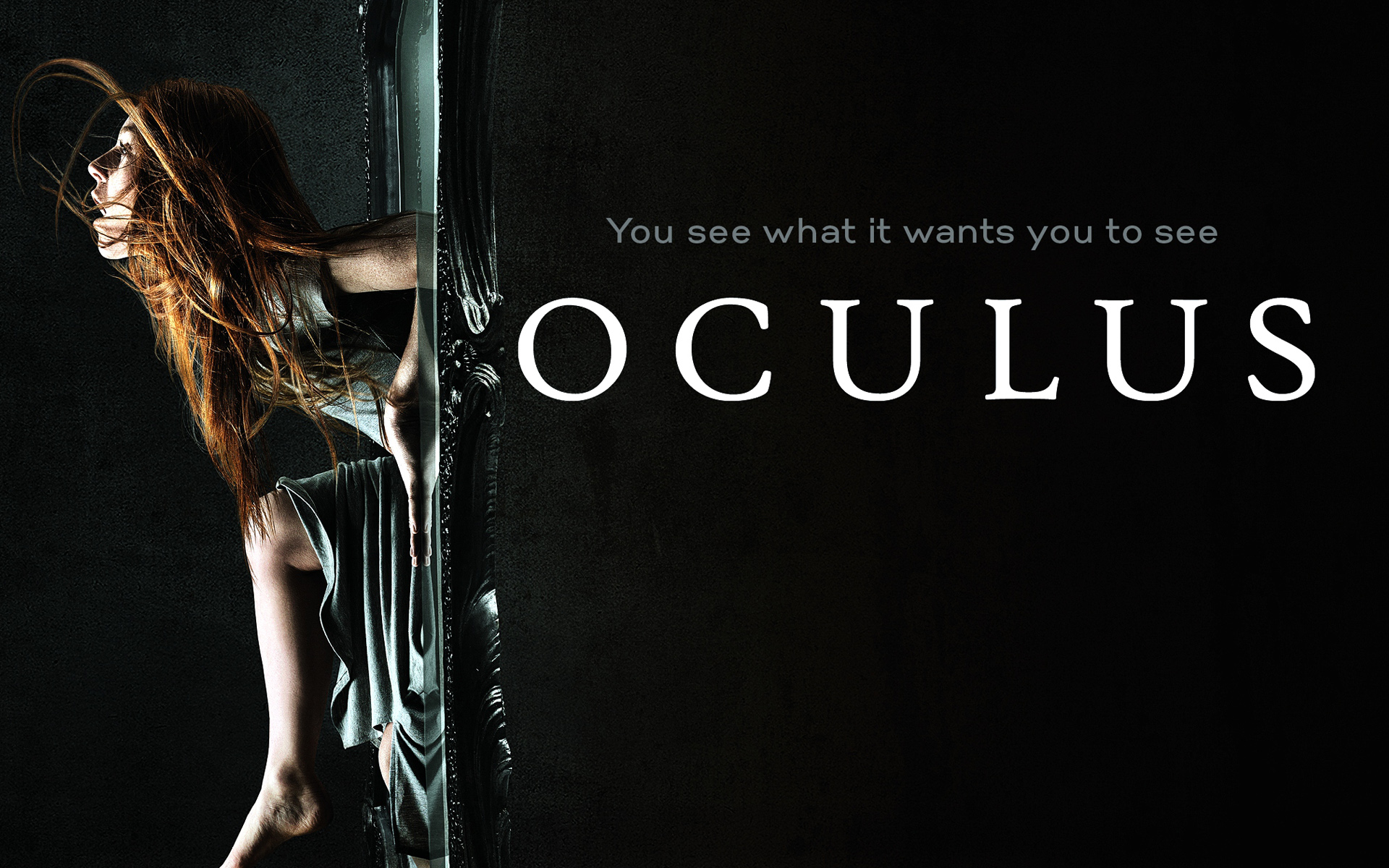
See this movie: Oculus

Oculus is a cunning, tough horror movie that will leave you unsettled.

oculus_2014_horror_movie-wide

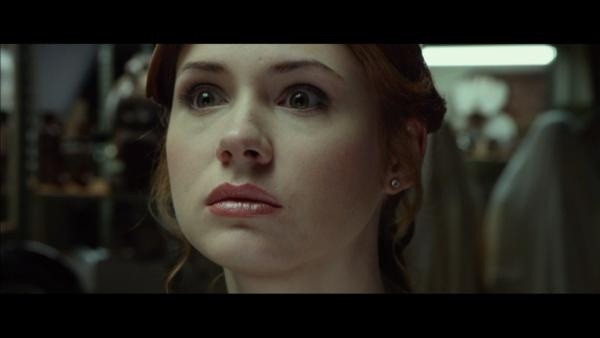
When we last left Karen Gillan, the Scottish woman with the big eyes who played Amy Pond in Doctor Who, she was staring at the weeping angels to avoid being sucked back in time (spoiler: she wasn’t successful).

Oculus Gillan

Now, in Oculus, the actress is donning an American accent (competently) as she stares into a haunted British mirror to fight an evil force.

Oculus is the latest horror offering from the forces behind the Saw series (too gory for me) and the Insidious flicks (good, fun horror). I was expecting something along the lines of Insidious. I was not prepared for a dark and harrowing tale of family madness, PTSD and psychological horror.

The setup: Tim is released from a mental hospital. Ten years earlier, he, along with his sister Kaylie (Karen Gillan), witnessed a horrific crime when their mother turned psychotic and was shot by their father. They only survived because Tim killed their father. Tim has been thoroughly rehabilitated. Kaylie, on the other hand, has gotten hold of the evil mirror which may have driven their parents (their mother is played effectively by Battlestar Galactica‘s Katee Sackhoff, aka Starbuck) to madness and death. She intends to defeat the evil that lies inside, along with Tim’s unwilling help.

Oculus

Oculus was great on two levels.

First, the narrative structure was brilliantly crafted. We bounce back and forth between the present and the original crime 10 years earlier. As the movie progresses, the past and present merge to great effect. And, even though we know the outcome of the events in the past, there’s still heart-pounding tension.

Second, one of the strengths of horror/sci-fi/fantasy is that it gives us the chance to explore common, painful themes in a fantastical setting. Oculus does that. On one level, this is the story of a horrific childhood, mental illness, and the stubborn hold that trauma has on our lives. A good chunk of the film is spent debating reality, for good reason. I enjoy writing about the supernatural because it allows me to explore deeper issues. The writers of Oculus obviously feel the same.

Oculus draws on a rich heritage of horror films. I picked up on the references to The Amityville Horror, a classic movie about possession that scared the life out of me as a kid. It uses these tropes effectively.

My main complaints would be that the Nightmare on Elm Street effects of “is this real or not” were overdone, and the nature of the evil, which was way stronger than our protagonists, was never hinted at (perhaps setting up a sequel). And the title sucks. I keep calling it Ocular. Not good.

Oculus is not an easy movie. It is not an escape. But it shows the power of horror to shine a spotlight on very human terrors.


Book vs movie: World War Z

It was nearly an impossible book to film, but they filmed it anyway.

There’s only one book that comes to mind as a successful movie adaptation (though I’m sure there are tons of others), and that’s The Hunger Games.

Zombie thriller World War Z by Max Brooks was a mega-successful book.

Image

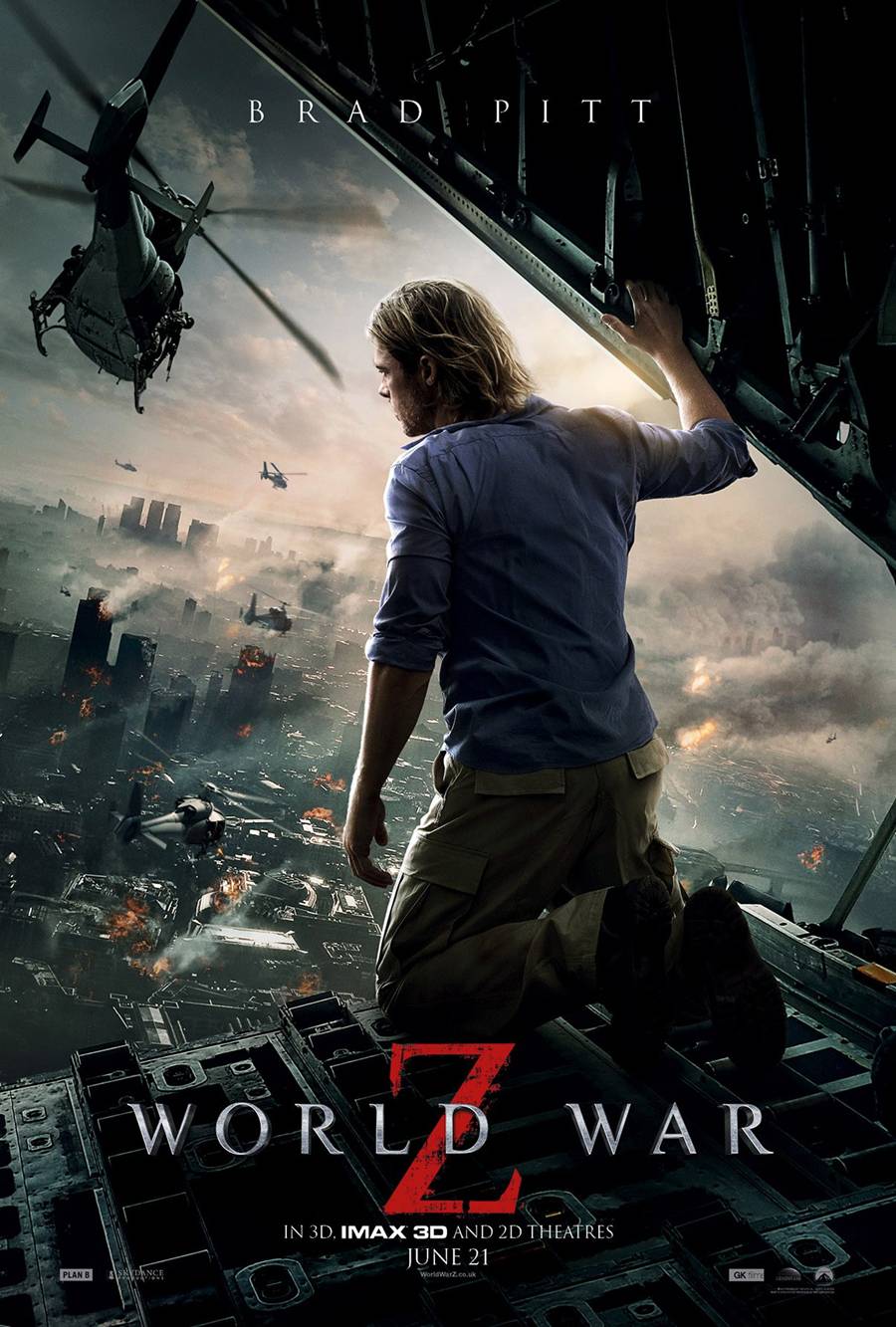
World War Z the movie, produced by Brad Pitt, was a moderately successful movie.

Image

Both are vastly different beasts, and the adaptation didn’t quite make the Hunger Games standard.

To be fair, the book is nearly unfilmable as written. It’s told in the style of The Good War, an oral history of World War II by Studs Terkel. World War Z (book) is written after a global zombie pandemic/attack/war. It’s narrator is a UN rep who is compiling reports on the war from around the globe. In a neat literary trick, while the narrator appears in every chapter — he actually interviews the survivors — we never even know his name, or much else about him. This allows the focus to be on the individual stories throughout the book.

And the stories are gripping. We hear from normal folks who have to bury their pain to soldiers who relay harrowing tales of near death to higher-ups who reflect on the war from a matter-of-fact perspective. Max Brooks excelled at writing these micro-tales that not only have genuine human drama, but combine facts on worldwide culture and geopolitics. Brooks covers nearly every facet of the global war and its aftermath, including the new world order that results. It’s fascinating to see how Russia has become a theocracy, Cuba is a capitalist powerhouse, Israel and Palestine finally live in peace, and China is a democracy.

The movie version of World War Z. goes in a different direction. The hero (Hollywood loves its heroes) is Gerry Lane (Brad Pitt). He is a former UN investigator who gets caught up in the zombie outbreak in Philadelphia with his wife and daughters. After a close escape from a Newark rooftop, Lane and his family are flown to a ship, where Lane is called back to duty to help a CDC scientist search for a cure. This search takes Lane (and the viewer) to South Korea, Israel, and Wales.

The movie tried to stay true to the book in the sense that it was a global story. It was exciting to travel to those locations, even if the plot felt forced. For instance, I was unsure as to why Wales, in particular.

But while the book was one of my favorite reads, it did lack that central human character, and that’s the role that Gerry Lane served.

The movie also improved the book in its use of zombies. These were not the slow, ambling (though still menacing) zombies that we’re used to ,and which Brooks used. These zombies were lightning fast. The opening scene of Lane’s escape in the Philly streets was outstanding. The swarm happens in real time. It’s intense. There’s nothing like that in the book, though to be fair, it’s much easier to relay menace on film than in a book. And the scene with the zombie swarm scaling the wall in Jerusalem is a classic.

Image

Still, the movie couldn’t quite match the book in its scope. And as with most action movies, it stretched my belief nearly to the breaking point. A zombie outbreak on a plane results in a too-neat escape that could never happen in real life. Also, in the movie, the Israelis survived because they spotted the threat before any other country and walled themselves off. Yet they didn’t realize that noise would attract the zombies? The movie turned one of the most hopeful parts of the book — a lasting Israeli-Palestinian peace — into a tragedy.

In short, there were too many harrowing escapes for Pitt, and the last act in Wales nearly put me to sleep.

My recommendation — read the book if nothing else. Then see the movie, at the very least for it’s amazing visual effects. I hear there are sequels to the movie planned. Hopefully they figure out how to add more of the book’s heart.

Blurred lines – Zombie edition

Zombies through the ages have morphed, and they continue to do so.

The Hollywood Reporter has this cool slideshow on their website that takes us through decades of zombies in film. It starts with a 1932 movie titled White Zombie. But they weren’t zombies as we know it — they were simply people who were entranced.

Image

The years that followed gave us more voodoo zombies, then on to George Romero’s iconic undead slow walkers — to the brain-eaters, up to today’s version — the viral walkers.

I have a soft spot for Romero’s zombies, especially the ones in Night of the Living Dead – they were my first, and I’ll always love their menacing ambling. Plus, there was something about the black and white of the movie that kept the creep factor high.

Image

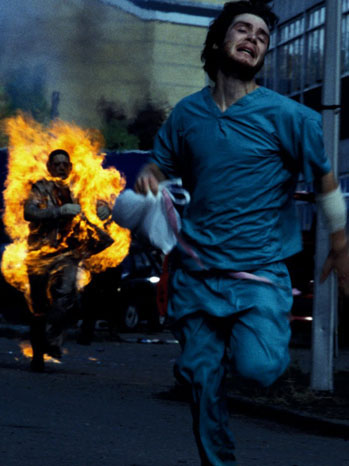
But I’m really digging the later versions as well, especially the one popularized by the British movie 28 Days Later. These were zombies created from a lethal infection, still vicious but not as mysterious. These latter-day zombies thrill the science geek in me.

Image

So what will come next in zombie lore? Alien-induced zombieism? I can’t wait.