Secrets of the Ouija board

Are Ouija boards dangerous? A comprehensive article traces its history, and the answers aren’t quite conclusive.

ouija 1

A Ouija board is a game that allows users to attempt to contact the spirit world. The board consists of letters and numbers. The player asks a question, and using a pointer, the spirit world will supposedly guide the pointer to letters that spell out an answer. Simple enough, right? Not really.

AlwaysMine_finalOuija boards have a bad reputation. Many consider them a gateway to evil. If this latest news report is to be believed, three young Americans in Mexico fell into convulsions after using a Ouija board (the local priest refused to perform an exorcism because none were parishioners). I used a Ouija board as an element in my horror story Always Mine, and from reader response, it struck a nerve.

But what’s the truth behind this game?

This long Smithsonian article breaks down the history of the Ouija board. It turns out that Ouija boards are a uniquely American creation. In the mid 1800s, a wave of spiritualism swept the US. People believed they could contact the spirit world, which would deliver messages. This belief dovetailed neatly with organized religion, which more or less sanctioned this practice.

Then, in the late 1800s, a canny investor caught wind of a “talking board” and formed a company to manufacture these boards.

Among the interesting facts about the Ouija board:

–The name Ouija supposedly came from the board itself.

–The US patent office approved its patent after the board revealed the patent official’s first name (proof that it worked).

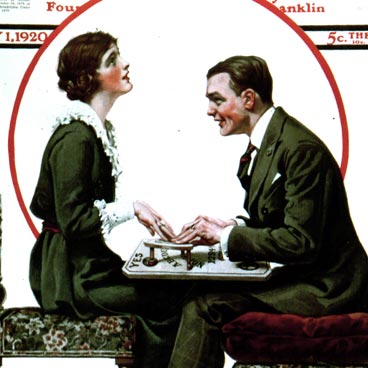
–It quickly became a best-seller, marketed as both a way to contact spirits, predict the future, and as wholesome family fun. Even Norman Rockwell got into the act.
ouija

But there was a dark side to it as well:

–One company head died after falling from a factory building, which he built based on advice from the Ouija board.

–In 1930, two women killed another based on the advice from a Ouija board.

And a quirky side:

–Writers have claimed that their works were written via Ouija board. One poet, James Merrill, won a major award for a poem that was “magnified” by his Ouija board.

So why have Ouija board become linked to evil?

Blame The Exorcist. Since that 1973 groundbreaking horror movie (which was supposedly inspired by actual events), Ouija boards lost any wholesome status they enjoyed. Following the phenomenal success of The Exorcist, Ouija boards have been denounced by religious groups and have become a staple for horror writers (guilty as charged). Interestingly, the board is still a hot seller.

The Smithsonian article delves in to the “why” of the Ouija board. In the simplest of terms, scientists believe Ouija boards tap into our unconscious mind. We may think we are talking to spirits, and in a sense, we are: our own.

But is this all there is to it? Maybe not. Check out these supposedly true scary stories of Ouija board freakiness.

To be honest, I’m not as concerned with how Ouija boards work. Don’t get me wrong: I love science. But when it comes to something like Ouija boards, I’d prefer to keep that element of scary suspense alive.

Spider fangs: nature’s perfect piercer

Some people love spiders (why??). Some people love to hate spiders. My view is: hey, Mr. Spider, you stay over there, I’ll stay over here. To me, they’re creepy as hell — horror movie creepy.

mexican-red-knee

Now there’s more to add to their creep factor. Not only are spiders adept at trapping their prey alive in a sticky web and sucking their blood and bodily fluids out in a slow, agonizing death, their fangs were honed by nature, God, evolution (take your pick, or as I believe, all of the above) to be the perfect piercing tools.

This article published in Scientific American discusses a study of spider fangs. It turns out that the curve of the spider fang allows the spider to not only attack from different directions, but also hold their prey while injecting their venom. And the hollow, conical shape gives the fangs strength.

Not cool.

The upside?

1) More fodder for horror writers. Now we’ve got an even more gruesome way to describe spider attacks.

2) Maybe they can design better piercing equipment, not only for medical applications, but also for those casual body piercers among us.

(Image courtesy of LiveScience.com)

Why were killer insects so popular in sci-fi?

I loved cheesy horror/sci-fi movies as a kid, everything from The Blob to The Thing.

But what always freaked me out were the movies about bugs. I remember watching the 1977 film Ants, about swarming, poisonous ants, and being terrified there were ants crawling under my bed. I’d have to check carefully every night, and still I was never sure I was safe.

ants

io9.com has an article up analyzing why insects were a sci-fi staple, especially in the atomic age of the 1950s (with giant bugs such as those memorable monsters from Them!), but even later, through the ’70s.

them-ant-on-hill1

Some think that the fascination—and popularity—had to do with:

–fears of Communism and the reinforcement of trust in an all-powerful US government

–fears of radiation from nuclear fallout

–mistrust in science

–overreliance on chemicals that pervert our natural world.

The article’s conclusion? The popularity of insects as villains was much more simple. That’s when we as a society became more aware of germs and diseases. And pesticides—bug spray, etc—were promoted to get rid of the vermin that were invading our homes.

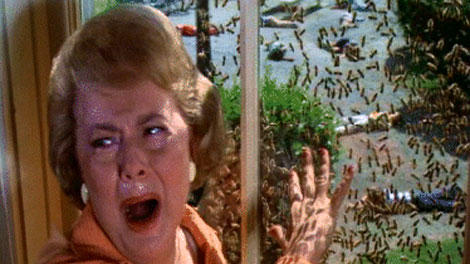
killer-bees

We were constantly on the lookout for roaches and ants and mosquitoes in our homes and backyards, so naturally they’d morph into something even more insidious.

Whatever the reason, it made for fun and creepy horror stories.

See this movie: Oculus

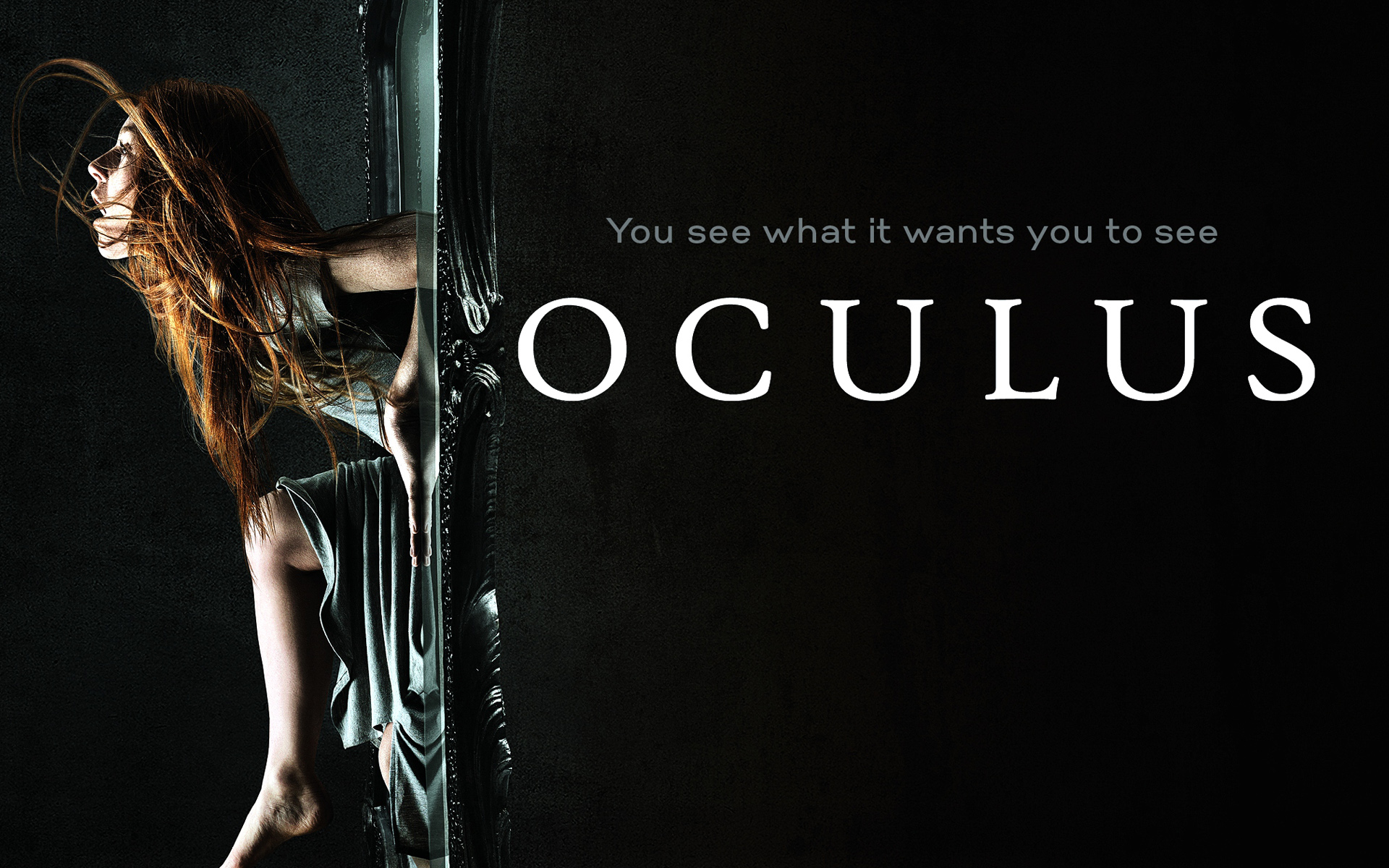
Oculus is a cunning, tough horror movie that will leave you unsettled.

oculus_2014_horror_movie-wide

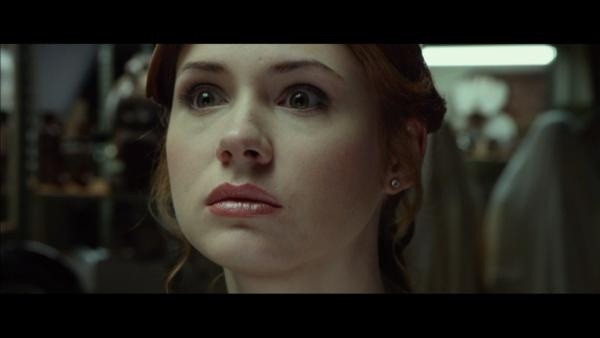
When we last left Karen Gillan, the Scottish woman with the big eyes who played Amy Pond in Doctor Who, she was staring at the weeping angels to avoid being sucked back in time (spoiler: she wasn’t successful).

Oculus Gillan

Now, in Oculus, the actress is donning an American accent (competently) as she stares into a haunted British mirror to fight an evil force.

Oculus is the latest horror offering from the forces behind the Saw series (too gory for me) and the Insidious flicks (good, fun horror). I was expecting something along the lines of Insidious. I was not prepared for a dark and harrowing tale of family madness, PTSD and psychological horror.

The setup: Tim is released from a mental hospital. Ten years earlier, he, along with his sister Kaylie (Karen Gillan), witnessed a horrific crime when their mother turned psychotic and was shot by their father. They only survived because Tim killed their father. Tim has been thoroughly rehabilitated. Kaylie, on the other hand, has gotten hold of the evil mirror which may have driven their parents (their mother is played effectively by Battlestar Galactica‘s Katee Sackhoff, aka Starbuck) to madness and death. She intends to defeat the evil that lies inside, along with Tim’s unwilling help.

Oculus

Oculus was great on two levels.

First, the narrative structure was brilliantly crafted. We bounce back and forth between the present and the original crime 10 years earlier. As the movie progresses, the past and present merge to great effect. And, even though we know the outcome of the events in the past, there’s still heart-pounding tension.

Second, one of the strengths of horror/sci-fi/fantasy is that it gives us the chance to explore common, painful themes in a fantastical setting. Oculus does that. On one level, this is the story of a horrific childhood, mental illness, and the stubborn hold that trauma has on our lives. A good chunk of the film is spent debating reality, for good reason. I enjoy writing about the supernatural because it allows me to explore deeper issues. The writers of Oculus obviously feel the same.

Oculus draws on a rich heritage of horror films. I picked up on the references to The Amityville Horror, a classic movie about possession that scared the life out of me as a kid. It uses these tropes effectively.

My main complaints would be that the Nightmare on Elm Street effects of “is this real or not” were overdone, and the nature of the evil, which was way stronger than our protagonists, was never hinted at (perhaps setting up a sequel). And the title sucks. I keep calling it Ocular. Not good.

Oculus is not an easy movie. It is not an escape. But it shows the power of horror to shine a spotlight on very human terrors.


Read this book: The Passage

This literary/genre juggernaut is worth the hundreds of pages.

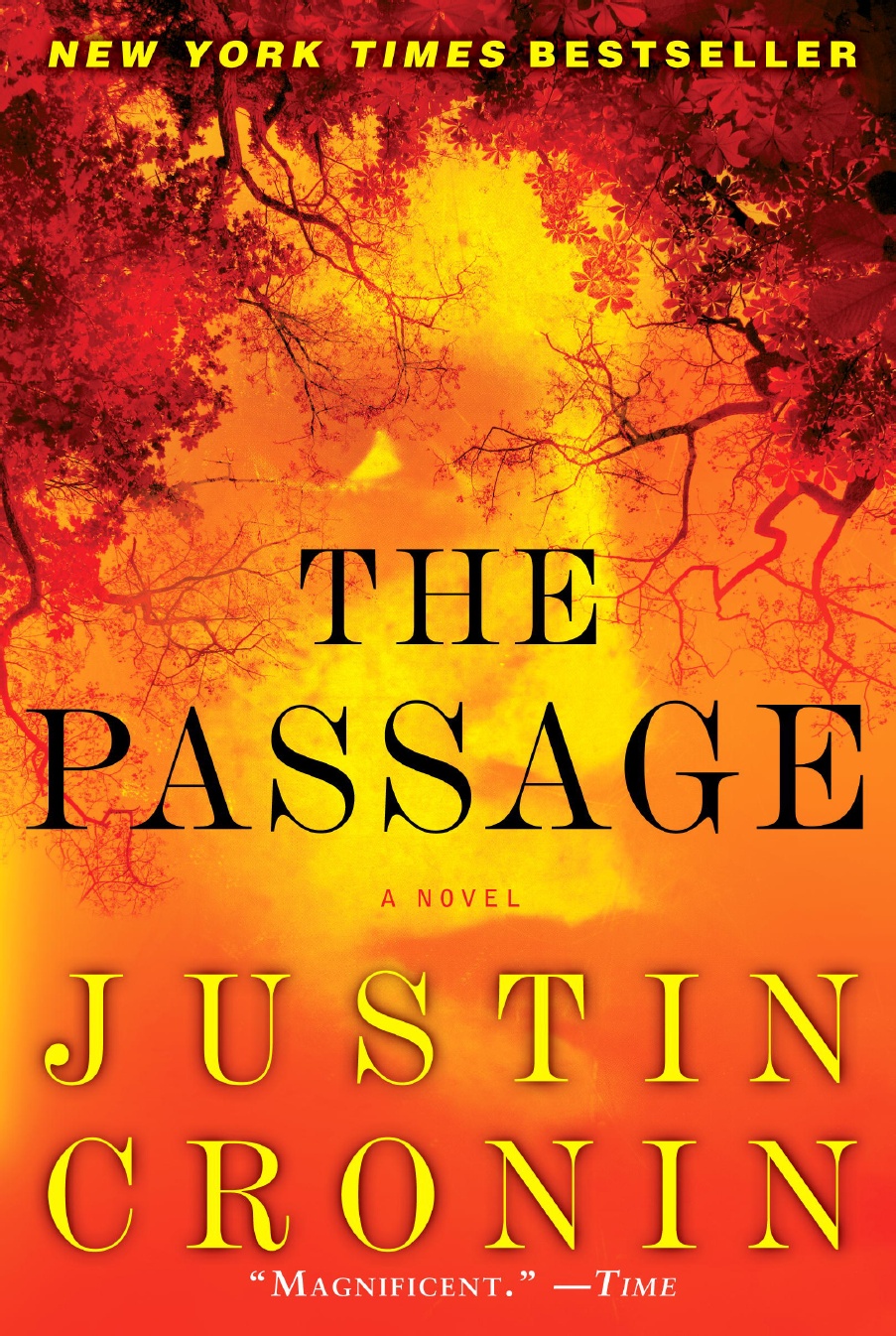
passageIf you picked up The Passage without knowing the plot, you would quickly know that dark times were ahead. It starts out with a deadly virus culled from South American bats, adapted and tweaked by government scientists to create super soldiers. Of course they test it out on twelve vicious killers on death row. And of course the outcome is worse than these scientists could ever have imagined.

So begins The Passage, Justin Cronin’s cinder block sized novel about vampires, the first of a trilogy. In other hands this setup might have been just another soon-to-be-forgotten pulp read. Cronin has the skills and literary background to create a lush, sprawling tale that spans genres and centuries.

The Passage, like the monsters it portrays, mutates and grows. It starts off as a technothriller that follows FBI Agent Brad Wolgast and one little girl named Amy. Amy is taken by these scientists and is given the same serum that turns twelve killers in to vampires. It doesn’t do that to her; instead it keeps her young. As the twelve proto-vampires escape and create their own tribes of powerful, evil vampires, Wolgast takes Amy and flees into a dying America.

Then we shift.

Courtesy of a report from a University set 1,000 years in the future (there’s hope for humanity!), we jump ahead nearly 100 years after the first vampires were created. Now we’re in a small California compound — a former FEMA camp — with a handful of survivors. Here we follow Alicia, one badass warrior woman, and Peter, along with other members of their community, as they struggle to survive. The technothriller is now a dystopic tale, reminiscent of the Mel Gibson flick The Road Warrior, though one deeply infested with horror that rivals Stephen King. Amy, the infected girl from the beginning, shows up and she becomes pivotal to the colony’s struggle against vampire hordes and horrific odds.

So what’s great about The Passage?

Start with the writing. I’m a fan of wordsmiths, and Cronin is definitely one. Though the book is huge, there isn’t much in terms of fat, and lyrically it is beautiful without being distracting.

Then there are the characters. The Passage includes several characters, and Cronin writes from their point of view. We get to know there people, and without exception they’re all three-dimensional.

And the plot. The Passage is thrilling end-of-the-world fare. We see America crumble. There’s a scene early on as a train full of people flees Philadelphia – the last train out before the city is overwhelmed. The train ride is harrowing, as the vampires pick off the train car-by-car. A few lucky ones only barely manage to survive. This scene has stayed with me.

This is just a glimpse into the world of The Passage. There are tons of twists and turns in this book, more than enough to get you hooked.


Book vs movie: World War Z

It was nearly an impossible book to film, but they filmed it anyway.

There’s only one book that comes to mind as a successful movie adaptation (though I’m sure there are tons of others), and that’s The Hunger Games.

Zombie thriller World War Z by Max Brooks was a mega-successful book.

Image

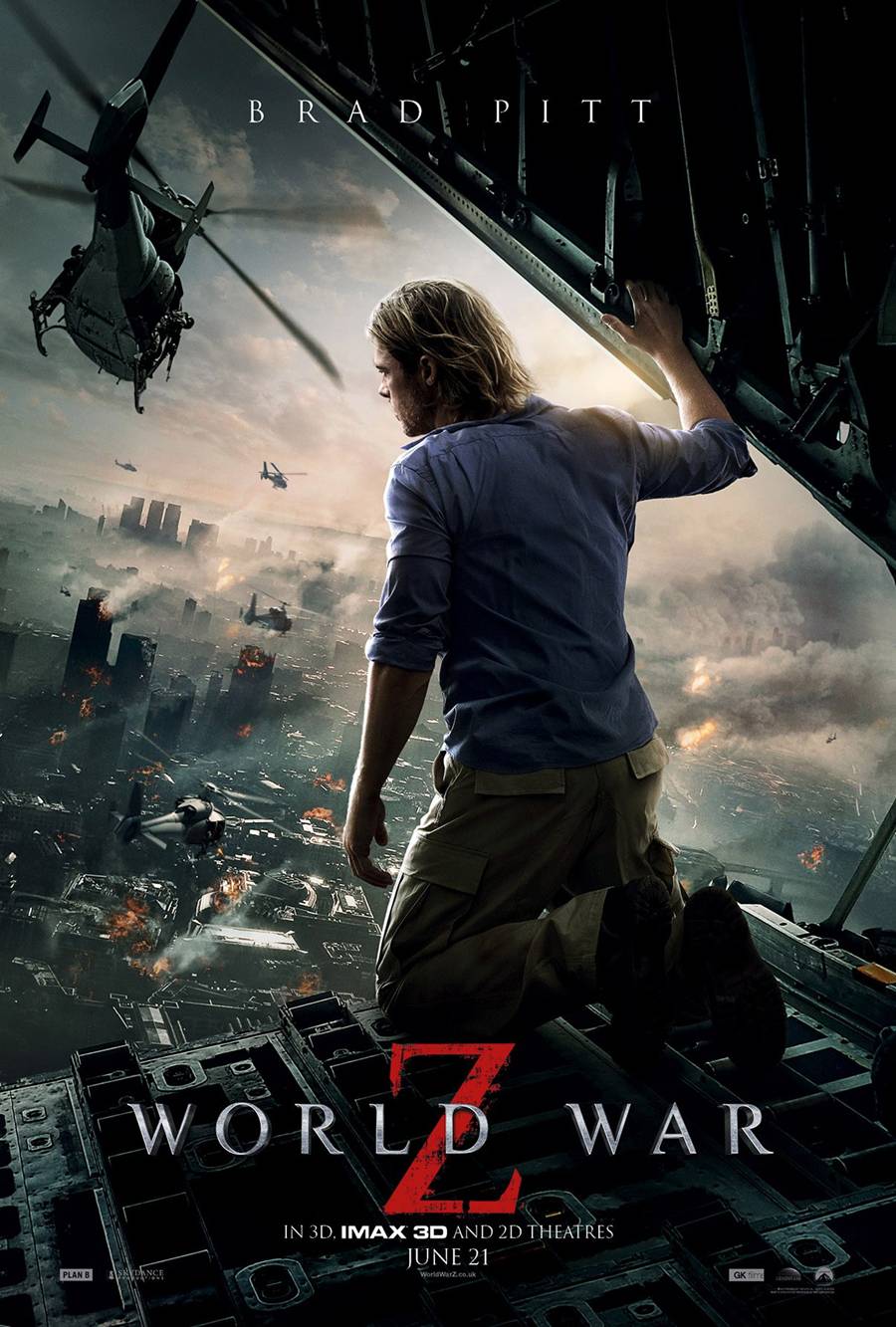
World War Z the movie, produced by Brad Pitt, was a moderately successful movie.

Image

Both are vastly different beasts, and the adaptation didn’t quite make the Hunger Games standard.

To be fair, the book is nearly unfilmable as written. It’s told in the style of The Good War, an oral history of World War II by Studs Terkel. World War Z (book) is written after a global zombie pandemic/attack/war. It’s narrator is a UN rep who is compiling reports on the war from around the globe. In a neat literary trick, while the narrator appears in every chapter — he actually interviews the survivors — we never even know his name, or much else about him. This allows the focus to be on the individual stories throughout the book.

And the stories are gripping. We hear from normal folks who have to bury their pain to soldiers who relay harrowing tales of near death to higher-ups who reflect on the war from a matter-of-fact perspective. Max Brooks excelled at writing these micro-tales that not only have genuine human drama, but combine facts on worldwide culture and geopolitics. Brooks covers nearly every facet of the global war and its aftermath, including the new world order that results. It’s fascinating to see how Russia has become a theocracy, Cuba is a capitalist powerhouse, Israel and Palestine finally live in peace, and China is a democracy.

The movie version of World War Z. goes in a different direction. The hero (Hollywood loves its heroes) is Gerry Lane (Brad Pitt). He is a former UN investigator who gets caught up in the zombie outbreak in Philadelphia with his wife and daughters. After a close escape from a Newark rooftop, Lane and his family are flown to a ship, where Lane is called back to duty to help a CDC scientist search for a cure. This search takes Lane (and the viewer) to South Korea, Israel, and Wales.

The movie tried to stay true to the book in the sense that it was a global story. It was exciting to travel to those locations, even if the plot felt forced. For instance, I was unsure as to why Wales, in particular.

But while the book was one of my favorite reads, it did lack that central human character, and that’s the role that Gerry Lane served.

The movie also improved the book in its use of zombies. These were not the slow, ambling (though still menacing) zombies that we’re used to ,and which Brooks used. These zombies were lightning fast. The opening scene of Lane’s escape in the Philly streets was outstanding. The swarm happens in real time. It’s intense. There’s nothing like that in the book, though to be fair, it’s much easier to relay menace on film than in a book. And the scene with the zombie swarm scaling the wall in Jerusalem is a classic.

Image

Still, the movie couldn’t quite match the book in its scope. And as with most action movies, it stretched my belief nearly to the breaking point. A zombie outbreak on a plane results in a too-neat escape that could never happen in real life. Also, in the movie, the Israelis survived because they spotted the threat before any other country and walled themselves off. Yet they didn’t realize that noise would attract the zombies? The movie turned one of the most hopeful parts of the book — a lasting Israeli-Palestinian peace — into a tragedy.

In short, there were too many harrowing escapes for Pitt, and the last act in Wales nearly put me to sleep.

My recommendation — read the book if nothing else. Then see the movie, at the very least for it’s amazing visual effects. I hear there are sequels to the movie planned. Hopefully they figure out how to add more of the book’s heart.

Blurred lines – Zombie edition

Zombies through the ages have morphed, and they continue to do so.

The Hollywood Reporter has this cool slideshow on their website that takes us through decades of zombies in film. It starts with a 1932 movie titled White Zombie. But they weren’t zombies as we know it — they were simply people who were entranced.

Image

The years that followed gave us more voodoo zombies, then on to George Romero’s iconic undead slow walkers — to the brain-eaters, up to today’s version — the viral walkers.

I have a soft spot for Romero’s zombies, especially the ones in Night of the Living Dead – they were my first, and I’ll always love their menacing ambling. Plus, there was something about the black and white of the movie that kept the creep factor high.

Image

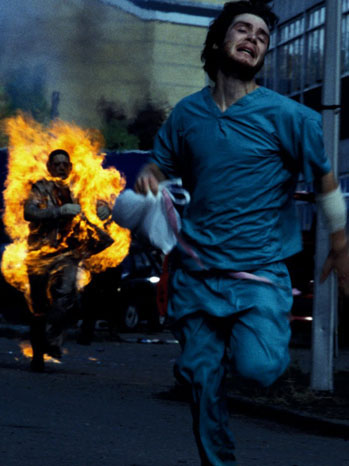
But I’m really digging the later versions as well, especially the one popularized by the British movie 28 Days Later. These were zombies created from a lethal infection, still vicious but not as mysterious. These latter-day zombies thrill the science geek in me.

Image

So what will come next in zombie lore? Alien-induced zombieism? I can’t wait.

Can you really laugh while watching sci-fi/horror?

Sometimes humor can cut the tension and seriousness, but it’s rarely done well.

I love most things horror and sci-fi related. But it can all get so heavy. Horror is basically about ghosts, witches, demons, vampires, etc. And as for sci-fi, well… science isn’t very funny. Scientists take what they do so damn seriously sometimes. Most times. Ok, 99% of the time.

In the fictional world there seems to be a stark divide. On one hand, there’s the hardcore, where pinhead2you never laugh, except maybe unintentionally. Take Hellraiser‘s Pinhead. There is nothing funny about him. Compare that with the comedies — Spaceballs, Scary Movie 1 to infinity. Those play it only for laughs.

But then along come those rare shows that can balance drama with comedy.

The first one that comes to mind is the iconic series Buffy the Vampire Slayer. At its core it was a tragedy: a teenage girl is chosen (against her will) to become a vampire slayer. These girls rarely see their 18th birthday. Fun, right?

Well, head writer and creator Joss Whedon and Buffy herself — Sarah Michelle Gellar — made it fun. The writing was sharp and clever and the jokes would fly.

buffy

But Buffy the Vampire Slayer never let you forget the tragedy at its core.

Another example is from the SyFy channel (or SciFi as it was called back then). Farscape was about John Chrichton (Ben Browder), an American astronaut who is shot through a wormhole to a thoroughly alien part of the universe. He accidentally kills the brother of a psychotic military captain, and winds up aligned with a band of escaped convicts. He spends the series on the run while trying to get back to Earth.

farscape 2

Farscape could be heavy, and many times it was. But Chrichton was written as a loose cannon, confounding his adopted compatriots for better and for worse. He was often serious as hell. But he was also funny, sharp and crafty.

I think we need more of this in these genres. Take time travel. Most of the time travel movies are 100% serious (the Terminator franchise). The only non-serious time travel movie I can think of is Hot Tub Time Machine. But that’s straight up comedy.

But there could be alternatives. I came across this short clip below, courtesy of io9.com. It takes place in a world where time travel is common, and is used by drunken assholes. It’s clever, and it left me thinking… what if? What if someone could successfully inject humor into time travel, while keeping the drama?

<p><a href=”http://vimeo.com/70410780″>Timeholes</a&gt; from <a href=”http://vimeo.com/mallaby”>Ben Mallaby</a> on <a href=”https://vimeo.com”>Vimeo</a&gt;.</p>

I’m waiting, Hollywood.