It Follows: hype and (no) story

I’m a sucker for a good horror movie. Give me some chills and thrills, but not too much gore, and I’m into it. but good horror movies are hard to find. Too often the thrills are just obvious and trite. Every scary story has seemingly been told.

it-follows-movie-posterThat’s why when I caught word of the new horror film It Follows, I was excited. io9.com, one of my go-to websites, called it absolutely must-see horror flick. They gushed over this movie so much (as did other media outlets) that I couldn’t wait to see it. So I forked over $14.50 and went.

First, the premise. Set in a typical middle America suburb (in Michigan), 19-year-old Jay (played by Maika Monroe) is dating a mysterious guy named Hugh (played by Jake Weary). After they have sex for the first time, he ties her up and tells her that he’s passed on a curse to her. A mysterious, slow-walking demon-like creature that can take the form of any human will follow her, and if it touches her, she will die. If she dies, then the curse will revert back to Hugh. The only way she can survive is to pass the curse on by having sex with someone else.

A killer premise, right? But premise doesn’t equal plot.

Before I deconstruct the hype, I’ll talk about what works.

It Follows is beautifully shot. It comes off like an expertly made indie flick. the imagery, from dull suburbia to decaying Detroit, are all lush and inviting.

–The soundtrack is both jarring and creepy. It Follows is scored by Disasterpiece, and it is filled with sudden electronic bursts, thumping synth beats, terror and pounding hearts gone ragged.

–The cast is generally appealing. This movie is not filled with the too-pretty Hollywood types we’re used to seeing. They’re good looking enough to be believable, and the actors all do fine jobs.

it-follows-banner

–The pace of the movie is steady. I never felt bored or hurried.

–There were some genuinely creepy elements. The way the creature would stalk Jay was unsettling, and it stayed with me long after the movie ended.

–Early in It Follows, after Jay is first infected, she is scarred by the fact that Hugh attacked her and tied her up. The actor who plays Jay relayed the shame and horror of that all-too-real occurrence in a way that left me shaken.

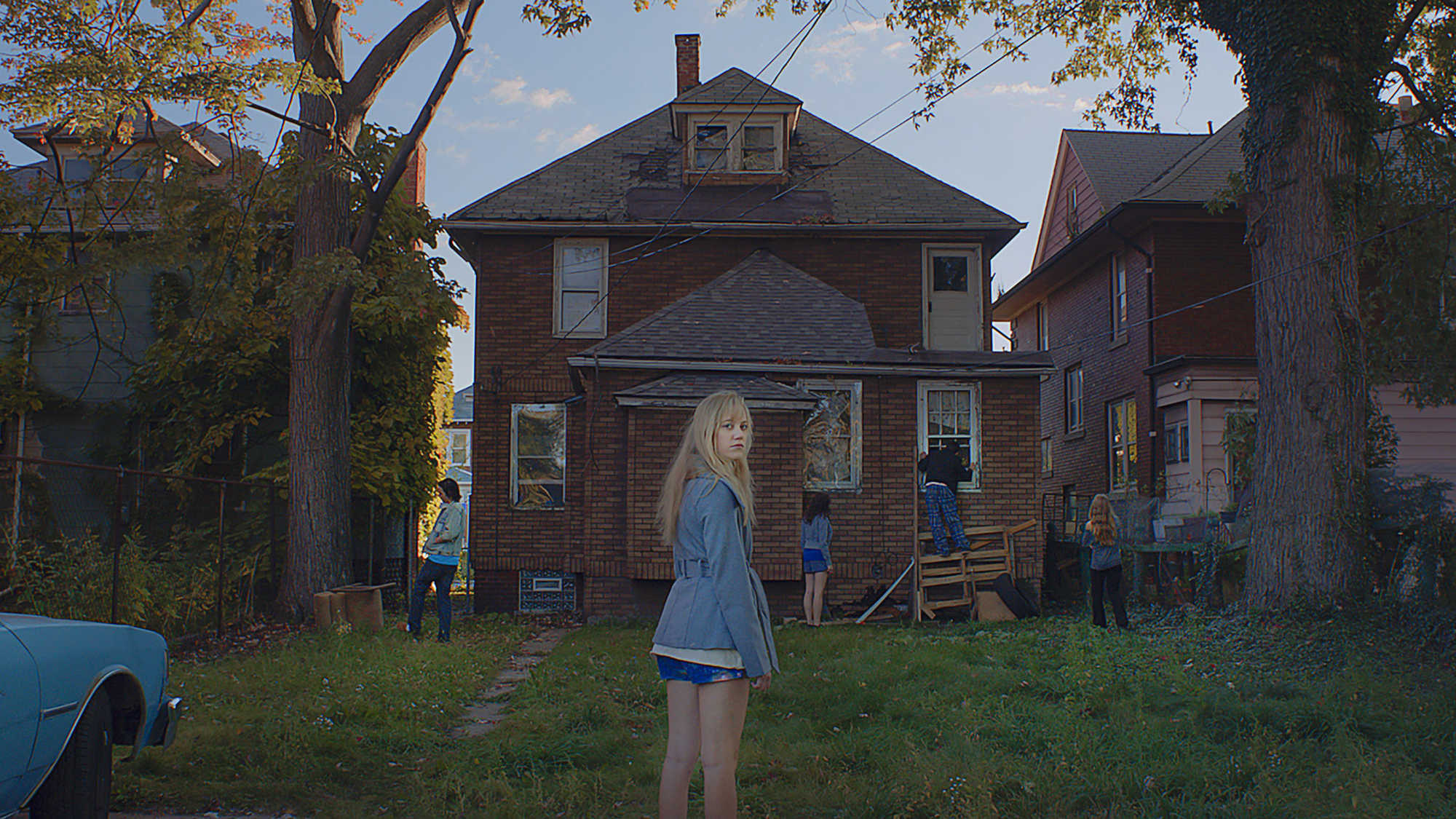
it follows jay

But while watching the movie I was acutely aware of the fact that while the premise was strong, and the production was excellent, the plot was thin. Many horror movies fail when it comes to crafting a compelling narrative. Too often the movies simply turn into repetitive scenes of the hero trying to elude or battle the monster, a back-and-forth that just ends suddenly, leaving the viewer unsatisfied. It Follows fell into this trap.

Part of the problem was that the characters were underdeveloped. It took me a good 45 minutes before I realized that the blond girl’s name was Jay — and she’s the main character! There is no backstory, and the movie suffers as a result.

Then there’s the theme. All horror movies have a theme, a primal fear that the writer and director exploits. For It Follows, it was clearly sex. The curse is passed on through sex. But this is a well-worn trope that has almost become a cliche. In my opinion, the writers missed a great opportunity to offer a twist on this. As I said earlier, I was moved by Jay’s traumatized reaction to her attack. It was real and visceral. What would have It Follows been like if they explored the theme of sexual trauma?

Maika Monroe and Jake Weary in It Follows

One of the most compelling scenes is when Jay and her sister and friends track down Hugh, the one who passed the curse along to her. The group sits in the grass as Hugh explains what happened to him. Rather than a villain, Hugh came off as a tortured, terrified soul. I couldn’t help but wonder what this movie would have been if it had spent more time on the characters of Jay and Hugh, and explored the repercussions of their sexual/relational traumas. There were also hints of a Freudian/Oedipal undercurrent, as the creature takes the form of parents of two of the characters. But this was too fleeting to leave much of an impression.

I wish that the writers had gone through a few more drafts. This could have been a truly great horror movie. As it stands, I’m going to buck the hype. It Follows, while well made, is not a brilliant horror film, and not one of the best of the decade. It is well made, chilling, but ultimately unsatisfying. Watch it on Netflix, and save your $14.50.

The Walking Dead: Ecstasy and agony

Walking dead_cast_wallpaper

I’m late to The Walking Dead. It’s not that I don’t like zombies — I do, ever since I watched Night of the Living Dead as a five year old. But there are so many shows out there, as well as an endless supply of zombie-themed shows and books. When it came to The Walking Dead, I just couldn’t be bothered.

But I decided to binge watch the show last Thanksgiving, and just before Christmas I caught up. (Part Walking Dead Castof that time was spent in bed with a fever — zombie shows make for surreal fever dreams). My verdict? The Walking Dead does several things great:

–This show manages to put a fresh spin on the beaten-to-death zombie trope. How? By focusing on the nuts and bolts of survival in a slow-moving apocalypse. Zombies are only one danger. Other humans are nearly as bad (hell, they’re sometimes worse).

–Rick Grimes (as played by Andrew Lincoln) is a hero who is both resolute and plagued by doubt. He is human and relatable. This is a tricky mix that the writers, and Lincoln, pull off.

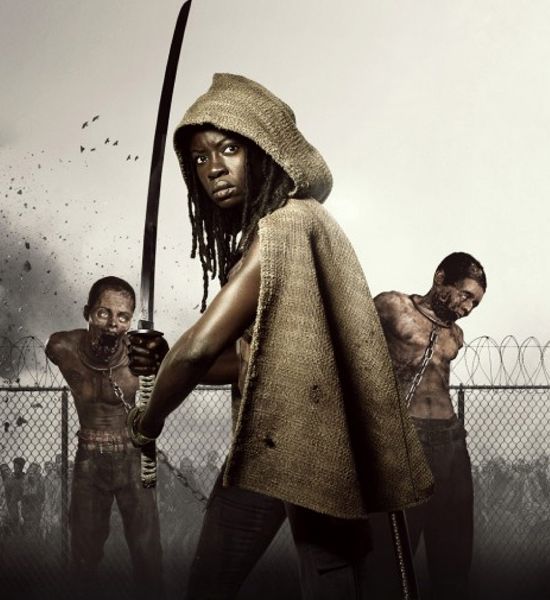
–With its ensemble, revolving cast, its characterizations can be uneven. Some have remained cardboard over several seasons (I’m looking at you, Glenn and Maggie). but then we get amazing characters like Michonne. Michonne petsShe will be remembered as one of the iconic horror characters decades from now. And then there’s Daryl, who has been consistently bad-ass, and consistently compelling. Finally, there’s Carol, who has morphed from a mousy abused woman to a woman with a backbone of steel. Carol has seen the worst of life and she has learned what it takes to survive in this horrific world.

But… The Walking Dead, like Lost, is one of those maddening TV shows that is blessed with brilliance and plagued by arrogance. This show is great, and the writers know it, which trips them up.

Take the episode “The Grove” from season 4. Carol and Tyreese are holed up in an idyllic country cottage with two young sisters. As often happens on this show, things go south. Way south. This episode was sharp and smart and beautiful. It was gut-wrenching and caught me off-guard. It was not a fast-paced episode — The Walking Dead often walks very slowly. But it was one of the most jarring hours of television I’ve seen.

And then The Walking Dead serves up an episode like “Them,” the latest in current season 5. In “Them,” the gang is reeling from the deaths of two beloved members. They’re wandering, starving, thirsty, and trailed by ambling zombies. And they have angst. And doubt. Basically nothing much of note happens for most of this episode, except for our heroes acting out in small, supposedly symbolic ways. Plus, we get a perverse motivational speech from Rick that is about three seasons too late in coming.The writers were aiming for deep symbolism and small epiphanies. They missed. Instead we got an hour of pouting and navel gazing.

Still, the worst episode of The Walking Dead is better than 99% of other TV shows. Here’s hoping the writers don’t repeat mistakes like this. Please — give us more ecstasy and spare us the agony.

WalkingDeadMemes_58

Why I can’t read any new Stephen King

This isn’t an easy thing for me to write: I will never read a new Stephen King novel again.

I grew up on King. When I was a teenager I devoured his books: Carrie, Firestarter, Thinner, The Talisman, Eyes of the Dragon, Pet Sematary, It. He was (and still is) a fantastic storyteller. He creates characters who feel real and alive, and in his horror, he captures real fears we all have and relays them to us in ways that keeps us awake well past dark.

I stopped reading him for several years — no real reason, except that there are so many other books out there. Then about five years ago I picked up The Dark Tower. Wow. It floored me. The Dark Tower was King at his best — wild, madcap, bursting with imagination, and populated with characters who seemed as real as you or me. Roland Deschain, the gunslinger and hero of the seven book Dark Tower series, is one of my all-time favorite characters. The seven books of the Dark Tower series weren’t perfect. There was way too much fat. And partway through the series he introduces a character named Stephen King, a writer of horror movies. This was his only major misstep in the whole series; it nearly broke the illusion for me. But I was able to overlook this. Even the ending, controversial to some, was brilliant to me.

Then I made the mistake of reading Under the Dome, his book about a town that’s mysteriously trapped beneath an impenetrable dome, and I realized a few things:

–I’m tired of reading about small-town Maine. The characters in Under the Dome were way too similar to those in his earlier books.

–King’s world is black and white. I like gray.

–King’s writing is devoid of all hope.

That last part is crucial. First, let me be clear: King’s talent and skill are undeniable, and his work ethic is something we should all emulate. But when I write, I must come from a place of hope. Even in the darkest stories I write, there exists a thread of hope, no matter how thin. In Under the Dome, there really was none. The basic message was this: the world sucks, people suck, and ultimately we’re all powerless. I trudged through the 1000 plus pages, hoping for at least a stellar ending, but the ending I got was one of the worst I’ve ever read. It wasn’t even good enough for a bad Twilight Zone episode. It was arbitrary and it made me regret wasting my time.

And now I just finished his latest, Revival. Where do I begin?

First, the good. King is a master of a unique premise, or, at least a premise that would have seemed obvious, but for some reason wasn’t. For this book, he infuses horror into the well-worn cliche of the faith healer. You would think it’s been done to death, but I can’t think of another case. And he works in clever homages to Mary Shelley’s Frankenstein and the cold horror of HP Lovecraft.

But first you have to sift through the boring life of one Jamie Morton, who is well meaning enough, but nothing more than a way for King to relay the glories of his small town baby boomer generation. I grew up in the shadow of the baby boomer generation. Never again do I want to hear about how cool or special their lives and culture were. Thank God for that skill known as skimming pages.

Jamie aside, King gives us Pastor Charles Jacobs. In Jacobs we have someone who is much more compelling — a man of God who loses all faith when his wife and son die in a horrific accident. King deftly describes the accident, sparing none of the gore. And he paints a brilliant picture of a man shattered.

Unfortunately it’s told through the bland eyes of Jamie, whose motivations are never quite clear or understandable. There’s an attraction between him and Jacobs, something that keeps them coming back to each other over the years, but it’s never explained. We’re just expected to go along until the bleak, bitter end.

And what an end it was. The world of Revival is one of utter horror, with no hope of escape. In the end, Jacobs and Jamie glimpse the afterlife, and its a hellish afterlife awaiting every man, woman and child. I’m not a psychologist, but I’m guessing Stephen King hates religion. I’d bet he doesn’t even believe in God. Fair enough. A belief in God is by no means a prerequisite for a good and happy life. But what King gives us is an inversion of God and religion. Not only is there no purpose to life, but we are insignificant, and will suffer cruelly no matter what we do.

Revival, similar to Under the Dome, is a book about being utterly powerless. It is a book that contains not a single shred of hope. In fact, hope is systematically killed off until nothing but despair remains.

Revival left me feeling pretty low. Yes, I know it’s JUST A BOOK. But one of the reasons we read books, watch TV, go to the movies, listen to music, etc, is to feel transformed. We’re looking for something to feed our souls, to make us feel alive, to affirm the beauty and goodness of life. King’s Dark Tower series did this for me. But these last two books — Under the Dome and now Revival — did the opposite. All they did was bring me lower.

Stephen King is a wildly talented and successful writer. I can’t speak for his state of mind (I wouldn’t presume to do so) but I hope he’s not living in a place of darkness. I’ve loved being a part of his literary word, but it’s time for me to let him go.

Archie vs Predator?

Call this post mash-ups gone wild.

What are two things that should not go together? Two things that absolutely MUST go together.

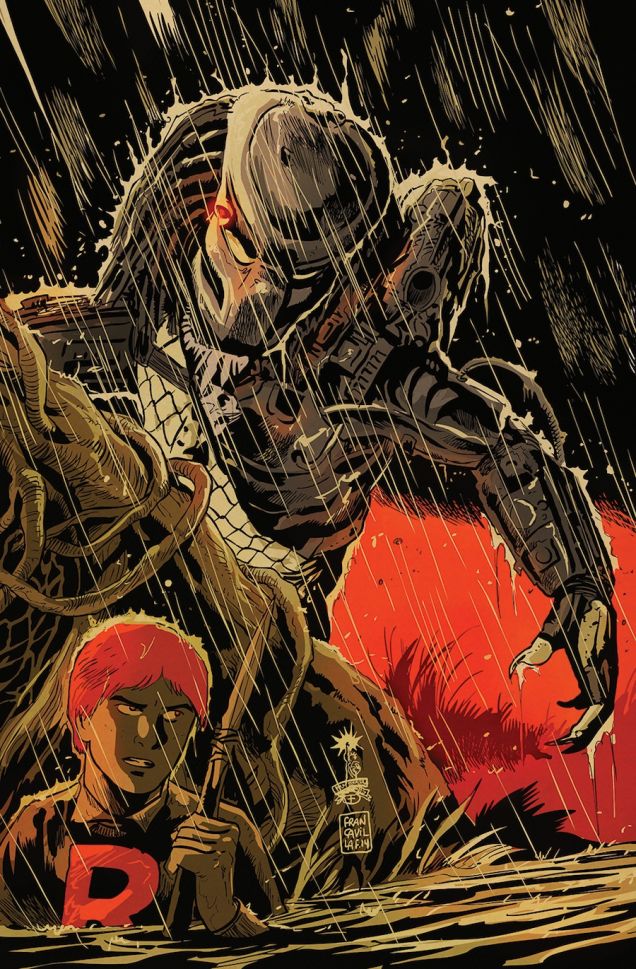
The latest proof — there’s a new comic series coming out that combines that all-American wholesomeness of the Archie comics with…. the sci-fi horror classic Predator.

Predator Archie

Say what???

According to this link at io9.com, Archie and friends will be forced to battle the Predator aliens while on vacation in Costa Rica. Sounds good to me.

When I was young, I loved the Archie comics. There was something so normal, so ideal, about Archie and his life. It was an experience I wanted. And of course I loved Predator. Badass Arnold Schwarzenegger fighting badass aliens? What’s not to like?

I hope Hollywood (or at least SyFy or the Spike Channel) have optioned these books. I would love to see Jughead’s severed head hoisted aloft.

Archie Predator

Hellraiser: behind the scenes

Hellriaser-Pinhead-Barker

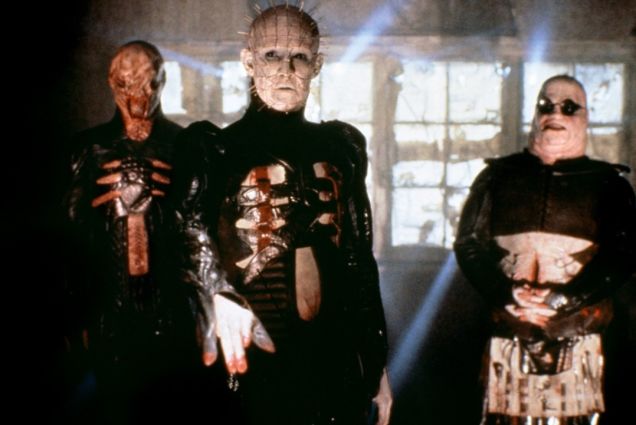
I was a teenager when I watched Clive Barker’s iconic horror movie Hellraiser. It freaked me out, to say the least. I’d never seen evil presented on screen in such a visceral, repulsive way. What made it so scary? First, several years of Catholic school had conditioned me to be afraid of hell. Second, the villains — Pinhead and the rest — were not just mindless monsters. They were human. Too human.

This movie has stayed with me after all these years. I haven’t watched it in a long time. Maybe I should. But will Hellraiser hold up? Sure, it was low-budget, but the core element of pure horror will remain as strong as ever, I’m guessing.

In the meantime, I came across this article in io9.com that details some behind-the-scenes tidbits about the movie. Here are a few highlights:

–Clive Barker sold the script for Hellraiser based on the idea alone. He’d never directed a movie — he didn’t even know how. Unfortunately the two books in the library on directing were both checked out.

–Jennifer Tilly auditioned for the role of Kirsty. But Barker wanted Ashley Laurence, an unknown actor, to play the part. He had to fight for her. Obviously he won.

Kirsty 2

–Doug Bradley, who played Pinhead, did not want to take the role. Why not? Number one, the hours of makeup required. Number two, with all the makeup, who would recognize him? Now that Pinhead is an icon, I bet he’s glad that he took the role.

–The original title was The Hellbound Heart, but the studio heads worried it would be mistaken for a romance. If only.

–The costumes were inspired by those seen in S&M clubs. Then again, that’s not a surprise.

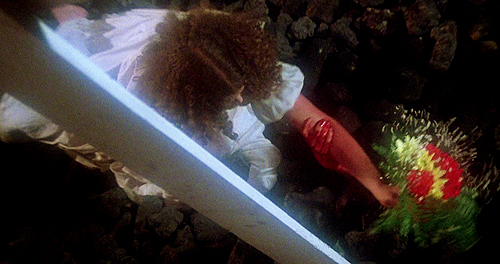
hellraiser


Read this book: Bitter Seeds

Ian Tregillis’s alt history/sci-fi mashup scores big on imagination, even if many of his characters are flat.

bitter seeds 1

Aside from the supernatural/horror/sci-fi, another thing I’m a fan of in pop culture is alternative histories. The “what if” has always fascinated me, mainly because it lets the imagination run away.

In his book Bitter Seeds, Ian Tregillis combines not only sci-fi, but also horror, with alternative history. Add nazis, arguably one of the best villain groups of all time, to that mix and you’ve got a recipe for a great story.

bitter seeds 3The plot: in Germany, a mad scientist is creating his own band of supermen, soldiers capable of such things as turning invisible, starting fire, and predicting the future. As war looms between Germany and the rest of Europe, the British government forms a group called Milkweed to investigate these reports. Soon a covert battle ensues as the British group use warlocks to summon dark forces to battle the nazis.

It’s actually a complicated plot to explain in a few tight sentences. Our hero is Raybould Marsh, a pugnacious British secret agent who is sent to investigate the reports of these supermen. Soon he summons his college friend Will, a warlock initiated in a blood rite that allows him to communicate with beings called Eidolons. When you think of Eidolons, think Lovecraft. These mysterious beings are not kindly or benevolent. They see humans as no better than ants. They would gladly destroy us but they exist in a different plane, and can never pin us down. Blood helps them get closer. Tregillis doesn’t fully explain what the Eidolons are, but he doesn’t need to. My imagination filled the gaps just fine.

Meanwhile, the German team of superheroes is on the verge of falling apart. They were Bitter-Seeds 2created when they were just children, bought by a scientist who experimented on them (horribly, one would assume, judging from the body count) until he had his team in place. They wear batteries that are hooked to wires embedded in their skulls, which allows them to access their superpowers. This is one of Tregillis’s strengths — he employs, simple, believable technology suited for the era. Think steampunk circa 1930s.

The German story centers on two characters: Klaus, who can dematerialize and move through walls, and his sister Gretel, an enigmatic sociopath who knows the future (though she rarely reveals it). Gretel is perhaps the most compelling character. Why? She is always a mystery, always unpredictable, and always uncontrolled. She’s fascinating to watch.

The breakdown. What was good about Bitter Seeds?

–The concept was fun. Who doesn’t love watching nazis get beat?

–As mentioned above. Gretel was by far my favorite character, though Will, the aristocratic warlock, was a close second. Tregillis convincingly drew a man who grew more and more tortured, especially as the Eidolons demanded higher blood prices as the battle continued.

–The Eidolons themselves were a fantastic creation. Thoroughly dangerous, extremely powerful, callously indifferent. I want more.

–Tregillis is a skilled writer. As a writer myself, I’m always appreciative of someone who takes great care in the writing of a story.

And the not so good:

Bitter Seeds suffers from something I see a lot in fiction. I call it the running in circles plot. Maybe the writer isn’t sure what to do next. Maybe the writer needs to up his page count. But sometimes a story starts running in circles, where the characters are going back and forth (sometimes literally) and not really getting anywhere. Not much plot movement, maybe a little character development. There were several times when I could feel the story lapsing into this.

–Aside from Gretel and Will, I cared little about any of the other characters. Our hero, Marsh, was fine, but he never made the leap off the page for me. Similarly, Klaus was very one note. His whole role was to protect his sister Gretel, and that’s all he did. The Germans, especially, were largely forgettable.

Nevertheless, Bitter Seeds (which is book one in a trilogy) is inventive, imaginative and thrilling. I’m looking forward to discovering where Tregillis will take us next.

Read this story: Wolverton Station

If you’re a fan of horror fiction and haven’t heard of Joe Hill, get yourself to the nearest bookstore now. For starters, check out his short story Wolverton Station. What you’ll get from Hill—and this story—is solid (if not a little workman-like) heart-thudding chills.

wolverton stationThe plot: Saunders is a corporate hatchet man traveling the rails in England. He’s off to scout out new sites for a Starbucks-like chain called Jimi Coffee. He’s greeted not only by protests, but wolves as well. Soon enough he finds himself trapped among the wolves.

I read this story cold. All I knew was that it was horror, and I enjoyed Hill’s book Heart-Shaped Box, so I gave this one a try.

First, the good:

–Hill manages to create a complex, if not entirely likable, character in Saunders in a brief amount of time. I could not say that I liked him, but definitely felt for him.

–There’s some deft sleight of hand that Hill manages to pull off. At first it seems as if the story is classic horror, then it veers away from that, only to return with a vengeance. One of the hallmarks of good horror is to keep the reader always off-balance. I could never find my footing in this story, so well done.

–As the story rolls along, the tension reaches 10 out of 10. One of the most intense scenes took place on a train with no exits.

And the not as good:

–My main criticism is that Hill’s writing is, as mentioned earlier, workman-like. There’s nothing particularly new or innovative in his work. He is not forging new pathways in horror fiction, but he’s staying on the well-worn trails. But this is just a minor criticism.

So for some good horror thrills, check out Wolverton Station, and the rest of Joe Hill’s works.


See-through science

Ever wanted to be invisible? Not in the metaphorical sense, but truly transparent?

Me either. But for those who do, scientists are a step closer to making see-through skin.

Researchers at the California Institute of Technology have advanced a process called tissue clearing that basically strips away all the color from the body. They did this in mice (not humans). What they got was a blurry, goopy messy looking thing. Ugly, but still intact.

see-through-mouse-1

How did they do this? By injecting a gel and detergents into the mouse’s bloodstream, which somehow stripped away most of the things that block our view.

Why would they do this? Having see-through organs would allow scientists to study body processes in real-time, as they happen. This would allow scientists to better understand conditions such as chronic pain.

I support most science, but for now, I’m adding this to the “not too sure this is a good idea” pile. I can imagine this getting into the hands of mad scientists who try this (illegally) on humans.

At the very least, it would make a really horrific story.

No word on how the mice fared, though. I can’t imagine it feels good to be injected with gel and detergents.