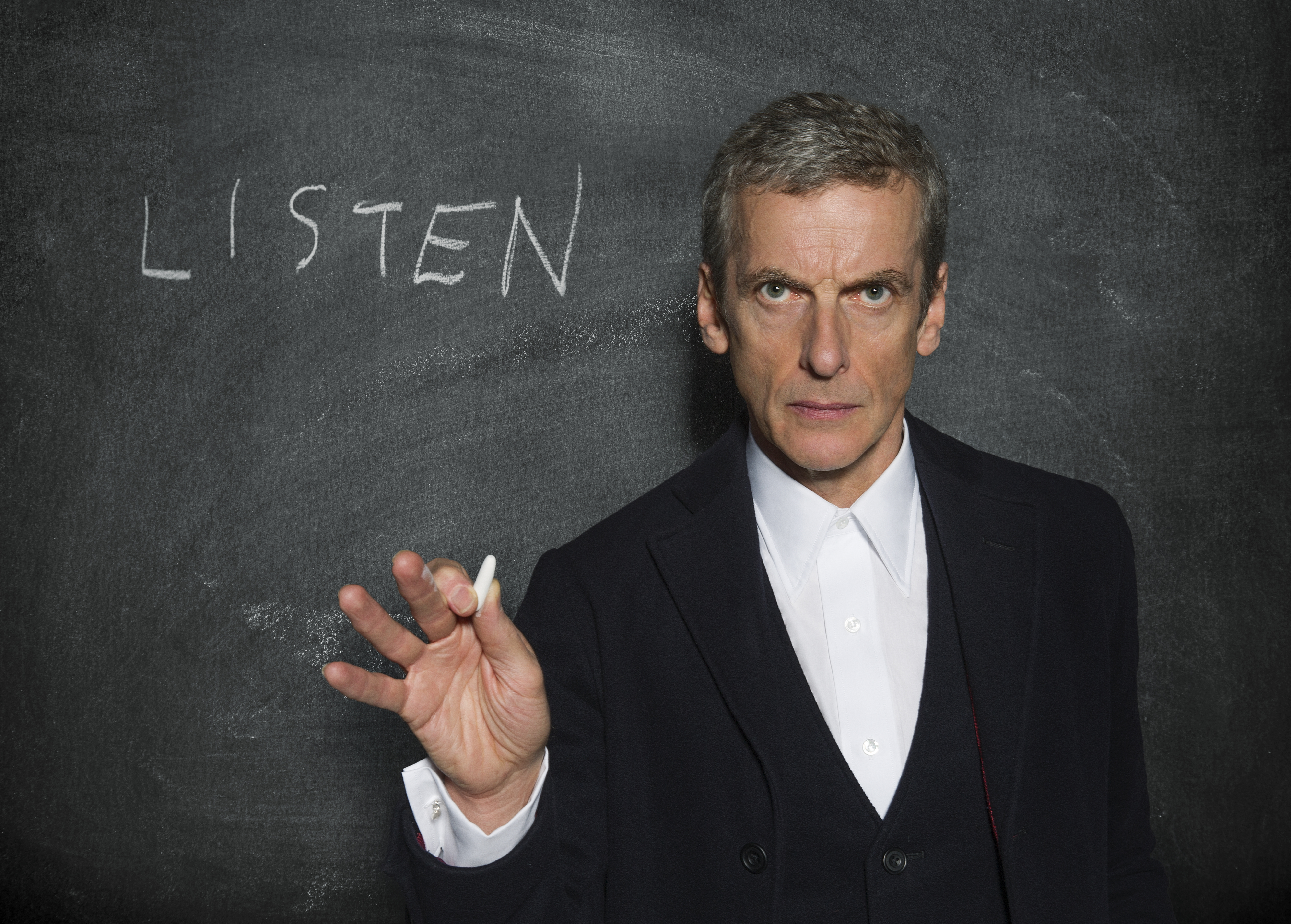
The brilliant failures of Doctor Who

Doctor Who‘s season 8 two-part finale overflowed with action and emotion, but it exposed the flaws consistent with the Steven Moffat era of this classic show.

Doctor-Who--Death-In-Heaven_article_story_large

All season long I’ve been wondering what the heck was going on with Doctor Who. A hallmark of the show is that it constantly changes its stars while keeping its core: the story of a double-hearted alien who travels through time with a human companion—typically young, female, and pretty.

Last season we learned who Clara, played by Jenna Coleman really was, and then Matt Smith’s Doctor died, to be replaced by Peter Capaldi.

When season 8 began, we had a prickly new Doctor in Capaldi, and an equally cranky companion in Clara. These two never meshed, and they never really tried. In some ways it was a welcome change from the usual template of wise Doctor and awestruck ingenue. Clara was similar to Donna Noble in that she wasn’t as impressed by the Doctor as Rose Tyler, Martha Jones, or Amy Pond were. But Donna Noble’s Doctor was at least vivacious, happy, and wacky. Capaldi was dour and sarcastic.
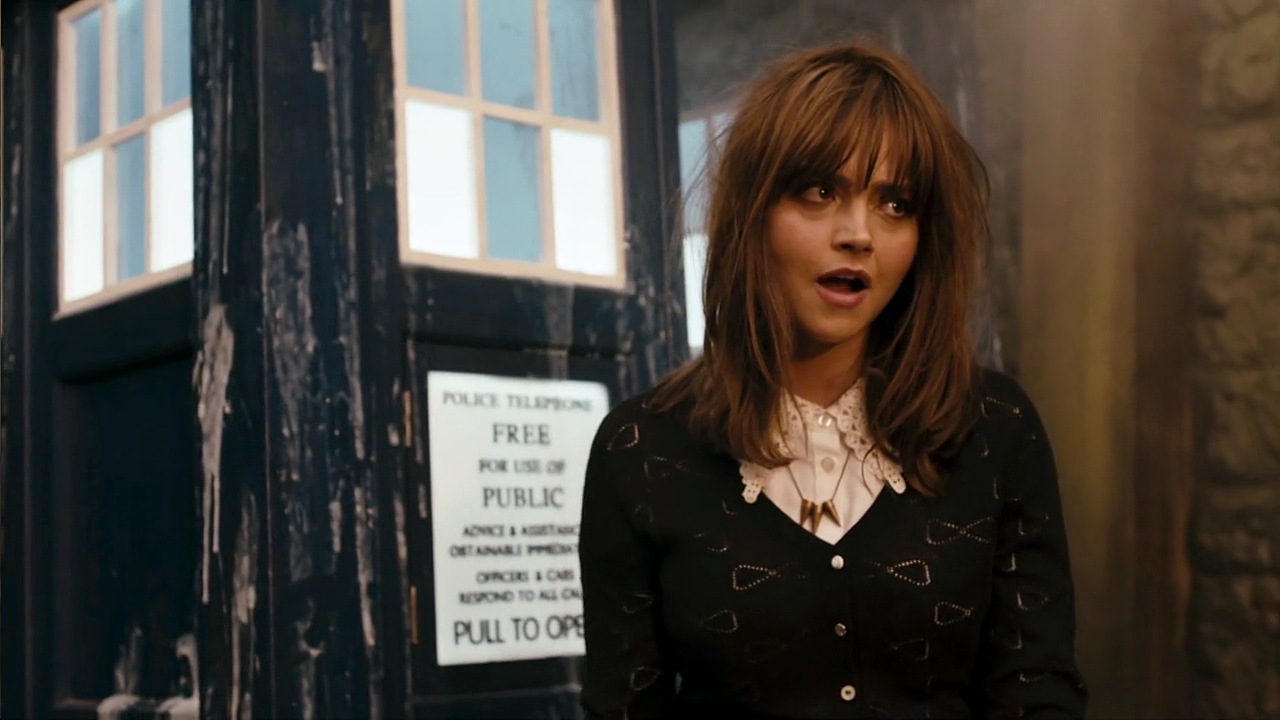
ClaraConfused

I’m not complaining. It was refreshing to see a different, edgier take on the Doctor/companion dynamic. This year was also a nice change from the past few seasons, with their increasingly complex and convoluted plotlines. This year, any casual viewer could watch any random episode and be able to get 80% of it. The episodes were simpler, more self contained, and frankly, more fun.

But then came the series finale.

Don’t get me wrong. I loved it. Doctor Who at its worst is dazzlingly fun. I grant it a wide berth when it comes to writing and storytelling, which is good, because this show needs it.

The two-part finale was a milestone in one respect: we saw the death of one major character, and the deaths of some minor ones too. In the UK, Doctor Who is billed as a children’s show; it usually shies away from getting too dark. This time it didn’t. The deaths were sudden and vicious.

But in other ways, the finale, though entertaining, exposed the flaws of the Moffat era.

We saw the return of classic Doctor Who villains the Cybermen. We also sat the return of the Doctor’s arch nemesis, the Master, though this time in female form. The Master (or Misi now, short for the Mistress), is written as crazy. Pure crazy. And she was played brilliantly as a deranged Mary Poppins type figure. So far so good.
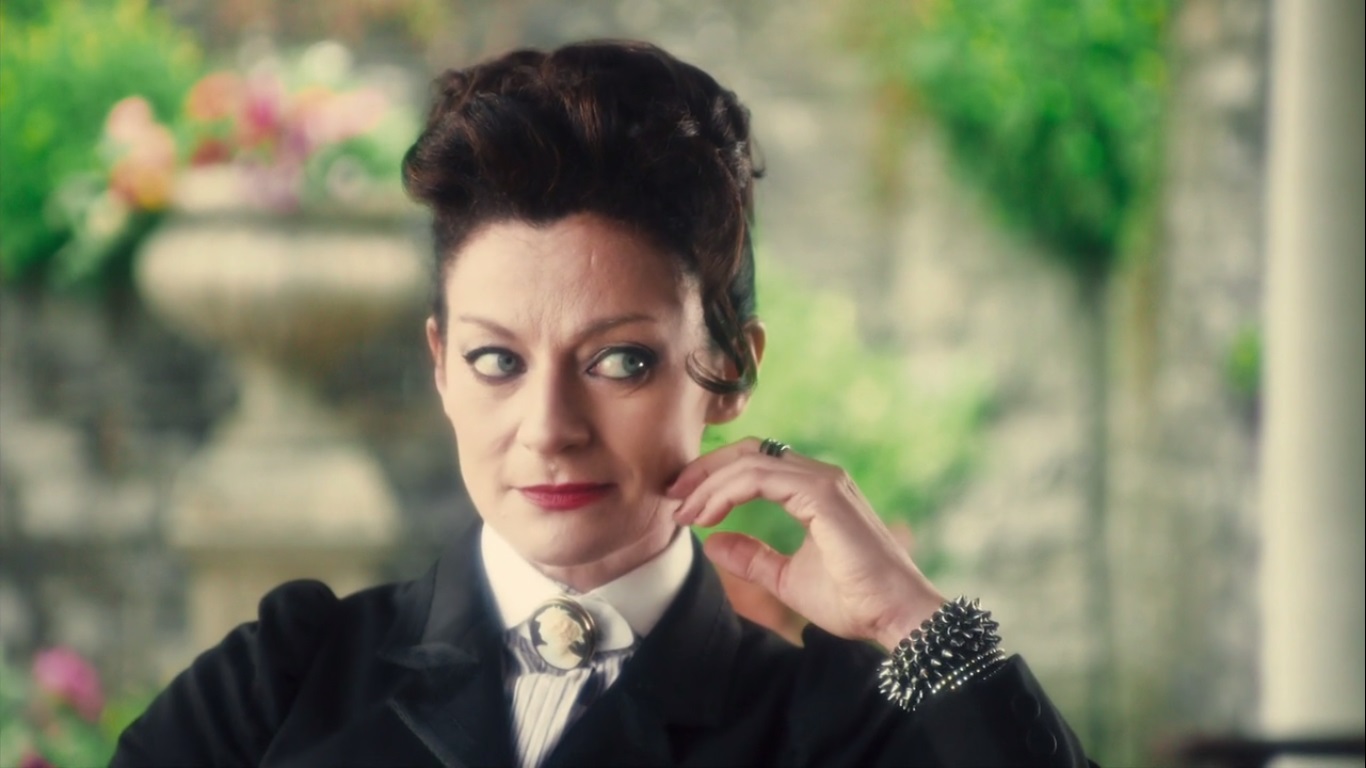
Missy-Doctor-Who

But here’s where the plotting goes off the rails.

It turns out that the Master/Misi was the one who brought the Doctor and Clara together in the first place. Why? We’re never given a solid enough answer, other than some mumblings about how they bring out the worst in each other or something like that. I don’t know. We’re never given a strong enough reason, other than the Master is nuts. Insanity, like convoluted plotting, does not make for good storytelling.

And then we have UNIT, a UN/paramilitary type organization that comes in and nearly saves the day. It was a thrilling turn of events—especially when the Doctor is named President of Earth—but nothing comes of it. His presidency doesn’t even last a full day. No decisions or plans are made. While riveting, it didn’t amount to much in the end.

And now we come to Clara and her ill-fated love with Danny Pink. This was the strongest part of the whole finale. I felt their frustration and pain over having to lose what they had together. I understood how Clara—and Danny—bitterly resented her habit of lying about the Doctor, and where it had led them. (though her lying skills did save her life when she pretended to be the Doctor)

Clara Danny

Something dawned on me, however. Why was Clara always so hostile to the Doctor this season? She acted as if she couldn’t relate to him just because he was in a different body. But last season we discovered that she had interacted with ALL previous incarnations of the Doctor. His changing bodies was nothing new to her. While I appreciated their tension, in the end, it was out of character for what we knew of Clara.

As I said earlier, this season of Doctor Who was a break with previous seasons in that the complicated mythology took a back seat to simply told stories, and for the most part it was a success. The series finale tried to be slick and complicated when it didn’t need to. What this season was about, at its heart, was the complicated relationship between Clara and the Doctor, and also Clara and Danny. Luckily the finale nailed those elements perfectly.

Orphan Black on the horizon

Arguable the best sci-fi show—if not the best show period—on TV, Orphan Black has been a masterpiece in terms of acting, character, and breakneck plotting. If it isn’t obvious, I love this show.

Orphan-Black-ad

For those unaware, it follows a group of clones, all played brilliantly by Tatiana Maslany. These clones are stalked by several shadowy groups with competing agendas, all the while each clone navigates her own tumultuous world.

Last season’s cliffhanger lived up to the hype of Orphan Black as we learned that there are male clones as well (played by Ari Millen). I’ve read some commentary — Orphan Black has a vocal fanbase that appreciate the fact that the show focuses on strong female characters —  and there was disappointment about the introduction of male clones. I disagree. I’m excited by all the dramatic possibilities. Who knows where this will take the show? There are hints that the male clones will not exactly be friendly toward their female counterparts.

ari millen

But we’ll have to wait to see how this all plays out. Season 3 of Orphan Black is filming right now, and the show is expected to return in Spring 2015.

To hold us over, the powers that be have released a little teaser, an Orphan Black video of sorts. Check it out below.


Doctor Who: rating Peter Capaldi

peter-capaldi-tardis-575

As an American, Doctor Who is not part of my culture the way it seems to be in the UK.

I first started watching it when I was maybe 8 or so, because channel 9 in New York would show episodes of this crazy, British sci-fi show on Saturday mornings. My first Doctor was Tom Baker, he of the crazy curly hair and long-ass scarf. I really dug Doctor Who back then, though it was mostly a blur.

When Doctor Who was rebooted back in 2005, I was excited. So far I haven’t been disappointed. Christopher Eccleston, one of my favorite actors, took over as the Doctor. Then came David Tennant, and next was Matt Smith. All the while, Doctor Who continued its tradition of a universe-weary hero dashing across time and space, with a human companion (typically female and star-struck) in tow. The storylines have been unevenly thrilling, heavily British, and always fun.

Smith Tennant

The new Doctor Who era has ramped up the youth and sexiness (the same hold true for the companions, mostly). In fact, Matt Smith was just in his twenties when he was signed to play the centuries-old alien. So when it was announced that Peter Capaldi (an Oscar winner, by the way) was hired as the next Doctor, everyone, including me, was thrown for a loop. Capaldi is in his late 60s. He’s gray haired and wrinkled. He is a man who has lived. And he most likely won’t be melting teenage girls hearts. Head writer Steven Moffat, in choosing Capaldi, was abandoning the rush to youth. And it makes sense, when you consider that the Doctor is really, really old (older on the inside, at least).

Capaldi

So how’s Capaldi doing?

We’re nearly at the two-episode season finale, so now’s a good a time as any to rate Calpaldi’s incarnation of the Doctor. And it’s not as easy as listing the pluses and minuses.

First, there’s the question of how the last Doctor died. Matt Smith’s Doctor lived a long, long time protecting the inhabitants of Trenzalore. He died an old man, and he wasn’t expecting another regeneration. The Doctor, as we knew him, was willing to pass on peacefully. But then he was granted more regenerations, and he came back. He wasn’t prepared for that.

And then there’s the question of his companion, Clara, played by Jenna Coleman. I’ll leave her for another post, but Clara has not been the ideal companion for Capaldi’s Doctor. She’s conflicted, she doesn’t understand what regeneration is, and she isn’t trying in the least to be supportive. She’s also one of the only companions who calls the Doctor out on his God complex. What that’s given us is a rough transition for this latest Doctor.

Jenna Coleman

On the good side, Capaldi’s age gives him more freedom to play the Doctor as a whimsical, childlike figure. He doesn’t have to pretend to be old. David Tennant and Matt Smith were young men who wore their gravitas on their sleeves. Capaldi reminds me of the first Doctor I knew, Tom Baker. He was older and could get away with playing silly.

But all is not perfect with this Doctor, and I think it boils down to the difficult relationship between Clara and this version of the Doctor. There is very little lightness between them. Their relationship is strained and forced. Most times I doubt they even like each other. The Doctor needs a traveling companion, and he’s developed a thing for humans. And Clara loves the rush of exploration. Theirs is a symbiotic relationship. Not much love, or warmth.

Jenna 2

Their tension, however, makes for great drama, and some damned funny lines. I loved when the Doctor commented on how Clara’s face was so big she needed three mirrors to see it all. Rumor has it that Jenna Coleman will leave after the season is over. As much as I’ve enjoyed her on the show, I’ll be glad to see her go. This Doctor — befuddled, socially inept, and a little cold — needs someone who will balance him out.

Hellraiser: behind the scenes

Hellriaser-Pinhead-Barker

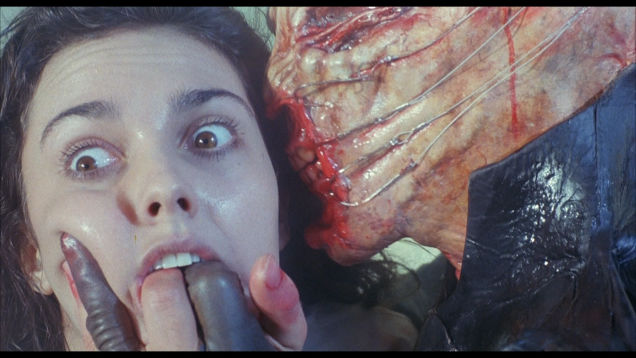
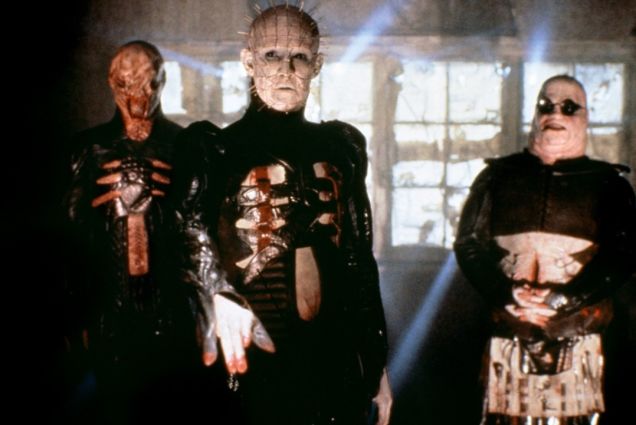
I was a teenager when I watched Clive Barker’s iconic horror movie Hellraiser. It freaked me out, to say the least. I’d never seen evil presented on screen in such a visceral, repulsive way. What made it so scary? First, several years of Catholic school had conditioned me to be afraid of hell. Second, the villains — Pinhead and the rest — were not just mindless monsters. They were human. Too human.

This movie has stayed with me after all these years. I haven’t watched it in a long time. Maybe I should. But will Hellraiser hold up? Sure, it was low-budget, but the core element of pure horror will remain as strong as ever, I’m guessing.

In the meantime, I came across this article in io9.com that details some behind-the-scenes tidbits about the movie. Here are a few highlights:

–Clive Barker sold the script for Hellraiser based on the idea alone. He’d never directed a movie — he didn’t even know how. Unfortunately the two books in the library on directing were both checked out.

–Jennifer Tilly auditioned for the role of Kirsty. But Barker wanted Ashley Laurence, an unknown actor, to play the part. He had to fight for her. Obviously he won.

Kirsty 2

–Doug Bradley, who played Pinhead, did not want to take the role. Why not? Number one, the hours of makeup required. Number two, with all the makeup, who would recognize him? Now that Pinhead is an icon, I bet he’s glad that he took the role.

–The original title was The Hellbound Heart, but the studio heads worried it would be mistaken for a romance. If only.

–The costumes were inspired by those seen in S&M clubs. Then again, that’s not a surprise.

hellraiser


The strange case of Hemlock Grove

A few weeks ago, I started watching the Netflix supernatural series Hemlock Grove on a whim. Somehow I managed to get through all 13 episodes of the first season. Still, I’m not sure if the show is a brilliant mess or a well-meaning failure.

Hemlock-Grove_keyart

Hemlock Grove, based on a book by Peter McGreevy (who also created the show), is a riff on the vampire and werewolf takes we all know by heart. It’s set in a fictional Pennsylvania town that is typically mid-America in all ways (with a touch of Twin Peaks), except for the monsters that roam its streets and woods.

The action begins, harshly, as a girl is brutally attacked and disembowled on her way to rendezvous with her high-school teacher. From there we meet the locals. There’s the powerful Godfrey family, headed by matriarch Olivia (played by X-Men’s Famke Janssen), and her teenage children: brooding, spoiled Roman (Bill Skarsgard), and the awkwardly disfigured Shelley. And we also meet the Rumanceks: Lynda (Lili Taylor) and her teenage son Peter (Landon Liboiron). And then there’s Norman Godfrey (Dougray Scott), his teenage daughter Leetha and his wife (no name; she doesn’t matter). Norman is Olivia’s brother in law, and Roman and Shelley’s uncle.

hemlock_grove kiss

So that’s the basic setup of Hemlock Grove. Simple enough, except that none of it really makes sense. Everything about the show — from the acting to the writing to the basic plotting — seems off. I could write several blog posts about the strangeness of this show, but here are just a few examples.

–The locals quickly tag Peter as a werewolf because of his “excessive body hair.” The actor who plays Peter, however, has not that much body hair at all. But he really is a werewolf after all (!)

HG transform

–The wildly over-the-top Olivia Godfrey is supposed to be English, but her accent slips and slides all over the place. And Roman’s accent as well is bizarre (it turns out the actor is Swedish)

–Dougray Scott must be pissed off at having to play on this show. He mopes through every scene, as if all he’s thinking of is cashing the next paycheck. At least Famke Janssen gets the joke; she camps it up in every scene she’s in

–There’s some seriously strong gay subtext in the friendship between Peter and Roman. It is not at all subtle, though it doesn’t do much in terms of developing their characters. It’s basically pointless

Peter Roman

–The high schoolers are written way more adult. Roman, for example, zips around in his classic sportscar as he hires hookers, chain smokes, and drinks in bars. And school seems optional

It took me a while to figure out what the hell was up with Hemlock Grove. It’s weird and surreal. It’s badly written and unevenly acted. But I couldn’t stop watching. Then it clicked. It’s produced by Eli Roth, the man behind Hostel. I remember watching Cabin Fever, directed by Roth, years ago. Cabin Fever was a grade B horror flick, nothing groundbreaking about it. But it was so damned weird. And Hostel likewise was just plain bizarre. Apparently Eli Roth has developed his own freaky genre.

Hemlock Grove did manage to wrap up its main story lines by episode 13 in a mostly satisfying way. And it was definitely entertaining as I felt whiplashed between the weirdness and the awfulness.

So would I recommend watching Hemlock Grove? My advice would be to proceed with caution.

Read this book: Bitter Seeds

Ian Tregillis’s alt history/sci-fi mashup scores big on imagination, even if many of his characters are flat.

bitter seeds 1

Aside from the supernatural/horror/sci-fi, another thing I’m a fan of in pop culture is alternative histories. The “what if” has always fascinated me, mainly because it lets the imagination run away.

In his book Bitter Seeds, Ian Tregillis combines not only sci-fi, but also horror, with alternative history. Add nazis, arguably one of the best villain groups of all time, to that mix and you’ve got a recipe for a great story.

bitter seeds 3The plot: in Germany, a mad scientist is creating his own band of supermen, soldiers capable of such things as turning invisible, starting fire, and predicting the future. As war looms between Germany and the rest of Europe, the British government forms a group called Milkweed to investigate these reports. Soon a covert battle ensues as the British group use warlocks to summon dark forces to battle the nazis.

It’s actually a complicated plot to explain in a few tight sentences. Our hero is Raybould Marsh, a pugnacious British secret agent who is sent to investigate the reports of these supermen. Soon he summons his college friend Will, a warlock initiated in a blood rite that allows him to communicate with beings called Eidolons. When you think of Eidolons, think Lovecraft. These mysterious beings are not kindly or benevolent. They see humans as no better than ants. They would gladly destroy us but they exist in a different plane, and can never pin us down. Blood helps them get closer. Tregillis doesn’t fully explain what the Eidolons are, but he doesn’t need to. My imagination filled the gaps just fine.

Meanwhile, the German team of superheroes is on the verge of falling apart. They were Bitter-Seeds 2created when they were just children, bought by a scientist who experimented on them (horribly, one would assume, judging from the body count) until he had his team in place. They wear batteries that are hooked to wires embedded in their skulls, which allows them to access their superpowers. This is one of Tregillis’s strengths — he employs, simple, believable technology suited for the era. Think steampunk circa 1930s.

The German story centers on two characters: Klaus, who can dematerialize and move through walls, and his sister Gretel, an enigmatic sociopath who knows the future (though she rarely reveals it). Gretel is perhaps the most compelling character. Why? She is always a mystery, always unpredictable, and always uncontrolled. She’s fascinating to watch.

The breakdown. What was good about Bitter Seeds?

–The concept was fun. Who doesn’t love watching nazis get beat?

–As mentioned above. Gretel was by far my favorite character, though Will, the aristocratic warlock, was a close second. Tregillis convincingly drew a man who grew more and more tortured, especially as the Eidolons demanded higher blood prices as the battle continued.

–The Eidolons themselves were a fantastic creation. Thoroughly dangerous, extremely powerful, callously indifferent. I want more.

–Tregillis is a skilled writer. As a writer myself, I’m always appreciative of someone who takes great care in the writing of a story.

And the not so good:

Bitter Seeds suffers from something I see a lot in fiction. I call it the running in circles plot. Maybe the writer isn’t sure what to do next. Maybe the writer needs to up his page count. But sometimes a story starts running in circles, where the characters are going back and forth (sometimes literally) and not really getting anywhere. Not much plot movement, maybe a little character development. There were several times when I could feel the story lapsing into this.

–Aside from Gretel and Will, I cared little about any of the other characters. Our hero, Marsh, was fine, but he never made the leap off the page for me. Similarly, Klaus was very one note. His whole role was to protect his sister Gretel, and that’s all he did. The Germans, especially, were largely forgettable.

Nevertheless, Bitter Seeds (which is book one in a trilogy) is inventive, imaginative and thrilling. I’m looking forward to discovering where Tregillis will take us next.

Why not Mars?

World building is an integral part of fiction. When it comes to sci-fi, Mars seems like the perfect world to build. It’s been long ignored. Now, it might get its chance chance.

Writers (myself included) are closet megalomaniacs. When you write, one of the more important, though hidden, tasks is you have to construct the fictional world your characters inhabit. This is true whether you write a true-to-life family drama or a space opera set in unexplored galaxies.

As a writer, I love that part of it. And I suspect most other writers do as well. Why? Because we get to create these worlds. We are in charge.

On that level, it’s all about the worlds. But what about literal worlds?

As a sci-fi fan, I could never figure out why Mars is always forgotten. It’s well represented in print (Ray Bradbury’s The Martian Chronicles, for one example of many). But on film and TV, apart from a few crappy movies, Mars has been largely ignored.

Mars

And it’s right next door. You can see it, if you have a good telescope.

That may change. Spike TV, of all networks, plans to produce a TV show adapted from Kim Stanley Robinson’s Mars trilogy (Red Mars, Blue Mars and M1_Red_MarsGreen Mars). I read these books years ago. I have some problems with the books, mostly involving pacing (slow…), but what he did brilliantly in his writing was build a world. Mars.

His books track the colonization and terraforming of Mars over centuries. He includes topics and themes such as genetic engineering and social unrest. His characters run the gamut of human nature. And he has a space elevator,which blew my young sci-fi mind when I first read about it years ago, but is now slowly turning from science fiction to science fact.

If this series comes to pass (which is always a huge question mark) and if it is done well (an even bigger question mark), it would finally give the Red Planet its due in the sci-fi world.

Let’s hope. Here’s to world building.

To life

A famous actor died last month. He committed suicide after reportedly suffering from bipolar disorder. Like a lot of people, it hit me hard. Unlike a lot of other people, it was difficult not just because he was a much-loved actor, but also for more personal reasons.

First, there’s a myth that creative people are more prone to mental conditions such as depression. But research doesn’t support that. If anything, those who are creative (and productive) show higher levels than the general population of psychosis and hypomania. Keep in mind, everyone has these traits, it’s just a matter of the degree expressed.

But in our popular culture, depression, melancholy, etc, are more commonly associated with writers, artists, actors, and other creatives. As someone who’s gone through a deep depression, I can attest that it does NOT enhance creativity. When you’re going through it, the last thing you want to do (or can do) is use your imagination to create something positive. Depression is the enemy of creation. If there is an upside, I’d say that having gone through depression makes you more empathetic to the human experience. It’s a tough trade-off.

Now back to the famous actor. While none of us can know what was going on in his head, I have great sympathy for what he went through. It’s not a cliche to say his death was tragic.

What really offended me, though, was the reaction. Many commented that he was finally at peace. One tweet specifically used the words “you’re free.” And anyone who dared to question this line of thought or point out the negative repercussions of suicide was attacked as heartless until they retracted their position.

I am not here to attack the actor for his suicide. What I am here to do is attack the idea that suicide is a viable “freeing” option for those who are in deep depression. Depression and bipolar are not a choice as much as a brain chemistry problem, but the act of suicide is a choice. And a final one. My heart breaks when I hear of someone committing suicide because I know the pain that led them to that point, and I know that the finality of their decision cuts off any hope of recovery. I’ve had friends who committed suicide. The tragedy rested in their pain and in their choice.

And it was a choice.

Suicide is seductive. When I heard of the actor’s death it awakened long dormant feelings that I thought I’d left behind forever. I hadn’t. What counters that voice—then and now—is the realization that life is pretty damn unique. Whether you believe it’s God-given or whether you believe it’s a random act of the universe, the fact that we exist, the fact of our awareness, is nothing short of a miracle.

Suicide should not be romanticized or glorified as a freeing act. It should be portrayed for what it is: a choice, a final action that is a rebuke to existence.