Charlie Hebdo and free expression

Time to get serious.

The world is reeling from the murders in Paris this week. Twelve people, including journalists and policemen, were murdered by Muslim terrorists. Why were these people killed? Because the journalists at the satirical publication Charlie Hebdo dared to express views these terrorists deemed unacceptable. Specifically, they criticized — and mocked — Muhammed.

This got these twelve humans killed.

Stephane Charbonnier, pictured below with one of the offending images, was the editor of Charlie Hebdo. He was among those murdered. He’d received death threats for daring to express himself. And his response?

CharlieHebdo_19092012_0

“I’d rather die standing than live on my knees.”

I can’t express the rage I feel regarding the animals who murdered Charbonnier and the eleven others. I have no respect for their values.

This tragedy has only reinforced one of my core beliefs: the freedom of expression. As a writer, I wholeheartedly believe in the God-given human right to express myself freely. I believe that the dignity of the individual takes precedence over groupthink, and I want to live in a society where everyone is allowed to express themselves (as long as they’re not openly inciting violence).

Don’t get me wrong — there are scores of examples of speech and actions I personally find offensive. The Kardashians, for instance, or anything Madonna has said and done in the past decade. And then there’s Eli Roth’s torture porn Hostel movies.

But if I am offended, I change the channel, or leave the web page. I don’t murder people. I understand that some people cherish their beliefs, and are hurt when they are mocked, but I will not submit to violence or intimidation.

I am thankful I live in a society where freedom of expression is an accepted—if not constantly debated—value. I don’t enjoy mocking someone’s beliefs for the sake of shock alone. But the world needs to understand that violence isn’t acceptable. These images need to be shared widely so their threatening power will be diluted.

These are just a couple of images that were worth killing over. If this is what your god demands of you, I will never understand your god.

Charlie-Hebdo

o-VEILED-570

Why not Venus?

It’s been described as Earth’s twin, our sister planet, roughly the same size and composition as the home world we all know and love.

Venus Earth
But it’s the hellish parts of Venus that make it our evil twin:

–Its atmospheric pressure is nearly 100 times greater than on Earth. If you set foot on Venus you would be crushed.

–It is damn hot: over up to 900 degrees. At best, you would bake.

–Its atmosphere is mostly carbon dioxide, with clouds that rain sulphuric acid. Not only would you be unable to breathe, but the acid would melt your body.

Venus
So what’s good about this hell planet? What possible use could we have for it?

It turns out that Venus is not as useless as it may seem, at least not according to NASA.

If we are ever to become serious about off-world colonies, Venus might be a good place to start. But how could we ever live on such an inhospitable world? We couldn’t. Instead, we could float just above its poisonous atmosphere.

This is what some NASA scientists are planning: floating cities. These giant blimp-like structures would be tethered about 30 miles above Venus’s surface. At this level, the atmospheric pressure is roughly similar to that of Earth, and the temperature, while still an inhumanly 160 degrees, would be suitable for these structures. The crafts would be solar powered as well.

Venus floating cities
But if Venus is so bad, what’s the benefit?

It allows us to get our feet wet in terms of establishing colonies in space, and we could avoid problems such as extreme temperatures or adverse gravitational conditions (too little gravity and our bodies would break down faster than we would like).

I have never considered Venus as a potential off-world site, and the more I think about it, the better it sounds. Of course it would not be easy. There are many logistical problems, not to mention the cost involved.

At the very least, these NASA dreams can provide another cool setting for sci-fi.

Ascension — a fatal bait-and-switch

I have to give the SyFy network some credit. After taking a strange turn away from all things sci-fi several years ago, they’re making an effort to cultivate new sci-fi programming. Helix, for example, is a solid, if not great, show.

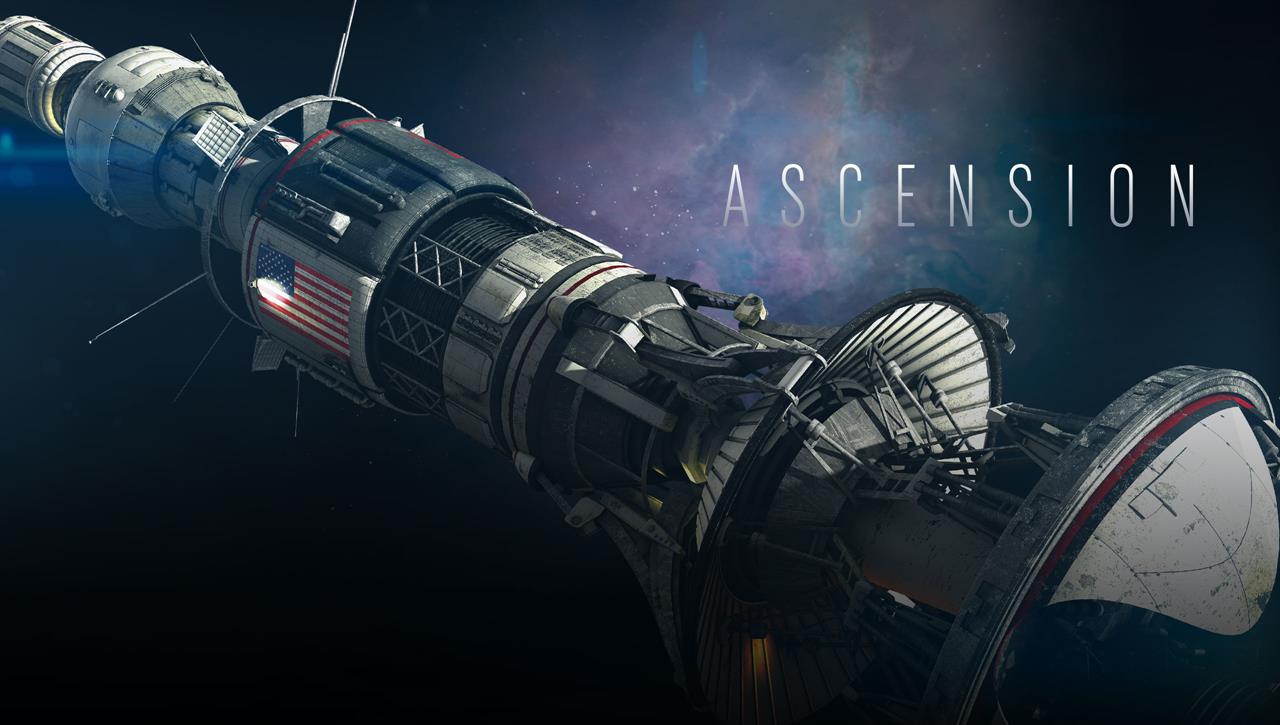
ascension_2560x1450_1280x725_369265219996

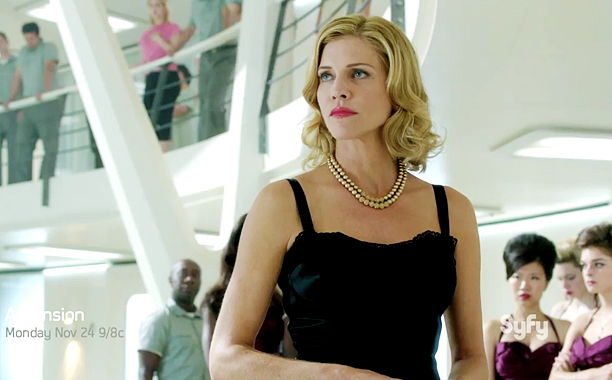
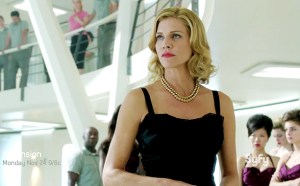
I was excited to see the promos for SyFy’s new miniseries (and possible series) Ascension. Not just because it stars Battlestar Galactica alum Tricia Helfer, though that’s a plus. Mainly I was ASCENSION-HELFERintrigued by its plot. This is what we were told Ascension would be about:
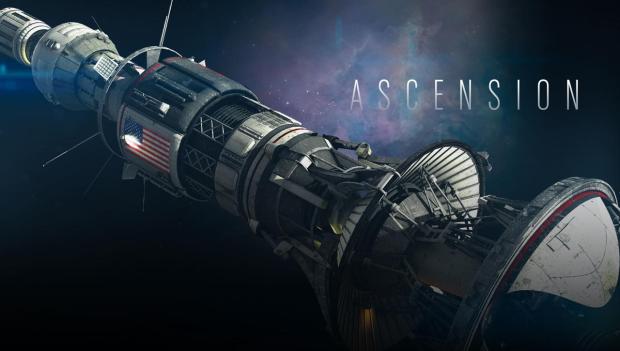
A spaceship is launched in 1963 to colonize the far reaches of space. Halfway through their 100-year journey, they’ve been isolated from Earth, yet continue on with their mission.

Wow. So many thematic possibilities. The obvious question, what would a society be like that never saw advances such as civil rights and feminism? And how would this society have evolved over a full generation with nothing to rely on but their faith in their mission? Space operas tend to focus on the larger mission, that is, surviving in space and getting to the planet. Few genre shows get into the nitty gritty of day-to-day survival. In my opinion, that’s one reason why The Walking Dead is such a successful show. When it comes to zombies, it is wholly conventional — nothing new to see there. But what it does different than every other zombie show we’ve seen is focus on the mechanics of survival. Ascension, based on its premise, seemed like it could be the sci-fi equivalent.
Ascension

Unfortunately it did none of this. Instead, what we got with Ascension was one of the biggest bait-and-switches I’ve seen on TV.

(SPOILERS BELOW…)

At the very end of the first night of Ascension‘s three night run, we discovered that the spaceship was not in fact traveling in space. It had never left the ground. The whole thing was a planned, covert experiment.

What???

So, you mean to tell me, the last two hours I’ve invested in these people and their mission was wasted? And there are four hours left?

Now, I’m all for dramatic twists, but this one undermined the whole premise of Ascension. I was lured to a show about space exploration, not a show about a Truman Show style social experiment.

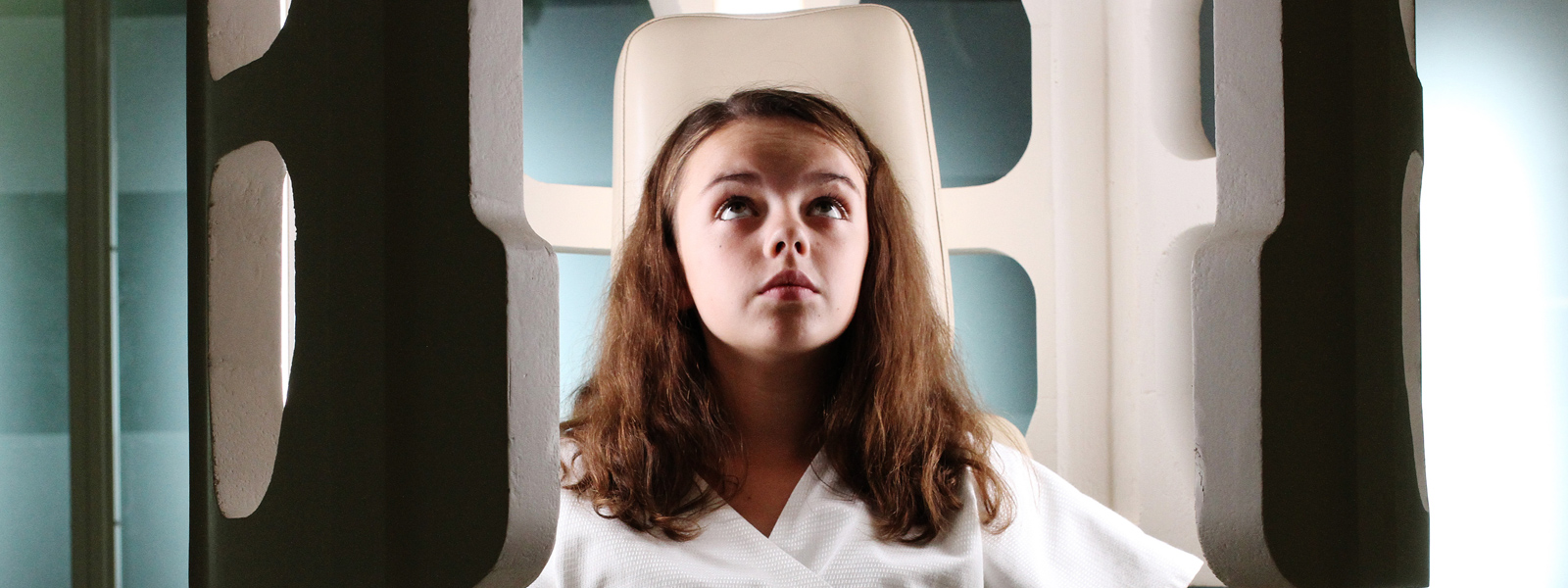
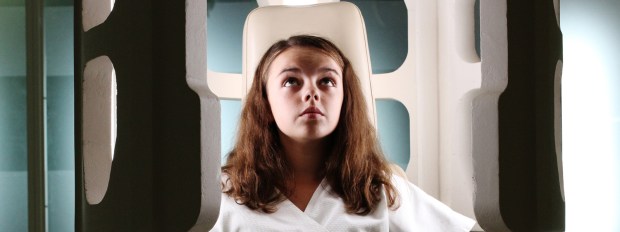
I watched the remaining four hours of Ascension, though my heart wasn’t in it. I didn’t care about the power struggle among those running the experiment, and I no longer cared about what was happening on the spaceship, because their mission wasn’t real anyway. And all I could focus on were the flaws: the boring angsty teen subplot, the annoying child actor who played a girl with mystical abilities.
ascension_121714_1600

By the time the ending came — a convoluted, inexplicable mess of a thing — I was glad it was over, and I was also sorry that I never got to see the show that I was originally promised.
So long, River Song

If this brief interview is any hint, we won’t be seeing the return of two of the most interesting Doctor Who characters—River Song and Captain Jack Harkness—as long as head writer Steven Moffat is around.

I for one am disappointed.

River Song

River Song, as played by Alex Kingston, was a larger-than-life character in a show filled with larger-than-life characters. From the first time we saw her in the Silence in the Library episode way back in season 4, River took control of every scene she was in. She possessed a singular confidence that only grew stronger as she showed up in different points in the Doctor’s timeline. And when we learned of River’s vulnerabilities (as well as her unique origin story), she only became stronger. Rarely has a character’s first appearance been their death scene. Moffat made it—and River—work.

captain_jack_harkness

And then there’s Jack Harkness. As played by John Barrowman, Jack was similar to River in that he was overflowing with vitality. Like River, he pushed the Doctor’s buttons. He was also groundbreaking: Jack Harkness was openly, and actively, bisexual. And he was fearless. The character was spun off into his own show, Torchwood, which was darker and more adult. Torchwood also revealed Harkness’s deep sadness, as a man who could live forever would have to watch his loved ones die.

In this interview, Moffat addresses the possibility of bringing River Song and Jack Harkness back to Doctor Who. To sum it up, never say never. But it would have to be done right, he continues, and that would be hard to pull off.

If you read between the lines, then we won’t be seeing either return to Doctor Who in the near future. That’s disappointing. Both characters brought much vitality to the show. Hopefully we’ll see the introduction of new iconic characters instead.

Time’s arrow and our weird universe

Our universe, and the nature of time, may be much stranger than we ever could have imagined.

Think about this. What is time? It is something that can be measured.Seconds, minutes, hours, years, millennia. But unlike other properties of our physical world, it only goes in one direction. You can’t add or subtract time, not literally. This has left scientists stumped.

Now, scientists have come up with one of the more bizarre theories of the universe and time that I’ve ever heard. To explain the back and forth movement of time, our universe might be just one side of another universe that was formed during the big bang. And since we exist on the opposite side of that universe, we are living in that mirror universe’s distant past.

This all comes courtesy of an article in Scientific American (by Lee Billings, who I work with there, btw). Much of it is over my head, to be honest, and I’m probably not summarizing it correctly. But what intrigues me most is the whole issue of time as a physical property. I always assumed that time flows, consistently, constantly, in one direction. But scientists can’t explain this. I never realized it was an issue.

After reading the article, I didn’t come away with the impression that we’re going to build some sort of time machine. or maybe visit this parallel universe (thought that would really be cool from a sci-fi perspective). What the article shows me is that there’s so much that we don’t know — about the universe, about life, about even ourselves.

Some might be scared by this lack of certainty. I think it’s exhilarating.

Is Peter Pan a villain?

When it comes to storytelling, who is the villain and who is the hero? Sometimes it depends on point of view.

Take Peter Pan. Originally written by J.M. Barrie, the story of the lost boy from Neverland has been popularized by Disney, on Broadway and on television. We all know the story of Peter Pan, the adventurous, valiant boy who refuses to grow up.

But what if Peter Pan as a character is someone much darker than we want to admit?

peter-pan

Over at Tor.com, Emily Asher-Perrin writes a terrific essay that reassesses this much loved childhood story, and she makes a convincing case that at best, Peter is a scary hero who comes close to being the true villain of the story.

Here’s a summary of her evidence:

–Neverland is a world that caters to his every desire. He’s the dictator of that realm. Whatever he says, goes. That’s a lot of power—maybe too much power—for a hero to possess.

–When Neverland gets too crowded with lost boys, Peter Pan thins out the herd. In her essay, Asher-Perrin uses a single word to describe this: murder. Ouch.

–He cares little for Wendy or her family apart from their ability to amuse him. When bored, he’ll just find another Wendy to take away.

–And then there’s Captain Hook. We’ve always believed he was the villain. But think about it: Peter Pan cut his hand off and fed it to a crocodile. No wonder Hook is pissed.

These are intriguing arguments. But the most compelling piece of evidence (which Asher-Perrin does discuss) is the sum of all this. Peter Pan is basically selfish. He’s a self-involved character who refuses to grow up, and who creates an entire world—Neverland—which is his to rule.

When you look at Peter Pan in this way — as a character whose growth has been stunted — it’s fitting that he loses his shadow. Carl Jung would have a field day with Peter Pan.

Pan myth

And then there’s the fact that in Greek myth, Pan is a hedonistic, wild, goat-like god. He’s all about pleasure, as is our supposed hero, Peter. When you add this all up, you get someone you’d definitely want to keep at arm’s length.


Mars attacked!

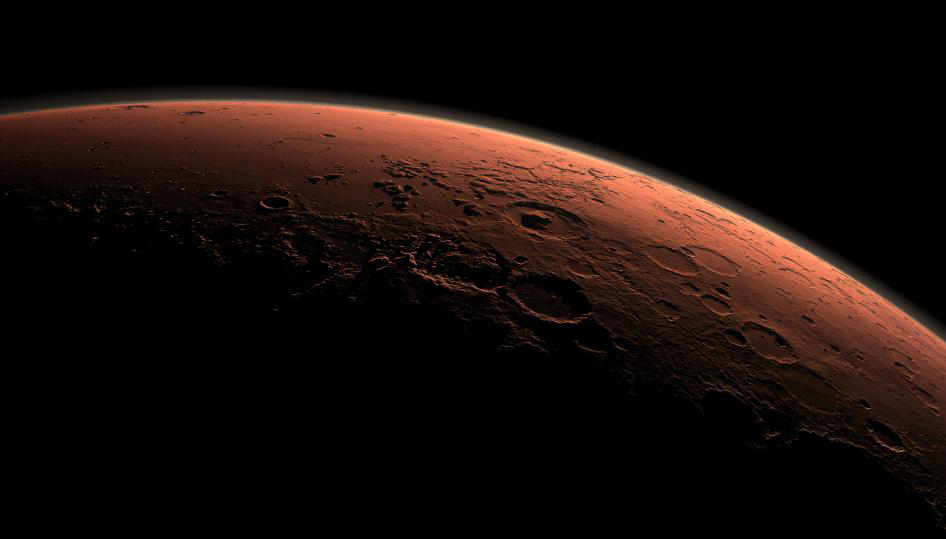
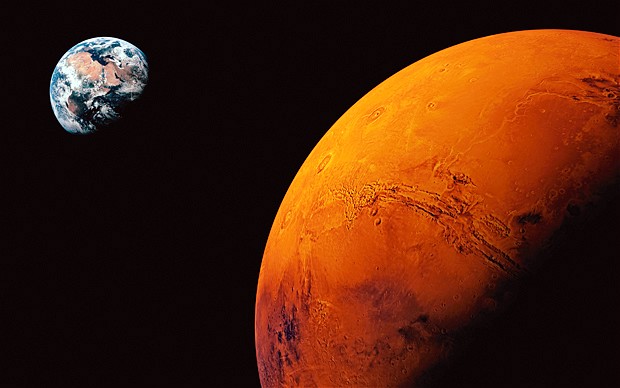
Was there once a grand civilization on our neighboring planet that was annihilated by a nuclear attack? One researcher says yes. While it’s impossible to prove (for now), the sci-fi geek in me loves this story.

mars

Mars has gotten some, but not enough, attention in the world of sci-fi. H.G. Wells got the ball rolling with War of the Worlds, where we were attacked by Martians (I loved the Tom Cruise movie as well). There have been sporadic Martian-themed stories, including Ray Bradbury’s The Martian Chronicles and Kim Stanley Robinson’s Red/Blue/Green Mars trilogy. And there have also been one-off stories, like Doctor Who‘s The Waters of Mars episode.

mars and earth

But these are all fictional. What about the real Mars? The red planet is smaller than ours, colder, and less hospitable to human life (and any life, so far). It’s long been theorized that the Mars of the distant past was a very different planet, one capable of supporting life.

John Brandenburg, a plasma physicist, speculates that Mars once had a civilization as advanced as the ancient Egyptians. But this civilization caught the attention of some nasty aliens, who nuked these Martians, and rendered the planet uninhabitable. His evidence? The large number of nuclear isotopes detected on Mars.

Nuclear-Explosion-001

The takeaway, according to Brandenburg, is that we’d better get our butts (and not just rovers) to Mars ASAP, and figure out exactly what happen, lest it happen to us as well. See, we’re too noisy, blasting our radio signals out into the universe. Eventually, the Martian killers are bound to notice us.

He has a point. If there is a superior civilization out there, they may very well decide to rid themselves of any competition. And we’re pretty much defenseless. But what can I do about a high-tech alien force attacking? Not much of anything, so I’ll file that away in the “Things I cannot control, so therefore I won’t worry about it” drawer.

The idea that there were advanced civilizations on Mars that suffered a nuclear holocaust intrigues the sci-fi fan in me. Was Mars nuked? I don’t know nearly enough about the science to say no, though I think that Brandenburg is taking one too many leaps of logic. Nevertheless, the nuking of Mars makes great sci-fi fodder.

Read this book: Black Moon

Have you ever had a wicked bout of insomnia? It’s near dawn and you haven’t been able to sleep, no matter what you do. The world outside your bedroom is fast asleep, but not you. And slowly, you begin to hate all these lucky sleepers as your mind jumps and skitters.

Imagine if that insomnia lasted not one night, but several days — and then endlessly. What would you do? How much of your sanity would remain?

Black MoonThis is the premise of Kenneth Calhoun’s debut novel Black Moon. An unexplained insomnia plague has struck. People are becoming sleepless zombies, losing their minds as they wander the landscape. A lucky few, however, can still sleep. Only they’re targeted by the angry hordes.

Black Moon is a new take on the zombie craze that refuses to die out. It includes several zombie tropes that we all know so well by now — the ravaged landscape, the plucky heroes targeted, the dystopian gloom. The fact that these “zombies” are still alive is a fresh twist.

This strong premise, and not the characterization or plotting, is what carries this book, and it’s unfortunate. Black Moon is a good book. It could have been a great one.

Time for the breakdown. First, the good:

— As I said, the premise is strong. It taps into a nearly universal experience. Most of us have been frustrated by not being able to fall asleep. And we have also had that spacey, drunk-like feeling of being sleep deprived. Black Moon raises an interesting question: how much of our daily life is simply a valiant effort to hold back the unconscious wildness that streaks through our minds at any given moment? Our dream worlds, like our inner monologues, are free flowing and chaotic. Which is our more natural state?

— Apocalyptic books can take one of two paths: the knowledgeable official (government, scientist, etc), who works to solve the problem, or the ordinary Joe/Jane who struggles to survive. I prefer the latter. Black Moon shifted between several characters — average people all struggling to cope. This book provided no answers, and it didn’t even try to. I appreciated that.

— At around 300 pages, Black Moon is short. It is a quick and thrilling read. And Calhoun can write quality prose.

And the not so good:

— Plotting is not one of the stronger suits of Black Moon. We shift between character viewpoints, which isn’t a problem, except when the shifts jump around, leaving the reader confused as to what happened and why. You may find yourself backtracking several times, and not in a good way. Calhoun had the room to explore several scenes more fully, and for some reason, he chose not to.

— The characters were a mixed bag. Biggs is one of the POV characters. He can sleep, and he searches for his insomniac wife, Carolyn. All the while, we get their back story as a couple. While I could relate to Biggs through his interactions with his dying world, I could not relate to the wife he described. I didn’t like her at all, and didn’t care. Several of the characters seemed like cardboard cut-outs, not flesh-and-blood people.

These drawbacks were not insignificant. Luckily, the premise is strong enough to counterbalance these flaws. Ultimately, Black Moon is a fun book. It’s a new take on the zombie craze that will keep you up at night as you race to finish it.