Interview with Indie Author Kevin Singer

This woman knows a thing or two about writing compelling characters. Dev, the lead in Madhuri Blaylock’s book The Girl (The Sanctum), is a teenage half angel/half demon powerhouse. Recently Madhuri interviewed me about my story Always Mine. It was a great experience. Check out the interview, and check out Madhuri’s book too.

mpavamani45's avatarMadhuri Writes Things

Back in January the book club at 9th & Coles Tavern in downtown Jersey City read THE GIRL and invited me to attend their discussion session. It was loads of fun hanging with Greg and the gang and was where I met fellow author and neighbor, Kevin Singer.

He’s very cool and it was fun talking about my book with another writer so when I had the chance this past March, I returned the favor and picked up his book “Always Mine”. It’s a little gem of a story and if you have a chance, I highly recommend snagging a copy and getting lost in its pages. You won’t regret it.

AlwaysMine_final

After reading “Always Mine”, I thought it would be fun to interview Kevin and see what goes on in his writer’s mind. Here’s what I discovered about Mister Singer:

Tell us a little about yourself.

I’ve been in love…

View original post 1,174 more words

Ultimate Dystopian Showdown: Battle Royale vs. The Hunger Games

I loved both The Hunger Games (books and films) and Battle Royale (the great Japanese movie long rumored to have inspired The Hunger Games). This blogger, The Spectatorial, has a great comparison of the two. What I’d add: while The Hunger Games is great, Battle Royale is better in two ways — it’s not as cartoonish as The Hunger Games, which makes it even scarier; and the “contestants” in Battle Royale have known each other all their lives, which makes the deaths that much more impactful.

The monsters in our family tree

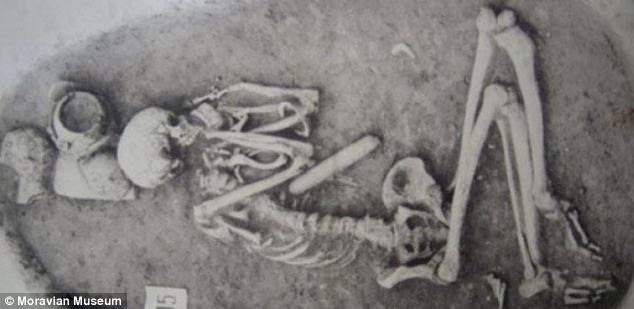
Scientists have discovered a startling fact — compared to our not-too-distant ancestors (5000 BC), we are weaklings. Or as one of the researchers said, “the people back then were monsters by comparison. what you see today is quite pathetic.”

skeletonBritish researchers examined human bones from time periods spanning 5300 BC through the present day. What they found was that the oldest of the bones were comparable to those of today’s elite athletes. The average guy of today wouldn’t stand a chance in one-on-one with the average prehistoric man. You can read the original scientific study here, or try these summary articles in Outside magazine or the Daily Mail.

Why were people so much stronger back then? Because their lifestyles demanded it. There was no agriculture. Food had to be foraged and hunted. The humans back then had to have the physical stamina to roam—and run—great distances, all the time.

With the invention of agriculture, obtaining food became much easier, so we didn’t have to work as hard as a result. And, some speculate that our diets became poorer as a result.

side by side

So what’s the main takeaway? If you plan on travelling back in time several thousand years, you’d better be well armed.

But what about the future? As our world becomes more mechanized, as the physical demands on our bodies lessen, will we shrivel even further?

(Image source: Daily Mail)

Read this book: The Last Policeman

Apocalypse stories are divided into two camps:

1. The impending doom, where we see the event plus its aftermath (or see it thwarted)

2. The post apocalyptic, where a remnant of survivors has built a new and dangerous world from the wreckage of the old.

Ben H. Winters, in his novel The Last Policeman, gives us what should be a new sci-fi subcategory all its The Last Policemanown: the pre-apocalyptic world.
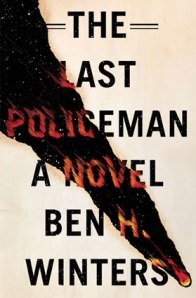
Hank Palace, the hero of The Last Policeman, has always wanted to be a detective (a desire that in part stems from the fates of his parents). A rookie cop with the Concord, New Hampshire Police Department, he gets his wish, but only because an impending cataclysm has opened up a detective slot.

This impending cataclysm? A kilometers-wide asteroid named Maia heading straight for Earth.

In the world of The Last Policeman, everyone knows that Maia will arrive in several months to end life as we know it. Several months of knowing that doom awaits. Imagine that.

Winters does a stellar job in describing what life is like in this world. And he does so mainly through the eyes of Palace, a solid, tenacious, and kind protagonist who the reader quickly grows to like.

Hank Palace is not a man trying to save the world. He’s just trying to do his job.

The plot is simple enough: a man is found hanging by his neck in a McDonalds bathroom. Suicides are rampant in this world, but Palace isn’t convinced this is a suicide. He doggedly investigates while others tell him not to bother. What he gets is apathy and stonewalling. But he never gives up, even as many in the world around him (literally) do.

In many ways this is classic crime noir. Think Raymond Chandler, with his misdirection (and even a femme fatale). This element of The Last Policeman hooked me. I’m a big fan of Chandler — he inspired me to write my novel The Last Conquistador, and I proudly employed his techniques.

Winters amps it up, though, in that he throws us a sci-fi curveball in Maia. On a technical level, I admire the way Winters uses newscasts, media reports, and recollections to tell us about Maia — how he effectively intersperses the info without giving us a data dump.

He also peppers The Last Policeman with fascinating details of life on a doomed planet. For instance, that McDonalds where the body was found? It wasn’t really a McDonalds. Corporate HQ closed, and the remaining stores were run by whoever wanted to sell their own food. All over the world people are abandoning their old lives to pursue a final dream. Or, they’re just giving up.

The Last Policeman is part of a trilogy. I’ve read the second, Countdown City (also great), and Winters does an even better job in describing a society desolate, dejected, but still clinging to threads of hope. In fact, he just won the Philip K. Dick award for best sci-fi book for Countdown City.

Life on a doomed planet: it’s not a cheery topic, but it’s rich with dramatic possibilities.


Why were killer insects so popular in sci-fi?

I loved cheesy horror/sci-fi movies as a kid, everything from The Blob to The Thing.

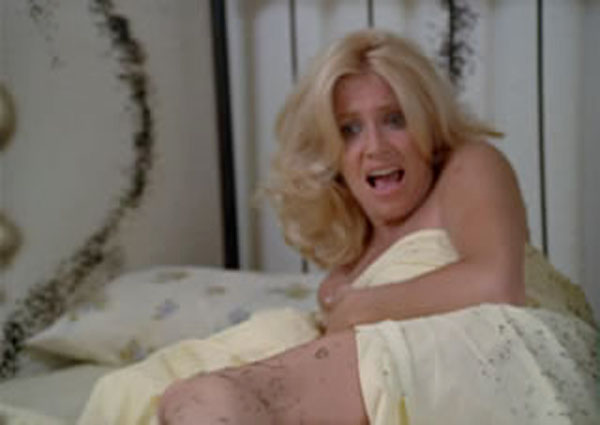
But what always freaked me out were the movies about bugs. I remember watching the 1977 film Ants, about swarming, poisonous ants, and being terrified there were ants crawling under my bed. I’d have to check carefully every night, and still I was never sure I was safe.

ants

io9.com has an article up analyzing why insects were a sci-fi staple, especially in the atomic age of the 1950s (with giant bugs such as those memorable monsters from Them!), but even later, through the ’70s.

them-ant-on-hill1

Some think that the fascination—and popularity—had to do with:

–fears of Communism and the reinforcement of trust in an all-powerful US government

–fears of radiation from nuclear fallout

–mistrust in science

–overreliance on chemicals that pervert our natural world.

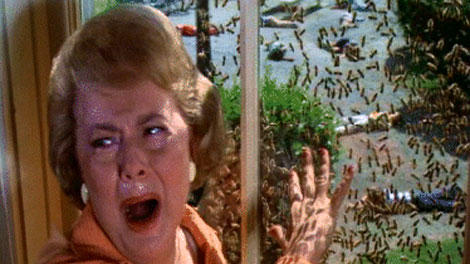
The article’s conclusion? The popularity of insects as villains was much more simple. That’s when we as a society became more aware of germs and diseases. And pesticides—bug spray, etc—were promoted to get rid of the vermin that were invading our homes.

killer-bees

We were constantly on the lookout for roaches and ants and mosquitoes in our homes and backyards, so naturally they’d morph into something even more insidious.

Whatever the reason, it made for fun and creepy horror stories.

Want to buy the world’s most haunted island?

Off the coast of Venice lies the small island of Poveglia. If you have several million lying around, it can be yours.

Poveglia_2883002b

But there’s a catch. It comes occupied. With ghosts.

Danse_macabre_by_Michael_Wolgemut  The history of this island is fascinating. The Venetians and Genoese fought over this island in the middle ages, but the real trouble started with the arrival of the Bubonic Plague in the 14th century. Plague victims were shunted to the island and sealed off. The dead were burned on funeral pyres in the center of the island. This history was repeated when the Black Death returned in the 1600s. Thus came the legends of ghosts. (The plague peroids of European history have always fascinated me. Maybe that’s why I like zombie stories so much.)

In the late 1800s the island was home to a mental asylum (always prime breeding ground for ghosts). There were rumors of torturous dsc_0215experiments on the mentally ill performed by a doctor driven mad by ghosts. The doctor committed suicide by jumping from the hospital tower.

More recently, an American ghost hunter/tv show host claims to have been possessed by a ghost while visiting the island, and the reconstruction of the hospital stopped abruptly and the project was abandoned, with no reason given.

Now the Italian government is hoping a developer will swoop in and turn the island into a high-end resort. I can’t wait for the stories that will follow that one.

(Hospital image courtesy of muchmoremuchier.com)

See this movie: Oculus

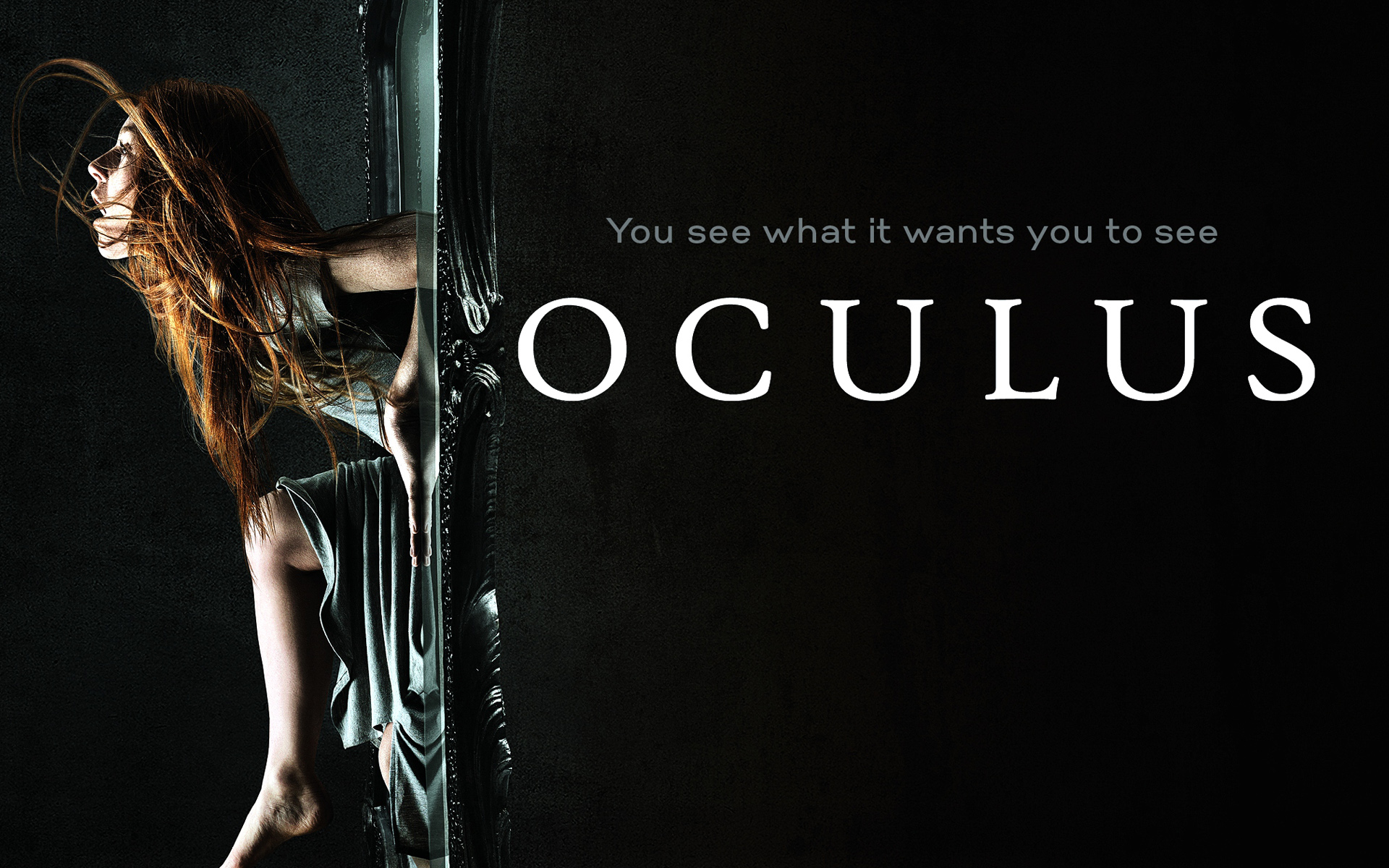
Oculus is a cunning, tough horror movie that will leave you unsettled.

oculus_2014_horror_movie-wide

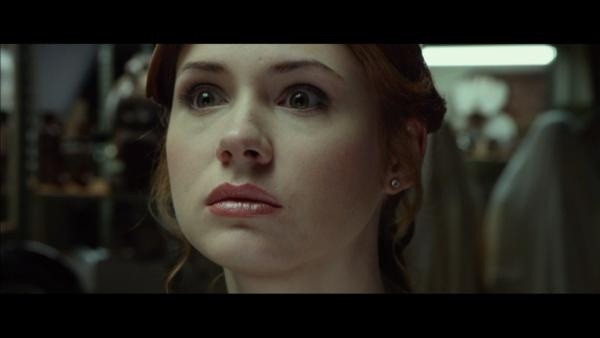
When we last left Karen Gillan, the Scottish woman with the big eyes who played Amy Pond in Doctor Who, she was staring at the weeping angels to avoid being sucked back in time (spoiler: she wasn’t successful).

Oculus Gillan

Now, in Oculus, the actress is donning an American accent (competently) as she stares into a haunted British mirror to fight an evil force.

Oculus is the latest horror offering from the forces behind the Saw series (too gory for me) and the Insidious flicks (good, fun horror). I was expecting something along the lines of Insidious. I was not prepared for a dark and harrowing tale of family madness, PTSD and psychological horror.

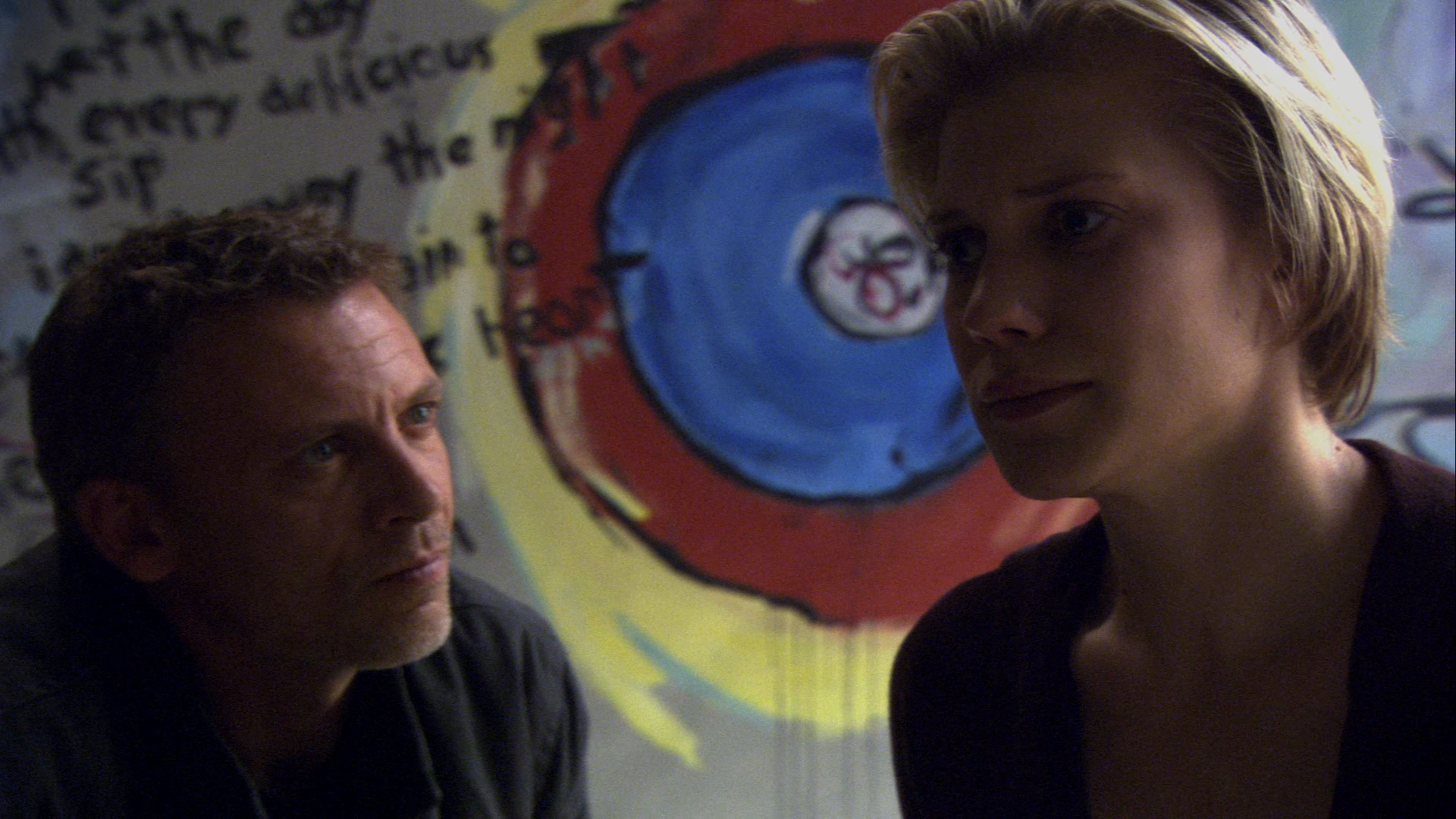
The setup: Tim is released from a mental hospital. Ten years earlier, he, along with his sister Kaylie (Karen Gillan), witnessed a horrific crime when their mother turned psychotic and was shot by their father. They only survived because Tim killed their father. Tim has been thoroughly rehabilitated. Kaylie, on the other hand, has gotten hold of the evil mirror which may have driven their parents (their mother is played effectively by Battlestar Galactica‘s Katee Sackhoff, aka Starbuck) to madness and death. She intends to defeat the evil that lies inside, along with Tim’s unwilling help.

Oculus

Oculus was great on two levels.

First, the narrative structure was brilliantly crafted. We bounce back and forth between the present and the original crime 10 years earlier. As the movie progresses, the past and present merge to great effect. And, even though we know the outcome of the events in the past, there’s still heart-pounding tension.

Second, one of the strengths of horror/sci-fi/fantasy is that it gives us the chance to explore common, painful themes in a fantastical setting. Oculus does that. On one level, this is the story of a horrific childhood, mental illness, and the stubborn hold that trauma has on our lives. A good chunk of the film is spent debating reality, for good reason. I enjoy writing about the supernatural because it allows me to explore deeper issues. The writers of Oculus obviously feel the same.

Oculus draws on a rich heritage of horror films. I picked up on the references to The Amityville Horror, a classic movie about possession that scared the life out of me as a kid. It uses these tropes effectively.

My main complaints would be that the Nightmare on Elm Street effects of “is this real or not” were overdone, and the nature of the evil, which was way stronger than our protagonists, was never hinted at (perhaps setting up a sequel). And the title sucks. I keep calling it Ocular. Not good.

Oculus is not an easy movie. It is not an escape. But it shows the power of horror to shine a spotlight on very human terrors.


Was Battlestar Galactica too religious?

Is there a role for faith in sci-fi? I say of course, but the battle simmers.

Image

This recent post from a Netflix-sponsored blog brings up the issue of religion as discussed in the 2000s now-classic series Battlestar Galactica. The four-season-long reboot of the 1970s show was well written, well acted, and wasn’t afraid to take on the big issues of the day (the opening battles of the global war on terror). But by the time the show ended its run, there was simmering controversy among its fans: why end it with all the overt religious references?

I would say they weren’t truly paying attention.

Battlestar Galactica in its fun and campy 1970s incarnation was an allegory for Mormonism. And it was great television sci-fi, even to my 7-year-old mind. When it was relaunched it kept a strong element of religion. The cylons were inspired by the one true god, and they despised the humans not only as their creators, but for their polytheism. The cylons consistently talked of “a plan” and of their faith in god. Meanwhile, the humans always implored and paid tribute to their Greek-named gods. Take a look at this promo picture below. Can this get any more overtly religious?

Image

So if the religion was in the DNA of Battlestar Galactica, why the controversy?

Two reasons:

–There are many in the science community–and the sci-fi community–who see religion and science as antagonistic. They view science as the antithesis of religion. Therefore, having a sci-fi show that takes religion seriously (and not just as a metaphor or a plot device) is at its heart a betrayal of all that is sci-fi. I am not one of these people.

Battlestar Galactica fully embraced religion. It took faith seriously. However, it failed in that it used the mystery of religion to paper over plot holes. The biggest: when Starbuck disappeared, seemingly died, and came back. Was she some sort of angel? Was she reanimated? The writers never even tried to explain. Faith was used in the wrong sense. The viewer was expected to have faith that things were happening for a reason.

Image

What reason, though?

Unfortunately we were never given a satisfying answer. All we heard were things like “this has all happened before, and it will all happen again.” Uh, ok.

The cause for the Battlestar Galactica controversy are twofold – one inevitable and the other avoidable. All in all though, the series is brilliant television. Its strengths far outweigh its flaws.