Lukewarm Leftovers

Will The Leftovers become a TV classic? Too soon to tell, but it doesn’t look good.

leftovers

HBO’s new sci-fi-ish series The Leftovers has an intriguing, if unoriginal premise, is based on a high-profile novel, and is produced by the man behind Lost. Yet the first episode left me underwhelmed.

The set-up: two percent of the world’s population has vanished with no explanation. Three years later, the residents of Mapleton (aka Anytown, USA) struggle to move on despite the uncertainty and lingering grief.

the-leftovers-hbo-damon-lindelof

The story follows police chief Kevin Garvey (played excellently by Justin Theroux), who is not quite with it. He struggles to relate to his rebellious teenage daughter Jill, and his son Tom, who has fled to a mysterious commune. He butts heads with the town’s mayor, Kevin and LucyLucy Warburton, and tries to keep the peace between the townspeople and a strange cult that wears white, chain smokes, doesn’t talk, and taunts the grieving. And he may or may not be crazy.

So far, so good. Plus, The Leftovers based on a book by bestselling writer Tom Perrotta. I like it when TV shows and movies have a literary legacy (then again, as a writer, I’m biased). And, it was brought to TV by Damon Lindelof of Lost fame. Say what you will about Lost; that show is a classic in my eyes, with spectacular storytelling and gripping characterization. The Lost connection, more than anything else, had me excited for the show.

But based on the first episode I’m not confident that The Leftovers is headed for greatness. I see two main problems:

1) I fear we will never get any kind of explanation for the disappearance, and this show will become an endless grief-fest.

2) There were so many characters who we zoomed past that it was difficult to get sucked into any of their stories. Theroux’s Kevin Garvey worked well, but aside from him, I felt no real connection with the faces who passed by.

Some of the subplots were interesting. Nihilism has gripped the youth of Mapleton, as we see with Kevin’s daughter Jill. There’s a party scene that perfectly captures the sense that if anyone can suddenly vanish, what’s the point of trying?

The story following Kevin’s prodigal son Tom, who is part of some survivalist-type cult is also intriguing (though the actor is miscast. He is 29 in real life, while his “father” is 42. It shows).

And then there’s Christopher Eccleston of Doctor Who fame who plays a preacher. I’ll tune in to anything with a Doctor Who alum in it.

I’m nowhere near ready to give up on The Leftovers, though I’m somewhat pessimistic. It’s hard to NOT compare The Leftovers to Lost, but as with Lost, I fear that the writers will lose their way when it comes to the sci-fi elements.

I hope I’m wrong.

Game of Thrones meets the World Cup

While waiting impatiently for season 5 of Game of Thrones (only 10 months away!), any stories even remotely related to the show are catching my attention.

And now, in the spirit of the World cup, along come the Game of Thrones soccer uniforms, courtesy of a Spanish designer named Nerea Palacios. Read this interesting Q&A with Palacios. She says if she had to choose, she would align herself with House Lannister. Really? With Cersei?

Regardless of her taste in warring factions, she has great design taste. Take a look at a few of my favorites:

Targaryen

Martell

Night's Watch

For more Game of Thrones meets the World Cup, check out this clever article from the Washington Post that compares the warring clans of Westeros to the international rivalries of the World Cup. Over the top? Sure. But fun nonetheless.

(Images courtesy of Nerea Palacios)

Is time travel possible (for real)?

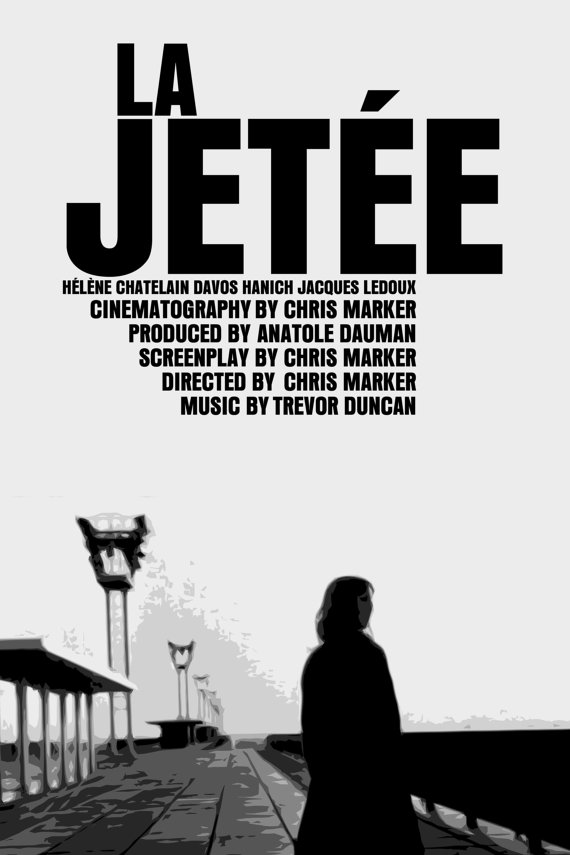
When I was young my mother was in college and she took me to one of her film studies classes. I was maybe 8 or 9, and the movie we watched was an avant garde French black-and-white flick called La Jetee, about a man from a desolate future who travels back in time and is killed. A boy watches the man die, and the boy turns out to be that man as a child (You can watch the whole movie here).

La Jetee

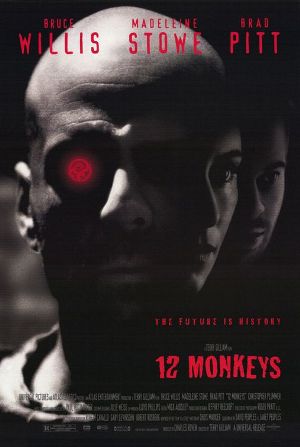
Since then I’ve been hooked by time travel stories. They’re a staple of sci-fi, and some of my favorites are The Terminator series, Doctor Who, SyFy channel’s Continuum, and 12 Monkeys, which was based on La Jetee.

Twelve_monkeysmpWhile time travel is an interesting fictional conceit, it’s been pretty much dismissed as an impossibility for several reasons:

1. How could it be done physically?

2. The possibility of time-destroying paradoxes — the most famous one being, what if you went back in time and accidentally killed your grandfather before your parent was conceived?

3. If time travel is possible, then why aren’t time travelers all around us?

I’ve never been convinced by number 2. Number 1 never interested me. Number 3 has always been the most persuasive.

Nevertheless, scientists are getting closer to solving the riddle presented in number 1.

According to this report, a team of Australian physicists have simulated time travel on a quantum level using particles of light. The particle “traveled” through spacetime on a closed timeline curve. This means that the particle returned to its original starting point. It did not create a new curve.

In the simulation, the particle was sent back to an earlier point in time and interacted with the original particle before returning back to the present.

Don’t ask me to explain the nitty-gritty science behind this stuff. I failed physics in college.

So, if I’m reading this correctly, time travel is theoretically possible, at least in the quantum world. Will this mean that we can one day travel through time? Probably not, but who knows?

In the meantime, I’ll keep going back, time and again, to time travel stories.

Secrets of the Ouija board

Are Ouija boards dangerous? A comprehensive article traces its history, and the answers aren’t quite conclusive.

ouija 1

A Ouija board is a game that allows users to attempt to contact the spirit world. The board consists of letters and numbers. The player asks a question, and using a pointer, the spirit world will supposedly guide the pointer to letters that spell out an answer. Simple enough, right? Not really.

AlwaysMine_finalOuija boards have a bad reputation. Many consider them a gateway to evil. If this latest news report is to be believed, three young Americans in Mexico fell into convulsions after using a Ouija board (the local priest refused to perform an exorcism because none were parishioners). I used a Ouija board as an element in my horror story Always Mine, and from reader response, it struck a nerve.

But what’s the truth behind this game?

This long Smithsonian article breaks down the history of the Ouija board. It turns out that Ouija boards are a uniquely American creation. In the mid 1800s, a wave of spiritualism swept the US. People believed they could contact the spirit world, which would deliver messages. This belief dovetailed neatly with organized religion, which more or less sanctioned this practice.

Then, in the late 1800s, a canny investor caught wind of a “talking board” and formed a company to manufacture these boards.

Among the interesting facts about the Ouija board:

–The name Ouija supposedly came from the board itself.

–The US patent office approved its patent after the board revealed the patent official’s first name (proof that it worked).

–It quickly became a best-seller, marketed as both a way to contact spirits, predict the future, and as wholesome family fun. Even Norman Rockwell got into the act.

ouija

But there was a dark side to it as well:

–One company head died after falling from a factory building, which he built based on advice from the Ouija board.

–In 1930, two women killed another based on the advice from a Ouija board.

And a quirky side:

–Writers have claimed that their works were written via Ouija board. One poet, James Merrill, won a major award for a poem that was “magnified” by his Ouija board.

So why have Ouija board become linked to evil?

Blame The Exorcist. Since that 1973 groundbreaking horror movie (which was supposedly inspired by actual events), Ouija boards lost any wholesome status they enjoyed. Following the phenomenal success of The Exorcist, Ouija boards have been denounced by religious groups and have become a staple for horror writers (guilty as charged). Interestingly, the board is still a hot seller.

The Smithsonian article delves in to the “why” of the Ouija board. In the simplest of terms, scientists believe Ouija boards tap into our unconscious mind. We may think we are talking to spirits, and in a sense, we are: our own.

But is this all there is to it? Maybe not. Check out these supposedly true scary stories of Ouija board freakiness.

To be honest, I’m not as concerned with how Ouija boards work. Don’t get me wrong: I love science. But when it comes to something like Ouija boards, I’d prefer to keep that element of scary suspense alive.

Interview with Andrew Lamb, author of the Dispatchers series

Astral projection and bacon sandwiches are two things you normally wouldn’t link together. Fellow indie writer Madhuri Blaylock interviewed English writer Andrew Lamb, who wrote a paranormal novel — Dispatchers: Vengeance of the Dark — about astral projectors up to no good. That’s an intriguing set-up for a novel. Read Madhuri’s interview with Andrew below as they talk about his writing, his love of Cornwall and bacon sandwiches.

mpavamani45's avatarMadhuri Writes Things

Last week I became a member of the Goodreads group Paranormal, Fantasy, Dystopia and Romance Readers, Writers and Reviewers, a group whose goals are to help promote writers, give reviews, get good books out to reviewers and readers, give advice, engender good book discussions and just generally support Indie authors any way possible.

It’s through this group that I met Andrew Lamb, a writer from across the pond, developing a sci-fi/fantasy series called The Dispatchers, described as “a dark new twist on Astral Projection.” [Admit it, I had you at “dark new twist”.]

Always looking for new ways to help promote my fellow Indie authors and put some good juju out into the universe for myself and The Sanctum, I contacted Andrew to see if he would sit down for an interview to discuss pretty much whatever nonsense I throw at him. Apparently he’s a good sport…

View original post 1,116 more words

The secret genius of Orphan Black

The BBC America cult hit series Orphan Black has fast-paced plotting and amazing acting, but it’s something more psychological that keeps viewers hooked.

AA_orphanblack

I thank Doctor Who for introducing me to Orphan Black. A couple of years ago, BBC America aired Doctor Who at 9 pm. When 10 came around, I was too lazy to lift the remote and change the channel, so I left it on. The next show? A new Canadian-produced sci-fi show with the weird title of Orphan Black. It only took one episode to hook me.

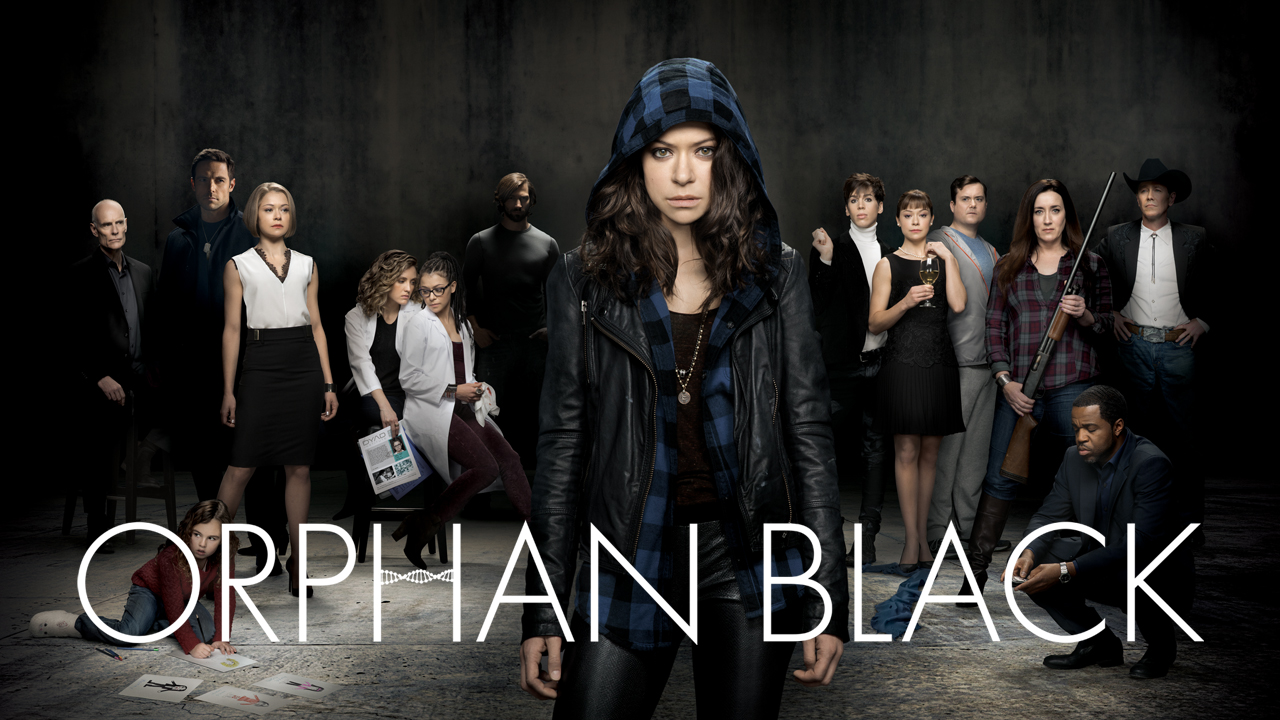
Sarah ManningThe premise: Sarah Manning, a rough-around-the-edges London transplant living in Canada discovers by chance that she’s a clone. Together with fellow clones Alison, an uptight soccer mom, Cosima, a gay, hipster science nerd, and Sarah’s loyal foster brother Felix, she tries to unravel the mystery of her existence, while protecting herself and her young daughter, from sinister forces.

Orphan Black, if you haven’t guessed, is not your standard thriller.

What makes this show great is, first and foremost, the top-notch writing. Orphan Black moves at breakneck speed (sometimes too fast). Once it has you, it doesn’t let go. And it is unflinching in its violence.

And then there’s Tatiana Maslany. This actor is amazing. She plays each of the clones (I read that there’s been 12 accounted for, but we’ve only seen 9. Maslany has played all 9. Even when it’s just a brief portrayal, Maslany manages to impart a unique persona on each clone.

clones

Often, though, the clones interact with each other in a single scene. Think about it: one actor playing 3 different parts in a five minute scene. She does more than just pull it off. We quickly forget that it’s only one actor who we’re seeing. And then there was the scene where Maslany played Alison impersonating Sarah. Brilliant.

But to me the secret appeal of Orphan Black lies in its premise: clones. Clones are really nothing more than identical twins — two (or more) genetically identical humans. But identical twins, while they share the same exact DNA, are often more dissimilar personality-wise than alike. The same with the clones in Orphan Black. You have clones ranging from rough-edged transgender Tony to the corporate ice queen Rachel. Genetics doesn’t equal destiny.

What Orphan Black gives us, on an unconscious level, is a “what if” moment. What if I’d been born rich/poor/unwanted/loved? What if I went to/never went to college? What if I got married/never got married? We all have lives that go unlived, even those of us who live to the max. Choices inevitably are made. In Orphan Black, we get to see one genetic code across a range of lives and situations and choices. Why is Sarah straight and Cosima gay? Why is Alison so uptight while Sarah is so free-wheeling?

Who knows? But playing along in this game is half the fun.


See this movie: Edge of Tomorrow

What do you get when you combine aliens, explosions, and the repeating day motif of Groundhog Day? Tom Cruise’s latest sci-fi action flick Edge of Tomorrow.

Edge_of_Tomorrow_9
Tom Cruise’s personal life gets a lot of attention, but strip away that nuttiness and what you have is a workhorse actor who knows how to entertain. Whether it’s the Mission: Impossible series, Minority Report, or Oblivion, Cruise is a master at making a damn good action film. Edge of Tomorrow is the latest in his string of successes.

Edge of Tomorrow is based on the Japanese sci-fi novel All You Need Is Kill (great title!) by Hiroshi Sakurazaka. All You Need Is KillThe movie’s plot: an alien race known as mimics has overrun the European continent, and unified forces are gearing up for a D-Day style invasion in France. Major William Cage (Cruise) finds himself on the front lines of the invasion, where he quickly dies. Only he doesn’t. Time resets, and he wakes up the morning before the invasion. He relives the same day, dying again and again. Aided by Sergeant Rita Vratraski (Emily Blunt) the war hero known as “Full Metal Bitch,” he plots to defeat the mimics.

What’s great about Edge of Tomorrow:

–Cruise and Blunt are excellent. This isn’t Oscar bait. We’re not looking for amazing acting. We want skill, competence and relatability. They deliver.

–The action is intense. The battle scenes are breakneck, part video game, part roller coaster.

–Humor. I didn’t think I’d be laughing during a Tom Cruise sci-fi action movie, but the writers were wise to add some funny scenes. On one level, this movie almost calls for it. The humor, which comes mostly from bungled deaths (and repeated days) helps break the tension. It also lets the audience laugh at the overall concept. Cruise plays it well — sometimes he’s clearly ready to die (again).

–The invasion of France has clear and obvious parallels to the Allied invasion of Europe in D-Day during World War II. The writers build a pretty complete world, one that has been at war for a while.

What’s not so great:

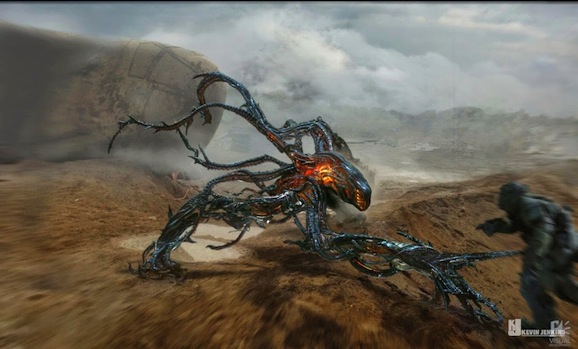
mimic3–The aliens were fine. I have no major complaints, but there was nothing particularly novel about them. The special effects were also fine. But I wanted a little more.

–I had a couple of issues with the ending, which I won’t reveal. The best I can say is that it was satisfying. I’ll leave it at that.

Overall, Edge of Tomorrow is a thrill ride of a movie with solid performances, some laughs, and great action scenes that make it worth a trip to the theater.

Meet my main character(s) blog tour

This is new for me. Friend and fellow writer Madhuri Blaylock (author of YA urban fantasy series The Sanctum) tagged me to join in on the Meet My Main Character blog tour.

My first question was, what the hell is this? Then I read Madhuri’s blog entry, and it clicked. Basically, this is a great way to share with readers and other bloggers some key and interesting facts about the characters who make up our literary worlds.

So now it’s my turn. The book: my supernatural suspense novel The Last Conquistador. Here goes.

1. What is the name of your main character? Is he or she fictional or a historical person?

The Last Conquistador tells two parallel stories, one set in the present day and one set in the past, so there are two main characters. Randy Velasquez is a young American soldier stationed in Germany. He’s totally fictional, though I drew on my experiences as a soldier in Germany to create much of the setting and even some situations.

Rodrigo is the main character of the second part, which is set in the past. He is a 17-year-old Spaniard who sets off for the New World in search of riches. He is fictional, though I based many of his exploits and misadventures on the true and wild tale of Cabeza de Vaca.

2. When and where is the story set?

Randy’s story is set in the present in Germany. I chose this setting for two reasons. After living there as a soldier, I realized that, with a couple of exceptions, I’d never seen this setting in fiction before. Also, one of the themes of this story is being lost in a strange world. For Randy, Germany is a weird place that he’s never able to conquer.

Rodrigo’s story, which begins in the year 1530, spans Spain, Cuba, what is now the southwest US, and Mexico. Similar to Randy, though more extreme, he’s a stranger in a hostile land.

3. What should we know about him?

For both characters, their character traits drive the story.

Randy is brash, tenacious, and is stubborn. He’s a bit of a smartass, a little cocky and sometimes he goes too far, which gets him into trouble. But he never gives up.

Rodrigo is hungry and determined. He grew up the second son of a tanner in a small Spanish village, but he always lusted for adventure. This will get him into more trouble than he ever imagined. But his determination and hunger are what will carry him through some tough times.

4. What is the main conflict? What messes up his life?

For Randy, the trouble starts because of his German girlfriend Lise. The day after she tells him she’s pregnant, she leaves him. Randy is determined to find her and win her back. But everyone around him throws roadblocks in his path, and he learns that Lise is not who she appeared to be. Not only that, but there’s a demon chasing him.

Rodrigo is in love with Elena. When her father turns down his marriage proposal, he vows to become a rich conquistador to prove his worth. But luck isn’t on his side. He becomes shipwrecked among hostile Indian tribes and spends the next several years trying to find his way back home.

5. What is his personal goal?

Randy’s goal is to find Lise and win her back. He wants her, he wants their baby, he wants this fantasy life he’s built up in his head, and he refuses to let that go, demon or no demon.

Rodrigo’s goal at first was to amass wealth and prestige. but once he’s marooned, his goal is simply to survive.

For both characters their goals are shaped by who they are. Rodrigo’s hunger drives him. He wants so much from life. this helps him survive against long odds, but it also leads to disappointment. Randy is stubborn in his hope, which sees him through some dark times. It’s the key to his ability to battle the demon which he can never seem to shake.

And now, for the next stops on the blog tour, check out these writers as they discuss their main characters:

Christa Wojo talks about David from her novella The Wrong David.

Check them all out. And if you’re a blogging writer, climb on board.