This is new for me. Friend and fellow writer Madhuri Blaylock (author of YA urban fantasy series The Sanctum) tagged me to join in on the Meet My Main Character blog tour.
My first question was, what the hell is this? Then I read Madhuri’s blog entry, and it clicked. Basically, this is a great way to share with readers and other bloggers some key and interesting facts about the characters who make up our literary worlds.
So now it’s my turn. The book: my supernatural suspense novel The Last Conquistador. Here goes.
1. What is the name of your main character? Is he or she fictional or a historical person?
The Last Conquistador tells two parallel stories, one set in the present day and one set in the past, so there are two main characters. Randy Velasquez is a young American soldier stationed in Germany. He’s totally fictional, though I drew on my experiences as a soldier in Germany to create much of the setting and even some situations.
Rodrigo is the main character of the second part, which is set in the past. He is a 17-year-old Spaniard who sets off for the New World in search of riches. He is fictional, though I based many of his exploits and misadventures on the true and wild tale of Cabeza de Vaca.
Randy’s story is set in the present in Germany. I chose this setting for two reasons. After living there as a soldier, I realized that, with a couple of exceptions, I’d never seen this setting in fiction before. Also, one of the themes of this story is being lost in a strange world. For Randy, Germany is a weird place that he’s never able to conquer.
Rodrigo’s story, which begins in the year 1530, spans Spain, Cuba, what is now the southwest US, and Mexico. Similar to Randy, though more extreme, he’s a stranger in a hostile land.
3. What should we know about him?
For both characters, their character traits drive the story.
Randy is brash, tenacious, and is stubborn. He’s a bit of a smartass, a little cocky and sometimes he goes too far, which gets him into trouble. But he never gives up.
Rodrigo is hungry and determined. He grew up the second son of a tanner in a small Spanish village, but he always lusted for adventure. This will get him into more trouble than he ever imagined. But his determination and hunger are what will carry him through some tough times.
4. What is the main conflict? What messes up his life?
For Randy, the trouble starts because of his German girlfriend Lise. The day after she tells him she’s pregnant, she leaves him. Randy is determined to find her and win her back. But everyone around him throws roadblocks in his path, and he learns that Lise is not who she appeared to be. Not only that, but there’s a demon chasing him.
Rodrigo is in love with Elena. When her father turns down his marriage proposal, he vows to become a rich conquistador to prove his worth. But luck isn’t on his side. He becomes shipwrecked among hostile Indian tribes and spends the next several years trying to find his way back home.
5. What is his personal goal?
Randy’s goal is to find Lise and win her back. He wants her, he wants their baby, he wants this fantasy life he’s built up in his head, and he refuses to let that go, demon or no demon.
Rodrigo’s goal at first was to amass wealth and prestige. but once he’s marooned, his goal is simply to survive.
For both characters their goals are shaped by who they are. Rodrigo’s hunger drives him. He wants so much from life. this helps him survive against long odds, but it also leads to disappointment. Randy is stubborn in his hope, which sees him through some dark times. It’s the key to his ability to battle the demon which he can never seem to shake.
And now, for the next stops on the blog tour, check out these writers as they discuss their main characters:
—Christa Wojo talks about David from her novella The Wrong David.
Check them all out. And if you’re a blogging writer, climb on board.
The Girl and The Boy: local paranormal thrills
I’m a fan of supporting my local community, and that doesn’t just mean going to the local bars. I’ve become involved in my writing community here in Jersey City, and one of the  writers I’ve met is Madhuri Blaylock, a woman with a penchant for fantastical stories of page-turning urban paranormal fiction.
Her first book, The Sanctum: The Girl, follows our teenage hero Dev, a demon-angel hybrid. She’s targeted for death by a shadowy organization called the Sanctum, a worldwide group of families that monitors all the paranormal activity in our world. Dev, however, proves difficult to kill. Not only that, but she falls for one of he Sanctum’s best killers, Wyatt.
This was a fun book, full of relatable characters that ranged from stalwart best friends to seductive vampires, as well as  mustache-twirling villains I loved to hate.
Now Madhuri has released the second book in the trilogy, aptly titled The Sanctum: The Boy. Check it out, help me support my local community, and have some fun in the process.
Playing the Game of Thrones
I love this TV show, and I’ve read book 3 (mainly because I’m a sucker for spoilers) but I  hesitated writing about Game of Thrones for two big reasons.
1) It’s more in the realm of fantasy (though with strong supernatural elements). I’ve never been big into fantasy — I struggled with the Lord of the Rings series.
2) Game of Thrones, both the print and TV versions, are deep and intricate. I don’t think my analysis, on an episode-by-episode basis, could do it justice.
Nevertheless I’m a big fan of all things Game of Thrones. I think it’s brilliant storytelling. 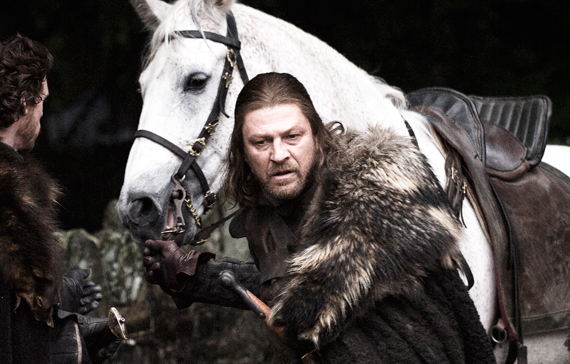 The show hooked me late in the first season, when Ned Stark, played by Sean Bean (the biggest name in the cast), met his fate. I knew then I was in for a wild and unpredictable ride.
On TV, the production values are excellent, the pacing is consistently solid, and the actors are all pros. My favorite, and I’m not alone in this, is Peter Dinklage’s Tyrion Lannister. Tyrion as played by Dinklage is the complicated heart of a complicated show. Catelyn Stark, played by Michelle Fairley, a woman who is smart and tough and willing to do whatever it takes to protect her family, is/was a close second.
 In the books, writer George RR Martin alternates character viewpoints as he bounces around the fictional world of Westeros and beyond — Daenerys, Jon Snow, Sansa Stark, Catelyn Stark, Jaime Lannister, and Tyrion Lannister. Each of these viewpoints is utterly unique and fully formed.
But neither book nor TV show is perfect. The books are rambling. No, I don’t need listings of every Ser who fought in a certain battle twenty years earlier. And the TV show revels in gore and violence to the point of overkill. One blogger commented that the show uses rape as a set piece. Okay, I get it — this world is brutal.
These are minor points. Game of Thrones is great entertainment. Very few moments in recent TV history can top when Daenerys ordered her dragon to burn the evil Kraznys.

And then there’s the infamous Red Wedding episode, where Catelyn, Robb and his pregnant wife weren’t treated very well by their hosts (huge understatement). Check out this link for some great reaction videos.

Watch/read Game of Thrones if you’re up for some excitement. And for great postgame reading, the best I’ve found on the Internet comes from the A.V. Club. Their website has intelligent commentary, with articles geared toward those who haven’t read the books and those who have.

Read this book: Dark Matter
This moody haunted tale takes its time, but delivers a solid scare.
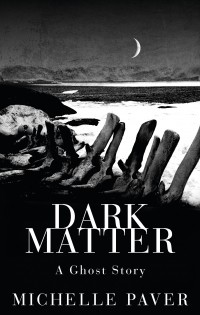 While writing my latest supernatural work I wanted a good ghost story to read. A google search brought me to a Guardian review of Michelle Paver’s novel Dark Matter. After a few false starts I got to reading it. The woman knows how create a chilling world.
The plot: In 1937 pre-war London, bored clerk Jack Miller signs up to a months-long Arctic expedition run by rich guys Gus, Algie and Hugo. But the isolated expedition site turns out to be haunted. Jack must battle loneliness and isolation as he struggles to survive both the elements and the supernatural force.
First, the positives.
Setting: The setting of Dark Matter is great. She describes the landscape beautifully, and the particulars of the mission confidently, transporting me to the Arctic. It’s obvious that Paver has done her research.
Foreshadowing: Several of the earlier scenes involve Eriksson, a grizzled Norwegian ship captain. His demeanor alone lets us know that nothing good will come from this expedition. And, as in many great horror tales, the neophytes don’t listen to the veteran’s advice.
Mood: Paver is a wordsmith, and she uses her words to spin a claustrophobic, isolated mood. Her writing is deceptively simple. Her language and descriptions are straightforward and powerful.
Jack Miller: he’s the main character of Dark Matter, and the story is told from his point of view. While he’s not the most forthcoming narrator, he is likeable. We root for him, early on, even as he remains hidden from us.
Isaak: Jack befriends one of the huskies, a playful pup named Isaak. I’m not an animal person (I once had a hermit crab that disappeared), but the dog gives the story some much-needed humanity. Animals are powerful in fiction; I learned that in my story Always Mine. My hero Danny has one loyal companion, his dog Rocky, who plays a key role in keeping Danny sane and safe. Their relationship led to some of the strongest feedback from readers. I can see why now. At some points I was more worried for Isaak than Jack.
And the negatives.
The story doesn’t kick in until well over 100 pages. Dark Matter is only a 250 page book. Much of the first 100 pages is setting up the story. I was tempted to put it down for good several times. But once it gets going it’s on fire.
Jack Miller, the hero, is underwritten. The most glaring omission: there’s no mention of any kind of sexual/romantic aspect to his character, inner or outer. Jack is in his mid 20s. There would be some small reference to that aspect of himself, or lack of. Paver previously wrote children’s books. She seemed hesitant to write a fully formed adult.
Perspective: A major flaw is how Dark Matter is told. It’s first person — Jack’s journal entries. But he’s an unreliable narrator, not just about the events but also his own self. I would have loved to see the wider story. We do get a glimpse of it when Jack reads the journal of one of his companions, and what we see is a starkly different version of Jack. I wonder what this story would have been like if written in the 3rd person.
Dark Matter is a flawed book, and I was torn for a while as to whether it warranted a recommendation. In the end, despite these flaws, Paver succeeded in crafting a haunting, disturbed world. Hopefully she will embrace adult fiction more fully.
Interview with Indie Author Kevin Singer
This woman knows a thing or two about writing compelling characters. Dev, the lead in Madhuri Blaylock’s book The Girl (The Sanctum), is a teenage half angel/half demon powerhouse. Recently Madhuri interviewed me about my story Always Mine. It was a great experience. Check out the interview, and check out Madhuri’s book too.

Back in January the book club at 9th & Coles Tavern in downtown Jersey City read THE GIRL and invited me to attend their discussion session. It was loads of fun hanging with Greg and the gang and was where I met fellow author and neighbor, Kevin Singer.
He’s very cool and it was fun talking about my book with another writer so when I had the chance this past March, I returned the favor and picked up his book “Always Mine”. It’s a little gem of a story and if you have a chance, I highly recommend snagging a copy and getting lost in its pages. You won’t regret it.

After reading “Always Mine”, I thought it would be fun to interview Kevin and see what goes on in his writer’s mind. Here’s what I discovered about Mister Singer:
Tell us a little about yourself.
I’ve been in love…
View original post 1,174 more words
Want to buy the world’s most haunted island?
Off the coast of Venice lies the small island of Poveglia. If you have several million lying around, it can be yours.

But there’s a catch. It comes occupied. With ghosts.
 The history of this island is fascinating. The Venetians and Genoese fought over this island in the middle ages, but the real trouble started with the arrival of the Bubonic Plague in the 14th century. Plague victims were shunted to the island and sealed off. The dead were burned on funeral pyres in the center of the island. This history was repeated when the Black Death returned in the 1600s. Thus came the legends of ghosts. (The plague peroids of European history have always fascinated me. Maybe that’s why I like zombie stories so much.)
In the late 1800s the island was home to a mental asylum (always prime breeding ground for ghosts). There were rumors of torturous  experiments on the mentally ill performed by a doctor driven mad by ghosts. The doctor committed suicide by jumping from the hospital tower.
More recently, an American ghost hunter/tv show host claims to have been possessed by a ghost while visiting the island, and the reconstruction of the hospital stopped abruptly and the project was abandoned, with no reason given.
Now the Italian government is hoping a developer will swoop in and turn the island into a high-end resort. I can’t wait for the stories that will follow that one.
(Hospital image courtesy of muchmoremuchier.com)
Read this book: The Demonologist
Andrew Pyper proves that horror can live alongside literary fiction.
In one sense, The Demonologist is a highbrow book. Its touchstone is John Milton’s Paradise Lost.
 Paradise Lost, published way back in 1667, is a classic (long, long) epic poem that chronicles the fall of Adam and Eve, Lucifer and a whole bunch of demons. It is the definition of literature. I read it in high school. It wasn’t fun. I haven’t read it since.
Now along comes Andrew Pyper, who valiantly tries to make Paradise Lost interesting. He pulls it off.
In The Demonologist, our hero David Ullman is a Columbia University professor who specializes in Milton’s Paradise Lost. He is visited by a creepy woman who offers him a huge sum of money to fly to Venice and consult with her mysterious employer on the topic of demons. His marriage in shambles, he agrees, and takes along his old-soul 12-year-old daughter Tess. In Venice, he sees something that make him believe demons may in fact be real, and then witnesses his daughter plunge from the hotel roof and disappear.
The rest of the novel follows David as he searches against reason for his supposedly dead daughter, encounters demonic forces and dodges church henchmen.
In The Demonologist, Pyper pulls a brilliant switch — what the demonic forces want from David is really simple, so simple that I can’t believe it hasn’t been explored before (maybe it has). I won’t spoil it, but it’s a great play on Pyper’s part. He’s a strong writer. His descriptions of evil are fully sensual and always unsettling. He touches on themes of mental illness and the complicated relationships between parents and children without being overbearing. And, most importantly, he is willing to make the reader feel acutely uncomfortable. He kills innocents in service to the story. That is horror.
Pyper does one more thing in The Demonologist that I like: he uses the reluctant hero. Thriller stories tend to rely on the valiant/flawed hero. Think the suave yet emotionally remote James Bond, or FBI agent with a scarred childhood Olivia Dunham from TV’s Fringe. These heroes are fun to follow, but as a reader and writer, the reluctant hero is the one I identify with. In my book The Last Conquistador, the hero Randy Velasquez only wants to find his girlfriend. He doesn’t care much about the demon chasing him, except that it’s standing in his way. Similarly, in The Demonologist, David doesn’t even believe in demons – he’s an atheist. He only wanted a big fat check. Now he just wants his daughter back. If it wasn’t for that, he would have probably returned home with Tess and rationalized the whole Venice episode away.
But then we wouldn’t have had such a thrilling and surprising story.
Evil and the Ouija board
An underused trope of horror gets its due.
The Ouija board is basically just a game. You touch a pointer (or other object), and ask questions of the spirit world. The pointer will move between yes/no, or letters to give you an answer. Simple enough.
Except when you play with a Ouija board, you’re messing with the spirit world.
From a creative standpoint, there are tons of possibilities. But I’ve rarely seen it portrayed in TV, movies or in print. the 2007 movie Paranormal Activity used it to good and creepy effect. A recent episode of American Horror Story: Coven had one as well (they called it a spirit board), though it wasn’t nearly as consequential as it could have been.
Now there’s a new movie in production, called, simply enough, Ouija. It’s way too early to tell how this one will pan out; from the looks if it, it will be a typical teen horror flick. At least it’s a start.
My opinion?The more interpretations the better.
 I’ve added my own Ouija board story to the canon. It’s called Always Mine, and it’s about Danny, a 15-year-old who has a crush on Tina, the new girl next door. She lures him into Ouija board play, and he quickly becomes the target of the spirit of a drowned Swedish sailor.
It was a fun story to write, and I attribute that to the Ouija board — a great prop and a cool gateway into tales of terror.
Related articles
- Fear and Spirit Communication (bigseance.com)
- Reactions from Ouija Use: Are They Telling the Truth? (drewrynewsntwrk.wordpress.com)
- Bianca Santos has just been casted in horror film OUIJA. (thefostersdaily.wordpress.com)
 Read by Kevin