See this movie: Edge of Tomorrow

What do you get when you combine aliens, explosions, and the repeating day motif of Groundhog Day? Tom Cruise’s latest sci-fi action flick Edge of Tomorrow.

Edge_of_Tomorrow_9
Tom Cruise’s personal life gets a lot of attention, but strip away that nuttiness and what you have is a workhorse actor who knows how to entertain. Whether it’s the Mission: Impossible series, Minority Report, or Oblivion, Cruise is a master at making a damn good action film. Edge of Tomorrow is the latest in his string of successes.

Edge of Tomorrow is based on the Japanese sci-fi novel All You Need Is Kill (great title!) by Hiroshi Sakurazaka. All You Need Is KillThe movie’s plot: an alien race known as mimics has overrun the European continent, and unified forces are gearing up for a D-Day style invasion in France. Major William Cage (Cruise) finds himself on the front lines of the invasion, where he quickly dies. Only he doesn’t. Time resets, and he wakes up the morning before the invasion. He relives the same day, dying again and again. Aided by Sergeant Rita Vratraski (Emily Blunt) the war hero known as “Full Metal Bitch,” he plots to defeat the mimics.

What’s great about Edge of Tomorrow:

–Cruise and Blunt are excellent. This isn’t Oscar bait. We’re not looking for amazing acting. We want skill, competence and relatability. They deliver.

–The action is intense. The battle scenes are breakneck, part video game, part roller coaster.

–Humor. I didn’t think I’d be laughing during a Tom Cruise sci-fi action movie, but the writers were wise to add some funny scenes. On one level, this movie almost calls for it. The humor, which comes mostly from bungled deaths (and repeated days) helps break the tension. It also lets the audience laugh at the overall concept. Cruise plays it well — sometimes he’s clearly ready to die (again).

–The invasion of France has clear and obvious parallels to the Allied invasion of Europe in D-Day during World War II. The writers build a pretty complete world, one that has been at war for a while.

What’s not so great:
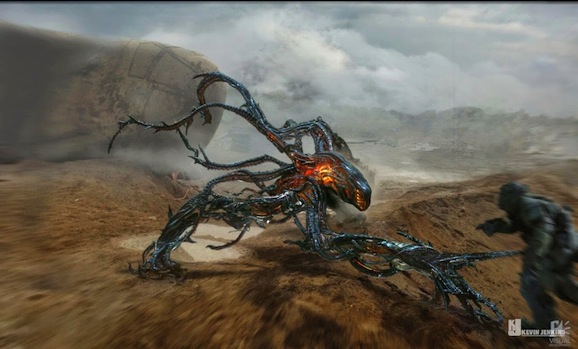
mimic3–The aliens were fine. I have no major complaints, but there was nothing particularly novel about them. The special effects were also fine. But I wanted a little more.

–I had a couple of issues with the ending, which I won’t reveal. The best I can say is that it was satisfying. I’ll leave it at that.

Overall, Edge of Tomorrow is a thrill ride of a movie with solid performances, some laughs, and great action scenes that make it worth a trip to the theater.
Battlestar Galactica revisited: Gaius Baltar’s trial

Great stories must include these 3 elements: a strong premise, great characters, and a compelling plot. Two now-classic TV shows from the last decade—Lost and Battlestar Galactica—had the first two in spades.

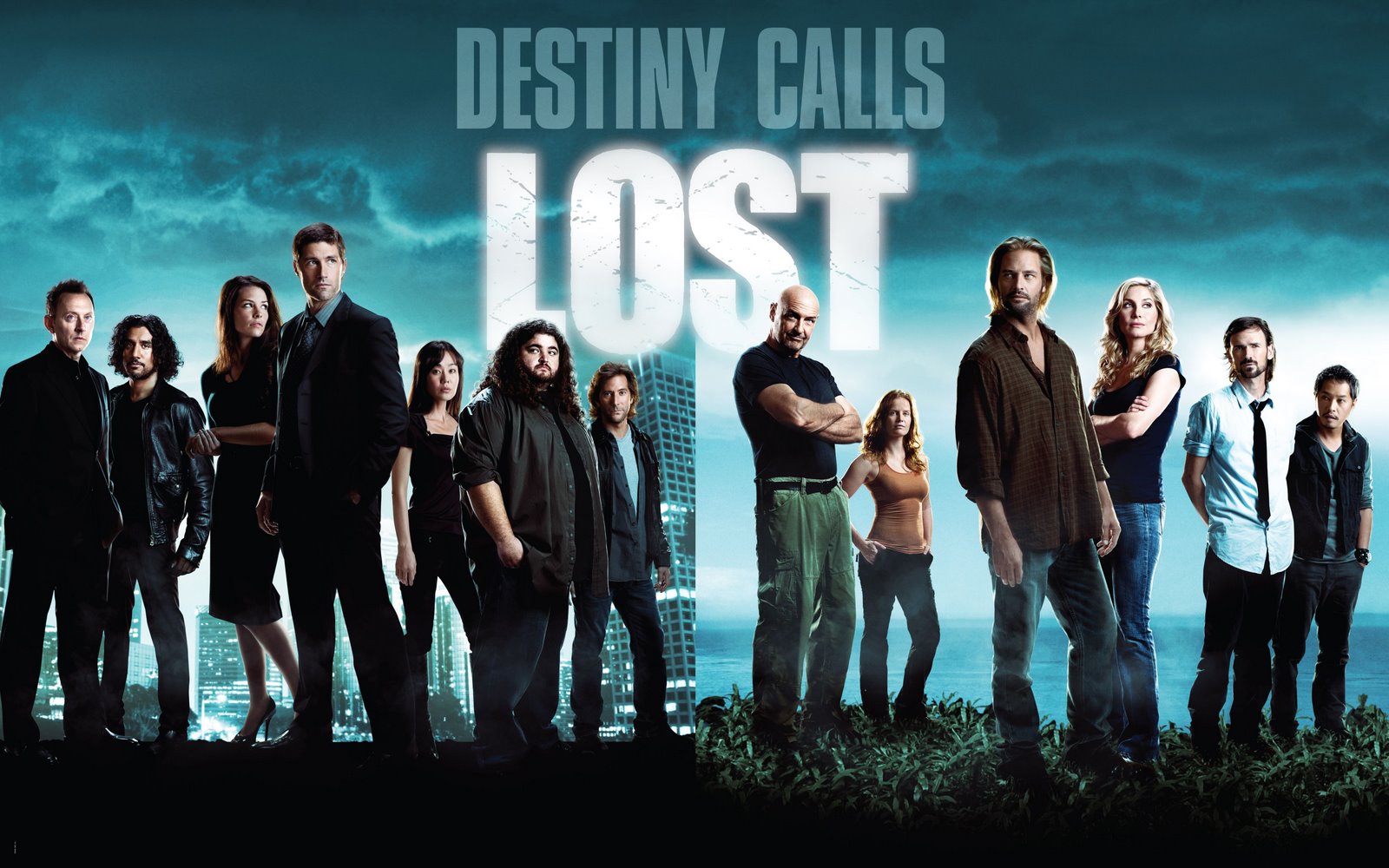
Take Lost. The premise: a plane crashes on a mysterious island and the survivors must battle not only each other, but the island’s inhabitants and the island itself. The characters: Jack Shepard, John Locke, Kate Austen, Sawyer, and Ben Linus, to name a few, were all strong and dynamic.

LostPoster

And then there’s Battlestar Galactica. The premise: Cylons (sentient robots) destroy their creators, but a ragtag group of human survivors flee through the universe in a search for a mythical planet called Earth. The characters: Admiral Adama, President Laura Roslin, Starbuck, Gaius Baltar, Apollo, the cylon Caprica Six, and many more. Again, all compelling.

battlestar

Both shows faltered when it came to plot. It’s safe to say that the endings of Battlestar Galactica and Lost were troublesome.

Nevertheless, what these shows gave us was a new and dynamic way to tell stories.

Battlestar Galactica was a reimagining of the 1970s series. The new version, written by Ronald D. Moore, was a gritty sci-fi drama that mirrored the American experience in the 2000s as the country suffered through the World Trade Center and Pentagon attacks and the resulting global war on terror and Iraq War. Battlestar Galactica was unflinching. It ran headfirst into controversial issues.

baltarOne of the best examples was the trial of Gaius Baltar. A haunted genius, Baltar was an amoral man whose sole concern was his own survival. In the old series he was a stock villain. In the new show, there were times, many times, when I found myself rooting for Baltar, even when I knew he was a jerk.

One of those times was his trial.

Baltar was elected President of the surviving humans, beating Laura Roslin (who nearly rigged the election to stop Baltar). Under his leadership, the humans chose to settle on a habitable planet, dubbed New Caprica, instead of seeking Earth. But the humanoid cylons soon found them. Instead of wiping them out, they instituted a terror-like regime to control the humans.

Baltar went along with them. What choice did he have?

Once the humans broke free from the cylons and escaped, Baltar was ousted as president and then put on trial for crimes against humanity. The resulting trial was a brilliant piece of drama. Obviously Baltar colluded. How could he be found not guilty?

baltar trial

This article from io9.com revisits the trial. It’s a fascinating look at the law and its use in fiction. Was the trial a farce? To an extent, yes. But the whole point of the show (and a theme of our own global war on terror) was that these were not normal times. When the whole of humanity has been reduced from 20 billion to fewer than 50,000, who are actively being chased by murderous robots, you do the best you can.

Some of the plot twists of Battlestar Galactica, including Gaius Baltar’s trial, pushed the bounds of logic and reason, but it’s great to see that so many elements of this iconic series still resonate.

Read this book: After Dark

In the hands of this fiction master, After Dark is nighttime Tokyo reimagined as a surreal noir-ish dreamscape.

after darkI was in one of my favorite bars in Jersey City talking to the bartender Tom about the new insomnia-themed sci-fi novel Black Moon (which is on my shortlist). After a quick tour of books — others and mine — he threw one title at me: After Dark, by Haruki Murakami. Tom said it was strange, offbeat and captivating.

So I tried it. Tom was right.

The best words to describe After Dark is The Twilight Zone. The classic TV series often featured stories, settings, and characters that weren’t outright sci-fi or horror, but were just off-kilter enough to not be truly of this world. That describes After Dark.

The novel is set in a not-so-safe district of Tokyo. The narrator brings us in with a swooping eagle-eye view of the city (pretty after dark altmuch literally). Murakami uses an interesting technique where the narrator is our guide. He is nearly a character himself, though one who is never named or described. Instead he is the all-knowing, all-seeing, and he lets us have a glimpse.

What exactly do we glimpse? A pair of protagonists in their late teens chatting in a Denny’s after midnight. Mari is a 19-year-old student who doesn’t want to go home. Takahashi is a jazz musician on his way to an all-night practice. Mari and Takahashi met months earlier when Takahashi’s friend went on a date with Mari’s beautiful sister Eri.

What we get is a lot of talk between the two — on life, loneliness, alienation. After Dark almost reads like a play. We don’t get much action, but it doesn’t matter. These two characters are compelling.

Once Takahashi leaves Mari the action picks up. Mari gets tangled up with the manager of a “love hotel” where a Chinese prostitute has been beaten. We get glimpses of the dark side of this city, and it’s fascinating.

two girlsThe real strangeness comes when we get to the story of Mari’s sister Eri, the breathtakingly beautiful model. Eri sleeps through the whole book. Except for when she becomes trapped inside a TV.

Yes. That’s right. Trapped in a TV. The brilliance of Murakami is that he could write that and pull it off.

If you choose to read After Dark — and you should — don’t expect plot-twisting thrills. What you’ll get instead is a haunting story about young people on the edge.

(Two Girls image courtesy of www.innakomarovsky.com/blog)


Waiting for the Doctor to return

As we sit here like young Amy Pond and wait (and wait and wait) for the British sci-fi classic series Doctor Who to return to us — the rumor is that we’ll have to wait until Christmas — here are a few tidbits to hold us over.

doctor-whoFirst, Matt Smith, the bow-tie-wearing previous Doctor, who we last saw die defending Trenzalore, told an interviewer at a Calgary sci-fi expo that he’d love to make a return.

“I’m just waiting for the next anniversary. I spoke to Steven (Moffat) the other day and said ‘what’s the quickest one we can do?'”

I’m not sure how I feel about that right now. The 50th anniversary show, which featured a few Doctors running around, was tons of fun but it got a little confusing. Then again, with the rate that Doctor Who episodes are produced, we wouldn’t be seeing Smith reprise his role until 2025 at the earliest.

And, there’s a very tenuous rumor that Alex Kingston could come back as River Song, the Doctor’s wife and one of my favorite characters. What’s the evidence? An interview in RiverSong321_0which Kingston said she looks forward to sharing more of River with the audience.

But then we have Doctor Who head writer Steven Moffat hemming and hawing, wondering if there are more River stories to be told (I vote yes). His logic is that Matt Smith and Alex Kingston worked as a couple because they didn’t look like a couple, while the opposite would be true with Kingston and the latest Doctor Peter Capaldi. I don’t buy it.

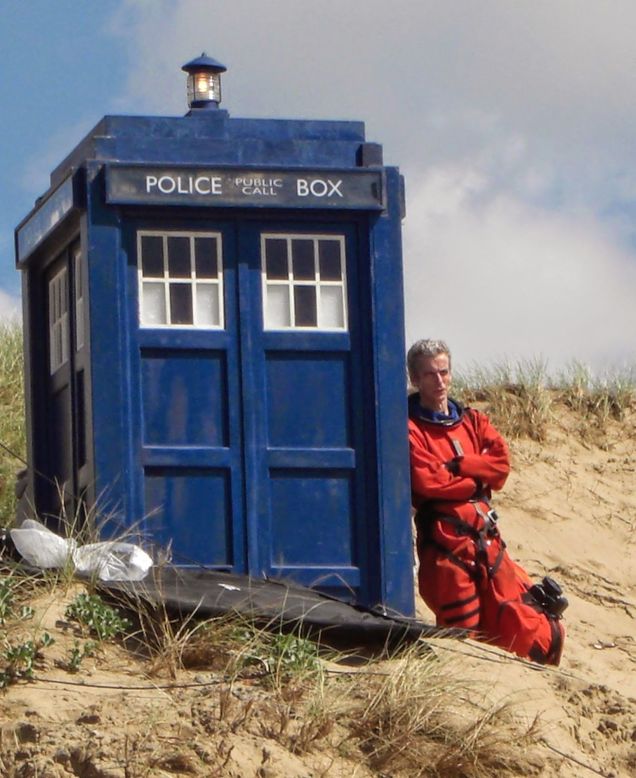
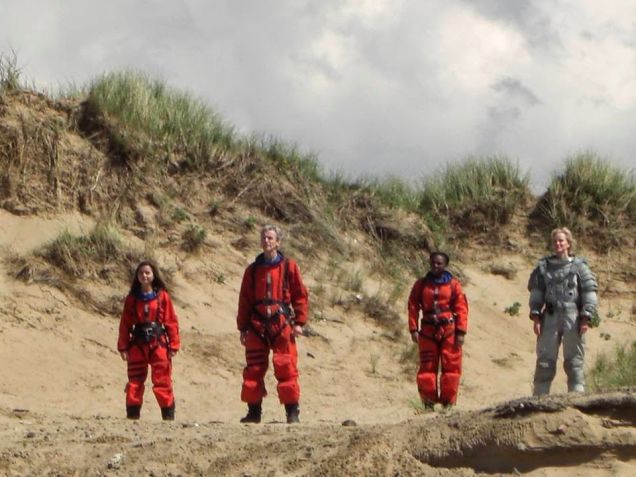
Finally, here are a couple of set photos from Doctor Who featuring new Doctor Capaldi, his companion Clara (Jenna-Louise Coleman), and some other people hanging around, via io9.com.

new doctor 1

new doctor 2


Don’t see this movie: The Host

The Host is proof that a great concept won’t work when saddled with a bad plot and annoying characters.

The_Host_PosterGranted, I’m not the target audience for a YA movie with a romantic subplot based on a book by Twilight’s Stephenie Meyer. But the premise sounded intriguing: the human race is taken over by alien body snatchers that obliterate the host human consciousness. Think of this as a more literal Invasion of the Body Snatchers than the original movie(s), which were all great, but should have been called Invasion of the Body Copiers.

I watched The Host solely for that premise, and that was the only good thing I can say about it.

The plot: Human holdout Melanie Stryder (played by Saoirse Ronan) is captured and taken over by an alien called “Wanderer” (that name was the first warning sign of trouble ahead). But Melanie manages to hold on. Melanie/Wanderer seek out her fellow human holdouts, trailed by a Seeker (the unbelievably beautiful Diane Kruger) who is determined to wipe them out.

The Host ends up turning into a weird love quadrangle. Melanie/Wanderer reunite with KrugerMelanie’s boyfriend Jared, and Wanderer falls in love with some guy named Ian.

How can true love work out if Melanie/Wanderer share the same body? I didn’t really care, because I never bought it. The love story was not developed, it was unrealistic, and the tension felt manufactured.

The rest of The Host was clunky as well. Great actors like William Hurt had little to do, because nothing really exciting or unpredictable happened. Saoirse Ronan is usually a phenomenal actor, but she couldn’t do much in this part. If you want to see her shine in an action flick, watch the surreal Hanna.

The worst part of the movie? Melanie’s voiceover. Since Wanderer had active control, she spoke through the body. Melanie spoke through thoughts, which we heard as a voiceover. Very early on I was wishing that Wanderer had indeed obliterated Melanie. That’s not a good sign.

All of this is a shame, because, like I said, the premise is great. But The Host is bad, and not even in the “so bad it’s good” sense. You’ve been warned: watch The Host at your own risk.

The monsters in our family tree

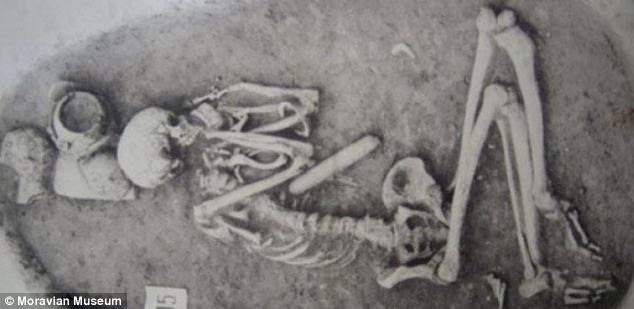
Scientists have discovered a startling fact — compared to our not-too-distant ancestors (5000 BC), we are weaklings. Or as one of the researchers said, “the people back then were monsters by comparison. what you see today is quite pathetic.”

skeletonBritish researchers examined human bones from time periods spanning 5300 BC through the present day. What they found was that the oldest of the bones were comparable to those of today’s elite athletes. The average guy of today wouldn’t stand a chance in one-on-one with the average prehistoric man. You can read the original scientific study here, or try these summary articles in Outside magazine or the Daily Mail.

Why were people so much stronger back then? Because their lifestyles demanded it. There was no agriculture. Food had to be foraged and hunted. The humans back then had to have the physical stamina to roam—and run—great distances, all the time.

With the invention of agriculture, obtaining food became much easier, so we didn’t have to work as hard as a result. And, some speculate that our diets became poorer as a result.

side by side

So what’s the main takeaway? If you plan on travelling back in time several thousand years, you’d better be well armed.

But what about the future? As our world becomes more mechanized, as the physical demands on our bodies lessen, will we shrivel even further?

(Image source: Daily Mail)

Read this book: The Last Policeman

Apocalypse stories are divided into two camps:

1. The impending doom, where we see the event plus its aftermath (or see it thwarted)

2. The post apocalyptic, where a remnant of survivors has built a new and dangerous world from the wreckage of the old.

Ben H. Winters, in his novel The Last Policeman, gives us what should be a new sci-fi subcategory all its The Last Policemanown: the pre-apocalyptic world.

Hank Palace, the hero of The Last Policeman, has always wanted to be a detective (a desire that in part stems from the fates of his parents). A rookie cop with the Concord, New Hampshire Police Department, he gets his wish, but only because an impending cataclysm has opened up a detective slot.

This impending cataclysm? A kilometers-wide asteroid named Maia heading straight for Earth.

In the world of The Last Policeman, everyone knows that Maia will arrive in several months to end life as we know it. Several months of knowing that doom awaits. Imagine that.

Winters does a stellar job in describing what life is like in this world. And he does so mainly through the eyes of Palace, a solid, tenacious, and kind protagonist who the reader quickly grows to like.

Hank Palace is not a man trying to save the world. He’s just trying to do his job.

The plot is simple enough: a man is found hanging by his neck in a McDonalds bathroom. Suicides are rampant in this world, but Palace isn’t convinced this is a suicide. He doggedly investigates while others tell him not to bother. What he gets is apathy and stonewalling. But he never gives up, even as many in the world around him (literally) do.

In many ways this is classic crime noir. Think Raymond Chandler, with his misdirection (and even a femme fatale). This element of The Last Policeman hooked me. I’m a big fan of Chandler — he inspired me to write my novel The Last Conquistador, and I proudly employed his techniques.

Winters amps it up, though, in that he throws us a sci-fi curveball in Maia. On a technical level, I admire the way Winters uses newscasts, media reports, and recollections to tell us about Maia — how he effectively intersperses the info without giving us a data dump.

He also peppers The Last Policeman with fascinating details of life on a doomed planet. For instance, that McDonalds where the body was found? It wasn’t really a McDonalds. Corporate HQ closed, and the remaining stores were run by whoever wanted to sell their own food. All over the world people are abandoning their old lives to pursue a final dream. Or, they’re just giving up.

The Last Policeman is part of a trilogy. I’ve read the second, Countdown City (also great), and Winters does an even better job in describing a society desolate, dejected, but still clinging to threads of hope. In fact, he just won the Philip K. Dick award for best sci-fi book for Countdown City.

Life on a doomed planet: it’s not a cheery topic, but it’s rich with dramatic possibilities.


Why were killer insects so popular in sci-fi?

I loved cheesy horror/sci-fi movies as a kid, everything from The Blob to The Thing.

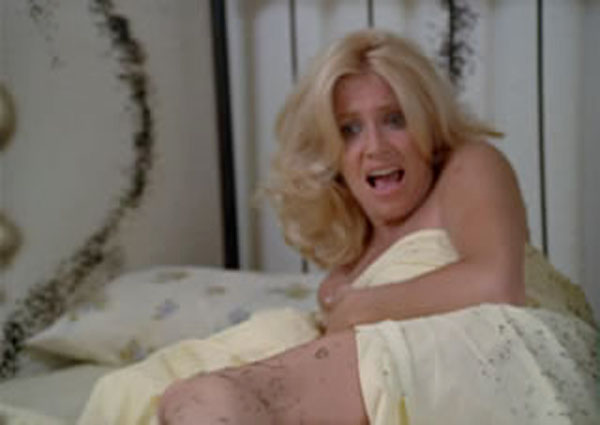
But what always freaked me out were the movies about bugs. I remember watching the 1977 film Ants, about swarming, poisonous ants, and being terrified there were ants crawling under my bed. I’d have to check carefully every night, and still I was never sure I was safe.

ants

io9.com has an article up analyzing why insects were a sci-fi staple, especially in the atomic age of the 1950s (with giant bugs such as those memorable monsters from Them!), but even later, through the ’70s.

them-ant-on-hill1

Some think that the fascination—and popularity—had to do with:

–fears of Communism and the reinforcement of trust in an all-powerful US government

–fears of radiation from nuclear fallout

–mistrust in science

–overreliance on chemicals that pervert our natural world.

The article’s conclusion? The popularity of insects as villains was much more simple. That’s when we as a society became more aware of germs and diseases. And pesticides—bug spray, etc—were promoted to get rid of the vermin that were invading our homes.

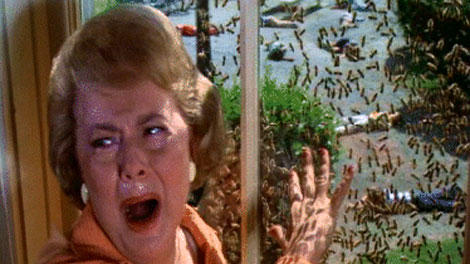
killer-bees

We were constantly on the lookout for roaches and ants and mosquitoes in our homes and backyards, so naturally they’d morph into something even more insidious.

Whatever the reason, it made for fun and creepy horror stories.