Trope or Choke: Episode 12

The challenge: write a complete story in 500 words or less following these guidelines:

Setting: An operating room

Genre: Amish romance + Medical mystery

Trope: Decoding ancient texts

Characters: Acrophobic five-year-old math genius + Martian

POV: 2nd/future

The result:

Oddity

You’ll record these moments in your mind. You’ll transcribe them. For her. For posterity.

The boy will sit with his ankles crossed and dangling, refusing to look your way. “We’re 72,000 feet from the surface,” he’ll say. “If I plummet through that window it will take me 8.7 minutes to crash. My body will splatter in a diameter of 1.28 miles.”

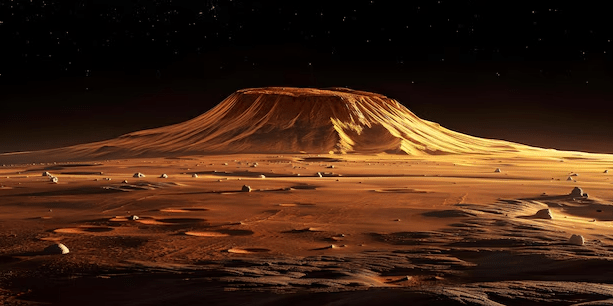
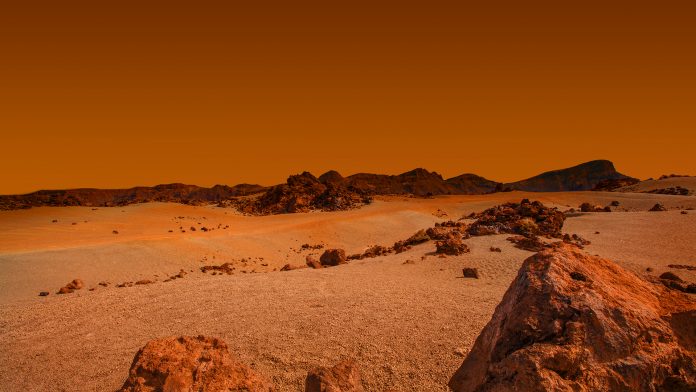
With all the current strife, this laboratory on the peak of Olympus Mons is the safest place on Mars. Sometimes you forget he’s only five: frail and pale with wild hair. “I see. You’re afraid of heights. How about you turn your back to the window?”

He’ll comply and as he begins to swing his legs you bring forth the rune. He runs his fingers over it. “It’s not a forgery,” he’ll say. “These carvings resemble those on the Xanthe cave tablets.”

“Yes, Abigail found those stones.”

“Tell me about her again.”

You’ll sigh and stare out the window. You can almost see all the way to Drava Valles from here. You and Abigail were children when you met, seventh generation Amish colonists. You knew instantly you were fated to be together. You courted and pledged yourselves to each other, and when you both turned seventeen, you married. That first kiss was an electric shock. You can still feel it reverberate. “She was the most brilliant person I’ve ever met. And the most beautiful.”

“Sounds too good to be true,” the boy says, suddenly sounding too wise for his years.

“Isn’t every romance story?” You’ll glance over at the operating table. Empty. How much blood has pooled on this floor? You can’t think about that now. “Her life’s work was solving the mystery of the Xanthe tablet. And now with this rune we’ve discovered…there has to be a connection.”

“And you think it’s me?” the boy will ask.

Innocently. Too innocently. The first child genius was born nine months after the tablet was unearthed. This boy is the seventh. “Ever since we’ve found this proof that we’re not alone, there’s been so much turmoil. We have to know what they say.”

He’ll squint at the tablet, then the rune. “These markings form a code.”

“Can you decipher it?”

“Close enough, yes. It says, After one thousand years the soil makes them ours.”

A shiver will crawl down your spine. “We’ve been on Mars for nearly a millennia.”

“There’s more,” he’ll say. “Two in the blood will become three.”

“What blood?” you’ll ask.

He’ll look at you so mournfully that you’ll forget about his unnatural intellect and see him just as a child. The skin of his arm is so white, and in his silence you’ll find the answer. You won’t ask his

permission to draw his blood. He won’t resist. Under the microscope you’ll magnify until you hit his DNA. And then you’ll see it: not two strands entwined but three.

You’ll stare at this impossible Martian child, all the time wishing Abigail was here to witness this glory.
Trope or Choke: Episode 5

The challenge: write a complete story in 500 words or less following these guidelines:

Setting: On the bus

Genre: Dark academia + Speculative

Situation: “I didn’t have anywhere else to go.”

Characters: Elon Musk + a hotshot

POV/tense: 1st person/future tense

The result:

Heart Like a Fortress

One day my heart will surrender its walls. It will break its shell and pierce the world around me. I know this. Until that day I will persevere. I will swallow down my screams and funnel my pain like bullets in my bloodstream and inside those barricades.

Until then I will ride the shuttlebus in my seat assigned not by the proctors of Blessed Musk Institute 67 in the Fourth Sluice of Olympus Mons, but by Damron, he of the titanium fist, he of the night vision eyes, he of the pack that gloats over their fifteen-generation lineage on Mars, their high-grade cybernetics, and their vulgar power.

“You failed advanced chelation,” he whispers in my ear. “Not me,” he purrs. “I aced it.”

That old tingle of shame pricks my limbs and flushes my face. I curse my weakness. “I never wanted to be here,” I whisper.

“Ha!” Damron barks to his pack. They yelp laughter as if on command. “Hear that? The Earthling doesn’t want to be here. Thinks he’s too good for us Redders.”

“I didn’t have anywhere else to go,” I say flatly. Two dead parents on Earth plus one living uncle on Mars equals a one-way trip to another planet, another institute, another mode of being.

“You don’t belong here,” Damron hisses. “Mars will crush you.” He wraps metal fingers around my earlobe. “We will crush you.”

He squeezes. I swallow the pain. I will rise from my seat and tell him: No, you can never crush me! Mars will never crush me! All the proctors and students at the Blessed Musk Institute with their leers and scorn will never crush me!

I tell him none of that. Instead I flinch and I let escape a treasonous “ouch.”

“Heeeah! What a pathetic meatboy you are.” Damron gloats in his victory. He slaps me on the side of the head.

“Don’t!”

I shield myself but it does no good. He batters my skull until I see more stars than the darkest night in the Hellas Planitia.

A girl in the back squeals laughter. “You made meatboy cry again.” My eyes burn. I wish I was invisible. Bullets of shame course through my bloodstream. They coagulate inside the shell of my heart with all the rest trapped there—my hurt and pain, my hopes and dreams, all encapsulated away from me, from the world, for my safety, for theirs, but all the while I am dead inside, without a heart to call my own.

“You’re so pathetic,” Damron whispers. “I bet that’s why your parents killed themselves.”

That’s it. That’s the one last bit of shrapnel to load into the fortress of my heart. My eyes bolt open. “I never failed advanced chelation,” I say. “I am not just a meatsack.”

One day that fortress heart of mine will explode, a bomb of metal mingled with blood, and I will send fragments of my pain into the hearts of all around me. That day is now.

Image: © iStock/nemchinowa

Robots: our ticket to life on the moon?

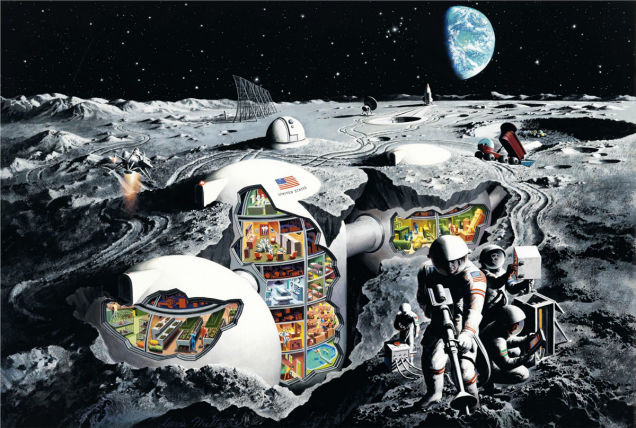
If I were a scientist intent on colonizing space, our very own moon wouldn’t be my first choice. But maybe, since it’s the closest of all celestial bodies, it should be. And, maybe the answer to us getting there is robots that would construct homes for us and pave the way for lunar life.

moon3

What’s the proposal? Robots would be dispatched to the moon to set up solar panels in massive craters on the moon that would warm the craters up and make them more habitable for humans. Why craters? I assume they would provide some sort of natural protection from asteroids. And the craters contain ice, a necessity for human life.

moon2

This makes sense. Look at what we’ve been able to do on Mars. We’ve dispatched robots to explore the martian plains, sending back tons of scientific data. We have satellites landing on comets, and probes sending back amazingly detailed images of our sometime ninth planet Pluto.

So why wouldn’t we eventually rely on robotics to construct complete habitats for our descendants?

moon

The European exploration of North and South America was a deadly and costly venture. There’s little reason to believe that human colonization of space will be any safer. And, as compared to our ancestors, we have little stomach for death. We no longer think it’s acceptable that some people HAVE to die in order for us to ultimately be successful. But, if we can make the transition to off-world homes both easier and safer, then maybe life among the stars will still be within our reach.

Will we ever colonize distant worlds?

On first glance, that question seems absurd. Humans are an adventurous species, so the thinking is of course we’ll spread out among the stars, especially as word comes of more and more planets that may be close to Earth-like.

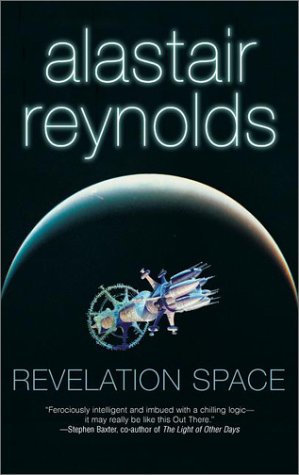
Revelation_Space_cover_(Amazon)But Alaistair Reynolds, sci-fi author of great books such as Revelation Space, throws a little cold water on that idea in a new essay.

Reynolds is a strong proponent of space exploration. But he brings up a couple of interesting problems.

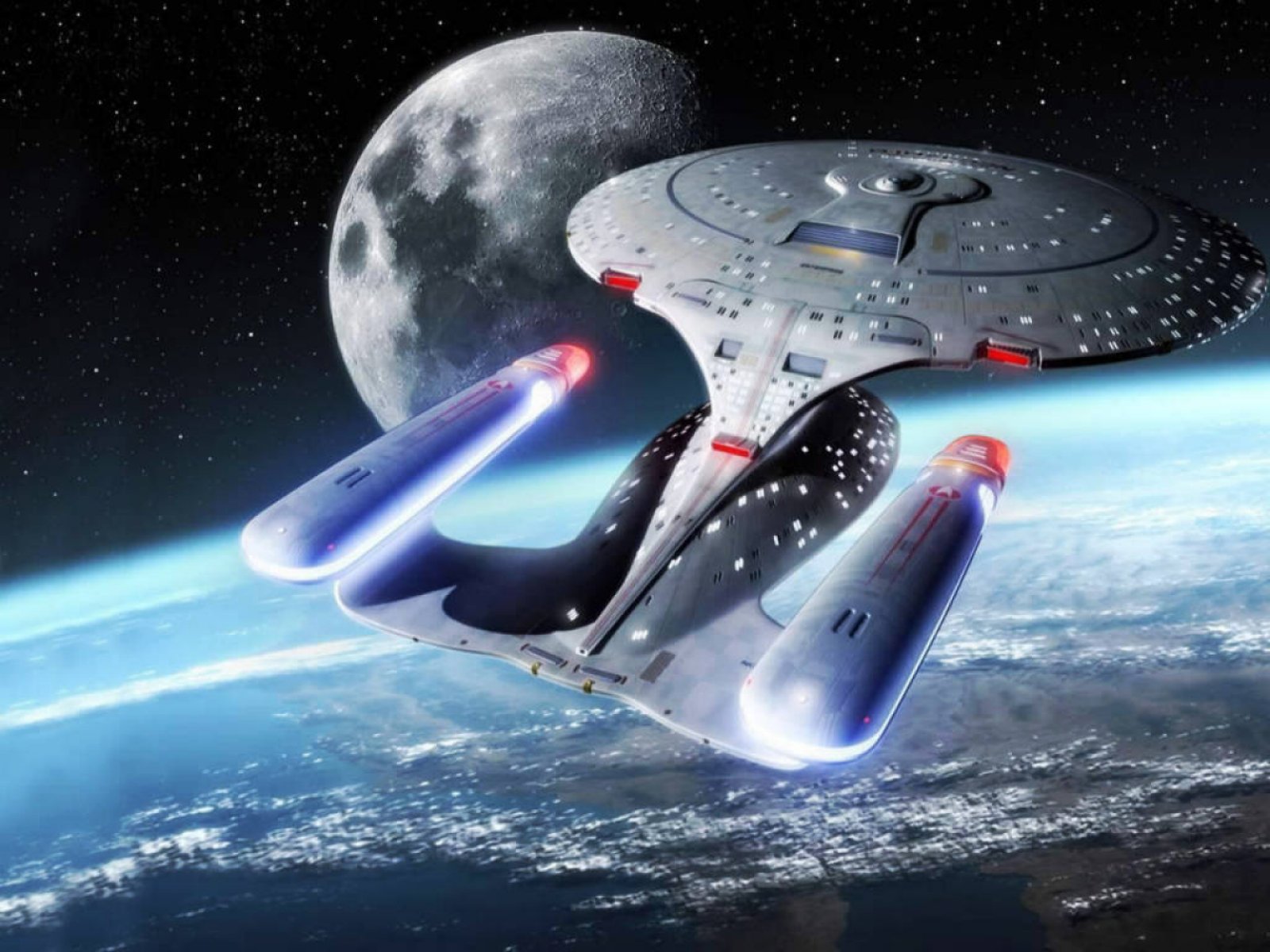
First, there’s the issue of time.TV shows such as Star Trek and Star Wars utilize faster-than-light technologies to travel among the stars. These technologies, however have yet to be created. Not only that, not one experiment has uncovered anything that can travel faster than light in nature. As Einstein theorized, it just may not be possible.

ftl

That would leave us with daunting travel times just to reach the nearest stars. We’re talking at least decades for a one-way trip. How would that work, logistically? How could we assemble a flight crew willing for a life-long mission? Would this mission be simply exploration, since there may be no guarantee that there would be habitable worlds at their destination?

spaceship

Then there’s the issue of a target. As out science is refined, would we be blessed with an abundance of potential worlds to visit? How would we pick just one? It sounds like a silly question, but for such a massive undertaking, we might need to collectively focus on a single goal. That may not be an easy task. Look at our exploration of our own puny solar system. we have no lunar base. We have no Mars base. And the plans for manned exploration of the Red Planet are always being pushed back another decade.

earths3

As Reynolds explains, the study of space may be the answer to the Fermi Paradox, which states that if there is intelligent life, how come we haven’t run into it? Reynolds speculates that maybe as other intelligent alien species surveyed the universe, they became less awed by creation, and more content with their own little corner. They’ve stayed silent and hidden to us.

I hope this last bit won’t be true of humans. Knowing our history, I doubt it. Maybe the answer is that humans are indeed unique in their hunger for more, always more.

Mars Alive!

If I had a hundred lives and the corresponding years, I’d spend a chunk on space travel. Can you imagine the disorienting feeling of stepping foot on another planet? I can’t but I would like to.

Mars is one of the planets on that list. Well, there aren’t that many viable options right now. Venus is a hot mess, Saturn and Jupiter are too gassy, and who would ever want to go to a place named Uranus? Mars is the best bet of a bad lot. But it is dry and barren. As it turns out, it might not always have been the case for the Red Planet.

Mars ocean

Those brilliant scientists at NASA have determined that Mars once had an ocean — a deep ocean — that covered nearly half the planet. This means it was warm enough for life (meaning us), and it may have actually been home to life.

I’m not one who thinks that Earth alone is the be-all and end-all of life. I do believe that life is special and rare, though. Could this mean that our next door neighbor was teeming with life?

Possibly. If the NASA scientists are right, then there was liquid water—a prerequisite for life—and time enough for life to develop. What that life on Mars would have looked like is anyone’s guess.

Eternal life, here on Earth

Those wacky scientists are at it again. And if they have their way, we’ll live a very, very long time.

The latest? Scientists have perfected a technique where they lengthen the telomeres of cells’ chromosomes. The length of telomeres, which protect cells from damage, corresponds with the health of cells. The longer the telomeres, the healthier the cell. By artificially lengthening the telomeres, they’ve turned back the clock on these cells. OR, to put it another way, they replenished the cells’ bank accounts.

Before anyone books that vacation a hundred years out, this has only been done in the lab, on cells. The scientists believe that this technique may someday help treat diseases of aging such as heart disease. So, it seems that everlasting life would be a piecemeal thing — treat each condition as it comes up.

But there’s always the dark side. If we lived forever, or close to it, where would we all fit? We’d definitely have to colonize Mars, and Venus too. And what if it goes wrong? What if the procedure turns us into a race of zombies, as in Resident Evil? Now that would make life interesting.

Rain_zombie2

Are ancient aliens ignoring us?

We’re obsessed with life beyond Earth.

For a while, we thought we might find it close to home. Venus turned out to be a hellish bust, and Mars is turning up nothing but red rocks. SETI has been beaming a hello for decades, but no one has greeted our call. So, unless you believe that Roswell is indeed the site of an alien vacation community, we’ve come up with nothing.

SETI

That hasn’t stopped us from making it a focal point of sci-fi and pop culture, from HG Wells’ vicious War of the star trekWorlds to the community of agreeable, and sometimes sexy, aliens embodied in the Star Trek series and movies.

And, the research to identify life supporting planets is going full steam, with hundred potential candidates identified to date. Now, we may be able to expand our time frame as well.

First, the title of this io9.com article — Freakishly Old System of Planets Hint at Ancient Alien Civilizations — is misleading. Nowhere does the writer, or the research, state that we’ve found any kind of proof (or even a hint) of alien life.

But what we’ve discovered—that rocky planet systems are billions of years older than we first thought—is intriguing in its implication. And what is this implication? That life, and advanced civilizations, have had several billions of years in which to develop.

Our universe is considered to be about 13.8 billion years old, and according to the article, scientists have detected a planet system that is about 11.2 billion years old. Before this, scientists didn’t believe that rocky planets capable of sustaining life could have formed that early in our universe’s life span. Now they know different.

But this leads to the inevitable question: if there are so many planets that could potentially support life, and if these planets have existed for at least 11 billion years, then why isn’t our universe teeming with life? Surely there would be ONE advanced civilization that would have colonized the stars. Was there NEVER a planet capable of supporting life? Or, did they ALL fail to advance to the point we have?

Revelation_Space_cover_(Amazon)One of my favorite sci-fi writers, Alastair Reynolds, explored this very topic in his book Revelation Space. His world view was bleak: advanced civilizations destroyed each other, leaving behind a higher power that would snuff out advanced civilizations whenever they reached the point of breaking their planetary bounds.

If that’s true, then we’re in danger.

Or, maybe there are tons of aliens out there, and they don’t find us interesting enough to return our calls.

Why not Venus?

It’s been described as Earth’s twin, our sister planet, roughly the same size and composition as the home world we all know and love.

Venus Earth
But it’s the hellish parts of Venus that make it our evil twin:

–Its atmospheric pressure is nearly 100 times greater than on Earth. If you set foot on Venus you would be crushed.

–It is damn hot: over up to 900 degrees. At best, you would bake.

–Its atmosphere is mostly carbon dioxide, with clouds that rain sulphuric acid. Not only would you be unable to breathe, but the acid would melt your body.

Venus
So what’s good about this hell planet? What possible use could we have for it?

It turns out that Venus is not as useless as it may seem, at least not according to NASA.

If we are ever to become serious about off-world colonies, Venus might be a good place to start. But how could we ever live on such an inhospitable world? We couldn’t. Instead, we could float just above its poisonous atmosphere.

This is what some NASA scientists are planning: floating cities. These giant blimp-like structures would be tethered about 30 miles above Venus’s surface. At this level, the atmospheric pressure is roughly similar to that of Earth, and the temperature, while still an inhumanly 160 degrees, would be suitable for these structures. The crafts would be solar powered as well.

Venus floating cities
But if Venus is so bad, what’s the benefit?

It allows us to get our feet wet in terms of establishing colonies in space, and we could avoid problems such as extreme temperatures or adverse gravitational conditions (too little gravity and our bodies would break down faster than we would like).

I have never considered Venus as a potential off-world site, and the more I think about it, the better it sounds. Of course it would not be easy. There are many logistical problems, not to mention the cost involved.

At the very least, these NASA dreams can provide another cool setting for sci-fi.