We’re back for another round. The challenge: write a story in 20 minutes using the following prompts:
Characters: Heart surgeon and Astronaut
Setting: A wine cellar
Genre: Cozy mystery
Trope: A very cheap date
POV/tense: Third person future
And the result:
The Case of the Orange Feather
It will be Betty who first notices the safe. Open, with a single orange feather resting on the bottom.
“That wasn’t like that before,” she’ll tell Alex.
“What do you mean?”
“When you first brought me here, down here to this wine cellar, of all places…”
“Of all places, what do you mean by that?” Alex will say.
“A first date is supposed to be romantic. Dinner, candlelight. Not, mildew and hypothermia.”
He’ll slide up close to her and wrap an arm around her. “How could I ever impress the best heart surgeon in the county by dropping five Benjamins at a steakhouse. I know that a woman like you deserves better. So I figured I’d bring you to a wine cellar—I was on the space shuttle a decade ago with the guy who owns it—and we can explore a little.”
“Explore as crack open a bottle of something pricey?”
He’ll raise his hands in mock surrender. “Hold on now, these bottles go for a grand a pop. I don’t think so.”
She’ll grunt at him, deservedly so, but she won’t be ready to end the date, not quite yet. “What about the safe?”
“What about it?”
“I know for a fact it was locked when we came down here. Did your friend, this mysterious friend, come back in when you were leading me through one of the caverns here?”
Alex will scratch his chin. “No.” He’ll reach in the safe and pick up the feather. “Strange. My friend has a parrot back home. But I don’t think it had orange feathers. Or did it. Hey, do birds have orange feathers?”
“I don’t know.”
Suddenly the lights will turn off. Betty will yelp and Alex will reach for her hand in the dark. She’ll find it and grab it. Then he’ll whip out his phone and shine the flashlight, revealing nothing but dark rows of dusty wine bottles.
Behind them, a crash.
“What was that?”
“I…I don’t know,” Alex will say.
“If this is some kind of practical joke, or scheme to make you fall for me…I know about how adrenaline can affect people, and I’m telling you, I’m not falling for it.”
“This isn’t a game. Trust me.”
Together they’ll walk closer toward the sound of the noise. They’ll turn a corner and see on the floor a busted bottle of 1901 Pinot Noir, the red wine flowing in a rivulet until it reaches a man’s loafer, and attached to the loafer a leg, and a body. While Alex shines the light on the man Betty will reach down and with her trained hands she’ll determine that the man is indeed…
“Dead,” she’ll say.
“I’m guessing he was stealing this prized bottle when he bit it,” Alex will say.
Betty will raise her hand to her mouth. “Who could have done this?”
Alex will hear a rustling from above. He’ll shine his light up and spot the biggest parrot he’s ever seen, the proof of what the parrot did on its claws and beak.
“Guard parrot,” he’ll say. “Who would’ve seen that coming?”
Here’s the latest entry in the structured, timed prompts series. This one’s called Person, Place, and Thing.
The set-up: take ten minutes to write intensively about a thing, a person, and a place (that’s ten minutes for each). And then, take another ten minutes to weave all three into a story. The purpose behind this exercise is to develop descriptive skills, to learn how to really get into the language behind whatever it is you’re writing about.
Here are my results:
Thing
No one knew where this lighter came from. There were no identifying markings on it. No made in China or USA or wherever such things are fabricated. No name. Not a single word to place it somewhere in the universe. It was larger than most lighters typically are. It felt meaty, solid in your palm, like something forged for a king or a queen. Its case was gold, not pure gold but steel colored in gold, or so one assumed. On one side the image of a dragon with ruby stones for eyes, its scales raised as if it longed to break free of its metal prisons. On the other side was a heron with a slender neck and long beak that jutted out to a sharpened point. Its feathers felt light to the touch, almost. If you stroked your finger along them you might think they were real, as if a bird could be shrunk and trapped in metal. Its lone eye visible in profile was a purple gem.
The lid sat tight on its hinges, with two fingers needed to pry it up, the light wheel so finely serrated it almost felt like silk, and it glided with just a flick of your finger and sent a spark that blinked and sputtered, and then the flame, uncontrollable and ravenous and shooting up inches into the sky, so bold and cruel that if you held it too close to your face it would singe your eyebrow clean away.
Person
Molly wasn’t a crier, that’s what she always insisted but she knew in her heart it wasn’t the truth. She’d only cry alone, in her bedroom, the place where she could lock the world out, the place where she could see herself as she believed herself to be: old at 45, too old. She wore clothes that never quite fit her right: too tight in the middle or too loose in the shoulders, never hugging her hips as she believed they should, but always colors, the bolder the better, a dare to herself; she never wanted to be looked at, but she insisted she needed to get over that silly insecurity, though she never did. Hair that never fell just right, light brown that frizzed with the slightest humidity, resistant to any product, hair in a constant state of rebellion, a rebellion that the teenage Molly never dared to partake in.
She considered herself not quite pretty but not quite plain. But there was one thing she appreciated about herself—appreciated more than loved—her eyes, wide and violet, an almost unreal color, blue edging close to purple, and with those eyes she compensated for the litany of shortcomings that looped through her mind. She used her eyes to capture people. Tame them. Her eyes made friends of enemies.
She’d tell herself out loud that she could heal all those old wounds that never seemed to stay closed, that she needed to, and she’d wring her hands together until her joints burned. But even with all of this she managed to hold on to that one bit of crucial hope that despite the past, the future would be hers, her lined and unlipsticked mouth set firm with a smile.
Place
Somewhere in the distance a fire burned. Smoke not unpleasant but somehow rude, filtered through air that carried the scent of the sea. Just a few people sat out here on this beach with sand so fine-grained that it almost felt like water, sand that seemed as if it would swallow you up but not with any evil intent but with love. The water lapped the shoreline with slow rolls that emanated a hum, rhythmic like a heartbeat that pulsed along the sand and reverberated through your body. A smattering of palm trees weak and lonely edged the sand behind you, and behind them, the lights of the houses, eyes that stared at the ocean that stretched out into a black infinity. Every so often a voice would carry through the night, a woman’s shrill laugh, a man’s rough bark, these noises alien and jarring, interrupting the calm, breaking something precious. Figures moved near that distant firelight, jostling and rolling and shifting, so distracting that you’d have to blot them out from your existence and focus solely on the warm breeze and the fell of the sand and the sheen of salt that hugged your skin and the forever ocean that whispers to you that there’s so much more to this world than what’s behind you.
And the story
Truth be told Molly hated that lighter. It belonged to her grandfather, and he willed it to her thinking that he’d done her a favor but she couldn’t help see it as a curse. It was bigger than a normal lighter, gold but not real gold, weighing heavy in her hand. She did love the dragon on one side. When she was a girl she’d named him Clyde and imagined that this red-eyed beauty would break free of its metal cage and swoop out and burn everything down, everything except for her, of course. Or that the heron on the other side, with its one eye a purple so close in color to her otherworldly eyes, would fly free and carry her off to that secret kingdom where she was originally from, the one she belonged in. She’d named the heron Matilda.
Still, she hated the lighter because it was the last remnant she had from her own family but she could never get rid of it. She stared out at the ocean, so black and calm and endless. She felt the pulse of the waves as they lapped the shore in time with her own heartbeat and she wished she could stay on this moonlit beach the rest of her life, her frizzy hair be damned. The world would just have to get used to her wildness, then.
She caught the scent of the bonfire, far away but not far enough. Who were they? Those happy people laughing and shouting, moving ghoullike in the glow of the fire. She considered going up to them, luring them in, making new friends but she declined. Not this night of all nights.
It was a necessary thing, she told herself, and she would cry about it later. Perhaps. But she’d only do it alone. Not in front of anyone, not ever. She cradled the lighter in her hand and on a whim she pried open the too-stiff top and flicked the light wheel and watched the flame soar and flicker and she shone it on her bare ring finger with its band of pale flesh and she felt no sadness, no regret. She hovered the flame close to her skin, just enough to feel the heat but she had no intention of hurting herself. She vowed she wouldn’t do that to herself, ever. She was single, once again, as she always should have been, perhaps. She closed the lighter’s lid and let the moonlight coat her and she stared out into the black sea that promised her some new forever.
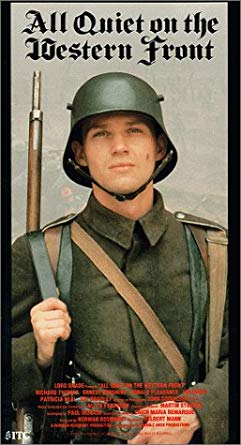
A few months after my father was killed, my mother purged a ton of his books, so when I was at her house searching for something to read, it shouldn’t have been a surprise that the bookshelves were as bare as a Venezuelan supermarket. All I found were a few religious books, some non-fiction war books and…All Quiet on the Western Front.
I probably grimaced when I pulled it off the shelf. Not only because it was a boring war novel that you’re assigned in high school, but also because on the cover was John Boy from The Waltons TV show. That show bored me to death, as did the character, so I can’t dissociate the actor from the character, or the show.
Nevertheless, I took it with me. It was short enough to meet my classic challenge standard, and I love the history of Germany during the pre-WWII era. So I figured I’d just try to not look too long at John Boy on the cover and give it a try.
I was expecting Erich Maria Remarque’s classic to be boring. It wasn’t. I was also expecting it to be staid and mannered. I was wrong again. All Quiet on the Western Front is the story of Paul, a battle-hardened German soldier fighting along the western front in France during World War One. In his preface, Remarque clearly states that the book is not meant to be anti war. While it could easily be mistaken for a pacifist plea, it’s not. It’s just a detailed account of life as a soldier.
At times the writing is bawdy. He’s not adverse to throwing in a few fart jokes, of all things. In other episodes, Remarque, through the narrator, clearly relays the intense camaraderie that develops among soldiers. This falls just short of romanticization, which makes it even more effective.
One thing that kept coming back to me (which was in contrast to the thirtysomething actor on the book’s cover) was Paul’s age. He and his friends enlist just after high school. He’s 19 during the course of the book. More than once he comments on how disillusioned he and his entire generation have become because of the war, how lost they are, how much they’ve aged. This was one of the most powerful themes for me.
All Quiet on the Western Front is bursting with rich description. Unlike most modern novels, it’s not told in a traditional three-act structure. That’s because it was serialized during the 1920s. I found the episodic nature of the chapters compelling.
All Quiet on the Western Front didn’t go over too well once the Nazis came into power. It was a target of book burnings, and Remarque fled the country. The Nazis are long gone, but his book still persists.
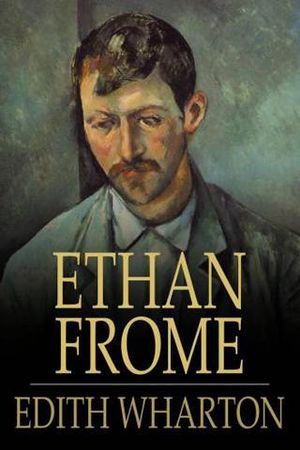
As I write this I’m listening to Nine Inch Nails — The Day The World Went Away. It fits the mood I was in when I picked up Edith Wharton’s novel Ethan Frome, and the song’s constrained brutality fits the mood of the book.
I was in a “whole world went away” kind of mood when I rummaged through the stacks of books at the local protestant church’s used book pile (paperbacks for a dollar!). I’d just finished Ursula LeGuin’s The Left Hand of Darkness, still haunted by that resonating line of hers: Why can I never set my heart on a possible thing? I was desperate for another book, one that had some words and meaning that would give me something (what “thing” I couldn’t say). On a shelf full of plays I found a few dozen classics. I sifted through them, and I chose Edith Wharton’s book for only one reason. It was short. Right now I can’t sit through anything longer than 300 pages, and this paperback version was about 100.
Deal.
All I knew of Edith Wharton was that she was a highly regarded American writer from the turn of the last century, that she was rich, and that she wrote books about rich people. I expected Ethan Frome to be a novel about boring rich people and their fussy manners.
I was wrong.
It’s about poor people and their fussy manners. And their inability to set their hearts on a possible thing.
Don’t get me wrong. I loved Ethan Frome. It’s a big story in a little book. It’s a focused narrative that mines deep emotions. It is restrained yet revealing.
The book is about the title character’s doomed, aborted love affair. Wharton does something interesting craft-wise. She opens with an unnamed narrator (who totally doesn’t matter) describing an older Ethan as a crippled man, both physically and emotionally. Eventually the narrator learns how Ethan became so wounded. Years earlier, Ethan, trapped in a loveless marriage with the shrewish Zeena, falls for her cousin Mattie, who is boarding with the Fromes to help Zeena, who is more or less a hypochondriac. Ethan falls in love with Mattie. Zeena, who only seems to love her mysterious malady, plans on sending Mattie away. Ethan grows desperate.
And then the trouble begins.
I won’t reveal what happened, but I was totally caught up in the story. Everyone is trapped in lives and a society that offer no escape. Their choices are severely constrained. Hope is hard to come by.
It fit my mood perfectly.
Ethan Frome is a book to wallow in. I don’t thing Edith Wharton thought highly of marriage, and she had no clue about struggling working class folk. but none of that mattered. She burrowed deep into the hearts of her characters. She churned a whirlpool of tension until the final shocking moments when she revealed exactly how Ethan’s body and spirit were broken.
Next in my literary challenge, another dark and stormy classic.
Have you ever had a wicked bout of insomnia? It’s near dawn and you haven’t been able to sleep, no matter what you do. The world outside your bedroom is fast asleep, but not you. And slowly, you begin to hate all these lucky sleepers as your mind jumps and skitters.
Imagine if that insomnia lasted not one night, but several days — and then endlessly. What would you do? How much of your sanity would remain?
This is the premise of Kenneth Calhoun’s debut novel Black Moon. An unexplained insomnia plague has struck. People are becoming sleepless zombies, losing their minds as they wander the landscape. A lucky few, however, can still sleep. Only they’re targeted by the angry hordes.
Black Moon is a new take on the zombie craze that refuses to die out. It includes several zombie tropes that we all know so well by now — the ravaged landscape, the plucky heroes targeted, the dystopian gloom. The fact that these “zombies” are still alive is a fresh twist.
This strong premise, and not the characterization or plotting, is what carries this book, and it’s unfortunate. Black Moon is a good book. It could have been a great one.
Time for the breakdown. First, the good:
— As I said, the premise is strong. It taps into a nearly universal experience. Most of us have been frustrated by not being able to fall asleep. And we have also had that spacey, drunk-like feeling of being sleep deprived. Black Moon raises an interesting question: how much of our daily life is simply a valiant effort to hold back the unconscious wildness that streaks through our minds at any given moment? Our dream worlds, like our inner monologues, are free flowing and chaotic. Which is our more natural state?
— Apocalyptic books can take one of two paths: the knowledgeable official (government, scientist, etc), who works to solve the problem, or the ordinary Joe/Jane who struggles to survive. I prefer the latter. Black Moon shifted between several characters — average people all struggling to cope. This book provided no answers, and it didn’t even try to. I appreciated that.
— At around 300 pages, Black Moon is short. It is a quick and thrilling read. And Calhoun can write quality prose.
And the not so good:
— Plotting is not one of the stronger suits of Black Moon. We shift between character viewpoints, which isn’t a problem, except when the shifts jump around, leaving the reader confused as to what happened and why. You may find yourself backtracking several times, and not in a good way. Calhoun had the room to explore several scenes more fully, and for some reason, he chose not to.
— The characters were a mixed bag. Biggs is one of the POV characters. He can sleep, and he searches for his insomniac wife, Carolyn. All the while, we get their back story as a couple. While I could relate to Biggs through his interactions with his dying world, I could not relate to the wife he described. I didn’t like her at all, and didn’t care. Several of the characters seemed like cardboard cut-outs, not flesh-and-blood people.
These drawbacks were not insignificant. Luckily, the premise is strong enough to counterbalance these flaws. Ultimately, Black Moon is a fun book. It’s a new take on the zombie craze that will keep you up at night as you race to finish it.
Ian Tregillis’s alt history/sci-fi mashup scores big on imagination, even if many of his characters are flat.
Aside from the supernatural/horror/sci-fi, another thing I’m a fan of in pop culture is alternative histories. The “what if” has always fascinated me, mainly because it lets the imagination run away.
In his book Bitter Seeds, Ian Tregillis combines not only sci-fi, but also horror, with alternative history. Add nazis, arguably one of the best villain groups of all time, to that mix and you’ve got a recipe for a great story.
The plot: in Germany, a mad scientist is creating his own band of supermen, soldiers capable of such things as turning invisible, starting fire, and predicting the future. As war looms between Germany and the rest of Europe, the British government forms a group called Milkweed to investigate these reports. Soon a covert battle ensues as the British group use warlocks to summon dark forces to battle the nazis.
It’s actually a complicated plot to explain in a few tight sentences. Our hero is Raybould Marsh, a pugnacious British secret agent who is sent to investigate the reports of these supermen. Soon he summons his college friend Will, a warlock initiated in a blood rite that allows him to communicate with beings called Eidolons. When you think of Eidolons, think Lovecraft. These mysterious beings are not kindly or benevolent. They see humans as no better than ants. They would gladly destroy us but they exist in a different plane, and can never pin us down. Blood helps them get closer. Tregillis doesn’t fully explain what the Eidolons are, but he doesn’t need to. My imagination filled the gaps just fine.
Meanwhile, the German team of superheroes is on the verge of falling apart. They were created when they were just children, bought by a scientist who experimented on them (horribly, one would assume, judging from the body count) until he had his team in place. They wear batteries that are hooked to wires embedded in their skulls, which allows them to access their superpowers. This is one of Tregillis’s strengths — he employs, simple, believable technology suited for the era. Think steampunk circa 1930s.
The German story centers on two characters: Klaus, who can dematerialize and move through walls, and his sister Gretel, an enigmatic sociopath who knows the future (though she rarely reveals it). Gretel is perhaps the most compelling character. Why? She is always a mystery, always unpredictable, and always uncontrolled. She’s fascinating to watch.
The breakdown. What was good about Bitter Seeds?
–The concept was fun. Who doesn’t love watching nazis get beat?
–As mentioned above. Gretel was by far my favorite character, though Will, the aristocratic warlock, was a close second. Tregillis convincingly drew a man who grew more and more tortured, especially as the Eidolons demanded higher blood prices as the battle continued.
–The Eidolons themselves were a fantastic creation. Thoroughly dangerous, extremely powerful, callously indifferent. I want more.
–Tregillis is a skilled writer. As a writer myself, I’m always appreciative of someone who takes great care in the writing of a story.
And the not so good:
—Bitter Seeds suffers from something I see a lot in fiction. I call it the running in circles plot. Maybe the writer isn’t sure what to do next. Maybe the writer needs to up his page count. But sometimes a story starts running in circles, where the characters are going back and forth (sometimes literally) and not really getting anywhere. Not much plot movement, maybe a little character development. There were several times when I could feel the story lapsing into this.
–Aside from Gretel and Will, I cared little about any of the other characters. Our hero, Marsh, was fine, but he never made the leap off the page for me. Similarly, Klaus was very one note. His whole role was to protect his sister Gretel, and that’s all he did. The Germans, especially, were largely forgettable.
Nevertheless, Bitter Seeds (which is book one in a trilogy) is inventive, imaginative and thrilling. I’m looking forward to discovering where Tregillis will take us next.
World building is an integral part of fiction. When it comes to sci-fi, Mars seems like the perfect world to build. It’s been long ignored. Now, it might get its chance chance.
Writers (myself included) are closet megalomaniacs. When you write, one of the more important, though hidden, tasks is you have to construct the fictional world your characters inhabit. This is true whether you write a true-to-life family drama or a space opera set in unexplored galaxies.
As a writer, I love that part of it. And I suspect most other writers do as well. Why? Because we get to create these worlds. We are in charge.
On that level, it’s all about the worlds. But what about literal worlds?
As a sci-fi fan, I could never figure out why Mars is always forgotten. It’s well represented in print (Ray Bradbury’s The Martian Chronicles, for one example of many). But on film and TV, apart from a few crappy movies, Mars has been largely ignored.
And it’s right next door. You can see it, if you have a good telescope.
That may change. Spike TV, of all networks, plans to produce a TV show adapted from Kim Stanley Robinson’s Mars trilogy (Red Mars, Blue Mars and Green Mars). I read these books years ago. I have some problems with the books, mostly involving pacing (slow…), but what he did brilliantly in his writing was build a world. Mars.
His books track the colonization and terraforming of Mars over centuries. He includes topics and themes such as genetic engineering and social unrest. His characters run the gamut of human nature. And he has a space elevator,which blew my young sci-fi mind when I first read about it years ago, but is now slowly turning from science fiction to science fact.
If this series comes to pass (which is always a huge question mark) and if it is done well (an even bigger question mark), it would finally give the Red Planet its due in the sci-fi world.
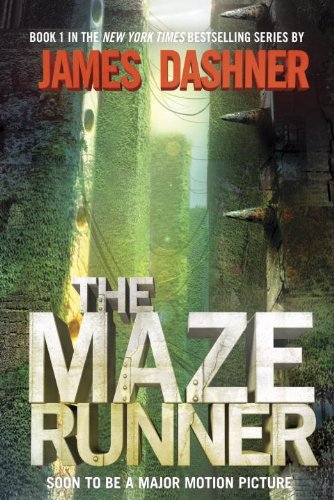
Short take: The Maze Runner, by James Dashner, is a thrill ride that succeeds despite its lack of heart.
When I was young I devoured the Choose Your Own Adventure books. These books were a plot maze where the reader would make a decision at a crucial plot point, and then be directed to a certain page to continue the story. Some decisions would lead to a dead end — end of story — while others would keep you going. All the books were exciting, plot-driven page turners where character (and character development) was largely irrelevant.
In many ways, The Maze Runner, another entry in the YA dystopian canon, reminds me of the Choose Your Own Adventure books. It’s an action-packed story with characters who might as well be blank.
The story: Thomas wakes up in an elevator, with no firm memories, that takes him to a place populated with tough-talking teenage boys. Thomas soon discovers that he’s trapped, as are all the boys. Every day the walls of their compound open, revealing mazes that the boys attempt to navigate. They’ve failed to find an escape, and are threatened by biomechanical monsters called Grievers that lurk in the maze. Thomas is determined to become a maze runner, convinced he can not only solve the maze, but also recover his lost memories.
First, the good:
–Reading The Maze Runner, the first in a series, is like being at a great amusement park. The book is a constant thrill ride that had me turning pages (flipping through my Kindle) at a lightning pace. Dashner excels at turning up the heat and keeping it going.
–Not only that, but Dashner expertly parcels out hints of what’s really going on. He gives us just enough to pique our interest the whole way through.
And the not-so-good:
–Thomas as a character is not relatable. He doesn’t have much of an inner life, largely because he can’t recall his past. Thomas has guts, but he has no heart. I felt the same about most of the other characters — group leaders Newt and Alby, maze-running expert Minho, and the mysterious lone girl Teresa. The only character who seemed three-dimensional was eager, bumbling Chuck. Dashner subtly showed us how desperate Chuck was for friendship. He did this through Chuck’s dialogue and actions. If only Dashner had done that with Thomas and the rest.
–I didn’t buy Thomas’s fledgling relationship with Teresa. Again, maybe it was the fact that both characters were amnesiacs; there wasn’t much to build on. Was Teresa included only to throw in a romantic subplot? If so, then it felt forced.
–While the story was thrilling, there were times when I wanted Dashner to slow down. There was little reflection. The Maze Runner would have benefited from a break in the action now and then.
But these complaints don’t doom the book — far from it.
The Maze Runner is just one among many YA dystopian novels, a trend which seems to never end. The ones I enjoyed the most — The Hunger Games series and Neal Shusterman’s Unwind — excelled because they focused on character. The Maze Runner shows that sometimes you can get away with relying solely on plot.


 religious books, some non-fiction war books and…All Quiet on the Western Front.
 f Darkness, still haunted by that resonating line of hers: Why can I never set my heart on a possible thing? I was desperate for another book, one that had some words and meaning that would give me something (what “thing” I couldn’t say). On a shelf full of plays I found a few dozen classics. I sifted through them, and I chose Edith Wharton’s book for only one reason. It was short. Right now I can’t sit through anything longer than 300 pages, and this paperback version was about 100.


 Read by Kevin