Taking on time travel

Time travel is the thorniest of plot elements. By nature, it’s full of flaws. Take the Grandfather Paradox — watch Futurama for the best example of that. Time travel is difficult because it doesn’t fare well under the light gaze of logic.

But lets push logic aside — whether time travel is or is not possible. When I read fiction (or watch movies or TV), I often want to escape. And what better way to escape than to leave the time period entirely?

Time travel as a plot device offers infinite possibilities. When you’re no longer constrained by time itself, the plot permutations are endless. The imagination can run wild. And for that reason most of all, I love nothing better than a great time travel story.

One of my favorite websites, io9.com, recently ranked all the time-travel-related movies, from best to worst. The article, and their reasons behind each ranking, is worth a look.

For a quick rundown, here is their top five:

5. Time Bandits

time_bandits_25

4. Back to the Future 2

marlene-mcfly

3. Groundhog Day

groundhog-day-4

2. Primer

primer

And their top time travel movie of all time is….. Back to the Future (the first one)

back to the future

It’s an impressive list. I applaud the effort that went in to compiling it. My take? For the most part I agree, with some reservations. I’m not a Groundhog Day fan, and that barely qualifies as a time travel movie in my mind. And I disagree with the low rating for Ashton Kutshcer’s Butterfly Effect. Sure it was hokey, but what was great about it was how it showed the accumulated futility of trying to alter time.

As far as my own personal list, my favorite time travel movie ever, which made the top ten, has to be The Terminator. It was a brilliant sci-fi/thriller that established a mind-bending franchise. Arnold is great, and both Sarah and John Connor are now pop culture icons.

terminator

Eternal life, here on Earth

Those wacky scientists are at it again. And if they have their way, we’ll live a very, very long time.

The latest? Scientists have perfected a technique where they lengthen the telomeres of cells’ chromosomes. The length of telomeres, which protect cells from damage, corresponds with the health of cells. The longer the telomeres, the healthier the cell. By artificially lengthening the telomeres, they’ve turned back the clock on these cells. OR, to put it another way, they replenished the cells’ bank accounts.

Before anyone books that vacation a hundred years out, this has only been done in the lab, on cells. The scientists believe that this technique may someday help treat diseases of aging such as heart disease. So, it seems that everlasting life would be a piecemeal thing — treat each condition as it comes up.

But there’s always the dark side. If we lived forever, or close to it, where would we all fit? We’d definitely have to colonize Mars, and Venus too. And what if it goes wrong? What if the procedure turns us into a race of zombies, as in Resident Evil? Now that would make life interesting.

Rain_zombie2

Why I can’t read any new Stephen King

This isn’t an easy thing for me to write: I will never read a new Stephen King novel again.

I grew up on King. When I was a teenager I devoured his books: Carrie, Firestarter, Thinner, The Talisman, Eyes of the Dragon, Pet Sematary, It. He was (and still is) a fantastic storyteller. He creates characters who feel real and alive, and in his horror, he captures real fears we all have and relays them to us in ways that keeps us awake well past dark.

I stopped reading him for several years — no real reason, except that there are so many other books out there. Then about five years ago I picked up The Dark Tower. Wow. It floored me. The Dark Tower was King at his best — wild, madcap, bursting with imagination, and populated with characters who seemed as real as you or me. Roland Deschain, the gunslinger and hero of the seven book Dark Tower series, is one of my all-time favorite characters. The seven books of the Dark Tower series weren’t perfect. There was way too much fat. And partway through the series he introduces a character named Stephen King, a writer of horror movies. This was his only major misstep in the whole series; it nearly broke the illusion for me. But I was able to overlook this. Even the ending, controversial to some, was brilliant to me.

Then I made the mistake of reading Under the Dome, his book about a town that’s mysteriously trapped beneath an impenetrable dome, and I realized a few things:

–I’m tired of reading about small-town Maine. The characters in Under the Dome were way too similar to those in his earlier books.

–King’s world is black and white. I like gray.

–King’s writing is devoid of all hope.

That last part is crucial. First, let me be clear: King’s talent and skill are undeniable, and his work ethic is something we should all emulate. But when I write, I must come from a place of hope. Even in the darkest stories I write, there exists a thread of hope, no matter how thin. In Under the Dome, there really was none. The basic message was this: the world sucks, people suck, and ultimately we’re all powerless. I trudged through the 1000 plus pages, hoping for at least a stellar ending, but the ending I got was one of the worst I’ve ever read. It wasn’t even good enough for a bad Twilight Zone episode. It was arbitrary and it made me regret wasting my time.

And now I just finished his latest, Revival. Where do I begin?

First, the good. King is a master of a unique premise, or, at least a premise that would have seemed obvious, but for some reason wasn’t. For this book, he infuses horror into the well-worn cliche of the faith healer. You would think it’s been done to death, but I can’t think of another case. And he works in clever homages to Mary Shelley’s Frankenstein and the cold horror of HP Lovecraft.

But first you have to sift through the boring life of one Jamie Morton, who is well meaning enough, but nothing more than a way for King to relay the glories of his small town baby boomer generation. I grew up in the shadow of the baby boomer generation. Never again do I want to hear about how cool or special their lives and culture were. Thank God for that skill known as skimming pages.

Jamie aside, King gives us Pastor Charles Jacobs. In Jacobs we have someone who is much more compelling — a man of God who loses all faith when his wife and son die in a horrific accident. King deftly describes the accident, sparing none of the gore. And he paints a brilliant picture of a man shattered.

Unfortunately it’s told through the bland eyes of Jamie, whose motivations are never quite clear or understandable. There’s an attraction between him and Jacobs, something that keeps them coming back to each other over the years, but it’s never explained. We’re just expected to go along until the bleak, bitter end.

And what an end it was. The world of Revival is one of utter horror, with no hope of escape. In the end, Jacobs and Jamie glimpse the afterlife, and its a hellish afterlife awaiting every man, woman and child. I’m not a psychologist, but I’m guessing Stephen King hates religion. I’d bet he doesn’t even believe in God. Fair enough. A belief in God is by no means a prerequisite for a good and happy life. But what King gives us is an inversion of God and religion. Not only is there no purpose to life, but we are insignificant, and will suffer cruelly no matter what we do.

Revival, similar to Under the Dome, is a book about being utterly powerless. It is a book that contains not a single shred of hope. In fact, hope is systematically killed off until nothing but despair remains.

Revival left me feeling pretty low. Yes, I know it’s JUST A BOOK. But one of the reasons we read books, watch TV, go to the movies, listen to music, etc, is to feel transformed. We’re looking for something to feed our souls, to make us feel alive, to affirm the beauty and goodness of life. King’s Dark Tower series did this for me. But these last two books — Under the Dome and now Revival — did the opposite. All they did was bring me lower.

Stephen King is a wildly talented and successful writer. I can’t speak for his state of mind (I wouldn’t presume to do so) but I hope he’s not living in a place of darkness. I’ve loved being a part of his literary word, but it’s time for me to let him go.

Are ancient aliens ignoring us?

We’re obsessed with life beyond Earth.

For a while, we thought we might find it close to home. Venus turned out to be a hellish bust, and Mars is turning up nothing but red rocks. SETI has been beaming a hello for decades, but no one has greeted our call. So, unless you believe that Roswell is indeed the site of an alien vacation community, we’ve come up with nothing.

SETI

That hasn’t stopped us from making it a focal point of sci-fi and pop culture, from HG Wells’ vicious War of the star trekWorlds to the community of agreeable, and sometimes sexy, aliens embodied in the Star Trek series and movies.

And, the research to identify life supporting planets is going full steam, with hundred potential candidates identified to date. Now, we may be able to expand our time frame as well.

First, the title of this io9.com article — Freakishly Old System of Planets Hint at Ancient Alien Civilizations — is misleading. Nowhere does the writer, or the research, state that we’ve found any kind of proof (or even a hint) of alien life.

But what we’ve discovered—that rocky planet systems are billions of years older than we first thought—is intriguing in its implication. And what is this implication? That life, and advanced civilizations, have had several billions of years in which to develop.

Our universe is considered to be about 13.8 billion years old, and according to the article, scientists have detected a planet system that is about 11.2 billion years old. Before this, scientists didn’t believe that rocky planets capable of sustaining life could have formed that early in our universe’s life span. Now they know different.

But this leads to the inevitable question: if there are so many planets that could potentially support life, and if these planets have existed for at least 11 billion years, then why isn’t our universe teeming with life? Surely there would be ONE advanced civilization that would have colonized the stars. Was there NEVER a planet capable of supporting life? Or, did they ALL fail to advance to the point we have?

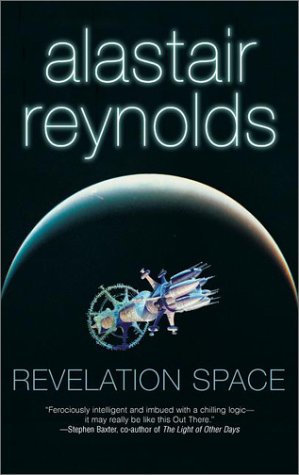
Revelation_Space_cover_(Amazon)One of my favorite sci-fi writers, Alastair Reynolds, explored this very topic in his book Revelation Space. His world view was bleak: advanced civilizations destroyed each other, leaving behind a higher power that would snuff out advanced civilizations whenever they reached the point of breaking their planetary bounds.

If that’s true, then we’re in danger.

Or, maybe there are tons of aliens out there, and they don’t find us interesting enough to return our calls.

Watch this movie: Predestination

Time travel story plus great performances minus a creaky plot equals a stylish, though flawed, film.

predestination

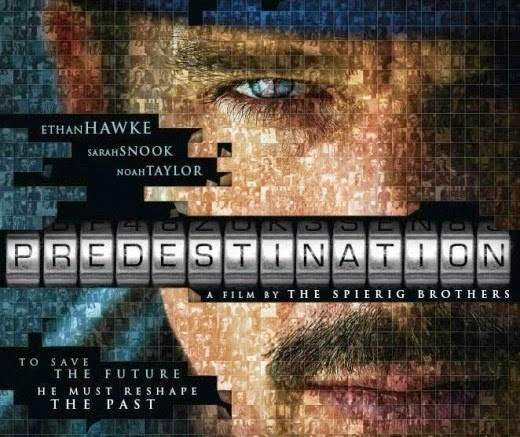
It took me about 20 minutes into Predestination, the new sci-fi film starring Ethan Hawke, to figure it all out. Predestination is a movie that tries to shroud itself in mystery, but that mystery is pretty evident to anyone who pays attention. If it wasn’t for the stylish visuals and strong performances by the two main actors — Ethan Hawke and Sarah Snook — Predestination might have ended up being nothing more than a silly time-travel flick that falls apart too quickly.

But it’s not.

The plot, or as much as I can share, is this: Hawke plays a time travel agent who has been hopping around the latter half of the 20th century in an effort to stop the so-called Fizzle Bomber. When he’s on a stakeout as a bartender in a NYC dive in 1970, he meets a surly patron who proceeds to tell him a wild tale.

predestination-ethan-hawke

That’s about all I can say without giving anything away. Predestination, based on the short story All You Zombies by Robert A. Heinlein, brings one huge thing to the table for me: time travel. I love the conceit. I don’t care that time travel stories are inherently unstable, full of logical paradoxes. They’re fun. Predestination isn’t especially groundbreaking in its use of time travel. But at least they didn’t spend too much time trying to explain it. Part of that was a conscious narrative choice. This is a tightly told story. It sticks very close to certain characters. Just like them, we never get the bigger picture.

What sets Predestination apart from other movies of this genre is the performances. Ethan Hawke has been around long enough now — the man knows how to act convincingly. He is solid throughout. Sarah Snook, who plays a tough but lonely girl named Jane, is something else entirely. I’ve never heard of Snook, but I can’t imagine I won’t be hearing from her again. She had a tough role to play, and she was simply amazing. Her emotions ran the gamut, and she pulled them off convincingly and movingly. As played by Snook, Jane is a tragic character who you can’t help but relate to.

Sarah Snook

Despite all this, Predestination is stuck in B-movie land. The plot, especially toward the end, just could not carry the movie to the point of greatness. Nevertheless, Predestination is worth the time.

Archie vs Predator?

Call this post mash-ups gone wild.

What are two things that should not go together? Two things that absolutely MUST go together.

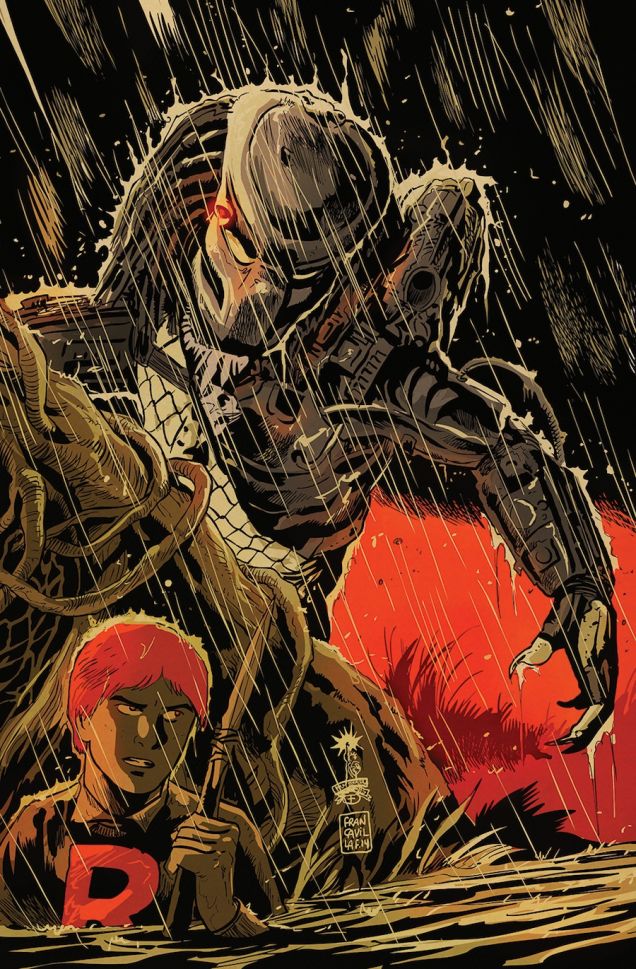
The latest proof — there’s a new comic series coming out that combines that all-American wholesomeness of the Archie comics with…. the sci-fi horror classic Predator.

Predator Archie

Say what???

According to this link at io9.com, Archie and friends will be forced to battle the Predator aliens while on vacation in Costa Rica. Sounds good to me.

When I was young, I loved the Archie comics. There was something so normal, so ideal, about Archie and his life. It was an experience I wanted. And of course I loved Predator. Badass Arnold Schwarzenegger fighting badass aliens? What’s not to like?

I hope Hollywood (or at least SyFy or the Spike Channel) have optioned these books. I would love to see Jughead’s severed head hoisted aloft.

Archie Predator

Charlie Hebdo and free expression

Time to get serious.

The world is reeling from the murders in Paris this week. Twelve people, including journalists and policemen, were murdered by Muslim terrorists. Why were these people killed? Because the journalists at the satirical publication Charlie Hebdo dared to express views these terrorists deemed unacceptable. Specifically, they criticized — and mocked — Muhammed.

This got these twelve humans killed.

Stephane Charbonnier, pictured below with one of the offending images, was the editor of Charlie Hebdo. He was among those murdered. He’d received death threats for daring to express himself. And his response?

CharlieHebdo_19092012_0

“I’d rather die standing than live on my knees.”

I can’t express the rage I feel regarding the animals who murdered Charbonnier and the eleven others. I have no respect for their values.

This tragedy has only reinforced one of my core beliefs: the freedom of expression. As a writer, I wholeheartedly believe in the God-given human right to express myself freely. I believe that the dignity of the individual takes precedence over groupthink, and I want to live in a society where everyone is allowed to express themselves (as long as they’re not openly inciting violence).

Don’t get me wrong — there are scores of examples of speech and actions I personally find offensive. The Kardashians, for instance, or anything Madonna has said and done in the past decade. And then there’s Eli Roth’s torture porn Hostel movies.

But if I am offended, I change the channel, or leave the web page. I don’t murder people. I understand that some people cherish their beliefs, and are hurt when they are mocked, but I will not submit to violence or intimidation.

I am thankful I live in a society where freedom of expression is an accepted—if not constantly debated—value. I don’t enjoy mocking someone’s beliefs for the sake of shock alone. But the world needs to understand that violence isn’t acceptable. These images need to be shared widely so their threatening power will be diluted.

These are just a couple of images that were worth killing over. If this is what your god demands of you, I will never understand your god.

Charlie-Hebdo

o-VEILED-570

Why not Venus?

It’s been described as Earth’s twin, our sister planet, roughly the same size and composition as the home world we all know and love.

Venus Earth
But it’s the hellish parts of Venus that make it our evil twin:

–Its atmospheric pressure is nearly 100 times greater than on Earth. If you set foot on Venus you would be crushed.

–It is damn hot: over up to 900 degrees. At best, you would bake.

–Its atmosphere is mostly carbon dioxide, with clouds that rain sulphuric acid. Not only would you be unable to breathe, but the acid would melt your body.

Venus
So what’s good about this hell planet? What possible use could we have for it?

It turns out that Venus is not as useless as it may seem, at least not according to NASA.

If we are ever to become serious about off-world colonies, Venus might be a good place to start. But how could we ever live on such an inhospitable world? We couldn’t. Instead, we could float just above its poisonous atmosphere.

This is what some NASA scientists are planning: floating cities. These giant blimp-like structures would be tethered about 30 miles above Venus’s surface. At this level, the atmospheric pressure is roughly similar to that of Earth, and the temperature, while still an inhumanly 160 degrees, would be suitable for these structures. The crafts would be solar powered as well.

Venus floating cities
But if Venus is so bad, what’s the benefit?

It allows us to get our feet wet in terms of establishing colonies in space, and we could avoid problems such as extreme temperatures or adverse gravitational conditions (too little gravity and our bodies would break down faster than we would like).

I have never considered Venus as a potential off-world site, and the more I think about it, the better it sounds. Of course it would not be easy. There are many logistical problems, not to mention the cost involved.

At the very least, these NASA dreams can provide another cool setting for sci-fi.