Evil and the Ouija board

An underused trope of horror gets its due.

The Ouija board is basically just a game. You touch a pointer (or other object), and ask questions of the spirit world. The pointer will move between yes/no, or letters to give you an answer. Simple enough.

Except when you play with a Ouija board, you’re messing with the spirit world.

From a creative standpoint, there are tons of possibilities. But I’ve rarely seen it portrayed in TV, movies or in print. the 2007 movie Paranormal Activity used it to good and creepy effect. A recent episode of American Horror Story: Coven had one as well (they called it a spirit board), though it wasn’t nearly as consequential as it could have been.

Now there’s a new movie in production, called, simply enough, Ouija. It’s way too early to tell how this one will pan out; from the looks if it, it will be a typical teen horror flick. At least it’s a start.

My opinion?The more interpretations the better.

Always MineI’ve added my own Ouija board story to the canon. It’s called Always Mine, and it’s about Danny, a 15-year-old who has a crush on Tina, the new girl next door. She lures him into Ouija board play, and he quickly becomes the target of the spirit of a drowned Swedish sailor.

It was a fun story to write, and I attribute that to the Ouija board — a great prop and a cool gateway into tales of terror.

American Horror Story: Coven – Good, Bad and Ugly

What lies between a masterpiece and a mess?

I continue to be frustrated by American Horror Story: Coven. The show has loads of talent, creative writing, and a great cast. But still…

The good:

The writers are not afraid to give us complicated villains and complex heroes. Jessica Lange’s Fiona Good, the supreme leader of the struggling New Orleans coven, is  basically evil. She killed the previous supreme to usurp her powers, and she killed a young witch who threatened to challenge her standing. But lately we’ve seen Fiona struggle with terminal cancer. Maybe it’s due to Jessica Lange’s talent, but I actually felt sorry for Fiona. And now that there are new villains on the scene (the witch hunters), we might actually see a heroic Fiona.

And then there’s Zoe Benson, the young witch, and the hero of the story, or at least the character that the writers have used for the audience to identify with. She’s always been led into iffy situations (resurrecting Kit Walker Frankenstein-style), but now she’s killed Spalding, Fiona’s henchman. Yes, he was bad, but Zoe didn’t flinch. That doesn’t bode well for her, but it sure makes her a lot more interesting.

The bad:

Let’s stick with Zoe killing Spalding. It would have been nice to see a consequence for her (as a person). There was none. Then again, death seems to be irrelevant. Madison Montgomery was killed. She’s “alive” again. Myrtle Snow was burned at the stake and now she’s back. Can Madame Delphine ever die? (Please?) Death is no longer shocking or interesting.

And what about rules? When a writer constructs a universe, the rules should be clear and consistent. In American Horror Story: Coven they are not. Kit was brought back to life several episodes ago but he can still barely talk; everyone else resurrected was fine after a day or so. Madison said there was nothing after death, just blackness. But we’ve seen two spirit entities so far: the Axeman and Spalding. So something must exist after death.

So much for rules.

And the ugly:

Sometimes less is more. Tell that to the writers. Every scene involving the over-the-top Jesus freak next door neighbor Joan Ramsey and her dopey, cardboard son Luke make me want to change the channel. An enema as punishment? Death by bees? Really?

And get rid of Madame Delphine. She’s served her purpose.

The end of the Doctor (for now)

Christmas is coming, and that means only one thing to me: a new Doctor Who Christmas special. And this one will be the end of the 11th (or is it 12th? — seriously, who knows for sure) Doctor, as played by Matt Smith.

The preview clip is up now, and it seems like Steven Moffat is throwing another grab-bag of Doctor Who villains at us: Daleks, Weeping Angels, Cybermen, and the Silence.

Seriously, Steve? Anyone else you want to include? This hodgepodge of villainy has been a specialty of the Moffat era of Doctor Who. It never works for me. Too distracting.

What else to expect from Moffat? His writing shuttles between brilliance and incoherence. Not much of a middle ground. At least he’s always entertaining. Can’t wait to see how he offs Smith’s Doctor.

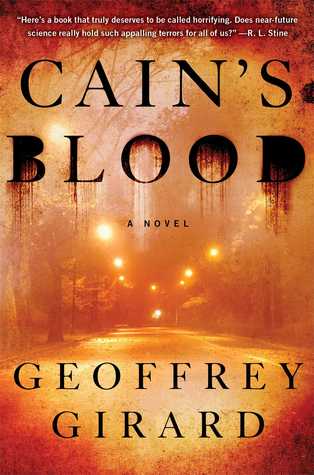
Read this book: Cain’s Blood

Sympathy for a devil? Sci-fi meets serial killers in an intriguing and fast-paced thriller.

There’s nothing good to say about Jeffrey Dahmer, who murdered, ate, and attempted to zombify 17 men from 1978-1991, except that he’s dead.

So imagine a novel where the reader identifies with the clone of this monster in the form of a “normal” 15-year-old boy. It’s here. It’s called Cain’s Blood, by Geoffrey Girard. And it works.

Image

The plot: a secret government-related outfit has been cloning the nation’s most notorious serial killers in order to determine their genetic underpinnings, and then create a biopharma weapon. Some of the teenage closes escape, along with their creator, and former Army Captain Shawn Castillo is called in to track down the renegades. He stumbles upon Jeff Jacobson, a teenage clone of Dahmer, and together they travel the country searching for the clones.

First, what I didn’t like. Too much gore. I’m not a fan. But how can you escape gore in a book about serial killers?

Also, the protagonist, Castillo, is a stock thriller hero: nearly superhuman, endlessly brave, though haunted by a dark past. I tend to avoid books featuring a CIA/FBI agent, police detectives, forensics, etc. I like people who seem more relatable. Just my own preference.

The character who is relatable turns out to be the young Dahmer clone. And that’s what I liked most about this book. Jeff Jacobson thinks he’s a normal kid, and for the most part, he is. How does he react when he finds out the truth? Can he rise above his genetic heritage?

Girard hooks the reader in 3 ways:

–A great premise: while clones have been used in movies (The Boys from Brazil, The Island) and in fiction (JA Konrath’s The List, Kazuo Ishiguro’s Never Let Me Go), Girard takes the concept in a dark and entertaining direction.

–Fast-paced storytelling skills. I burned through this book in a few days.

–Focusing on the plight of a normal kid in Jeff Jacobson, who must grapple with the whole nature/nurture issue.

About the science: this book takes on the nature/nurture debate. Is younger Jeff destined to become a serial killer, or would he be positively influenced by his upbringing? Girard hedges his bets here – some clones are murderous, others don’t seem to be.

But the reality is more complex. Technically, identical twins are clones of each other, yet they often do not turn out the same way. Some twins use different hands. Some twins are gay/gay, while others are gay/straight.

We know precious little about how genes work. For example, scientists are only beginning to learn about so-called junk DNA, the huge sections of our genetic code that seemingly have no function.

And then there’s epigenetics. Can life experiences actually affect the genetic code, not just for the self but for future offspring, several generations on? Scientists used to laugh this off. Now they’re not so sure.

Killer clones aside, truth is a lot more complex than fiction.

Zombies on Mars?

(Hint: Doctor Who did it first, and possibly better)

I’ll hold judgment on a movie I haven’t seen, but if this report from io9.com is true, a new horror/sci-fi mash-up is a space disaster.

It’s called The Last Days on Mars — great title, btw — and it’s about a group of astronauts about to leave Mars who discover bacteria that turns them into zombies. Okay, interesting set-up. And it stars Liev Schreiber. Encouraging.

But if the io9.com write-up is to be believed, they fail on two big counts.

First, character. The article describes the crew as “eclectically unlikeable.” Uh oh.

Second, consistency. To quote:

“The space zombies can walk around Mars without a helmet on, but sometimes mild head-butting takes them out. The space zombies don’t seem to want anything but to kill everybody, although there is one lone space zombie who decides to try eating people, but maybe he was just feeling peckish.”

I’ll wait for it to come on Spike TV.

And for the record, Doctor Who already did something similar. It was a special called The Waters of Mars, and it was scary, smart, and had characters you actually liked (though the zombies looked just a little cheesy). Watch that instead if you have a craving for zombies and Mars.

The Day of the Doctor: Character or plot?

I vote character.

Image

There once was a man, an alien, from a planet called Gallifrey. He was a time traveler–a Time Lord to be exact.

His name? No one knows, except his wife, River Song. He goes by the Doctor.

Fifty years ago, the BBC launched a television show called Doctor Who about this time traveling alien. Straightforward enough. Except, in a genius twist that has allowed this show to last so long, the character has the power to regenerate — the same man in a different form (ie, actor).

Last week, the 50th anniversary special, The Day of the Doctor, brought together 3 incarnations of the Doctor, and it proved one thing — the best writing is fueled by character.

Doctor Who has fantastical plots that zip along but threaten to dissolve into nonsense if examined too closely. What makes up for this? Character.

The Doctor is a complex man. When we met the 9th incarnation, played by Christopher Eccleston, he kept the childlike ingenuity but carried a dark PTSD shadow.

The tenth Doctor, played by David Tennant, had more of a lust for life. But he also shouldered the full weight of his burden: it turns out that in a previous incarnation he’d ended the war between his own people, the Gallifreyans, and the evil Daleks, by killing ALL, his own species included.

Heavy stuff.

The eleventh Doctor, played by Matt Smith, seemed to suppress this knowledge. He could be whimsical, but he was prone to melancholy; he needed a companion. And he was the man who led cultures to translate the word Doctor not as healer but as warrior.

In last week’s special, we met the Doctor who ended the war, alongside the tenth and eleventh doctors. Played by John Hurt, he looked much older than Tennant and Smith, though the character was much, much younger, and the special focused on him as he grappled with how to end the ruinous war.

In the process, we saw three versions of the Doctor — three personas — three separate selves — three parts of the same person. Unique but the same.

What we got, besides a rollicking story, was a rich, multifaceted character in triplicate. Credit goes to not only the actors, but the writers.

So what exactly happened? Watch it and find out.

Catching Fire stays true to the word

Hey Hollywood, this is how you adapt a novel for film.

Image

For some reason, the movie industry has a hard time translating sci-fi/supernatural/speculative stories from the page to the screen. Exhibit A: Anne Rice‘s Interview With the Vampire and Queen of the Damned. Exhibit B: Anything by Stephen King (except maybe for Carrie).

They got it right with Catching Fire, the second novel in Suzanne Collins’ Hunger Games series. (The official movie title is The Hunger Games: Catching Fire. Too long.)

The books aren’t perfect, but they’re great. And the movie effectively conveys all that happens in the book at a quick pace.

First, a primer: The Hunger Games series is about 16-year-old Katniss Everdeen in a futuristic dystopic North America who is selected to compete in the annual Hunger Games, which pits 24 teens in a fight to the death (see the Japanese film Battle Royale). The 3 novels follow her battles against the oppressive government.

Katniss is my favorite type of hero: an every man/woman who is thrust into danger and is forced to rise to the occasion. She remains reluctant throughout the series, a central fact that Jennifer Lawrence has captured. In the books, Katniss develops PTSD (Collins stated in interviews that she wanted to write about the traumatic effects of war on children), and luckily the movie did not shy away from this topic.

As with the novel, the movie picks up right where the first novel/movie left off, and it churns through with a cliffhanger. Catching Fire has been compared to The Empire Strikes Back, and with good reason: it’s tough and sharp and has a tight narrative core. And it is often a downer.

But it works. It is a solid addition to the speculative film canon. The third book will be broken into two movies, which is good because there’s a whole lot of story to tell.

How much you want to bet we’ll be seeing spin-offs for years to come? After all, there have been 75 Hunger Games, and we’ve only seen two.

Doctor Who: clip turns canon on its head?

A new webisode promoting the Doctor Who 50th Anniversary special teases an altered take on the Doctor.

Doctor Who, the classic BBC TV show about a time traveling alien with the power to regenerate, is set to air its 50th anniversary special, The Day of the Doctor, Saturday, November 23. Now, a newly leaked webisode sheds light onto a darker side of an iconic sci-fi hero.

Paul McGann played the eighth doctor in a 1996 TV movie. The hope was it would launch a re-boot of the TV series. It didn’t, and the re-boot occurred nearly a decade later, with Christopher Eccleston taking over as the ninth Doctor. We never saw the transition between the doctors. We never saw McGann again. Until now.

Paul McGann – the Eighth Doctor

Image

In the new webisode titled The Night of the Doctor, McGann makes a surprising return. In the space of 6:49 minutes, we get a burst of action, the Doctor’s wry take on eternal life (he calls it utter boredom), the hint that the Doctor could regenerate as a woman, and a huge clue that quite a lot happened between McGann’s Doctor and Eccleston’s.

Watch the clip here:

http://www.youtube.com/watch?v=-U3jrS-uhuo

The clip packs a lot of plot in its short time frame, and it’s accessible for those who don’t know much about Doctor Who. Credit the writer, Steven Moffat for this feat.

As The Day of the Doctor approaches, we’re getting more info about the event. Click here to see stills from the show, including John Hurt as a mysterious incarnation of the Doctor, the return of Billie Piper as Rose Tyler, and the tenth and eleventh doctors, David Tennant and Matt Smith, side by side.

And click here for some cryptic words by Steven Moffat on how John Hurt’s character will–or won’t–fit in to canon.

I can’t wait.