Helix: the last spasm?

The SyFy original was more than I thought it would be, but will the lack of character (and viewers) be its downfall?
Image

One episode left for SyFy’s 13-episode sci-fi series Helix. No word yet on whether it will be renewed. Knowing SyFy, we may never see Helix again, which would be a shame.

When Helix was first launched, I was intrigued. Was it a zombie story? A medical procedural? Knowing it was produced by Battlestar Galactica‘s Ronald D. Moore was a plus, but so what?

Over the past 12 episodes I’ve been surprised. It was not at all what I expected. The writers of Helix have seeded intrigue steadily and consistently, with more than enough plot twists to keep me coming back.

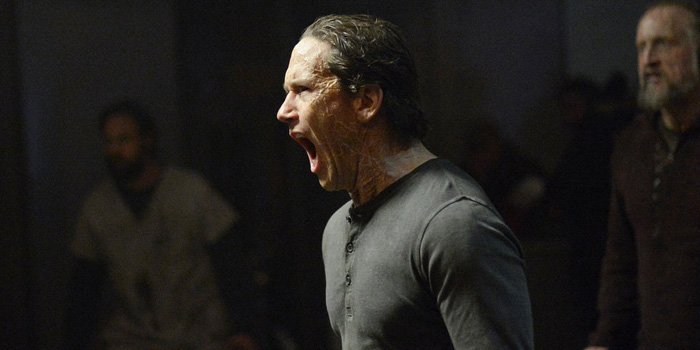
–About those “zombies” – I would liken them more to vampires in the sense that the infected don’t die and come back to life, but turn. And what do they turn into? A sort of hive collective. Think bees, or ants – parts of a whole. A snippet of dialogue explained that the virus appears to be acting in concert, across the bodies of the infected. Kind of like Star Trek‘s Borg collective. It’s a cool twist on an old trope. I loved when one of the infected spit a mouthful of blood into the Keep Calm mug.

Image

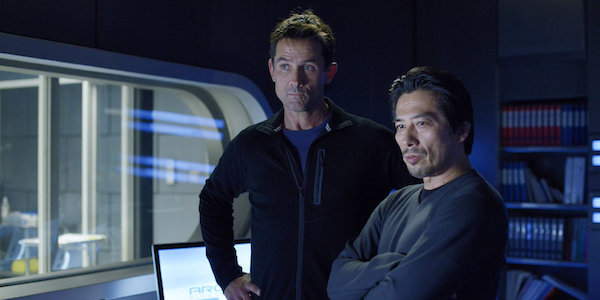
–The writers have built layers of mythology, the most notable being the identity of the company that is funding Dr. Hatake’s research: the Ilaria Corporation. Their rep was Constance Sutton, overacted by Jeri Ryan, who didn’t fare too well against a desperate Hatake. Now we know that Ilaria is populated by 500 “immortals.” Like Hatake. And… his daughter.

–And that would be Julia Walker. Sure, it was a soap opera move reminiscent of Star Wars, but I bought it. The reveal of Julia Walker as Hatake’s daughter was telegraphed, and it made sense in terms of Hatake’s motivations and actions. It explained his preoccupation with her, as well as the fact that he rescued her from the infected-zombielike fate by making her “immortal” too.

Image

–But what about this immortality? Is it a fact? Why? Where did it come from? And what does it have to do with the Narvik A virus, the one that’s creating the hive-minded people? Could it be that Ilaria and the 500 want to rid the world of those annoying mortals forever? But is that the best way?

–Speaking of pesky mortals, we’ve got a mixed bag of semi-developed characters, which is Helix‘s glaring weakness. Crusading CDC researcher Sarah Jordan has been on death’s door for a few episodes now, and honestly I don’t care. Peter Farragut was healed, but he was more interesting as a viral. Alan Farragut is noble but cardboard. The only characters who have moderately interested me are Julia Walker, Hatake, his stolen/adopted son Daniel, and the evil-but-trying-to be good Sergio Balleseros. Compare Helix to Lost: Lost made you care about the characters, whatever nonsensical craziness happened on that island. Helix struggles to make us care.

Image

–But then there’s the storytelling. While Helix fails in characterization, it excels in plot and pacing. It is consistent in giving me just enough to hook me. The plot twists keep me off-balance. The visuals are stilted and creative. The music is moody and disturbing. Helix is a quickly moving story. Each episode spans single day, and it’s told with no flashbacks. The structure is bound and wound.

There is something subtly different about Helix. It’s not perfect, but few TV shows are. There’s only one episode left, I suspect not just for this season but for good. If this is the case, then Helix was a great experiment in tight, daring storytelling.


Book vs movie: World War Z

It was nearly an impossible book to film, but they filmed it anyway.

There’s only one book that comes to mind as a successful movie adaptation (though I’m sure there are tons of others), and that’s The Hunger Games.

Zombie thriller World War Z by Max Brooks was a mega-successful book.

Image

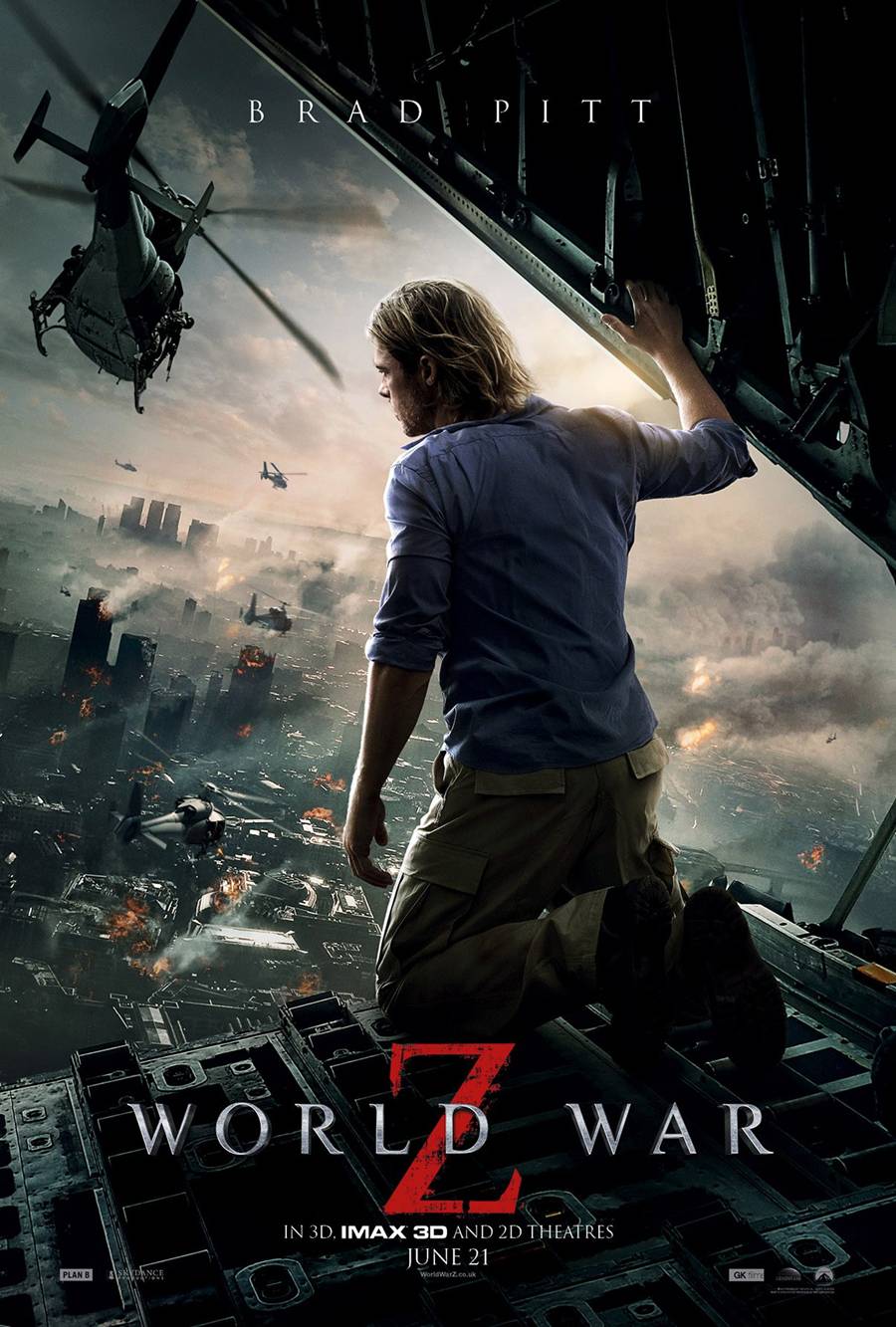
World War Z the movie, produced by Brad Pitt, was a moderately successful movie.

Image

Both are vastly different beasts, and the adaptation didn’t quite make the Hunger Games standard.

To be fair, the book is nearly unfilmable as written. It’s told in the style of The Good War, an oral history of World War II by Studs Terkel. World War Z (book) is written after a global zombie pandemic/attack/war. It’s narrator is a UN rep who is compiling reports on the war from around the globe. In a neat literary trick, while the narrator appears in every chapter — he actually interviews the survivors — we never even know his name, or much else about him. This allows the focus to be on the individual stories throughout the book.

And the stories are gripping. We hear from normal folks who have to bury their pain to soldiers who relay harrowing tales of near death to higher-ups who reflect on the war from a matter-of-fact perspective. Max Brooks excelled at writing these micro-tales that not only have genuine human drama, but combine facts on worldwide culture and geopolitics. Brooks covers nearly every facet of the global war and its aftermath, including the new world order that results. It’s fascinating to see how Russia has become a theocracy, Cuba is a capitalist powerhouse, Israel and Palestine finally live in peace, and China is a democracy.

The movie version of World War Z. goes in a different direction. The hero (Hollywood loves its heroes) is Gerry Lane (Brad Pitt). He is a former UN investigator who gets caught up in the zombie outbreak in Philadelphia with his wife and daughters. After a close escape from a Newark rooftop, Lane and his family are flown to a ship, where Lane is called back to duty to help a CDC scientist search for a cure. This search takes Lane (and the viewer) to South Korea, Israel, and Wales.

The movie tried to stay true to the book in the sense that it was a global story. It was exciting to travel to those locations, even if the plot felt forced. For instance, I was unsure as to why Wales, in particular.

But while the book was one of my favorite reads, it did lack that central human character, and that’s the role that Gerry Lane served.

The movie also improved the book in its use of zombies. These were not the slow, ambling (though still menacing) zombies that we’re used to ,and which Brooks used. These zombies were lightning fast. The opening scene of Lane’s escape in the Philly streets was outstanding. The swarm happens in real time. It’s intense. There’s nothing like that in the book, though to be fair, it’s much easier to relay menace on film than in a book. And the scene with the zombie swarm scaling the wall in Jerusalem is a classic.

Image

Still, the movie couldn’t quite match the book in its scope. And as with most action movies, it stretched my belief nearly to the breaking point. A zombie outbreak on a plane results in a too-neat escape that could never happen in real life. Also, in the movie, the Israelis survived because they spotted the threat before any other country and walled themselves off. Yet they didn’t realize that noise would attract the zombies? The movie turned one of the most hopeful parts of the book — a lasting Israeli-Palestinian peace — into a tragedy.

In short, there were too many harrowing escapes for Pitt, and the last act in Wales nearly put me to sleep.

My recommendation — read the book if nothing else. Then see the movie, at the very least for it’s amazing visual effects. I hear there are sequels to the movie planned. Hopefully they figure out how to add more of the book’s heart.

Crime and punishment – sci-fi to sci-fact?

A near eternal hell on earth for felons? Maybe, if these scientists are to be believed.

Imagine a drug that, when given to a prisoner, would make him believe that a thousand years have passed in the matter of months. Imagine the hell of living for a thousand years in a jail cell, whether real or imagined.

We can argue over whether some crimes are so vicious that the perpetrators would deserve this treatment. But if scientists at Oxford University are right, this will soon be a reality.

And there’s more. The scientists quoted in this article also claim that life extension will allow a prisoner to be kept alive — and punished — for centuries. Or, criminals’ minds could be uploaded into a computer where they would serve hundreds of years in time.

Let’s take it for granted that this isn’t mere speculation but a possibility. Do we want to do this? Does this fall into the category of cruel and unusual punishment? And why would we want to invest so much money and time into keeping these criminals around indefinitely?

But what about another take on this? Even if these technologies never come to pass, imagine the possibilities in the sci-fi realm. Criminal minds uploaded that escape and roam free in the digital world. A killer kept alive for a millennium who escapes. A wrongly convicted man given a pill who lives a lifetime in a matter of days.

At least this kind of speculation is good fodder for fiction.

Blurred lines – Zombie edition

Zombies through the ages have morphed, and they continue to do so.

The Hollywood Reporter has this cool slideshow on their website that takes us through decades of zombies in film. It starts with a 1932 movie titled White Zombie. But they weren’t zombies as we know it — they were simply people who were entranced.

Image

The years that followed gave us more voodoo zombies, then on to George Romero’s iconic undead slow walkers — to the brain-eaters, up to today’s version — the viral walkers.

I have a soft spot for Romero’s zombies, especially the ones in Night of the Living Dead – they were my first, and I’ll always love their menacing ambling. Plus, there was something about the black and white of the movie that kept the creep factor high.

Image

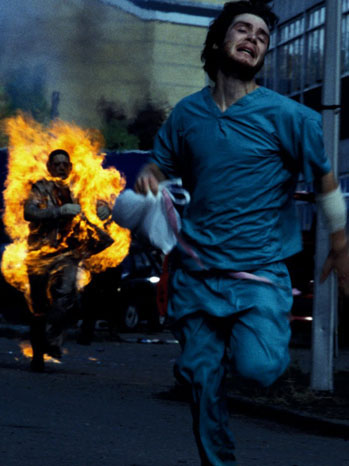
But I’m really digging the later versions as well, especially the one popularized by the British movie 28 Days Later. These were zombies created from a lethal infection, still vicious but not as mysterious. These latter-day zombies thrill the science geek in me.

Image

So what will come next in zombie lore? Alien-induced zombieism? I can’t wait.

Can you really laugh while watching sci-fi/horror?

Sometimes humor can cut the tension and seriousness, but it’s rarely done well.

I love most things horror and sci-fi related. But it can all get so heavy. Horror is basically about ghosts, witches, demons, vampires, etc. And as for sci-fi, well… science isn’t very funny. Scientists take what they do so damn seriously sometimes. Most times. Ok, 99% of the time.

In the fictional world there seems to be a stark divide. On one hand, there’s the hardcore, where pinhead2you never laugh, except maybe unintentionally. Take Hellraiser‘s Pinhead. There is nothing funny about him. Compare that with the comedies — Spaceballs, Scary Movie 1 to infinity. Those play it only for laughs.

But then along come those rare shows that can balance drama with comedy.

The first one that comes to mind is the iconic series Buffy the Vampire Slayer. At its core it was a tragedy: a teenage girl is chosen (against her will) to become a vampire slayer. These girls rarely see their 18th birthday. Fun, right?

Well, head writer and creator Joss Whedon and Buffy herself — Sarah Michelle Gellar — made it fun. The writing was sharp and clever and the jokes would fly.

buffy

But Buffy the Vampire Slayer never let you forget the tragedy at its core.

Another example is from the SyFy channel (or SciFi as it was called back then). Farscape was about John Chrichton (Ben Browder), an American astronaut who is shot through a wormhole to a thoroughly alien part of the universe. He accidentally kills the brother of a psychotic military captain, and winds up aligned with a band of escaped convicts. He spends the series on the run while trying to get back to Earth.

farscape 2

Farscape could be heavy, and many times it was. But Chrichton was written as a loose cannon, confounding his adopted compatriots for better and for worse. He was often serious as hell. But he was also funny, sharp and crafty.

I think we need more of this in these genres. Take time travel. Most of the time travel movies are 100% serious (the Terminator franchise). The only non-serious time travel movie I can think of is Hot Tub Time Machine. But that’s straight up comedy.

But there could be alternatives. I came across this short clip below, courtesy of io9.com. It takes place in a world where time travel is common, and is used by drunken assholes. It’s clever, and it left me thinking… what if? What if someone could successfully inject humor into time travel, while keeping the drama?

<p><a href=”http://vimeo.com/70410780″>Timeholes</a&gt; from <a href=”http://vimeo.com/mallaby”>Ben Mallaby</a> on <a href=”https://vimeo.com”>Vimeo</a&gt;.</p>

I’m waiting, Hollywood.

On writing: race and the universal

I write about outsiders, mainly — characters who, in one way or another, are cut off from humanity at large, often in ways that aren’t obvious.

Take Danny, for instance, in my supernatural story Always Mine. He’s 15, plays for his high school lacrosse team, and he fits in well enough at school. He’s a good looking white suburban kid. Nothing wrong with his life, right? No, except that his mother is physically abusive and depressive, and his father is deployed to Iraq during the height of the conflict. He is alienated in ways that are hidden, even to himself. That makes it easy for him to fall for Tina, the new girl next door, who uses her Ouija board for not-so-good purposes.

As with Danny, many of my protagonists have been white (and male), in part because that has been my experience, so it’s easy to climb into that skin. But I enjoy writing heroes who are neither of those. Take Randy Velazquez. He’s the star of my book The Last Conquistador. His Hispanic heritage is vital to the story, but for him, it’s just a mundane fact of his life. He doesn’t strongly identify with it, and he doesn’t have the time for it to be an issue, between trying to track down his pregnant runaway girlfriend and dodging a creepy demon.

And a story I’m working on now centers around a 14-year-old Chinese-American girl, Mina. Her ethnic background is secondary to the story. So how do I, as a white guy, approach writing Hispanic or Native American or Asian or African-American characters? Simple, actually. I write them as human beings. My philosophy in writing any character is to get to their common human essence first, and then go from there.

But there seems to be a lot of reluctance to do this, especially in the world of movies and television. Too often nonwhite actors play roles that can only be played by nonwhite actors. It’s rare that you get a Will Smith in I Am Legend. That’s a shame for all of us, because it limits all of our imaginations.

A fellow Jersey City writer, Madhuri Blaylock, wrote a great novel titled The Sanctum: Book One: The Girl. It’s a paranormal thriller that follows Dev, a half angel/half demon teenage girl who is kick-ass. Dev, in a matter-of-factly way, is African American. Blaylock scored a hit with Dev because she wrote her from a place of universal experience. There is no preaching or educating, just entertaining. In a lot of ways, Dev reminded me of Katniss Everdeen from the Hunger Games in that she was 100% relatable. You do not have to be female, black or a teenager to follow Dev as she fights the forces of the Sanctum. Plus, her love interest Wyatt is white; it’s about time we’re moving past the point of interracial relationships being any kind of issue. I highly recommend checking out this thrilling book.

Don’t get me wrong: I believe there’s a place–even a need–for stories unique to gender, culture, age, race, sexuality and religion. But there’s also a need for people who are any or all of the above to be universally relatable. None of those qualities should matter all that much in our day-to-day lives. As writers we can make it so, at least in our fictional worlds.

Churning the Doctor Who rumor mill

Will the 12th Doctor, Peter Capaldi, be a short-timer as per Christopher Eccleston?

peter-capaldi-doctor-who

Rumor has it, thanks to UK tabloid the Mirror, that the new 12th doctor in the BBC’s half-century-long sci-fi series Doctor Who, will only stick around for a single season. Christopher Eccleston, who was the 9th Doctor when the show was revived in 2005, left after a single season, supposedly because he clashed with the higher ups over their treatment of the cast and crew.

If the new report is to be believed, Capaldi’s short stint on Doctor Who is for a different reason — to help steer the show in a “different direction.” So what could that mean?

Either 1) they plan on bringing a new actor to play the Doctor, and this actor would either be female or non-white. Why they’d need a soft transition is beyond me. Or, 2) lead writer Steven Moffat won’t stick around after 2014, so a new writer will want his/her own version of the Doctor.

I don’t buy it, and I hope it’s not true. Every regeneration of the Doctor is nearly a different character. It takes a little while to bond with this “new” character, to really get to know him. A single season is not enough bonding time.Doctor Who Jenna Louise Coleman

In other news, there’s a new companion to ride in the Tardis alongside Clara (Jenna-Louise Coleman). This is welcome news. While Clara’s been real nice to look at, she’s never become a three-dimensional character, nowhere in the league of Donna Noble or River Song. She’s served as the Doctor’s conscience, helpmate, and even his savior. But too often she’s felt like just a foil — not a person in her own right. That may never change.

The new character is a colleague of Clara’s, a teacher named Danny Pink, played by British actor Samuel Anderson. He’s listed as a recurring character. Let’s see what he brings to Doctor Who.

Doctor Who Anderson


Helix spins a tantalizing, twisted tale

The SyFy Channel’s latest original series Helix, which airs Friday nights in the US, is turning out to be a multilayered labyrinth of a show.

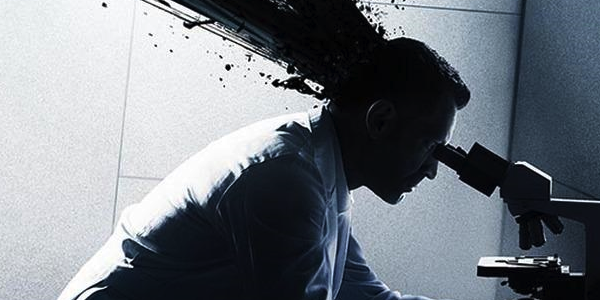
When SyFy first began promoting Helix, I was captivated by the (literally) mind-blowing poster.Since then, I tried toHelix- 1 unravel what exactly it was about. Zombies? Scientific procedural? Lost-style isolation tale?

Several episodes in, I’m still not sure exactly what this science-heavy show all about, and that’s half the fun.

To recap the set-up, a team of CDC scientists is flown in to a Helix - Season 1remote Arctic lab to contain a mysterious viral outbreak. Once there, they are trapped. Alan Farragut (Billy Campbell) is the lead scientist, and his brother Peter is one of the Arctic lab’s scientists, who also happens to be infected. Alan Farragut’s team includes his ex-wife Julia Walker, who had an affair with Peter. Soapy and confusing. Luckily this aspect of the story has taken a backburner as the plot churns on.

The series is getting a lot right.

–We know the outbreak was engineered by lab head Hiroshi Hatake (Hiroyuke Sanada, a Lost alum), but we’re not sure what exactly it is, or why it was created.

–The writers on Helix aren’t afraid to play rough with the characters. No one is safe. Farragut and Hatake isolated scores of researchers they suspected were infected, giving them essentially a death sentence.

–Major characters are also at risk. I was shocked what happened to Doreen Boyle, a member of Farragut’s team. Likewise, big bad Constance Sutton (played by Star Trek: Voyager‘s Teri Ryan) proved less threatening in the end than she seemed. (And I loved the scene of her filing her own teeth down. Why??).

Helix_teeth

–Julia Walker, Farragut’s ex-wife, could have been an annoying distraction. Instead she’s become fascinating. Infected by the virus, then mysteriously “cured” by Hatake, Helix eyesshe’s revealed depth and determination. Adding to the mystery – is she really Hatake’s daughter? And what exactly has she become?

–One of my favorite characters on Helix is Major Sergio Ballaseros (Mark Ghanime). He’s duplicitous, murderous, and maybe even a touch remorseful. It’s a great portrayal of a mostly bad, complex character.Helix - Season 1

–Likewise, Hatake isn’t quite the villain he seemed. He reminds me of Lost‘s Ben Linus – a flawed man for whom the ends justify the means. His motivation is still unknown. It’s compelling to watch.

Another interesting aspect of the show is technical: the editing and the music. The scenes often seem a little off. They cut away too early, or they come in and out of focus, which keeps you slightly disoriented. It’s hard to understand without watching it;  this article at TV.com explains it better than I can. And the music choices, well, just watch the opening credits, with the 1960s bossa nova soundtrack.

I’ve referenced Lost a few times. That’s because Helix is similar to Lost in key ways. The mysteries unfold gradually, and the layers are onion-like. Character motivation is always in question, and the isolation heightens the drama. While it doesn’t have the emotional impact that Lost had, Helix is proving to be a fun addition to the sci-fi universe.