Doctor Who and plot regrets

Writing is hard. You have to not only come up with compelling, believable characters, you also have to create dramatic tension. You have to give the character a reason to do what he does — motivation. And that’s not always easy. Especially when you’re rebooting a beloved, decades-old sci-fi franchise like Doctor Who.
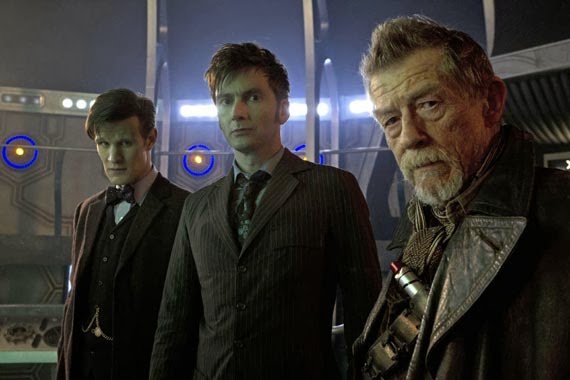
The-Three-Doctors

But that’s exactly what head writer Russell T. Davies did when he brought Doctor Who back to the BBC in 2005. He created a dark version of the Doctor, one who ended the war between his home planet Gallifrey and their mortal enemies the Daleks by sacrificing his home world to rid the universe of the Daleks forever. What Davies gave us in this new Doctor, played brilliantly by Christopher Eccleston, was a withdrawn, shell-shocked hero burdened by guilt. Sure, Eccleston’s Doctor showed flashes of that childlike wackiness that is the hallmark of the Doctor across incarnations, but the guilt was a strong undercurrent.

daleks

This theme — the burden of guilt and the loneliness of being the last of your kind — carried through to the new incarnations of the Doctor as played by David Tennant and Matt Smith. Doctor Who became a balancing act between darkness and frenetic energy.

But then the new head writer Steven Moffat changed it all. In Doctor Who‘s 50th anniversary episode, not only did we see the Doctor who ended the time wars, we also had a shift. Gallifrey was NOT destroyed. The Doctor was not guilty of genocide, however well intentioned. The Doctor was given a new purpose — rescue his home world from the static universe they were trapped in.

Now Moffat believes he may have cheated, in a way. In a recent interview, he stated that he, like the Doctor, is haunted by guilt:

“I know some of you, including friends of mine, were upset that we reversed the outcome of the Time War. My defence, however feeble, is that given the chance, the Doctor would do exactly that. And it was his birthday, how could I deny him that chance? What could define him more? This man who always finds another way? And there he is, at every moment of his life, proving to himself – literally – that there is always a better path.”

I say Moffat should get over his guilt. Why? The morose Doctor had run his course. After several years, we understood that the Doctor was tortured. What more could we get from this particular plot point? Why not switch things up? In the world of sci-fi and fantasy, writers have a broad canvas to paint on. Why not take advantage of every square inch?

Now Doctor Who has a chance to be reborn. Now we can witness a Doctor who has a genuine shot at redemption, one who is hopeful and can save his home world. Just imagine the new stories that can come from that.

Movies They Need to Stop Making Sequels To

It’s not like there aren’t enough original ideas out there. How many amazing books are sitting there just waiting to be made into brilliant movies? Unfortunately, though, sequels make money. And unless they’re a part of a pre-planned series, rarely do they live up to the brilliance of the originals. Sure there are exceptions, but these outliers (Terminator 2, for instance) are not the rule. This blog post from the good folks at House of Geekery lays out some of the movies that need to just give it a rest.

gfunk101's avatarFunk's House of Geekery

Why does Hollywood keep making sequels? Because we keep going to see them. The audience requires less convincing to see it, the development time is less…all in all they’re a better investment. Studios do know that there’s a rule of diminishing returns, especially if they take a long time to come out, so they tend to be rushed and have less creative thought put into this.

Here’s ten movies that have already had a couple of sequels, potentially have more in the works (or actually does have one or more in the works), and really need to cut that shit out. We’ve excluded some films for being more reboot than sequel happy (such as Spider-Man), franchises that have already wrapped up (Saw) and ones where the terrible sequels have all but sunk the series already (Paranormal Activity).

Iron Man

Iron-Man-3

There isn’t a fourth Iron Man 

View original post 1,235 more words

Will we ever colonize distant worlds?

On first glance, that question seems absurd. Humans are an adventurous species, so the thinking is of course we’ll spread out among the stars, especially as word comes of more and more planets that may be close to Earth-like.

Revelation_Space_cover_(Amazon)But Alaistair Reynolds, sci-fi author of great books such as Revelation Space, throws a little cold water on that idea in a new essay.

Reynolds is a strong proponent of space exploration. But he brings up a couple of interesting problems.

First, there’s the issue of time.TV shows such as Star Trek and Star Wars utilize faster-than-light technologies to travel among the stars. These technologies, however have yet to be created. Not only that, not one experiment has uncovered anything that can travel faster than light in nature. As Einstein theorized, it just may not be possible.

ftl

That would leave us with daunting travel times just to reach the nearest stars. We’re talking at least decades for a one-way trip. How would that work, logistically? How could we assemble a flight crew willing for a life-long mission? Would this mission be simply exploration, since there may be no guarantee that there would be habitable worlds at their destination?

spaceship

Then there’s the issue of a target. As out science is refined, would we be blessed with an abundance of potential worlds to visit? How would we pick just one? It sounds like a silly question, but for such a massive undertaking, we might need to collectively focus on a single goal. That may not be an easy task. Look at our exploration of our own puny solar system. we have no lunar base. We have no Mars base. And the plans for manned exploration of the Red Planet are always being pushed back another decade.

earths3

As Reynolds explains, the study of space may be the answer to the Fermi Paradox, which states that if there is intelligent life, how come we haven’t run into it? Reynolds speculates that maybe as other intelligent alien species surveyed the universe, they became less awed by creation, and more content with their own little corner. They’ve stayed silent and hidden to us.

I hope this last bit won’t be true of humans. Knowing our history, I doubt it. Maybe the answer is that humans are indeed unique in their hunger for more, always more.

In Praise of the Original ‘Mad Max,’ a Unique Masterpiece of Low-Budget Filmmaking

mad max

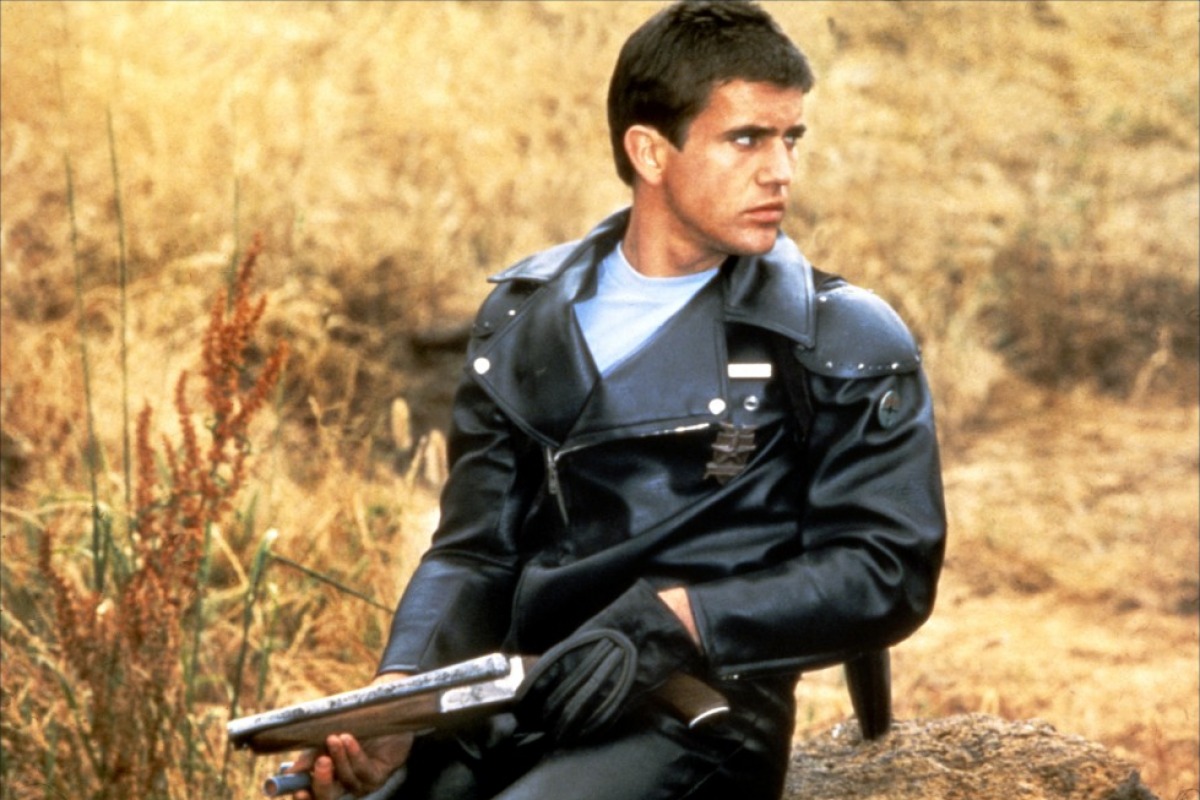
With Max Max: Fury Road coming out this weekend, I’ve been thinking about the original Mad Max movies. I was young enough when The Road Warrior came out (the first one I saw) that it left a huge impression on me. I was maybe 12 or so when I saw it and it was raw and rough and unlike anything I’d seen. This blog post revisits the very first Mad Max, with an impossibly young Mel Gibson. It’s a great take on the novelty that was Mad Max. Give it a read.

In praise of Neil Gamian

If you haven’t read any works by fantasy writer Neil Gamian, you should. The British-born writer is best known for works such as the comic series The Sandman and books including American Gods. I’ve reviewed American Gods and for anyone into fantasy or mythology, American Gods is a must read. It is sprawling and thrilling, and I can proudly say it has influenced my writing.

neil-gaiman-lantern_2

Aside from novels and comics, he’s also had a long friendship with Tori Amos, popping up as a character of sorts in several of her songs. He’s written a glorious Doctor Who episode titled “The Doctor’s Wife,” and he also gave one of the best commencement speeches you’ll ever hear.

Now Neil Gaiman is taking on another role, one that would seem obvious for a writer: free speech supporter. PEN America, an organization of writers dedicated to supporting freedom of expression, is slated to give an award to the French satirical magazine Charlie Hebdo, which lost several members following a terrorist attack. Some PEN members pulled out of the awards gala citing concerns that the magazine was racist. And now, several writers, including Gaiman, Alison Bechdel and Art Spiegelman, have stepped in.

In an interview with Salon, Gaiman was blunt in his reasons for joining: “…for f**k’s sake, they drew somebody, and they [al-Qaida] shot them, and you don’t get to do that.”

Freedom of expression is a bedrock principle of mine. I know what it’s like to be afraid to speak your mind, to express yourself, for fear of backlash in ways small and large. I know what it’s like to feel intimidated. I know what it’s like to feel that I have no voice. Writing has helped me find that voice. It’s given me the freedom to speak my mind and reveal who I am. And I am thankful that when it comes to my fiction, the only barriers in place are the ones that I choose to erect.

I understand the controversy surrounding Charlie Hebdo. But my support of the right to free expression is nearly absolute. And there’s no way I could NOT stand up against violence or government coercion against freedom of speech.

I’m heartened that Gaiman is claiming a spot at the PEN America awards gala. And I can’t wait for his next Doctor Who episode.

Tracking the zombie outbreak

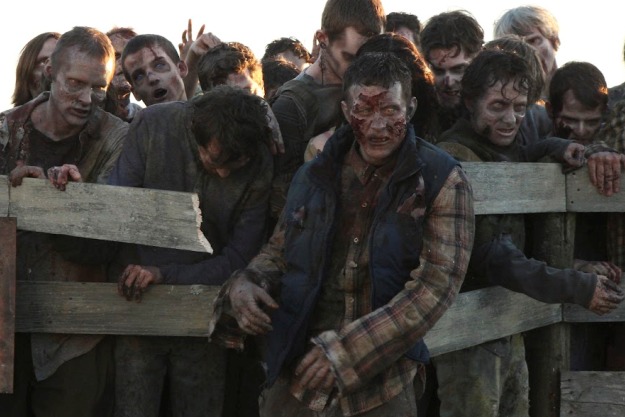
Who doesn’t love a good zombie story? I know, not everyone does but I like to pretend they do. From George Romero’s Night of the Living Dead to the AMC channel’s The Walking Dead, zombies have been a staple of the horror genre for half a century, with no sign of them being killed off anytime soon.

zombies

But who knew that zombies could be a topic worthy of honest-to-goodness scientific inquiry? I sure didn’t. I was wrong.

A team of researchers from Cornell University used a combination of US Census data and statistical probabilities regarding disease outbreaks, coupled that with some zombie lore, and created an interactive map that allows you and me to watch our own little zombie outbreak as it filters across the US.

zombie_horde

The map, which you can find here, lets us control a few of the parameters to make it interesting:

–how easy or hard it is to kill zombies

–how fast the zombies move

–where the outbreak originates

I tried a couple of simulations, and watched as a chilling red crept across the map. for both simulations, I had the outbreak start in Miami, because all the weird stuff happens in Florida.

In simulation 1, I had slow-moving zombies that were relatively easy to kill. While the zombies zipped up the east coast of Florida, it took them a full 16 days to conquer Florida, and after a month, they were still bogged down in the deep south. The zombies2takeaway? Under these conditions humans would have a good chance of surviving — the threat could conceivably be contained.

Then I tried a quicker, nastier simulation, with faster zombies that were harder to kill. Again, I started in Miami. And the results were scarier, at least for those of us on the East Coast. By the second day Florida was completely overrun. After 4 days the south was gone. On day 5, zombies were attacking New Orleans and the Midwest. Day 6: Washington DC, Baltimore were decimated, followed quickly by Philadelphia, and as the day ended, New York City fell victim, with Chicago, Houston and Detroit next to fall.

The good news? The outbreak had a hard time spreading through the rural areas of the Western United States. So if you want to survive the zombie apocalypse, go west.

Genre TV: a golden age or too much of a good thing?

It is a sad fact that there are too many great books in the world, of all genres, that I will never have time to read. I’m sure that I’m missing out on some life-changing classics, but there’s nothing I can do about that.

Star TrekWhen it comes to TV, though, there used to be a time when you could be up on all the great TV shows. For fans of all things sci-fi/supernatural/horror like myself, it wasn’t that hard, because there were so few TV shows that had a sci-fi or supernatural theme. Back in the 1950s you had The Twilight Zone and in the 1960s came The Outer Limits, Star Trek, and in England, Doctor Who. Along the way there were a smattering of other TV shows, notably the X-Files and Buffy the Vampire Slayer in the ’90s, but with only a handful of networks (and the BBC in England) the options were severely limited.

Buffy the Vampire Slayer

That’s all changed. Now there seems to be a new network popping up every week, along with new TV shows. When Lost premiered, it reinvigorated the genre by making it commercially and critically viable. As flawed as Lost was, the emmy-winning series showed the powers that be that genre shows could make money and win awards.

Lost

Since then, there’s been an explosion of genre shows. A few decades ago, who would have predicted that two of the most hyped television shows would include dragons and zombies? These two shows, Game of Thrones and The Walking Dead are worldwide cultural events. Game of Thrones and The Walking Dead bring more than just supernatural/fantastical/horror elements: they have high production values, are well acted, and have great writing.

Walking Dead

And these are just two of the latest and greatest. The past couple of decades have given us so many great genre shows, from SyFy’s Farscape and the Battlestar Galactica reboot, to BBC’s relaunched Doctor Who and BBC America’s Orphan Black. I should be happy, right?

Orphan Black Tatiana Maslany

In a way, I’m not. There are SO MANY genre shows out there I can’t keep up. And neither can the people who are writing them. The Walking Dead has given us the derivative Z Nation. The second season of SyFy’s Helix was a mess (a glorious, batshit crazy mess, but still a mess). And Netflix’s Hemlock Grove was half-baked camp. We’ve got a glut of genre shows out there, some of which should have never been made, and others that could have used a little more seasoning.

helixNot to mention that I don’t have the time to watch the vast majority. I’d love to watch The Strain, and there’s a new Salem TV show with Lucy Lawless that looks interesting. But between work, writing, play, family, how could I possibly fit all these shows into my life?

Maybe Hollywood needs to scale back a little — if not in the number of shows, then at least in the number of episodes. In the UK, it’s a common practice for TV shows to be short runs. Each season is perhaps six episodes, and the TV shows only run for a few seasons, if that. What you get is concise storytelling that does not require a lifetime commitment of the viewer. I’d fully support this idea; even the best shows suffer from episode bloat and could use some trimming (I’m looking at you, Walking Dead).

It Follows: hype and (no) story

I’m a sucker for a good horror movie. Give me some chills and thrills, but not too much gore, and I’m into it. but good horror movies are hard to find. Too often the thrills are just obvious and trite. Every scary story has seemingly been told.

it-follows-movie-posterThat’s why when I caught word of the new horror film It Follows, I was excited. io9.com, one of my go-to websites, called it absolutely must-see horror flick. They gushed over this movie so much (as did other media outlets) that I couldn’t wait to see it. So I forked over $14.50 and went.

First, the premise. Set in a typical middle America suburb (in Michigan), 19-year-old Jay (played by Maika Monroe) is dating a mysterious guy named Hugh (played by Jake Weary). After they have sex for the first time, he ties her up and tells her that he’s passed on a curse to her. A mysterious, slow-walking demon-like creature that can take the form of any human will follow her, and if it touches her, she will die. If she dies, then the curse will revert back to Hugh. The only way she can survive is to pass the curse on by having sex with someone else.

A killer premise, right? But premise doesn’t equal plot.

Before I deconstruct the hype, I’ll talk about what works.

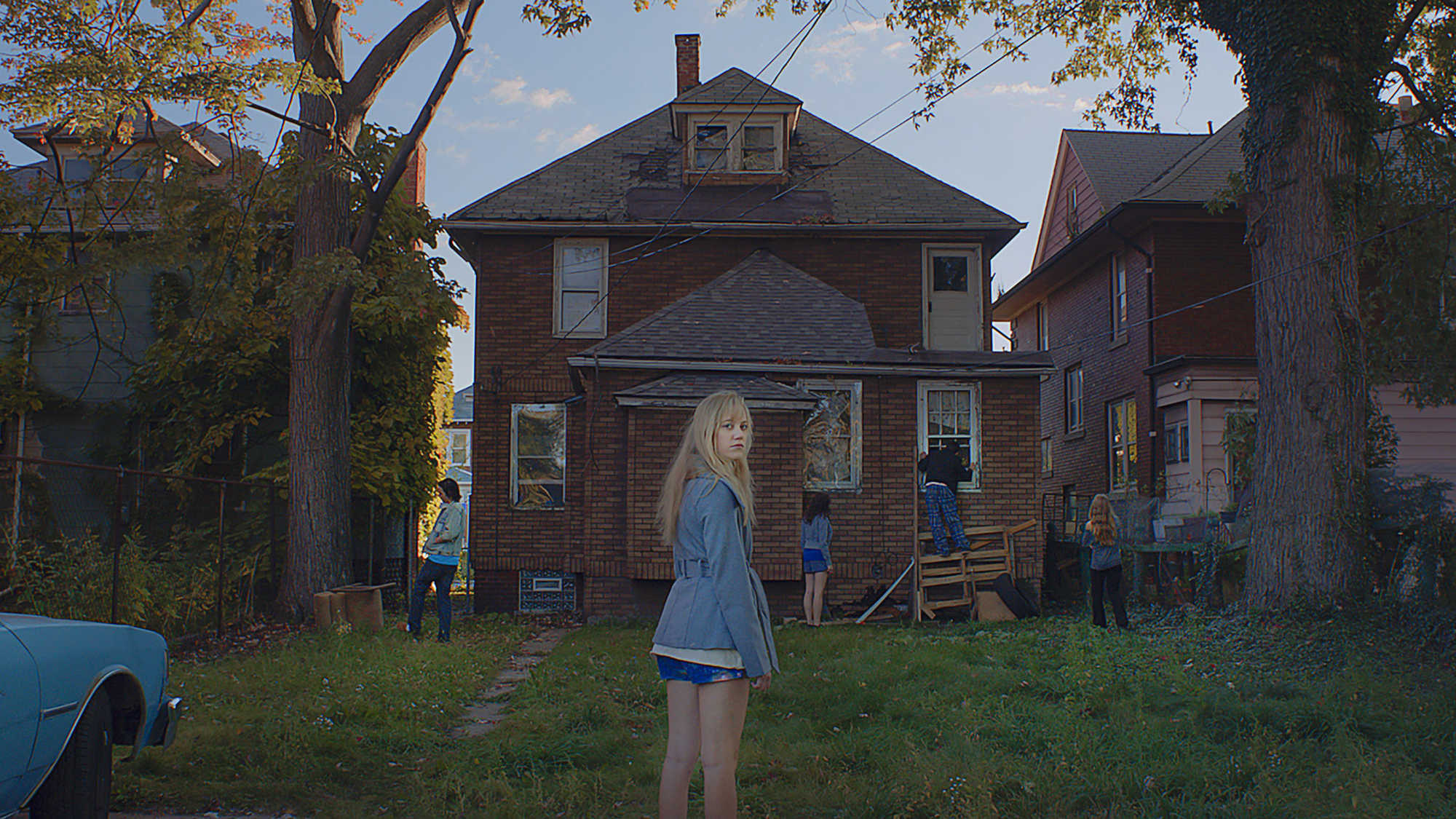
It Follows is beautifully shot. It comes off like an expertly made indie flick. the imagery, from dull suburbia to decaying Detroit, are all lush and inviting.

–The soundtrack is both jarring and creepy. It Follows is scored by Disasterpiece, and it is filled with sudden electronic bursts, thumping synth beats, terror and pounding hearts gone ragged.

–The cast is generally appealing. This movie is not filled with the too-pretty Hollywood types we’re used to seeing. They’re good looking enough to be believable, and the actors all do fine jobs.

it-follows-banner

–The pace of the movie is steady. I never felt bored or hurried.

–There were some genuinely creepy elements. The way the creature would stalk Jay was unsettling, and it stayed with me long after the movie ended.

–Early in It Follows, after Jay is first infected, she is scarred by the fact that Hugh attacked her and tied her up. The actor who plays Jay relayed the shame and horror of that all-too-real occurrence in a way that left me shaken.

it follows jay

But while watching the movie I was acutely aware of the fact that while the premise was strong, and the production was excellent, the plot was thin. Many horror movies fail when it comes to crafting a compelling narrative. Too often the movies simply turn into repetitive scenes of the hero trying to elude or battle the monster, a back-and-forth that just ends suddenly, leaving the viewer unsatisfied. It Follows fell into this trap.

Part of the problem was that the characters were underdeveloped. It took me a good 45 minutes before I realized that the blond girl’s name was Jay — and she’s the main character! There is no backstory, and the movie suffers as a result.

Then there’s the theme. All horror movies have a theme, a primal fear that the writer and director exploits. For It Follows, it was clearly sex. The curse is passed on through sex. But this is a well-worn trope that has almost become a cliche. In my opinion, the writers missed a great opportunity to offer a twist on this. As I said earlier, I was moved by Jay’s traumatized reaction to her attack. It was real and visceral. What would have It Follows been like if they explored the theme of sexual trauma?

Maika Monroe and Jake Weary in It Follows

One of the most compelling scenes is when Jay and her sister and friends track down Hugh, the one who passed the curse along to her. The group sits in the grass as Hugh explains what happened to him. Rather than a villain, Hugh came off as a tortured, terrified soul. I couldn’t help but wonder what this movie would have been if it had spent more time on the characters of Jay and Hugh, and explored the repercussions of their sexual/relational traumas. There were also hints of a Freudian/Oedipal undercurrent, as the creature takes the form of parents of two of the characters. But this was too fleeting to leave much of an impression.

I wish that the writers had gone through a few more drafts. This could have been a truly great horror movie. As it stands, I’m going to buck the hype. It Follows, while well made, is not a brilliant horror film, and not one of the best of the decade. It is well made, chilling, but ultimately unsatisfying. Watch it on Netflix, and save your $14.50.