Helix: so much for zombies

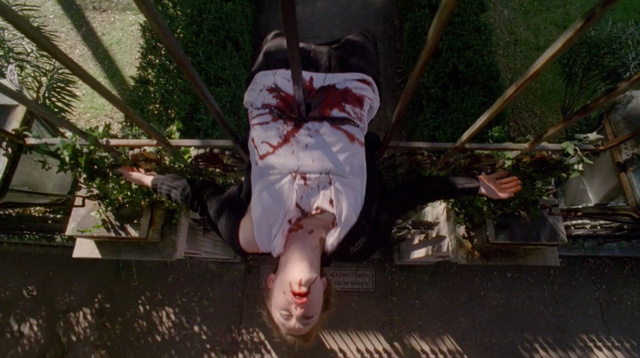
Helix is Lost meets 28 Days Later with a little CSI thrown in. I’m in.

I was skeptical after seeing the previews. It seemed as if SyFy was trying to craft a CSI-style drama by grafting some vague sci-fi elements. The 15-minute preview wasn’t exactly encouraging. It relied heavily on a complicated backstory exposition involving lead Alan Farragut, his infected brother Peter, and his ex-wife Julia Walker (who became his ex because of Peter). Too soapy.

But… the premiere and the following episode delivered more than I expected.

The basics: Helix, which airs in the US on SyFy Friday nights, follows CDC scientists who travel to a remote Arctic lab to contain and identify a mysterious viral outbreak. This being TV, not everything is what it seems, and you never know the true identities/loyalties of the characters.

The big question: is this about zombies? Well, not in the dead-then-brought-back-to-life-to-eat-brains sense. Instead, think 28 Days Later, the great British horror flick (that also featured Doctor Who’s Christopher Eccleston). In Helix, as in 28 Days Later, the “zombies” are people who have been infected with some sort of pathogen. It doesn’t kill them. Instead, it makes them not quite themselves, as well as violent, aggressive, quick. There’s more, of course, which we’ll understand as the show goes on.

As for the rest of it, the soapy aspect that showed up in the first 15 minutes was quickly quarantined as subtext. After 3 hours of Helix, we’re already on Day 3. There simply isn’t enough time in the story for that type of boring drama. Good move by the writers.

The characters: We’ve got some complexity here, which is a requirement in books but seems to be optional in film and TV. The villain is nearly mustache twirling (and something else too…), but there are plenty of characters in Helix who are not as good (or bad) as they seem.

The setting: An undetermined number of people are trapped in an isolated, mysterious location. Sounds like Lost. I loved Lost, mainly because the writers focused on character. The writers of Helix have incorporated many of the best elements of Lost: the claustrophobic isolated location, unknown motives, mystery upon mystery. Let’s hope they don’t bog it down with crazy mythology too.

Bottom line: I’m hooked. Helix is fast paced, intriguing, and geeky enough to appeal to my science side. I raised an eyebrow at the angry black woman trope in one scene, but I’ll give them a pass on that one. Watch and enjoy.


Read this book: The Demonologist

Andrew Pyper proves that horror can live alongside literary fiction.

In one sense, The Demonologist is a highbrow book. Its touchstone is John Milton’s Paradise Lost.

the demonologistParadise Lost, published way back in 1667, is a classic (long, long) epic poem that chronicles the fall of Adam and Eve, Lucifer and a whole bunch of demons. It is the definition of literature. I read it in high school. It wasn’t fun. I haven’t read it since.

Now along comes Andrew Pyper, who valiantly tries to make Paradise Lost interesting. He pulls it off.

In The Demonologist, our hero David Ullman is a Columbia University professor who specializes in Milton’s Paradise Lost. He is visited by a creepy woman who offers him a huge sum of money to fly to Venice and consult with her mysterious employer on the topic of demons. His marriage in shambles, he agrees, and takes along his old-soul 12-year-old daughter Tess. In Venice, he sees something that make him believe demons may in fact be real, and then witnesses his daughter plunge from the hotel roof and disappear.

The rest of the novel follows David as he searches against reason for his supposedly dead daughter, encounters demonic forces and dodges church henchmen.

In The Demonologist, Pyper pulls a brilliant switch — what the demonic forces want from David is really simple, so simple that I can’t believe it hasn’t been explored before (maybe it has). I won’t spoil it, but it’s a great play on Pyper’s part. He’s a strong writer. His descriptions of evil are fully sensual and always unsettling. He touches on themes of mental illness and the complicated relationships between parents and children without being overbearing. And, most importantly, he is willing to make the reader feel acutely uncomfortable. He kills innocents in service to the story. That is horror.

Pyper does one more thing in The Demonologist that I like: he uses the reluctant hero. Thriller stories tend to rely on the valiant/flawed hero. Think the suave yet emotionally remote James Bond, or FBI agent with a scarred childhood Olivia Dunham from TV’s Fringe. These heroes are fun to follow, but as a reader and writer, the reluctant hero is the one I identify with. In my book The Last Conquistador, the hero Randy Velasquez only wants to find his girlfriend. He doesn’t care much about the demon chasing him, except that it’s standing in his way. Similarly, in The Demonologist, David doesn’t even believe in demons – he’s an atheist. He only wanted a big fat check. Now he just wants his daughter back. If it wasn’t for that, he would have probably returned home with Tess and rationalized the whole Venice episode away.

But then we wouldn’t have had such a thrilling and surprising story.

When it’s dangerous to dream

Dreams in fiction are hard — but not impossible — to pull off.

Why? Two reasons. 1) most dreams are fragmented (to ourselves) and boring (to others), and 2) a book/TV show/movie is essentially a dream: the writer is asking the reader to suspend their disbelief. To add a dream within a dream is tricky, and risks pulling the reader from the main story.

But dreams can be effective. Let’s look at the movies.

Cover of "Inception"

Cover of Inception

Inception was a great film about lucid dreamscapes. The viewer was never sure where reality ended and dreams began, even after the movie ended. Some people hated the whole movie because of this, but for me it worked.

The Nightmare on Elm Street series wasn’t just a bunch of teen slasher flicks. It was also a clever way to exploit nightmares common to all of us. Even in our worst nightmares we know on some level they are just dreams. In A Nightmare on Elm Street, this was no longer true.

And on TV?

I can’t skip over the single worst use of dreams EVER: when the writers of mega-soap Dallas passed a whole season off as a dream. Horrible. Unbelievable.

Anyway…

Restless (Buffy the Vampire Slayer)

Restless (Buffy the Vampire Slayer) (Photo credit: Wikipedia)

Buffy the Vampire Slayer had an episode titled Restless. It’s almost entirely dream sequences. Each of the four main characters, Willow, Xander, Giles and Buffy, experiences dreams–surreal dreams–that convey character and information vital for future episodes. It was unorthodox storytelling, and it worked. 

In Doctor Who, the episode Amy’s Choice followed Amy, Rory and the Doctor as they are forced to distinguish between reality and a dream world. They face mortal danger in both realms, and must choose to “die” in the dream in order to awaken in reality.

These all worked because the dream was integral to the story being told.

What about shorter dreams? I’ve used them in my writing, and it’s challenging. In The Last Conquistador, the main character, Randy, is awakened from a dream, and I describe fragments of it:

“It’s too early to be awake, and it’s not the sun bleeding through my curtains that wakes me. It’s the scratching. At first I think it’s the dream, the one where I’m swimming in the clear Caribbean waters when a hand pulls me under, but it’s not. Scratching, slicing, screeching. It’s not a dream. It’s coming from my window.”

The dream for Randy is part of a break from the world as we know it; as the book progresses, he will “slip” between worlds. And, it’s a short, singular image that melds waking and sleep.

In Always Mine, the main character, Danny, is targeted by an evil spirit after using a Ouija board. The entry point for this evil spirit? Dreams. He eats away at Danny through his unconscious mind. Dreams were the gateway.

Writing dreams is a tricky proposition. It usually only works if it’s an integral part of the story.

Doctor Who: Goodbye Matt Smith

Matt Smith managed to make the eleventh Doctor both world-weary and child-like. Now it’s time for a change.

Image

Confession: when I first saw the promo shots for the eleventh Doctor, Matt Smith, a few years back, my first thought was: why the hell are they casting this too-young beanpole as the Doctor? No one could top David Tennant. I figured Steven Moffat was swinging for the younger demos, acting skills be damned.

And… I was wrong. From the first scenes with a young Amy Pond, where he’s sampling custard and fish fingers, I got it. Matt Smith was using his age (or lack of) to bring a different quality to the Doctor.

Sticking with the relaunched series, Christopher Eccleston’s Doctor was haunted and zany. But Eccleston only stuck around for one season. Then came Tennant as the tenth. He redefined the Doctor. Tennant was so assured in the role; he filled it out completely. I still insist that the season with Donna Noble is the best, and the episodes where we first meet River Song are the pinnacle of Doctor Who, both in terms of acting and writing.

But back to Matt Smith. No actor wants to do Doctor Who forever, apparently, so when Tennant moved on, Smith came aboard. Slowly I warmed to him. But the episode where I truly became a Matt Smith fan was the two-parter The Rebel Flesh/Almost People, where Smith played two versions of the Doctor. Each was the same, yet distinct. Subtle but brilliant.

There’s so much to say about Smith’s incarnation of the Doctor. I loved the River Song arc. I felt his loss when Amy Pond was separated from him forever. And I understood that Smith’s doctor could be the man so dangerous that hordes would try to destroy him in A Good Man Goes to War.

Goodbye Matt Smith, and number eleven. It’s been great.

Evil and the Ouija board

An underused trope of horror gets its due.

The Ouija board is basically just a game. You touch a pointer (or other object), and ask questions of the spirit world. The pointer will move between yes/no, or letters to give you an answer. Simple enough.

Except when you play with a Ouija board, you’re messing with the spirit world.

From a creative standpoint, there are tons of possibilities. But I’ve rarely seen it portrayed in TV, movies or in print. the 2007 movie Paranormal Activity used it to good and creepy effect. A recent episode of American Horror Story: Coven had one as well (they called it a spirit board), though it wasn’t nearly as consequential as it could have been.

Now there’s a new movie in production, called, simply enough, Ouija. It’s way too early to tell how this one will pan out; from the looks if it, it will be a typical teen horror flick. At least it’s a start.

My opinion?The more interpretations the better.

Always MineI’ve added my own Ouija board story to the canon. It’s called Always Mine, and it’s about Danny, a 15-year-old who has a crush on Tina, the new girl next door. She lures him into Ouija board play, and he quickly becomes the target of the spirit of a drowned Swedish sailor.

It was a fun story to write, and I attribute that to the Ouija board — a great prop and a cool gateway into tales of terror.

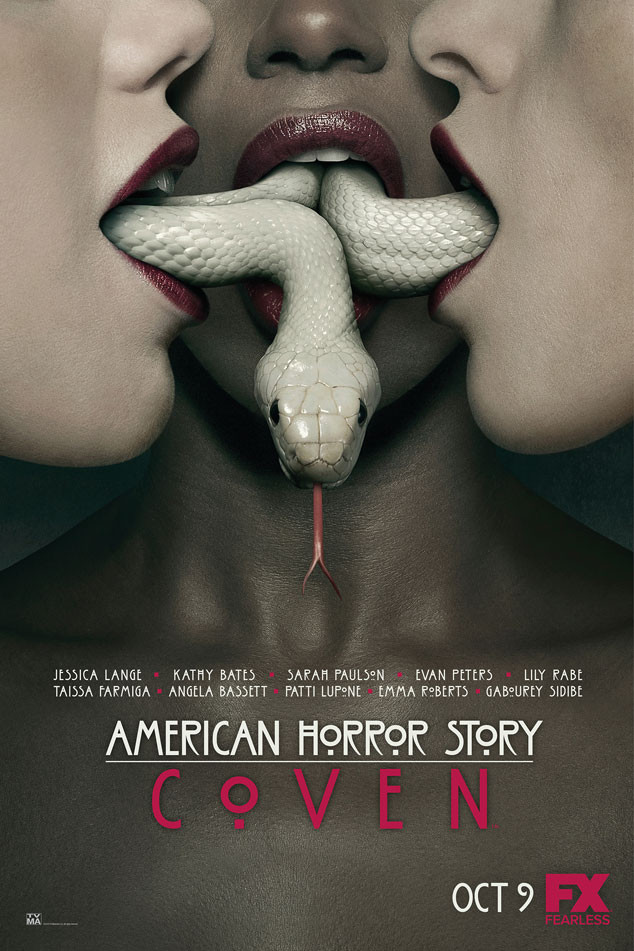
American Horror Story: Coven – Good, Bad and Ugly

What lies between a masterpiece and a mess?

I continue to be frustrated by American Horror Story: Coven. The show has loads of talent, creative writing, and a great cast. But still…

The good:

The writers are not afraid to give us complicated villains and complex heroes. Jessica Lange’s Fiona Good, the supreme leader of the struggling New Orleans coven, is  basically evil. She killed the previous supreme to usurp her powers, and she killed a young witch who threatened to challenge her standing. But lately we’ve seen Fiona struggle with terminal cancer. Maybe it’s due to Jessica Lange’s talent, but I actually felt sorry for Fiona. And now that there are new villains on the scene (the witch hunters), we might actually see a heroic Fiona.

And then there’s Zoe Benson, the young witch, and the hero of the story, or at least the character that the writers have used for the audience to identify with. She’s always been led into iffy situations (resurrecting Kit Walker Frankenstein-style), but now she’s killed Spalding, Fiona’s henchman. Yes, he was bad, but Zoe didn’t flinch. That doesn’t bode well for her, but it sure makes her a lot more interesting.

The bad:

Let’s stick with Zoe killing Spalding. It would have been nice to see a consequence for her (as a person). There was none. Then again, death seems to be irrelevant. Madison Montgomery was killed. She’s “alive” again. Myrtle Snow was burned at the stake and now she’s back. Can Madame Delphine ever die? (Please?) Death is no longer shocking or interesting.

And what about rules? When a writer constructs a universe, the rules should be clear and consistent. In American Horror Story: Coven they are not. Kit was brought back to life several episodes ago but he can still barely talk; everyone else resurrected was fine after a day or so. Madison said there was nothing after death, just blackness. But we’ve seen two spirit entities so far: the Axeman and Spalding. So something must exist after death.

So much for rules.

And the ugly:

Sometimes less is more. Tell that to the writers. Every scene involving the over-the-top Jesus freak next door neighbor Joan Ramsey and her dopey, cardboard son Luke make me want to change the channel. An enema as punishment? Death by bees? Really?

And get rid of Madame Delphine. She’s served her purpose.

The end of the Doctor (for now)

Christmas is coming, and that means only one thing to me: a new Doctor Who Christmas special. And this one will be the end of the 11th (or is it 12th? — seriously, who knows for sure) Doctor, as played by Matt Smith.

The preview clip is up now, and it seems like Steven Moffat is throwing another grab-bag of Doctor Who villains at us: Daleks, Weeping Angels, Cybermen, and the Silence.

Seriously, Steve? Anyone else you want to include? This hodgepodge of villainy has been a specialty of the Moffat era of Doctor Who. It never works for me. Too distracting.

What else to expect from Moffat? His writing shuttles between brilliance and incoherence. Not much of a middle ground. At least he’s always entertaining. Can’t wait to see how he offs Smith’s Doctor.

The Day of the Doctor: Character or plot?

I vote character.

Image

There once was a man, an alien, from a planet called Gallifrey. He was a time traveler–a Time Lord to be exact.

His name? No one knows, except his wife, River Song. He goes by the Doctor.

Fifty years ago, the BBC launched a television show called Doctor Who about this time traveling alien. Straightforward enough. Except, in a genius twist that has allowed this show to last so long, the character has the power to regenerate — the same man in a different form (ie, actor).

Last week, the 50th anniversary special, The Day of the Doctor, brought together 3 incarnations of the Doctor, and it proved one thing — the best writing is fueled by character.

Doctor Who has fantastical plots that zip along but threaten to dissolve into nonsense if examined too closely. What makes up for this? Character.

The Doctor is a complex man. When we met the 9th incarnation, played by Christopher Eccleston, he kept the childlike ingenuity but carried a dark PTSD shadow.

The tenth Doctor, played by David Tennant, had more of a lust for life. But he also shouldered the full weight of his burden: it turns out that in a previous incarnation he’d ended the war between his own people, the Gallifreyans, and the evil Daleks, by killing ALL, his own species included.

Heavy stuff.

The eleventh Doctor, played by Matt Smith, seemed to suppress this knowledge. He could be whimsical, but he was prone to melancholy; he needed a companion. And he was the man who led cultures to translate the word Doctor not as healer but as warrior.

In last week’s special, we met the Doctor who ended the war, alongside the tenth and eleventh doctors. Played by John Hurt, he looked much older than Tennant and Smith, though the character was much, much younger, and the special focused on him as he grappled with how to end the ruinous war.

In the process, we saw three versions of the Doctor — three personas — three separate selves — three parts of the same person. Unique but the same.

What we got, besides a rollicking story, was a rich, multifaceted character in triplicate. Credit goes to not only the actors, but the writers.

So what exactly happened? Watch it and find out.