Anatomy of a Story: The Two Burials of Francisco Collins

Story ideas are all around. You just have to open your ears. You can find them in all manner of places, including a pub in Ireland in a town called Renvyle on the Connemara coast, a pub called Paddy Coynes, small and dark and warm, which would’ve been smoky in another era, over a pint of Guinness, naturally.

That’s where I first came up with the idea for my story, The Two Burials of Francisco Collins, recently published in Folklore Review.

I was in that pub with my cousin and his wife. We were spending the weekend in Renvyle celebrating their tenth anniversary (they were married there, not the pub but the town), and that night over that pint my cousin’s wife told me of an Irish documentary about a man in Ireland whose body was buried twice. The documentary is called Con Carey and the Twelve Apostles, and I never got around to listening to it (probably will today after I write this) but it gave me a hell of an idea for a story.

An idea that stuck. That’s what good ideas do. They stick. Often I’ll tell myself I’m going to use something I hear or see in a story, but oftentimes it doesn’t stick. This one did. The premise was simple enough, but the question I needed to confront was this: why would a person be buried twice?

For that I went to one of my neglected literary loves: magic realism. The king of that is Gabriel Garcia Marquez, and truth be told I’m woefully deficient in my knowledge of magic realism, but to me it’s a close cousin of speculative fiction. It deals with events that are fantastical and improbable or impossible in our world, but totally in keeping with the fictional world in which they occur.

That’s my baseline for this story. In it, an old man recounts the true story of the events surrounding the two burials of the title character, a patriarch of a ranching family, and what led his son, Xavier to do what he did.

So the documentary gave me the idea, the genre gave me the vehicle, and for the heart of it all (every story needs a heart) I went to my own.

It’s been several years since my own father was killed in a plane crash, so I drew up my own personal experiences and feelings around his life and death, our relationship, and I funneled them into this story. Sometimes things get complicated. Sometimes people are complicated. Sometimes relationships are complicated. And truth be told it’s not always easy to reveal some personal things. But that’s my job as a writer: to put it all on the page, to leave a piece of myself behind, for the reader to see, for the world to witness.

Just as Xavier Collins needed his own witness.

Time’s arrow and our weird universe

Our universe, and the nature of time, may be much stranger than we ever could have imagined.

Think about this. What is time? It is something that can be measured.Seconds, minutes, hours, years, millennia. But unlike other properties of our physical world, it only goes in one direction. You can’t add or subtract time, not literally. This has left scientists stumped.

Now, scientists have come up with one of the more bizarre theories of the universe and time that I’ve ever heard. To explain the back and forth movement of time, our universe might be just one side of another universe that was formed during the big bang. And since we exist on the opposite side of that universe, we are living in that mirror universe’s distant past.

This all comes courtesy of an article in Scientific American (by Lee Billings, who I work with there, btw). Much of it is over my head, to be honest, and I’m probably not summarizing it correctly. But what intrigues me most is the whole issue of time as a physical property. I always assumed that time flows, consistently, constantly, in one direction. But scientists can’t explain this. I never realized it was an issue.

After reading the article, I didn’t come away with the impression that we’re going to build some sort of time machine. or maybe visit this parallel universe (thought that would really be cool from a sci-fi perspective). What the article shows me is that there’s so much that we don’t know — about the universe, about life, about even ourselves.

Some might be scared by this lack of certainty. I think it’s exhilarating.

Tiny monsters, continued

Real-life creepy bugs are one of my favorite science-related topics. Not sure why — maybe because it combines monsters and science.

Here’s the latest. First, we have book scorpions. I’ve only seen a scorpion in real life once. I was in El Paso and one of the suckers, pincers snapping away, was crawling up a bedroom wall. Totally freaked me out.

book-scorpion

Well, it turns out not all scorpions are vicious. Not only are so-called book scorpions too tiny to harm us humans, they’re pretty helpful. These small creatures (there are over 3,000 different species) are only a couple of millimeters in length. What they love more than anything are booklice.

What are booklice? Bugs that eat the glue that binds books. And book scorpions devour these booklice. If it wasn’t for them, all our books would fall apart.

No word on whether book scorpions would help keep your Kindle clean.

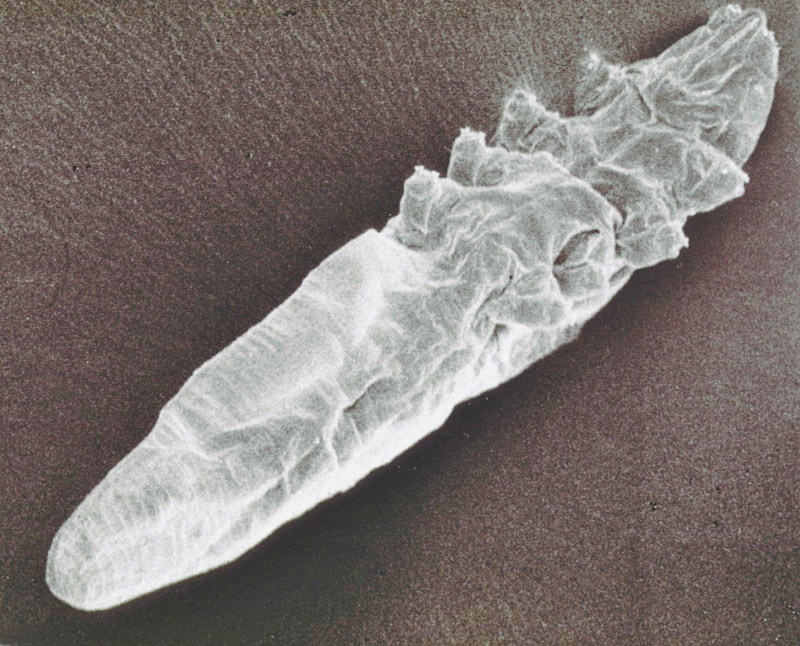
The second of today’s tiny monsters is the Demodex mite.

mites

This microscopic critter is a relative of spiders and ticks. And you are very familiar with it. How familiar? Right now there are scores crawling all over your body.

No worries, though. The mites that live among us are relatively harmless, though when their numbers get out of whack they can cause skin conditions such as rosacea.

It turns out that Demodex has been with us for a long, long time, perhaps as long as when humans first left Africa and spread out all over the world. Not only Demodex — there are several species of mites that scientists are just beginning to identify.

Read more about book scorpions here at Scientific American, and more about the hitchhiking mites at Discover Magazine.

(Book scorpion image courtesy of Protasov AN/Shutterstock; mite image courtesy of Alan R. Walker)


Tale of the vampire (plant version)

File this under: Evil Nature.

The more I study science, the more I’m convinced that nature is home to some of our biggest nightmares.

More proof? There’s a vampire-like plant that not only feeds off its prey, but convinces it to let down its defenses.

Kind of like this guy (Nosferatu, the first film vampire, and the creepiest, in my book).

how-to-make-vampire-teeth-nosferatu

Scientists have long known that a plant called the dodder (deceptively cute name) wraps itself around a target plant, burrows into it, and then drains it of all its nutrients. Hence the vampire correlation.

But what they didn’t know were the details. How do dodders get away with it?

It turns out that once a dodder makes contact with the plants, it releases bits of its genetic material into the victim plant, and in turn receives bits of the plant’s genetic material, which prompts the victim plant to lower its defenses.

Or, as this article states, the dodder sweet-talks its victim into surrendering.

dodder

See-through science

Ever wanted to be invisible? Not in the metaphorical sense, but truly transparent?

Me either. But for those who do, scientists are a step closer to making see-through skin.

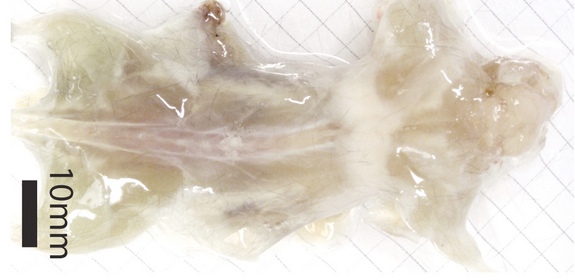
Researchers at the California Institute of Technology have advanced a process called tissue clearing that basically strips away all the color from the body. They did this in mice (not humans). What they got was a blurry, goopy messy looking thing. Ugly, but still intact.

see-through-mouse-1

How did they do this? By injecting a gel and detergents into the mouse’s bloodstream, which somehow stripped away most of the things that block our view.

Why would they do this? Having see-through organs would allow scientists to study body processes in real-time, as they happen. This would allow scientists to better understand conditions such as chronic pain.

I support most science, but for now, I’m adding this to the “not too sure this is a good idea” pile. I can imagine this getting into the hands of mad scientists who try this (illegally) on humans.

At the very least, it would make a really horrific story.

No word on how the mice fared, though. I can’t imagine it feels good to be injected with gel and detergents.


Pictures worth a thousand words

I’ve never been drawn to the visual arts. My life’s vocation is crafting words into stories that relay emotions, moods and experiences. But thanks to the vastness of the world wide web, I’ve discovered visual artists whose works are as vivid as anything the best wordsmith could create.

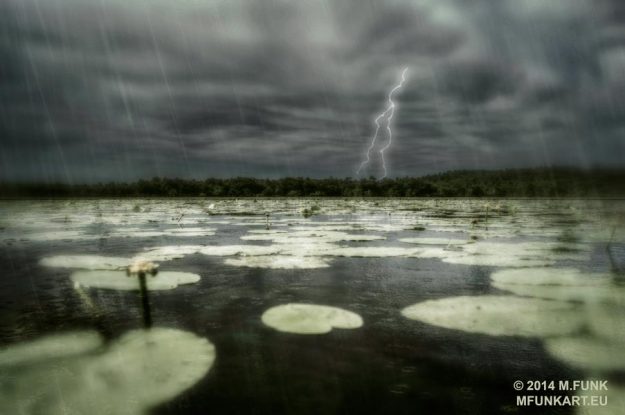
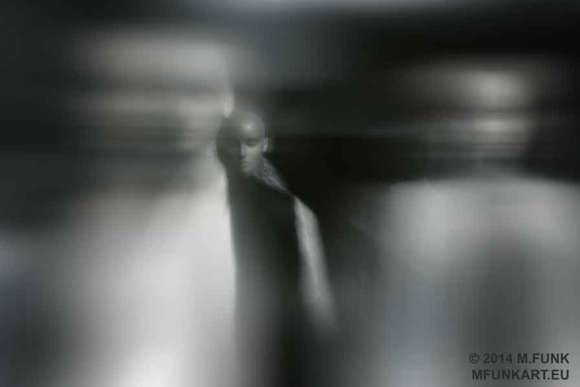
One of these visual artists is a photographer, M. Funk, based in Germany and France. I came across his website by accident. I’m glad I did. His photographs capture a moody eeriness that I could only hope replicate with words.

Take a look at a sample of his work below, and be sure to check out his website for more.


TEMPÊTE-4


AIR-DE-LA-NUIT-11

IT-WAS-A-SUNNY-DAY


UNREAL1

(Images courtesy of M. Funk)

Bioluminescent creatures in the darkest realms

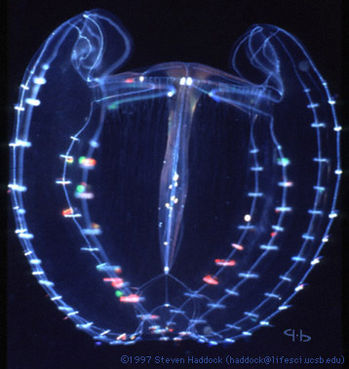
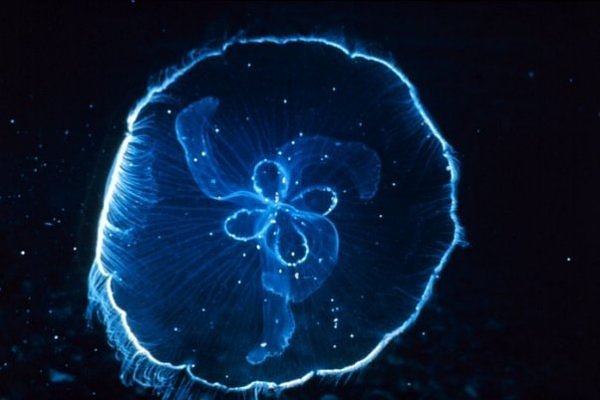
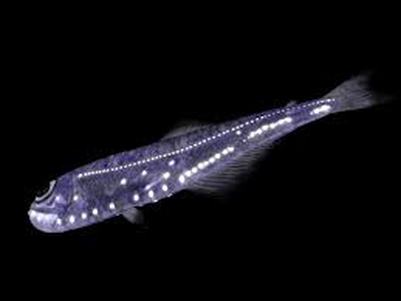
Life on earth is truly stranger than anything we’ve imagined. Science continually finds more evidence of this. Just one example? Fish in waters devoid of any natural light equipped with light-giving powers of their own.

bioluminescent

How do these fish manage to produce light from their own bodies? Through a mix of two chemicals. One is called, ominously enough, luciferin. This chemical creates the light. The second chemical, luciferase, spurs the reaction that, along with oxygen, creates the light. Deep-sea creatures use this light to not only find their way, but also to communicate with other fish and trap their prey.

What I love about science and nature is that there are so many twists and turns in the evolution of life, ones we are still discovering, that rival the wildest creatures dreamed up in our imaginations.

image 6

image 4

image 3

image 5

Spider fangs: nature’s perfect piercer

Some people love spiders (why??). Some people love to hate spiders. My view is: hey, Mr. Spider, you stay over there, I’ll stay over here. To me, they’re creepy as hell — horror movie creepy.

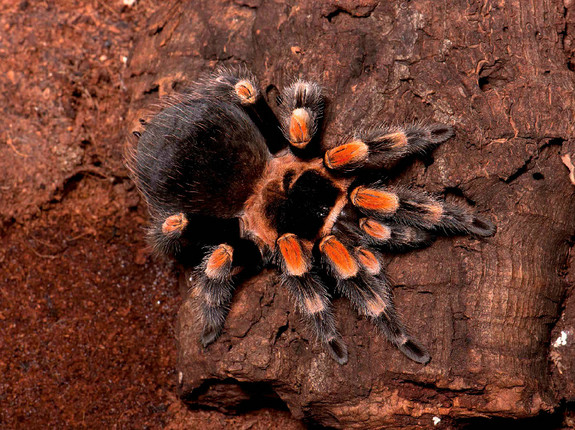
mexican-red-knee

Now there’s more to add to their creep factor. Not only are spiders adept at trapping their prey alive in a sticky web and sucking their blood and bodily fluids out in a slow, agonizing death, their fangs were honed by nature, God, evolution (take your pick, or as I believe, all of the above) to be the perfect piercing tools.

This article published in Scientific American discusses a study of spider fangs. It turns out that the curve of the spider fang allows the spider to not only attack from different directions, but also hold their prey while injecting their venom. And the hollow, conical shape gives the fangs strength.

Not cool.

The upside?

1) More fodder for horror writers. Now we’ve got an even more gruesome way to describe spider attacks.

2) Maybe they can design better piercing equipment, not only for medical applications, but also for those casual body piercers among us.

(Image courtesy of LiveScience.com)