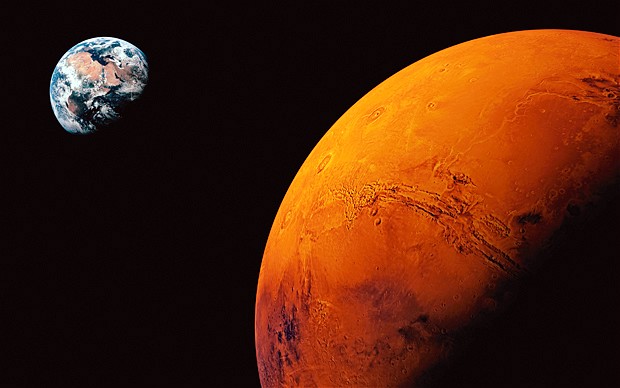
Are ancient aliens ignoring us?

We’re obsessed with life beyond Earth.

For a while, we thought we might find it close to home. Venus turned out to be a hellish bust, and Mars is turning up nothing but red rocks. SETI has been beaming a hello for decades, but no one has greeted our call. So, unless you believe that Roswell is indeed the site of an alien vacation community, we’ve come up with nothing.

SETI

That hasn’t stopped us from making it a focal point of sci-fi and pop culture, from HG Wells’ vicious War of the star trekWorlds to the community of agreeable, and sometimes sexy, aliens embodied in the Star Trek series and movies.

And, the research to identify life supporting planets is going full steam, with hundred potential candidates identified to date. Now, we may be able to expand our time frame as well.

First, the title of this io9.com article — Freakishly Old System of Planets Hint at Ancient Alien Civilizations — is misleading. Nowhere does the writer, or the research, state that we’ve found any kind of proof (or even a hint) of alien life.

But what we’ve discovered—that rocky planet systems are billions of years older than we first thought—is intriguing in its implication. And what is this implication? That life, and advanced civilizations, have had several billions of years in which to develop.

Our universe is considered to be about 13.8 billion years old, and according to the article, scientists have detected a planet system that is about 11.2 billion years old. Before this, scientists didn’t believe that rocky planets capable of sustaining life could have formed that early in our universe’s life span. Now they know different.

But this leads to the inevitable question: if there are so many planets that could potentially support life, and if these planets have existed for at least 11 billion years, then why isn’t our universe teeming with life? Surely there would be ONE advanced civilization that would have colonized the stars. Was there NEVER a planet capable of supporting life? Or, did they ALL fail to advance to the point we have?
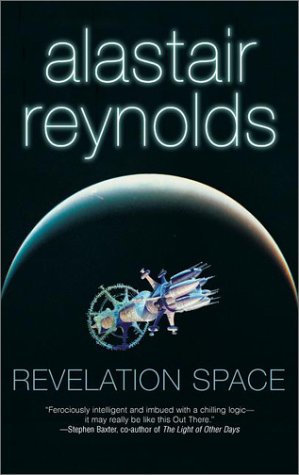
Revelation_Space_cover_(Amazon)One of my favorite sci-fi writers, Alastair Reynolds, explored this very topic in his book Revelation Space. His world view was bleak: advanced civilizations destroyed each other, leaving behind a higher power that would snuff out advanced civilizations whenever they reached the point of breaking their planetary bounds.

If that’s true, then we’re in danger.

Or, maybe there are tons of aliens out there, and they don’t find us interesting enough to return our calls.
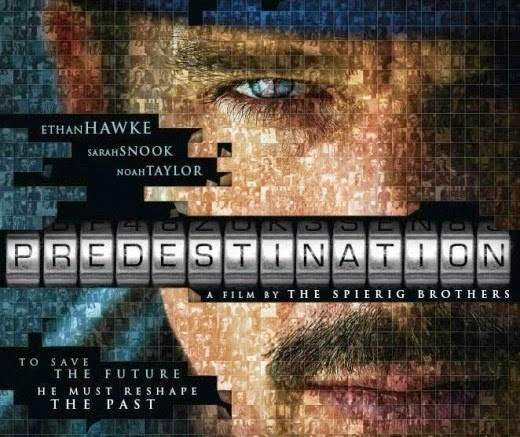
Watch this movie: Predestination

Time travel story plus great performances minus a creaky plot equals a stylish, though flawed, film.

predestination

It took me about 20 minutes into Predestination, the new sci-fi film starring Ethan Hawke, to figure it all out. Predestination is a movie that tries to shroud itself in mystery, but that mystery is pretty evident to anyone who pays attention. If it wasn’t for the stylish visuals and strong performances by the two main actors — Ethan Hawke and Sarah Snook — Predestination might have ended up being nothing more than a silly time-travel flick that falls apart too quickly.

But it’s not.

The plot, or as much as I can share, is this: Hawke plays a time travel agent who has been hopping around the latter half of the 20th century in an effort to stop the so-called Fizzle Bomber. When he’s on a stakeout as a bartender in a NYC dive in 1970, he meets a surly patron who proceeds to tell him a wild tale.

predestination-ethan-hawke

That’s about all I can say without giving anything away. Predestination, based on the short story All You Zombies by Robert A. Heinlein, brings one huge thing to the table for me: time travel. I love the conceit. I don’t care that time travel stories are inherently unstable, full of logical paradoxes. They’re fun. Predestination isn’t especially groundbreaking in its use of time travel. But at least they didn’t spend too much time trying to explain it. Part of that was a conscious narrative choice. This is a tightly told story. It sticks very close to certain characters. Just like them, we never get the bigger picture.

What sets Predestination apart from other movies of this genre is the performances. Ethan Hawke has been around long enough now — the man knows how to act convincingly. He is solid throughout. Sarah Snook, who plays a tough but lonely girl named Jane, is something else entirely. I’ve never heard of Snook, but I can’t imagine I won’t be hearing from her again. She had a tough role to play, and she was simply amazing. Her emotions ran the gamut, and she pulled them off convincingly and movingly. As played by Snook, Jane is a tragic character who you can’t help but relate to.

Sarah Snook

Despite all this, Predestination is stuck in B-movie land. The plot, especially toward the end, just could not carry the movie to the point of greatness. Nevertheless, Predestination is worth the time.

Archie vs Predator?

Call this post mash-ups gone wild.

What are two things that should not go together? Two things that absolutely MUST go together.

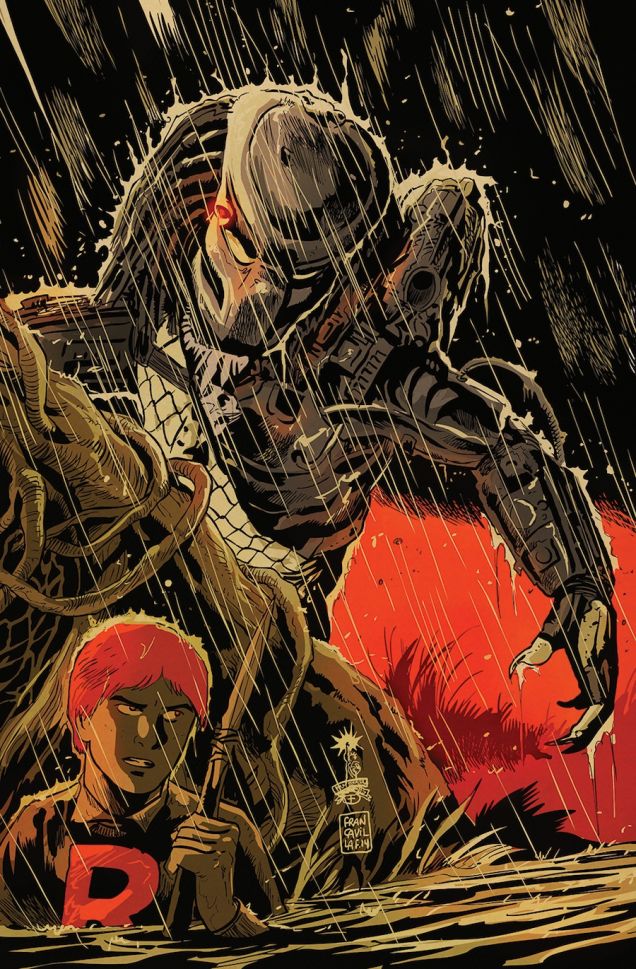
The latest proof — there’s a new comic series coming out that combines that all-American wholesomeness of the Archie comics with…. the sci-fi horror classic Predator.

Predator Archie

Say what???

According to this link at io9.com, Archie and friends will be forced to battle the Predator aliens while on vacation in Costa Rica. Sounds good to me.

When I was young, I loved the Archie comics. There was something so normal, so ideal, about Archie and his life. It was an experience I wanted. And of course I loved Predator. Badass Arnold Schwarzenegger fighting badass aliens? What’s not to like?

I hope Hollywood (or at least SyFy or the Spike Channel) have optioned these books. I would love to see Jughead’s severed head hoisted aloft.

Archie Predator

Why not Venus?

It’s been described as Earth’s twin, our sister planet, roughly the same size and composition as the home world we all know and love.

Venus Earth
But it’s the hellish parts of Venus that make it our evil twin:

–Its atmospheric pressure is nearly 100 times greater than on Earth. If you set foot on Venus you would be crushed.

–It is damn hot: over up to 900 degrees. At best, you would bake.

–Its atmosphere is mostly carbon dioxide, with clouds that rain sulphuric acid. Not only would you be unable to breathe, but the acid would melt your body.

Venus
So what’s good about this hell planet? What possible use could we have for it?

It turns out that Venus is not as useless as it may seem, at least not according to NASA.

If we are ever to become serious about off-world colonies, Venus might be a good place to start. But how could we ever live on such an inhospitable world? We couldn’t. Instead, we could float just above its poisonous atmosphere.

This is what some NASA scientists are planning: floating cities. These giant blimp-like structures would be tethered about 30 miles above Venus’s surface. At this level, the atmospheric pressure is roughly similar to that of Earth, and the temperature, while still an inhumanly 160 degrees, would be suitable for these structures. The crafts would be solar powered as well.

Venus floating cities
But if Venus is so bad, what’s the benefit?

It allows us to get our feet wet in terms of establishing colonies in space, and we could avoid problems such as extreme temperatures or adverse gravitational conditions (too little gravity and our bodies would break down faster than we would like).

I have never considered Venus as a potential off-world site, and the more I think about it, the better it sounds. Of course it would not be easy. There are many logistical problems, not to mention the cost involved.

At the very least, these NASA dreams can provide another cool setting for sci-fi.

Ascension — a fatal bait-and-switch

I have to give the SyFy network some credit. After taking a strange turn away from all things sci-fi several years ago, they’re making an effort to cultivate new sci-fi programming. Helix, for example, is a solid, if not great, show.

ascension_2560x1450_1280x725_369265219996

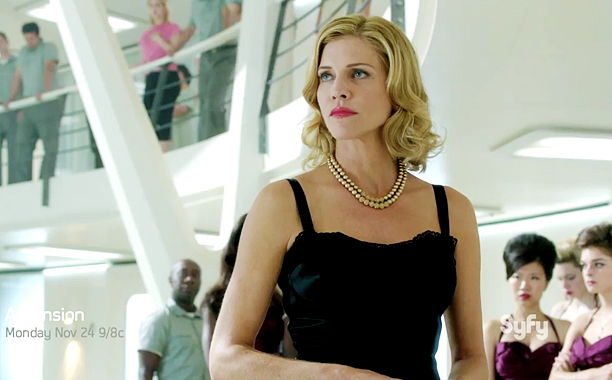
I was excited to see the promos for SyFy’s new miniseries (and possible series) Ascension. Not just because it stars Battlestar Galactica alum Tricia Helfer, though that’s a plus. Mainly I was ASCENSION-HELFERintrigued by its plot. This is what we were told Ascension would be about:

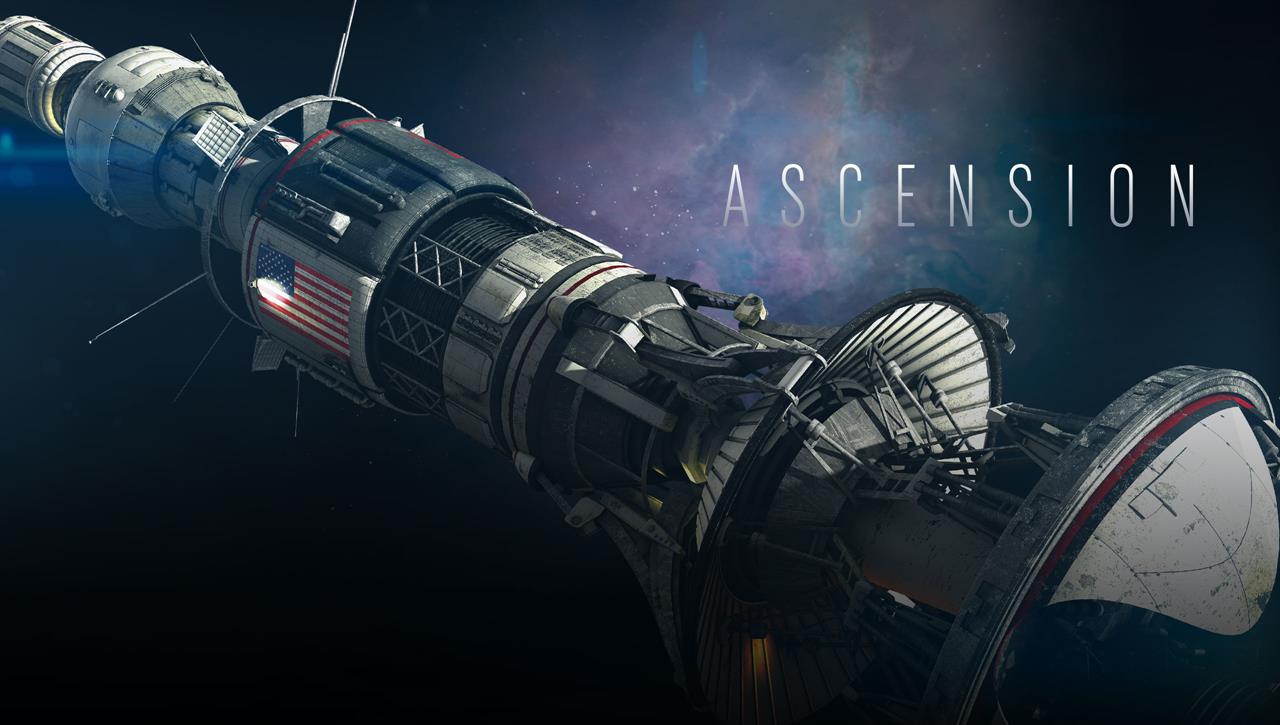
A spaceship is launched in 1963 to colonize the far reaches of space. Halfway through their 100-year journey, they’ve been isolated from Earth, yet continue on with their mission.

Wow. So many thematic possibilities. The obvious question, what would a society be like that never saw advances such as civil rights and feminism? And how would this society have evolved over a full generation with nothing to rely on but their faith in their mission? Space operas tend to focus on the larger mission, that is, surviving in space and getting to the planet. Few genre shows get into the nitty gritty of day-to-day survival. In my opinion, that’s one reason why The Walking Dead is such a successful show. When it comes to zombies, it is wholly conventional — nothing new to see there. But what it does different than every other zombie show we’ve seen is focus on the mechanics of survival. Ascension, based on its premise, seemed like it could be the sci-fi equivalent.

Ascension

Unfortunately it did none of this. Instead, what we got with Ascension was one of the biggest bait-and-switches I’ve seen on TV.

(SPOILERS BELOW…)

At the very end of the first night of Ascension‘s three night run, we discovered that the spaceship was not in fact traveling in space. It had never left the ground. The whole thing was a planned, covert experiment.

What???

So, you mean to tell me, the last two hours I’ve invested in these people and their mission was wasted? And there are four hours left?

Now, I’m all for dramatic twists, but this one undermined the whole premise of Ascension. I was lured to a show about space exploration, not a show about a Truman Show style social experiment.

I watched the remaining four hours of Ascension, though my heart wasn’t in it. I didn’t care about the power struggle among those running the experiment, and I no longer cared about what was happening on the spaceship, because their mission wasn’t real anyway. And all I could focus on were the flaws: the boring angsty teen subplot, the annoying child actor who played a girl with mystical abilities.

ascension_121714_1600

By the time the ending came — a convoluted, inexplicable mess of a thing — I was glad it was over, and I was also sorry that I never got to see the show that I was originally promised.

So long, River Song

If this brief interview is any hint, we won’t be seeing the return of two of the most interesting Doctor Who characters—River Song and Captain Jack Harkness—as long as head writer Steven Moffat is around.

I for one am disappointed.

River Song

River Song, as played by Alex Kingston, was a larger-than-life character in a show filled with larger-than-life characters. From the first time we saw her in the Silence in the Library episode way back in season 4, River took control of every scene she was in. She possessed a singular confidence that only grew stronger as she showed up in different points in the Doctor’s timeline. And when we learned of River’s vulnerabilities (as well as her unique origin story), she only became stronger. Rarely has a character’s first appearance been their death scene. Moffat made it—and River—work.

captain_jack_harkness

And then there’s Jack Harkness. As played by John Barrowman, Jack was similar to River in that he was overflowing with vitality. Like River, he pushed the Doctor’s buttons. He was also groundbreaking: Jack Harkness was openly, and actively, bisexual. And he was fearless. The character was spun off into his own show, Torchwood, which was darker and more adult. Torchwood also revealed Harkness’s deep sadness, as a man who could live forever would have to watch his loved ones die.

In this interview, Moffat addresses the possibility of bringing River Song and Jack Harkness back to Doctor Who. To sum it up, never say never. But it would have to be done right, he continues, and that would be hard to pull off.

If you read between the lines, then we won’t be seeing either return to Doctor Who in the near future. That’s disappointing. Both characters brought much vitality to the show. Hopefully we’ll see the introduction of new iconic characters instead.

Time’s arrow and our weird universe

Our universe, and the nature of time, may be much stranger than we ever could have imagined.

Think about this. What is time? It is something that can be measured.Seconds, minutes, hours, years, millennia. But unlike other properties of our physical world, it only goes in one direction. You can’t add or subtract time, not literally. This has left scientists stumped.

Now, scientists have come up with one of the more bizarre theories of the universe and time that I’ve ever heard. To explain the back and forth movement of time, our universe might be just one side of another universe that was formed during the big bang. And since we exist on the opposite side of that universe, we are living in that mirror universe’s distant past.

This all comes courtesy of an article in Scientific American (by Lee Billings, who I work with there, btw). Much of it is over my head, to be honest, and I’m probably not summarizing it correctly. But what intrigues me most is the whole issue of time as a physical property. I always assumed that time flows, consistently, constantly, in one direction. But scientists can’t explain this. I never realized it was an issue.

After reading the article, I didn’t come away with the impression that we’re going to build some sort of time machine. or maybe visit this parallel universe (thought that would really be cool from a sci-fi perspective). What the article shows me is that there’s so much that we don’t know — about the universe, about life, about even ourselves.

Some might be scared by this lack of certainty. I think it’s exhilarating.

Mars attacked!

Was there once a grand civilization on our neighboring planet that was annihilated by a nuclear attack? One researcher says yes. While it’s impossible to prove (for now), the sci-fi geek in me loves this story.

mars

Mars has gotten some, but not enough, attention in the world of sci-fi. H.G. Wells got the ball rolling with War of the Worlds, where we were attacked by Martians (I loved the Tom Cruise movie as well). There have been sporadic Martian-themed stories, including Ray Bradbury’s The Martian Chronicles and Kim Stanley Robinson’s Red/Blue/Green Mars trilogy. And there have also been one-off stories, like Doctor Who‘s The Waters of Mars episode.

mars and earth

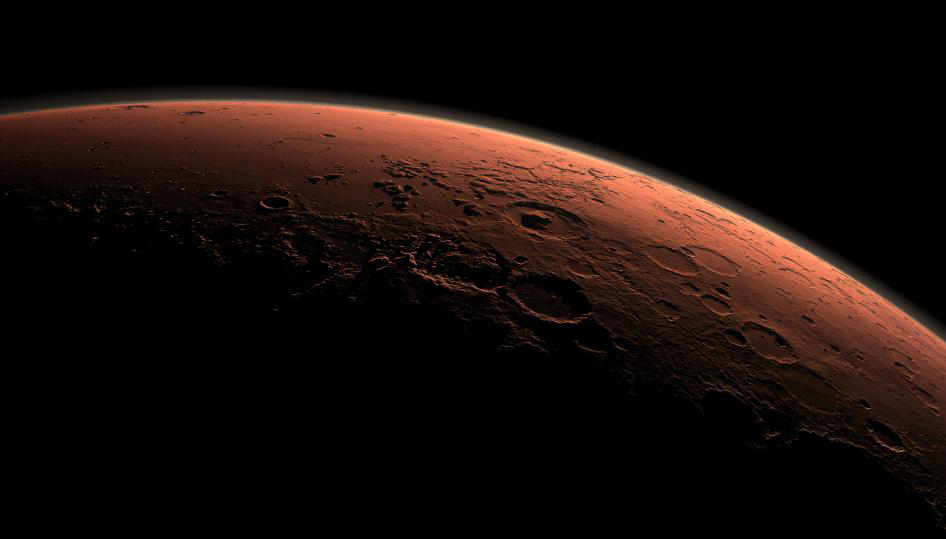
But these are all fictional. What about the real Mars? The red planet is smaller than ours, colder, and less hospitable to human life (and any life, so far). It’s long been theorized that the Mars of the distant past was a very different planet, one capable of supporting life.

John Brandenburg, a plasma physicist, speculates that Mars once had a civilization as advanced as the ancient Egyptians. But this civilization caught the attention of some nasty aliens, who nuked these Martians, and rendered the planet uninhabitable. His evidence? The large number of nuclear isotopes detected on Mars.

Nuclear-Explosion-001

The takeaway, according to Brandenburg, is that we’d better get our butts (and not just rovers) to Mars ASAP, and figure out exactly what happen, lest it happen to us as well. See, we’re too noisy, blasting our radio signals out into the universe. Eventually, the Martian killers are bound to notice us.

He has a point. If there is a superior civilization out there, they may very well decide to rid themselves of any competition. And we’re pretty much defenseless. But what can I do about a high-tech alien force attacking? Not much of anything, so I’ll file that away in the “Things I cannot control, so therefore I won’t worry about it” drawer.

The idea that there were advanced civilizations on Mars that suffered a nuclear holocaust intrigues the sci-fi fan in me. Was Mars nuked? I don’t know nearly enough about the science to say no, though I think that Brandenburg is taking one too many leaps of logic. Nevertheless, the nuking of Mars makes great sci-fi fodder.