Trope or Choke: Episode 6

The challenge: write a complete story in 500 words or less following these guidelines:

Setting: A deep freezer

Genre: Horror + ’90s redux

Trope: Wai-Fu (tiny girl who kicks ass)

Characters: Cleopatra + absent-minded professor

POV/tense: 3rd person/present tense

The result:

Mister Pointy Returns

It reads: Do not open.

Professer Wentworth purses her lips.

“What’s that awful odor, Stuart?”

Her assistant sighs. “You left yesterday’s salmon dinner on your desk.”

“It must’ve tasted atrocious,” she says. “Now, about this “do not open” situation. A deep freezer arrives from the estate of a murdered FBI agent. Dana Scully, right? With no other instructions. What do you suppose we should do?”

“Not open it.”

“You pathetic man. Where’s your curiosity?”

“I don’t want to end up being the cat.”

“Well it’s my laboratory,” she huffs. “I say open it.”

He sighs. “Fine. I’ll remove the padlock.”

He cuts the lock off and motions to the door. “Would you like to do the honors?”

She scoffs. “Grunt work? That’s why I have you.”

He tugs the handle. It refuses to give.

She snorts. “What a waste of testosterone.”

He gives it an angry yank. The door releases. Cold mist fills the room. Wentworth holds her nose. “It reeks worse than that blasted salmon.”

“It said do not open.”

She shoves Stuart aside. “Let the professional have a look.” She wipes frost from her bifocals and peers into the mist. “It appears to be two sarcophagi. There are name plates. Hard to read. This one reads B Summers. The other. C something. No other artifacts.”

An alarm sounds on her phone. Wentworth perks up. “I forgot. Tonight is Mister Fuzzykins birthday. We’ll pick this up in the morning.”

On the way out she trips on the freezer’s power cord, curses her clumsy shoe and dashes out the door.

The next morning Stuart notices the cord free of the outlet. As he plugs it in, Wentworth catches him on his knees.

“What now, boy?”

“It thawed out.”

“Providence indeed.” She orders Stuart to pry free the first sarcophagus. Inside is a woman, olive skin, long black hair. He opens the second. Another woman. Petite. Young.

“So this Scully collected women,” Wentworth says. “Odd.”

Stuart leans toward the first woman. “I think she moved.”

“Preposterous.” Wentworth shoves him away. The woman opens her eyes and parts her lips to reveal fangs, which rip the skin of Wentworth’s neck and lock onto an artery. Wentworth screams. Her blood splatters. The woman drains Wentworth and tosses her dead husk aside. “A bitter offering for Egypt’s Queen.” She eyes Stuart. “I trust you will taste better.”

Before he can move the second body sits up. “Bad girl, Cleopatra. Rude much? You’re barely awake and already killing people.”

Cleopatra turns. “The foul slayer.”

“I prefer Buffy. Hey cuddlemonkey,” she tells Stuart. “Throw me that broom-handle.” She catches and breaks it. “Hey, Cleo. Mister Pointy needs some love.”

Buffy roundhouses Cleopatra, pins her down and hovers the broomstick above Cleopatra’s heart. “This is for murdering my friends. And for baiting me to that lame FBI agent. And for getting me iced as a threat to the government.” She smirks. “Nah, I just like killing vamps.” She plunges Mister Pointy into Cleopatra, who turns to dust.

Image: (C) Ash Carli

Trope or Choke: Episode 5

The challenge: write a complete story in 500 words or less following these guidelines:

Setting: On the bus

Genre: Dark academia + Speculative

Situation: “I didn’t have anywhere else to go.”

Characters: Elon Musk + a hotshot

POV/tense: 1st person/future tense

The result:

Heart Like a Fortress

One day my heart will surrender its walls. It will break its shell and pierce the world around me. I know this. Until that day I will persevere. I will swallow down my screams and funnel my pain like bullets in my bloodstream and inside those barricades.

Until then I will ride the shuttlebus in my seat assigned not by the proctors of Blessed Musk Institute 67 in the Fourth Sluice of Olympus Mons, but by Damron, he of the titanium fist, he of the night vision eyes, he of the pack that gloats over their fifteen-generation lineage on Mars, their high-grade cybernetics, and their vulgar power.

“You failed advanced chelation,” he whispers in my ear. “Not me,” he purrs. “I aced it.”

That old tingle of shame pricks my limbs and flushes my face. I curse my weakness. “I never wanted to be here,” I whisper.

“Ha!” Damron barks to his pack. They yelp laughter as if on command. “Hear that? The Earthling doesn’t want to be here. Thinks he’s too good for us Redders.”

“I didn’t have anywhere else to go,” I say flatly. Two dead parents on Earth plus one living uncle on Mars equals a one-way trip to another planet, another institute, another mode of being.

“You don’t belong here,” Damron hisses. “Mars will crush you.” He wraps metal fingers around my earlobe. “We will crush you.”

He squeezes. I swallow the pain. I will rise from my seat and tell him: No, you can never crush me! Mars will never crush me! All the proctors and students at the Blessed Musk Institute with their leers and scorn will never crush me!

I tell him none of that. Instead I flinch and I let escape a treasonous “ouch.”

“Heeeah! What a pathetic meatboy you are.” Damron gloats in his victory. He slaps me on the side of the head.

“Don’t!”

I shield myself but it does no good. He batters my skull until I see more stars than the darkest night in the Hellas Planitia.

A girl in the back squeals laughter. “You made meatboy cry again.” My eyes burn. I wish I was invisible. Bullets of shame course through my bloodstream. They coagulate inside the shell of my heart with all the rest trapped there—my hurt and pain, my hopes and dreams, all encapsulated away from me, from the world, for my safety, for theirs, but all the while I am dead inside, without a heart to call my own.

“You’re so pathetic,” Damron whispers. “I bet that’s why your parents killed themselves.”

That’s it. That’s the one last bit of shrapnel to load into the fortress of my heart. My eyes bolt open. “I never failed advanced chelation,” I say. “I am not just a meatsack.”

One day that fortress heart of mine will explode, a bomb of metal mingled with blood, and I will send fragments of my pain into the hearts of all around me. That day is now.

Image: © iStock/nemchinowa

Read This Book: Children of Time

620 pages. That’s how long this brick of a book turned out to be when I got it in the mail. Hell no, I thought. But then I started to read it and I didn’t want to stop.

Children of Time, the 2015 sci-fi novel by British writer Adrian Tschaikovsky, is a supremely imaginative story about one planet and two rival species vying for control of it. On the one side we have an ark ship of humans, the survivors of a spacefaring civilization that blew themselves up millennia earlier, leaving a rump population on Earth to reestablish technology and, one day, flee their dying home for the stars.

To where exactly?

Well, here’s where Tschaikovsky takes the trope of a colony ship in a wholly unexpected direction.

Let’s rewind. Millennia earlier at the start of that cataclysmic war, megalomaniacal scientist Avrana Kern was going to seed a terraformed planet with monkeys and a virus that would selectively enhance their evolution in favor of intelligence. Her creepy plan goes awry, and what we get is not a rehashed Planet of the Apes, but something much creepier, especially for those of us who are arachnophobes.

Spoiler…the monkeys didn’t make it to the planet, and the virus, which did, selected for intelligence mostly among the insects, the top dogs being a certain species of spider.

Centuries later, as the spiders evolve into a complex and intelligent society, that ragtag ship nears what they believe to be a green paradise just waiting for them to land and populate it. As you can guess, there will be conflict.

I won’t spoil the rest of the story. Instead, here’s my breakdown:

The good:

Children of Time alternates between both groups. For the first hundred pages or so, the story and pace were riveting. I didn’t want to put it down.

–The writing is pristine and engaging. As someone who obsesses over words, zero complaints.

–Tschaikovsky managed to make spiders (not a fan) into sympathetic and relatable characters. He wove spiders’ natural biology into humanlike functions and hierarchies. He made it seem effortless, though I am sure this was the product of hours upon hours of research and craft.

–The human characters were all compelling. Even the minor ones seemed real to me.

The not as good:

Children of Time sagged in the middle. There was a lot of back and forth that made me wonder if the writer had to figure out a way to account for the passage of time (and the spiders’ continued evolution). Also in the middle section, the chapters were overly long, when shorter and punchier would have been more effective.

–A subplot regarding the ship’s captain, while interesting, felt like it belonged in another book.

–While I liked the ending (totally unexpected), something about it felt off. Not sure what or why. It could have just been a pacing issue.

But these are minor flaws. I wouldn’t normally buy or recommend a 600-page book. Children of Time is a fantastic exception.

Trope or Choke: Episode 1

The challenge: write a complete story in 500 words or less following these guidelines…

Setting: On a train

Genre: Sci-fi + Military

Trope: Blown cover

Two characters: A dumb blonde and a mad scientist

POV/tense: 1st person/past tense

The result:

The Screams of the Acolytes

The bards would sing of Asmodeus, the golden capital of the Bartolic Republic, but their songs turned to cries when the republic turned to empire. Brandon Sathanis, that cyborg chimera, that corruption, secured his infamy as our last elected leader. Then he gutted the vital freedoms one by one until none remained but the freedom to agree.

I’d been exiled from Asmodeus for twelve years. This troop transport train to Asmodeus’s central station, would end that chapter. The odds were high, the wager my life, but success could bring counterrevolution. But the enemy was cleverer than I expected.

This captain, this man with silver bars and green uniform and black boots, no cyborg enhancements visible, eyed me with simmering contempt. “You’re no lieutenant.”

“Not for Sathanis.” I spat in his face. Spittle flecked his left cheekbone. He didn’t wipe it away.

“Eyes not truly blue,” he said. “Hair not truly blond. Fraud.” He clucked his tongue. “But what else to expect from a recidivist. Vermin, really. We’ve already disposed of five this week.”

I bucked. The cuffs that locked my wrists above my head dug into my skin. “Disposed of?”

The captain motioned to the gray-haired woman hunched in the corner, the left half of her face a dull cyborg chrome that melted into her human flesh. “You’re choices are thusly, lieutenant. Defect. Repent of your recidivist tendencies and embrace the truth of the majority.”

“Or?” I asked.

“Or Doctor Gressil will commence your unraveling.”

The doctor’s cyborg eye flashed orange. A rumble emanated from her throat. “The process is most unpleasant,” she said. “Truly unpleasant. For the participant. For the spectators, so much fun.”

The train jostled through the spiraling suburbs of Asmodeus. Soon it would pierce the heart of the city. “Here is my answer. Brandon Sathanas is the king of lies.”

The captain clapped. “I was hoping this would be your choice.” He turned to the doctor. She tiptoed toward me and pulled a silver vial from her pocket. “Your plot will tumble from your mouth as your gray matter dissolves,” she said. She twisted my head and rammed the needle into my ear. I howled. I panted. I felt nothing except a throbbing in my ear.

Then, happiness. I couldn’t say the colors of the train car. Even my own name became a puzzle. Drool hung from my mouth. I grinned at the nice man and woman before me.

“Good, good, my boy,” the captain said. “Tell us what you’ve plotted.”

I laughed.

“Tell us,” he said.

“You go boom,” I muttered.

“What?”

“You go boom.”

He grabbed his phone just as the pulse rippled through the car. He clutched his chest—his enhancement beneath the skin. The doctor shrieked as her cyborg face sizzled. The train swayed as if drunk, then rolled onto its side. My chained body twisted among the collapsing metal and shattering glass, mind still dumb but alive.

Outside the train I heard the screams of Brandon Sathanis’s acolytes. And I laughed.

[Photo by Tom Dahm on Unsplash]

Wait…Gendercide Is a Thing?

I like to consider myself a fan of all things speculative–horror and supernatural and sci-fi books, movies, TV shows, etc., and I believe I know a ton about these genres.

Apparently I don’t. The other day I was rabbit holing into the latest of a long line of literary controversies (I won’t go into it here) and I read this article asking whether it’s time do do away with the gendercide trope, a trope I’ve never heard of before.

What is gendercide? It sounds nasty, because it is. Gendercide is where either the men or the women in any given story are killed or die off from some nefarious or mysterious or viral reason. The book that inspired the article introducing me to gendercide is The Men by Sandra Newman. I haven’t read it yet, but it’s about a world where all males suddenly vanish. The remaining women adjust to this disappearance, while videos online depict the men living in a hellish landscape.

There are others, too, such as Y: The Last Man, a comic turned TV show where (almost) all men die of a virus. One of my favorite books, The Knife of Never Letting Go by Patrick Ness, is a variant of the gendercide trope; the novel opens in an all-male society where the women have mysteriously died off.

According to TVtropes.org, gendercide isn’t super popular, and most of the time only a variant is used (only some or most of either men or women die or disappear). Stories where the men disappear are more in line with the theme of feminist utopia, and stories where the women vanish are considered dystopic.

In reading about Newman’s book, I found it disturbing that all the men were sent to a hellscape ruled by demons. Oddly, the writer of the article critical of gendercide (and Newman’s book), didn’t write about that disturbing aspect of it. From me, though, disturbing is not a criticism. I want to learn more about this trope, and see how different writers explore it.

Watch this movie: High Life

This one’s a tricky recommendation.

It’s not often that I like revolting movies, movies that are repulsive for the sake of being repulsive, movies that are obviously trying to shock you.

But here I am.

high life

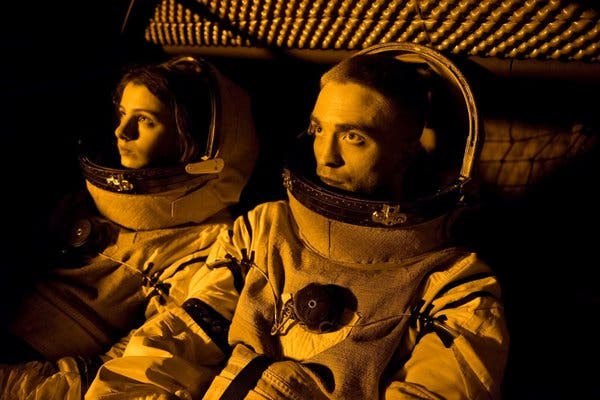
High Life is a recent sci-fi film by French director Claire Denis. It stars Robert Pattinson and Juliette Binoche as travelers on a spacecraft on a one-way mission to harness the energy of a black hole. And perform experiments.

The twist? There are two. Number one: all onboard are death row convicts. Number two: the experiments involve trying to bring a baby to term in deep space.

That all sounds like a run-of-the-mill sci-fi plot. High Life is definitely, absolutely, 100% not. Like I said, it’s revolting. It’s graphic. There should be a whole list of trigger warnings attached. Every trigger warning ever invented.

But it’s also beautiful. Beautifully shot. Beautifully scripted. Beautifully acted.

I was never a Twilight fan. I watched the first one in German and that was enough. But Robert Pattinson is one hell of an actor. His character is reserved (mostly) and mysterious enough to not be annoying.

Juliette Binoche is a madwoman in every sense. The rest of the cast are all great — intense and hateful — with the exception of Andre Lauren Benjamin (aka Outkast’s Andre 3000), who plays a convict full of regret for what he left behind on Earth.

High Life is not for everyone. Some scenes were straight-up sick. Still, this movie is one hell of a trip.

Sensuality, Shakespeare and Stranger Things

Where the hell has Winona Ryder been?

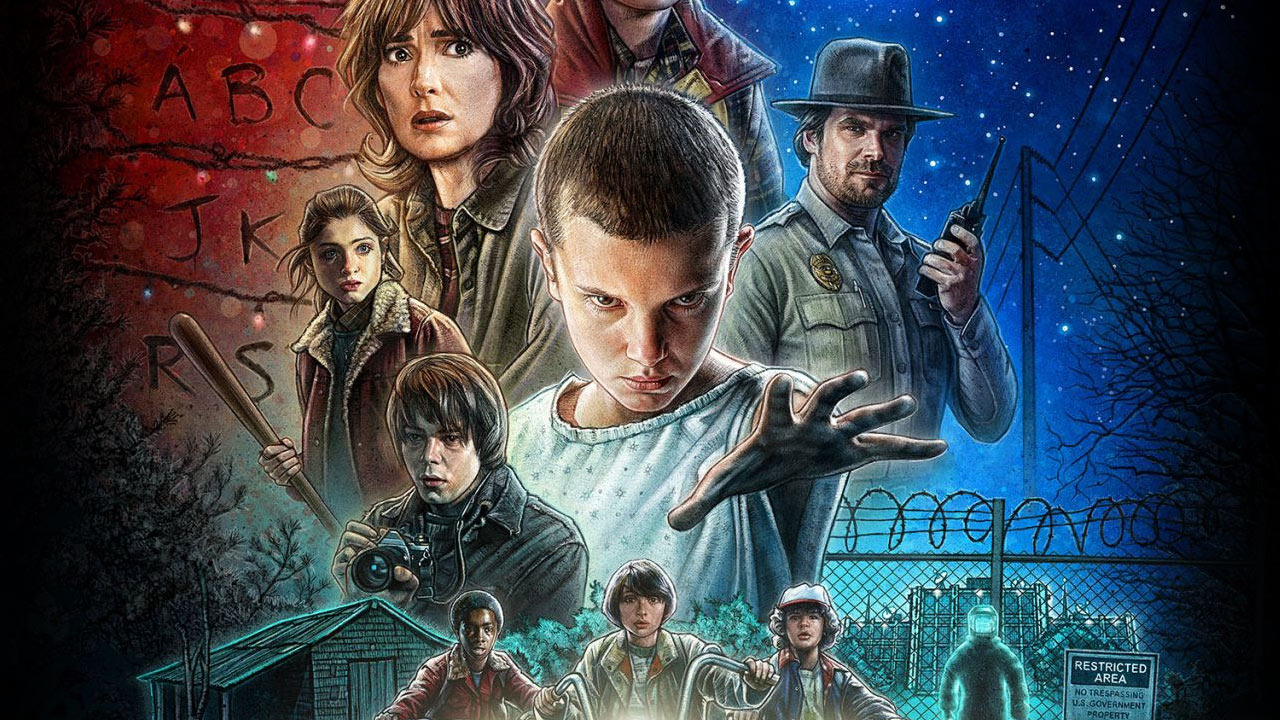
Like half my friends, I just finished binge-watching Netflix’s Stranger Things, an eight-part sci-fi/horror series that’s partly a homage to the 1980s. Overall it was very good, both addicting and entertaining, once I was able to slide into the story.

strangerthingsthumbjpg-6ab191_1280w

A lot has been made of the fact that Stranger Things is set in 1983, and the directors took great pains to ground the series in that time frame. The senses are constantly distracted by elements from the early ’80s — from music to the clothes and hairstyles to the decor of the houses.

I appreciate the effort, but it was overkill, too much of a good thing, and it distracted from the story. Having been alive and aware in 1983 I kept finding myself questioning how accurate it all was, and it seemed too dated.

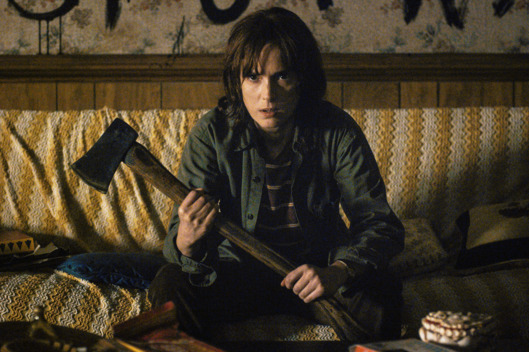
Luckily, in a stroke of brilliance, they cast Winona Ryder as the lead. She played against type — the woman who made her name as a quirky everywoman played a worried, desperate, and unstoppable mother.

Winona

Winona Ryder is about my age, and when I was younger a lot of guys I knew had crushes on her. But to me she always seemed unformed. She a girl, not a woman. I didn’t get the attraction, and I never followed her career.

Winona_RyderIn these intervening years she’s had some not-so-secret difficulties, as we all have. And when I look at pictures of her now — she’s hot. She’s a woman now, a fully formed adult with all the complications that brings.
In Stranger Things Ryder was effective not just for her acting, but because, in contrast to the set, she was not stylized. She was gaunt and frail. Ryder’s pixie quality was a strength here, as we saw a woman who’s been beaten down by life in many ways but keeps fighting.

Coincidentally, last week I saw Shakespeare’s Troilus and Cressida in Central Park. One of the actors listed in that play was David Harbour as Achilles, a rambunctious warrior torn between his fellow soldier/boyfriend and a woman he pines for back home.

Harbour, unfortunately, dropped out two days before I saw the play. He tore his Achilles tendon during a performance (you can’t make that up). However, when I started binge-watching Stranger Things the next day, whose name pops up in the credits?

David Harbour, as Chief Hopper.

david-harbour-stranger-things

Like Winona Ryder, he brought a physicality that rooted the show. In one of his earliest scenes he’s outside shirtless smoking a cigarette after a hard night of drinking. He’s pale with a paunch. He’s tired. He’s hung over. And he’s real in a fully relatable way.

Watching Stranger Things was a totally different experience than watching Troilus and Cressida. Compared with television, it’s harder for me to lose myself while watching a play. I’m hyper aware of the fact that it’s fake. Troilus and Cressida was hard-charging. The actors were loud and physical. There was constant movement — touching, scrapping, fighting. The play used these sensory elements to draw me in.

Stranger Things, while fun, was using the sensory elements of 1983 (or a close approximation) as a wink to the audience, and it was distracting. Luckily they cast Winona Ryder and David Harbour as their leads. They were natural, and by using their physicality to ground the show, they ended up saving it.


Aliens: do they look like us?

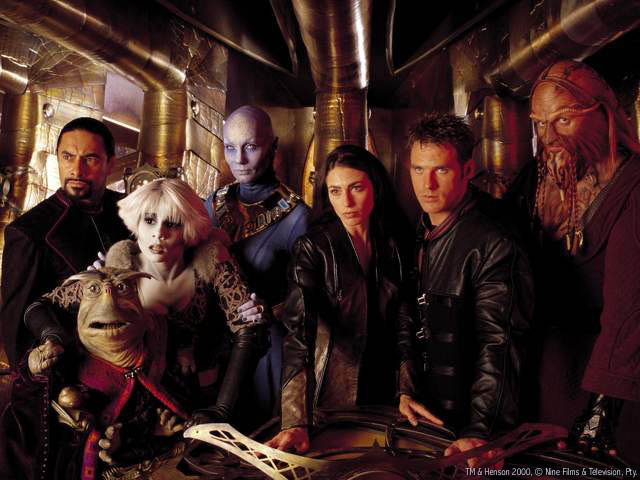
If anyone’s noticed, one of my minor obsessions is alien life. I’m not one of those who believes we’re being probed by Roswell-style aliens. My interest is more about fantasy (and maybe reality). If there’s a book or movie with aliens in it, chances are I’ll be interested. Take one of my favorite TV shows: Farscape. Human dude gets mixed up with a bunch of renegade aliens. What more could you ask for?

FARSCAPE

But I also love the scientific aspect of the search for extraterrestrial life. As we discover more Earth-sized planets, the question of extraterrestrials becomes more of when we’ll find them, rather than do they exist.

I’ve written about why we haven’t found any evidence of alien life yet. (short answer — we don’t know why). If we do find intelligent life, what will it look like? For Star Trek alienyears I’ve thought that alien life would be wildly different from our own. Not like Star Trek, where the aliens are basically humans with a few bumps and ridges, and a little different hue. Instead, the real aliens would, due to evolutionary forces unique to their home worlds, be more bizarre than we could fathom.

Not so, says a professor named Simon Conway Morris from Cambridge University in England. Evolution is a streamlined process — it selects the features best suited to thrive in life. And independently, different species evolve similar features (eyes, for instance). If this takes place on Earth, then the same process would apply on other planets.

He also states that evolution has produced life suitable for its environment. If you want a sophisticated plant, then you design it as a flower or tree. Aquatic animals would be fish-like, and creatures that fly would have wings.

The question remains, though, what about intelligent life? Could we assume that Calculating Godthey would look like us only because we’re the first intelligent species on the planet?

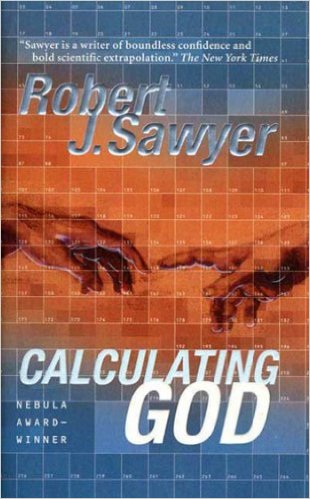
In his novel Calculating God, sci-fi writer Robert J. Sawyer had a intriguing take on ETs. Two different intelligent species contact humans. Both are similar proportion and of similar intelligence to humans, though one is a spider-like creature. These aliens were very like us, suggesting that intelligence is linked less to physical resemblance than to shared understanding, beliefs and values.

I guess someday we’ll find out the truth. Or maybe we truly are alone after all.