Battlestar Galactica Rewatch Part 3: Major Themes

(For Part 1, see here; for Part 2, see here.)

Some years ago I wrote a post asking if Battlestar Galactica was too religious. To this day it remains one of my most popular pieces. Controversial, too. Not because of the meat of the post itself but because some people just don’t like religion. At all.

But let’s put aside whether or not religion is good or bad or whatever. Let’s instead focus on religion in Battlestar Galactica. After rewatching the entire series I can say with 100% confidence that one of the major themes of the series was in fact religion. Not just religion, but God and our place in the universe.

In my opinion, Battlestar Galactica was one of the most overtly philosophical television shows of this century.

In the series we had two separate camps when it came to religion. First were the 12 colonies, each named after a zodiac sign (astrology—a quasi religion in my view). The colonists paid reverence to the gods. Not a single god but a collection, patterned off of the Roman gods. Devotions, sacrifices, all of that.
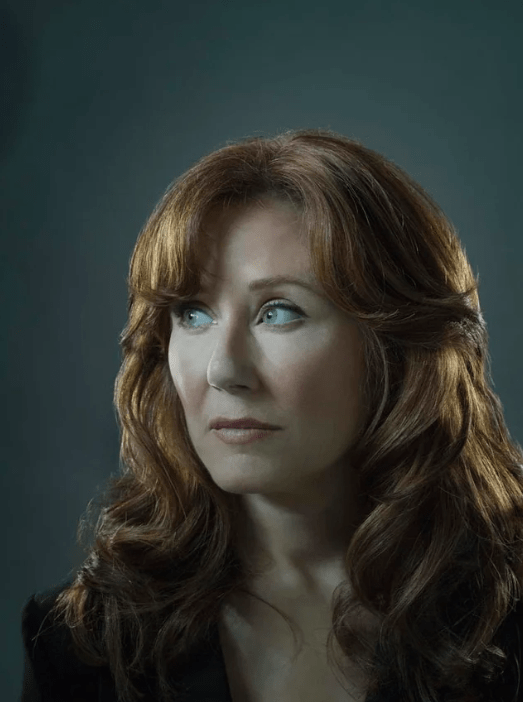
One of the most religious characters among this religion was President Laura Roslin. I can’t say for sure what her level of faith was before the events in the story, but when we meet her, she’s just been diagnosed with terminal cancer. She turns to the gods and takes solace in the scrolls of Pythia, which foretell of a dying leader who will take her people to safety. She’s beset by dreams and visions (drug induced?) that she takes for messages from the gods. Her faith, whether or not conditional, is in the forefront of the storytelling.

And then we have the cylons. The Caprica who appears to Gaius Baltar talks of one true God, a God who had a plan for everyone. It’s obvious what the writers were doing here: contrasting a pagan faith of offerings and visions against the Judeo-Christian singular God who had an individual connection with each of his creations (children).

The show ping-pongs between these two world views. It also provides an interesting commentary. For both camps, the colonists and the cylons, their religions/faiths don’t necessarily make them better or more virtuous. If anything, they use their religions to justify their actions. It’s pretty convenient that at first, the cylons view killing billions of colonists as part of God’s plan.

That’s a pretty dark view of religion.

But Battlestar Galactica is suffused with religion, with belief, with gods or God, and that’s part of what makes the show so interesting, even 20 years on.

The second major theme of the series is one that’s become a sci-fi trope: what is the definition of personhood? Are the cylons persons? In the series this question arises with the twelve humanoid-looking models. And no character best represents this than Sharon.

There were two significant Sharons in Battlestar Galactica. The first was Boomer, an ace fighter pilot in the Galactica. What Boomer did not know was that she was a sleeper agent. She believed she was human. She’d had memories implanted. She was in love with Galen Tyron (who turned out to be a sleeper cylon himself, though not one of the baddies). Then she was activated and shot Adama, nearly killing him. The series portrays her struggles to retain her humanity even as she loses her world.

Then there’s Athena, the other Sharon. On the cylon-controlled Caprica, this one pretended to be Boomer in order to trick a stranded Karl Agathon. She always knew just what she was. But somewhere along the way she fell in love with Agathon. They return to the Galactica and she dedicates herself to fighting her fellow cylons, along with having a daughter, Hera, the first human/cylon hybrid.

The series made a strong case for the humanity of both these Sharons. And there were other models thrown in there too. When colonists brutalize one of the Sixes, for instance, who’s the monster? On the flip side, let’s go back to the miniseries, when Caprica snaps the neck of a baby. Monstrous. Inhuman. But…she changes and grows and eventually leads a faction of cylons to seek another path with the colonists.

There’s a third major theme of Battlestar Galactica, and in my view, it’s the weakest. Keep in mind when the series first aired: 2004-2009. America was coming off 1) a major terror attack, 2) paranoia about sleeper agents, 3) critiques of blowback from decades of botched foreign policy, and 4) not-successful invasions and occupations of Afghanistan and Iraq.

At the time I remember reading commentary stating outright that the series was a response to the GWOT, and if you look closely at the storylines you can definitely see it. We’ve got an angry foe seeing revenge, a clash of civilizations, rampant terrorism, sleepers (cylons), and then the cylon occupation of New Caprica (one of the weaker storylines). We’ve also got brutality and torture galore.

As a larger commentary on American society of the zeroes, this comparison leaves me kind of flat. Don’t get me wrong, within the confines of the show, this all worked. But maybe I’d just not rather relive those dark days.

Next up: the hits.

Why I can’t read any new Stephen King

This isn’t an easy thing for me to write: I will never read a new Stephen King novel again.

I grew up on King. When I was a teenager I devoured his books: Carrie, Firestarter, Thinner, The Talisman, Eyes of the Dragon, Pet Sematary, It. He was (and still is) a fantastic storyteller. He creates characters who feel real and alive, and in his horror, he captures real fears we all have and relays them to us in ways that keeps us awake well past dark.

I stopped reading him for several years — no real reason, except that there are so many other books out there. Then about five years ago I picked up The Dark Tower. Wow. It floored me. The Dark Tower was King at his best — wild, madcap, bursting with imagination, and populated with characters who seemed as real as you or me. Roland Deschain, the gunslinger and hero of the seven book Dark Tower series, is one of my all-time favorite characters. The seven books of the Dark Tower series weren’t perfect. There was way too much fat. And partway through the series he introduces a character named Stephen King, a writer of horror movies. This was his only major misstep in the whole series; it nearly broke the illusion for me. But I was able to overlook this. Even the ending, controversial to some, was brilliant to me.

Then I made the mistake of reading Under the Dome, his book about a town that’s mysteriously trapped beneath an impenetrable dome, and I realized a few things:

–I’m tired of reading about small-town Maine. The characters in Under the Dome were way too similar to those in his earlier books.

–King’s world is black and white. I like gray.

–King’s writing is devoid of all hope.

That last part is crucial. First, let me be clear: King’s talent and skill are undeniable, and his work ethic is something we should all emulate. But when I write, I must come from a place of hope. Even in the darkest stories I write, there exists a thread of hope, no matter how thin. In Under the Dome, there really was none. The basic message was this: the world sucks, people suck, and ultimately we’re all powerless. I trudged through the 1000 plus pages, hoping for at least a stellar ending, but the ending I got was one of the worst I’ve ever read. It wasn’t even good enough for a bad Twilight Zone episode. It was arbitrary and it made me regret wasting my time.

And now I just finished his latest, Revival. Where do I begin?

First, the good. King is a master of a unique premise, or, at least a premise that would have seemed obvious, but for some reason wasn’t. For this book, he infuses horror into the well-worn cliche of the faith healer. You would think it’s been done to death, but I can’t think of another case. And he works in clever homages to Mary Shelley’s Frankenstein and the cold horror of HP Lovecraft.

But first you have to sift through the boring life of one Jamie Morton, who is well meaning enough, but nothing more than a way for King to relay the glories of his small town baby boomer generation. I grew up in the shadow of the baby boomer generation. Never again do I want to hear about how cool or special their lives and culture were. Thank God for that skill known as skimming pages.

Jamie aside, King gives us Pastor Charles Jacobs. In Jacobs we have someone who is much more compelling — a man of God who loses all faith when his wife and son die in a horrific accident. King deftly describes the accident, sparing none of the gore. And he paints a brilliant picture of a man shattered.

Unfortunately it’s told through the bland eyes of Jamie, whose motivations are never quite clear or understandable. There’s an attraction between him and Jacobs, something that keeps them coming back to each other over the years, but it’s never explained. We’re just expected to go along until the bleak, bitter end.

And what an end it was. The world of Revival is one of utter horror, with no hope of escape. In the end, Jacobs and Jamie glimpse the afterlife, and its a hellish afterlife awaiting every man, woman and child. I’m not a psychologist, but I’m guessing Stephen King hates religion. I’d bet he doesn’t even believe in God. Fair enough. A belief in God is by no means a prerequisite for a good and happy life. But what King gives us is an inversion of God and religion. Not only is there no purpose to life, but we are insignificant, and will suffer cruelly no matter what we do.

Revival, similar to Under the Dome, is a book about being utterly powerless. It is a book that contains not a single shred of hope. In fact, hope is systematically killed off until nothing but despair remains.

Revival left me feeling pretty low. Yes, I know it’s JUST A BOOK. But one of the reasons we read books, watch TV, go to the movies, listen to music, etc, is to feel transformed. We’re looking for something to feed our souls, to make us feel alive, to affirm the beauty and goodness of life. King’s Dark Tower series did this for me. But these last two books — Under the Dome and now Revival — did the opposite. All they did was bring me lower.

Stephen King is a wildly talented and successful writer. I can’t speak for his state of mind (I wouldn’t presume to do so) but I hope he’s not living in a place of darkness. I’ve loved being a part of his literary word, but it’s time for me to let him go.

Was Battlestar Galactica too religious?

Is there a role for faith in sci-fi? I say of course, but the battle simmers.

Image

This recent post from a Netflix-sponsored blog brings up the issue of religion as discussed in the 2000s now-classic series Battlestar Galactica. The four-season-long reboot of the 1970s show was well written, well acted, and wasn’t afraid to take on the big issues of the day (the opening battles of the global war on terror). But by the time the show ended its run, there was simmering controversy among its fans: why end it with all the overt religious references?

I would say they weren’t truly paying attention.

Battlestar Galactica in its fun and campy 1970s incarnation was an allegory for Mormonism. And it was great television sci-fi, even to my 7-year-old mind. When it was relaunched it kept a strong element of religion. The cylons were inspired by the one true god, and they despised the humans not only as their creators, but for their polytheism. The cylons consistently talked of “a plan” and of their faith in god. Meanwhile, the humans always implored and paid tribute to their Greek-named gods. Take a look at this promo picture below. Can this get any more overtly religious?

Image

So if the religion was in the DNA of Battlestar Galactica, why the controversy?

Two reasons:

–There are many in the science community–and the sci-fi community–who see religion and science as antagonistic. They view science as the antithesis of religion. Therefore, having a sci-fi show that takes religion seriously (and not just as a metaphor or a plot device) is at its heart a betrayal of all that is sci-fi. I am not one of these people.

Battlestar Galactica fully embraced religion. It took faith seriously. However, it failed in that it used the mystery of religion to paper over plot holes. The biggest: when Starbuck disappeared, seemingly died, and came back. Was she some sort of angel? Was she reanimated? The writers never even tried to explain. Faith was used in the wrong sense. The viewer was expected to have faith that things were happening for a reason.

Image

What reason, though?

Unfortunately we were never given a satisfying answer. All we heard were things like “this has all happened before, and it will all happen again.” Uh, ok.

The cause for the Battlestar Galactica controversy are twofold – one inevitable and the other avoidable. All in all though, the series is brilliant television. Its strengths far outweigh its flaws.