During my exploration of the reboot of Battlestar Galactica I’ve been pretty non-critical of how they handled the series (See Parts 1, 2, 3, and 4 here). Just so I don’t sound like a mindless fanboy, I’ll delve a little deeper into some of my criticisms of the series. After all, nothing in life is perfect. So here goes…
New Caprica
By the end of season two, the colonists are cramped on their ships, tired of fleeing the cylons and giving up on searching for an Earth that doesn’t want to be found. Life isn’t going so good for them.
Meanwhile, the cylons are having issues of their own. Their plan of domination isn’t as simple to achieve as they imagined. And, we have a couple of prominent cylons who begin to doubt the plan. After Boomer shoots and nearly kills Adama, she’s killed and resurrected and is living in conquered Caprica City as a hero among the cylons. Caprica Six, the one who got the nuclear codes from Gaius Baltar, is also in Caprica City, and also a cylon celebrity. She’s been seeing an “angel” in the form of Gaius, and she’s having her doubts about the cylons’ plan of wiping out all of humanity. Together Boomer and Six convince the cylons to try and live together with the humans, rather than wipe them out.

Only “live together with” doesn’t quite mean what we think it should mean. When the humans find a barely habitable planet (named New Caprica), they vote to abandon the search for Earth and settle there. All’s going so-so and then the cylons arrive, not to slaughter the humans but to lord over them. For several episodes (it felt like forever), we’re treated to a planet-bound show about insurgencies and counter-insurgencies. Not exactly thrilling.
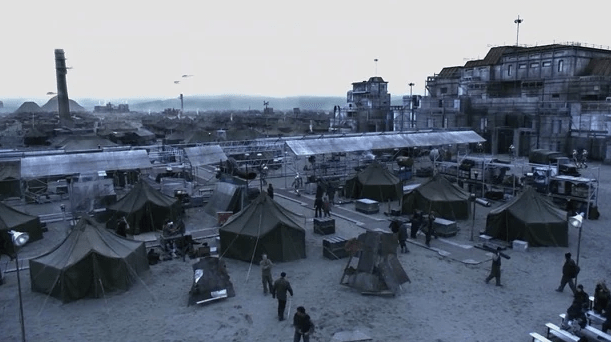
I remember reading that the writers were trying to write a commentary about the US invasion and occupation of Iraq. ATTENTION ALL WRITERS: be careful using your fiction to critique real-world events. Most times it lands with a thud.
The New Caprica storyline was planet-bound and plodding and, like the colonists, mired in the mud. We got time jumps, which were kind of cool, and we got to see the cylons battling each other, but that’s about it in terms of excitement. I for one was glad when they abandoned that planet and that story for good.
Apollo Loves Starbuck
Another storyline we were forced to deal with during the New Caprica muddle was this stupid romance plot. Let’s leave aside the fact that in the original series, Apollo and Starbuck were a couple of dudes and definitely didn’t hook up. But I guess that with Starbuck’s sex change, the writers decided, hey why not have them bang?
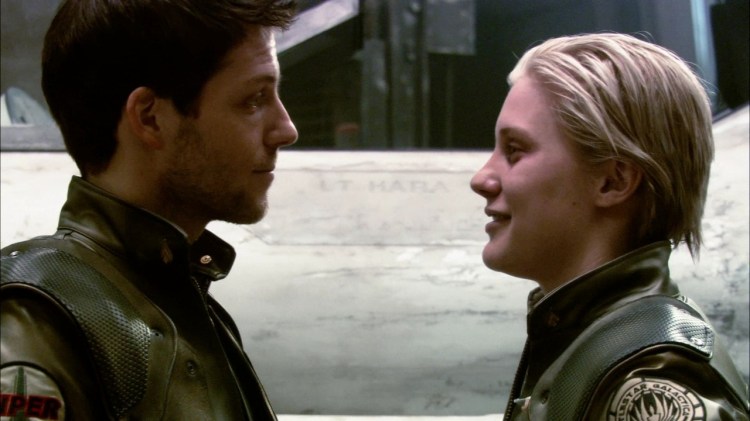
Honestly that’s what it felt like: dumb and crude.
The Starbuck in the reboot wasn’t just some random pilot. She’d been engaged to Apollo’s brother, who died in an accident before the events of this series. She was almost his sister in law. They were almost family, they were friends, they were co-workers. And, again, I repeat myself, the writers decided, hey, why not have them bang?
The writers used this storyline not just to bore us, but also to foul up the marriages of Apollo and Dee, and of Starbuck and Sam. Those relationships could have been much more interesting. Instead they were tossed aside. Plus, while the actors who played Starbuck and Apollo were fine, there wasn’t much chemistry between them.
Rather than a full-blown affair, an undercurrent of unrequited lust would have worked much, much better.
Too much filler
We were blessed to get 74 or so one-hour episodes of the series spread over four seasons (plus the miniseries and a couple of webisodes). But with all that time to fill, you’re inevitably going to get some filler episodes. And boy did we. The one that stands out most for me was called Black Market, where Apollo investigates the fleet’s black market. We get corruption. We get mafia. We even get a prostitute. Hell, we might as well have been watching a wholly different series.

There’s more, of course, and I won’t go through it all, but I think we’ve been spoiled by the Netflix and Amazon Prime model of television viewing. It used to be that a series got picked up season by season for a preset number of episodes, say 20, per season, and the writers were expected to deliver all those hours. Today the series is sold all planned out, if not the entire arc of the show over several seasons, then as one complete season. We’ve become used to tighter stories with less filler.
This leads to another of my critiques, which is…
Plot Holes
All the best shows and books and movies have them. Battlestar Galactica isn’t immune. The most glaring to me, even though I loved the storyline, was the Final Five. When Saul Tigh, Adama’s oldest and closest friend, was revealed to be one of the Final Five, I kept trying to untangle the timeline. He fought in the first cylon war, but he also came to the metal cylons from the bombed-out version of Earth, helped them end the war and create the humanoid cylons.
Or something like that.
Can someone explain that timeline to me?
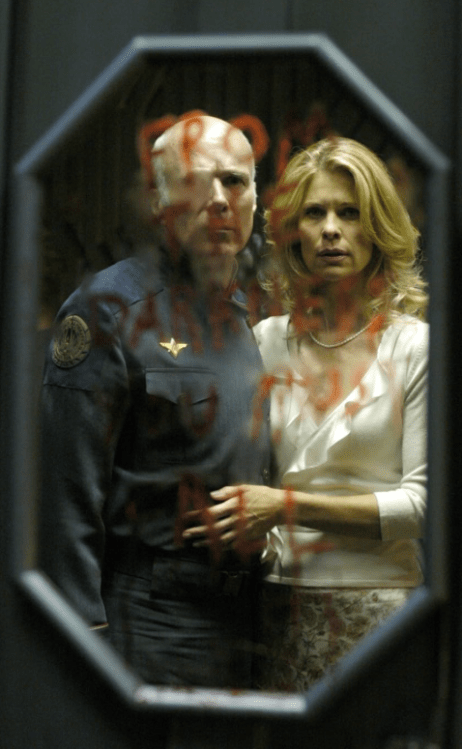
I get what the writers were tying to do. Having Tigh and his wife, Ellen, be cylons was dramatic and Tigh’s “betrayal” hit Adama, the most prominent character, the hardest. The others: Ellen, Sam, Callie, Tyrol, I could totally buy, and I liked them as cylons. But Tigh? It just felt like a sinkhole-sized plot hole, and it made the identities of all the Final Five feel shoehorned in, as if the writers decided sometime during season two to add them to the show. (Evidence for this, Tyrol and Callie’s son was revealed to be a product of her unfaithfulness. He had to be, otherwise, Athena as the human/cylon hybrid wouldn’t be special.)
Another plot misstep was the mythical nature of Kara Thrace, aka Starbuck. The writers threw in something vague about her father, and childhood visions from the Lords of Kobol, and then she’s the harbinger of doom and she vanishes and reappears and then she finds her own corpse on the bombed-out Earth and at the very end she vanishes while Apollo is talking to her as if she’s an angel or a ghost or something. If there was a plan here, lord knows I had no clue.

Speaking of plans, we were continually reminded that the cylons had a plan. What exactly was this plan? Kill every last human? Breed with them? Live in harmony with them? The Caprica Six in Gaius’s head (an angel or something) continually talked about God’s plan. Which was what? I swear I’m not dumb but this plan was always cloudy to me. It didn’t detract from my enjoyment of Battlestar Galactica, but when you’re reminded every episode that the cylons have a plan, it’s hard to get it out of your mind.

So that’s it for my review of the reboot of Battlestar Galactica. Despite the theme of this final post I truly loved this series, and if you haven’t watched it for some reason, start tomorrow. Or maybe now.


 Read by Kevin