We’re back for another round. The challenge: write a story in 20 minutes using the following prompts:
Characters: Heart surgeon and Astronaut
Setting: A wine cellar
Genre: Cozy mystery
Trope: A very cheap date
POV/tense: Third person future
And the result:
The Case of the Orange Feather
It will be Betty who first notices the safe. Open, with a single orange feather resting on the bottom.
“That wasn’t like that before,” she’ll tell Alex.
“What do you mean?”
“When you first brought me here, down here to this wine cellar, of all places…”
“Of all places, what do you mean by that?” Alex will say.
“A first date is supposed to be romantic. Dinner, candlelight. Not, mildew and hypothermia.”
He’ll slide up close to her and wrap an arm around her. “How could I ever impress the best heart surgeon in the county by dropping five Benjamins at a steakhouse. I know that a woman like you deserves better. So I figured I’d bring you to a wine cellar—I was on the space shuttle a decade ago with the guy who owns it—and we can explore a little.”
“Explore as crack open a bottle of something pricey?”
He’ll raise his hands in mock surrender. “Hold on now, these bottles go for a grand a pop. I don’t think so.”
She’ll grunt at him, deservedly so, but she won’t be ready to end the date, not quite yet. “What about the safe?”
“What about it?”
“I know for a fact it was locked when we came down here. Did your friend, this mysterious friend, come back in when you were leading me through one of the caverns here?”
Alex will scratch his chin. “No.” He’ll reach in the safe and pick up the feather. “Strange. My friend has a parrot back home. But I don’t think it had orange feathers. Or did it. Hey, do birds have orange feathers?”
“I don’t know.”
Suddenly the lights will turn off. Betty will yelp and Alex will reach for her hand in the dark. She’ll find it and grab it. Then he’ll whip out his phone and shine the flashlight, revealing nothing but dark rows of dusty wine bottles.
Behind them, a crash.
“What was that?”
“I…I don’t know,” Alex will say.
“If this is some kind of practical joke, or scheme to make you fall for me…I know about how adrenaline can affect people, and I’m telling you, I’m not falling for it.”
“This isn’t a game. Trust me.”
Together they’ll walk closer toward the sound of the noise. They’ll turn a corner and see on the floor a busted bottle of 1901 Pinot Noir, the red wine flowing in a rivulet until it reaches a man’s loafer, and attached to the loafer a leg, and a body. While Alex shines the light on the man Betty will reach down and with her trained hands she’ll determine that the man is indeed…
“Dead,” she’ll say.
“I’m guessing he was stealing this prized bottle when he bit it,” Alex will say.
Betty will raise her hand to her mouth. “Who could have done this?”
Alex will hear a rustling from above. He’ll shine his light up and spot the biggest parrot he’s ever seen, the proof of what the parrot did on its claws and beak.
“Guard parrot,” he’ll say. “Who would’ve seen that coming?”
Here’s the latest entry in the structured, timed prompts series. This one’s called Person, Place, and Thing.
The set-up: take ten minutes to write intensively about a thing, a person, and a place (that’s ten minutes for each). And then, take another ten minutes to weave all three into a story. The purpose behind this exercise is to develop descriptive skills, to learn how to really get into the language behind whatever it is you’re writing about.
Here are my results:
Thing
No one knew where this lighter came from. There were no identifying markings on it. No made in China or USA or wherever such things are fabricated. No name. Not a single word to place it somewhere in the universe. It was larger than most lighters typically are. It felt meaty, solid in your palm, like something forged for a king or a queen. Its case was gold, not pure gold but steel colored in gold, or so one assumed. On one side the image of a dragon with ruby stones for eyes, its scales raised as if it longed to break free of its metal prisons. On the other side was a heron with a slender neck and long beak that jutted out to a sharpened point. Its feathers felt light to the touch, almost. If you stroked your finger along them you might think they were real, as if a bird could be shrunk and trapped in metal. Its lone eye visible in profile was a purple gem.
The lid sat tight on its hinges, with two fingers needed to pry it up, the light wheel so finely serrated it almost felt like silk, and it glided with just a flick of your finger and sent a spark that blinked and sputtered, and then the flame, uncontrollable and ravenous and shooting up inches into the sky, so bold and cruel that if you held it too close to your face it would singe your eyebrow clean away.
Person
Molly wasn’t a crier, that’s what she always insisted but she knew in her heart it wasn’t the truth. She’d only cry alone, in her bedroom, the place where she could lock the world out, the place where she could see herself as she believed herself to be: old at 45, too old. She wore clothes that never quite fit her right: too tight in the middle or too loose in the shoulders, never hugging her hips as she believed they should, but always colors, the bolder the better, a dare to herself; she never wanted to be looked at, but she insisted she needed to get over that silly insecurity, though she never did. Hair that never fell just right, light brown that frizzed with the slightest humidity, resistant to any product, hair in a constant state of rebellion, a rebellion that the teenage Molly never dared to partake in.
She considered herself not quite pretty but not quite plain. But there was one thing she appreciated about herself—appreciated more than loved—her eyes, wide and violet, an almost unreal color, blue edging close to purple, and with those eyes she compensated for the litany of shortcomings that looped through her mind. She used her eyes to capture people. Tame them. Her eyes made friends of enemies.
She’d tell herself out loud that she could heal all those old wounds that never seemed to stay closed, that she needed to, and she’d wring her hands together until her joints burned. But even with all of this she managed to hold on to that one bit of crucial hope that despite the past, the future would be hers, her lined and unlipsticked mouth set firm with a smile.
Place
Somewhere in the distance a fire burned. Smoke not unpleasant but somehow rude, filtered through air that carried the scent of the sea. Just a few people sat out here on this beach with sand so fine-grained that it almost felt like water, sand that seemed as if it would swallow you up but not with any evil intent but with love. The water lapped the shoreline with slow rolls that emanated a hum, rhythmic like a heartbeat that pulsed along the sand and reverberated through your body. A smattering of palm trees weak and lonely edged the sand behind you, and behind them, the lights of the houses, eyes that stared at the ocean that stretched out into a black infinity. Every so often a voice would carry through the night, a woman’s shrill laugh, a man’s rough bark, these noises alien and jarring, interrupting the calm, breaking something precious. Figures moved near that distant firelight, jostling and rolling and shifting, so distracting that you’d have to blot them out from your existence and focus solely on the warm breeze and the fell of the sand and the sheen of salt that hugged your skin and the forever ocean that whispers to you that there’s so much more to this world than what’s behind you.
And the story
Truth be told Molly hated that lighter. It belonged to her grandfather, and he willed it to her thinking that he’d done her a favor but she couldn’t help see it as a curse. It was bigger than a normal lighter, gold but not real gold, weighing heavy in her hand. She did love the dragon on one side. When she was a girl she’d named him Clyde and imagined that this red-eyed beauty would break free of its metal cage and swoop out and burn everything down, everything except for her, of course. Or that the heron on the other side, with its one eye a purple so close in color to her otherworldly eyes, would fly free and carry her off to that secret kingdom where she was originally from, the one she belonged in. She’d named the heron Matilda.
Still, she hated the lighter because it was the last remnant she had from her own family but she could never get rid of it. She stared out at the ocean, so black and calm and endless. She felt the pulse of the waves as they lapped the shore in time with her own heartbeat and she wished she could stay on this moonlit beach the rest of her life, her frizzy hair be damned. The world would just have to get used to her wildness, then.
She caught the scent of the bonfire, far away but not far enough. Who were they? Those happy people laughing and shouting, moving ghoullike in the glow of the fire. She considered going up to them, luring them in, making new friends but she declined. Not this night of all nights.
It was a necessary thing, she told herself, and she would cry about it later. Perhaps. But she’d only do it alone. Not in front of anyone, not ever. She cradled the lighter in her hand and on a whim she pried open the too-stiff top and flicked the light wheel and watched the flame soar and flicker and she shone it on her bare ring finger with its band of pale flesh and she felt no sadness, no regret. She hovered the flame close to her skin, just enough to feel the heat but she had no intention of hurting herself. She vowed she wouldn’t do that to herself, ever. She was single, once again, as she always should have been, perhaps. She closed the lighter’s lid and let the moonlight coat her and she stared out into the black sea that promised her some new forever.
When thinking about writing this piece you’re reading at this very moment I struggled to find the correct word to use to describe a specific type of incident. Every word I could come up with felt wrong, and for a writer, that’s one of the most frustrating feelings.
So I gave up searching for that perfect word and kept on working the concept for this piece in my mind and then I sat down to write it, which is actually similar to the writing process for my recently published short story, Splinter, a tale of brothers Nate and Hud and their tangled dependency.
Here’s where I got stuck. November/December 2023 was interesting for me. I had three events happen to me in quick succession, three intense events. Each one on its own was something to handle. The three piled up led me to write Splinter as an outlet for what I’d experienced.
Now, what to call them. My first go-to was Trauma. But that word is so overused in our current society, it’s become a cliché. If everything can be traumatic then nothing is really traumatic. Incident? Police procedural Events? Bloodless. Nothing seems to fit.
So I’ll switch over to the three things (ugh I hate that word) that led me to write Splinter. I’ll skim over the first two, for personal reasons. One involved a family member over Thanksgiving that painfully plucked at old childhood strings. The second involved a night that included shrooms and whiskey and a friend going through some serious shit, probably among the strangest nights I’ve experienced, which is saying a hell of a lot if you know me.
The third was a garden variety street attack I experienced, where I was slammed to the ground by some asshole. I landed on the concrete on my back, upper left side. He was long gone when I got up. I felt fine. I think I even laughed. The next day and for a couple weeks later I had a sharp pain in my back. I told myself that violence is just a part of being a man in this world, of being a human. In other words, cope and denial.
Mostly I can handle pretty much anything that’s thrown my way, at least that’s what I tell myself. But this triplet pile-on began to claw at me. My dissociative skills were having trouble managing them, so I turned to my what’s been my salvation: writing.
The concept of Splinter is an ancient one. It has its roots in the Genesis story of Cain and Abel: two opposite brothers who (can or) cannot coexist. The challenge I gave to myself was as follows. First, incorporate all three “events” to some degree. Second, thread the needle between realism and speculative fiction. Third, take a panoramic view of the lives of Nate and Hud.
None of this was easy.
First lets get to the technical challenge. Rather than focus on a single event, I chose to lengthen the story out and follow the brothers over several years. I jumped back and forth through time. I interspersed Nate’s “splintering” with his recounting events in the past with a part of the story set in real time. Not easy. What I did was develop different styles for each of the three sections in order to make it easy for the reader to know where they were at any given moment. This took tons and tons of work. Any writer who says that writing is easy is either not good at it, a liar, or incredibly blessed.
Regarding the speculative element, I absolutely love writing spec fiction: light horror, contemporary fantasy, sci-fi, anything with an element of unreality in it. I love how there are fewer limits on your imagination. I love the playful aspect to it. Could I add a speculative element to this story without cheapening it? I chose a very subtle approach (some might call it cheating). I embedded some speculative options, sort of a choose-your-own-adventure take on this story, letting the reader decide for themselves. I’d say it worked: this is the quickest turnaround I’ve had from writing a story to getting it published.
What about the emotional aspect? My primary goal was to work through those three events I’d experienced. How did I do that?
By being as honest as I could bear.
No story is successful unless you get to its heart, and in order to do that you have to cut through flesh and bone and bleed. You have to go to the most painful points. You have to leave blood on the page. That’s what I set out to do here. Most of Splinter is fiction, but some of Splinter is fictionalized, if not factually then emotionally. No, I do not have a drug-addicted brother, but I could transpose sets of feelings that are true. No, I did not witness (or have) a breakdown at my father’s funeral but I could connect feelings of abandonment.
And to me, that’s what successful fiction is: embedding your words with feelings that are true, even if the events are not.
A couple years ago I read the collected fiction of Flannery O’Connor, all of it, her short stories and her two novellas, from start to finish. She’s a master, and what she taught me is that you have to bleed on the page. You have to go to those places you don’t want to go. You can incorporate and reconfigure your own biography in your fiction.
Readers can tell when there’s something real on the page, and after all, isn’t that what we all want from the stories we read and listen to and watch– to feel something real?
We’ve all had at least one. Or two. Or several. You meet someone and you get nearly instantly hooked, despite all logic or reasoning. Yet you know, for reasons beyond your control, that it can never ever be.
The impossible crush. Sometimes the only possible thing you can do is to get as far away from it, however possible.
That’s what I tried to portray in my story, The Only Possible Thing, recently published on James Gunn’s Ad Astra, a website dedicated to sci-fi-themed speculative fiction.
This universal quandary was just one inspiration for this story. The second was the amazing novella by Ted Chiang, The Story of Your Life. It’s about a linguist who struggles to communicate with aliens. In the process, her conception of time is disrupted. Rather than experiencing time as a linear construct, she experiences it as a simultaneous occurrence. If this sounds familiar, it’s because the novella was adapted into the movie The Arrival.
I’ve always had a hard…uh…time with time. Yes, I experience it in a linear fashion, but on an emotional level, things that happened in the past often seem more present than the present, to the point where I sometimes feel my life as existing on a broad plan that stretches out rather than a taut line. Chiang’s story spoke to me, and I wanted to blend his motif with my emotional concept of time and the futility of an impossible crush that sends you to the farthest reaches of the universe where you confront not just your horrific destiny, but that pivotal moment that sends you there, a moment that lingers forever.
You must know, first, that every moment is merely one of a constellation spread across the sky of my life. These moments, here with you, are the only ones that matter, the only ones I never want to leave.
The process with the folks at James Gunn’s Ad Astra was both intense and rewarding. Rather than a simple acceptance (or rejection), they sent back a thorough list of questions and recommended changes. It took me some time to work through these points, and to be honest, it was a struggle, but in the end it only made the story better.
After it was accepted for publication, they provided me with the artwork that would be associated with the story (see above). I was blown away. I have zero visual artistic talent, and this image was more than I could possible have imagined.
620 pages. That’s how long this brick of a book turned out to be when I got it in the mail. Hell no, I thought. But then I started to read it and I didn’t want to stop.
Children of Time, the 2015 sci-fi novel by British writer Adrian Tschaikovsky, is a supremely imaginative story about one planet and two rival species vying for control of it. On the one side we have an ark ship of humans, the survivors of a spacefaring civilization that blew themselves up millennia earlier, leaving a rump population on Earth to reestablish technology and, one day, flee their dying home for the stars.
To where exactly?
Well, here’s where Tschaikovsky takes the trope of a colony ship in a wholly unexpected direction.
Let’s rewind. Millennia earlier at the start of that cataclysmic war, megalomaniacal scientist Avrana Kern was going to seed a terraformed planet with monkeys and a virus that would selectively enhance their evolution in favor of intelligence. Her creepy plan goes awry, and what we get is not a rehashed Planet of the Apes, but something much creepier, especially for those of us who are arachnophobes.
Spoiler…the monkeys didn’t make it to the planet, and the virus, which did, selected for intelligence mostly among the insects, the top dogs being a certain species of spider.
Centuries later, as the spiders evolve into a complex and intelligent society, that ragtag ship nears what they believe to be a green paradise just waiting for them to land and populate it. As you can guess, there will be conflict.
I won’t spoil the rest of the story. Instead, here’s my breakdown:
The good:
—Children of Time alternates between both groups. For the first hundred pages or so, the story and pace were riveting. I didn’t want to put it down.
–The writing is pristine and engaging. As someone who obsesses over words, zero complaints.
–Tschaikovsky managed to make spiders (not a fan) into sympathetic and relatable characters. He wove spiders’ natural biology into humanlike functions and hierarchies. He made it seem effortless, though I am sure this was the product of hours upon hours of research and craft.
–The human characters were all compelling. Even the minor ones seemed real to me.
The not as good:
—Children of Time sagged in the middle. There was a lot of back and forth that made me wonder if the writer had to figure out a way to account for the passage of time (and the spiders’ continued evolution). Also in the middle section, the chapters were overly long, when shorter and punchier would have been more effective.
–A subplot regarding the ship’s captain, while interesting, felt like it belonged in another book.
–While I liked the ending (totally unexpected), something about it felt off. Not sure what or why. It could have just been a pacing issue.
But these are minor flaws. I wouldn’t normally buy or recommend a 600-page book. Children of Time is a fantastic exception.
I’m back on my classics kick. Part of it is having read one too many contemporary novels that is way too formulaic. Same old tropes whipped out again and again. I don’t mean to knock them too hard. I’m guilty of the same sin. But sometimes you just want something different. And that involves going back a hundred years.
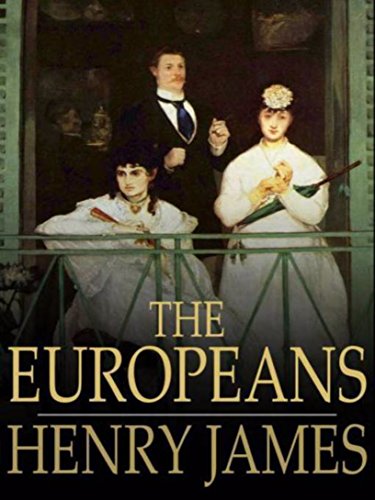
So here I am. With Henry James and The Europeans.
I’ve never read James before. I’ve heard of him (and his famous brother the psychologist William James). In my mind Henry was the stuffy writer of stuffy period slash costume pieces.
Not my thing.
But this book is short! Only a hundredish pages long, depending on what edition. I can handle a hundred pages. No problem.
Right?
Well, actually, yes.
The Europeans wasn’t nearly as painful as I thought it would be. In fact, it was kind of interesting.
Damning with faint praise? Not quite. Like I said, costume dramas about manners are not my favorite. What The Europeans served up, though, was a clash of civilizations writ small. Who doesn’t love a little war? (And Europeans, after all, perfected war, right??)
The basics: Eugenia (a baroness) and her brother Felix come to America to grift their American cousins, the Wentworths, a goodly Puritanish people in the Boston area. They don’t say out-and-out grift, but that’s basically what they’re doing. Seems Eugenia and Felix’s mother was Mr. Wentworth’s older half sister. She met some European dude, converted to Catholicism, and ran off to Europe. And here we are, 30 plus years later. Like many immigrants before them (my ancestors included), Eugenia and Felix are seeking their fortune in the new world.
Much is left out of The Europeans. Why did their mother leave? What was their life like in Europe? None of that seems to matter to Henry James, because he never tells us. What he does tell us, though, is details about what the Americans, and the Europeans, are thinking. If there’s one thing that Henry does excellently, it’s hopping from head to head to reveal what each character is thinking at any given time. Sometimes it’s interesting. Other times, eh. (I’m looking at you, Clifford Wentworth).
I expected a bigger clash. I expected fireworks. I expected a little inadvertent comedy. There wasn’t much of that. Instead what I got was an awkward overuse of the phrase “making love to” — used in a way VERY different from modern times. And a lot of first cousin love. Seriously. I guess first cousins marrying each other was a thing in the late 1800s.
I got through this “comedy” of manners fairly quickly, maybe because I was expecting more. That more never arrived. Still, it was fun to slip into the heads of these lightly scheming characters. A hundred pages I could handle. Four hundred I would have felt cheated.
Tor.com is the home to free short speculative fiction, always great. This short story, Mama Bruise, by Jonathan Carroll not only features great writing–the prose is intimate and clean–it’s also not at all what I expected. It’s billed as a story about a dog with issues. I was expecting something Cujo-esque. Instead it was stealthily heartbreaking and thoroughly unsettling. Read it.
2. Vietnam by Jon Grant
“Your silence is a weapon. It’s like a nuclear bomb. It’s like the agent orange they used to use in Vietnam.”
Jon Grant is one of my favorites. His musical style isn’t easily classifiable, but his voice is honey and his lyrics are mostly about heartbreak. He’s got a talent for employing strange and sometimes awkward metaphors. They don’t always land but they’re fun to listen to. In this song, he equates a bad relationship to the Vietnam war. It sounds like a stretch but it works. The video does, too. It’s just him, there, being filmed. It’s awkward to look at, which is the point.
3. Villanelle and the knitting needles in Killing Eve
Killing Eve is addictive, over the top, and pure fun. I love watching Sandra Oh’s Eve chase and be chased by the psychopathic assassin Villanelle. Even more than that, I love watching Villanelle get in and out of trouble. A recent example is when she’s holed up with a creepy older dude who has an obsession with dolls. Of course she escapes, and of course creepy older dude doesn’t fare too well. Thanks to knitting needles.
The Battle of Winterfell will go down as the second-best episode of Game of Thrones to date. Despite its darkness, both literal and figurative, it was a tour-de-force of writing, acting, and production. I could go on about how awesome a plotting job the writers did in getting Arya to the eventual place where it felt completely natural and earned that she would be the one to take down the Night King. I’m not. Instead I’ll focus on one brief moment of brilliance. Just before Arya stormed seemingly out of nowhere to attack the Night King, the hair of one of his minions is rustled. You think it’s the wind. It’s not. It’s Arya leaping in for the kill.
If you’re a fan of horror fiction and haven’t heard of Joe Hill, get yourself to the nearest bookstore now. For starters, check out his short story Wolverton Station. What you’ll get from Hill—and this story—is solid (if not a little workman-like) heart-thudding chills.
The plot: Saunders is a corporate hatchet man traveling the rails in England. He’s off to scout out new sites for a Starbucks-like chain called Jimi Coffee. He’s greeted not only by protests, but wolves as well. Soon enough he finds himself trapped among the wolves.
I read this story cold. All I knew was that it was horror, and I enjoyed Hill’s book Heart-Shaped Box, so I gave this one a try.
First, the good:
–Hill manages to create a complex, if not entirely likable, character in Saunders in a brief amount of time. I could not say that I liked him, but definitely felt for him.
–There’s some deft sleight of hand that Hill manages to pull off. At first it seems as if the story is classic horror, then it veers away from that, only to return with a vengeance. One of the hallmarks of good horror is to keep the reader always off-balance. I could never find my footing in this story, so well done.
–As the story rolls along, the tension reaches 10 out of 10. One of the most intense scenes took place on a train with no exits.
And the not as good:
–My main criticism is that Hill’s writing is, as mentioned earlier, workman-like. There’s nothing particularly new or innovative in his work. He is not forging new pathways in horror fiction, but he’s staying on the well-worn trails. But this is just a minor criticism.
So for some good horror thrills, check out Wolverton Station, and the rest of Joe Hill’s works.









 Read by Kevin