Waiting for the Doctor to return

As we sit here like young Amy Pond and wait (and wait and wait) for the British sci-fi classic series Doctor Who to return to us — the rumor is that we’ll have to wait until Christmas — here are a few tidbits to hold us over.

doctor-whoFirst, Matt Smith, the bow-tie-wearing previous Doctor, who we last saw die defending Trenzalore, told an interviewer at a Calgary sci-fi expo that he’d love to make a return.

“I’m just waiting for the next anniversary. I spoke to Steven (Moffat) the other day and said ‘what’s the quickest one we can do?'”

I’m not sure how I feel about that right now. The 50th anniversary show, which featured a few Doctors running around, was tons of fun but it got a little confusing. Then again, with the rate that Doctor Who episodes are produced, we wouldn’t be seeing Smith reprise his role until 2025 at the earliest.

And, there’s a very tenuous rumor that Alex Kingston could come back as River Song, the Doctor’s wife and one of my favorite characters. What’s the evidence? An interview in RiverSong321_0which Kingston said she looks forward to sharing more of River with the audience.

But then we have Doctor Who head writer Steven Moffat hemming and hawing, wondering if there are more River stories to be told (I vote yes). His logic is that Matt Smith and Alex Kingston worked as a couple because they didn’t look like a couple, while the opposite would be true with Kingston and the latest Doctor Peter Capaldi. I don’t buy it.

Finally, here are a couple of set photos from Doctor Who featuring new Doctor Capaldi, his companion Clara (Jenna-Louise Coleman), and some other people hanging around, via io9.com.
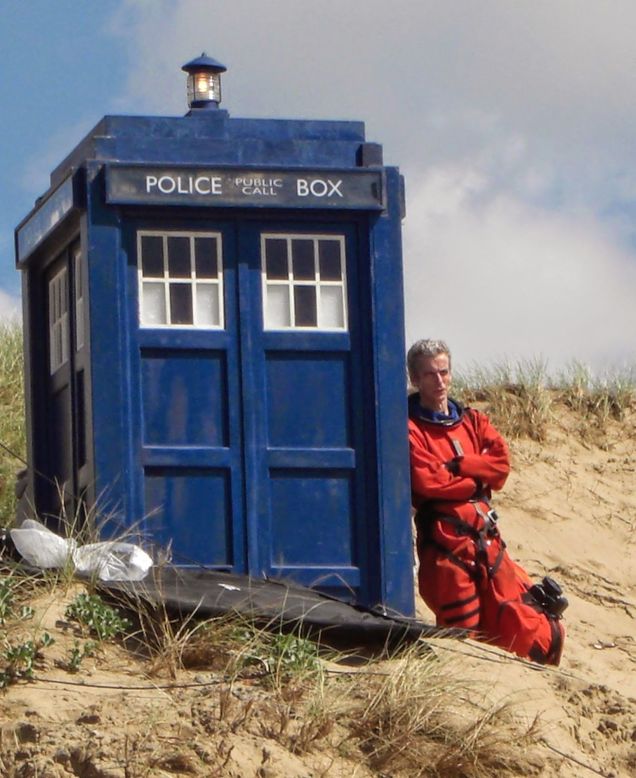
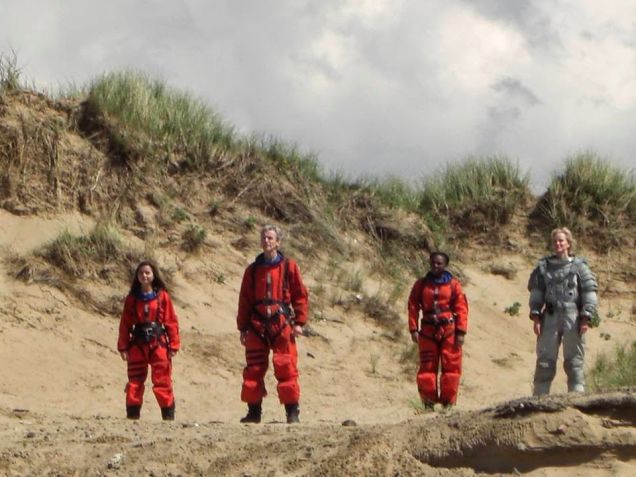
new doctor 1

new doctor 2


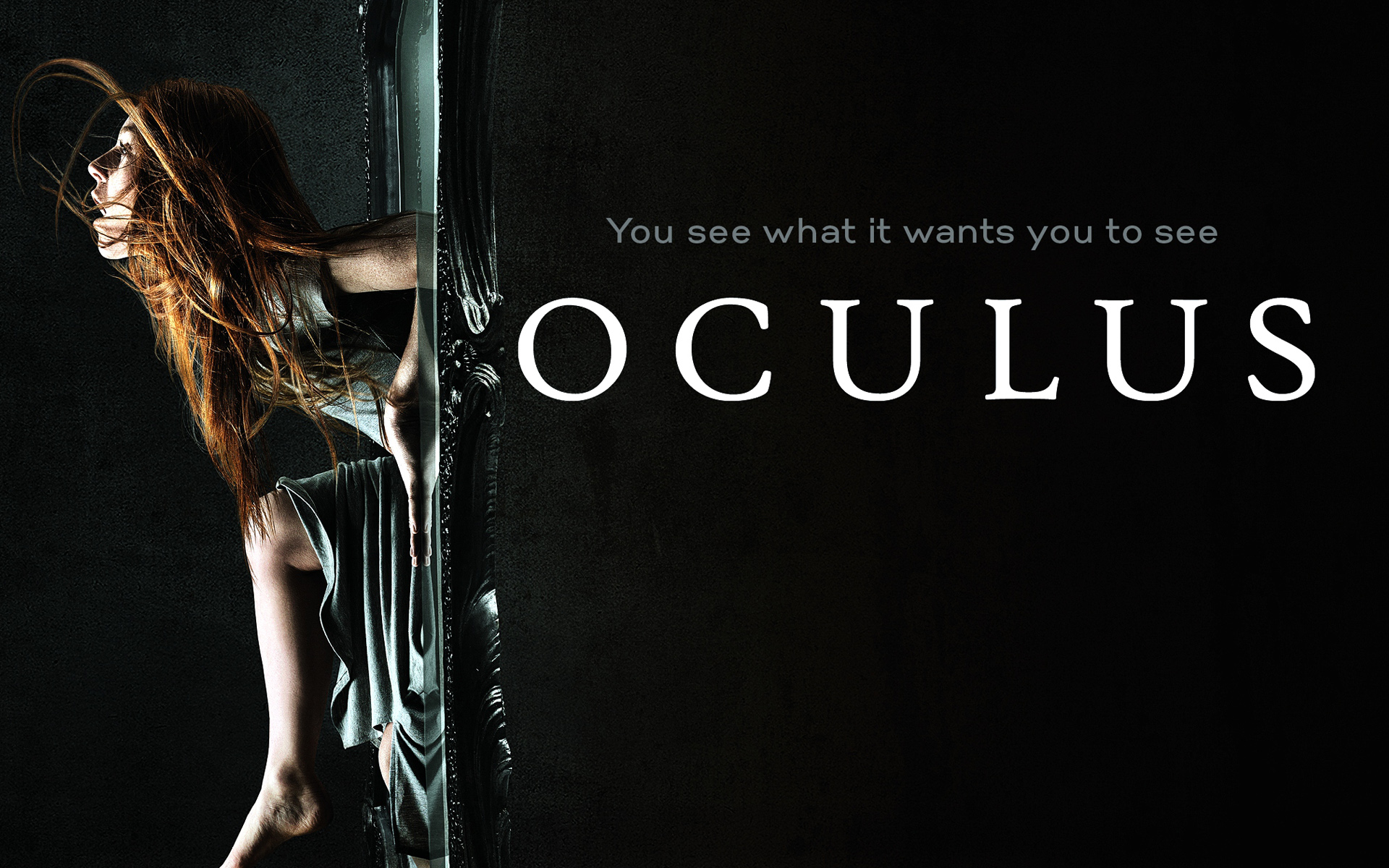
See this movie: Oculus

Oculus is a cunning, tough horror movie that will leave you unsettled.

oculus_2014_horror_movie-wide

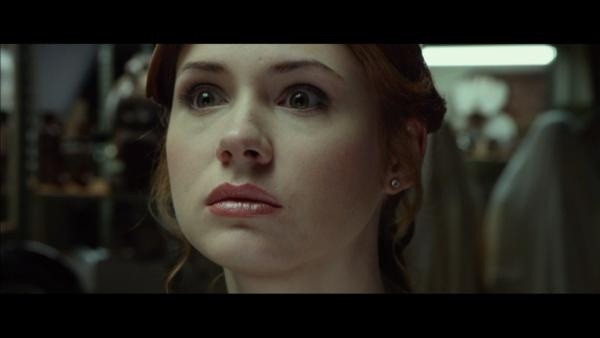
When we last left Karen Gillan, the Scottish woman with the big eyes who played Amy Pond in Doctor Who, she was staring at the weeping angels to avoid being sucked back in time (spoiler: she wasn’t successful).

Oculus Gillan

Now, in Oculus, the actress is donning an American accent (competently) as she stares into a haunted British mirror to fight an evil force.

Oculus is the latest horror offering from the forces behind the Saw series (too gory for me) and the Insidious flicks (good, fun horror). I was expecting something along the lines of Insidious. I was not prepared for a dark and harrowing tale of family madness, PTSD and psychological horror.

The setup: Tim is released from a mental hospital. Ten years earlier, he, along with his sister Kaylie (Karen Gillan), witnessed a horrific crime when their mother turned psychotic and was shot by their father. They only survived because Tim killed their father. Tim has been thoroughly rehabilitated. Kaylie, on the other hand, has gotten hold of the evil mirror which may have driven their parents (their mother is played effectively by Battlestar Galactica‘s Katee Sackhoff, aka Starbuck) to madness and death. She intends to defeat the evil that lies inside, along with Tim’s unwilling help.

Oculus

Oculus was great on two levels.

First, the narrative structure was brilliantly crafted. We bounce back and forth between the present and the original crime 10 years earlier. As the movie progresses, the past and present merge to great effect. And, even though we know the outcome of the events in the past, there’s still heart-pounding tension.

Second, one of the strengths of horror/sci-fi/fantasy is that it gives us the chance to explore common, painful themes in a fantastical setting. Oculus does that. On one level, this is the story of a horrific childhood, mental illness, and the stubborn hold that trauma has on our lives. A good chunk of the film is spent debating reality, for good reason. I enjoy writing about the supernatural because it allows me to explore deeper issues. The writers of Oculus obviously feel the same.

Oculus draws on a rich heritage of horror films. I picked up on the references to The Amityville Horror, a classic movie about possession that scared the life out of me as a kid. It uses these tropes effectively.

My main complaints would be that the Nightmare on Elm Street effects of “is this real or not” were overdone, and the nature of the evil, which was way stronger than our protagonists, was never hinted at (perhaps setting up a sequel). And the title sucks. I keep calling it Ocular. Not good.

Oculus is not an easy movie. It is not an escape. But it shows the power of horror to shine a spotlight on very human terrors.


Are multiple universes real? Some scientists say yes

The good news – they believe they may be real. The bad news – we may never be able to access them, or even want to.

How cool would it be to visit an alternate version of yourself, say, a world where you married your college girlfriend instead of breaking up? Or visit the version of yourself who is the ninja badass you always imagined yourself to be?

Image

Scientists have long theorized that multiple universes exist, and now they may have proof.

I won’t delve into the science behind all this — it’s over my head. But I’ll get to the heart of it: a recent discovery on the inflation of the universe, as explained in this Scientific American article, supports a hypothesis that multiple universes exist in this humongous thing called space.

How would it work? Imagine a glass of soda. In the soda there are tons of bubbles. Each bubble would be its own universe. Simple enough.

But there’s a catch. Actually, a few.

First, it is theorized that these alternate universes would follow different physical laws. Scientists have no reason to believe that the basic properties of matter hold true. It just seems to be the way our universe is constructed, by nature, by God, take your pick. Let your mind go crazy with how these other universes might be constructed. The possibilities are infinite. But we would stand no chance of surviving.

Second, how would we access these alternate universes, even if we wanted to? We can’t even get very far across our own universe, which is too large for us to rationally fathom.

Third, and this gets to my problem with science, this is all basically theory. Science and religion love bashing each other, but what they don’t realize is that they’re more alike than they’d care to admit. Both are tightly constructed belief systems with high priests who disseminate knowledge. Science relies on the observable world, and religion tends toward philosophy, but both frequently get it wrong. (For the record, I’m a fan of aspects of both.)

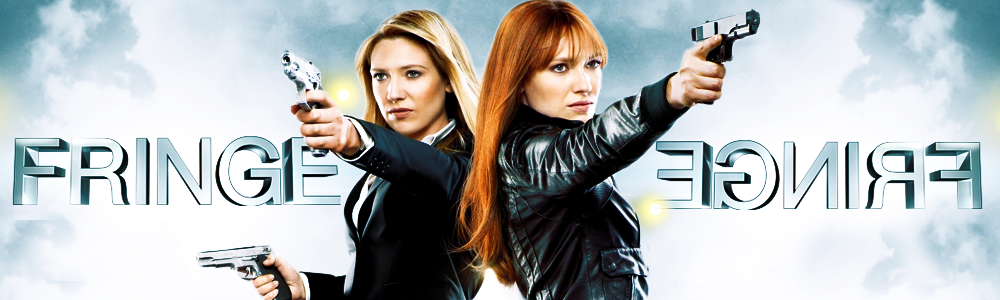
So, in the end, I think we’re stuck with multiple universes existing solely in our imaginations, which is good. I loved when the TV show Fringe, a great underrated sci-fi series, used alternate universes to enhance the show’s mythology. The old TV show Sliders, where the cast of characters went from alternate world to alternate world, was great fun. Doctor Who used parallel universes briefly and effectively. And I’m writing a story now that is centered on parallel worlds – and alternate versions of the main character.

While the science is exciting, I’ll stick with the fictional side of multiple universes. For now.

Churning the Doctor Who rumor mill

Will the 12th Doctor, Peter Capaldi, be a short-timer as per Christopher Eccleston?

peter-capaldi-doctor-who

Rumor has it, thanks to UK tabloid the Mirror, that the new 12th doctor in the BBC’s half-century-long sci-fi series Doctor Who, will only stick around for a single season. Christopher Eccleston, who was the 9th Doctor when the show was revived in 2005, left after a single season, supposedly because he clashed with the higher ups over their treatment of the cast and crew.

If the new report is to be believed, Capaldi’s short stint on Doctor Who is for a different reason — to help steer the show in a “different direction.” So what could that mean?

Either 1) they plan on bringing a new actor to play the Doctor, and this actor would either be female or non-white. Why they’d need a soft transition is beyond me. Or, 2) lead writer Steven Moffat won’t stick around after 2014, so a new writer will want his/her own version of the Doctor.

I don’t buy it, and I hope it’s not true. Every regeneration of the Doctor is nearly a different character. It takes a little while to bond with this “new” character, to really get to know him. A single season is not enough bonding time.Doctor Who Jenna Louise Coleman

In other news, there’s a new companion to ride in the Tardis alongside Clara (Jenna-Louise Coleman). This is welcome news. While Clara’s been real nice to look at, she’s never become a three-dimensional character, nowhere in the league of Donna Noble or River Song. She’s served as the Doctor’s conscience, helpmate, and even his savior. But too often she’s felt like just a foil — not a person in her own right. That may never change.

The new character is a colleague of Clara’s, a teacher named Danny Pink, played by British actor Samuel Anderson. He’s listed as a recurring character. Let’s see what he brings to Doctor Who.

Doctor Who Anderson


Helix: so much for zombies

Helix is Lost meets 28 Days Later with a little CSI thrown in. I’m in.

I was skeptical after seeing the previews. It seemed as if SyFy was trying to craft a CSI-style drama by grafting some vague sci-fi elements. The 15-minute preview wasn’t exactly encouraging. It relied heavily on a complicated backstory exposition involving lead Alan Farragut, his infected brother Peter, and his ex-wife Julia Walker (who became his ex because of Peter). Too soapy.

But… the premiere and the following episode delivered more than I expected.

The basics: Helix, which airs in the US on SyFy Friday nights, follows CDC scientists who travel to a remote Arctic lab to contain and identify a mysterious viral outbreak. This being TV, not everything is what it seems, and you never know the true identities/loyalties of the characters.

The big question: is this about zombies? Well, not in the dead-then-brought-back-to-life-to-eat-brains sense. Instead, think 28 Days Later, the great British horror flick (that also featured Doctor Who’s Christopher Eccleston). In Helix, as in 28 Days Later, the “zombies” are people who have been infected with some sort of pathogen. It doesn’t kill them. Instead, it makes them not quite themselves, as well as violent, aggressive, quick. There’s more, of course, which we’ll understand as the show goes on.

As for the rest of it, the soapy aspect that showed up in the first 15 minutes was quickly quarantined as subtext. After 3 hours of Helix, we’re already on Day 3. There simply isn’t enough time in the story for that type of boring drama. Good move by the writers.

The characters: We’ve got some complexity here, which is a requirement in books but seems to be optional in film and TV. The villain is nearly mustache twirling (and something else too…), but there are plenty of characters in Helix who are not as good (or bad) as they seem.

The setting: An undetermined number of people are trapped in an isolated, mysterious location. Sounds like Lost. I loved Lost, mainly because the writers focused on character. The writers of Helix have incorporated many of the best elements of Lost: the claustrophobic isolated location, unknown motives, mystery upon mystery. Let’s hope they don’t bog it down with crazy mythology too.

Bottom line: I’m hooked. Helix is fast paced, intriguing, and geeky enough to appeal to my science side. I raised an eyebrow at the angry black woman trope in one scene, but I’ll give them a pass on that one. Watch and enjoy.


When it’s dangerous to dream

Dreams in fiction are hard — but not impossible — to pull off.

Why? Two reasons. 1) most dreams are fragmented (to ourselves) and boring (to others), and 2) a book/TV show/movie is essentially a dream: the writer is asking the reader to suspend their disbelief. To add a dream within a dream is tricky, and risks pulling the reader from the main story.

But dreams can be effective. Let’s look at the movies.

Cover of "Inception"

Cover of Inception

Inception was a great film about lucid dreamscapes. The viewer was never sure where reality ended and dreams began, even after the movie ended. Some people hated the whole movie because of this, but for me it worked.

The Nightmare on Elm Street series wasn’t just a bunch of teen slasher flicks. It was also a clever way to exploit nightmares common to all of us. Even in our worst nightmares we know on some level they are just dreams. In A Nightmare on Elm Street, this was no longer true.

And on TV?

I can’t skip over the single worst use of dreams EVER: when the writers of mega-soap Dallas passed a whole season off as a dream. Horrible. Unbelievable.

Anyway…

Restless (Buffy the Vampire Slayer)

Restless (Buffy the Vampire Slayer) (Photo credit: Wikipedia)

Buffy the Vampire Slayer had an episode titled Restless. It’s almost entirely dream sequences. Each of the four main characters, Willow, Xander, Giles and Buffy, experiences dreams–surreal dreams–that convey character and information vital for future episodes. It was unorthodox storytelling, and it worked. 

In Doctor Who, the episode Amy’s Choice followed Amy, Rory and the Doctor as they are forced to distinguish between reality and a dream world. They face mortal danger in both realms, and must choose to “die” in the dream in order to awaken in reality.

These all worked because the dream was integral to the story being told.

What about shorter dreams? I’ve used them in my writing, and it’s challenging. In The Last Conquistador, the main character, Randy, is awakened from a dream, and I describe fragments of it:

“It’s too early to be awake, and it’s not the sun bleeding through my curtains that wakes me. It’s the scratching. At first I think it’s the dream, the one where I’m swimming in the clear Caribbean waters when a hand pulls me under, but it’s not. Scratching, slicing, screeching. It’s not a dream. It’s coming from my window.”

The dream for Randy is part of a break from the world as we know it; as the book progresses, he will “slip” between worlds. And, it’s a short, singular image that melds waking and sleep.

In Always Mine, the main character, Danny, is targeted by an evil spirit after using a Ouija board. The entry point for this evil spirit? Dreams. He eats away at Danny through his unconscious mind. Dreams were the gateway.

Writing dreams is a tricky proposition. It usually only works if it’s an integral part of the story.

Doctor Who: Goodbye Matt Smith

Matt Smith managed to make the eleventh Doctor both world-weary and child-like. Now it’s time for a change.

Image

Confession: when I first saw the promo shots for the eleventh Doctor, Matt Smith, a few years back, my first thought was: why the hell are they casting this too-young beanpole as the Doctor? No one could top David Tennant. I figured Steven Moffat was swinging for the younger demos, acting skills be damned.

And… I was wrong. From the first scenes with a young Amy Pond, where he’s sampling custard and fish fingers, I got it. Matt Smith was using his age (or lack of) to bring a different quality to the Doctor.

Sticking with the relaunched series, Christopher Eccleston’s Doctor was haunted and zany. But Eccleston only stuck around for one season. Then came Tennant as the tenth. He redefined the Doctor. Tennant was so assured in the role; he filled it out completely. I still insist that the season with Donna Noble is the best, and the episodes where we first meet River Song are the pinnacle of Doctor Who, both in terms of acting and writing.

But back to Matt Smith. No actor wants to do Doctor Who forever, apparently, so when Tennant moved on, Smith came aboard. Slowly I warmed to him. But the episode where I truly became a Matt Smith fan was the two-parter The Rebel Flesh/Almost People, where Smith played two versions of the Doctor. Each was the same, yet distinct. Subtle but brilliant.

There’s so much to say about Smith’s incarnation of the Doctor. I loved the River Song arc. I felt his loss when Amy Pond was separated from him forever. And I understood that Smith’s doctor could be the man so dangerous that hordes would try to destroy him in A Good Man Goes to War.

Goodbye Matt Smith, and number eleven. It’s been great.

The end of the Doctor (for now)

Christmas is coming, and that means only one thing to me: a new Doctor Who Christmas special. And this one will be the end of the 11th (or is it 12th? — seriously, who knows for sure) Doctor, as played by Matt Smith.

The preview clip is up now, and it seems like Steven Moffat is throwing another grab-bag of Doctor Who villains at us: Daleks, Weeping Angels, Cybermen, and the Silence.

Seriously, Steve? Anyone else you want to include? This hodgepodge of villainy has been a specialty of the Moffat era of Doctor Who. It never works for me. Too distracting.

What else to expect from Moffat? His writing shuttles between brilliance and incoherence. Not much of a middle ground. At least he’s always entertaining. Can’t wait to see how he offs Smith’s Doctor.