Read this book: Dark Matter

This moody haunted tale takes its time, but delivers a solid scare.
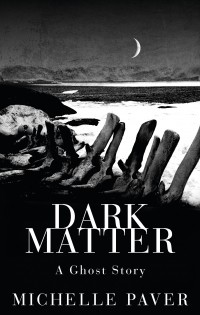
Dark-Matter-jacket-200x315While writing my latest supernatural work I wanted a good ghost story to read. A google search brought me to a Guardian review of Michelle Paver’s novel Dark Matter. After a few false starts I got to reading it. The woman knows how create a chilling world.

The plot: In 1937 pre-war London, bored clerk Jack Miller signs up to a months-long Arctic expedition run by rich guys Gus, Algie and Hugo. But the isolated expedition site turns out to be haunted. Jack must battle loneliness and isolation as he struggles to survive both the elements and the supernatural force.

First, the positives.

Setting: The setting of Dark Matter is great. She describes the landscape beautifully, and the particulars of the mission confidently, transporting me to the Arctic. It’s obvious that Paver has done her research.

Foreshadowing: Several of the earlier scenes involve Eriksson, a grizzled Norwegian ship captain. His demeanor alone lets us know that nothing good will come from this expedition. And, as in many great horror tales, the neophytes don’t listen to the veteran’s advice.

Mood: Paver is a wordsmith, and she uses her words to spin a claustrophobic, isolated mood. Her writing is deceptively simple. Her language and descriptions are straightforward and powerful.

Jack Miller: he’s the main character of Dark Matter, and the story is told from his point of view. While he’s not the most forthcoming narrator, he is likeable. We root for him, early on, even as he remains hidden from us.

Isaak: Jack befriends one of the huskies, a playful pup named Isaak. I’m not an animal person (I once had a hermit crab that disappeared), but the dog gives the story some much-needed humanity. Animals are powerful in fiction; I learned that in my story Always Mine. My hero Danny has one loyal companion, his dog Rocky, who plays a key role in keeping Danny sane and safe. Their relationship led to some of the strongest feedback from readers. I can see why now. At some points I was more worried for Isaak than Jack.

And the negatives.

The story doesn’t kick in until well over 100 pages. Dark Matter is only a 250 page book. Much of the first 100 pages is setting up the story. I was tempted to put it down for good several times. But once it gets going it’s on fire.

Jack Miller, the hero, is underwritten. The most glaring omission: there’s no mention of any kind of sexual/romantic aspect to his character, inner or outer. Jack is in his mid 20s. There would be some small reference to that aspect of himself, or lack of. Paver previously wrote children’s books. She seemed hesitant to write a fully formed adult.

Perspective: A major flaw is how Dark Matter is told. It’s first person — Jack’s journal entries. But he’s an unreliable narrator, not just about the events but also his own self. I would have loved to see the wider story. We do get a glimpse of it when Jack reads the journal of one of his companions, and what we see is a starkly different version of Jack. I wonder what this story would have been like if written in the 3rd person.

Dark Matter is a flawed book, and I was torn for a while as to whether it warranted a recommendation. In the end, despite these flaws, Paver succeeded in crafting a haunting, disturbed world. Hopefully she will embrace adult fiction more fully.

Interview with Indie Author Kevin Singer

This woman knows a thing or two about writing compelling characters. Dev, the lead in Madhuri Blaylock’s book The Girl (The Sanctum), is a teenage half angel/half demon powerhouse. Recently Madhuri interviewed me about my story Always Mine. It was a great experience. Check out the interview, and check out Madhuri’s book too.

mpavamani45's avatarMadhuri Writes Things

Back in January the book club at 9th & Coles Tavern in downtown Jersey City read THE GIRL and invited me to attend their discussion session. It was loads of fun hanging with Greg and the gang and was where I met fellow author and neighbor, Kevin Singer.

He’s very cool and it was fun talking about my book with another writer so when I had the chance this past March, I returned the favor and picked up his book “Always Mine”. It’s a little gem of a story and if you have a chance, I highly recommend snagging a copy and getting lost in its pages. You won’t regret it.

AlwaysMine_final

After reading “Always Mine”, I thought it would be fun to interview Kevin and see what goes on in his writer’s mind. Here’s what I discovered about Mister Singer:

Tell us a little about yourself.

I’ve been in love…

View original post 1,174 more words

Read this book: The Last Policeman

Apocalypse stories are divided into two camps:

1. The impending doom, where we see the event plus its aftermath (or see it thwarted)

2. The post apocalyptic, where a remnant of survivors has built a new and dangerous world from the wreckage of the old.

Ben H. Winters, in his novel The Last Policeman, gives us what should be a new sci-fi subcategory all its The Last Policemanown: the pre-apocalyptic world.

Hank Palace, the hero of The Last Policeman, has always wanted to be a detective (a desire that in part stems from the fates of his parents). A rookie cop with the Concord, New Hampshire Police Department, he gets his wish, but only because an impending cataclysm has opened up a detective slot.

This impending cataclysm? A kilometers-wide asteroid named Maia heading straight for Earth.

In the world of The Last Policeman, everyone knows that Maia will arrive in several months to end life as we know it. Several months of knowing that doom awaits. Imagine that.

Winters does a stellar job in describing what life is like in this world. And he does so mainly through the eyes of Palace, a solid, tenacious, and kind protagonist who the reader quickly grows to like.

Hank Palace is not a man trying to save the world. He’s just trying to do his job.

The plot is simple enough: a man is found hanging by his neck in a McDonalds bathroom. Suicides are rampant in this world, but Palace isn’t convinced this is a suicide. He doggedly investigates while others tell him not to bother. What he gets is apathy and stonewalling. But he never gives up, even as many in the world around him (literally) do.

In many ways this is classic crime noir. Think Raymond Chandler, with his misdirection (and even a femme fatale). This element of The Last Policeman hooked me. I’m a big fan of Chandler — he inspired me to write my novel The Last Conquistador, and I proudly employed his techniques.

Winters amps it up, though, in that he throws us a sci-fi curveball in Maia. On a technical level, I admire the way Winters uses newscasts, media reports, and recollections to tell us about Maia — how he effectively intersperses the info without giving us a data dump.

He also peppers The Last Policeman with fascinating details of life on a doomed planet. For instance, that McDonalds where the body was found? It wasn’t really a McDonalds. Corporate HQ closed, and the remaining stores were run by whoever wanted to sell their own food. All over the world people are abandoning their old lives to pursue a final dream. Or, they’re just giving up.

The Last Policeman is part of a trilogy. I’ve read the second, Countdown City (also great), and Winters does an even better job in describing a society desolate, dejected, but still clinging to threads of hope. In fact, he just won the Philip K. Dick award for best sci-fi book for Countdown City.

Life on a doomed planet: it’s not a cheery topic, but it’s rich with dramatic possibilities.


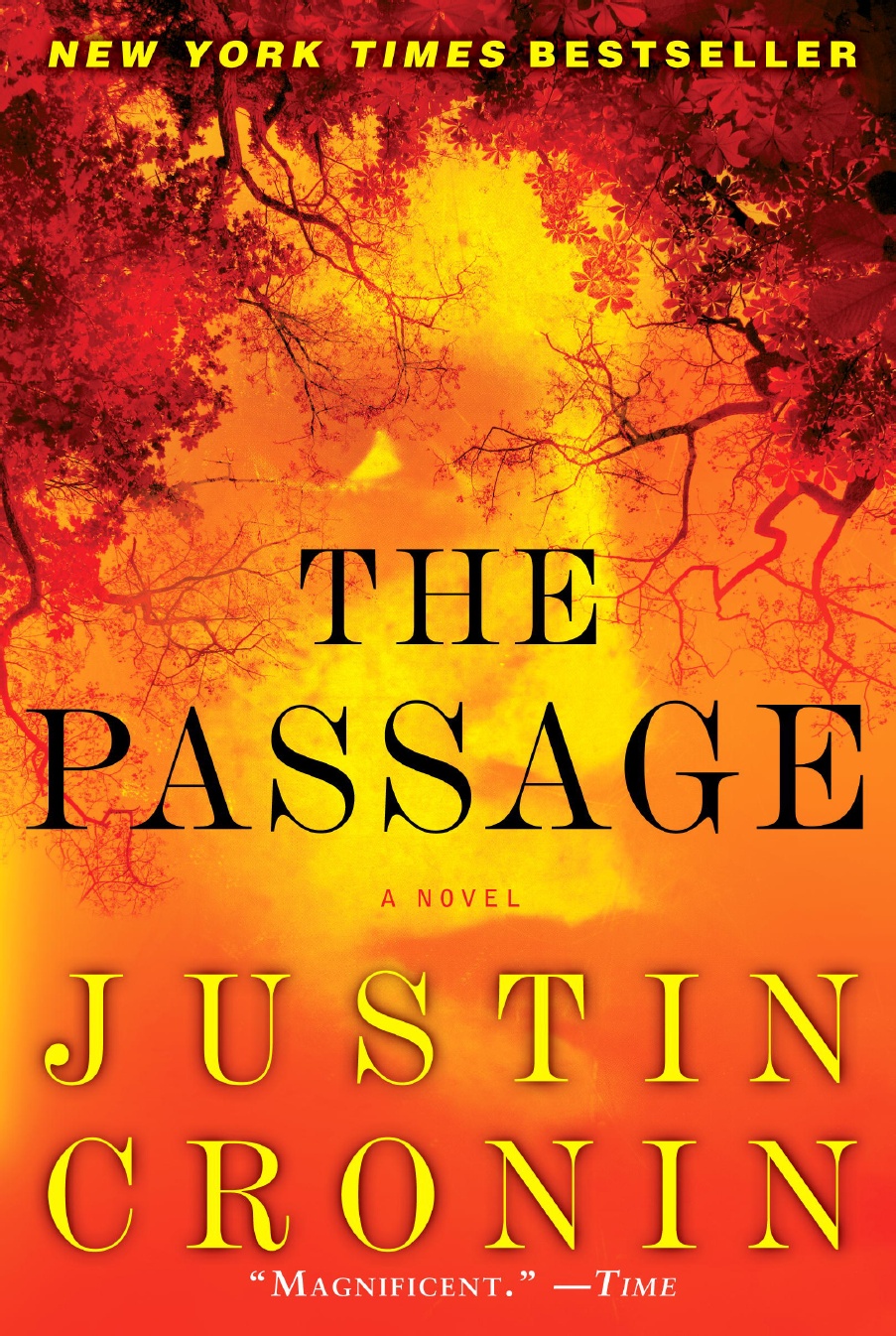
Read this book: The Passage

This literary/genre juggernaut is worth the hundreds of pages.

passageIf you picked up The Passage without knowing the plot, you would quickly know that dark times were ahead. It starts out with a deadly virus culled from South American bats, adapted and tweaked by government scientists to create super soldiers. Of course they test it out on twelve vicious killers on death row. And of course the outcome is worse than these scientists could ever have imagined.

So begins The Passage, Justin Cronin’s cinder block sized novel about vampires, the first of a trilogy. In other hands this setup might have been just another soon-to-be-forgotten pulp read. Cronin has the skills and literary background to create a lush, sprawling tale that spans genres and centuries.

The Passage, like the monsters it portrays, mutates and grows. It starts off as a technothriller that follows FBI Agent Brad Wolgast and one little girl named Amy. Amy is taken by these scientists and is given the same serum that turns twelve killers in to vampires. It doesn’t do that to her; instead it keeps her young. As the twelve proto-vampires escape and create their own tribes of powerful, evil vampires, Wolgast takes Amy and flees into a dying America.

Then we shift.

Courtesy of a report from a University set 1,000 years in the future (there’s hope for humanity!), we jump ahead nearly 100 years after the first vampires were created. Now we’re in a small California compound — a former FEMA camp — with a handful of survivors. Here we follow Alicia, one badass warrior woman, and Peter, along with other members of their community, as they struggle to survive. The technothriller is now a dystopic tale, reminiscent of the Mel Gibson flick The Road Warrior, though one deeply infested with horror that rivals Stephen King. Amy, the infected girl from the beginning, shows up and she becomes pivotal to the colony’s struggle against vampire hordes and horrific odds.

So what’s great about The Passage?

Start with the writing. I’m a fan of wordsmiths, and Cronin is definitely one. Though the book is huge, there isn’t much in terms of fat, and lyrically it is beautiful without being distracting.

Then there are the characters. The Passage includes several characters, and Cronin writes from their point of view. We get to know there people, and without exception they’re all three-dimensional.

And the plot. The Passage is thrilling end-of-the-world fare. We see America crumble. There’s a scene early on as a train full of people flees Philadelphia – the last train out before the city is overwhelmed. The train ride is harrowing, as the vampires pick off the train car-by-car. A few lucky ones only barely manage to survive. This scene has stayed with me.

This is just a glimpse into the world of The Passage. There are tons of twists and turns in this book, more than enough to get you hooked.