What should we do with the era of Covid? As a society? As writers?
It’s an understatement for sure to say that it was a difficult time. I look back in anger, and maybe not for the reasons that you might, and that fact makes reckoning with that time period all the complicated–we probably see different villains.
Nevertheless, as writers, our lives bleed into our work. It better to some degree, unless you want writing that’s sterile.
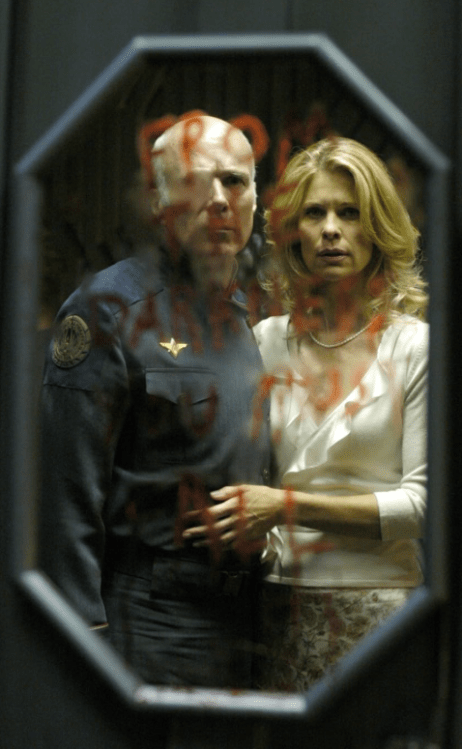
With that said, back to my original question – what do we do with the Covid era? I touched upon it from a distance in my recently published story, One More Darrell, by zeroing in on the isolation of the main character (isolation being one of the Big Bads of that time period for me).
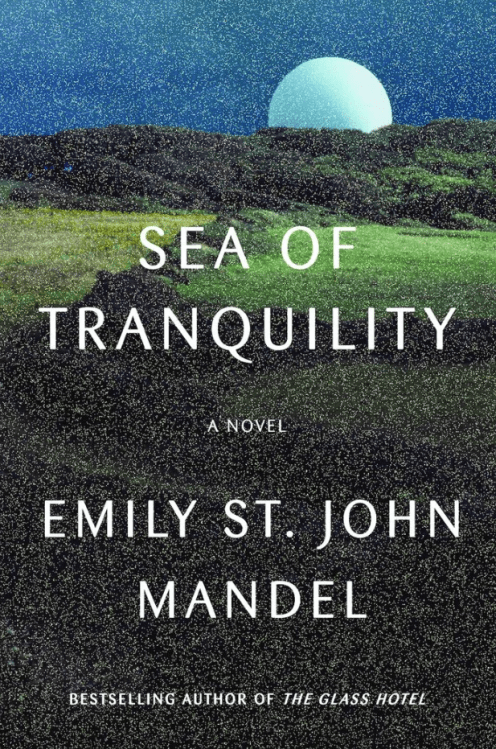
I’ve heard chatter that writers SHOULD be incorporating the Covid era more concretely and directly into stories. Fine, do that. I likely won’t read it. I don’t want to be reminded of it. Forgetting is the best medicine (weird cliche but go with it). Unfortunately (or fortunately) I slipped up and read Emily St. John Mandel’s time-hopping novel Sea of Tranquility, and while it is not about the big C per se, it hits on epidemics. Hard.
Luckily, Mandel, who wrote the mega-successful Station Eleven, is talented enough to push me past my resistance. Also, it helps that it’s not a story ABOUT pandemics. It’s about rips in the fabric of space and time. It’s about people from different eras sharing a common experience. And it asks what is the real nature of the world we live in?
Sea of Tranquility opens with a British nobleman migrating to Canada on the eve of World War 1. He’s a lost soul in the sense that he’s purposeless, and he stumbles on a strange incident in the forests of British Columbia he stumbles upon a strange incident that leaves him forever changed.
From there the novel time jumps ( from the 1910s to the 1990s-2020s, the 2200s, the 2400s, and back and forth). We meet characters including a novelist, Olive Llewelyn, and a time traveler named Gaspery-Jacques Roberts. To explain more of the plot wouldn’t do this book justice (and frankly it’s not so easy to explain without giving it all away). But I will say this. At its heart, Sea of Tranquility is a time travel story. I love time travel stories, but they’re damn near impossible to pull off (the series Dark did it well, so did the movie 12 Monkeys).
But Mandel manages to do it, successfully. She ties together all the back and forth and the here and there that ranges from cities on the moon to the forests of western Canada. It’s a small story; it’s not about the end of the world, or saving the world, or anything like that. It’s just about a group of people who become tied together across space and time through a series of events. Lives are lived and lost and remembered. Sea of Tranquility is a quick read, it has a compelling storyline, and the characters are drawn well.
But I’ve got to knock a star off of my review, and the reason why comes back to my question way at the beginning: what do we do with the Covid era? In Sea of Tranquility, Mandel harkens back to the particularly paranoid aspects of that time, and while it all made sense in the story, it ripped me right out of the book. Nevertheless, I enjoyed my time spent reading it. Time travel plus beautiful prose is the key to my heart.
Story ideas are all around. You just have to open your ears. You can find them in all manner of places, including a pub in Ireland in a town called Renvyle on the Connemara coast, a pub called Paddy Coynes, small and dark and warm, which would’ve been smoky in another era, over a pint of Guinness, naturally.
That’s where I first came up with the idea for my story, The Two Burials of Francisco Collins, recently published in Folklore Review.
I was in that pub with my cousin and his wife. We were spending the weekend in Renvyle celebrating their tenth anniversary (they were married there, not the pub but the town), and that night over that pint my cousin’s wife told me of an Irish documentary about a man in Ireland whose body was buried twice. The documentary is called Con Carey and the Twelve Apostles, and I never got around to listening to it (probably will today after I write this) but it gave me a hell of an idea for a story.
An idea that stuck. That’s what good ideas do. They stick. Often I’ll tell myself I’m going to use something I hear or see in a story, but oftentimes it doesn’t stick. This one did. The premise was simple enough, but the question I needed to confront was this: why would a person be buried twice?
For that I went to one of my neglected literary loves: magic realism. The king of that is Gabriel Garcia Marquez, and truth be told I’m woefully deficient in my knowledge of magic realism, but to me it’s a close cousin of speculative fiction. It deals with events that are fantastical and improbable or impossible in our world, but totally in keeping with the fictional world in which they occur.
That’s my baseline for this story. In it, an old man recounts the true story of the events surrounding the two burials of the title character, a patriarch of a ranching family, and what led his son, Xavier to do what he did.
So the documentary gave me the idea, the genre gave me the vehicle, and for the heart of it all (every story needs a heart) I went to my own.
It’s been several years since my own father was killed in a plane crash, so I drew up my own personal experiences and feelings around his life and death, our relationship, and I funneled them into this story. Sometimes things get complicated. Sometimes people are complicated. Sometimes relationships are complicated. And truth be told it’s not always easy to reveal some personal things. But that’s my job as a writer: to put it all on the page, to leave a piece of myself behind, for the reader to see, for the world to witness.
Here’s the latest entry in the structured, timed prompts series. This one’s called Person, Place, and Thing.
The set-up: take ten minutes to write intensively about a thing, a person, and a place (that’s ten minutes for each). And then, take another ten minutes to weave all three into a story. The purpose behind this exercise is to develop descriptive skills, to learn how to really get into the language behind whatever it is you’re writing about.
Here are my results:
Thing
No one knew where this lighter came from. There were no identifying markings on it. No made in China or USA or wherever such things are fabricated. No name. Not a single word to place it somewhere in the universe. It was larger than most lighters typically are. It felt meaty, solid in your palm, like something forged for a king or a queen. Its case was gold, not pure gold but steel colored in gold, or so one assumed. On one side the image of a dragon with ruby stones for eyes, its scales raised as if it longed to break free of its metal prisons. On the other side was a heron with a slender neck and long beak that jutted out to a sharpened point. Its feathers felt light to the touch, almost. If you stroked your finger along them you might think they were real, as if a bird could be shrunk and trapped in metal. Its lone eye visible in profile was a purple gem.
The lid sat tight on its hinges, with two fingers needed to pry it up, the light wheel so finely serrated it almost felt like silk, and it glided with just a flick of your finger and sent a spark that blinked and sputtered, and then the flame, uncontrollable and ravenous and shooting up inches into the sky, so bold and cruel that if you held it too close to your face it would singe your eyebrow clean away.
Person
Molly wasn’t a crier, that’s what she always insisted but she knew in her heart it wasn’t the truth. She’d only cry alone, in her bedroom, the place where she could lock the world out, the place where she could see herself as she believed herself to be: old at 45, too old. She wore clothes that never quite fit her right: too tight in the middle or too loose in the shoulders, never hugging her hips as she believed they should, but always colors, the bolder the better, a dare to herself; she never wanted to be looked at, but she insisted she needed to get over that silly insecurity, though she never did. Hair that never fell just right, light brown that frizzed with the slightest humidity, resistant to any product, hair in a constant state of rebellion, a rebellion that the teenage Molly never dared to partake in.
She considered herself not quite pretty but not quite plain. But there was one thing she appreciated about herself—appreciated more than loved—her eyes, wide and violet, an almost unreal color, blue edging close to purple, and with those eyes she compensated for the litany of shortcomings that looped through her mind. She used her eyes to capture people. Tame them. Her eyes made friends of enemies.
She’d tell herself out loud that she could heal all those old wounds that never seemed to stay closed, that she needed to, and she’d wring her hands together until her joints burned. But even with all of this she managed to hold on to that one bit of crucial hope that despite the past, the future would be hers, her lined and unlipsticked mouth set firm with a smile.
Place
Somewhere in the distance a fire burned. Smoke not unpleasant but somehow rude, filtered through air that carried the scent of the sea. Just a few people sat out here on this beach with sand so fine-grained that it almost felt like water, sand that seemed as if it would swallow you up but not with any evil intent but with love. The water lapped the shoreline with slow rolls that emanated a hum, rhythmic like a heartbeat that pulsed along the sand and reverberated through your body. A smattering of palm trees weak and lonely edged the sand behind you, and behind them, the lights of the houses, eyes that stared at the ocean that stretched out into a black infinity. Every so often a voice would carry through the night, a woman’s shrill laugh, a man’s rough bark, these noises alien and jarring, interrupting the calm, breaking something precious. Figures moved near that distant firelight, jostling and rolling and shifting, so distracting that you’d have to blot them out from your existence and focus solely on the warm breeze and the fell of the sand and the sheen of salt that hugged your skin and the forever ocean that whispers to you that there’s so much more to this world than what’s behind you.
And the story
Truth be told Molly hated that lighter. It belonged to her grandfather, and he willed it to her thinking that he’d done her a favor but she couldn’t help see it as a curse. It was bigger than a normal lighter, gold but not real gold, weighing heavy in her hand. She did love the dragon on one side. When she was a girl she’d named him Clyde and imagined that this red-eyed beauty would break free of its metal cage and swoop out and burn everything down, everything except for her, of course. Or that the heron on the other side, with its one eye a purple so close in color to her otherworldly eyes, would fly free and carry her off to that secret kingdom where she was originally from, the one she belonged in. She’d named the heron Matilda.
Still, she hated the lighter because it was the last remnant she had from her own family but she could never get rid of it. She stared out at the ocean, so black and calm and endless. She felt the pulse of the waves as they lapped the shore in time with her own heartbeat and she wished she could stay on this moonlit beach the rest of her life, her frizzy hair be damned. The world would just have to get used to her wildness, then.
She caught the scent of the bonfire, far away but not far enough. Who were they? Those happy people laughing and shouting, moving ghoullike in the glow of the fire. She considered going up to them, luring them in, making new friends but she declined. Not this night of all nights.
It was a necessary thing, she told herself, and she would cry about it later. Perhaps. But she’d only do it alone. Not in front of anyone, not ever. She cradled the lighter in her hand and on a whim she pried open the too-stiff top and flicked the light wheel and watched the flame soar and flicker and she shone it on her bare ring finger with its band of pale flesh and she felt no sadness, no regret. She hovered the flame close to her skin, just enough to feel the heat but she had no intention of hurting herself. She vowed she wouldn’t do that to herself, ever. She was single, once again, as she always should have been, perhaps. She closed the lighter’s lid and let the moonlight coat her and she stared out into the black sea that promised her some new forever.
You might recognize that song lyric. If not, it’s from Britney Spears’ song Hit Me Baby One More Time. Believe it or not, that lyric was the inspiration for my story, My Loneliness Is Killing Me, which was just published in the literary magazine Periwinkle Pelican (note, you have to download a PDF to read the story, but it’s free).
So how’d this one come about? Actually it originated from a very common phenomenon: when you get a song stuck in your head, no matter if you’re a fan or not, and it gets lodged in your brain and plays on repeat. FOREVER. Until it vanishes. Usually it’s a Bon Jovi song for me for some reason (not a fan, but I don’t hate them).
This story came from that. As luck would have it, on that particular day I didn’t have much to do. It was a Saturday. A beautiful day. A HOT day. So I went into Manhattan and bummed around with that lyric repeating in my head.
And an image. Of someone day drinking. Wasted and wasting their life away.
The weekend before I was with a bunch of people drinking and we watched the Sydney Sweeney rom-com Anyone But You. I’m not a rom-com fan but the idea of romance was still thick in my mind. As I walked around the city, this story came to life for me. I would run the lines through my head and then stop at random points and scribe lines into my phone. At one point I passed this white hipster guy who had this perfectly styled mustache, just short of cheesy, but great all the same, and I knew that his mustache had to be a part of my story (which it is).
By the end of my sweaty sojourn through the city, and after a few frozen margaritas (hence the Slurpee reference), I pretty much had the story all written. It’s short and fierce and I’m immensely proud of it. It’s not the type of story I usually write–nothing supernatural at all in it–but it’s loads of fun. And I have to give credit to a great writer, whose work I was reading and whose freewheeling style was most definitely an inspiration: Bud Smith. Check out his great collection Double Bird. His writing taught me you can be ridiculous as long as you’re getting to the guts of your character.
And my favorite part of this story? The opening line: Fuck off, Britney.
During my exploration of the reboot of Battlestar Galactica I’ve been pretty non-critical of how they handled the series (See Parts 1, 2, 3, and 4 here). Just so I don’t sound like a mindless fanboy, I’ll delve a little deeper into some of my criticisms of the series. After all, nothing in life is perfect. So here goes…
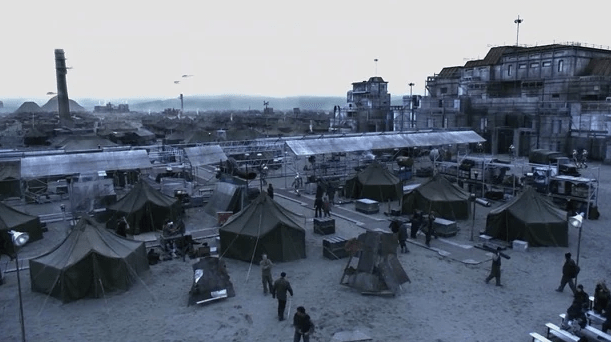
New Caprica By the end of season two, the colonists are cramped on their ships, tired of fleeing the cylons and giving up on searching for an Earth that doesn’t want to be found. Life isn’t going so good for them.
Meanwhile, the cylons are having issues of their own. Their plan of domination isn’t as simple to achieve as they imagined. And, we have a couple of prominent cylons who begin to doubt the plan. After Boomer shoots and nearly kills Adama, she’s killed and resurrected and is living in conquered Caprica City as a hero among the cylons. Caprica Six, the one who got the nuclear codes from Gaius Baltar, is also in Caprica City, and also a cylon celebrity. She’s been seeing an “angel” in the form of Gaius, and she’s having her doubts about the cylons’ plan of wiping out all of humanity. Together Boomer and Six convince the cylons to try and live together with the humans, rather than wipe them out.
Only “live together with” doesn’t quite mean what we think it should mean. When the humans find a barely habitable planet (named New Caprica), they vote to abandon the search for Earth and settle there. All’s going so-so and then the cylons arrive, not to slaughter the humans but to lord over them. For several episodes (it felt like forever), we’re treated to a planet-bound show about insurgencies and counter-insurgencies. Not exactly thrilling.
I remember reading that the writers were trying to write a commentary about the US invasion and occupation of Iraq. ATTENTION ALL WRITERS: be careful using your fiction to critique real-world events. Most times it lands with a thud.
The New Caprica storyline was planet-bound and plodding and, like the colonists, mired in the mud. We got time jumps, which were kind of cool, and we got to see the cylons battling each other, but that’s about it in terms of excitement. I for one was glad when they abandoned that planet and that story for good.
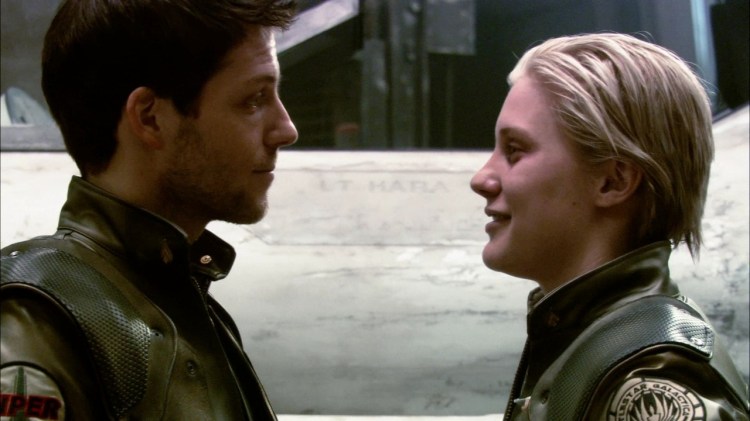
Apollo Loves Starbuck Another storyline we were forced to deal with during the New Caprica muddle was this stupid romance plot. Let’s leave aside the fact that in the original series, Apollo and Starbuck were a couple of dudes and definitely didn’t hook up. But I guess that with Starbuck’s sex change, the writers decided, hey why not have them bang?
Honestly that’s what it felt like: dumb and crude.
The Starbuck in the reboot wasn’t just some random pilot. She’d been engaged to Apollo’s brother, who died in an accident before the events of this series. She was almost his sister in law. They were almost family, they were friends, they were co-workers. And, again, I repeat myself, the writers decided, hey, why not have them bang?
The writers used this storyline not just to bore us, but also to foul up the marriages of Apollo and Dee, and of Starbuck and Sam. Those relationships could have been much more interesting. Instead they were tossed aside. Plus, while the actors who played Starbuck and Apollo were fine, there wasn’t much chemistry between them.
Rather than a full-blown affair, an undercurrent of unrequited lust would have worked much, much better.
Too much filler We were blessed to get 74 or so one-hour episodes of the series spread over four seasons (plus the miniseries and a couple of webisodes). But with all that time to fill, you’re inevitably going to get some filler episodes. And boy did we. The one that stands out most for me was called Black Market, where Apollo investigates the fleet’s black market. We get corruption. We get mafia. We even get a prostitute. Hell, we might as well have been watching a wholly different series.
There’s more, of course, and I won’t go through it all, but I think we’ve been spoiled by the Netflix and Amazon Prime model of television viewing. It used to be that a series got picked up season by season for a preset number of episodes, say 20, per season, and the writers were expected to deliver all those hours. Today the series is sold all planned out, if not the entire arc of the show over several seasons, then as one complete season. We’ve become used to tighter stories with less filler.
This leads to another of my critiques, which is…
Plot Holes All the best shows and books and movies have them. Battlestar Galactica isn’t immune. The most glaring to me, even though I loved the storyline, was the Final Five. When Saul Tigh, Adama’s oldest and closest friend, was revealed to be one of the Final Five, I kept trying to untangle the timeline. He fought in the first cylon war, but he also came to the metal cylons from the bombed-out version of Earth, helped them end the war and create the humanoid cylons.
Or something like that.
Can someone explain that timeline to me?
I get what the writers were tying to do. Having Tigh and his wife, Ellen, be cylons was dramatic and Tigh’s “betrayal” hit Adama, the most prominent character, the hardest. The others: Ellen, Sam, Callie, Tyrol, I could totally buy, and I liked them as cylons. But Tigh? It just felt like a sinkhole-sized plot hole, and it made the identities of all the Final Five feel shoehorned in, as if the writers decided sometime during season two to add them to the show. (Evidence for this, Tyrol and Callie’s son was revealed to be a product of her unfaithfulness. He had to be, otherwise, Athena as the human/cylon hybrid wouldn’t be special.)
Another plot misstep was the mythical nature of Kara Thrace, aka Starbuck. The writers threw in something vague about her father, and childhood visions from the Lords of Kobol, and then she’s the harbinger of doom and she vanishes and reappears and then she finds her own corpse on the bombed-out Earth and at the very end she vanishes while Apollo is talking to her as if she’s an angel or a ghost or something. If there was a plan here, lord knows I had no clue.
Speaking of plans, we were continually reminded that the cylons had a plan. What exactly was this plan? Kill every last human? Breed with them? Live in harmony with them? The Caprica Six in Gaius’s head (an angel or something) continually talked about God’s plan. Which was what? I swear I’m not dumb but this plan was always cloudy to me. It didn’t detract from my enjoyment of Battlestar Galactica, but when you’re reminded every episode that the cylons have a plan, it’s hard to get it out of your mind.
So that’s it for my review of the reboot of Battlestar Galactica. Despite the theme of this final post I truly loved this series, and if you haven’t watched it for some reason, start tomorrow. Or maybe now.
Here’s a new exercise: power prompts. These are timed exercises that center around a specific writing theme. This one was about Character Perspective, which is what a specific character is seeing in the story. This contrasts with Point of View, which is how is the story being narrated. [NOTE: There are three POVs: first person (I), second person (You) and third person (He, She). But this prompt was solely about Character Perspective.]
And the prompt itself: in five minutes sketch three distinct characters. Then, in thirty minutes insert them in a city cafe on a rainy afternoon where they witness stabbing.
Here are my results:
The Characters: Callie, 35, with her toddler in a stroller, she’s stressed about her job, very type A personality. Her toddler is acting up while she’s on the phone with her sister who’s upset over her fiance’s suspected infidelity. Callie doesn’t have the energy to deal with her sister but she’s trying her best.
Justin, 21, is falling behind in his classes. He’s thinking about dropping out of college – money’s tight, but he doesn’t have any plan b besides wanting to go surfing in Hawaii, and he doesn’t know how he’d tell his father, who’d kill him. His father always makes him super nervous. Even thinking about that conversation makes him sweat.
Marissa, 17, she’s run away from home. She’s sleeping on the couch of a friend of her cousin’s. Her mom’s drinking has gotten out of hand and she can’t be around her anymore. She has $700 in savings and she’s trying to think about what kind of job she can do. She definitely can’t go back with her mother, and she refuses to get stuck in the foster system. She’s not afraid, just determined to get her life started out right, on her terms.
And the Scene:
Marissa wished she had an umbrella. It wasn’t one of the things she even thought to shove in her backpack. Not like she woke up yesterday thinking, yeah, mom’s gonna be on her worst bender ever, so you better pack all the things you’ll need for life on your own. It was after the half empty Jameson bottle went flying across the room and nearly hitting her head that she decided to bolt.
Lucky for her she found a couch to crash on. One week, they told her. One week was more than enough time. As long as the dickhead behind the counter would stop making the millionth flat white and give her the time of day to hand her an application. She could do barista. She could do anything. Anything to stay out of mom’s and anything to stay out of foster care. Six months she’d be eighteen. Nothing could touch her then. But she needed A JOB.
“Listen, all I need is an application,” she told him.
“Okay, give me a minute,” he said, looking through her, looking over her. She pulled up a stool and sat herself right at the counter. She would make him see her, make him give her the time she needed. Five minutes past. The line kept growing, flowing. Then it stopped as a woman pushing a baby stroller, a kid bucking and squirming inside it, cell phone propped against her ear, complaining about her cappucino, about it being too cold or too milky or something, and that baby fussing and whining.
Marissa swore to herself she’d never have kids. Well, at least not until she was old, like 30 or something. Bored and eyeing that barista dude, who was way over his head, sweat stains spreading along his underarms, she went over how much cash she had left. About 700 bucks. Wait, I bought pizza last night, she thought. She deducted that princely sum, and that was when she heard the scream.
It sounded like a goat. She pivoted her head, slow motion, and there, at a table by the door, was a lady dressed in an tan raincoat and Uggs. Her hair was all stringy and wet and her makeup was a mess. The lady reared up and that’s when Marissa saw the knife. It was a steak knife, the kind you get in fancy restaurants. The lady stood tall, then she slammed the knife into the table. Marissa heard a squelch and a scream, a real scream. Then the squirt of blood. That’s when Marissa decided she’d be better off working in a CVS.
God Justin hated this job. Never in his life did he dream of making fancy coffees for people who could barely even look him in the eye. Hey, but it paid the bills. Barely. College wasn’t cheap, and as he made some wall street finance bro his double mocha macchiato, triple red eye and passed it over to the guy who stood glaring and drumming his fat fingers, that’s when it came to him. He’d quit college. It wasn’t a choice. It was a knowing.
But then one of his panic attacks threatened to bite him in the ass. Dad will absolutely murder me, he thought. Nobody had a father as terrifying as Justin’s. That he was sure of. But this knowing. He had no choice now. That’s the way his mind worked. He tried to reason with himself, talk himself out of it, and he got so lost in this that he forgot about the waiting cappucino. He looked up at the angry girl, the one who’d been pestering him for an application, and he could feel her judging him for being such a shitty barista. He took a breath and shook it off and gave the lady her cappucino, and not two minutes later she was back at the counter, insisting it was too something.
But he wasn’t listening. Tanya was back. Tanya came in sometimes, and it was never good. She looked a mess, more a mess than usual, and she was bothering some old guy sitting near the door just drinking his coffee like any normal person. That’s when he saw the switchblade in Tanya’s hand. He ran around the counter and watched her raise that switchblade in the air. He bounded over a stroller with a crying kid and nearly tumbled to the ground. But before he could reach Tanya, she’d slammed it onto the table.
Justin couldn’t ever remember hearing a person scream so loud.
The last thing Callie needed right now was another of Alicia’s messes. Her sister had the worst taste in men, and Callie long ago vowed to stop giving relationship advice to someone who’d never take it. But here Alicia was again, crying on the other end of her cell about her cheating fiancee. Callie yes’ed and sure’d her, hoping Alicia would take the hint and hang up. She didn’t.
All Callie wanted was a damn cappucino and a few minutes of silence. This was supposed to be her day off, exploring the city with her two-year-old Susannah. But the rain wasn’t letting up and Susannah was fussy beyond belief and then of course there was that presentation she had to wrap up later tonight and now Alicia. She rocked the stroller and listen to her sister bitch while spitting out her order, only to get her cappucino from the vacant surfer dude barista and sip it and find out that it was already lukewarm. Plus, too much foam.
“No, no, no, this will not do,” she told him. Alicia snapped at her. “Don’t tell me how to live my life.”
“No, not you. The coffee,” she said. But Alicia kept on being Alicia, all woe is me. Callie tried to hush Susannah who refused to sit still in her stroller and tell that dopey barista what exactly he did wrong, convinced he was most likely high, when she heard someone yelling, a woman, and then all of a sudden the barista was out from behind the counter pushing past her and nearly falling over Susannah in her stroller. Callie lunged forward instinctively and raced after him to give him a piece of her mind, when she saw the woman, not homeless but definitely something, and the knife, so big, like a goddamn machete. The woman had one hand planted on the table and she raised that knife high and then slammed it into her own hand.
Between the crazy woman screaming, the barista frantically patting at the blood, and Susannah launching into a royal tantrum, Callie decided the best course of action was to head straight back home and crack open a bottle of Cabernet. The last thing she did before scooting past the bloody, writhing woman was hang up on Alicia.
Someone once said books beget books. I can’t find out who. I thought it was Virginia Woolf, and since I read and really liked Mrs. Dalloway, I’ll go with her.
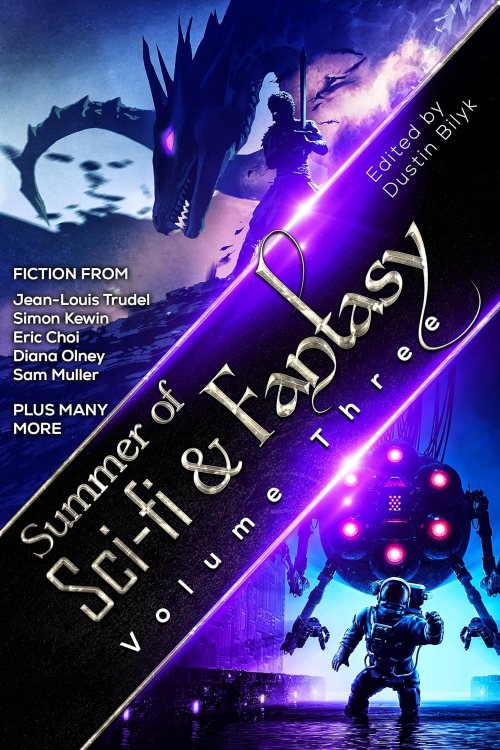
In my case, short stories beget short stories, or more specifically, a throwaway line in a story included in an anthology on time travel was the seed for my short story, One More Darrell, which was published in the anthology Summer of Sci-Fi & Fantasy: Volume Three.
I tried to find the exact line and the story it appeared in but I had no luck. It was something about a pill that let you experience a moment in someone else’s life. That struck a chord in me, so I got to work writing.
A brief flashback: I wrote this story during the height of the Covid lockdowns. I’d spent a lot of time on my own in my house drinking too much and lost in the online world. So just like most of the world. That whole experience left me with a profound sense of disconnect. Again like most of the world. And I began to reflect how we as humans tend to lose ourselves in other people’s stories, everything from fiction to theater to movies and TV, porn and video games, even social media to an extent where we become not so much ourselves but a curated persona.
And I also thought of the story in terms of one of the seven deadly sins: envy. It’s a seductive trait. That person over there has a better life than you do in some way. Imagining what they feel like with that benefit, with that gift, with that luck or skill or talent or blessing, can feel great. But it also cuts you off from your own life.
This is the framework I approached in writing One More Darrell. It’s about a near future where you can take a pill that lets you relive a perfect day or hour of someone else’s life. The pills are named. Some are more popular than others. Our poor narrator can barely manage the stress of his life without popping one pill or another, and his fave by far is Darrell. But his world begins to fall apart when he learns that Darrell is going to be discontinued.
This was one of the easier stories for me to write. It came to me pretty quickly, it was fun to write, and it connected with something in my life. Win, win, win. Not all stories are like that. Most are a hell of a lot of work. Hard, hard work.
And to all the so-called writers out there who don’t read fiction, you’re missing out on a universe of inspiration. Go pick up a book and read it. You never know what story will come out of it.
(Here’s the latest in my sporadically spaced BSG Rewatch. Click the links for Part 1, Part 2, and Part 3.)
Two decades is good for perspective. We have a moment to breathe, to take in a new view (literally; the world around us changes), and we can look back at something with fresh eyes.
So with all these cliches in mind, after rewatching all four seasons of Battlestar Galactica straight through, what worked, and what didn’t?
I’ll start with what worked.
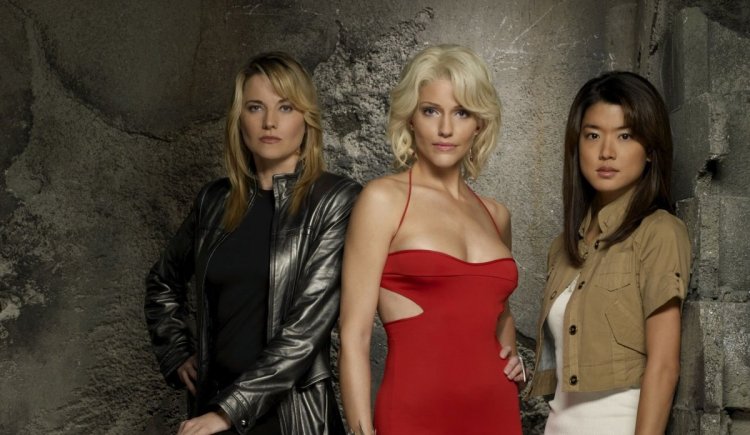
Cylons The best part of the reboot was the enemy. Heroes are (usually) necessary for any story. We need someone to identify with, a man or woman to root for, to escape into. But, what really makes a story shine is the enemy. We love to hate them, and we sometimes secretly love them as well. A good enemy can be our outlet for all those parts of ourselves we disown. We might not want to literally be Hannibal Lecter, but there’s a small part of us that revels in the villain’s total disregard for good society.
Or maybe this is just me.
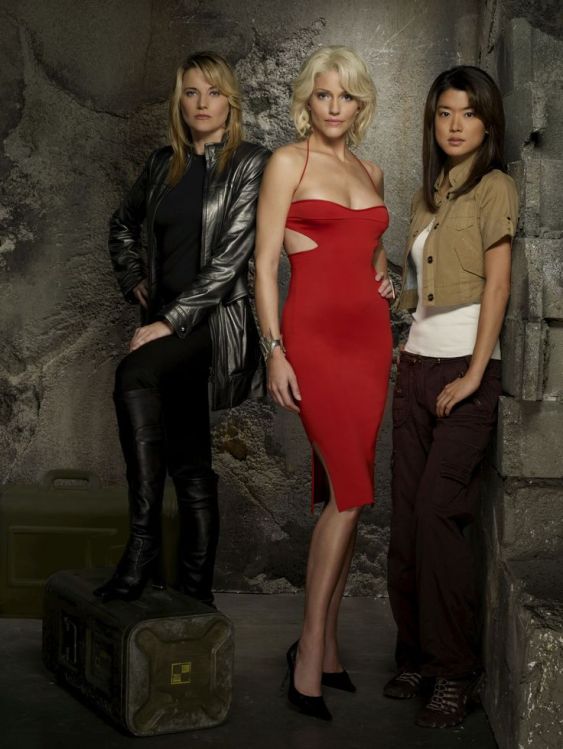
Either way, the thing I love most about Battlestar Galactica is the cylons, not so much the chrome toasters but the humanlike twelve. Take Caprica Six. She’s stunning and hot and cruel (she snapped a baby’s neck!) but also riveting. Or Leoben. He’s probably my favorite of the cylon models. Spiritual. Unhinged. Fanatical. Mystical. He was obsessed with Starbuck. He fucked with her mind on New Caprica. No, I wasn’t rooting for him, but I always wanted to know more about him.
Just think about the sheer audacity of the cylons. Their resentment drove them to massacre billions of humans. And they weren’t satisfied with driving them off their home planets. They insisted on hunting down every last one of the 40,000 or so surviving humans. That’s hardcore.
But the writers had the foresight to mix it up. The cylons could have easily become two dimensional. Same old same old. Instead, partway through the series run they changed things. One faction of the cylons splintered. Rather than destroying the humans, they wanted to coexist with them (more on that later). Some villains remained villains, and some became allies. In my opinion, this was one of the best parts of the series.
A Complex Society Another strength of Battlestar Galactica was the way the writers portrayed a rich and complex society among the ragtag group of survivors. We could have gotten a series about military warfare vs robots. Instead we got a rich tapestry on a human civilization that was struggling to reassert itself in extreme conditions. We got religious fervor. We got dissent. Treachery. Terrorism. Political wrangling.
One episode that stands out for me happened way in the first season. A pregnant woman wants to get an abortion. But her religious community is against it. Laura Roslin, the civilian president, is forced to deal with this. Her dilemma: she’s pro-choice, but she sees the cold facts that there are only roughly 40,000 humans left. Every life is needed. So she goes against her own personal beliefs and outlaws abortion. I thought it was a surprising, daring and wholly logical storyline. Not your typical sci-fi or space opera fare.
Plot Twists We know the basics of Battlestar Galactica: a ragtag group of humans travels the universe fleeing an overwhelming foe in search of a mythical lost group of humans. Pretty straightforward. But a plot so linear can easily turn stagnant. Luckily the writers mixed it up a little. One standout plot curveball came in the form of a woman named Admiral Helena Cain.
Cain was commander of the Battlestar Pegasus, another Battlestar presumed lost. Only it wasn’t. For months the Pegasus traveled and fought not knowing that the Galactica had also survived. And there were a couple of twists with Cain’s introduction. First, she outranked Adama. Second, her group of survivors had taken a more militaristic turn. She was a harsh and a brutal leader, damn near a dictator, and her group of humans gave us a view of how the Galactica could have turned out under different leadership.
Cain didn’t last long, but she definitely made the show more interesting.
Another twist was the introduction of the Final Five. According to series lore, there were twelve human models of cylons. During the course of the series we got to see six models: One (Cavil), Two (Leoben), Three (D’Anna), Four (Simon), Five (Aaron), Six (Caprica), Eight (Sharon). That left six unaccounted for. You can scratch one off that list, a model named Daniel, a sensitive model who John contaminated out of jealousy (I really wish the series had found a way to resurrect him—definitely a lost opportunity).
So that left five models who were likely living among the survivors. And among the cylons, only Cavil knew their identity.
When this revelation came, it heightened the tension, not just among the characters, but also the viewers. It became a guessing game—who’s the cylon? What will they do?
As it turned out, the Final Five were an integral part of the Battlestar Galactica story. They were both the catalyst for all the events of the story, and also the resolution. Yes, I have my criticisms, but all in all it was a great twist.
The Use of Mythology Battlestar Galactica, both the original series and the reboot, is steeped in Greek mythology (Apollo, etc). The colonists pray to the gods (versus the one true god of the cylons). I think in the original series it was to tie the colonists to ancient earth civilization. In the reboot, I suppose it was used to have them seed earth culture (since the reboot takes place 150,000 years in our past).
This mythology permeates their lives. Take Laura Roslin. She’s presented as a humanist atheist type, yet she believes in the prophecy of the Sacred Scrolls of Pythia with all her heart. It drives her actions. It undergirds her clawing for power. She uses this mythology to justify her fight to remain in control of the civilian government, to the point where she almost steals an election.
But Battlestar Galactica developed its own mythology aside from the Greek one. Take, for instance, Kobol. Or the lost Earth colony. This unique mythology formed a continuity within the series. We were continually reminded that all this had happened before, and it would all happen again, and when we finally get to what they called Earth, we see this repetition in action: the events we witnessed in the series are just one small part of a larger story that has repeated again and again. This use of internal mythology resonated. I felt it and I imagined these other stories. That’s what I call effective use of mythology.
The End As a writer I know it can be incredibly difficult to stick the landing. The television landscape is littered with series that had controversial or unsatisfying endings (Seinfeld, Lost, The Sopranos). While I’m sure some people would disagree, I think Battlestar Galactica gave us a solid ending. We could have gotten lost in space. We could have gone on forever and ever. Instead, the writers brought us home. They gave us final resolutions for all the characters that felt earned and deserved. Would I have loved sequels? Of course. But sometimes it’s good to leave on a high note. (We did get a prequel, and let’s just say sometimes it’s better to leave well enough alone.)






 Read by Kevin