DON’T read this book: Under the Dome

The ending is throw-the-book-across-the-room horrible, and it’s why I won’t waste my time on the TV show.

There’s nothing worse in the world of fandom when one of your favorites screws up epically (see Star Wars: Jar Jar Binks). I’ve been a fan of Stephen King since I was 15, and his Dark Tower series, aside from when he stuck himself in the books as a character, remains one of my favorite series of books (I’ll write a more comprehensive blog post on the Dark Tower books – the good, the bad and the weird – later).

Now I realize that sci-fi/horror/speculative fiction is a landmine for plot missteps. You begin with a fantastical premise and must go from there. It’s easy to paint yourself into a corner plot-wise, and there are plenty of well-known controversial creative choices (see the final seasons of Lost and Battlestar Galactica for two).

But none are as horrendous or unforgivable as Stephen King’s ending to Under the Dome.

The plot: a dome suddenly covers a small Maine (duh – it’s King) town. Nothing can get in or out. Lord of the Flies style chaos ensues.

The ending reads like a rejected Twilight Zone script. Maybe I’d be more generous if there was a single likable character. It’s bad enough that the villains were mustache-twirling caricatures; the heroes were either cardboard or they were jerks. The TV show Lost had some plot convolutions that required hefty suspensions of logic, but at least the writers had you invested in the characters – even the villains were multifaceted. By the end of Under the Dome I would have voted to keep them all trapped and smothered.

So how exactly did it end? You really want to know? Okay.

SPOILER BELOW…

….

….

It turns out the dome was set in place by a child alien on another planet. He was playing with the town as a human child would use a magnifying glass to torture ants. The alien parent calls, and the alien child lifts the dome. The End.

Eleven hundred words for that. Ugh.

King needed a good editor. He needed someone to say HELL NO, try again. All writers need at least one pair of non-starstruck eyes.

I’ve read that the TV show will deviate from the book. I’m not wasting my time.
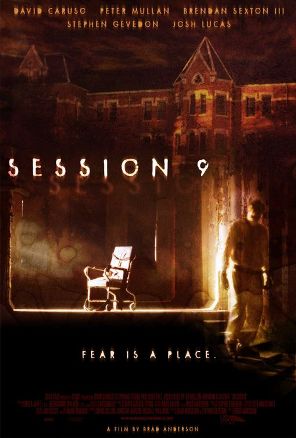
When fear is a place

Mental wards. Insane asylums. Sanatariums. Do those words scare you?

If so, you’re not alone.

The question then is… what makes mental wards so scary? It’s been a potent setting for fiction: One Flew Over the Cuckoo’s Nest, a book that shows that you do not have to add ghosts or monsters to make a story horrifying. And on TV, American Horror Story devoted an entire season to an insane asylum.

Then there’s Session 9, a 2001 movie that follows an asbestos removal crew in an abandoned mental hospital. It is filmed brilliantly, and manages to be scary and disturbing. To say anymore would give too much of the story away, and it’s best to be surprised. They’re right when they say fear is a place.

Image

So back to the why…

I believe the fear of asylums, and mental illness, is rooted in powerlessness; being powerless to control your own mind, being powerless in your movement in the world.

The thought of losing touch with “reality” to the degree that you are locked up scares me. Not being able to tell what’s real and what’s not. Hearing voices. Seeing things that aren’t there. All terrifying. People deal with this in real life every day. It’s got to be tough. And I’m sure it’s a common fear.

Then there’s the idea of being committed. Not too long ago, involuntary incarceration in an asylum was more than just an idle fear. Check out this link at Dangerous Minds, where common traits ranging from laziness to superstition could get you locked away.

When you consider that many fears are internally generated, (a dis-ease of the mind), and mental hospitals are full of dis-eased minds, then the asylums, especially those of yesterday, are the fertile settings for horror stories.

What are some of the scariest asylum-set stories you’ve read or seen?

American Horror Story: Coven – horror or camp?

There’s a scene near the opening of the first episode of American Horror Story: Coven that is the definition of horror. The year is 1834, and a society madam, played by Kathy Bates, is a vain, sadistic woman who keeps a collection of slaves chained and tortured in the attic of her New Orleans mansion. The camera fixes on the mutilated people. You hear their moans and screams. It is pure horror.

But why?

Because it is grounded in the very real horror of slavery.

I’ve seen 3 episodes of this series so far (I haven’t seen the first or second seasons), and nothing else has compared to this one scene.

Don’t get me wrong, American Horror Story: Coven is entertaining and compelling. It follows a coven of witches in New Orleans (with roots in Salem) as they battle each other and the outside world. But it doesn’t know whether it wants to be a campfest or a gory/horror thriller. Too often it slides into camp.

The actors are big names. Jessica Lange is a great fit for the role of a witch obsessed with holding on to her fading looks and power. But there are times when Lange, Angela Bassett, and Kathy Bates play it way over the top. There’s not much subtlety going on. Or maybe they’re just too big for the small screen.

The best horror is rooted in real-life tragedy, both small and large, because it gets us where we live. Case-in-point: the slave/torture scene. And American Horror Story: Coven has more of this. There’s an infertile woman desperate to get pregnant, and there’s a young man who is revealed to have been molested — both are great set-ups for horror. In the latter, you get the payoff (the pregnancy storyline is developing).

So there is potential. The writers are highly skilled in keeping you watching (and I”ll definitely watch on). I just wish they wouldn’t rely on lazy tropes like the rapist fraternity brothers or Jesus freak neighbor, scale back the camp, and stick with the horror.

The heartbreaking case of Donna Noble

Doctor Who offers a case study in stellar character development: Donna Noble. She began as someone you’d gnaw off your own arm to escape from. She ended up heroic and self-sacrificing.

The good news: there’s an outside chance that Donna Noble (played by Catherine Tate, last seen on The Office), may be returning to Doctor Who for the 50th Anniversary special in November.

For those who don’t know, Doctor Who is a British sci-fi series about a human-looking alien (the doctor) who travels through time in his blue police box-looking machine (called the TARDIS). It’s been on TV since 1963, and it manages this feat because the Doctor can regenerate into a new body (that is, new actors). 

The Doctor usually travels with a companion, who is typically 1) human 2) youngish 3) female and 4) highly impressionable. Oh, and they’re usually hot and have a crush on the doctor.
 
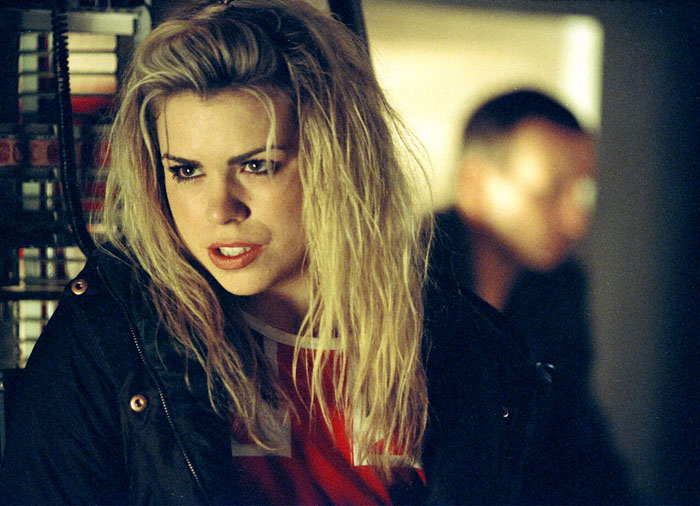
Exhibit A: Rose Tyler.
Image
 
Exhibit B: Amy Pond. 
Image
 
And then there’s Donna Noble.
Image
 
She was mouthy, rude and bossy. But she was also curious and persistent. And the writers gave her an amazing character arc.
 
When she’s first introduced, she’s about to get married. She’s a boorish bridezilla. When her wedding doesn’t turn out as planned (think alien spider creature), she refuses the Doctor’s call to travel with him.
 
But she changes her mind, and ends up tracking him down. Together they travel to Pompeii, get caught in a deadly 51st-century library planet, and meet Agatha Christie. Ultimately she’s given a monumental choice, the universe saving kind, but of course there’s a terrible price to pay.
 
The brilliance of her character development is that the Donna Noble we meet in the beginning would have made a different choice than the one she becomes at the end…
 
…which makes the way she ends the show heartbreaking. No spoilers here. 
 
Here’s a clip of Donna Noble from Doctor Who:
 
 And here’s Catherine Tate in one of her funniest sketches:

Sci-fi is failing us

Sc-fi is supposed to prepare us for the future, but no one gave the script to the robot creators.

The Terminator came out nearly 30 years ago. It lit the warning flare for a whole generation: artificial intelligence (machines, computers, robots, etc etc) will become self aware and will attempt to obliterate mankind. In the movie, this was done by Skynet, a high-powered war machine. Just as Star Trek has pushed us toward a more egalitarian society, the Terminator franchise has subconsciously tried to prepare us to battle human-hating robots.
 
And it’s been effective.
 
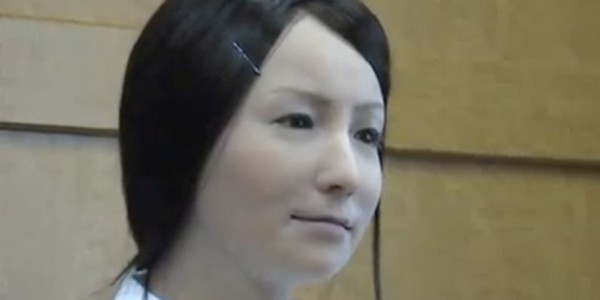
Take Japan’s repeated efforts to create companion robots, such as this nurse robot from Koroko robotics company:
 
Image
 
Creepy, right? Can’t you imagine her peeling off that fake skin and shooting you down with red glowing eyes? Something like this Arnold Schwarzenegger metallic monster:
 
Image
 
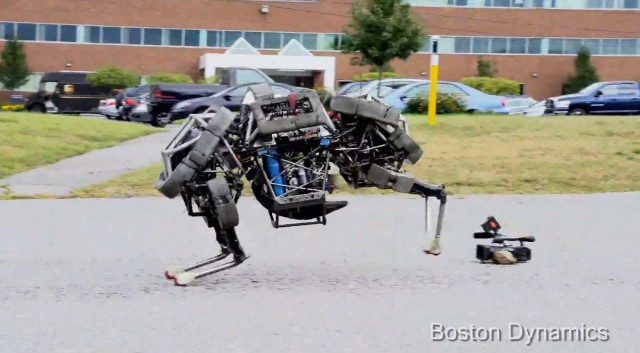
Now those “geniuses” at Boston Dynamics are fouling it all up. They’ve created a vicious robot that looks like… a galloping, headless goat/horse/metal hybrid, both fast and clumsy at the same time. Vicious. Silly. Unpredictable. Death bringers all the same.
 
Image
 
Watch this video and you will realize how confused and ill prepared you will be when this robot is hunting you down.


Nope. We only know how to fight humanoid, Schwarzeneggeresque robots. Not these crazy things.

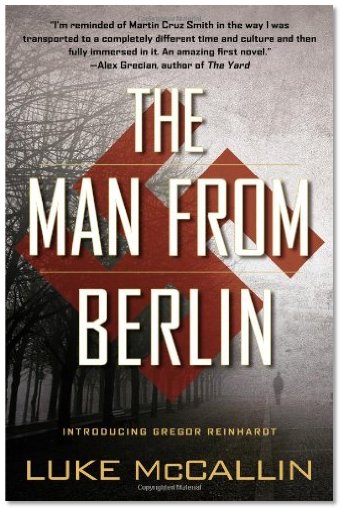
Read this book: The Man From Berlin

The scariest monsters, it turns out, are all too human.

Image

My Friend Luke McCallin‘s great book The Man From Berlin is a historical thriller set in Nazi-occupied Sarajevo. It’s a page-turner, ideal for anyone who loves reading about other times and places. McCallin creates (or re-creates) a time period with mesmerizing detail.

But part of me was hesitant to read it. Why? The protagonist, Gregor Reinhardt, is an officer in the German army. When I read I like to try and identify with the main character. I didn’t want to identify with a Nazi. Luke reminded me that not everyone in the German army during World War II was a Nazi.

Okay.

That distinction wasn’t fine enough for me (and I’m still borderline). Lucky for me I got past this hesitation, because McCallin very subtly walks Reinhardt through the Nazi house of horrors. In the beginning, Reinhardt compartmentalizes: he’s a German soldier, separate from the Nazis. By the end, Reinhardt’s eyes are opened and he sees, like it or not, that he is playing a part in the evil the Nazis are perpetrating, even if his own hands aren’t bloody.

What is common knowledge for all of us – the atrocities committed – is new learning for Reinhardt, and through his eyes we come face to face with the scariest monsters of all, and they aren’t the demonic type. They are not vampires or werewolves or aliens. They’re human.

Take the character of Marija. The novel opens with Reinhardt being assigned to investigate her murder. She’s Croatian, but she collaborates with the Nazis, cataloging, observing, maybe even participating, in their horrors with creepy glee. Now, I have some doubts about whether she was as evil as depicted – she’s only described by others; we never actually see her in action. There’s a chance she was a scapegoat for others with their own agendas. Maybe. But it’s hard to read her as anything but a gorgeous monster.

I love to write about ghosts and monsters. The Last Conquistador stars a demon wreaking havoc on the life of a young Army soldier. But what I write is pure escapism – it’s safe to live in an imaginary world of ghosts and demons and vampires. It’s much harder to look head-on at the evil and danger that exists in this world, which is probably why we love roller coasters and monster movies.

Saturday fun with Doctor Who

Here’s a Doctor Who webisode I stumbled across. The Doctor (played by Matt Smith) and his wife, River Song (Alex Kingston), are out on a date gone awry. It’s a short clip, written by none other than Neil Gaiman. For those who have never watched this British classic series, this gives you a glimpse of what the Whoniverse is like (heavy on characterization, sometimes tongue-in-cheek, other times deadly serious).

Waiting impatiently for the Doctor’s return in November…

http://www.youtube.com/watch?v=ORR-SY0KskM


The chimera in the mirror

Mashed-up mutants aren’t only the stuff of legend and fiction.

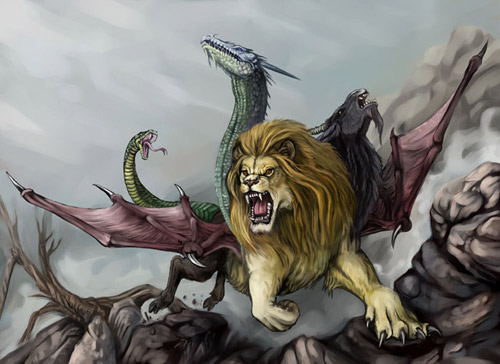
Imagine a creature that’s part lion, part eagle and part snake, a creature that breathes fire, a bad-ass scourge. One that looks like this:


Chimera_by_josh_buchanan

It’s called a Chimera, and it exists only in ancient Greek mythology. It’s not the only hybrid creature in literature and pop culture.

There’s also the Griffin, also Greek, a lion/eagle mix.

Griffin

These creatures, imaginary as they are, are genetic abnormalities. They are not supposed to exist in nature, mythological metaphors to serve some higher literary purpose. In Left Among the Mutants I wrote about mutating animals (and humans) as a way to convey change, loss and grief.

But it turns out that, to some degree, many of us are freaks of nature. We may all be a little monstrous.

The New York Times published an article that suggests that many humans harbor cells with completely different genetic codes. Theoretically each one of our cells should have the same genetic codes. Not so.

For example:

–A British woman donated blood, and the cells were a mix of Type O and Type A. People are supposed to be only one blood type. Scientists concluded she absorbed cells from her twin brother

–Another woman gave birth to children who were not genetically hers. Doctors say that she originated from 2 separate genomes; some of the other genome gave rise to the eggs of 2 of her 3 children

–In one study, more than half of women had cells with the Y chromosome in their breast tissue. Women aren’t supposed to carry the Y chromosome at all – the Y is men only

Note that this is called chimerism, courtesy of that lion/eagle/snake creature.

How does all this happen? Scientists are just beginning to explore this question. What we do know-at this very early stage-is that we may not be who we think we are. We may be others as well.

Aside from the scientific implications, what could this mean for literature? Movies? TV?

Come on, writers, there’s a whole mountain of possibilities waiting to be mined.