Wait…Gendercide Is a Thing?

I like to consider myself a fan of all things speculative–horror and supernatural and sci-fi books, movies, TV shows, etc., and I believe I know a ton about these genres.

Apparently I don’t. The other day I was rabbit holing into the latest of a long line of literary controversies (I won’t go into it here) and I read this article asking whether it’s time do do away with the gendercide trope, a trope I’ve never heard of before.

What is gendercide? It sounds nasty, because it is. Gendercide is where either the men or the women in any given story are killed or die off from some nefarious or mysterious or viral reason. The book that inspired the article introducing me to gendercide is The Men by Sandra Newman. I haven’t read it yet, but it’s about a world where all males suddenly vanish. The remaining women adjust to this disappearance, while videos online depict the men living in a hellish landscape.

There are others, too, such as Y: The Last Man, a comic turned TV show where (almost) all men die of a virus. One of my favorite books, The Knife of Never Letting Go by Patrick Ness, is a variant of the gendercide trope; the novel opens in an all-male society where the women have mysteriously died off.

According to TVtropes.org, gendercide isn’t super popular, and most of the time only a variant is used (only some or most of either men or women die or disappear). Stories where the men disappear are more in line with the theme of feminist utopia, and stories where the women vanish are considered dystopic.

In reading about Newman’s book, I found it disturbing that all the men were sent to a hellscape ruled by demons. Oddly, the writer of the article critical of gendercide (and Newman’s book), didn’t write about that disturbing aspect of it. From me, though, disturbing is not a criticism. I want to learn more about this trope, and see how different writers explore it.

The Health Benefits of Writing

Writing saved my life. Okay, that may be an exaggeration as well as a cliche, but cliches have a foundation in truth, and while writing may not have stopped a speeding bus from pancaking me as I ventured through a crosswalk, the (almost) daily act has helped center me and give me purpose.

With that in mind, how much do writers (and readers) consider the health benefits of writing? And by health benefits I mean psychological, which is as important as the physical. In a recent blog post for Jersey City Writers (a large, community-based writing group I’m a part of), one of the moderators, Sara Stone, reflected on the mental health benefits of writing, and she came up with a surprising benefit of putting pen to paper and SHARING it: the act of sharing your writing for critique requires TRUST, and trust in turn can foster community and acceptance.

I’d never thought of that aspect of writing. Even here, this act of writing these exact words right this very minute forces me to build my resiliency, to face and accept that some might not like these words. But others might. And that’s cool.

To read more of Sara’s post, plus all of the nitty gritty psychological links, click here.

Watch this movie: High Life

This one’s a tricky recommendation.

It’s not often that I like revolting movies, movies that are repulsive for the sake of being repulsive, movies that are obviously trying to shock you.

But here I am.

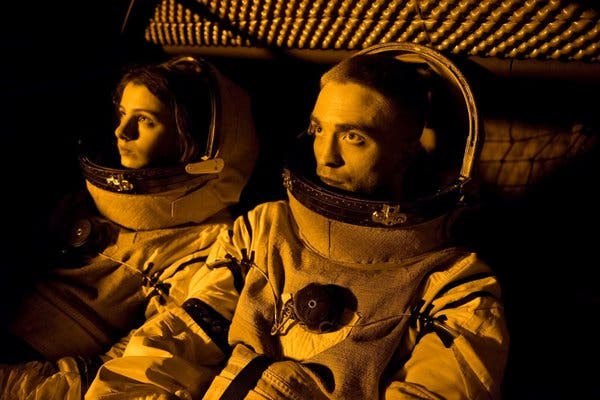
high life

High Life is a recent sci-fi film by French director Claire Denis. It stars Robert Pattinson and Juliette Binoche as travelers on a spacecraft on a one-way mission to harness the energy of a black hole. And perform experiments.

The twist? There are two. Number one: all onboard are death row convicts. Number two: the experiments involve trying to bring a baby to term in deep space.

That all sounds like a run-of-the-mill sci-fi plot. High Life is definitely, absolutely, 100% not. Like I said, it’s revolting. It’s graphic. There should be a whole list of trigger warnings attached. Every trigger warning ever invented.

But it’s also beautiful. Beautifully shot. Beautifully scripted. Beautifully acted.

I was never a Twilight fan. I watched the first one in German and that was enough. But Robert Pattinson is one hell of an actor. His character is reserved (mostly) and mysterious enough to not be annoying.

Juliette Binoche is a madwoman in every sense. The rest of the cast are all great — intense and hateful — with the exception of Andre Lauren Benjamin (aka Outkast’s Andre 3000), who plays a convict full of regret for what he left behind on Earth.

High Life is not for everyone. Some scenes were straight-up sick. Still, this movie is one hell of a trip.

Read this book: The Space Between the Stars

“Life is its own point. It’s just a series of moments, some of them memorable, some of them not. There’s no redemption but what we’re prepared to grant ourselves. No point when we’re finished becoming what we’re going to be. There’s just this breath, and the next one, and the next one. Each of those breaths, each of those moments, help shape us.”

The Space Between the Stars

This bit of gorgeous nihilism is to me the heart of Anne Corlett’s sci-fi novel The Space Between the Stars, the story of a group of plague survivors: the .0001 percent or so of humanity spread across several worlds who were not turned to dust.

I didn’t plan on reading a book about a plague, not right now. Living through a much milder one than in this book is about all I wanted to do with anything plague related.

Once I started reading, it was hard for me to stop.

The Space Between the Stars is centered on Jamie, a thirtysomething veterinarian who is estranged from her long-term boyfriend, isolated from her own historical grief, and the only survivor on a small colony world.

Or so she thinks.

Plague stories can go in several directions. The Walking Dead was once my favorite TV show. Now just a droning, repetitive PSA that humans can be monsters too (ok, I get it!). When Jamie finds other survivors, I was expecting some Walking Dead-ish human vs. human confrontations.

Not so much.

I won’t get into spoilers, but a search for survivors–and her boyfriend–takes on some twists. Not too many, though. The Space Between the Stars is not a hard sci-fi novel (spacecraft can traverse great distances in unbelievably short spans of time). It is also not a thriller.

Instead, it’s more of a character study. On that note, I found Jamie wholly unlikable. She is prickly. She snaps at people. She is self righteous. She’s a horrible communicator. But Corlett does a great job in showing some of the whys, and also showing how maybe Jamie doesn’t like being so flawed. So, while Jamie is unlikable, she’s relatable, if not quite sympathetic.

The Space Between the Stars is not perfect. There were things I couldn’t relate to–as an American, I don’t get the English obsession with class, which was one of the themes of this book. And I wished the sci-fi was amped up (several scenes felt too present day, and not set a century or two in the future).

Still, I was glad to be along for the ride. The writing was beautiful (almost to the point of distraction), and Corlett hit all the right emotional notes. By the end, I wanted to stay in that plague wrecked world just a little while longer.

Classic Lit Challenge: Heart of Darkness

Here’s one of the rarely discussed facts of fiction. Whether we’re writing an alien-filled sci-fi adventure, a sprawling fantasy saga, or a historical epic, all these stories are ultimately a reflection of the specific writer’s society, worldview, ethics, and morals. If you want a true representation of the past, don’t turn to historical fiction.

Turn to fiction actually written in the past.

Warning, though. Often their ethics and sensibilities are vastly different from ours. Sometimes disturbingly so.

If you want to be disturbed and unsettled, then read Joseph Conrad’s Heart of Darkness. In it he depicts a world that is cruel and brutal and blatantly racist. And, yes, heartless and dark.

This is a controversial book, because of its unvarnished description of 19th century European colonialism. But if it’s going to be an accurate portrayal of that time period, how could it not be?

Heart of Darkness book cover

Heart of Darkness is a short book that recounts the story of a less than reliable, and possibly slightly insane, sailor named Marlow, the narrator in Conrad’s sprawling and ambitious Lord Jim, as he tells of his journey into the Belgian Congo to retrieve the mysterious Kurtz for his trading company.

Along the way Marlow travels deeper and deeper into the mysterious heart of so-called wild Africa. The writing has a dreamlike quality throughout that’s a testament to Conrad’s skill. It moves at a fast clip and doesn’t let up. Sometimes it moves too fast for me–especially in the scenes where he finally arrives at Kurtz’s renegade compound I wanted Marlow to slow down and tell us more. But we get what we get.

Heart of Darkness is a compelling read, and I highly recommend it. It was the inspiration for the movie Aopcalypse Now (which I have to rewatch now), so much so that Marlon Brando’s character is also named Kurtz, and he utters the famous line from Conrad’s book.

“The horror, the horror.”

I read commentary on Heart of Darkness captured from writers throughout the 20th Century, and they all dissected it based on where they sat in time and place. I am too. For me, Heart of Darkness was an indictment of the 19th century European colonial enterprise into Africa. The people in London who run the company are presented as cold. The European men in Africa come across as casually cruel. The Africans in their employ are first seen as brutally treated. Conrad does not spare these details. He doesn’t present the Africans as fully human. He does the Europeans, which does them little favor.

Heart of Darkness shows how, rather than “civilizing” Africa (the thin sheen of respectability placed on an enterprise that was really about plunder), European colonialism corrupted those involved.

It made their own hearts dark.

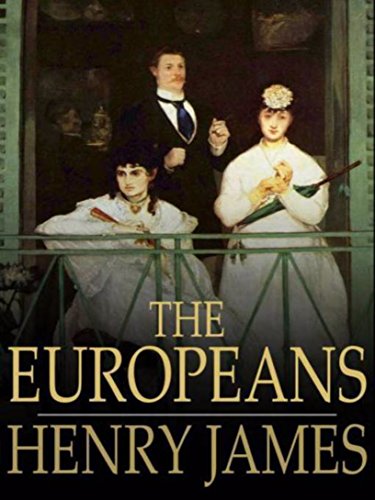
Classic Lit Challenge: The Europeans

I’m back on my classics kick. Part of it is having read one too many contemporary novels that is way too formulaic. Same old tropes whipped out again and again. I don’t mean to knock them too hard. I’m guilty of the same sin. But sometimes you just want something different. And that involves going back a hundred years.

So here I am. With Henry James and The Europeans.

I’ve never read James before. I’ve heard of him (and his famous brother the psychologist William James). In my mind Henry was the stuffy writer of stuffy period slash costume pieces.

Not my thing.

But this book is short! Only a hundredish pages long, depending on what edition. I can handle a hundred pages. No problem.

Right?

Well, actually, yes.

The Europeans wasn’t nearly as painful as I thought it would be. In fact, it was kind of interesting.

Damning with faint praise? Not quite. Like I said, costume dramas about manners are not my favorite. What The Europeans served up, though, was a clash of civilizations writ small. Who doesn’t love a little war? (And Europeans, after all, perfected war, right??)

The basics: Eugenia (a baroness) and her brother Felix come to America to grift their American cousins, the Wentworths, a goodly Puritanish people in the Boston area. They don’t say out-and-out grift, but that’s basically what they’re doing. Seems Eugenia and Felix’s mother was Mr. Wentworth’s older half sister. She met some European dude, converted to Catholicism, and ran off to Europe. And here we are, 30 plus years later. Like many immigrants before them (my ancestors included), Eugenia and Felix are seeking their fortune in the new world.

Much is left out of The Europeans. Why did their mother leave? What was their life like in Europe? None of that seems to matter to Henry James, because he never tells us. What he does tell us, though, is details about what the Americans, and the Europeans, are thinking. If there’s one thing that Henry does excellently, it’s hopping from head to head to reveal what each character is thinking at any given time. Sometimes it’s interesting. Other times, eh. (I’m looking at you, Clifford Wentworth).

I expected a bigger clash. I expected fireworks. I expected a little inadvertent comedy. There wasn’t much of that. Instead what I got was an awkward overuse of the phrase “making love to” — used in a way VERY different from modern times. And a lot of first cousin love. Seriously. I guess first cousins marrying each other was a thing in the late 1800s.

I got through this “comedy” of manners fairly quickly, maybe because I was expecting more. That more never arrived. Still, it was fun to slip into the heads of these lightly scheming characters. A hundred pages I could handle. Four hundred I would have felt cheated.

At least Felix got his happy ending.

Five for Friday

1. Mama Bruise by Jonathan Carroll

mama bruise
Tor.com is the home to free short speculative fiction, always great. This short story, Mama Bruise, by Jonathan Carroll not only features great writing–the prose is intimate and clean–it’s also not at all what I expected. It’s billed as a story about a dog with issues. I was expecting something Cujo-esque. Instead it was stealthily heartbreaking and thoroughly unsettling. Read it.

2. Vietnam by Jon Grant


“Your silence is a weapon. It’s like a nuclear bomb. It’s like the agent orange they used to use in Vietnam.”

Jon Grant is one of my favorites. His musical style isn’t easily classifiable, but his voice is honey and his lyrics are mostly about heartbreak. He’s got a talent for employing strange and sometimes awkward metaphors. They don’t always land but they’re fun to listen to. In this song, he equates a bad relationship to the Vietnam war. It sounds like a stretch but it works. The video does, too. It’s just him, there, being filmed. It’s awkward to look at, which is the point.

3. Villanelle and the knitting needles in Killing Eve

tumblr_pq25koKZAr1u66wzko2_400
Killing Eve is addictive, over the top, and pure fun. I love watching Sandra Oh’s Eve chase and be chased by the psychopathic assassin Villanelle. Even more than that, I love watching Villanelle get in and out of trouble. A recent example is when she’s holed up with a creepy older dude who has an obsession with dolls. Of course she escapes, and of course creepy older dude doesn’t fare too well. Thanks to knitting needles.

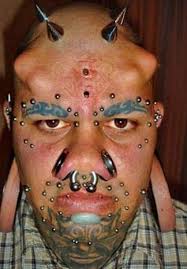
4. The Modfather

modfather
Why???

5. The rustling hair in Game of Thrones

white walker
The Battle of Winterfell will go down as the second-best episode of Game of Thrones to date. Despite its darkness, both literal and figurative, it was a tour-de-force of writing, acting, and production. I could go on about how awesome a plotting job the writers did in getting Arya to the eventual place where it felt completely natural and earned that she would be the one to take down the Night King. I’m not. Instead I’ll focus on one brief moment of brilliance. Just before Arya stormed seemingly out of nowhere to attack the Night King, the hair of one of his minions is rustled. You think it’s the wind. It’s not. It’s Arya leaping in for the kill.

Five for Friday

My top raves of the week:

1. Quentin Coldwater in the Season 4 finale of The Magicians

the-magicians-quentin-alice-penny

The Magicians Quentin Coldwater a strange case. In the books he was meant to subvert the trope of the savior; instead of being super special, he was an average, depressed dude with a marginal talent for magic. In the show he always wanted to be the hero but kept getting outshined by the other characters. The season 4 finale of The Magicians was all his. He became the hero in every sense of the word, but most especially the tragic one.

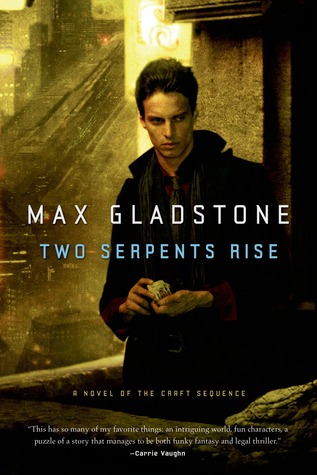
2. Two Serpents Rise by Max Gladstone

TwoSerpentsRise

I just finished Two Serpents Rise, Max Gladstone’s second book in his fantasy Craft Sequence series, about a world full of living and dead gods, and mortals who use a complex system of rules to keep both magic and gods in check. While no book is perfect, he did a great job of creating a wholly unique world very loosely based on Aztec and Mayan legends. His prose is intense (and intimidating from a writer’s standpoint) and his characterizations are effective. Most of all, this book was fun, which is what any reader really wants.

3. Karmacoma by Massive Attack

Once upon a time videos were close to art. I don’t know if I’d put this video in that category but what I love about this throwback is how it spins stories in the viewers mind. Welcome to the weirdest hotel outside of the one in The Shining. What the hell is going on? The guy hunting his tiny double? Why did that other guy get shot in the stomach? The kidnapped kid? The weird homeless dude? The random nosebleed woman? Plus the song holds up after a couple of decades. Hard to beat.

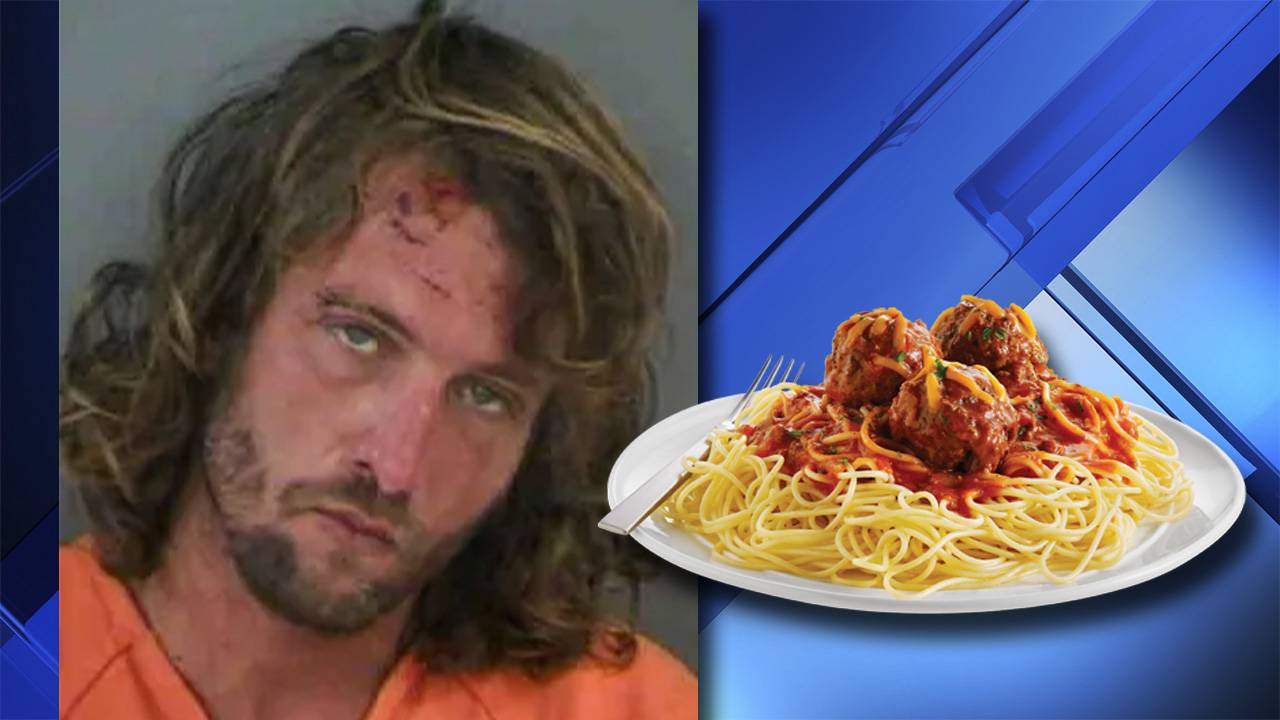
4. Florida Man Aggressively Eats Pasta

florida spaghetti

In Florida (of course), a crazed Jesus hipster looking man, looking beat to hell, was arrested at an Olive Garden for aggressively eating pasta (spoiler: he was drunk). I could eat this story up forever.

5. Dany Targaryen’s bloody coat in Game of Thrones

GoT Dany

I’m not much for fashion. but this coat? I couldn’t look away. Give the costumers an Oscar right now. Fur the color of pure snow, but hidden beneath were lines of red. Blood and snow mingling beautifully. Nothing subtle about this foreshadowing. I can’t wait for the blood!