We’re back for another round. The challenge: write a story in 20 minutes using the following prompts:
Characters: Heart surgeon and Astronaut
Setting: A wine cellar
Genre: Cozy mystery
Trope: A very cheap date
POV/tense: Third person future
And the result:
The Case of the Orange Feather
It will be Betty who first notices the safe. Open, with a single orange feather resting on the bottom.
“That wasn’t like that before,” she’ll tell Alex.
“What do you mean?”
“When you first brought me here, down here to this wine cellar, of all places…”
“Of all places, what do you mean by that?” Alex will say.
“A first date is supposed to be romantic. Dinner, candlelight. Not, mildew and hypothermia.”
He’ll slide up close to her and wrap an arm around her. “How could I ever impress the best heart surgeon in the county by dropping five Benjamins at a steakhouse. I know that a woman like you deserves better. So I figured I’d bring you to a wine cellar—I was on the space shuttle a decade ago with the guy who owns it—and we can explore a little.”
“Explore as crack open a bottle of something pricey?”
He’ll raise his hands in mock surrender. “Hold on now, these bottles go for a grand a pop. I don’t think so.”
She’ll grunt at him, deservedly so, but she won’t be ready to end the date, not quite yet. “What about the safe?”
“What about it?”
“I know for a fact it was locked when we came down here. Did your friend, this mysterious friend, come back in when you were leading me through one of the caverns here?”
Alex will scratch his chin. “No.” He’ll reach in the safe and pick up the feather. “Strange. My friend has a parrot back home. But I don’t think it had orange feathers. Or did it. Hey, do birds have orange feathers?”
“I don’t know.”
Suddenly the lights will turn off. Betty will yelp and Alex will reach for her hand in the dark. She’ll find it and grab it. Then he’ll whip out his phone and shine the flashlight, revealing nothing but dark rows of dusty wine bottles.
Behind them, a crash.
“What was that?”
“I…I don’t know,” Alex will say.
“If this is some kind of practical joke, or scheme to make you fall for me…I know about how adrenaline can affect people, and I’m telling you, I’m not falling for it.”
“This isn’t a game. Trust me.”
Together they’ll walk closer toward the sound of the noise. They’ll turn a corner and see on the floor a busted bottle of 1901 Pinot Noir, the red wine flowing in a rivulet until it reaches a man’s loafer, and attached to the loafer a leg, and a body. While Alex shines the light on the man Betty will reach down and with her trained hands she’ll determine that the man is indeed…
“Dead,” she’ll say.
“I’m guessing he was stealing this prized bottle when he bit it,” Alex will say.
Betty will raise her hand to her mouth. “Who could have done this?”
Alex will hear a rustling from above. He’ll shine his light up and spot the biggest parrot he’s ever seen, the proof of what the parrot did on its claws and beak.
“Guard parrot,” he’ll say. “Who would’ve seen that coming?”
Story ideas are all around. You just have to open your ears. You can find them in all manner of places, including a pub in Ireland in a town called Renvyle on the Connemara coast, a pub called Paddy Coynes, small and dark and warm, which would’ve been smoky in another era, over a pint of Guinness, naturally.
That’s where I first came up with the idea for my story, The Two Burials of Francisco Collins, recently published in Folklore Review.
I was in that pub with my cousin and his wife. We were spending the weekend in Renvyle celebrating their tenth anniversary (they were married there, not the pub but the town), and that night over that pint my cousin’s wife told me of an Irish documentary about a man in Ireland whose body was buried twice. The documentary is called Con Carey and the Twelve Apostles, and I never got around to listening to it (probably will today after I write this) but it gave me a hell of an idea for a story.
An idea that stuck. That’s what good ideas do. They stick. Often I’ll tell myself I’m going to use something I hear or see in a story, but oftentimes it doesn’t stick. This one did. The premise was simple enough, but the question I needed to confront was this: why would a person be buried twice?
For that I went to one of my neglected literary loves: magic realism. The king of that is Gabriel Garcia Marquez, and truth be told I’m woefully deficient in my knowledge of magic realism, but to me it’s a close cousin of speculative fiction. It deals with events that are fantastical and improbable or impossible in our world, but totally in keeping with the fictional world in which they occur.
That’s my baseline for this story. In it, an old man recounts the true story of the events surrounding the two burials of the title character, a patriarch of a ranching family, and what led his son, Xavier to do what he did.
So the documentary gave me the idea, the genre gave me the vehicle, and for the heart of it all (every story needs a heart) I went to my own.
It’s been several years since my own father was killed in a plane crash, so I drew up my own personal experiences and feelings around his life and death, our relationship, and I funneled them into this story. Sometimes things get complicated. Sometimes people are complicated. Sometimes relationships are complicated. And truth be told it’s not always easy to reveal some personal things. But that’s my job as a writer: to put it all on the page, to leave a piece of myself behind, for the reader to see, for the world to witness.
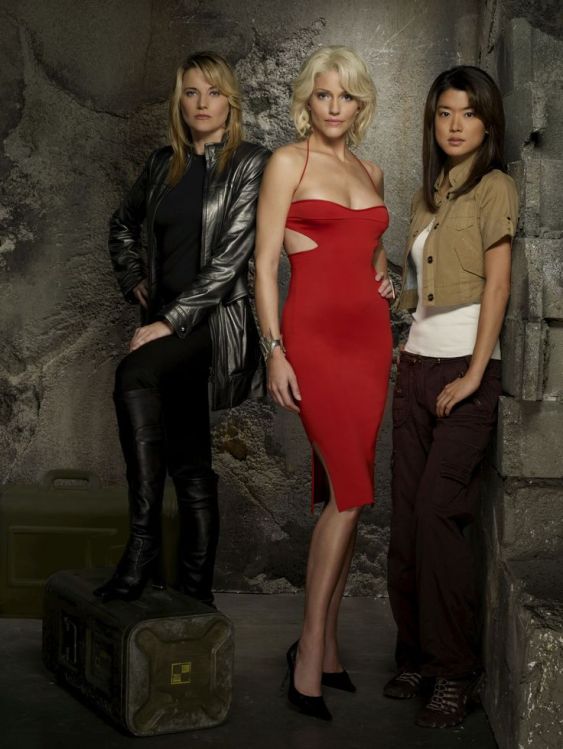
During my exploration of the reboot of Battlestar Galactica I’ve been pretty non-critical of how they handled the series (See Parts 1, 2, 3, and 4 here). Just so I don’t sound like a mindless fanboy, I’ll delve a little deeper into some of my criticisms of the series. After all, nothing in life is perfect. So here goes…
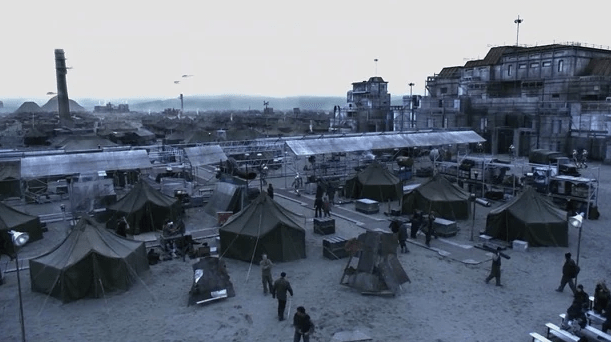
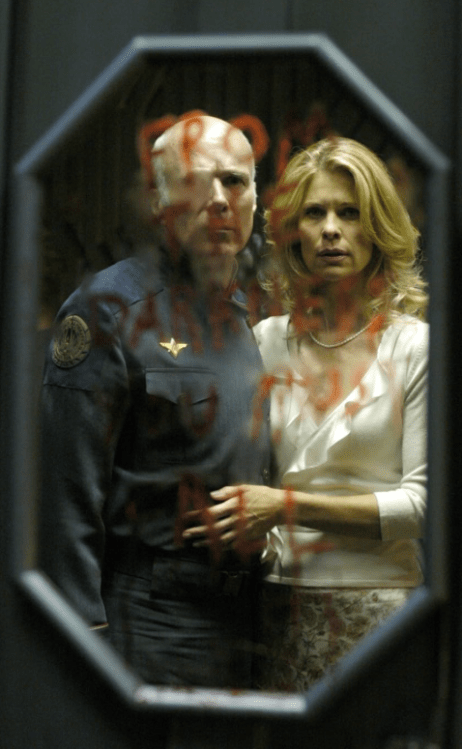
New Caprica By the end of season two, the colonists are cramped on their ships, tired of fleeing the cylons and giving up on searching for an Earth that doesn’t want to be found. Life isn’t going so good for them.
Meanwhile, the cylons are having issues of their own. Their plan of domination isn’t as simple to achieve as they imagined. And, we have a couple of prominent cylons who begin to doubt the plan. After Boomer shoots and nearly kills Adama, she’s killed and resurrected and is living in conquered Caprica City as a hero among the cylons. Caprica Six, the one who got the nuclear codes from Gaius Baltar, is also in Caprica City, and also a cylon celebrity. She’s been seeing an “angel” in the form of Gaius, and she’s having her doubts about the cylons’ plan of wiping out all of humanity. Together Boomer and Six convince the cylons to try and live together with the humans, rather than wipe them out.
Only “live together with” doesn’t quite mean what we think it should mean. When the humans find a barely habitable planet (named New Caprica), they vote to abandon the search for Earth and settle there. All’s going so-so and then the cylons arrive, not to slaughter the humans but to lord over them. For several episodes (it felt like forever), we’re treated to a planet-bound show about insurgencies and counter-insurgencies. Not exactly thrilling.
I remember reading that the writers were trying to write a commentary about the US invasion and occupation of Iraq. ATTENTION ALL WRITERS: be careful using your fiction to critique real-world events. Most times it lands with a thud.
The New Caprica storyline was planet-bound and plodding and, like the colonists, mired in the mud. We got time jumps, which were kind of cool, and we got to see the cylons battling each other, but that’s about it in terms of excitement. I for one was glad when they abandoned that planet and that story for good.
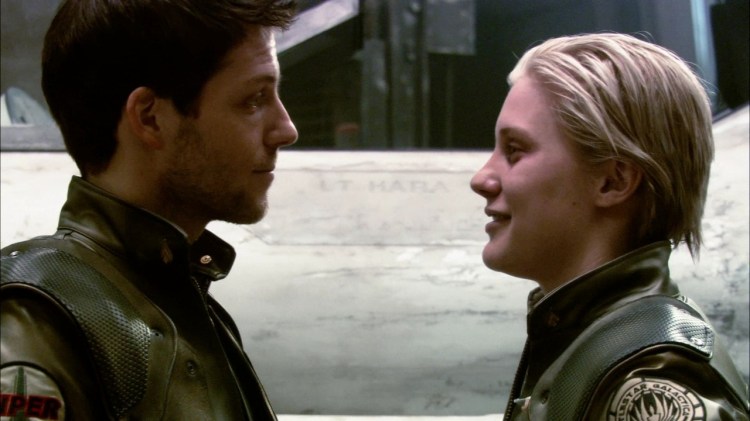
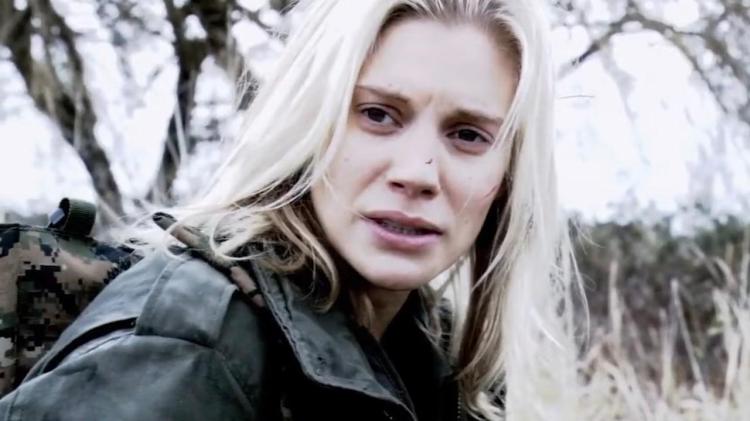
Apollo Loves Starbuck Another storyline we were forced to deal with during the New Caprica muddle was this stupid romance plot. Let’s leave aside the fact that in the original series, Apollo and Starbuck were a couple of dudes and definitely didn’t hook up. But I guess that with Starbuck’s sex change, the writers decided, hey why not have them bang?
Honestly that’s what it felt like: dumb and crude.
The Starbuck in the reboot wasn’t just some random pilot. She’d been engaged to Apollo’s brother, who died in an accident before the events of this series. She was almost his sister in law. They were almost family, they were friends, they were co-workers. And, again, I repeat myself, the writers decided, hey, why not have them bang?
The writers used this storyline not just to bore us, but also to foul up the marriages of Apollo and Dee, and of Starbuck and Sam. Those relationships could have been much more interesting. Instead they were tossed aside. Plus, while the actors who played Starbuck and Apollo were fine, there wasn’t much chemistry between them.
Rather than a full-blown affair, an undercurrent of unrequited lust would have worked much, much better.
Too much filler We were blessed to get 74 or so one-hour episodes of the series spread over four seasons (plus the miniseries and a couple of webisodes). But with all that time to fill, you’re inevitably going to get some filler episodes. And boy did we. The one that stands out most for me was called Black Market, where Apollo investigates the fleet’s black market. We get corruption. We get mafia. We even get a prostitute. Hell, we might as well have been watching a wholly different series.
There’s more, of course, and I won’t go through it all, but I think we’ve been spoiled by the Netflix and Amazon Prime model of television viewing. It used to be that a series got picked up season by season for a preset number of episodes, say 20, per season, and the writers were expected to deliver all those hours. Today the series is sold all planned out, if not the entire arc of the show over several seasons, then as one complete season. We’ve become used to tighter stories with less filler.
This leads to another of my critiques, which is…
Plot Holes All the best shows and books and movies have them. Battlestar Galactica isn’t immune. The most glaring to me, even though I loved the storyline, was the Final Five. When Saul Tigh, Adama’s oldest and closest friend, was revealed to be one of the Final Five, I kept trying to untangle the timeline. He fought in the first cylon war, but he also came to the metal cylons from the bombed-out version of Earth, helped them end the war and create the humanoid cylons.
Or something like that.
Can someone explain that timeline to me?
I get what the writers were tying to do. Having Tigh and his wife, Ellen, be cylons was dramatic and Tigh’s “betrayal” hit Adama, the most prominent character, the hardest. The others: Ellen, Sam, Callie, Tyrol, I could totally buy, and I liked them as cylons. But Tigh? It just felt like a sinkhole-sized plot hole, and it made the identities of all the Final Five feel shoehorned in, as if the writers decided sometime during season two to add them to the show. (Evidence for this, Tyrol and Callie’s son was revealed to be a product of her unfaithfulness. He had to be, otherwise, Athena as the human/cylon hybrid wouldn’t be special.)
Another plot misstep was the mythical nature of Kara Thrace, aka Starbuck. The writers threw in something vague about her father, and childhood visions from the Lords of Kobol, and then she’s the harbinger of doom and she vanishes and reappears and then she finds her own corpse on the bombed-out Earth and at the very end she vanishes while Apollo is talking to her as if she’s an angel or a ghost or something. If there was a plan here, lord knows I had no clue.
Speaking of plans, we were continually reminded that the cylons had a plan. What exactly was this plan? Kill every last human? Breed with them? Live in harmony with them? The Caprica Six in Gaius’s head (an angel or something) continually talked about God’s plan. Which was what? I swear I’m not dumb but this plan was always cloudy to me. It didn’t detract from my enjoyment of Battlestar Galactica, but when you’re reminded every episode that the cylons have a plan, it’s hard to get it out of your mind.
So that’s it for my review of the reboot of Battlestar Galactica. Despite the theme of this final post I truly loved this series, and if you haven’t watched it for some reason, start tomorrow. Or maybe now.
When thinking about writing this piece you’re reading at this very moment I struggled to find the correct word to use to describe a specific type of incident. Every word I could come up with felt wrong, and for a writer, that’s one of the most frustrating feelings.
So I gave up searching for that perfect word and kept on working the concept for this piece in my mind and then I sat down to write it, which is actually similar to the writing process for my recently published short story, Splinter, a tale of brothers Nate and Hud and their tangled dependency.
Here’s where I got stuck. November/December 2023 was interesting for me. I had three events happen to me in quick succession, three intense events. Each one on its own was something to handle. The three piled up led me to write Splinter as an outlet for what I’d experienced.
Now, what to call them. My first go-to was Trauma. But that word is so overused in our current society, it’s become a cliché. If everything can be traumatic then nothing is really traumatic. Incident? Police procedural Events? Bloodless. Nothing seems to fit.
So I’ll switch over to the three things (ugh I hate that word) that led me to write Splinter. I’ll skim over the first two, for personal reasons. One involved a family member over Thanksgiving that painfully plucked at old childhood strings. The second involved a night that included shrooms and whiskey and a friend going through some serious shit, probably among the strangest nights I’ve experienced, which is saying a hell of a lot if you know me.
The third was a garden variety street attack I experienced, where I was slammed to the ground by some asshole. I landed on the concrete on my back, upper left side. He was long gone when I got up. I felt fine. I think I even laughed. The next day and for a couple weeks later I had a sharp pain in my back. I told myself that violence is just a part of being a man in this world, of being a human. In other words, cope and denial.
Mostly I can handle pretty much anything that’s thrown my way, at least that’s what I tell myself. But this triplet pile-on began to claw at me. My dissociative skills were having trouble managing them, so I turned to my what’s been my salvation: writing.
The concept of Splinter is an ancient one. It has its roots in the Genesis story of Cain and Abel: two opposite brothers who (can or) cannot coexist. The challenge I gave to myself was as follows. First, incorporate all three “events” to some degree. Second, thread the needle between realism and speculative fiction. Third, take a panoramic view of the lives of Nate and Hud.
None of this was easy.
First lets get to the technical challenge. Rather than focus on a single event, I chose to lengthen the story out and follow the brothers over several years. I jumped back and forth through time. I interspersed Nate’s “splintering” with his recounting events in the past with a part of the story set in real time. Not easy. What I did was develop different styles for each of the three sections in order to make it easy for the reader to know where they were at any given moment. This took tons and tons of work. Any writer who says that writing is easy is either not good at it, a liar, or incredibly blessed.
Regarding the speculative element, I absolutely love writing spec fiction: light horror, contemporary fantasy, sci-fi, anything with an element of unreality in it. I love how there are fewer limits on your imagination. I love the playful aspect to it. Could I add a speculative element to this story without cheapening it? I chose a very subtle approach (some might call it cheating). I embedded some speculative options, sort of a choose-your-own-adventure take on this story, letting the reader decide for themselves. I’d say it worked: this is the quickest turnaround I’ve had from writing a story to getting it published.
What about the emotional aspect? My primary goal was to work through those three events I’d experienced. How did I do that?
By being as honest as I could bear.
No story is successful unless you get to its heart, and in order to do that you have to cut through flesh and bone and bleed. You have to go to the most painful points. You have to leave blood on the page. That’s what I set out to do here. Most of Splinter is fiction, but some of Splinter is fictionalized, if not factually then emotionally. No, I do not have a drug-addicted brother, but I could transpose sets of feelings that are true. No, I did not witness (or have) a breakdown at my father’s funeral but I could connect feelings of abandonment.
And to me, that’s what successful fiction is: embedding your words with feelings that are true, even if the events are not.
A couple years ago I read the collected fiction of Flannery O’Connor, all of it, her short stories and her two novellas, from start to finish. She’s a master, and what she taught me is that you have to bleed on the page. You have to go to those places you don’t want to go. You can incorporate and reconfigure your own biography in your fiction.
Readers can tell when there’s something real on the page, and after all, isn’t that what we all want from the stories we read and listen to and watch– to feel something real?
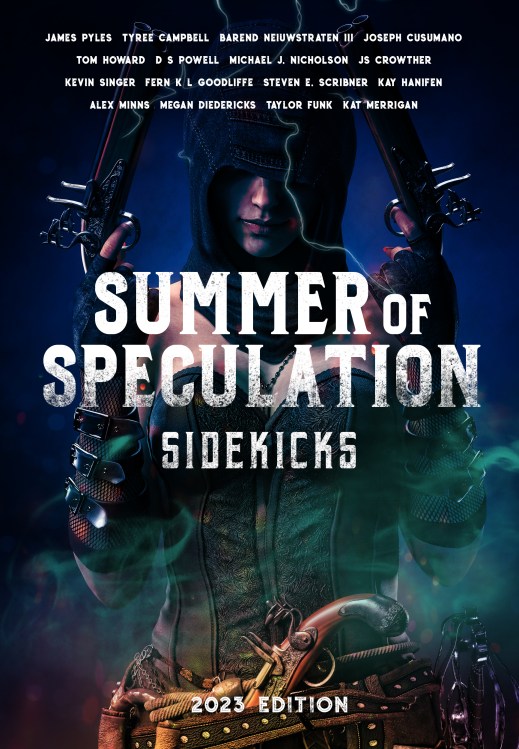
Self-promotion time: one of my stories has been picked up for inclusion in the now-available anthology Summer of Speculation: Sidekicks.
My story is called Champions of the Nereid, and it’s a story about a rudderless woman named Nori who falls under the spell of Hyacinth, a charismatic woman whose mission it is to cleanse the rivers. Nori assumes Hyacinth’s intentions are noble. I won’t spoil it, but it’s a horror story, so you can guess there’ll be trouble brewing for Nori.
This story came to me in a viral video that circulated a few years ago. By now everyone knows about those well meaning yet supremely annoying anti-oil protesters who block traffic and only end up alienating people from their cause. When I watched this video I sided with the angry doctor, and a kind of battle rush hit me.
But later I began to think about the screaming girl. And I couldn’t stop thinking about her. I had this curiosity as to how she got there, how she felt during the incident, and what happened to her after the incident. How did it change her? Instead of mocking her, as I initially did, I came to this place of sympathy. Not with her actions, but with her reaction. I felt something for her. So I decided to write about someone in a similar situation.
That’s how Nori, one of the champions of the nereid, was born (nereids are mythological mermaids, by the way. Hint hint).
From there I knew it would be a horror story.
While Nori’s story was fun to explore, it was tough to write. It’s a slow burn, and those types of stories are hard in terms of maintaining tension and momentum. I did several rewrites and workshopped it. A lot of the backstory had to be cut because it cluttered up the piece (too distracting). To be honest, I’m still not 100% sure I nailed it. But I must have done something right, because now it has a life out there in the world.
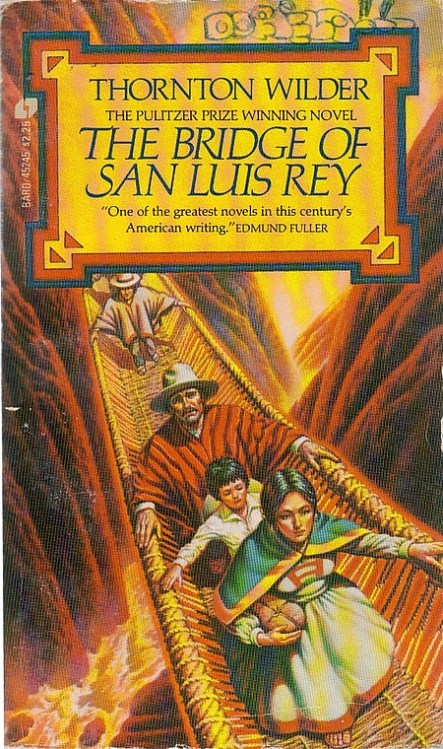
On Friday noon, July the twentieth, 1714, the finest bridge in all Peru broke and precipitated five travellers into the gulf below.
I don’t do good with unexpected freedom. It was a Thursday. I should have been working but a bottleneck ruined my plans. I couldn’t stay idle in my house because my mind would wander to someone else and then thoughts of what never could be would loop in my head, so I roamed the city with a book and my earbuds and headed toward the waterfront—blue sky over the river, the Manhattan skyline, ferries streaming across the Hudson—and I sat and read and listened and watched people go from work toward the train station and vice versa.
The book was The Bridge of San Luis Rey by Thornton Wilder, which I bought for two bucks from a street vendor. It was five by the time I got my coffee and sat on the rocking chair underneath the granite portico with a view of the river and listened to a shuffle of songs (starting with Manchester Orchestra’s I Know How to Speak) and cracked open the book and started to read it only to discover it was not about a WW2 battle but instead a bridge collapse. In the book Wilder kills the five travelers from the get-go. Then he explores those five in detail and what led them to that bridge at that moment. The first of those characters is Doña Maria, described as unattractive and unloved, who was finally married off at 26.
Still, she lived alone and thought alone, and when an exquisite daughter was born to her she fastened upon her an idolatrous love.
Unfortunately Maria’s daughter, Clara, took after her father, cold and intellectual. Still, Maria persisted, persecuting Clara with nervous attention and a fatiguing love. A grown-up Clara moved to Spain, but Maria’s desire for her daughter only grew more intense. Maria knew she would never be loved in return, but she couldn’t quit her desire.
I thought of that someone else. Desire, someone said, is not love but the awareness of distance. That’s true. For me and for Maria, too. She was obsessed with that distance between her and her daughter. And me, no matter how close I could possibly get, that someone else would always be separate from me. I see it and I feel it and I know it but it doesn’t matter much. It doesn’t kill the desire. That’s the essence of desire, I guess.
While I read I watched men walk by wearing loafers with no socks. A woman held her mask loose in her hand as if she was about to let it go. A man passed in the sunlight and I judged him adequate according to that inventory list in my mind and I ached (Dumb word, ache. Romance ruined it.) and told myself that he doesn’t feel shame, not like I do, that no one could feel it like I do. Something rumbled in my gut, some undigested thing from some long-gone yesterday, and I wondered if it would ever be digested, or if I would I carry it around with me forever. When that adequate man left my line of sight I felt relieved and read some more.
She wanted her daughter for herself; she wanted to hear her say: “You are the best of all possible mothers”; she longed to hear her whisper: “Forgive me.”
I looked out at the pier and at the men and women who crossed its planks. What was here a hundred years ago? A thousand years ago? What would be on this spot a thousand years from now? Wilder wrote The Bridge of San Luis Rey a century ago. He’s gone. The people he wrote about—people who lived three hundred years ago and who seem as real as any of the men and women on the pier before me—would be long gone, if they ever really existed. But I still felt them resonate.
She lived alone and she thought alone.
I read that line again and again. Like her, I am separate. Separated. I don’t know if this feeling is a Covid hangover or an ancient psychic wound or some personal flaw or just a hallmark of what it means to be human. I wanted to bring that feeling, that eternal separation, out into the sunlight, dry it out it and shrink it until it was small enough to fit in my hand and tuck into my pocket instead of having to wear it like a giant dripping shroud hanging over my shoulders and head and blocking out the rest of the world. But I don’t know how.
Maria could never figure out how to let go of her desire. News of her daughter’s pregnancy led her to cross that fateful bridge to a certain shrine where she would pray for the health and safety of her daughter and grandchild. She was convinced this devotion would finally win her daughter’s love. Her desire was her undoing.
My coffee was getting cold. A woman took a chair across from me and she rocked in her summer dress staring at her phone, legs extended, smiling, and I felt so far from her I could barely even find myself. Then she was gone. A man in a suit and sunglasses walked past me with a hands-in-pocket swagger that told me he was trying too hard, that he, too, carries a dripping shroud heavy on his shoulders. I’d never want to slip into his skin; I have enough shame for one man as it is, so why take on his as well? But I did, and then I was stuck with sadness for two. Someone once told me I lacked empathy. I wish I could lack some more.
By 6:30 pm my coffee was empty. I’d watched so many people pass by on to some other life, and me, always apart. All I wanted was to escape whatever inside me makes me stay so apart. I wanted to feel what they feel, like one of them, like they do, but I never do and it leaves me like an alien on this planet. I could’ve sat and watched the people all night until the morning and then all day again but that longing, that desire, would grow so unbearable that I’d want to rip my chest open and pull out every last poisonous fiber. If that someone else were beside me and if I could be totally honest, I would say this: Come sit beside me and take my pain from me. To me it’s poison but to you it’s dust.
And if I did and if it happened, then what? Would I still be alone, even with that someone else beside me? I think I would. Does this go back to my father, who taught me how to live in distance and separation? I don’t know. And while I’m being totally honest, do I truly, really, care about that someone else? Who they are? What they feel? Their own poisonous pain? Did Maria care about her daughter, or was Clara just a receptacle for her mother’s needy desire?
I finished the section about Maria. Two days before that bridge fell out from under her she realized that her desire was her undoing, that she need to surrender it to ever feel peace in the world, that she needed to live her life with courage and not fear.
“Let me live now,” she whispered. “Let me begin again.”
I left my chair and the view of the skyline and the commuters with my own desire still by my side.
The thing I love about speculative fiction (horror, sci-fi, contemporary fantasy) is those stories aren’t just about monsters or spaceships or time travel. They serve as broad canvases to explore different facets of humanity. Dragons and Ice Zombies in Game of Thrones are window dressing for a story about the lust for power. The task of fighting vampires in Buffy the Vampire Slayer is a metaphor for the tumultuous transition to adulthood.
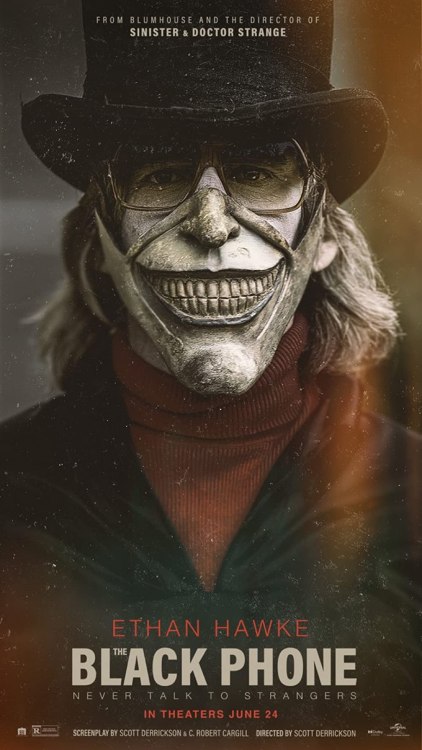
Recently I saw a horror movie titled The Black Phone that was not just about a teenage boy locked in a basement by a sadistic madman who got help from previous dead victims via a dead phone. The story was not about ghosts. It was about child abuse.
The Black Phone (not sure how I feel about the title), starring Ethan Hawke and based on a short story by Joe Hill, is about a child abductor nicknamed the Grabber who terrorizes a Denver suburb. He kidnaps teenage Finney and locks him in the basement. In this basement is the black phone of the title that doesn’t work, except it does. (WARNING: spoilers ahead). Finney has a touch of ESP, and that ESP allows him to communicate with the boys who the Grabber kidnapped and murdered before him. Those boys barely know who they are anymore. Their murders left them that traumatized, but they’re able to give Finney advice that leads him to tools that may help him survive.
First off, The Black Phone is really well done. At no point did I find my mind wandering. I didn’t get bored. It took me a while to get into it, but that’s more of a Kevin quirk than an actual criticism. The ‘70s details are fun (before my time, so I can’t relate or critique), the suspense and thrills are well placed and well spaced, and the writing and acting were strong. If you like horror, you’ll love this movie.
So, about the child abuse. In the real world it’s a topic rarely touched. The Black Phone didn’t shy away from it.
One of the earliest shots shows Finney and his sister Gwen tiptoeing around their angry father, a nasty drunk mourning the suicide of his wife. Gwen (like Finney and their mother) has ESP abilities, which their father literally tries to beat out of her. This, not the kidnapping or murders, was the most horrific scene of the movie. For anyone who’s experienced something similar, it will be a killer scene to watch. For those lucky enough to never have suffered abuse, hopefully it will be a little easier to watch.
It’s not profound or especially insightful to say that abuse warps children. Gwen is defiant and violent. Finney is passive to a fault. Both learned lessons from their abuse (Gwen: fight fire with fire. Finney: weakness). By the end Finney learns that sometimes you have to fight back, if just to survive. The second to last scene gutted me. After Finney kills the Grabber, he and his sister huddle in the back of the ambulance. Their father runs to them and sobs apologies at their feet. They stare at him, blankly. He’s repentant, but they’re already broken. That scene rang so true.
But the final scene of The Black Phone, the one just after that ambulance scene, told a different story. Throughout the movie, Finney was tormented by bullies. In the last scene, Finney, now legendary for killing the Grabber, struts through the halls of his school, ready to claim the love of the girl he crushes on.
It was a good ending, but it left me with a doubt I could only make sense of when I read an interview with the director. For him, the movie was about being bullied. In that narrative framework that absurdly triumphant last scene make sense. But the realities of child abuse tell a different story. In the real world Finney would have a long, long road ahead of him. He’d face a mighty struggle to reclaim his sense of self and his sense of power.
We rarely talk about the effects of physical abuse on children, including in fiction. Horror is the exception. To me, the movie Hereditary was about a woman abused by her mother pass on that abuse to her children. In The Babadook, a mother lashes out at her difficult son, using her grief as an excuse. Add The Black Phone to this thin cannon (I don’t count Carrie–the mother was too cartoonish). All three movies presented the parents as sympathetic. They usually are. But they didn’t flinch at showing us a glimpse of the horror that children experience as a result of their physical abuse.
Every so often some version of this list bubbles up into my consciousness. Mostly it’s when I guiltily remind myself I’m way behind on my reading (my bookshelves can attest to that). So I did a web search and pulled up a bunch of these lists of the top hundred books you should read. The “you” in question is debatable, of course, as are the lists. There are tons and tons and tons, everyone from The New York Times to the BBC, PBS, booksellers and publishers of course, as well as more obscure sites like The Art of Manliness (glad to see that people are finally treating manliness as the art form that it is).
The Great Gatsby by F. Scott Fitzgerald. Read it, loved it, recommend it, mainly for the technique of the unreliable narrator. Nick Carraway is a creep.
Catch-22 by Joseph Heller. Tried it in college. I was too young for it. Didn’t make it very far.
On the Road by Jack Kerouac. Read this soon after I got out of the army. I liked it well enough, even though its antiestablishment, pre-hippie vibes were dated.
To Kill a Mockingbird by Harper Lee. Controversy be damned, this one should be higher up on this list.
The Lord of the Rings by J.R.R Tolkien. Tried reading The Hobbit in high school. Hated it, so I never got to this one, and I never will. The movies were great.
Lolita by Vladimir Nabokov. I recently tried reading this. It’s one of those books that is too well written. I couldn’t stomach a book about a pedophile. Despite the great writing, I will not finish it and I couldn’t recommend it.
The Catcher in the Rye by J.D. Salinger. This book gets slagged a lot, and I get why, but I think it’s phenomenal. Salinger broke new ground with his storytelling and POV character style, a style that’s been imitated almost to death. But it’s great in its original incarnation. Also spawned one of my favorite lyrics by country artist Orville Peck: “You’re just another boy caught in the rye.”
Midnight’s Children by Salman Rushdie. Read this book several years ago. It’s about a world and a time I know little about–interesting, fascinating, expertly written, and highly recommended.
Alice’s Adventures in Wonderland by Lewis Carroll. Know the story, never read it, but I did write a story based off his Jabberwocky poem that got included in an anthology.
Ulysses by James Joyce. A friend of mine who is a Joyce fanatic had me read this book chapter by chapter and discuss it with her over wine. Ulysses is a challenge, but he maps out the modern novel.
Lord of the Flies by William Golding. I think I might have read it in high school? Can’t remember, but this is one of those stories almost everyone knows, even if they’ve never read it.
The Grapes of Wrath by John Steinbeck. Read it. Loved it. I can never forget that final scene. Also, one of my favorite songs, Rose of Sharyn by Killswitch Engage, shares the name with a character in this book.
1984 by George Orwell. Why read it when we’re living it? Just kidding.
Jayne Eyre by Charlotte Bronte. Never read it, though I did read Wuthering Heights by her sister Emily, and also Jasper Fforde’s The Eyre Affair, which is a strange and fun take on Bronte’s title character.
Moby-Dick by Herman Melville. I tried reading it in college. I kept falling asleep.
Mrs. Dalloway by Virginia Woolf. I read and loved Woolf’s mercifully briefer answer to Joyce’s Ulysses.
A Passage to India by E.M. Forster. Nope
Brave New World by Aldous Huxley. Yes. And I loved it. Dystopic sci-fi at its finest.
Things Fall Apart by Chinua Achebe. Yes, years ago. Not something I’d usually pick up but well worth the read.
The Prime of Miss Jean Brodie by Muriel Spark. I don’t know her.
One Hundred Years of Solitude by Gabriel Garcia Marquez. Here’s the thing. I hate Garcia Marquez. Every time I read his writing I get depressed because I will never write anything half as good, this included.
Pride and Prejudice by Jane Austen. I tried but it wasn’t for me. I think the main problem is that Austen, like Salinger, started a literary tradition that’s been done to death. I read Salinger early in my reading career. I tried reading Austen too late.
Animal Farm by George Orwell. Yep, back in high school, and I still remember it vividly. Some things never change.
Crime and Punishment by Dostoyevsky. Working on it right now. Intense.
Beloved by Toni Morrison. Not yet but it’s on my list.
Invisible Man by Ralph Ellison. Nope.
Slaughterhouse-Five by Kurt Vonnegut. Yes. When I was ten. Way too young. Then again a few years ago. Classic.
The Stranger by Albert Camus. Nope. I read The Plague though. Dark is an understatement.
Don Quixote by Miguel de Cervantes. Nope.
Robinson Crusoe by Daniel Defoe. No again.
Frankenstein by Mary Shelley. Yes. She is one of the parents of modern horror. Great book.
If you’ve made it this far you get the point and I won’t go on until 100. It’s fun, though, to look back on what you’ve read and loved (or didn’t), and to add more books to your pile waiting to be read.



 Read by Kevin