Problematic Protagonists: I Saw the TV Glow

Recently I checked out the 2024 indie film I Saw the TV Glow. Ask me what genre it is and I’d have to take a moment. Somewhere in the dark contemporary fantasy camp. Not quite horror but wishing it could be.

First off, what it’s about.

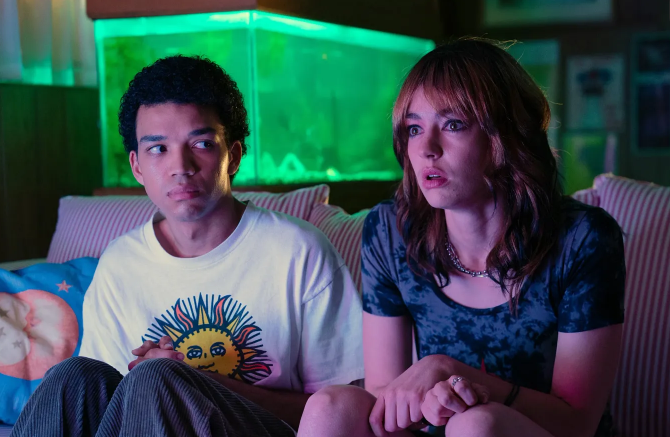
High schooler Owen befriends an older student, Maddy. They bond over a cult TV show called the Pink Opaque, which is about two psychic girls who fight bad guys. Owen is too young to watch the show at home, so he sneaks over to Maddy’s house. Stuff happens. Maddy is a lesbian and Owen is apparently asexual (more on that later). Owen’s mother dies of cancer and he’s stuck with his ignoring father. Maddy runs away then returns claiming that they are really the characters from the Pink Opaque and have been trapped in this fake world, then she’s gone again and Owen is left to figure out what’s what for himself.

My overall take is that there are things I enjoyed about it. The movie had a fun retro indie shoestring vibe (I mean that as a compliment). It had heart. It was a little goofy and it played to the tropes. Also, the show within the movie, the Pink Opaque, was clearly a callback to one of my favorite TV shows, Buffy the Vampire Slayer, including the font used in the credits, and a cameo by Amber Benson, who played Tara in Buffy (Fred Durst, the Limp Bizkit frontman, also has a very small role).

And I didn’t mind that the ending is left vague. In fact I liked that ending. And the writers earned it.

What hold the movie back, massively, is the character of Owen.
I’m of the camp that protagonists are make or break to your story. They don’t have to be likeable or noble or superhuman. They don’t even have to be relatable or identifiable. But there is one thing that every protagonist absolutely must have. He or she must WANT SOMETHING. It can be a small something (to go get a Slurpee) or a big thing (to save the universe from collapse), but there has to be something.

Poor Owen. He didn’t seem to want anything. Clearly he was disconnected from the world. He tells Maddy in a key scene that he doesn’t have any sexual feelings whatsoever, like he’s been scooped out hollow. If he was just a normal human like one of us that would be sad and probably a cause to get therapy. In a piece of fiction? It’s a huge red flag. It signifies your character is disconnected from his own wants and desires.

Now this could be a great launching point. How does that character reconnect with his internal desires? How does he take concrete action to fix this?

But that’s not what we get in this movie. Instead Owen drifts passively through life. His voice rarely rises above a whisper. His facial expression barely changes. Clearly this is a guy with some serious low-grade depression. Again, normal in the real world but do we want to watch this play out for two hours?

By the time we get toward the end of the movie, after Maddy returns and tells Owen that he’s really one of the characters from the Pink Opaque, trapped in this fake identity, we’re aching for Owen to do something, but all we get is nothing. Even after the climactic scene, the one where you can make a case that a) yes, he really is that trapped character or b) no, he’s just seriously mentally ill, Owen is back to being the same old mopey Owen we all know and don’t love.

Like I said, there was a lot of goofy charm to this movie. I really wanted to like it. But poor Owen left me not caring in the least what happened to him. So my take: give your protagonist a purpose. Give him a goal. Make us root for him.
Read This Book: Sea of Tranquility

What should we do with the era of Covid? As a society? As writers?

It’s an understatement for sure to say that it was a difficult time. I look back in anger, and maybe not for the reasons that you might, and that fact makes reckoning with that time period all the complicated–we probably see different villains.

Nevertheless, as writers, our lives bleed into our work. It better to some degree, unless you want writing that’s sterile.

With that said, back to my original question – what do we do with the Covid era? I touched upon it from a distance in my recently published story, One More Darrell, by zeroing in on the isolation of the main character (isolation being one of the Big Bads of that time period for me).

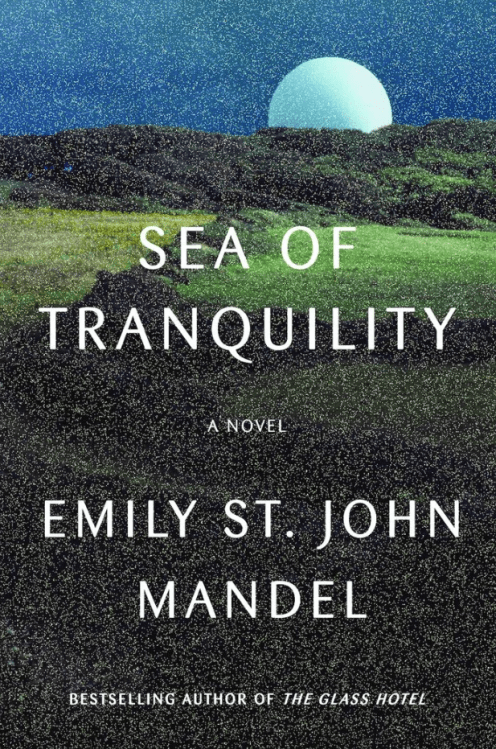
I’ve heard chatter that writers SHOULD be incorporating the Covid era more concretely and directly into stories. Fine, do that. I likely won’t read it. I don’t want to be reminded of it. Forgetting is the best medicine (weird cliche but go with it). Unfortunately (or fortunately) I slipped up and read Emily St. John Mandel’s time-hopping novel Sea of Tranquility, and while it is not about the big C per se, it hits on epidemics. Hard.

Luckily, Mandel, who wrote the mega-successful Station Eleven, is talented enough to push me past my resistance. Also, it helps that it’s not a story ABOUT pandemics. It’s about rips in the fabric of space and time. It’s about people from different eras sharing a common experience. And it asks what is the real nature of the world we live in?

Sea of Tranquility opens with a British nobleman migrating to Canada on the eve of World War 1. He’s a lost soul in the sense that he’s purposeless, and he stumbles on a strange incident in the forests of British Columbia he stumbles upon a strange incident that leaves him forever changed.

From there the novel time jumps ( from the 1910s to the 1990s-2020s, the 2200s, the 2400s, and back and forth). We meet characters including a novelist, Olive Llewelyn, and a time traveler named Gaspery-Jacques Roberts. To explain more of the plot wouldn’t do this book justice (and frankly it’s not so easy to explain without giving it all away). But I will say this. At its heart, Sea of Tranquility is a time travel story. I love time travel stories, but they’re damn near impossible to pull off (the series Dark did it well, so did the movie 12 Monkeys).

But Mandel manages to do it, successfully. She ties together all the back and forth and the here and there that ranges from cities on the moon to the forests of western Canada. It’s a small story; it’s not about the end of the world, or saving the world, or anything like that. It’s just about a group of people who become tied together across space and time through a series of events. Lives are lived and lost and remembered. Sea of Tranquility is a quick read, it has a compelling storyline, and the characters are drawn well.

But I’ve got to knock a star off of my review, and the reason why comes back to my question way at the beginning: what do we do with the Covid era? In Sea of Tranquility, Mandel harkens back to the particularly paranoid aspects of that time, and while it all made sense in the story, it ripped me right out of the book. Nevertheless, I enjoyed my time spent reading it. Time travel plus beautiful prose is the key to my heart.

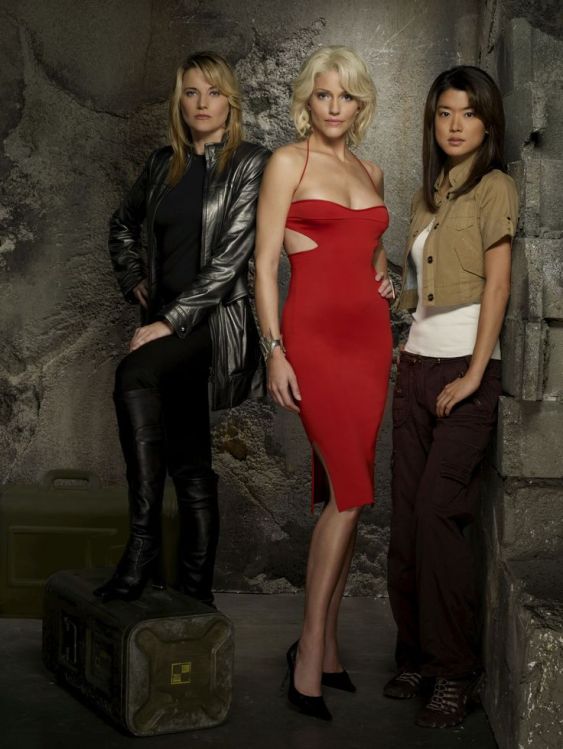
Battlestar Galactica Part 5: Some Final Callouts

During my exploration of the reboot of Battlestar Galactica I’ve been pretty non-critical of how they handled the series (See Parts 1, 2, 3, and 4 here). Just so I don’t sound like a mindless fanboy, I’ll delve a little deeper into some of my criticisms of the series. After all, nothing in life is perfect. So here goes…

New Caprica
By the end of season two, the colonists are cramped on their ships, tired of fleeing the cylons and giving up on searching for an Earth that doesn’t want to be found. Life isn’t going so good for them.

Meanwhile, the cylons are having issues of their own. Their plan of domination isn’t as simple to achieve as they imagined. And, we have a couple of prominent cylons who begin to doubt the plan. After Boomer shoots and nearly kills Adama, she’s killed and resurrected and is living in conquered Caprica City as a hero among the cylons. Caprica Six, the one who got the nuclear codes from Gaius Baltar, is also in Caprica City, and also a cylon celebrity. She’s been seeing an “angel” in the form of Gaius, and she’s having her doubts about the cylons’ plan of wiping out all of humanity. Together Boomer and Six convince the cylons to try and live together with the humans, rather than wipe them out.

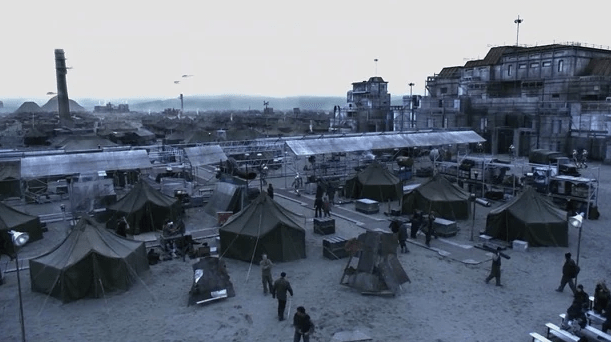
Only “live together with” doesn’t quite mean what we think it should mean. When the humans find a barely habitable planet (named New Caprica), they vote to abandon the search for Earth and settle there. All’s going so-so and then the cylons arrive, not to slaughter the humans but to lord over them. For several episodes (it felt like forever), we’re treated to a planet-bound show about insurgencies and counter-insurgencies. Not exactly thrilling.

I remember reading that the writers were trying to write a commentary about the US invasion and occupation of Iraq. ATTENTION ALL WRITERS: be careful using your fiction to critique real-world events. Most times it lands with a thud.

The New Caprica storyline was planet-bound and plodding and, like the colonists, mired in the mud. We got time jumps, which were kind of cool, and we got to see the cylons battling each other, but that’s about it in terms of excitement. I for one was glad when they abandoned that planet and that story for good.

Apollo Loves Starbuck
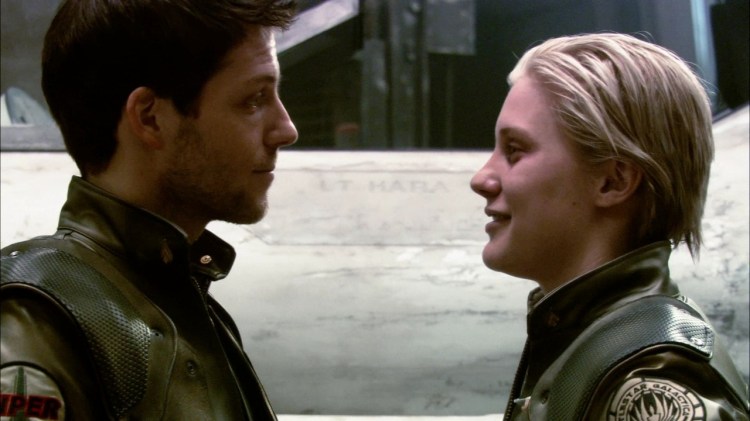
Another storyline we were forced to deal with during the New Caprica muddle was this stupid romance plot. Let’s leave aside the fact that in the original series, Apollo and Starbuck were a couple of dudes and definitely didn’t hook up. But I guess that with Starbuck’s sex change, the writers decided, hey why not have them bang?

Honestly that’s what it felt like: dumb and crude.

The Starbuck in the reboot wasn’t just some random pilot. She’d been engaged to Apollo’s brother, who died in an accident before the events of this series. She was almost his sister in law. They were almost family, they were friends, they were co-workers. And, again, I repeat myself, the writers decided, hey, why not have them bang?

The writers used this storyline not just to bore us, but also to foul up the marriages of Apollo and Dee, and of Starbuck and Sam. Those relationships could have been much more interesting. Instead they were tossed aside. Plus, while the actors who played Starbuck and Apollo were fine, there wasn’t much chemistry between them.

Rather than a full-blown affair, an undercurrent of unrequited lust would have worked much, much better.

Too much filler
We were blessed to get 74 or so one-hour episodes of the series spread over four seasons (plus the miniseries and a couple of webisodes). But with all that time to fill, you’re inevitably going to get some filler episodes. And boy did we. The one that stands out most for me was called Black Market, where Apollo investigates the fleet’s black market. We get corruption. We get mafia. We even get a prostitute. Hell, we might as well have been watching a wholly different series.

There’s more, of course, and I won’t go through it all, but I think we’ve been spoiled by the Netflix and Amazon Prime model of television viewing. It used to be that a series got picked up season by season for a preset number of episodes, say 20, per season, and the writers were expected to deliver all those hours. Today the series is sold all planned out, if not the entire arc of the show over several seasons, then as one complete season. We’ve become used to tighter stories with less filler.

This leads to another of my critiques, which is…

Plot Holes
All the best shows and books and movies have them. Battlestar Galactica isn’t immune. The most glaring to me, even though I loved the storyline, was the Final Five. When Saul Tigh, Adama’s oldest and closest friend, was revealed to be one of the Final Five, I kept trying to untangle the timeline. He fought in the first cylon war, but he also came to the metal cylons from the bombed-out version of Earth, helped them end the war and create the humanoid cylons.

Or something like that.

Can someone explain that timeline to me?

I get what the writers were tying to do. Having Tigh and his wife, Ellen, be cylons was dramatic and Tigh’s “betrayal” hit Adama, the most prominent character, the hardest. The others: Ellen, Sam, Callie, Tyrol, I could totally buy, and I liked them as cylons. But Tigh? It just felt like a sinkhole-sized plot hole, and it made the identities of all the Final Five feel shoehorned in, as if the writers decided sometime during season two to add them to the show. (Evidence for this, Tyrol and Callie’s son was revealed to be a product of her unfaithfulness. He had to be, otherwise, Athena as the human/cylon hybrid wouldn’t be special.)

Another plot misstep was the mythical nature of Kara Thrace, aka Starbuck. The writers threw in something vague about her father, and childhood visions from the Lords of Kobol, and then she’s the harbinger of doom and she vanishes and reappears and then she finds her own corpse on the bombed-out Earth and at the very end she vanishes while Apollo is talking to her as if she’s an angel or a ghost or something. If there was a plan here, lord knows I had no clue.

Speaking of plans, we were continually reminded that the cylons had a plan. What exactly was this plan? Kill every last human? Breed with them? Live in harmony with them? The Caprica Six in Gaius’s head (an angel or something) continually talked about God’s plan. Which was what? I swear I’m not dumb but this plan was always cloudy to me. It didn’t detract from my enjoyment of Battlestar Galactica, but when you’re reminded every episode that the cylons have a plan, it’s hard to get it out of your mind.

So that’s it for my review of the reboot of Battlestar Galactica. Despite the theme of this final post I truly loved this series, and if you haven’t watched it for some reason, start tomorrow. Or maybe now.

Anatomy of a Story: One More Darrell

Someone once said books beget books. I can’t find out who. I thought it was Virginia Woolf, and since I read and really liked Mrs. Dalloway, I’ll go with her.

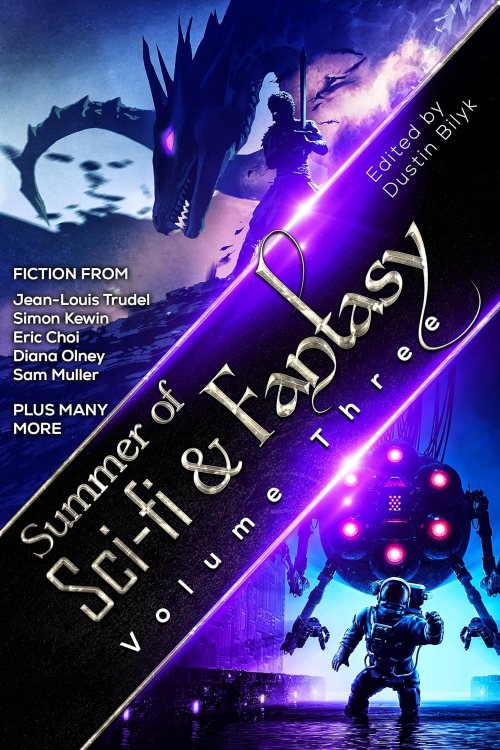
In my case, short stories beget short stories, or more specifically, a throwaway line in a story included in an anthology on time travel was the seed for my short story, One More Darrell, which was published in the anthology Summer of Sci-Fi & Fantasy: Volume Three.

I tried to find the exact line and the story it appeared in but I had no luck. It was something about a pill that let you experience a moment in someone else’s life. That struck a chord in me, so I got to work writing.

A brief flashback: I wrote this story during the height of the Covid lockdowns. I’d spent a lot of time on my own in my house drinking too much and lost in the online world. So just like most of the world. That whole experience left me with a profound sense of disconnect. Again like most of the world. And I began to reflect how we as humans tend to lose ourselves in other people’s stories, everything from fiction to theater to movies and TV, porn and video games, even social media to an extent where we become not so much ourselves but a curated persona.

And I also thought of the story in terms of one of the seven deadly sins: envy. It’s a seductive trait. That person over there has a better life than you do in some way. Imagining what they feel like with that benefit, with that gift, with that luck or skill or talent or blessing, can feel great. But it also cuts you off from your own life.

This is the framework I approached in writing One More Darrell. It’s about a near future where you can take a pill that lets you relive a perfect day or hour of someone else’s life. The pills are named. Some are more popular than others. Our poor narrator can barely manage the stress of his life without popping one pill or another, and his fave by far is Darrell. But his world begins to fall apart when he learns that Darrell is going to be discontinued.

This was one of the easier stories for me to write. It came to me pretty quickly, it was fun to write, and it connected with something in my life. Win, win, win. Not all stories are like that. Most are a hell of a lot of work. Hard, hard work.

And to all the so-called writers out there who don’t read fiction, you’re missing out on a universe of inspiration. Go pick up a book and read it. You never know what story will come out of it.

Battlestar Galactica Rewatch Part 4: Hits and Misses

(Here’s the latest in my sporadically spaced BSG Rewatch. Click the links for Part 1, Part 2, and Part 3.)

Two decades is good for perspective. We have a moment to breathe, to take in a new view (literally; the world around us changes), and we can look back at something with fresh eyes.

So with all these cliches in mind, after rewatching all four seasons of Battlestar Galactica straight through, what worked, and what didn’t?

I’ll start with what worked.

Cylons
The best part of the reboot was the enemy. Heroes are (usually) necessary for any story. We need someone to identify with, a man or woman to root for, to escape into. But, what really makes a story shine is the enemy. We love to hate them, and we sometimes secretly love them as well. A good enemy can be our outlet for all those parts of ourselves we disown. We might not want to literally be Hannibal Lecter, but there’s a small part of us that revels in the villain’s total disregard for good society.

Or maybe this is just me.

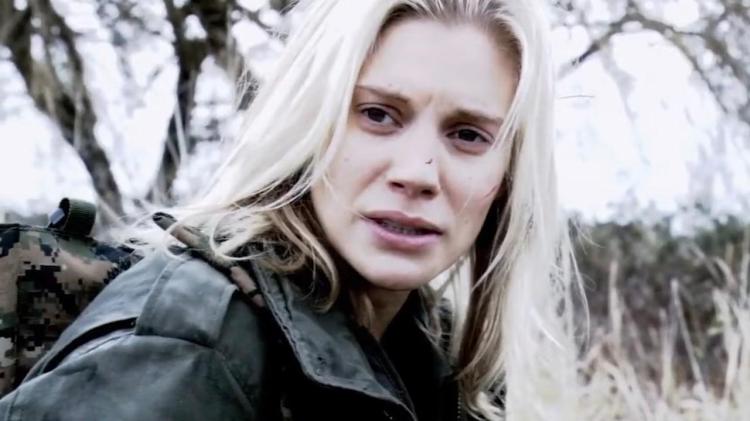
Either way, the thing I love most about Battlestar Galactica is the cylons, not so much the chrome toasters but the humanlike twelve. Take Caprica Six. She’s stunning and hot and cruel (she snapped a baby’s neck!) but also riveting. Or Leoben. He’s probably my favorite of the cylon models. Spiritual. Unhinged. Fanatical. Mystical. He was obsessed with Starbuck. He fucked with her mind on New Caprica. No, I wasn’t rooting for him, but I always wanted to know more about him.

Just think about the sheer audacity of the cylons. Their resentment drove them to massacre billions of humans. And they weren’t satisfied with driving them off their home planets. They insisted on hunting down every last one of the 40,000 or so surviving humans. That’s hardcore.

But the writers had the foresight to mix it up. The cylons could have easily become two dimensional. Same old same old. Instead, partway through the series run they changed things. One faction of the cylons splintered. Rather than destroying the humans, they wanted to coexist with them (more on that later). Some villains remained villains, and some became allies. In my opinion, this was one of the best parts of the series.

A Complex Society
Another strength of Battlestar Galactica was the way the writers portrayed a rich and complex society among the ragtag group of survivors. We could have gotten a series about military warfare vs robots. Instead we got a rich tapestry on a human civilization that was struggling to reassert itself in extreme conditions. We got religious fervor. We got dissent. Treachery. Terrorism. Political wrangling.

One episode that stands out for me happened way in the first season. A pregnant woman wants to get an abortion. But her religious community is against it. Laura Roslin, the civilian president, is forced to deal with this. Her dilemma: she’s pro-choice, but she sees the cold facts that there are only roughly 40,000 humans left. Every life is needed. So she goes against her own personal beliefs and outlaws abortion. I thought it was a surprising, daring and wholly logical storyline. Not your typical sci-fi or space opera fare.

Plot Twists
We know the basics of Battlestar Galactica: a ragtag group of humans travels the universe fleeing an overwhelming foe in search of a mythical lost group of humans. Pretty straightforward. But a plot so linear can easily turn stagnant. Luckily the writers mixed it up a little. One standout plot curveball came in the form of a woman named Admiral Helena Cain.

Cain was commander of the Battlestar Pegasus, another Battlestar presumed lost. Only it wasn’t. For months the Pegasus traveled and fought not knowing that the Galactica had also survived. And there were a couple of twists with Cain’s introduction. First, she outranked Adama. Second, her group of survivors had taken a more militaristic turn. She was a harsh and a brutal leader, damn near a dictator, and her group of humans gave us a view of how the Galactica could have turned out under different leadership.

Cain didn’t last long, but she definitely made the show more interesting.

Another twist was the introduction of the Final Five. According to series lore, there were twelve human models of cylons. During the course of the series we got to see six models: One (Cavil), Two (Leoben), Three (D’Anna), Four (Simon), Five (Aaron), Six (Caprica), Eight (Sharon). That left six unaccounted for. You can scratch one off that list, a model named Daniel, a sensitive model who John contaminated out of jealousy (I really wish the series had found a way to resurrect him—definitely a lost opportunity).

So that left five models who were likely living among the survivors. And among the cylons, only Cavil knew their identity.

When this revelation came, it heightened the tension, not just among the characters, but also the viewers. It became a guessing game—who’s the cylon? What will they do?

As it turned out, the Final Five were an integral part of the Battlestar Galactica story. They were both the catalyst for all the events of the story, and also the resolution. Yes, I have my criticisms, but all in all it was a great twist.

The Use of Mythology
Battlestar Galactica, both the original series and the reboot, is steeped in Greek mythology (Apollo, etc). The colonists pray to the gods (versus the one true god of the cylons). I think in the original series it was to tie the colonists to ancient earth civilization. In the reboot, I suppose it was used to have them seed earth culture (since the reboot takes place 150,000 years in our past).

This mythology permeates their lives. Take Laura Roslin. She’s presented as a humanist atheist type, yet she believes in the prophecy of the Sacred Scrolls of Pythia with all her heart. It drives her actions. It undergirds her clawing for power. She uses this mythology to justify her fight to remain in control of the civilian government, to the point where she almost steals an election.

But Battlestar Galactica developed its own mythology aside from the Greek one. Take, for instance, Kobol. Or the lost Earth colony. This unique mythology formed a continuity within the series. We were continually reminded that all this had happened before, and it would all happen again, and when we finally get to what they called Earth, we see this repetition in action: the events we witnessed in the series are just one small part of a larger story that has repeated again and again. This use of internal mythology resonated. I felt it and I imagined these other stories. That’s what I call effective use of mythology.

The End
As a writer I know it can be incredibly difficult to stick the landing. The television landscape is littered with series that had controversial or unsatisfying endings (Seinfeld, Lost, The Sopranos). While I’m sure some people would disagree, I think Battlestar Galactica gave us a solid ending. We could have gotten lost in space. We could have gone on forever and ever. Instead, the writers brought us home. They gave us final resolutions for all the characters that felt earned and deserved. Would I have loved sequels? Of course. But sometimes it’s good to leave on a high note. (We did get a prequel, and let’s just say sometimes it’s better to leave well enough alone.)

Next up: I dig into the not-so-good.

Trope or Choke: Episode 12

The challenge: write a complete story in 500 words or less following these guidelines:

Setting: An operating room

Genre: Amish romance + Medical mystery

Trope: Decoding ancient texts

Characters: Acrophobic five-year-old math genius + Martian

POV: 2nd/future

The result:

Oddity

You’ll record these moments in your mind. You’ll transcribe them. For her. For posterity.

The boy will sit with his ankles crossed and dangling, refusing to look your way. “We’re 72,000 feet from the surface,” he’ll say. “If I plummet through that window it will take me 8.7 minutes to crash. My body will splatter in a diameter of 1.28 miles.”

With all the current strife, this laboratory on the peak of Olympus Mons is the safest place on Mars. Sometimes you forget he’s only five: frail and pale with wild hair. “I see. You’re afraid of heights. How about you turn your back to the window?”

He’ll comply and as he begins to swing his legs you bring forth the rune. He runs his fingers over it. “It’s not a forgery,” he’ll say. “These carvings resemble those on the Xanthe cave tablets.”

“Yes, Abigail found those stones.”

“Tell me about her again.”

You’ll sigh and stare out the window. You can almost see all the way to Drava Valles from here. You and Abigail were children when you met, seventh generation Amish colonists. You knew instantly you were fated to be together. You courted and pledged yourselves to each other, and when you both turned seventeen, you married. That first kiss was an electric shock. You can still feel it reverberate. “She was the most brilliant person I’ve ever met. And the most beautiful.”

“Sounds too good to be true,” the boy says, suddenly sounding too wise for his years.

“Isn’t every romance story?” You’ll glance over at the operating table. Empty. How much blood has pooled on this floor? You can’t think about that now. “Her life’s work was solving the mystery of the Xanthe tablet. And now with this rune we’ve discovered…there has to be a connection.”

“And you think it’s me?” the boy will ask.

Innocently. Too innocently. The first child genius was born nine months after the tablet was unearthed. This boy is the seventh. “Ever since we’ve found this proof that we’re not alone, there’s been so much turmoil. We have to know what they say.”

He’ll squint at the tablet, then the rune. “These markings form a code.”

“Can you decipher it?”

“Close enough, yes. It says, After one thousand years the soil makes them ours.”

A shiver will crawl down your spine. “We’ve been on Mars for nearly a millennia.”

“There’s more,” he’ll say. “Two in the blood will become three.”

“What blood?” you’ll ask.

He’ll look at you so mournfully that you’ll forget about his unnatural intellect and see him just as a child. The skin of his arm is so white, and in his silence you’ll find the answer. You won’t ask his

permission to draw his blood. He won’t resist. Under the microscope you’ll magnify until you hit his DNA. And then you’ll see it: not two strands entwined but three.

You’ll stare at this impossible Martian child, all the time wishing Abigail was here to witness this glory.

Battlestar Galactica Rewatch Part 3: Major Themes

(For Part 1, see here; for Part 2, see here.)

Some years ago I wrote a post asking if Battlestar Galactica was too religious. To this day it remains one of my most popular pieces. Controversial, too. Not because of the meat of the post itself but because some people just don’t like religion. At all.

But let’s put aside whether or not religion is good or bad or whatever. Let’s instead focus on religion in Battlestar Galactica. After rewatching the entire series I can say with 100% confidence that one of the major themes of the series was in fact religion. Not just religion, but God and our place in the universe.

In my opinion, Battlestar Galactica was one of the most overtly philosophical television shows of this century.

In the series we had two separate camps when it came to religion. First were the 12 colonies, each named after a zodiac sign (astrology—a quasi religion in my view). The colonists paid reverence to the gods. Not a single god but a collection, patterned off of the Roman gods. Devotions, sacrifices, all of that.

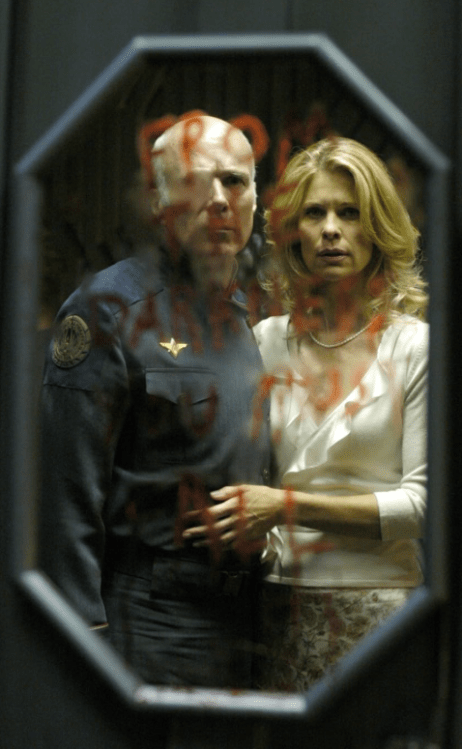
One of the most religious characters among this religion was President Laura Roslin. I can’t say for sure what her level of faith was before the events in the story, but when we meet her, she’s just been diagnosed with terminal cancer. She turns to the gods and takes solace in the scrolls of Pythia, which foretell of a dying leader who will take her people to safety. She’s beset by dreams and visions (drug induced?) that she takes for messages from the gods. Her faith, whether or not conditional, is in the forefront of the storytelling.

And then we have the cylons. The Caprica who appears to Gaius Baltar talks of one true God, a God who had a plan for everyone. It’s obvious what the writers were doing here: contrasting a pagan faith of offerings and visions against the Judeo-Christian singular God who had an individual connection with each of his creations (children).

The show ping-pongs between these two world views. It also provides an interesting commentary. For both camps, the colonists and the cylons, their religions/faiths don’t necessarily make them better or more virtuous. If anything, they use their religions to justify their actions. It’s pretty convenient that at first, the cylons view killing billions of colonists as part of God’s plan.

That’s a pretty dark view of religion.

But Battlestar Galactica is suffused with religion, with belief, with gods or God, and that’s part of what makes the show so interesting, even 20 years on.

The second major theme of the series is one that’s become a sci-fi trope: what is the definition of personhood? Are the cylons persons? In the series this question arises with the twelve humanoid-looking models. And no character best represents this than Sharon.

There were two significant Sharons in Battlestar Galactica. The first was Boomer, an ace fighter pilot in the Galactica. What Boomer did not know was that she was a sleeper agent. She believed she was human. She’d had memories implanted. She was in love with Galen Tyron (who turned out to be a sleeper cylon himself, though not one of the baddies). Then she was activated and shot Adama, nearly killing him. The series portrays her struggles to retain her humanity even as she loses her world.

Then there’s Athena, the other Sharon. On the cylon-controlled Caprica, this one pretended to be Boomer in order to trick a stranded Karl Agathon. She always knew just what she was. But somewhere along the way she fell in love with Agathon. They return to the Galactica and she dedicates herself to fighting her fellow cylons, along with having a daughter, Hera, the first human/cylon hybrid.

The series made a strong case for the humanity of both these Sharons. And there were other models thrown in there too. When colonists brutalize one of the Sixes, for instance, who’s the monster? On the flip side, let’s go back to the miniseries, when Caprica snaps the neck of a baby. Monstrous. Inhuman. But…she changes and grows and eventually leads a faction of cylons to seek another path with the colonists.

There’s a third major theme of Battlestar Galactica, and in my view, it’s the weakest. Keep in mind when the series first aired: 2004-2009. America was coming off 1) a major terror attack, 2) paranoia about sleeper agents, 3) critiques of blowback from decades of botched foreign policy, and 4) not-successful invasions and occupations of Afghanistan and Iraq.

At the time I remember reading commentary stating outright that the series was a response to the GWOT, and if you look closely at the storylines you can definitely see it. We’ve got an angry foe seeing revenge, a clash of civilizations, rampant terrorism, sleepers (cylons), and then the cylon occupation of New Caprica (one of the weaker storylines). We’ve also got brutality and torture galore.

As a larger commentary on American society of the zeroes, this comparison leaves me kind of flat. Don’t get me wrong, within the confines of the show, this all worked. But maybe I’d just not rather relive those dark days.

Next up: the hits.

Trope or Choke: Episode 11

The challenge: write a complete story in 500 words or less following these guidelines*:

Setting: Outer space

Genre: Solar punk + Reddit comment thread

Trope: Sweating like a whore in church

Characters: Morally bankrupt real estate agent + Used tire saleswoman

POV: 3rd/past

*Note: writer’s choice to ignore two elements.

The result:

Everyone Has Their Price

“Listen, I just need to get this bucket of bolts over to the Taurus nebula. I’ve got these new colonists fresh from Europa and there’s this asteroid field that I know they’ll pay top dollar for. Bunch of useless rocks, but between you and me, they don’t need to know that.” Saul Treppingham told the bulk of a woman in grease-stained overalls.

She sipped her energy drink in long, slow draws while eyeing his expensive-looking suit. Her name tag read Dervish. “Looks like your little baby here’s about to blow a couple of space tires. I don’t know how you even managed to land her on this runway in one piece without blowing her all to bits.”

“What? These tires?” Saul kicked one with a shiny wingtip. “I just got them replaced on my last turn around the old sun. Supposed to be good for five million miles.”

Dervish took a long slurp from her energy drink. “You ask me, my tires will take you even further than five million miles. Ten. At least.”

“It’s not the tires. I swear. The dome light came on. All blinking and flashing. Danger. You know.”

“Oh, yeah, I know,” Dervish said. “That means the tires are about shot. Like I said you’re lucky you even landed here. I have some of the finest used rubber. No better secondhand tires for nearly a light year. Honest.”

Saul sighed and took stock of the mostly deserted landing strip, some godforsaken bit of real estate on an out-of-the way asteroid. “You know what you need here? Some development. Surely there’s some ore to be mined in the belly of this baby. Say, who’s the owner?”

Dervish squeezed both fists around the bottom of her energy drink. She slurped the last of the dregs like a hungry camel. Then she ripped open the pouch, jammed grease-stained fingers inside and licked them clean.

“God, woman. You act like you were raised among space pirates. Tell you what, why don’t you relay a message to your overlords. I’ll offer them a cool million for exclusive development rights. Really, I’m being generous.”

She watched him rake a hand through slicked-back hair. “My people settled this little old asteroid generations ago. It’s been our claim ever since.”

“Come on,” he said. “Everyone has their price.”

“Tell you what, I’ll give you replacements, half price. Beam back an offer, and I’ll see that my overlords get it.”

Saul unbuttoned his blazer. “I don’t really think the tires are the issue.”

“You want me to relay your offer or not?”

He chuckled nervously, then boomed a laugh. “Alright, as long as you promise.”

She slapped his rear. “I swear, sweetcheeks.”

An hour later she watched Saul Treppingham’s spacecraft zip away. She laughed as loud as she wanted, because there was no one to hear.

Those used tires were too used to be of any good. Scrap rubber, actually. No way could he land without a catastrophic wreck. She could already smell their burning.