Battlestar Galactica Part 5: Some Final Callouts

During my exploration of the reboot of Battlestar Galactica I’ve been pretty non-critical of how they handled the series (See Parts 1, 2, 3, and 4 here). Just so I don’t sound like a mindless fanboy, I’ll delve a little deeper into some of my criticisms of the series. After all, nothing in life is perfect. So here goes…

New Caprica
By the end of season two, the colonists are cramped on their ships, tired of fleeing the cylons and giving up on searching for an Earth that doesn’t want to be found. Life isn’t going so good for them.

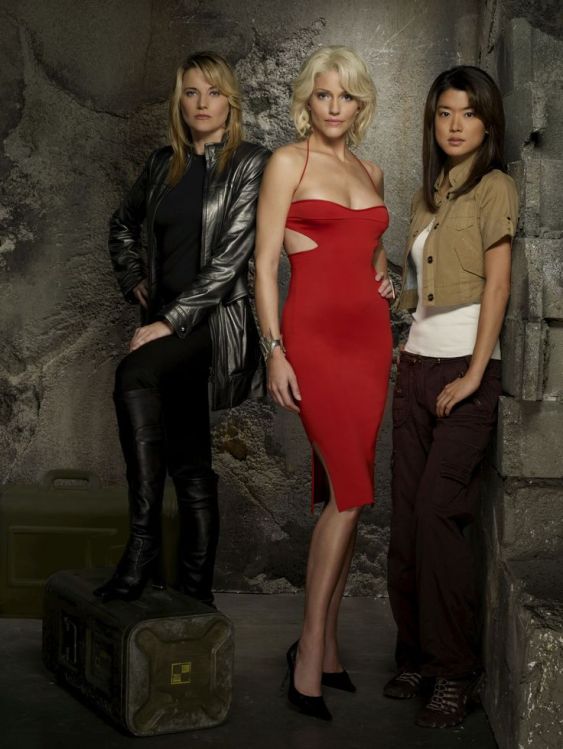
Meanwhile, the cylons are having issues of their own. Their plan of domination isn’t as simple to achieve as they imagined. And, we have a couple of prominent cylons who begin to doubt the plan. After Boomer shoots and nearly kills Adama, she’s killed and resurrected and is living in conquered Caprica City as a hero among the cylons. Caprica Six, the one who got the nuclear codes from Gaius Baltar, is also in Caprica City, and also a cylon celebrity. She’s been seeing an “angel” in the form of Gaius, and she’s having her doubts about the cylons’ plan of wiping out all of humanity. Together Boomer and Six convince the cylons to try and live together with the humans, rather than wipe them out.
Only “live together with” doesn’t quite mean what we think it should mean. When the humans find a barely habitable planet (named New Caprica), they vote to abandon the search for Earth and settle there. All’s going so-so and then the cylons arrive, not to slaughter the humans but to lord over them. For several episodes (it felt like forever), we’re treated to a planet-bound show about insurgencies and counter-insurgencies. Not exactly thrilling.
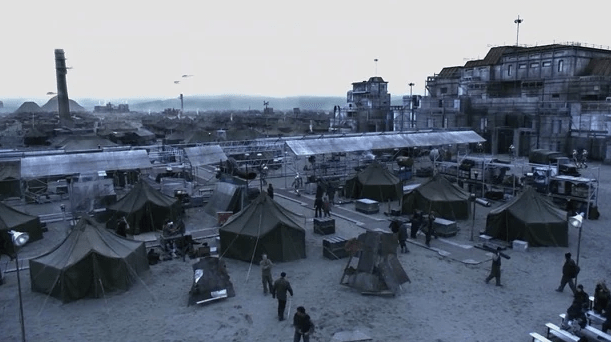
I remember reading that the writers were trying to write a commentary about the US invasion and occupation of Iraq. ATTENTION ALL WRITERS: be careful using your fiction to critique real-world events. Most times it lands with a thud.

The New Caprica storyline was planet-bound and plodding and, like the colonists, mired in the mud. We got time jumps, which were kind of cool, and we got to see the cylons battling each other, but that’s about it in terms of excitement. I for one was glad when they abandoned that planet and that story for good.

Apollo Loves Starbuck
Another storyline we were forced to deal with during the New Caprica muddle was this stupid romance plot. Let’s leave aside the fact that in the original series, Apollo and Starbuck were a couple of dudes and definitely didn’t hook up. But I guess that with Starbuck’s sex change, the writers decided, hey why not have them bang?
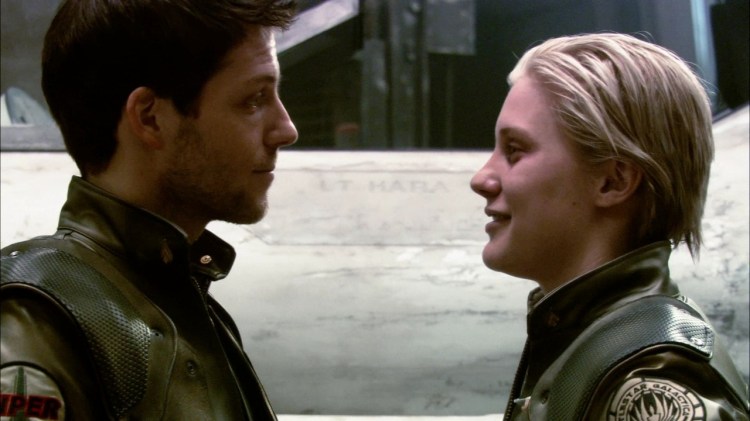
Honestly that’s what it felt like: dumb and crude.

The Starbuck in the reboot wasn’t just some random pilot. She’d been engaged to Apollo’s brother, who died in an accident before the events of this series. She was almost his sister in law. They were almost family, they were friends, they were co-workers. And, again, I repeat myself, the writers decided, hey, why not have them bang?

The writers used this storyline not just to bore us, but also to foul up the marriages of Apollo and Dee, and of Starbuck and Sam. Those relationships could have been much more interesting. Instead they were tossed aside. Plus, while the actors who played Starbuck and Apollo were fine, there wasn’t much chemistry between them.

Rather than a full-blown affair, an undercurrent of unrequited lust would have worked much, much better.

Too much filler
We were blessed to get 74 or so one-hour episodes of the series spread over four seasons (plus the miniseries and a couple of webisodes). But with all that time to fill, you’re inevitably going to get some filler episodes. And boy did we. The one that stands out most for me was called Black Market, where Apollo investigates the fleet’s black market. We get corruption. We get mafia. We even get a prostitute. Hell, we might as well have been watching a wholly different series.

There’s more, of course, and I won’t go through it all, but I think we’ve been spoiled by the Netflix and Amazon Prime model of television viewing. It used to be that a series got picked up season by season for a preset number of episodes, say 20, per season, and the writers were expected to deliver all those hours. Today the series is sold all planned out, if not the entire arc of the show over several seasons, then as one complete season. We’ve become used to tighter stories with less filler.

This leads to another of my critiques, which is…

Plot Holes
All the best shows and books and movies have them. Battlestar Galactica isn’t immune. The most glaring to me, even though I loved the storyline, was the Final Five. When Saul Tigh, Adama’s oldest and closest friend, was revealed to be one of the Final Five, I kept trying to untangle the timeline. He fought in the first cylon war, but he also came to the metal cylons from the bombed-out version of Earth, helped them end the war and create the humanoid cylons.

Or something like that.

Can someone explain that timeline to me?
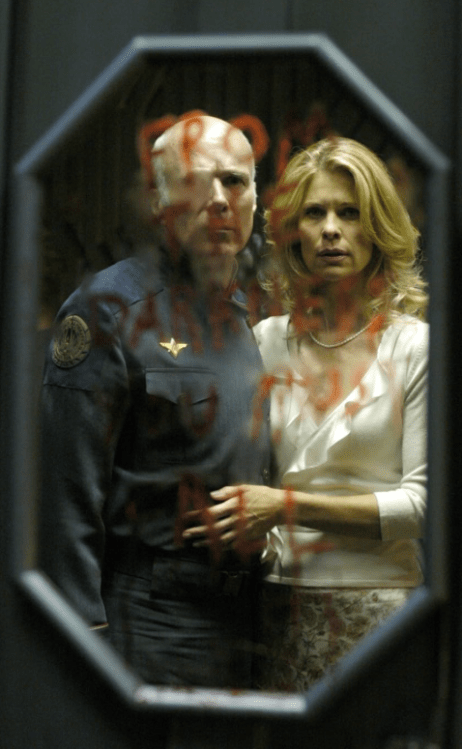
I get what the writers were tying to do. Having Tigh and his wife, Ellen, be cylons was dramatic and Tigh’s “betrayal” hit Adama, the most prominent character, the hardest. The others: Ellen, Sam, Callie, Tyrol, I could totally buy, and I liked them as cylons. But Tigh? It just felt like a sinkhole-sized plot hole, and it made the identities of all the Final Five feel shoehorned in, as if the writers decided sometime during season two to add them to the show. (Evidence for this, Tyrol and Callie’s son was revealed to be a product of her unfaithfulness. He had to be, otherwise, Athena as the human/cylon hybrid wouldn’t be special.)

Another plot misstep was the mythical nature of Kara Thrace, aka Starbuck. The writers threw in something vague about her father, and childhood visions from the Lords of Kobol, and then she’s the harbinger of doom and she vanishes and reappears and then she finds her own corpse on the bombed-out Earth and at the very end she vanishes while Apollo is talking to her as if she’s an angel or a ghost or something. If there was a plan here, lord knows I had no clue.
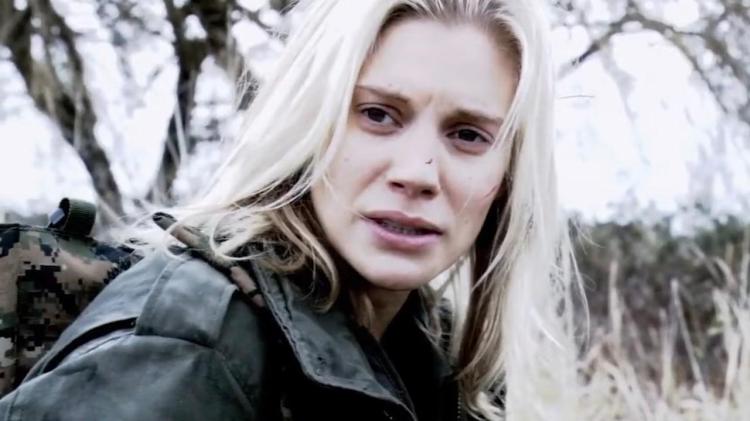
Speaking of plans, we were continually reminded that the cylons had a plan. What exactly was this plan? Kill every last human? Breed with them? Live in harmony with them? The Caprica Six in Gaius’s head (an angel or something) continually talked about God’s plan. Which was what? I swear I’m not dumb but this plan was always cloudy to me. It didn’t detract from my enjoyment of Battlestar Galactica, but when you’re reminded every episode that the cylons have a plan, it’s hard to get it out of your mind.

So that’s it for my review of the reboot of Battlestar Galactica. Despite the theme of this final post I truly loved this series, and if you haven’t watched it for some reason, start tomorrow. Or maybe now.
Wait…Gendercide Is a Thing?

I like to consider myself a fan of all things speculative–horror and supernatural and sci-fi books, movies, TV shows, etc., and I believe I know a ton about these genres.

Apparently I don’t. The other day I was rabbit holing into the latest of a long line of literary controversies (I won’t go into it here) and I read this article asking whether it’s time do do away with the gendercide trope, a trope I’ve never heard of before.

What is gendercide? It sounds nasty, because it is. Gendercide is where either the men or the women in any given story are killed or die off from some nefarious or mysterious or viral reason. The book that inspired the article introducing me to gendercide is The Men by Sandra Newman. I haven’t read it yet, but it’s about a world where all males suddenly vanish. The remaining women adjust to this disappearance, while videos online depict the men living in a hellish landscape.

There are others, too, such as Y: The Last Man, a comic turned TV show where (almost) all men die of a virus. One of my favorite books, The Knife of Never Letting Go by Patrick Ness, is a variant of the gendercide trope; the novel opens in an all-male society where the women have mysteriously died off.

According to TVtropes.org, gendercide isn’t super popular, and most of the time only a variant is used (only some or most of either men or women die or disappear). Stories where the men disappear are more in line with the theme of feminist utopia, and stories where the women vanish are considered dystopic.

In reading about Newman’s book, I found it disturbing that all the men were sent to a hellscape ruled by demons. Oddly, the writer of the article critical of gendercide (and Newman’s book), didn’t write about that disturbing aspect of it. From me, though, disturbing is not a criticism. I want to learn more about this trope, and see how different writers explore it.

Sensuality, Shakespeare and Stranger Things

Where the hell has Winona Ryder been?

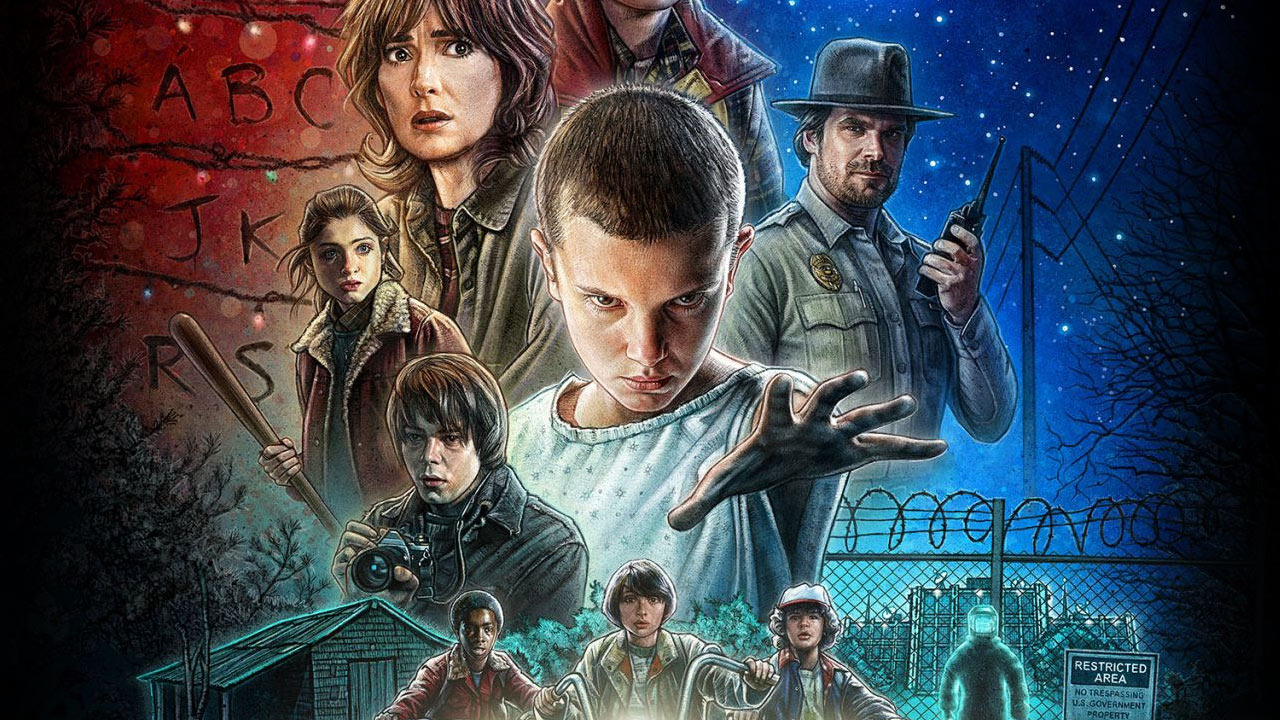
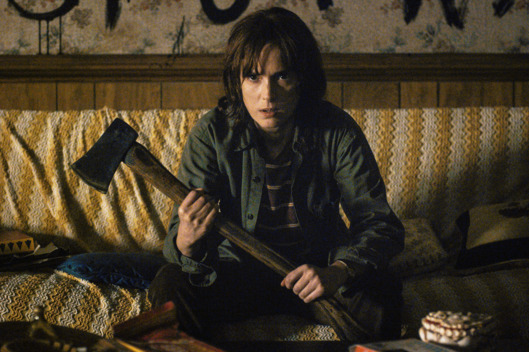
Like half my friends, I just finished binge-watching Netflix’s Stranger Things, an eight-part sci-fi/horror series that’s partly a homage to the 1980s. Overall it was very good, both addicting and entertaining, once I was able to slide into the story.

strangerthingsthumbjpg-6ab191_1280w

A lot has been made of the fact that Stranger Things is set in 1983, and the directors took great pains to ground the series in that time frame. The senses are constantly distracted by elements from the early ’80s — from music to the clothes and hairstyles to the decor of the houses.

I appreciate the effort, but it was overkill, too much of a good thing, and it distracted from the story. Having been alive and aware in 1983 I kept finding myself questioning how accurate it all was, and it seemed too dated.

Luckily, in a stroke of brilliance, they cast Winona Ryder as the lead. She played against type — the woman who made her name as a quirky everywoman played a worried, desperate, and unstoppable mother.

Winona

Winona Ryder is about my age, and when I was younger a lot of guys I knew had crushes on her. But to me she always seemed unformed. She a girl, not a woman. I didn’t get the attraction, and I never followed her career.

Winona_RyderIn these intervening years she’s had some not-so-secret difficulties, as we all have. And when I look at pictures of her now — she’s hot. She’s a woman now, a fully formed adult with all the complications that brings.

In Stranger Things Ryder was effective not just for her acting, but because, in contrast to the set, she was not stylized. She was gaunt and frail. Ryder’s pixie quality was a strength here, as we saw a woman who’s been beaten down by life in many ways but keeps fighting.

Coincidentally, last week I saw Shakespeare’s Troilus and Cressida in Central Park. One of the actors listed in that play was David Harbour as Achilles, a rambunctious warrior torn between his fellow soldier/boyfriend and a woman he pines for back home.

Harbour, unfortunately, dropped out two days before I saw the play. He tore his Achilles tendon during a performance (you can’t make that up). However, when I started binge-watching Stranger Things the next day, whose name pops up in the credits?

David Harbour, as Chief Hopper.

david-harbour-stranger-things

Like Winona Ryder, he brought a physicality that rooted the show. In one of his earliest scenes he’s outside shirtless smoking a cigarette after a hard night of drinking. He’s pale with a paunch. He’s tired. He’s hung over. And he’s real in a fully relatable way.

Watching Stranger Things was a totally different experience than watching Troilus and Cressida. Compared with television, it’s harder for me to lose myself while watching a play. I’m hyper aware of the fact that it’s fake. Troilus and Cressida was hard-charging. The actors were loud and physical. There was constant movement — touching, scrapping, fighting. The play used these sensory elements to draw me in.

Stranger Things, while fun, was using the sensory elements of 1983 (or a close approximation) as a wink to the audience, and it was distracting. Luckily they cast Winona Ryder and David Harbour as their leads. They were natural, and by using their physicality to ground the show, they ended up saving it.


Genre TV: a golden age or too much of a good thing?

It is a sad fact that there are too many great books in the world, of all genres, that I will never have time to read. I’m sure that I’m missing out on some life-changing classics, but there’s nothing I can do about that.

Star TrekWhen it comes to TV, though, there used to be a time when you could be up on all the great TV shows. For fans of all things sci-fi/supernatural/horror like myself, it wasn’t that hard, because there were so few TV shows that had a sci-fi or supernatural theme. Back in the 1950s you had The Twilight Zone and in the 1960s came The Outer Limits, Star Trek, and in England, Doctor Who. Along the way there were a smattering of other TV shows, notably the X-Files and Buffy the Vampire Slayer in the ’90s, but with only a handful of networks (and the BBC in England) the options were severely limited.

Buffy the Vampire Slayer

That’s all changed. Now there seems to be a new network popping up every week, along with new TV shows. When Lost premiered, it reinvigorated the genre by making it commercially and critically viable. As flawed as Lost was, the emmy-winning series showed the powers that be that genre shows could make money and win awards.

Lost

Since then, there’s been an explosion of genre shows. A few decades ago, who would have predicted that two of the most hyped television shows would include dragons and zombies? These two shows, Game of Thrones and The Walking Dead are worldwide cultural events. Game of Thrones and The Walking Dead bring more than just supernatural/fantastical/horror elements: they have high production values, are well acted, and have great writing.

Walking Dead

And these are just two of the latest and greatest. The past couple of decades have given us so many great genre shows, from SyFy’s Farscape and the Battlestar Galactica reboot, to BBC’s relaunched Doctor Who and BBC America’s Orphan Black. I should be happy, right?

Orphan Black Tatiana Maslany

In a way, I’m not. There are SO MANY genre shows out there I can’t keep up. And neither can the people who are writing them. The Walking Dead has given us the derivative Z Nation. The second season of SyFy’s Helix was a mess (a glorious, batshit crazy mess, but still a mess). And Netflix’s Hemlock Grove was half-baked camp. We’ve got a glut of genre shows out there, some of which should have never been made, and others that could have used a little more seasoning.

helixNot to mention that I don’t have the time to watch the vast majority. I’d love to watch The Strain, and there’s a new Salem TV show with Lucy Lawless that looks interesting. But between work, writing, play, family, how could I possibly fit all these shows into my life?

Maybe Hollywood needs to scale back a little — if not in the number of shows, then at least in the number of episodes. In the UK, it’s a common practice for TV shows to be short runs. Each season is perhaps six episodes, and the TV shows only run for a few seasons, if that. What you get is concise storytelling that does not require a lifetime commitment of the viewer. I’d fully support this idea; even the best shows suffer from episode bloat and could use some trimming (I’m looking at you, Walking Dead).

The Walking Dead: Ecstasy and agony

Walking dead_cast_wallpaper

I’m late to The Walking Dead. It’s not that I don’t like zombies — I do, ever since I watched Night of the Living Dead as a five year old. But there are so many shows out there, as well as an endless supply of zombie-themed shows and books. When it came to The Walking Dead, I just couldn’t be bothered.

But I decided to binge watch the show last Thanksgiving, and just before Christmas I caught up. (Part Walking Dead Castof that time was spent in bed with a fever — zombie shows make for surreal fever dreams). My verdict? The Walking Dead does several things great:

–This show manages to put a fresh spin on the beaten-to-death zombie trope. How? By focusing on the nuts and bolts of survival in a slow-moving apocalypse. Zombies are only one danger. Other humans are nearly as bad (hell, they’re sometimes worse).

–Rick Grimes (as played by Andrew Lincoln) is a hero who is both resolute and plagued by doubt. He is human and relatable. This is a tricky mix that the writers, and Lincoln, pull off.

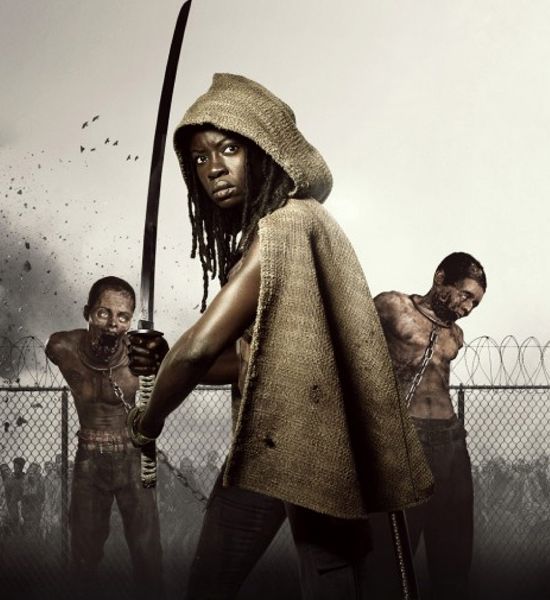
–With its ensemble, revolving cast, its characterizations can be uneven. Some have remained cardboard over several seasons (I’m looking at you, Glenn and Maggie). but then we get amazing characters like Michonne. Michonne petsShe will be remembered as one of the iconic horror characters decades from now. And then there’s Daryl, who has been consistently bad-ass, and consistently compelling. Finally, there’s Carol, who has morphed from a mousy abused woman to a woman with a backbone of steel. Carol has seen the worst of life and she has learned what it takes to survive in this horrific world.

But… The Walking Dead, like Lost, is one of those maddening TV shows that is blessed with brilliance and plagued by arrogance. This show is great, and the writers know it, which trips them up.

Take the episode “The Grove” from season 4. Carol and Tyreese are holed up in an idyllic country cottage with two young sisters. As often happens on this show, things go south. Way south. This episode was sharp and smart and beautiful. It was gut-wrenching and caught me off-guard. It was not a fast-paced episode — The Walking Dead often walks very slowly. But it was one of the most jarring hours of television I’ve seen.

And then The Walking Dead serves up an episode like “Them,” the latest in current season 5. In “Them,” the gang is reeling from the deaths of two beloved members. They’re wandering, starving, thirsty, and trailed by ambling zombies. And they have angst. And doubt. Basically nothing much of note happens for most of this episode, except for our heroes acting out in small, supposedly symbolic ways. Plus, we get a perverse motivational speech from Rick that is about three seasons too late in coming.The writers were aiming for deep symbolism and small epiphanies. They missed. Instead we got an hour of pouting and navel gazing.

Still, the worst episode of The Walking Dead is better than 99% of other TV shows. Here’s hoping the writers don’t repeat mistakes like this. Please — give us more ecstasy and spare us the agony.

WalkingDeadMemes_58

Orphan Black on the horizon

Arguable the best sci-fi show—if not the best show period—on TV, Orphan Black has been a masterpiece in terms of acting, character, and breakneck plotting. If it isn’t obvious, I love this show.

Orphan-Black-ad

For those unaware, it follows a group of clones, all played brilliantly by Tatiana Maslany. These clones are stalked by several shadowy groups with competing agendas, all the while each clone navigates her own tumultuous world.

Last season’s cliffhanger lived up to the hype of Orphan Black as we learned that there are male clones as well (played by Ari Millen). I’ve read some commentary — Orphan Black has a vocal fanbase that appreciate the fact that the show focuses on strong female characters —  and there was disappointment about the introduction of male clones. I disagree. I’m excited by all the dramatic possibilities. Who knows where this will take the show? There are hints that the male clones will not exactly be friendly toward their female counterparts.

ari millen

But we’ll have to wait to see how this all plays out. Season 3 of Orphan Black is filming right now, and the show is expected to return in Spring 2015.

To hold us over, the powers that be have released a little teaser, an Orphan Black video of sorts. Check it out below.


Doctor Who: rating Peter Capaldi

peter-capaldi-tardis-575

As an American, Doctor Who is not part of my culture the way it seems to be in the UK.

I first started watching it when I was maybe 8 or so, because channel 9 in New York would show episodes of this crazy, British sci-fi show on Saturday mornings. My first Doctor was Tom Baker, he of the crazy curly hair and long-ass scarf. I really dug Doctor Who back then, though it was mostly a blur.

When Doctor Who was rebooted back in 2005, I was excited. So far I haven’t been disappointed. Christopher Eccleston, one of my favorite actors, took over as the Doctor. Then came David Tennant, and next was Matt Smith. All the while, Doctor Who continued its tradition of a universe-weary hero dashing across time and space, with a human companion (typically female and star-struck) in tow. The storylines have been unevenly thrilling, heavily British, and always fun.

Smith Tennant

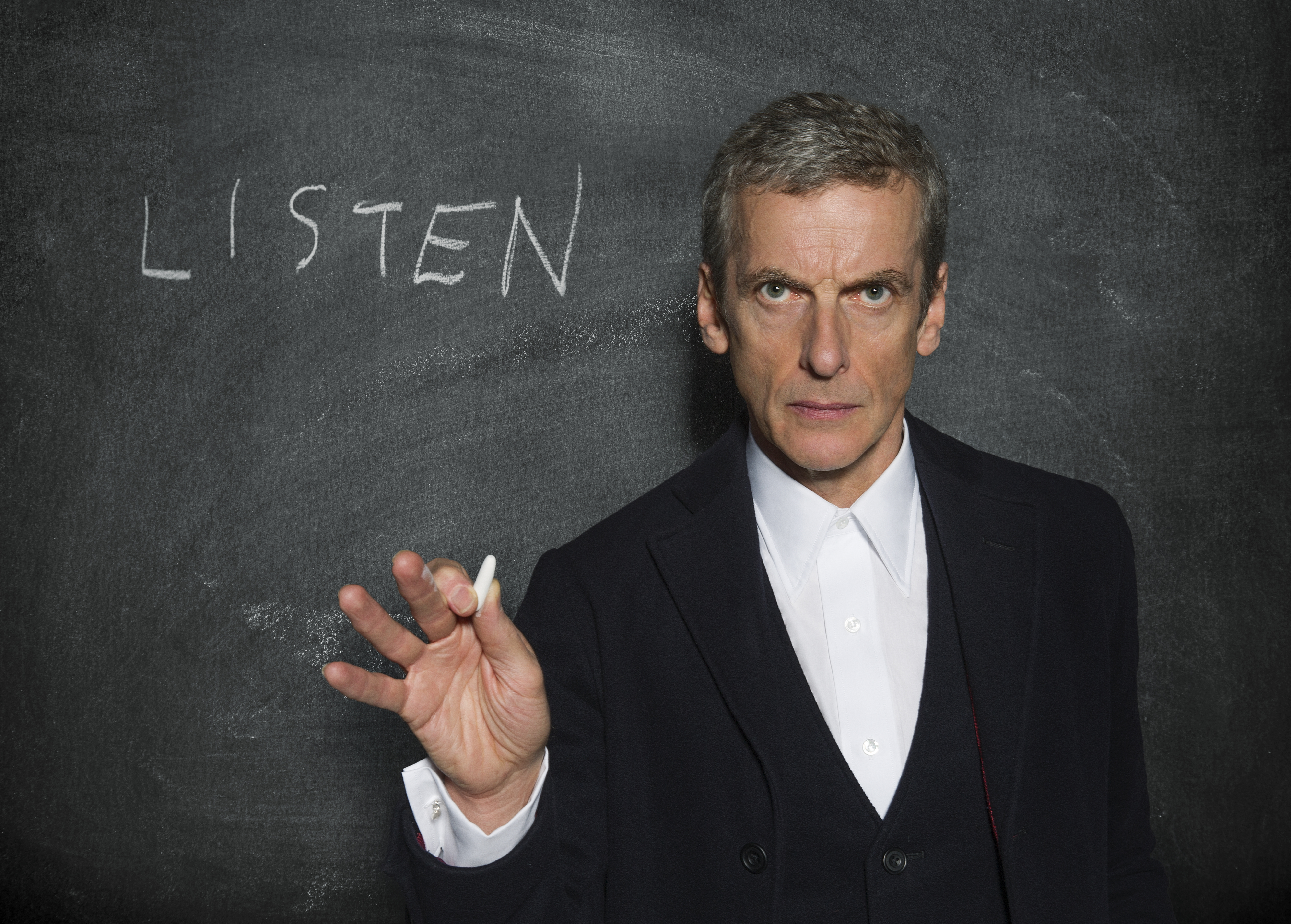
The new Doctor Who era has ramped up the youth and sexiness (the same hold true for the companions, mostly). In fact, Matt Smith was just in his twenties when he was signed to play the centuries-old alien. So when it was announced that Peter Capaldi (an Oscar winner, by the way) was hired as the next Doctor, everyone, including me, was thrown for a loop. Capaldi is in his late 60s. He’s gray haired and wrinkled. He is a man who has lived. And he most likely won’t be melting teenage girls hearts. Head writer Steven Moffat, in choosing Capaldi, was abandoning the rush to youth. And it makes sense, when you consider that the Doctor is really, really old (older on the inside, at least).

Capaldi

So how’s Capaldi doing?

We’re nearly at the two-episode season finale, so now’s a good a time as any to rate Calpaldi’s incarnation of the Doctor. And it’s not as easy as listing the pluses and minuses.

First, there’s the question of how the last Doctor died. Matt Smith’s Doctor lived a long, long time protecting the inhabitants of Trenzalore. He died an old man, and he wasn’t expecting another regeneration. The Doctor, as we knew him, was willing to pass on peacefully. But then he was granted more regenerations, and he came back. He wasn’t prepared for that.

And then there’s the question of his companion, Clara, played by Jenna Coleman. I’ll leave her for another post, but Clara has not been the ideal companion for Capaldi’s Doctor. She’s conflicted, she doesn’t understand what regeneration is, and she isn’t trying in the least to be supportive. She’s also one of the only companions who calls the Doctor out on his God complex. What that’s given us is a rough transition for this latest Doctor.

Jenna Coleman

On the good side, Capaldi’s age gives him more freedom to play the Doctor as a whimsical, childlike figure. He doesn’t have to pretend to be old. David Tennant and Matt Smith were young men who wore their gravitas on their sleeves. Capaldi reminds me of the first Doctor I knew, Tom Baker. He was older and could get away with playing silly.

But all is not perfect with this Doctor, and I think it boils down to the difficult relationship between Clara and this version of the Doctor. There is very little lightness between them. Their relationship is strained and forced. Most times I doubt they even like each other. The Doctor needs a traveling companion, and he’s developed a thing for humans. And Clara loves the rush of exploration. Theirs is a symbiotic relationship. Not much love, or warmth.

Jenna 2

Their tension, however, makes for great drama, and some damned funny lines. I loved when the Doctor commented on how Clara’s face was so big she needed three mirrors to see it all. Rumor has it that Jenna Coleman will leave after the season is over. As much as I’ve enjoyed her on the show, I’ll be glad to see her go. This Doctor — befuddled, socially inept, and a little cold — needs someone who will balance him out.

Why not Mars?

World building is an integral part of fiction. When it comes to sci-fi, Mars seems like the perfect world to build. It’s been long ignored. Now, it might get its chance chance.

Writers (myself included) are closet megalomaniacs. When you write, one of the more important, though hidden, tasks is you have to construct the fictional world your characters inhabit. This is true whether you write a true-to-life family drama or a space opera set in unexplored galaxies.

As a writer, I love that part of it. And I suspect most other writers do as well. Why? Because we get to create these worlds. We are in charge.

On that level, it’s all about the worlds. But what about literal worlds?

As a sci-fi fan, I could never figure out why Mars is always forgotten. It’s well represented in print (Ray Bradbury’s The Martian Chronicles, for one example of many). But on film and TV, apart from a few crappy movies, Mars has been largely ignored.

Mars

And it’s right next door. You can see it, if you have a good telescope.

That may change. Spike TV, of all networks, plans to produce a TV show adapted from Kim Stanley Robinson’s Mars trilogy (Red Mars, Blue Mars and M1_Red_MarsGreen Mars). I read these books years ago. I have some problems with the books, mostly involving pacing (slow…), but what he did brilliantly in his writing was build a world. Mars.

His books track the colonization and terraforming of Mars over centuries. He includes topics and themes such as genetic engineering and social unrest. His characters run the gamut of human nature. And he has a space elevator,which blew my young sci-fi mind when I first read about it years ago, but is now slowly turning from science fiction to science fact.

If this series comes to pass (which is always a huge question mark) and if it is done well (an even bigger question mark), it would finally give the Red Planet its due in the sci-fi world.

Let’s hope. Here’s to world building.