Fun with skulls

I’m not a macabre person by nature, but I like skulls. I’m not talking about actual human skulls, but representations: drawings, T-shirts, liquor bottles, candles, etc. Sure, it’s a cliche by now, but it’s still fun.

skull-art-prints-by-Gerrard-King

(Image courtesy of Gerrard King)

Where did my affinity for skulls start? Who knows? Maybe from the image of Hamlet holding up poor Yorick’s skull and talking to it. I always got a kick out of that when I was a kid. (Here’s a picture of Doctor Who‘s David Tennant as the moody Dane.)

Tennant Hamlet Yorick

Obviously I’m not alone. Skulls are everywhere in pop culture, and not just American culture. For instance, the Mexican Day of the Dead (Dia de Muertos) holiday is a festival that recognizes the dead, and similar traditions can be found throughout the world. Though the Mexicans seem to have perfected the imagery.

400px-Catrinas_2

My own theory: these representations of skulls are a safe way for us to reference our own mortality. We can observe it at arms’ length, poke fun at it, while still acknowledging it. Sure, some people choose to avoid anything that will remind them of death, while others seem to revel in it. For most of us, we can acknowledge it, have a laugh, and then move on.

And now I’m happy to be adding a skull to the pop-culture pantheon. My soon-to-be-released novella, House of Flies, will feature a skull on the cover. House of Flies follows Alec as he battles a fly infestation that drives him to the brink of insanity. It’s a psychological horror story about suppressed grief and the avoidance of death, hence the skull. I can’t describe how cool I thought this imagery was when my designer first showed it to me.

House of Flies

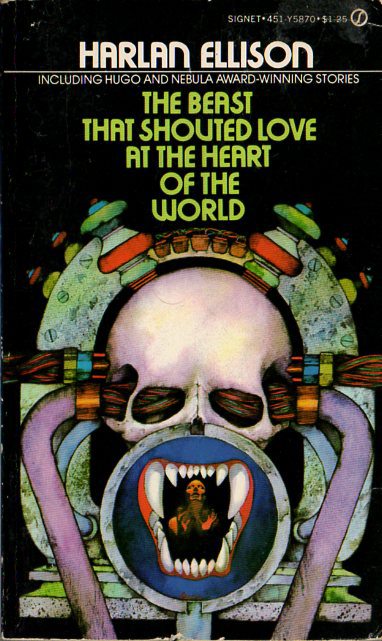
It turns out that there have been more than a few skull-themed covers. The website Science Fiction Ruminations has compiled a collection of skull covers from the recent era. Here are a few funky examples — check out the site for more.
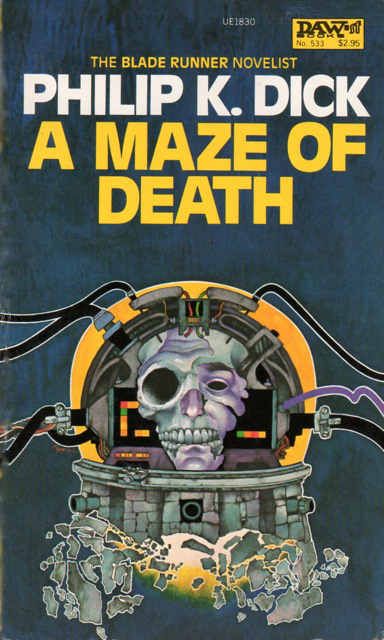
Philip K. dick

Robert Heinlein

Harlan Ellison


Is time travel possible (for real)?

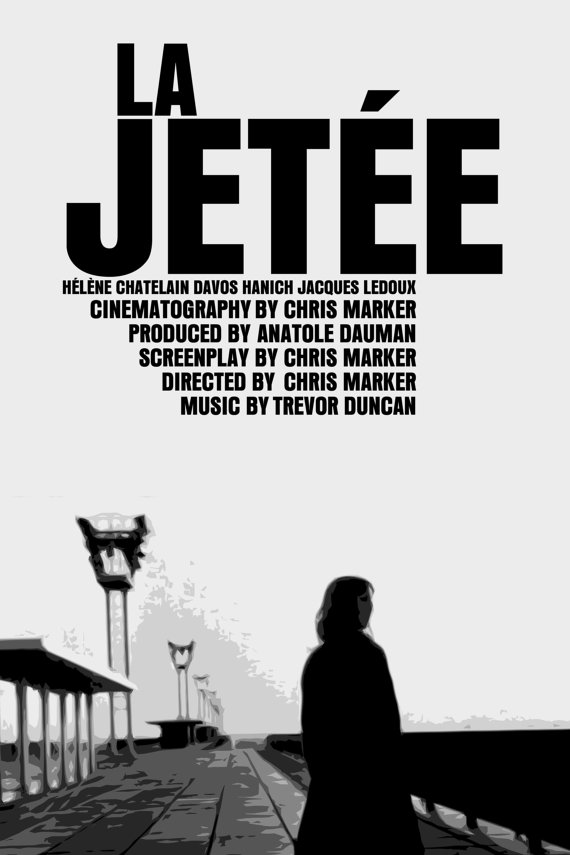
When I was young my mother was in college and she took me to one of her film studies classes. I was maybe 8 or 9, and the movie we watched was an avant garde French black-and-white flick called La Jetee, about a man from a desolate future who travels back in time and is killed. A boy watches the man die, and the boy turns out to be that man as a child (You can watch the whole movie here).

La Jetee

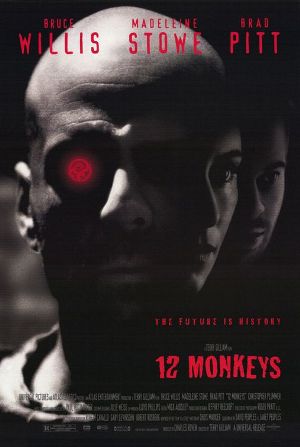
Since then I’ve been hooked by time travel stories. They’re a staple of sci-fi, and some of my favorites are The Terminator series, Doctor Who, SyFy channel’s Continuum, and 12 Monkeys, which was based on La Jetee.

Twelve_monkeysmpWhile time travel is an interesting fictional conceit, it’s been pretty much dismissed as an impossibility for several reasons:

1. How could it be done physically?

2. The possibility of time-destroying paradoxes — the most famous one being, what if you went back in time and accidentally killed your grandfather before your parent was conceived?

3. If time travel is possible, then why aren’t time travelers all around us?

I’ve never been convinced by number 2. Number 1 never interested me. Number 3 has always been the most persuasive.

Nevertheless, scientists are getting closer to solving the riddle presented in number 1.

According to this report, a team of Australian physicists have simulated time travel on a quantum level using particles of light. The particle “traveled” through spacetime on a closed timeline curve. This means that the particle returned to its original starting point. It did not create a new curve.

In the simulation, the particle was sent back to an earlier point in time and interacted with the original particle before returning back to the present.

Don’t ask me to explain the nitty-gritty science behind this stuff. I failed physics in college.

So, if I’m reading this correctly, time travel is theoretically possible, at least in the quantum world. Will this mean that we can one day travel through time? Probably not, but who knows?

In the meantime, I’ll keep going back, time and again, to time travel stories.

Secrets of the Ouija board

Are Ouija boards dangerous? A comprehensive article traces its history, and the answers aren’t quite conclusive.

ouija 1

A Ouija board is a game that allows users to attempt to contact the spirit world. The board consists of letters and numbers. The player asks a question, and using a pointer, the spirit world will supposedly guide the pointer to letters that spell out an answer. Simple enough, right? Not really.

AlwaysMine_finalOuija boards have a bad reputation. Many consider them a gateway to evil. If this latest news report is to be believed, three young Americans in Mexico fell into convulsions after using a Ouija board (the local priest refused to perform an exorcism because none were parishioners). I used a Ouija board as an element in my horror story Always Mine, and from reader response, it struck a nerve.

But what’s the truth behind this game?

This long Smithsonian article breaks down the history of the Ouija board. It turns out that Ouija boards are a uniquely American creation. In the mid 1800s, a wave of spiritualism swept the US. People believed they could contact the spirit world, which would deliver messages. This belief dovetailed neatly with organized religion, which more or less sanctioned this practice.

Then, in the late 1800s, a canny investor caught wind of a “talking board” and formed a company to manufacture these boards.

Among the interesting facts about the Ouija board:

–The name Ouija supposedly came from the board itself.

–The US patent office approved its patent after the board revealed the patent official’s first name (proof that it worked).

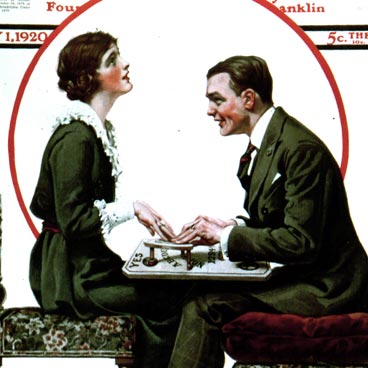
–It quickly became a best-seller, marketed as both a way to contact spirits, predict the future, and as wholesome family fun. Even Norman Rockwell got into the act.

ouija

But there was a dark side to it as well:

–One company head died after falling from a factory building, which he built based on advice from the Ouija board.

–In 1930, two women killed another based on the advice from a Ouija board.

And a quirky side:

–Writers have claimed that their works were written via Ouija board. One poet, James Merrill, won a major award for a poem that was “magnified” by his Ouija board.

So why have Ouija board become linked to evil?

Blame The Exorcist. Since that 1973 groundbreaking horror movie (which was supposedly inspired by actual events), Ouija boards lost any wholesome status they enjoyed. Following the phenomenal success of The Exorcist, Ouija boards have been denounced by religious groups and have become a staple for horror writers (guilty as charged). Interestingly, the board is still a hot seller.

The Smithsonian article delves in to the “why” of the Ouija board. In the simplest of terms, scientists believe Ouija boards tap into our unconscious mind. We may think we are talking to spirits, and in a sense, we are: our own.

But is this all there is to it? Maybe not. Check out these supposedly true scary stories of Ouija board freakiness.

To be honest, I’m not as concerned with how Ouija boards work. Don’t get me wrong: I love science. But when it comes to something like Ouija boards, I’d prefer to keep that element of scary suspense alive.

Game of Thrones vs science

The Mountain vs Prince Oberyn vs science: who will win?

First, this website is not a spoiler-free zone. Never has and never will be. I’m fine with spoilers. Sometimes I even seek them out (I was that kid who opened up his Christmas presents and then re-wrapped them). So, if you HATE spoilers, and aren’t up-to-date on Game of Thrones, stop reading now.

I love science, and I love fiction (and I also love science fiction). Fiction shouldn’t have to live up to the standards of science, especially when we’re talking about fantasy, sci-fi, or supernatural/horror, all of which require a level of disbelief. But sometimes it’s fun to see if what happens on the page (or screen) could happen in real life.

Let’s look at Game of Thrones and the epic battle between The Mountain and Prince Oberyn. Quick recap: Tyrion was accused of poisoning his nephew, the spoiled, vicious King Joffrey. Facing near certain conviction in a sham trial, he chose a duel to decide his fate. If his chosen fighter won, he would be set free. Cersei, Joffrey’s mother, who hated her brother Tyrion, selected The Mountain, a hulking beast of a man.

mountain

Prince Oberyn, aka The Red Viper, a fiery, bisexual Dornish prince renown for his fighting skills, volunteered to battle The Mountain on behalf of Tyrion in order to extract a confession from the villain who raped and killed his sister years earlier.

oberyn

Well, the fight didn’t go too well for either man. The Mountain was mortally wounded, and Prince Oberyn got his confession, but that was just before The Mountain crushed Oberyn’s skull with his bare hands.

It was shocking and gruesome, even for a show like Game of Thrones.

This article asks the scientific question: could The Mountain really have crushed Oberyn’s head like an overripe watermelon?

watermelon

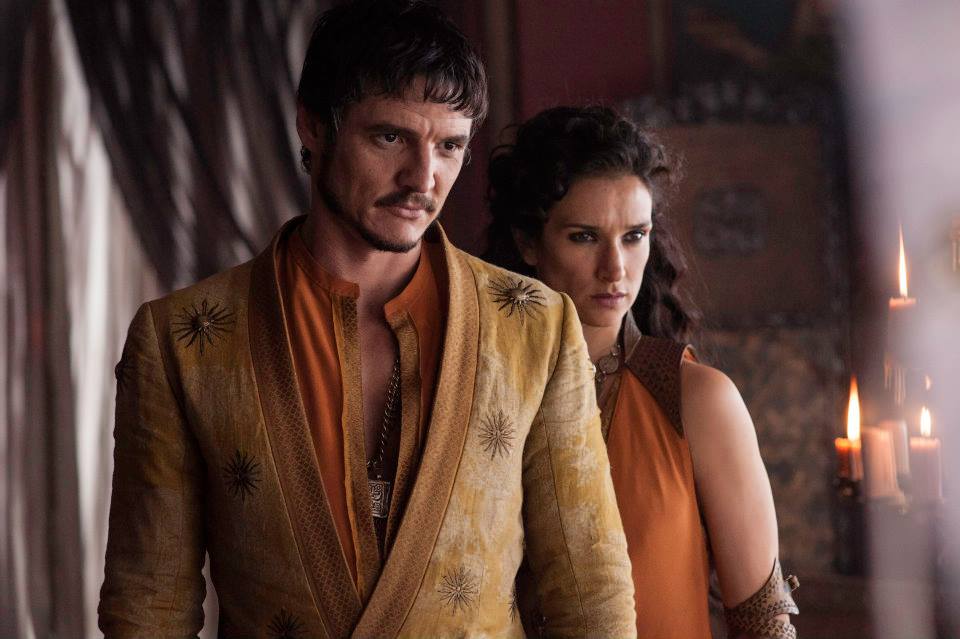
First the facts. The actor who plays The Mountain, Hafthor Julius Bjornsson, is 6 ft 9 inches and weighs over 400 lb. Bjornsson is the third-strongest man in the world and can deadlift 994 lb. The guy is seriously strong. The strength and size of Pedro Pascal, who played Oberyn, is irrelevant here, but this picture of the actors shows their difference in size.

pascal bjornsson

So could he do it? Probably not. Based on bike helmet crash data, it would take 2x the amount of force to crush a skull than human hands could muster, even hands as strong as Bjornsson’s. But, like much of science, this isn’t settled. One study suggested that it takes as little as 16 lb of pressure to fracture the skull, while another study pushed the skull-crushing requirement to 1200 lb.

My vote? Let’s get Bjornsson a skull to crush (not mine). Then we’ll see if George RR Martin’s words were based on scientific fact, or were pure fiction.

Spider fangs: nature’s perfect piercer

Some people love spiders (why??). Some people love to hate spiders. My view is: hey, Mr. Spider, you stay over there, I’ll stay over here. To me, they’re creepy as hell — horror movie creepy.

mexican-red-knee

Now there’s more to add to their creep factor. Not only are spiders adept at trapping their prey alive in a sticky web and sucking their blood and bodily fluids out in a slow, agonizing death, their fangs were honed by nature, God, evolution (take your pick, or as I believe, all of the above) to be the perfect piercing tools.

This article published in Scientific American discusses a study of spider fangs. It turns out that the curve of the spider fang allows the spider to not only attack from different directions, but also hold their prey while injecting their venom. And the hollow, conical shape gives the fangs strength.

Not cool.

The upside?

1) More fodder for horror writers. Now we’ve got an even more gruesome way to describe spider attacks.

2) Maybe they can design better piercing equipment, not only for medical applications, but also for those casual body piercers among us.

(Image courtesy of LiveScience.com)

A world of bizarre creatures in a drop of seawater

Coming back to my love of science and belief in monsters…

Sometimes the monsters are tiny. Consider yourself lucky in those moments. So, next time you’re at the beach going for a swim and you get an extra big mouthful of seawater, don’t think about the fantastically alien looking creatures you’re swallowing. Remind yourself instead that you’re the monster this time.

Drink deep, people.

The monsters in our family tree

Scientists have discovered a startling fact — compared to our not-too-distant ancestors (5000 BC), we are weaklings. Or as one of the researchers said, “the people back then were monsters by comparison. what you see today is quite pathetic.”

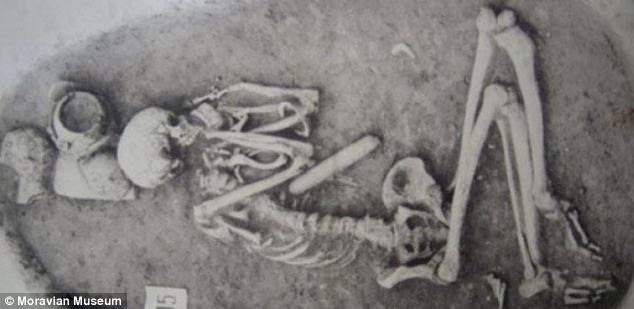
skeletonBritish researchers examined human bones from time periods spanning 5300 BC through the present day. What they found was that the oldest of the bones were comparable to those of today’s elite athletes. The average guy of today wouldn’t stand a chance in one-on-one with the average prehistoric man. You can read the original scientific study here, or try these summary articles in Outside magazine or the Daily Mail.

Why were people so much stronger back then? Because their lifestyles demanded it. There was no agriculture. Food had to be foraged and hunted. The humans back then had to have the physical stamina to roam—and run—great distances, all the time.

With the invention of agriculture, obtaining food became much easier, so we didn’t have to work as hard as a result. And, some speculate that our diets became poorer as a result.

side by side

So what’s the main takeaway? If you plan on travelling back in time several thousand years, you’d better be well armed.

But what about the future? As our world becomes more mechanized, as the physical demands on our bodies lessen, will we shrivel even further?

(Image source: Daily Mail)

Was Battlestar Galactica too religious?

Is there a role for faith in sci-fi? I say of course, but the battle simmers.

Image

This recent post from a Netflix-sponsored blog brings up the issue of religion as discussed in the 2000s now-classic series Battlestar Galactica. The four-season-long reboot of the 1970s show was well written, well acted, and wasn’t afraid to take on the big issues of the day (the opening battles of the global war on terror). But by the time the show ended its run, there was simmering controversy among its fans: why end it with all the overt religious references?

I would say they weren’t truly paying attention.

Battlestar Galactica in its fun and campy 1970s incarnation was an allegory for Mormonism. And it was great television sci-fi, even to my 7-year-old mind. When it was relaunched it kept a strong element of religion. The cylons were inspired by the one true god, and they despised the humans not only as their creators, but for their polytheism. The cylons consistently talked of “a plan” and of their faith in god. Meanwhile, the humans always implored and paid tribute to their Greek-named gods. Take a look at this promo picture below. Can this get any more overtly religious?

Image

So if the religion was in the DNA of Battlestar Galactica, why the controversy?

Two reasons:

–There are many in the science community–and the sci-fi community–who see religion and science as antagonistic. They view science as the antithesis of religion. Therefore, having a sci-fi show that takes religion seriously (and not just as a metaphor or a plot device) is at its heart a betrayal of all that is sci-fi. I am not one of these people.

Battlestar Galactica fully embraced religion. It took faith seriously. However, it failed in that it used the mystery of religion to paper over plot holes. The biggest: when Starbuck disappeared, seemingly died, and came back. Was she some sort of angel? Was she reanimated? The writers never even tried to explain. Faith was used in the wrong sense. The viewer was expected to have faith that things were happening for a reason.

Image

What reason, though?

Unfortunately we were never given a satisfying answer. All we heard were things like “this has all happened before, and it will all happen again.” Uh, ok.

The cause for the Battlestar Galactica controversy are twofold – one inevitable and the other avoidable. All in all though, the series is brilliant television. Its strengths far outweigh its flaws.