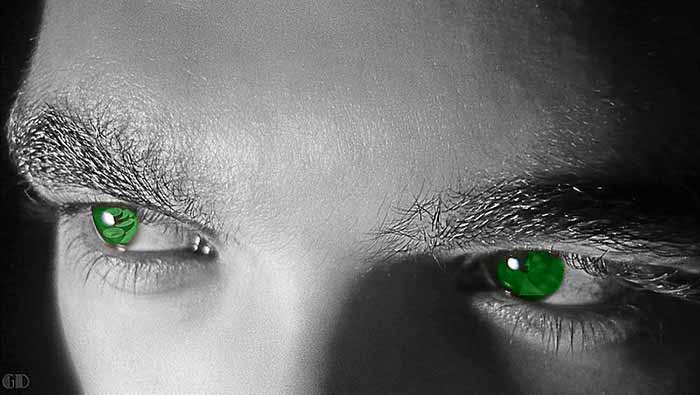
Anatomy of a Story: Envy, a User’s Guide

The origin story for my recently published piece, Envy, a User’s Guide (published here at Eulogy Press) is on one hand simple, and on the other hand, hard as hell.

Several months ago I took an online workshop on microfiction. What’s microfiction? It’s one of the latest in a series of subcategories of literature, mostly defined by length. You probably know of short stories and novels (short vs long). There are also novellas (longer than short stories) and novelettes (longer than novellas but not quite novels). 

And then on the other end of short stories there’s flash, which is 1000 words or less. Now, writing a complete story in 1000 words or less is pretty damn hard. But you can go even shorter. With microfiction we’re talking about 400 words max. 

(Disclaimer: there aren’t hard and fast rules. Surely people will have different guidelines for these lengths.)

I’ve dabbled in shorter than short. Like, 150-word pieces. I even got a 100-word story published. The thing is, at that length, you have to jettison just about everything that makes writing (and reading)  fun: the color, the expansiveness, the luxuriousness, the flavor. And it’s HARD. I think the shortest story most people know is this six-word one from Hemingway:

Baby shoes for sale, never worn.

Great in terms of giving some heartache with the fewest words. But that’s about it.

Still, I took this online course in microfiction, and one of the things they stressed was using that constricted canvas to experiment, to let your story live in a borderless zone between prose and poetry. Get a little wacky. 

So I decided to give it another shot. I went in thinking less about telling a traditional story and instead I viewed it as a way to convey a different kind of reality. The one I chose relates to my favorite deadly sin. Envy. I wanted to get into the head of someone who experiences envy as a crippling, phenomena. I wanted to present envy as a physical reality versus an ephemeral one. I wanted to get as close to personifying envy as Envy as I could without making it a literal person.

The hardest part of this story was the wordsmithing. When you’ve got only so many words, every one of them has to do a ton of work. I revised, at the same cafe, morning after morning, a couple weeks straight, to the point where I almost killed it (that feeling when you’ve wrung out every bit of originality and smothered all the life out of it). Apparently I didn’t, because some brave editor out there responded to it and published it.

Am I eager to take on another microfiction piece again? Not so much. But I did learn something valuable: don’t shy away from taking on a writing challenge. You never know when you can create a bit of art out of it.

Anatomy of a Story: My Loneliness Is Killing Me

You might recognize that song lyric. If not, it’s from Britney Spears’ song Hit Me Baby One More Time. Believe it or not, that lyric was the inspiration for my story, My Loneliness Is Killing Me, which was just published in the literary magazine Periwinkle Pelican (note, you have to download a PDF to read the story, but it’s free).

So how’d this one come about? Actually it originated from a very common phenomenon: when you get a song stuck in your head, no matter if you’re a fan or not, and it gets lodged in your brain and plays on repeat. FOREVER. Until it vanishes. Usually it’s a Bon Jovi song for me for some reason (not a fan, but I don’t hate them).

This story came from that. As luck would have it, on that particular day I didn’t have much to do. It was a Saturday. A beautiful day. A HOT day. So I went into Manhattan and bummed around with that lyric repeating in my head.

And an image. Of someone day drinking. Wasted and wasting their life away.

The weekend before I was with a bunch of people drinking and we watched the Sydney Sweeney rom-com Anyone But You. I’m not a rom-com fan but the idea of romance was still thick in my mind. As I walked around the city, this story came to life for me. I would run the lines through my head and then stop at random points and scribe lines into my phone. At one point I passed this white hipster guy who had this perfectly styled mustache, just short of cheesy, but great all the same, and I knew that his mustache had to be a part of my story (which it is).

By the end of my sweaty sojourn through the city, and after a few frozen margaritas (hence the Slurpee reference), I pretty much had the story all written. It’s short and fierce and I’m immensely proud of it. It’s not the type of story I usually write–nothing supernatural at all in it–but it’s loads of fun. And I have to give credit to a great writer, whose work I was reading and whose freewheeling style was most definitely an inspiration: Bud Smith. Check out his great collection Double Bird. His writing taught me you can be ridiculous as long as you’re getting to the guts of your character.

And my favorite part of this story? The opening line: Fuck off, Britney.

Anatomy of a Story, or the Only Way to Deal With an Impossible Crush

We’ve all had at least one. Or two. Or several. You meet someone and you get nearly instantly hooked, despite all logic or reasoning. Yet you know, for reasons beyond your control, that it can never ever be.

The impossible crush. Sometimes the only possible thing you can do is to get as far away from it, however possible.

That’s what I tried to portray in my story, The Only Possible Thing, recently published on James Gunn’s Ad Astra, a website dedicated to sci-fi-themed speculative fiction.

This universal quandary was just one inspiration for this story. The second was the amazing novella by Ted Chiang, The Story of Your Life. It’s about a linguist who struggles to communicate with aliens. In the process, her conception of time is disrupted. Rather than experiencing time as a linear construct, she experiences it as a simultaneous occurrence. If this sounds familiar, it’s because the novella was adapted into the movie The Arrival.

I’ve always had a hard…uh…time with time. Yes, I experience it in a linear fashion, but on an emotional level, things that happened in the past often seem more present than the present, to the point where I sometimes feel my life as existing on a broad plan that stretches out rather than a taut line. Chiang’s story spoke to me, and I wanted to blend his motif with my emotional concept of time and the futility of an impossible crush that sends you to the farthest reaches of the universe where you confront not just your horrific destiny, but that pivotal moment that sends you there, a moment that lingers forever.

You must know, first, that every moment is merely one of a constellation spread across the sky of my life. These moments, here with you, are the only ones that matter, the only ones I never want to leave.

The process with the folks at James Gunn’s Ad Astra was both intense and rewarding. Rather than a simple acceptance (or rejection), they sent back a thorough list of questions and recommended changes. It took me some time to work through these points, and to be honest, it was a struggle, but in the end it only made the story better.

After it was accepted for publication, they provided me with the artwork that would be associated with the story (see above). I was blown away. I have zero visual artistic talent, and this image was more than I could possible have imagined.