Zombies on Mars?

(Hint: Doctor Who did it first, and possibly better)

I’ll hold judgment on a movie I haven’t seen, but if this report from io9.com is true, a new horror/sci-fi mash-up is a space disaster.

It’s called The Last Days on Mars — great title, btw — and it’s about a group of astronauts about to leave Mars who discover bacteria that turns them into zombies. Okay, interesting set-up. And it stars Liev Schreiber. Encouraging.

But if the io9.com write-up is to be believed, they fail on two big counts.

First, character. The article describes the crew as “eclectically unlikeable.” Uh oh.

Second, consistency. To quote:

“The space zombies can walk around Mars without a helmet on, but sometimes mild head-butting takes them out. The space zombies don’t seem to want anything but to kill everybody, although there is one lone space zombie who decides to try eating people, but maybe he was just feeling peckish.”

I’ll wait for it to come on Spike TV.

And for the record, Doctor Who already did something similar. It was a special called The Waters of Mars, and it was scary, smart, and had characters you actually liked (though the zombies looked just a little cheesy). Watch that instead if you have a craving for zombies and Mars.

The Day of the Doctor: Character or plot?

I vote character.

Image

There once was a man, an alien, from a planet called Gallifrey. He was a time traveler–a Time Lord to be exact.

His name? No one knows, except his wife, River Song. He goes by the Doctor.

Fifty years ago, the BBC launched a television show called Doctor Who about this time traveling alien. Straightforward enough. Except, in a genius twist that has allowed this show to last so long, the character has the power to regenerate — the same man in a different form (ie, actor).

Last week, the 50th anniversary special, The Day of the Doctor, brought together 3 incarnations of the Doctor, and it proved one thing — the best writing is fueled by character.

Doctor Who has fantastical plots that zip along but threaten to dissolve into nonsense if examined too closely. What makes up for this? Character.

The Doctor is a complex man. When we met the 9th incarnation, played by Christopher Eccleston, he kept the childlike ingenuity but carried a dark PTSD shadow.

The tenth Doctor, played by David Tennant, had more of a lust for life. But he also shouldered the full weight of his burden: it turns out that in a previous incarnation he’d ended the war between his own people, the Gallifreyans, and the evil Daleks, by killing ALL, his own species included.

Heavy stuff.

The eleventh Doctor, played by Matt Smith, seemed to suppress this knowledge. He could be whimsical, but he was prone to melancholy; he needed a companion. And he was the man who led cultures to translate the word Doctor not as healer but as warrior.

In last week’s special, we met the Doctor who ended the war, alongside the tenth and eleventh doctors. Played by John Hurt, he looked much older than Tennant and Smith, though the character was much, much younger, and the special focused on him as he grappled with how to end the ruinous war.

In the process, we saw three versions of the Doctor — three personas — three separate selves — three parts of the same person. Unique but the same.

What we got, besides a rollicking story, was a rich, multifaceted character in triplicate. Credit goes to not only the actors, but the writers.

So what exactly happened? Watch it and find out.

Doctor Who: clip turns canon on its head?

A new webisode promoting the Doctor Who 50th Anniversary special teases an altered take on the Doctor.

Doctor Who, the classic BBC TV show about a time traveling alien with the power to regenerate, is set to air its 50th anniversary special, The Day of the Doctor, Saturday, November 23. Now, a newly leaked webisode sheds light onto a darker side of an iconic sci-fi hero.

Paul McGann played the eighth doctor in a 1996 TV movie. The hope was it would launch a re-boot of the TV series. It didn’t, and the re-boot occurred nearly a decade later, with Christopher Eccleston taking over as the ninth Doctor. We never saw the transition between the doctors. We never saw McGann again. Until now.

Paul McGann – the Eighth Doctor

Image

In the new webisode titled The Night of the Doctor, McGann makes a surprising return. In the space of 6:49 minutes, we get a burst of action, the Doctor’s wry take on eternal life (he calls it utter boredom), the hint that the Doctor could regenerate as a woman, and a huge clue that quite a lot happened between McGann’s Doctor and Eccleston’s.

Watch the clip here:

http://www.youtube.com/watch?v=-U3jrS-uhuo

The clip packs a lot of plot in its short time frame, and it’s accessible for those who don’t know much about Doctor Who. Credit the writer, Steven Moffat for this feat.

As The Day of the Doctor approaches, we’re getting more info about the event. Click here to see stills from the show, including John Hurt as a mysterious incarnation of the Doctor, the return of Billie Piper as Rose Tyler, and the tenth and eleventh doctors, David Tennant and Matt Smith, side by side.

And click here for some cryptic words by Steven Moffat on how John Hurt’s character will–or won’t–fit in to canon.

I can’t wait.

The heartbreaking case of Donna Noble

Doctor Who offers a case study in stellar character development: Donna Noble. She began as someone you’d gnaw off your own arm to escape from. She ended up heroic and self-sacrificing.

The good news: there’s an outside chance that Donna Noble (played by Catherine Tate, last seen on The Office), may be returning to Doctor Who for the 50th Anniversary special in November.

For those who don’t know, Doctor Who is a British sci-fi series about a human-looking alien (the doctor) who travels through time in his blue police box-looking machine (called the TARDIS). It’s been on TV since 1963, and it manages this feat because the Doctor can regenerate into a new body (that is, new actors). 

The Doctor usually travels with a companion, who is typically 1) human 2) youngish 3) female and 4) highly impressionable. Oh, and they’re usually hot and have a crush on the doctor.
 
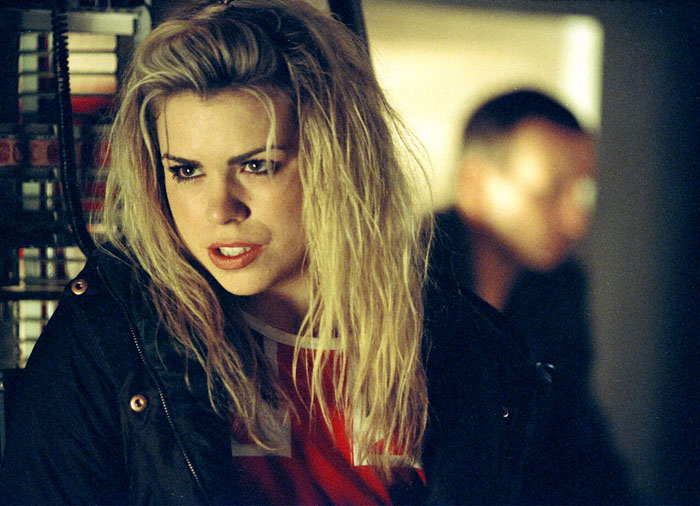
Exhibit A: Rose Tyler.
Image
 
Exhibit B: Amy Pond. 
Image
 
And then there’s Donna Noble.
Image
 
She was mouthy, rude and bossy. But she was also curious and persistent. And the writers gave her an amazing character arc.
 
When she’s first introduced, she’s about to get married. She’s a boorish bridezilla. When her wedding doesn’t turn out as planned (think alien spider creature), she refuses the Doctor’s call to travel with him.
 
But she changes her mind, and ends up tracking him down. Together they travel to Pompeii, get caught in a deadly 51st-century library planet, and meet Agatha Christie. Ultimately she’s given a monumental choice, the universe saving kind, but of course there’s a terrible price to pay.
 
The brilliance of her character development is that the Donna Noble we meet in the beginning would have made a different choice than the one she becomes at the end…
 
…which makes the way she ends the show heartbreaking. No spoilers here. 
 
Here’s a clip of Donna Noble from Doctor Who:
 
 And here’s Catherine Tate in one of her funniest sketches:

Saturday fun with Doctor Who

Here’s a Doctor Who webisode I stumbled across. The Doctor (played by Matt Smith) and his wife, River Song (Alex Kingston), are out on a date gone awry. It’s a short clip, written by none other than Neil Gaiman. For those who have never watched this British classic series, this gives you a glimpse of what the Whoniverse is like (heavy on characterization, sometimes tongue-in-cheek, other times deadly serious).

Waiting impatiently for the Doctor’s return in November…

http://www.youtube.com/watch?v=ORR-SY0KskM


Watch this movie: Attack the Block

British horror done right…

 
attack_the_block_ver4_xlg

The British are known for many things: great music, bad food and teeth, and their one-time love of controlling the planet. But they’re not as well known for horror movies. Maybe this is good: they have little to prove, so there’s no pressure.

Case in point: two of the best horror movies of the past decade: 28 Days Later, a zombie-ish movie that starred Irish actor Cillian Murphy, and one of the coolest, underrated, most bad-ass and too-short-lived doctors from Doctor Who, Christopher Eccleston. It’s a hard-edged, smash-bang-fun time. Whatever you do, avoid the sequel (which shall remain nameless), as it nearly ruined the whole thing.

The second film is a horror/comedy, Shaun of the Dead, with Simon Pegg and Nick Frost. Couple dry British humor with gore and you have a classic. 

And then there’s Attack the Block, a low budget (I’m assuming) indie-style horror. Why low budget? Well, the monsters are kind of… rough. And the movie features the classic horror fail: the empty city streets. 

Get over it. I did, and it was worth it.

So here’s the plot in a nutshell, ripped straight from IMDB: a teen gang in South London protect their block from an alien invasion. There you go.

First, it’s great fun. The action starts pretty early, and once it starts, it rolls along, not too slow, not too fast. It lies somewhere between 28 Days Later (super serious) and Shaun of the Dead (tongue-in-cheek), though more toward the 28 Days Later end of the horror spectrum.

What stood out for me, most of all, was the unique set-up. You meet the teenage hero, Moses, as he, along with his juvy gang, are mugging Sam, a nurse on her walk home. Moses is cruel, someone who you would not choose to identify with, but over the course of the movie, he morphs into the hero of the story, in part because the other characters (drug dealers, vicious aliens) are so much worse, and in part because the extreme situation he finds himself in (battling aliens), forces him to grow as a person.

Rent this movie. It’s worth it, not just because it’s fun, but because it’s a great example of the anti-hero in drama, and it also shows another of my favorite literary conceits: the ordinary man (men and women in this case) forced to confront extraordinary circumstances. None of these people are Jason Bourne or James Bond, and their fight scenes reflect that, which makes it all the better. 


Want to kill Hitler? Good luck with that

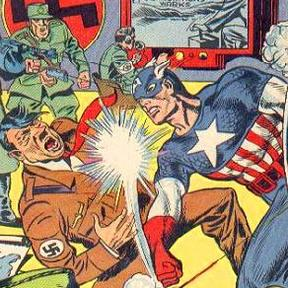
Attention time travelers, killing Hitler, while noble, may not be as easy as it sounds.
Image

One of my favorite web sites, io9.com, compiled several literary/TV attempts to kill Hitler, and the results are not particularly encouraging.

In a nutshell, all the literary/TV tries either 1) fail miserably due to the bumblings of the time traveler, 2) end up working, only leading to an even worse outcome, or 3) actually CAUSE Hitler and WWII as we know it.

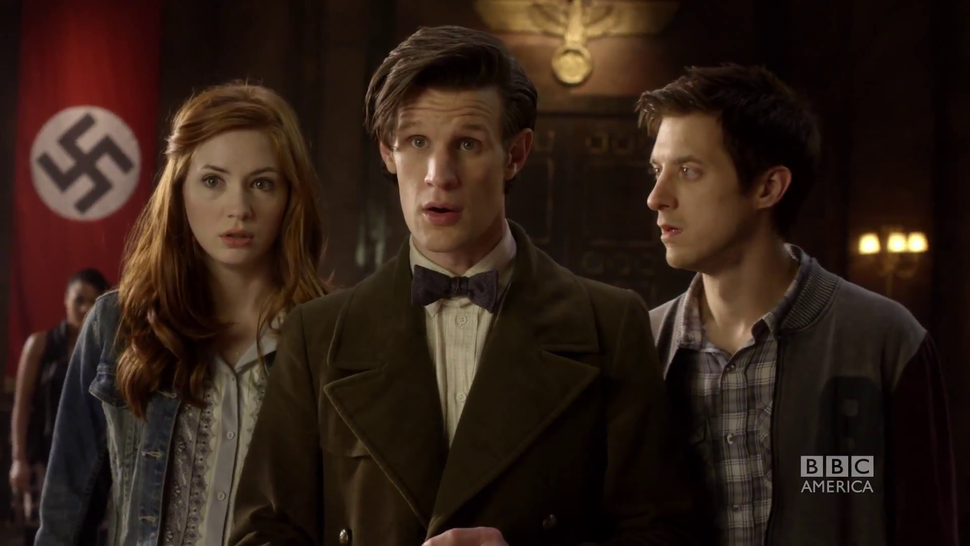
Now, I wasn’t aware that this was such a common trope. I’ve seen the Doctor Who episode, Let’s Kill Hitler, which actually had little to do with the big bad himself, and was more about developing one of my favorite Who characters, River Song (for a good intro to all things Who, watch the two-parter Silence in the Library). Hitler was quickly forgotten in the first ten minutes or so.

Image

And I remember watching one of the items on io9’s list – the Twilight Zone episode (in full here) where Katherine Heigl (!) time travels to visit baby Hitler. She’s not there for a friendly visit, and not to give it away, but history incorporates her mission with no noticeable change in the timeline.

Several of the other books/stories/etc on the list are intriguing, and worth a look. Read this clever short story here, in its entirety.

The moral of this story?

Time travel as a dramatic device is great for one reason – there are endless permutations and possibilities. One simple concept – killing Hitler – can be spun in countless entertaining ways. As long as it’s well executed, it will work.