Weapons: A movie on the verge of greatness, but not quite there

What makes a horror movie truly great? 

That’s not an easy question. Off the top of my head it’s got to be scary, innovative, well acted, well written, visually interesting. Some of the horror flicks that make this greatness level for me would include, Night of the Living Dead, Alien, Hereditary and Pearl, just to name a few (I could probably list a few dozen if given the time).

What those movies have in common is that they either brought something new to the genre, or they nailed every single facet of storytelling.

Why am I going on about this? Because I wanted so so bad for Weapons to be among one of these movies. It had a lot going for it, a great trailer, a strong premise, and a lead actor who I absolutely love. If you haven’t watched the series Ozark, watch it, for nothing else than the terrific acting by Julia Garner. When I saw she was starring in this, I could barely wait until it hit streaming.

My post-viewing verdict? Weapons is a strong movie. It’s solid and entertaining. But it doesn’t quite make the canon of the greats.

Quick recap of Weapons: one night at 2:17 am all the children of a certain classroom, except one, awake from their beds, leave their houses, and vanish.

Killer logline, right?

And the visuals in the trailer of kids running quietly in the night with their arms extended like airplanes. Simple, strong, creepy.

What Weapons has going for it is its different take on the protagonist (or protagonists) Julia Garner’s character, Justine, is the teacher of the class. Suspicion falls on her for somehow being involved. We have sympathy for her, but we also see another side of Justine. She’s a messy drunk. With a history. She’s not pure and plucky like many horror heroines. While she’s easy to root for, she’s also self sabatoging. I liked this twist.

Also, there are other characters, Josh Brolin plays Archer, the father of one of the missing kids. He’s kind of a dick, but again, we’re on his side. Alden Ehrenreich plays a cop and Justine’s ex. He’s a recovered alcoholic who slips up in many ways. And finally, we’ve got Austin Abrams, who plays the town junkie. Both of these characters cross paths and do things that we should dislike them for, but the way they’re written and acted, their flaws are somehow made relatable.

And finally, on the plus side, we have our villain, Aunt Gladys, played by Amy Madigan. She’s the aunt of Alex, the sole child who did not disappear. Visually she’s an A+ as a horror creature. She’s got major wicked witch vibes.

So we’ve got an interesting premise, compelling characters, solid acting and visuals. What’s holding me back from loving Weapons?

One thing is how they chose to tell the story. It wasn’t exactly linear. They’d focus on one character in turn, telling the story from their perspective, then backtrack to another character to tell it from their perspective, filling in the gaps. I liked this puzzle box method, but for me it kept on breaking the tension. It either didn’t belong in a horror movie, or it needed to be finessed.

A second thing was the tone. Sometimes it felt like I was watching a psychological thriller. Sometimes a body horror flick. Sometimes a Tarantino movie from the 90s. And toward the end it was almost a satire of horror movies. All of these elements were well done and interesting, but this inconsistency kept pulling me out of the movie.

But the final and most significant stumbling block I had related to the mythology of the movie. 

(Let’s put aside the meaning of the movie. I’ve read online that Weapons is supposed to be a critique of American society or something. I hope not, because that to me is so trite and boring and lazy. To be honest I’d rather see a movie take on critiques of American society. That would be something novel).

Anyway, all speculative stories have a mythology. What’s the story behind the thing we’re seeing or reading? How did it come about? What are the rules of this universe?

Now I don’t need to be told all the whys, or see all the hows, but I want to have the sense that the writer knows. And I’m not sure if the writers knew why Aunt Gladys did what she did. Was she a garden variety witch? Was she some kind of parasite? How exactly was she using the children? If the writers gave us just a little more of what she was and the hows and whys, she could have risen closer to the pantheon of unforgettable horror villains.

With all that said, watch Weapons. Yes it’s imperfect and slightly disappointing, but it’s tons of fun.

Problematic Protagonists: I Saw the TV Glow

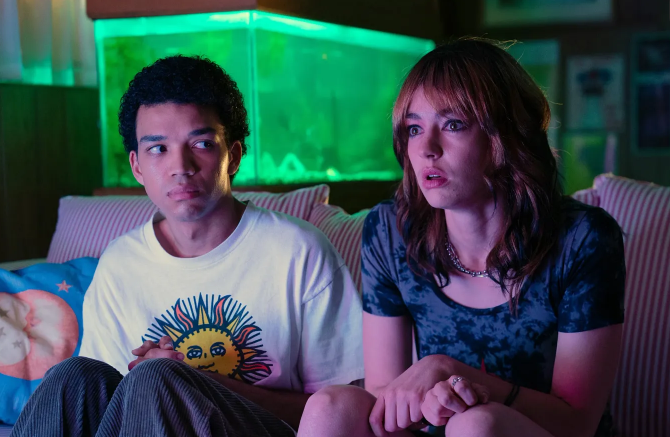
Recently I checked out the 2024 indie film I Saw the TV Glow. Ask me what genre it is and I’d have to take a moment. Somewhere in the dark contemporary fantasy camp. Not quite horror but wishing it could be.

First off, what it’s about.

High schooler Owen befriends an older student, Maddy. They bond over a cult TV show called the Pink Opaque, which is about two psychic girls who fight bad guys. Owen is too young to watch the show at home, so he sneaks over to Maddy’s house. Stuff happens. Maddy is a lesbian and Owen is apparently asexual (more on that later). Owen’s mother dies of cancer and he’s stuck with his ignoring father. Maddy runs away then returns claiming that they are really the characters from the Pink Opaque and have been trapped in this fake world, then she’s gone again and Owen is left to figure out what’s what for himself.

My overall take is that there are things I enjoyed about it. The movie had a fun retro indie shoestring vibe (I mean that as a compliment). It had heart. It was a little goofy and it played to the tropes. Also, the show within the movie, the Pink Opaque, was clearly a callback to one of my favorite TV shows, Buffy the Vampire Slayer, including the font used in the credits, and a cameo by Amber Benson, who played Tara in Buffy (Fred Durst, the Limp Bizkit frontman, also has a very small role).

And I didn’t mind that the ending is left vague. In fact I liked that ending. And the writers earned it.

What hold the movie back, massively, is the character of Owen.

I’m of the camp that protagonists are make or break to your story. They don’t have to be likeable or noble or superhuman. They don’t even have to be relatable or identifiable. But there is one thing that every protagonist absolutely must have. He or she must WANT SOMETHING. It can be a small something (to go get a Slurpee) or a big thing (to save the universe from collapse), but there has to be something.

Poor Owen. He didn’t seem to want anything. Clearly he was disconnected from the world. He tells Maddy in a key scene that he doesn’t have any sexual feelings whatsoever, like he’s been scooped out hollow. If he was just a normal human like one of us that would be sad and probably a cause to get therapy. In a piece of fiction? It’s a huge red flag. It signifies your character is disconnected from his own wants and desires.

Now this could be a great launching point. How does that character reconnect with his internal desires? How does he take concrete action to fix this?

But that’s not what we get in this movie. Instead Owen drifts passively through life. His voice rarely rises above a whisper. His facial expression barely changes. Clearly this is a guy with some serious low-grade depression. Again, normal in the real world but do we want to watch this play out for two hours?

By the time we get toward the end of the movie, after Maddy returns and tells Owen that he’s really one of the characters from the Pink Opaque, trapped in this fake identity, we’re aching for Owen to do something, but all we get is nothing. Even after the climactic scene, the one where you can make a case that a) yes, he really is that trapped character or b) no, he’s just seriously mentally ill, Owen is back to being the same old mopey Owen we all know and don’t love.

Like I said, there was a lot of goofy charm to this movie. I really wanted to like it. But poor Owen left me not caring in the least what happened to him. So my take: give your protagonist a purpose. Give him a goal. Make us root for him.

Watch This Movie: Pearl

I got into a horror kick recently. Why do I love horror? The thrills, the inventiveness, the over-the-topness, the almost cartoonish quality that stylized, fake horror, when done right, can have. Pearl came up on my Amazon Prime feed. The promo image was a Wizard of Oz riff, a Dorothyesque girl climbing a Scarecrow mount. It honestly confused me.

I almost passed it by. So glad I didn’t.

Pearl falls into the category of what I call Sunlit Horror (I don’t know if that’s a real genre. Now it is). Like Midsommar, the bulk of the action and the terror takes place in the daytime on perfectly sunny days. Instead of Be Afraid of the Dark it’s just Be Afraid.

Here’s the basic plot: It’s 1918 rural Texas. Pearl is a farmgirl with a stern German immigrant mother, a disabled father and a husband off in Europe fighting WW1. Pearl hates her dreary life. She dreams of being a star in the new film industry.

Sounds like a fun movie, right?

Well, it is, but not the way that that summary implies. Add to the plot some crushed dreams, a hungry alligator, and we’re off in a wholly different direction.

There are so many great things about Pearl. First, the visuals. Pearl such a beautiful movie, filmed in bright colors like old Hollywood classics on acid. It plays with the Wizard of Oz allusions but twists them and even perverts them in one of the weirdest and best scenes in the movie. Just for the visuals alone, Pearl is worth your time.

Another great thing about Pearl is the entire cast. The director Ti West assembled a strong ensemble to play characters who are well written to fill the tropes we love and expect in horror films (yes, tropes can be a good thing). The standout for me was Pearl herself. I’d heard of Mia Goth but never seen her in movies, only knowing her as the girl with no eyebrows. Turns out she does have eyebrows, they’re just very blonde. She’s perfect in this role, pretty but not too pretty, striving and failing. Goth is great at showing her desires, frustration and ultimately her rage. There’s an audition scene that, if there was any justice in the world, would have won Goth an Oscar. And there’s a scene at the end, a closeup of Pearl’s face, where Goth manages to portray a range of emotions from rage to happiness to madness to pure ridiculousness.

So my bottom line is: Pearl is one of the best horror flicks I’ve seen in a long time. Watch it.

And then watch X. Also starring Mia Goth, X is the first movie in this trilogy, but it’s set in 1979 Texas as a porn crew ventures to a run-down Texas farmhouse to film a movie.

Guess who owns the farmhouse.

The Dirty Little Secret of The Black Phone

The thing I love about speculative fiction (horror, sci-fi, contemporary fantasy) is those stories aren’t just about monsters or spaceships or time travel. They serve as broad canvases to explore different facets of humanity. Dragons and Ice Zombies in Game of Thrones are window dressing for a story about the lust for power. The task of fighting vampires in Buffy the Vampire Slayer is a metaphor for the tumultuous transition to adulthood.

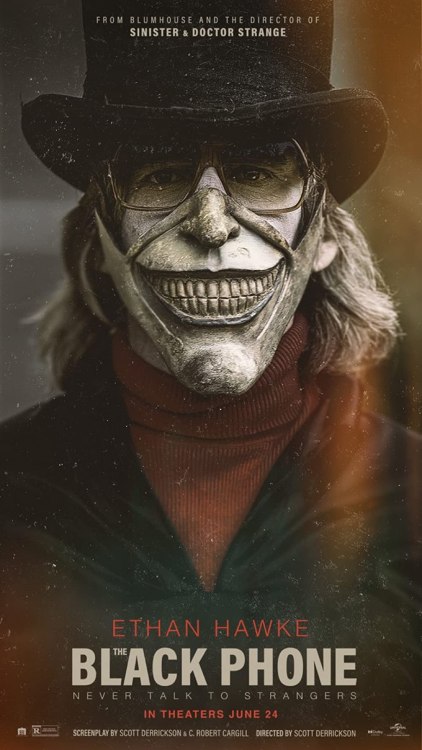
Recently I saw a horror movie titled The Black Phone that was not just about a teenage boy locked in a basement by a sadistic madman who got help from previous dead victims via a dead phone. The story was not about ghosts. It was about child abuse.

The Black Phone (not sure how I feel about the title), starring Ethan Hawke and based on a short story by Joe Hill, is about a child abductor nicknamed the Grabber who terrorizes a Denver suburb. He kidnaps teenage Finney and locks him in the basement. In this basement is the black phone of the title that doesn’t work, except it does. (WARNING: spoilers ahead). Finney has a touch of ESP, and that ESP allows him to communicate with the boys who the Grabber kidnapped and murdered before him. Those boys barely know who they are anymore. Their murders left them that traumatized, but they’re able to give Finney advice that leads him to tools that may help him survive.

First off, The Black Phone is really well done. At no point did I find my mind wandering. I didn’t get bored. It took me a while to get into it, but that’s more of a Kevin quirk than an actual criticism. The ‘70s details are fun (before my time, so I can’t relate or critique), the suspense and thrills are well placed and well spaced, and the writing and acting were strong. If you like horror, you’ll love this movie.

So, about the child abuse. In the real world it’s a topic rarely touched. The Black Phone didn’t shy away from it.

One of the earliest shots shows Finney and his sister Gwen tiptoeing around their angry father, a nasty drunk mourning the suicide of his wife. Gwen (like Finney and their mother) has ESP abilities, which their father literally tries to beat out of her. This, not the kidnapping or murders, was the most horrific scene of the movie. For anyone who’s experienced something similar, it will be a killer scene to watch. For those lucky enough to never have suffered abuse, hopefully it will be a little easier to watch.

It’s not profound or especially insightful to say that abuse warps children. Gwen is defiant and violent. Finney is passive to a fault. Both learned lessons from their abuse (Gwen: fight fire with fire. Finney: weakness). By the end Finney learns that sometimes you have to fight back, if just to survive. The second to last scene gutted me. After Finney kills the Grabber, he and his sister huddle in the back of the ambulance. Their father runs to them and sobs apologies at their feet. They stare at him, blankly. He’s repentant, but they’re already broken. That scene rang so true.

But the final scene of The Black Phone, the one just after that ambulance scene, told a different story. Throughout the movie, Finney was tormented by bullies. In the last scene, Finney, now legendary for killing the Grabber, struts through the halls of his school, ready to claim the love of the girl he crushes on.

It was a good ending, but it left me with a doubt I could only make sense of when I read an interview with the director. For him, the movie was about being bullied. In that narrative framework that absurdly triumphant last scene make sense. But the realities of child abuse tell a different story. In the real world Finney would have a long, long road ahead of him. He’d face a mighty struggle to reclaim his sense of self and his sense of power.

We rarely talk about the effects of physical abuse on children, including in fiction. Horror is the exception. To me, the movie Hereditary was about a woman abused by her mother pass on that abuse to her children. In The Babadook, a mother lashes out at her difficult son, using her grief as an excuse. Add The Black Phone to this thin cannon (I don’t count Carrie–the mother was too cartoonish). All three movies presented the parents as sympathetic. They usually are. But they didn’t flinch at showing us a glimpse of the horror that children experience as a result of their physical abuse.

Wait…Gendercide Is a Thing?

I like to consider myself a fan of all things speculative–horror and supernatural and sci-fi books, movies, TV shows, etc., and I believe I know a ton about these genres.

Apparently I don’t. The other day I was rabbit holing into the latest of a long line of literary controversies (I won’t go into it here) and I read this article asking whether it’s time do do away with the gendercide trope, a trope I’ve never heard of before.

What is gendercide? It sounds nasty, because it is. Gendercide is where either the men or the women in any given story are killed or die off from some nefarious or mysterious or viral reason. The book that inspired the article introducing me to gendercide is The Men by Sandra Newman. I haven’t read it yet, but it’s about a world where all males suddenly vanish. The remaining women adjust to this disappearance, while videos online depict the men living in a hellish landscape.

There are others, too, such as Y: The Last Man, a comic turned TV show where (almost) all men die of a virus. One of my favorite books, The Knife of Never Letting Go by Patrick Ness, is a variant of the gendercide trope; the novel opens in an all-male society where the women have mysteriously died off.

According to TVtropes.org, gendercide isn’t super popular, and most of the time only a variant is used (only some or most of either men or women die or disappear). Stories where the men disappear are more in line with the theme of feminist utopia, and stories where the women vanish are considered dystopic.

In reading about Newman’s book, I found it disturbing that all the men were sent to a hellscape ruled by demons. Oddly, the writer of the article critical of gendercide (and Newman’s book), didn’t write about that disturbing aspect of it. From me, though, disturbing is not a criticism. I want to learn more about this trope, and see how different writers explore it.

Watch this movie: High Life

This one’s a tricky recommendation.

It’s not often that I like revolting movies, movies that are repulsive for the sake of being repulsive, movies that are obviously trying to shock you.

But here I am.

high life

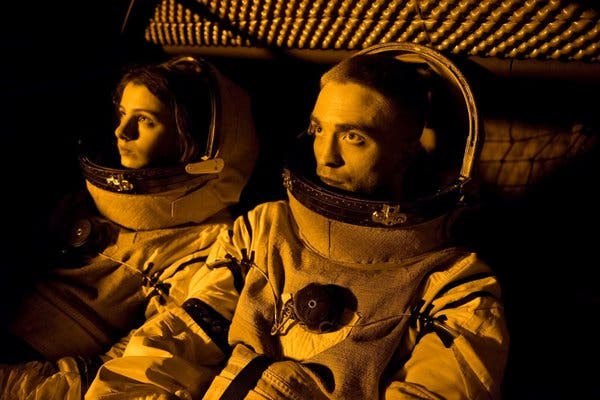
High Life is a recent sci-fi film by French director Claire Denis. It stars Robert Pattinson and Juliette Binoche as travelers on a spacecraft on a one-way mission to harness the energy of a black hole. And perform experiments.

The twist? There are two. Number one: all onboard are death row convicts. Number two: the experiments involve trying to bring a baby to term in deep space.

That all sounds like a run-of-the-mill sci-fi plot. High Life is definitely, absolutely, 100% not. Like I said, it’s revolting. It’s graphic. There should be a whole list of trigger warnings attached. Every trigger warning ever invented.

But it’s also beautiful. Beautifully shot. Beautifully scripted. Beautifully acted.

I was never a Twilight fan. I watched the first one in German and that was enough. But Robert Pattinson is one hell of an actor. His character is reserved (mostly) and mysterious enough to not be annoying.

Juliette Binoche is a madwoman in every sense. The rest of the cast are all great — intense and hateful — with the exception of Andre Lauren Benjamin (aka Outkast’s Andre 3000), who plays a convict full of regret for what he left behind on Earth.

High Life is not for everyone. Some scenes were straight-up sick. Still, this movie is one hell of a trip.