Problematic Protagonists: I Saw the TV Glow

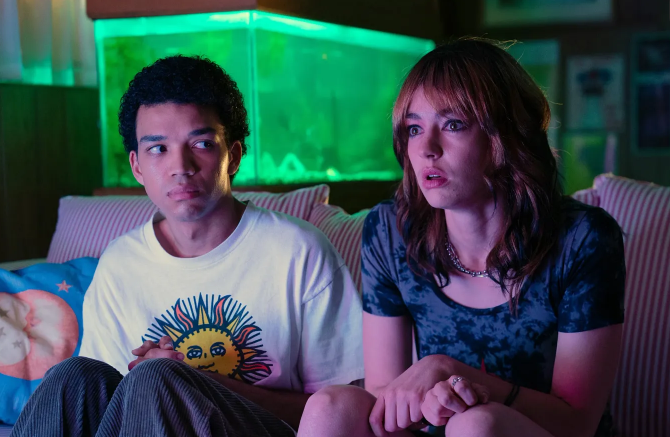
Recently I checked out the 2024 indie film I Saw the TV Glow. Ask me what genre it is and I’d have to take a moment. Somewhere in the dark contemporary fantasy camp. Not quite horror but wishing it could be.

First off, what it’s about.

High schooler Owen befriends an older student, Maddy. They bond over a cult TV show called the Pink Opaque, which is about two psychic girls who fight bad guys. Owen is too young to watch the show at home, so he sneaks over to Maddy’s house. Stuff happens. Maddy is a lesbian and Owen is apparently asexual (more on that later). Owen’s mother dies of cancer and he’s stuck with his ignoring father. Maddy runs away then returns claiming that they are really the characters from the Pink Opaque and have been trapped in this fake world, then she’s gone again and Owen is left to figure out what’s what for himself.

My overall take is that there are things I enjoyed about it. The movie had a fun retro indie shoestring vibe (I mean that as a compliment). It had heart. It was a little goofy and it played to the tropes. Also, the show within the movie, the Pink Opaque, was clearly a callback to one of my favorite TV shows, Buffy the Vampire Slayer, including the font used in the credits, and a cameo by Amber Benson, who played Tara in Buffy (Fred Durst, the Limp Bizkit frontman, also has a very small role).

And I didn’t mind that the ending is left vague. In fact I liked that ending. And the writers earned it.

What hold the movie back, massively, is the character of Owen.
I’m of the camp that protagonists are make or break to your story. They don’t have to be likeable or noble or superhuman. They don’t even have to be relatable or identifiable. But there is one thing that every protagonist absolutely must have. He or she must WANT SOMETHING. It can be a small something (to go get a Slurpee) or a big thing (to save the universe from collapse), but there has to be something.

Poor Owen. He didn’t seem to want anything. Clearly he was disconnected from the world. He tells Maddy in a key scene that he doesn’t have any sexual feelings whatsoever, like he’s been scooped out hollow. If he was just a normal human like one of us that would be sad and probably a cause to get therapy. In a piece of fiction? It’s a huge red flag. It signifies your character is disconnected from his own wants and desires.

Now this could be a great launching point. How does that character reconnect with his internal desires? How does he take concrete action to fix this?

But that’s not what we get in this movie. Instead Owen drifts passively through life. His voice rarely rises above a whisper. His facial expression barely changes. Clearly this is a guy with some serious low-grade depression. Again, normal in the real world but do we want to watch this play out for two hours?

By the time we get toward the end of the movie, after Maddy returns and tells Owen that he’s really one of the characters from the Pink Opaque, trapped in this fake identity, we’re aching for Owen to do something, but all we get is nothing. Even after the climactic scene, the one where you can make a case that a) yes, he really is that trapped character or b) no, he’s just seriously mentally ill, Owen is back to being the same old mopey Owen we all know and don’t love.

Like I said, there was a lot of goofy charm to this movie. I really wanted to like it. But poor Owen left me not caring in the least what happened to him. So my take: give your protagonist a purpose. Give him a goal. Make us root for him.
Power Prompts: Episode 3

Bringing back Trope or Choke, but this time live. The pressure’s on to write a story in 20 minutes.

The set-up:

Characters: A retired witch and a pimp

Tense: first person past

Tropes: Never too old for an adventure

Setting: Backstage at a concert

Genre: Historical romance

And the result:

Love Me Do

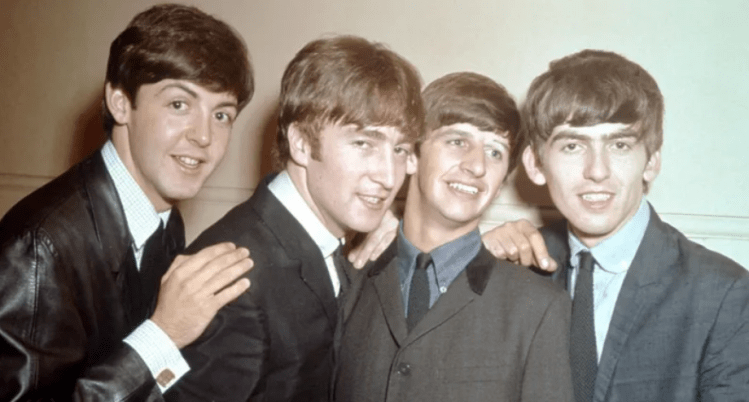
Her name was Lily. I knew she wasn’t supposed to be there. First she was old enough to be someone’s grandmother. And she wore this long black dress that reached down past her ankles, like something straight out of the 1920s. How she got backstage I don’t know but there she was, too close to Ringo, the kid was all bug eyed gawking at her, as if she put a spell on him, and for a moment I thought the girls I got him were all wrong. Maybe he was into older women.

I circled around the rear of the stage. The Beatles finished playing their first stateside concert not 20 minutes earlier. I still couldn’t get the screams out of my ears. I had it all lined up for them, two girls each, blondes for Paul, brunettes for John, they could take one or both, not my concern, as long as they paid cash money. But this lady, she was like a dragonfly buzzing around, regal and purposeful, and the last thing I wanted was for Ringo to ditch my girls, or I’d lose that fee.

“What’s your name?” she asked me. I didn’t know how she managed to get so close, like she suddenly materialized out of thin air.

“Rick,” I told her.

I’m Lily,” she said. “I know you from somewhere.”

I laughed. “I doubt you’re too familiar with my line of work.”

“Which is what?”

“Let’s just say I’m in the entertainment business. Listen, about Ringo, he has a prior commitment.”

“How entertaining,” she said. Then the stared at me so directly I had to swallow hard. I felt myself flush as she peered even closer, like she was opening doors and walking through each one. All around us people buzzed but all I could see was those eyes like green fields and suddenly I felt dizzy. I crouched down to steady myself and closed my eyes, the rush of people and clamor of voices hammering my ears and then it was all gone. I kept my eyes closed and kept my crouch and then she speaks to me.

“Yes, it’s you. We had a past life together. You burned me at the stake in 1542.”

I kept my eyes closed. “Lady you’re nuts.”

She laid her hand on my head and it’s the softest, most beautiful thing I’d ever felt. “But before that, many lifetimes, in fact, we were in love.” Then she sighed. “I thought I’d never find you in this lifetime. I retired, in fact. I gave it all up. But something told me to come here, to see these Beatles, and I did and I’m so glad. Open your eyes.”

I rose slow and unsteady. The rush of voices was gone. All I heard was birds and running water. When I opened my eyes we weren’t backstage anymore but in a sunlit forest, and Lily was young and beautiful again. She reached up and kissed me. “Let’s go, Rick. We’re never too old for an adventure, that’s what you always used to tell me.”

Read This Book: Sea of Tranquility

What should we do with the era of Covid? As a society? As writers?

It’s an understatement for sure to say that it was a difficult time. I look back in anger, and maybe not for the reasons that you might, and that fact makes reckoning with that time period all the complicated–we probably see different villains.

Nevertheless, as writers, our lives bleed into our work. It better to some degree, unless you want writing that’s sterile.

With that said, back to my original question – what do we do with the Covid era? I touched upon it from a distance in my recently published story, One More Darrell, by zeroing in on the isolation of the main character (isolation being one of the Big Bads of that time period for me).

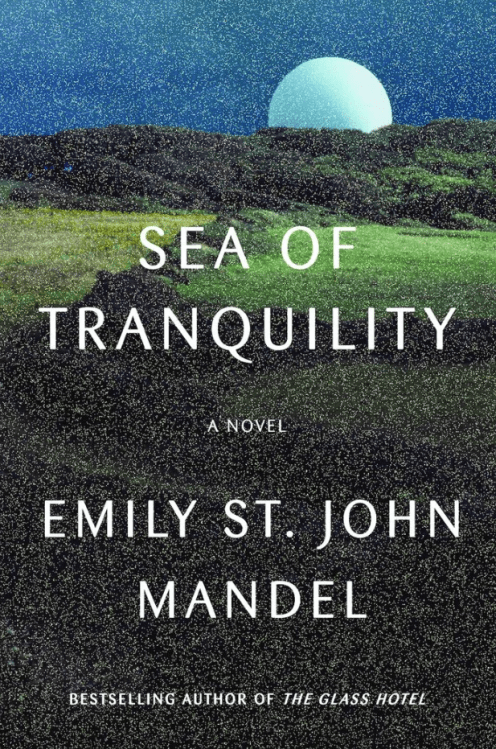
I’ve heard chatter that writers SHOULD be incorporating the Covid era more concretely and directly into stories. Fine, do that. I likely won’t read it. I don’t want to be reminded of it. Forgetting is the best medicine (weird cliche but go with it). Unfortunately (or fortunately) I slipped up and read Emily St. John Mandel’s time-hopping novel Sea of Tranquility, and while it is not about the big C per se, it hits on epidemics. Hard.

Luckily, Mandel, who wrote the mega-successful Station Eleven, is talented enough to push me past my resistance. Also, it helps that it’s not a story ABOUT pandemics. It’s about rips in the fabric of space and time. It’s about people from different eras sharing a common experience. And it asks what is the real nature of the world we live in?

Sea of Tranquility opens with a British nobleman migrating to Canada on the eve of World War 1. He’s a lost soul in the sense that he’s purposeless, and he stumbles on a strange incident in the forests of British Columbia he stumbles upon a strange incident that leaves him forever changed.

From there the novel time jumps ( from the 1910s to the 1990s-2020s, the 2200s, the 2400s, and back and forth). We meet characters including a novelist, Olive Llewelyn, and a time traveler named Gaspery-Jacques Roberts. To explain more of the plot wouldn’t do this book justice (and frankly it’s not so easy to explain without giving it all away). But I will say this. At its heart, Sea of Tranquility is a time travel story. I love time travel stories, but they’re damn near impossible to pull off (the series Dark did it well, so did the movie 12 Monkeys).

But Mandel manages to do it, successfully. She ties together all the back and forth and the here and there that ranges from cities on the moon to the forests of western Canada. It’s a small story; it’s not about the end of the world, or saving the world, or anything like that. It’s just about a group of people who become tied together across space and time through a series of events. Lives are lived and lost and remembered. Sea of Tranquility is a quick read, it has a compelling storyline, and the characters are drawn well.

But I’ve got to knock a star off of my review, and the reason why comes back to my question way at the beginning: what do we do with the Covid era? In Sea of Tranquility, Mandel harkens back to the particularly paranoid aspects of that time, and while it all made sense in the story, it ripped me right out of the book. Nevertheless, I enjoyed my time spent reading it. Time travel plus beautiful prose is the key to my heart.